
Last Updated on July 24, 2026 by Daniel Globe
Rome is one of those cities where ancient ruins, baroque fountains, domes, bridges, narrow lanes, and panoramic terraces can all appear in the same day’s photo roll. The best Rome photo spots range from the Colosseum and Trevi Fountain to quieter viewpoints such as the Pincio, Orange Garden, and Janiculum Hill. Timing matters just as much as location, so plan famous landmarks for early morning and save elevated viewpoints for golden hour or sunset.
Quick Answer
Rome’s most Instagrammable places include the Colosseum, Roman Forum, Vittoriano, St. Peter’s Basilica, Castel Sant’Angelo, Piazza Navona, Trevi Fountain, Pincio Terrace, Pantheon, Tiber Island, Spanish Steps, Trastevere, Orange Garden, Aventine Keyhole, and Janiculum Hill. Shoot major landmarks early and save panoramic viewpoints for sunset.
Key Takeaways
- Trevi Fountain, the Colosseum, Spanish Steps, Pantheon, and Piazza Navona are easiest to photograph with fewer people early in the morning.
- Pincio Terrace, the Vittoriano, Castel Sant’Angelo, the Orange Garden, and Janiculum Hill are strong choices for golden-hour or sunset city views.
- Some classic photo locations now require paid admission for close access, including the Pantheon and the inner perimeter of Trevi Fountain for most visitors.
- You do not need professional camera gear. A phone with a wide lens, clean lens glass, careful framing, and good light can produce excellent Rome photos.
- Leave room for neighborhoods such as Trastevere, where doorways, ivy, cobblestones, scooters, and small piazzas often create more personal photographs than the major monuments.
Note: Access rules changed at several Rome landmarks in 2026. As of July 2026, tourists and non-residents pay €2 to enter the inner perimeter of the Trevi Fountain, while the fountain remains visible for free from outside. Regular full admission to the Pantheon is €7. The Vittoriano Panoramic Terrace and Castel Sant’Angelo also require tickets. Check official pages before visiting because special events and maintenance can temporarily change access.
Disclosure: As an Amazon Associate I earn from qualifying purchases. Some links on this page are affiliate links, at no extra cost to you.
Best Times to Photograph Rome
There is no single best time for every Rome photo spot. The city’s monuments face different directions, and the busiest locations change dramatically between dawn, midday, and evening.
| Photo Spot | Best Time | Best For |
|---|---|---|
| Colosseum | Dawn or late afternoon | Exterior arches and warm stone |
| Trevi Fountain | Early morning or after dark | Lower crowds or illuminated water |
| Piazza Navona | Early morning or blue hour | Fountains and baroque architecture |
| Pincio Terrace | Sunset | Piazza del Popolo and skyline |
| Castel Sant’Angelo | Golden hour to blue hour | River reflections and bridge compositions |
| Janiculum Hill | Late afternoon and sunset | Wide Rome skyline |
Pro Tip: Clean your phone lens before every major photo stop. Pocket lint and fingerprints soften highlights dramatically, especially around fountains, streetlights, and sunset skies. For architecture, turn on your camera grid and keep vertical building lines as straight as possible.
Products Worth Considering

Introducing our new simple lens-cleaning system effective, durable and long lasting

SIMPLE AND EFFECTIVE: Just spray on a small amount of cleaning fluid and use the included microfiber cloth to clean and polish the lens of your camera or the screen of your smartphone or tablet.
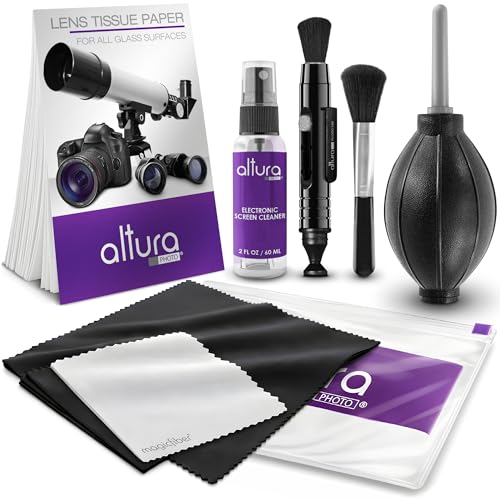
COMPLETE CAMERA CLEANING KIT: Our camera lens cleaning kit includes an alcohol & ammonia-free lens cleaner spray, cleaning brush, lens pen, air blower, MagicFiber microfiber cloths (3), and lens tissue paper wipes (50). Most competing lens cleaning kits cost more and still make you buy the spray and brush separately. Ours doesn't.
The Colosseum
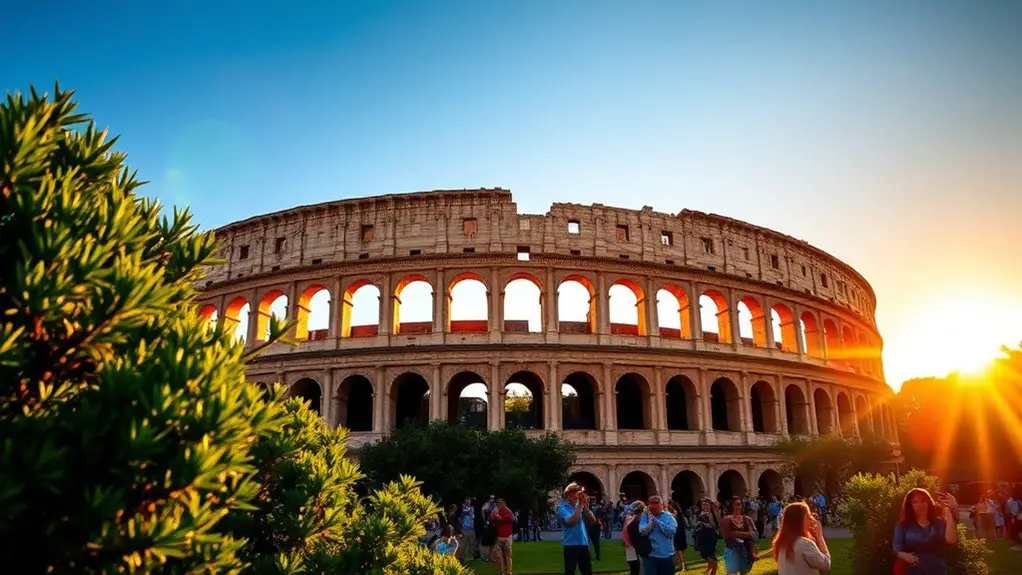
The Colosseum is one of Rome’s defining photo subjects. It forms part of Rome’s UNESCO-listed historic centre and is also recognized as one of the New 7 Wonders of the World.
For an elevated exterior composition, walk toward Via Nicola Salvi and the area above the Colosseo metro station. From here, you can frame the amphitheatre without standing directly in the busiest part of Piazza del Colosseo.
Early morning works well for cleaner street-level frames. Late afternoon brings warmer light across the travertine exterior, while blue hour and nighttime lighting create a completely different photograph.
Remember that sunrise photography refers to the exterior. The archaeological park does not open at dawn. Current timed-entry information is published by the Parco archeologico del Colosseo, and scheduled Colosseum entry should be reserved in advance.
Foro Romano
The Foro Romano, or Roman Forum, is the archaeological heart of ancient Roman public life. Temples, basilicas, arches, columns, and surviving fragments overlap throughout the valley, making it especially rewarding for wider landscape-style photography.
One of the best ways to show the Forum’s scale is to photograph it from higher ground on the Palatine Hill. Instead of isolating a single ruin, use columns or stone walls as foreground elements and let the city layers stretch through the rest of the frame.
| Time to Visit | Tips for Photography |
|---|---|
| Early Morning | Use softer light and photograph before the busiest part of the day. |
| Late Afternoon | Look for warm side lighting on columns, arches, and stone. |
| Elevated Areas | Use the Palatine to show the Forum as a complete archaeological landscape. |
The Forum and Palatine are part of the same central archaeological park as the Colosseum, so they are easy to combine during one photography session.
Altare della Patria and the Vittoriano
At Piazza Venezia, the huge white Vittoriano and Altare della Patria give you a very different photographic subject from Rome’s ancient ruins. Symmetrical staircases, columns, sculptural groups, and the equestrian monument to Victor Emmanuel II create strong geometric compositions.
Late afternoon is particularly effective because warmer light gives the pale stone more definition and helps separate sculptural details from the façade.
For a stronger Vittoriano photograph, step back far enough to include the monument’s symmetry instead of trying to fit the entire façade into an ultra-wide frame from directly below.
There are free exterior viewpoints and public areas around the monument, but the highest panoramic view is different. The Vittoriano Panoramic Terrace, reached by panoramic elevators, currently requires a ticket. As of July 2026, standard full admission is €18.
From the upper terrace, you can photograph the Roman Forum, Colosseum, churches, domes, rooftops, and other parts of central Rome from a high 360-degree viewpoint.
St. Peter’s Basilica
St. Peter’s Basilica provides several distinct photographs in one location: the façade, Bernini’s sweeping colonnades, the dome, the interior, and elevated views from the dome itself.
The dome reaches 136.57 meters to the top of the cross, which helps explain why it remains visible from viewpoints all across Rome. The wide curve of St. Peter’s Square is ideal for symmetrical compositions, especially when you stand near the central axis and allow the colonnades to lead toward the basilica.
For dawn photography, concentrate on the exterior and St. Peter’s Square. Since June 1, 2026, the official Basilica visitor information lists normal Basilica hours from 7 a.m. to 8 p.m.
Ordinary entrance to the Basilica is free. A separate paid booking service is available for visitors who want a guaranteed time slot with the included digital audio guide. The dome is a separate visitor experience with its own access arrangements.
Inside, work with the scale rather than trying to fit every detail into one image. Columns, floor patterns, shafts of light, Michelangelo’s Pietà, and Bernini’s Baldacchino can each support a stronger composition than a rushed ultra-wide snapshot.
Castel Sant’Angelo
Castel Sant’Angelo combines Roman history, medieval fortification, Renaissance additions, a dramatic bridge, and one of the most photogenic stretches of the Tiber. You can photograph it without buying a ticket from Ponte Sant’Angelo and the surrounding riverbanks, while the museum’s upper terraces provide paid elevated views.
Note: As of July 2026, full admission to Castel Sant’Angelo is €18. Standard museum hours are Tuesday through Sunday, 9 a.m.–7:30 p.m., with last admission at 6:30 p.m.; special openings can alter the normal schedule.
Unique Architectural Features
The cylindrical core of Castel Sant’Angelo immediately separates it from Rome’s churches and palaces. Above it stands the statue of the Archangel Michael, while Ponte Sant’Angelo creates a formal approach across the river.
The castle reflects centuries of change from the Mausoleum of Hadrian to fortress and papal stronghold. That layered design gives you options ranging from close architectural details to broad cityscape photographs.
The angel sculptures along Ponte Sant’Angelo are especially useful as foreground subjects. Try placing one near the edge of your frame while keeping the castle visible behind it.
Scenic River Views
The Tiber gives Castel Sant’Angelo one of its best photographic advantages. From the bridge or riverbank, you can combine water, bridge arches, statues, trees, and the fortress in the same composition.
When the river surface is relatively calm, reflections add another layer to evening photographs. Walk a short distance away from the bridge rather than taking every frame from its center; the lower riverbank and neighboring bridges can reveal cleaner sight lines.
Sunset Photography Opportunities
Golden hour and blue hour are excellent times to work around Castel Sant’Angelo because the changing sky, streetlights, and river reflections give you several looks within a short period.
- Arrive early: Reach the area 45–60 minutes before sunset so you can test compositions before the light changes quickly.
- Use the bridge: Ponte Sant’Angelo naturally leads the viewer’s eye toward the fortress.
- Change elevation: Compare bridge-level images with lower riverbank views where access is open.
- Stay through blue hour: The combination of the illuminated fortress and cooler evening sky can be more dramatic than the sunset itself.
Fontana dei Quattro Fiumi and Piazza Navona
Piazza Navona is one of Rome’s strongest locations for combining people, architecture, fountains, and street life. At its center stands the Fontana dei Quattro Fiumi, or Fountain of the Four Rivers, designed by Gian Lorenzo Bernini and unveiled in 1651.
The four monumental river figures represent the Danube, Ganges, Nile, and Río de la Plata. Bernini conceived and directed the work, while the individual river figures were executed by sculptors working within his project.
Instead of photographing only the Fountain of the Four Rivers, step back and include the obelisk, Sant’Agnese in Agone, surrounding façades, and the long shape of Piazza Navona to give the image a stronger sense of place.
Early morning usually gives you the easiest opportunity for a relatively uncluttered composition. In the evening, the square becomes more animated, so blue-hour photographs work well when you want people and street life to be part of the scene.
At night, the illuminated fountains and surrounding architecture provide good opportunities for low-light photography. On a phone, tap the brightest part of the fountain and slightly reduce exposure so white stone and lamps do not lose all detail.
Fontana di Trevi
The Trevi Fountain is one of Rome’s most recognizable photo locations, but access works differently now than it did for many years. You can still photograph and view the fountain for free from outside the controlled monumental area, including before and after the paid inner-perimeter visiting hours.
Since February 2, 2026, tourists and visitors who are not residents of Rome or its Metropolitan City generally pay €2 to enter the inner perimeter. The official Trevi Fountain visitor site lists the current schedule, exemptions, purchasing options, and temporary changes.
Best Times to Visit
- Sunrise: Photograph from the free exterior viewing area when the surrounding streets are quieter. Controlled inner-perimeter access does not normally operate this early.
- Morning: Once the controlled area opens, you can get closer to the basin and traditional coin-toss position with the required ticket if one applies to you.
- Late afternoon: Expect heavier pedestrian traffic but warmer light around the surrounding buildings.
- Night: The fountain remains highly photogenic under artificial lighting, and after official visiting hours it remains visible for free from outside the monumental area.
Capture Unique Angles
Do not limit yourself to one straight-on wide shot. Photograph individual tritons, the central figure of Ocean, the rock formations, falling water, and the façade of Palazzo Poli. Those details often produce stronger photographs than trying to include the whole fountain with a crowd in front.
From farther back, use people intentionally for scale instead of treating every visitor as an unwanted obstruction. At night, a phone’s night mode can work well when handheld; brace your elbows against your body and avoid excessive digital zoom.
Warning: Inside the controlled Trevi Fountain area, follow the posted monument rules. Do not sit on the basin edge, climb on the structure, eat or drink in restricted areas, or throw objects other than the traditional coin toss.
Nearby Attractions to Explore
- Piazza di Trevi: Step farther into the square to show how tightly the monumental fountain fits into Rome’s historic streets.
- Palazzo Poli: Use details of the palace façade as a backdrop rather than photographing only the water.
- A nearby gelateria: A gelato-and-street-scene photograph can add a more personal travel image between landmark shots.
- Santa Maria in Via: This nearby church offers a quieter architectural stop before you continue toward Piazza di Spagna or the Pantheon.
Pincio Terrace and Viale del Belvedere
The viewpoint often described simply as a Villa Borghese terrace is better known as the Pincio Terrace, or Terrazza del Pincio. Viale del Belvedere forms part of the adjoining Pincio promenade.
The terrace looks directly over Piazza del Popolo, with Rome’s rooftops and the dome of St. Peter’s visible farther across the city. The official Rome tourism site specifically highlights the Pincio in the late afternoon toward sunset, when the city takes on warmer light.
The public viewpoint is free, so it works particularly well when you want an elevated Rome photograph without buying an attraction ticket.
| Feature | Description | Why It Works in Photos |
|---|---|---|
| Panoramic Views | Piazza del Popolo, rooftops, domes, and distant St. Peter’s | Creates a recognizable layered Rome skyline |
| Promenade | Trees, paths, statues, and nearby Villa Borghese scenery | Adds quieter compositions beyond the main railing |
| Sunset Light | Warm light followed by city lights at blue hour | Provides several different looks without changing location |
Pantheon
The Pantheon’s massive portico, granite columns, bronze doors, dome, and central oculus make it one of the best places in Rome for both exterior and interior architectural photography.
For a relatively quiet exterior photograph, visit Piazza della Rotonda early in the morning. This is different from interior access: the Pantheon currently opens to ordinary visitors at 9 a.m.
As of July 1, 2026, standard full tourist admission is €7, with reduced and free categories available under the official rules. The normal visiting schedule is 9 a.m.–7 p.m., with last admission at 6:30 p.m., although religious services can affect tourist access.
Four photographic details are especially worth looking for:
- The portico: Step back into Piazza della Rotonda to show the columns and pediment together.
- The dome and oculus: Inside, use the curve of the coffered dome to lead the eye toward the opening at its center.
- Marble floor: Lower compositions can use geometric floor patterns as foreground lines.
- Changing light: The oculus creates very different interior light depending on the hour and weather.
Tiber Island
Tiber Island offers a quieter combination of river scenery, bridges, stone walls, church architecture, and mature trees. Its long shape in the middle of the Tiber gives you several compositions from both banks.
The island is connected toward the historic center by Ponte Fabricio and toward Trastevere by Ponte Cestio. Photographing from either bridge allows the island itself to become the subject rather than simply using it as a place to stand.
The Basilica di San Bartolomeo all’Isola was founded at the end of the 10th century, adding another architectural focal point to the island.
For river photographs, walk across both bridges and compare the angles before settling on a shot. Reflections and water levels change, so the strongest composition may not be the first one you see.
Spanish Steps and Piazza di Spagna
The Spanish Steps are too important to leave only in the FAQ. The broad staircase rises from Piazza di Spagna toward Trinità dei Monti and creates natural leading lines that work especially well in vertical photographs.
Early morning gives you the best chance of seeing the staircase with fewer people. From the square, photograph upward to emphasize the scale of the steps; from the upper level, turn around for a view over Piazza di Spagna and the streets beyond.
The Barcaccia fountain at the foot of the staircase gives you another foreground option. During the traditional spring azalea display, the staircase gains an additional layer of white and lilac flowers.
Because the Steps are a protected monument and major pedestrian route, keep your setup compact and respect posted visitor rules rather than blocking stairways for posed photographs.
Trastevere
Trastevere provides the street-level Rome that monumental piazzas cannot. Its lanes, weathered façades, doorways, plants, cafés, artisan shops, scooters, and small squares make it one of the city’s most varied areas for travel photography.
The official Rome tourism site describes Trastevere’s alleys and unusual views as among the city’s most photogenic scenes. Start around Piazza Santa Maria in Trastevere, then leave the main routes and look for narrower lanes where façades, hanging plants, and cobblestones fill the frame.
Morning is best for quieter street scenes. Late afternoon adds warmer light, while evening gives you a livelier atmosphere around restaurants and piazzas.
Pro Tip: In Trastevere, stop searching for a single famous “Instagram spot.” Walk slowly and look for layers: a doorway in the foreground, a bicycle or scooter in the middle, and a church tower or warm façade farther down the lane.
Orange Garden and Aventine Keyhole
The Aventine Hill gives you two distinctive photo stops within a short walk of each other: the Orange Garden and the famous keyhole at Piazza dei Cavalieri di Malta.
Parco Savello, better known as the Orange Garden, has a belvedere overlooking the Tiber and the city toward St. Peter’s Basilica. The central tree-lined path also creates a strong symmetrical composition as it leads toward the viewpoint.
A few minutes away, the Aventine Keyhole frames the dome of St. Peter’s at the end of a carefully aligned garden vista. Photographing through a tiny keyhole can be challenging with a phone: place the camera lens as close to the opening as practical, tap the bright distant dome to focus, and reduce exposure if the foreground turns into distracting glare.
Both locations are especially attractive late in the day, although the keyhole can develop a queue during popular travel periods.
Janiculum Hill
Janiculum Hill, or Gianicolo, is one of Rome’s classic panoramic viewpoints. From the hill, the historic center appears as layers of rooftops, church domes, towers, and monuments rather than a single landmark.
Late afternoon through sunset is the most rewarding period for a wide cityscape. Bring a slightly longer focal length if your phone or camera offers one; it helps compress distant domes and rooftops into a denser-looking skyline.
The hill also has a distinctive daily tradition: a cannon fires a blank round at noon, a custom that began in 1847 and later moved to the Janiculum.
For photographers deciding between viewpoints, Pincio gives you a recognizable composition over Piazza del Popolo, the Orange Garden frames the Tiber and St. Peter’s, while Janiculum offers one of the broadest views over central Rome.
A Simple Rome Photography Route
You do not need to visit every location in one day. Rome rewards walking slowly, and constantly crossing the city to chase a checklist can cost more good light than it saves.
For a practical central route, start around the Colosseum and Roman Forum, continue to the Vittoriano, then walk toward the Pantheon and Piazza Navona. From there, follow the route toward Castel Sant’Angelo and St. Peter’s Basilica.
A second route works well for the north-central sights: start at Trevi Fountain, continue to the Spanish Steps, and finish at Pincio Terrace near sunset. Trastevere, Tiber Island, the Aventine, and Janiculum can form another slower photography loop.
This approach lets you spend more time waiting for people to move, trying several compositions, and watching the light instead of photographing every location in a rush.
Products Worth Considering

Camera mount tripod stand with zippered storage bag

Innovative Pentagonal Tube Design – Engineered for stability and portability, this lightweight (2.6 lbs/1.18 kg) tripod features a unique pentagonal-shaped tube for enhanced durability and easy folding. With a compact 19.6 ''/50 cm folded size, it’s effortless to carry, making it ideal for travel, outdoor shoots, and professional use, even on rugged terrains

Wide Compatibility: This camera tripod is universally compatible with cameras and devices with 1/4"-20 and 3/8"-16 threaded holes, such as DSLR cameras, action cameras and mirrorless cameras, etc. It can also be used with cell phones and projectors. 【Note】For cameras with telephoto zoom lens, you need to purchase additional tripod mount ring or telephoto lens mount for better balance.
Practical Rome Photography Tips
- Use people for scale: Crowds are not always a flaw. A person beneath the Colosseum or St. Peter’s can communicate the size of the architecture.
- Avoid excessive digital zoom: Move closer when permitted or use your phone’s optical lens options.
- Protect highlights: White marble and bright skies lose detail quickly. Tap a bright area and lower exposure slightly.
- Try vertical frames: They work especially well for domes, columns, fountains, narrow lanes, and the Spanish Steps.
- Stay for blue hour: Ten to thirty minutes after sunset can produce better-balanced city lights than full darkness.
- Keep gear compact: Busy squares and narrow pavements are easier to navigate without a large tripod or oversized bag.
- Respect worship: St. Peter’s and the Pantheon are active religious sites. Photography should never disrupt services or visitors who are there to pray.
Products Worth Considering

Portable All-in-One Tripod for iphone: Vimose newly designed all-in-one tripod combines a phone tripod and selfie stick. It offers exceptional portability with a compact folding design, collapsing to just 12.5 inches, making it easy to carry and perfect for travel and everyday use.
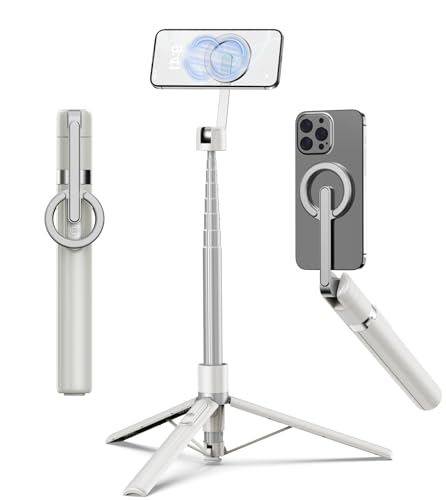
Magnetic Aluminum Phone Mount:The phone stand is made of aluminum,compatible with magsafe function, allowing seamless attachment for MagSafe-enabled devices.During use, you can quickly attach and detach the cellphone, which is more convenient and sturdier than the ordinary spring-loaded phone clips.The cell phone holder uses a powerful magnet to provide a stable and secure hold for your phone.

【Sturdy and Stable】: Made of premium aluminum alloy and plastic, Liphisy phone tripod with remote keeps your device stay securely in place for still shots and video recording.
Frequently Asked Questions
What is the most Instagrammable place in Rome?
The Trevi Fountain is one of the strongest choices because its baroque sculpture, moving water, and illuminated night view are instantly recognizable. The Colosseum, Spanish Steps, St. Peter’s Basilica, Pincio Terrace, and Trastevere are equally worthwhile depending on whether you prefer monuments, panoramic views, or street photography.
Where can you take the best pictures in Rome?
For famous landmarks, photograph the Colosseum, Trevi Fountain, Pantheon, Piazza Navona, Spanish Steps, Castel Sant’Angelo, and St. Peter’s Basilica. For wider views, use Pincio Terrace, the Orange Garden, or Janiculum Hill. For atmospheric street photographs, walk through Trastevere and around Tiber Island.
Where is the most scenic viewpoint in Rome?
Janiculum Hill is one of Rome’s broadest panoramic viewpoints, especially around sunset. Pincio Terrace is excellent for Piazza del Popolo and the western skyline, while the Orange Garden combines the Tiber, rooftops, and St. Peter’s Basilica in a quieter garden setting.
What is the most Instagrammable place in Italy?
There is no objective single winner, but the Amalfi Coast is a leading choice for dramatic coastal photography. Towns such as Positano combine steep mountains, pastel buildings, sea views, terraces, and sunsets. Rome, Venice, Florence, the Dolomites, and Cinque Terre offer very different but equally recognizable Italian photographs.
Can you photograph the Trevi Fountain for free?
Yes. The Trevi Fountain remains visible for free from outside the controlled monumental area. Since February 2, 2026, tourists and non-residents generally pay €2 only when entering the inner perimeter for closer access. Eligible residents and other exempt visitors can enter under the official free-admission rules.
What are the best free photo spots in Rome?
Strong free viewpoints include Pincio Terrace, Janiculum Hill, the Orange Garden, the Aventine Keyhole, Piazza Navona, the Spanish Steps, Trastevere, Tiber Island, and exterior viewpoints around the Colosseum, St. Peter’s Basilica, Castel Sant’Angelo, and Trevi Fountain.
Conclusion
Rome’s best photographs are not limited to one fountain, ruin, or viewpoint. The Colosseum and Trevi Fountain deliver the classic landmark shots, while Piazza Navona, the Pantheon, Castel Sant’Angelo, and St. Peter’s add architectural variety. Pincio Terrace, the Orange Garden, and Janiculum Hill reveal the city from above, and Trastevere brings the camera back down to street level.
Plan around light instead of trying to race through every location. Arrive early for popular monuments, give yourself time to walk around each subject, and stay through sunset when you choose a panoramic viewpoint. The photographs that feel most like Rome often appear after you have taken the obvious shot and started looking at what is happening just beyond it.
Sources
- Official Trevi Fountain Visitor Site — current access fee, opening hours, exemptions, and visitor rules.
- Parco archeologico del Colosseo — official Colosseum, Roman Forum, and Palatine visitor information.
- Pantheon — Direzione Musei nazionali della città di Roma — current Pantheon tickets, hours, and access conditions.
- St. Peter’s Basilica — official admission and visitor information.
- VIVE — Vittoriano Panoramic Terrace — official terrace ticket and visitor information.
- Turismo Roma — Panoramic Viewpoints — official city tourism information for Pincio, Janiculum, Orange Garden, St. Peter’s dome, and other viewpoints.
