
Last Updated on July 23, 2026 by Daniel Globe
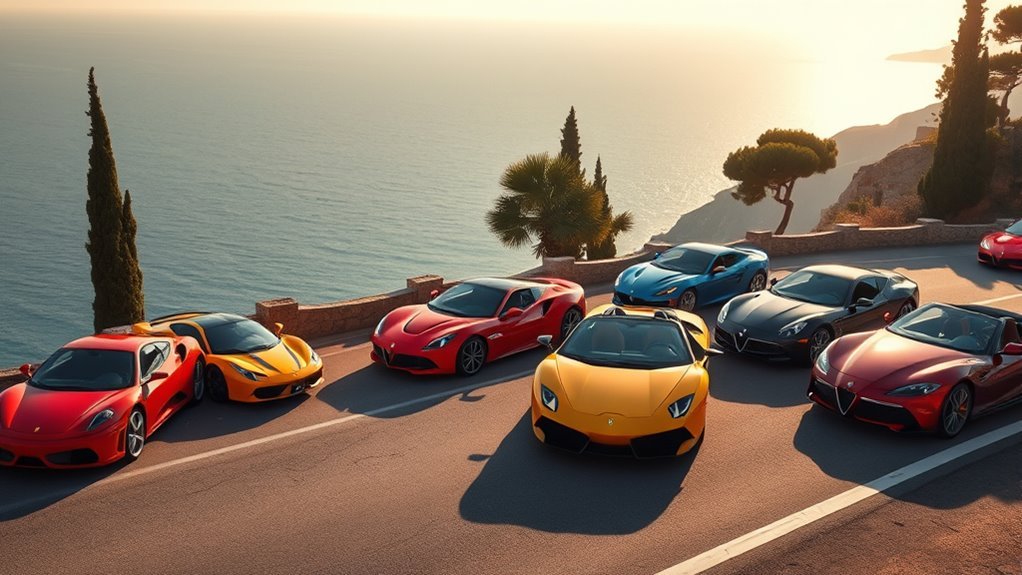
Italy has produced everything from affordable city cars to championship-winning rally machines and hand-built hypercars. This ranking compares 10 of the best Italian car brands of all time by looking at historical influence, motorsport success, engineering, design, iconic models, and continuing relevance. The order is subjective, but each brand earned its place for a clear reason.
Quick Answer
Ferrari ranks first for its unmatched mix of road cars, racing success, and global influence. Lamborghini, Alfa Romeo, Fiat, Maserati, Lancia, Pagani, Abarth, De Tomaso, and Iso complete the top 10, representing Italian excellence in supercars, mass-market mobility, rallying, tuning, grand touring, and design.
Key Takeaways
- Ferrari is the strongest all-around choice because it combines landmark road cars with the most successful record in Formula One constructors’ championships.
- Fiat had the greatest effect on everyday Italian motoring, while Lancia built one of rallying’s most important legacies.
- Pagani, De Tomaso, and Iso show how smaller Italian marques can influence the industry through craftsmanship, unusual engineering, and distinctive design.
- Abarth is the missing tenth brand in many lists because it turned small Fiat-based cars into accessible performance icons.
Disclosure: As an Amazon Associate I earn from qualifying purchases. Some links on this page are affiliate links, at no extra cost to you.
How the Italian Car Brands Were Ranked
No single metric can decide the “best” Italian car brand. This list weighs six factors: historical importance, motorsport record, engineering innovation, design influence, strength of iconic models, and relevance beyond one short production period. A brand did not need to be large or currently sell cars worldwide, but it needed a lasting contribution to automotive culture.
| Rank | Brand | Best Known For | Defining Models |
|---|---|---|---|
| 1 | Ferrari | Racing, supercars, technical prestige | 250 GTO, F40, LaFerrari |
| 2 | Lamborghini | Bold supercar design and V12 drama | Miura, Countach, Revuelto |
| 3 | Alfa Romeo | Sporting sedans, racing, elegant design | 8C, Spider, Giulia |
| 4 | Fiat | Affordable mobility and compact cars | 500, 124, Panda |
| 5 | Maserati | Luxury grand touring and racing heritage | A6, GranTurismo, MC20 |
| 6 | Lancia | Rally domination and engineering innovation | Stratos, 037, Delta |
| 7 | Pagani | Hand-built hypercars and advanced composites | Zonda, Huayra, Utopia |
| 8 | Abarth | Small-car tuning and accessible performance | 204 A, 595, 600e |
| 9 | De Tomaso | Italian styling with American V8 power | Mangusta, Pantera, P72 |
| 10 | Iso | Rare Italian-American grand tourers | Isetta, Rivolta GT, Grifo |
Note: Founding dates can be confusing. Scuderia Ferrari began in 1929, Enzo Ferrari formed Auto Avio Costruzioni in 1939, and the first road car carrying the Ferrari name appeared in 1947.
1. Ferrari: The Heart of Italian Supercars
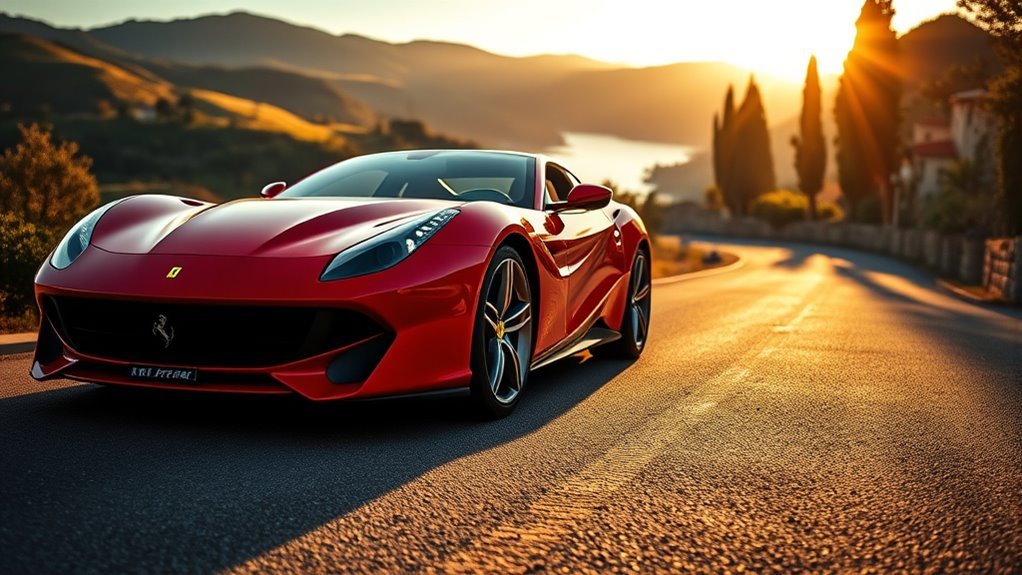
Ferrari takes first place because few manufacturers combine road-car influence, racing success, brand prestige, and technical ambition at the same level. Ferrari identifies 1947 as the beginning of its road-car story, when the 125 S became the first car to wear the marque.
The company’s landmark cars cover several eras. The 250 GTO became a successful racing GT and one of the most celebrated collector cars. The F40 used a 2.9-liter twin-turbo V8, became the first production road car to exceed 200 mph, and was the last Ferrari personally commissioned and approved by Enzo Ferrari. LaFerrari later combined a 6.3-liter V12 with a hybrid system, while the SF90 Stradale became Ferrari’s first plug-in hybrid road car.
Ferrari’s official museum record lists 16 Formula One Constructors’ Championships, a total that remains unmatched.
Ferrari is not number one simply because its cars are expensive or fast. It leads because its racing program, limited-production flagships, grand tourers, and mainstream sports cars have repeatedly influenced what buyers expect from an Italian performance brand.
Products Worth Considering

Capture the essence of speed and style with this 16x20-inch poster featuring the legendary Ferrari F40, a timeless icon of automotive excellence.

Poster Title: Ferrari F40 Poster

【Vintage Car Posters Set of 6】Decorate your space with this stylish set of car posters featuring bold supercar designs and vibrant racing colors. These eye-catching car posters instantly upgrade your walls and create exciting car wall art for bedrooms, dorm rooms, and gaming spaces.
2. Lamborghini: Wild Design and V12 Drama
Lamborghini was formed in 1963 and quickly established a different personality from Ferrari. Its strongest contribution is visual and mechanical theatre: low proportions, sharp surfaces, unconventional doors, and engines designed to make every journey feel like an event.
Products Worth Considering

Heavy-Duty Steel Construction & 150 PSI Struts: Built with high-quality steel and a sleek metallic silver finish, this open car door kit features four robust 150 PSI struts for smooth, stable operation and long-lasting reliability.
【 High Quality 】: The lambo door kit is made of durable steel, strong and wear-resistant, can withstand more than 20,000 opening and closing times, and is used in most models, including open cars.

Vertical door hinge kit, bolt on installation for universal usage. Vertical doors overturn traditional outward opening way with upward opening hinges.
Wedge-Shaped Icons
The Miura helped establish the mid-engine supercar formula in the 1960s. The Countach then turned the supercar into a visual statement with its wedge shape, extreme proportions, and scissor doors. Diablo and Murciélago carried that design language into later decades without making the cars look ordinary.
| Model | Impact |
|---|---|
| Miura | Popularized the mid-engine supercar layout |
| Countach | Defined the wedge-shaped supercar image |
| Diablo | Carried the V12 flagship into the 1990s |
| Murciélago | Modernized Lamborghini under Audi ownership |
V12 Powerhouse Legacy
The Miura used a transversely mounted 3.9-liter V12 behind the cabin. The Countach changed the arrangement but kept the naturally aspirated twelve-cylinder as the brand’s emotional center. The Murciélago continued that tradition with a 6.2-liter V12 in early versions and larger engines later in its production run.
Outrageous Modern Supercars
Lamborghini’s current range shows how the brand has changed without becoming quiet. The Revuelto combines a naturally aspirated 6.5-liter V12 with three electric motors for 1,015 CV. The Temerario replaces the Huracán in the current lineup, while the Urus SE brings plug-in hybrid power to the brand’s high-performance SUV. The Huracán, including the off-road-inspired Sterrato, now belongs to the brand’s recent history rather than its current new-car lineup.
3. Alfa Romeo: Style, Speed, and Soul
Alfa Romeo was established in Milan on June 24, 1910. Its importance reaches far beyond one model because it has built grand prix cars, sports racers, elegant coupes, roadsters, family cars, and performance sedans. Its design language usually favors balanced proportions and a strong sense of motion rather than decoration for its own sake.
Its competition history includes the first Automobile World Championship in 1925 and the first two Formula One Drivers’ Championships in 1950 and 1951. The Mille Miglia record also needs precision: an 8C 2900 A won in 1937, while the 8C 2900 B won in 1938 and again in 1947.
Recent Alfa Romeo performance is represented by the Giulia Quadrifoglio, whose latest global specification lists a 520-horsepower 2.9-liter V6. The same official page now identifies it as no longer available to order and directs buyers to check remaining stock, so availability depends on the market. The limited-production 33 Stradale reconnects the brand with one of its most admired designs. Alfa ranks below Ferrari and Lamborghini only because its modern product range has been less consistently broad, not because its heritage is weaker.
4. Fiat: The Small Car That Changed Italy
Fiat was founded in Turin in 1899 and ranks fourth because its effect on ordinary life was greater than that of Italy’s exotic-car manufacturers. The company helped expand mass motorization through practical, affordable vehicles that worked in crowded cities and on narrow roads.
The Nuova 500, launched in 1957, became the clearest symbol of that mission. More than four million examples of the original generation were produced through 1975. Its compact dimensions, rear-mounted two-cylinder engine, and simple construction made personal transport more attainable.
Founded in 1899, Fiat turned practical design into everyday mobility for millions.
- Compact dimensions for narrow streets
- Simple mechanical layouts
- Affordable family transportation
- Global production and licensing
Models such as the 124, 127, Uno, and Panda extended Fiat’s influence beyond the 500. The brand’s current direction includes the 500e and the Grande Panda, which is offered with petrol, hybrid, and electric powertrains in applicable markets. Fiat may not lead this list in speed, but it is one of the most historically important Italian automotive companies.
5. Maserati: Grand Touring With Racing Roots
Maserati began in Bologna in 1914 and moved to Modena in 1939. The marque first built its identity in competition: the Tipo 26, the first car to carry the Trident, won its class at the 1926 Targa Florio. Maserati later became equally known for grand tourers that combined performance with space, comfort, and restrained Italian styling.
| Model | Why It Matters |
|---|---|
| A6 1500 | Established Maserati’s postwar road-car direction |
| 3500 GT | Expanded the brand’s luxury grand-touring success |
| GranTurismo | Made the modern Maserati GT formula widely recognizable |
| MC20 / MCPURA | Returned a mid-engine super sports car to the lineup |
The Alfieri remained a concept rather than becoming the production model once anticipated. Recent V8-era cars such as the Ghibli Trofeo still matter to Maserati history, but the modern range is better represented by the GranTurismo, GranCabrio, Grecale, GT2 Stradale, and 630-horsepower MC20. In some markets, Maserati now presents the updated super sports car under the MCPURA name.
6. Lancia: Rally Legends and Technical Innovation
Lancia was founded in Turin in 1906 and deserves recognition for more than motorsport. Cars such as the Lambda, Aurelia, and Aprilia introduced or popularized engineering ideas that influenced road-car design. However, rallying remains the clearest reason the brand belongs in this top 10.
- The Stratos won three consecutive World Rally Constructors’ Championships from 1974 through 1976.
- The Fulvia helped Lancia win the 1972 International Championship for Manufacturers, the direct predecessor to the World Rally Championship.
- The Rally 037 became the last two-wheel-drive car to win the World Rally manufacturers’ title, doing so in 1983.
- The Delta family delivered six consecutive manufacturers’ titles from 1987 through 1992.
Lancia’s official history credits the marque with 10 World Rally Championship Manufacturers’ titles. The brand has also returned to competition with the Ypsilon Rally4 HF and a planned WRC2 program, while the road-car range has begun expanding beyond the Ypsilon.
7. Pagani: Hand-Built Hypercars
Horacio Pagani founded Pagani in 1992, creating a small company that treats engineering and decorative craftsmanship as parts of the same job. The Zonda debuted at the 1999 Geneva Motor Show with Mercedes-AMG V12 power and a carbon-fiber structure. It established Pagani as a serious hypercar manufacturer rather than a short-lived design exercise.
The Huayra followed with a bespoke 6.0-liter twin-turbo AMG V12, active aerodynamics, and extensive use of carbo-titanium. Pagani’s launch specification rated the original Huayra at 730 PS and cited a 370 km/h top speed.
Today, the Pagani Utopia uses an 864-horsepower twin-turbo V12 and offers either an automated manual transmission or a traditional manual. Pagani ranks seventh because its production volume and cultural reach are small, but few brands match its attention to materials, exposed mechanisms, and bespoke construction.
8. Abarth: Small Cars With a Racing Attitude
Abarth earns eighth place by bringing Italian performance to smaller, more attainable cars. Carlo Abarth and Guido Scagliarini founded Abarth & C. in 1949, and the first car was the Fiat 1100-based 204 A Roadster. The company became famous for racing, record attempts, performance exhausts, and conversion kits that made modest cars faster and more engaging.
Abarth’s greatest influence came from proving that an exciting Italian performance car did not need a large engine or an exotic price. Modified Fiat 500 and 600 models became small racing icons, while the 124 and 131 Abarth programs extended the brand into rallying. Modern 595 and 695 models continued the same compact formula.
The brand is now moving into electric performance. The Abarth 600e Competizione produces 280 horsepower, making it the most powerful production Abarth announced by the company. That modern relevance, combined with its historic tuning influence, earns Abarth a place ahead of De Tomaso and Iso.
9. De Tomaso: Italian Muscle With Attitude
Alejandro De Tomaso founded the company in Modena in 1959. Its most memorable formula combined Italian chassis and body design with American engines. The Mangusta used Giugiaro styling and a Ford V8, while the Pantera paired Tom Tjaarda’s wedge-shaped body with a mid-mounted Ford Cleveland V8.
The Pantera was not a 175-mph car in its standard early form. De Tomaso’s own legacy specification lists a 260 km/h, or 162 mph, top speed. More than 7,000 examples were sold across the model’s long life, making it far more successful than many low-volume Italian-American grand tourers.
De Tomaso has since been revived. The production-specification P72 uses a supercharged 5.0-liter V8, a six-speed manual transmission, and a carbon-fiber chassis. It keeps the brand’s mechanical personality alive instead of simply reusing the historic badge.
10. Iso: Grifo and Italian-American Grand Touring
Iso began as Isothermos in 1939, later produced motorcycles and scooters, and entered car production with the Isetta in 1953. The company then made a dramatic shift from microcars to luxury grand tourers. Its Rivolta GT and Grifo combined Italian styling and chassis expertise with dependable, powerful American V8 engines.
Giugiaro’s Sculptural Influence
Giorgetto Giugiaro designed the Grifo while working at Bertone. Its long hood, low roof, tight cabin, and clean surfaces created a shape that looked muscular without becoming visually heavy. The car’s engineering also involved Giotto Bizzarrini, giving the project a strong mixture of styling and performance expertise.
- Low stance
- Long hood
- Tight cabin
- Controlled, flowing surfaces
Giugiaro’s work on the Grifo is separate from the Alfa Romeo 33 Stradale, which was designed by Franco Scaglione. Both are celebrated Italian forms, but they came from different designers and design houses.
Grifo’s Italian-American Blend
The Iso Grifo paired Bertone-built bodywork with Chevrolet V8 power in its best-known versions. This combination delivered strong performance without requiring Iso to develop an engine from scratch.
| Feature | Significance |
|---|---|
| Chevrolet V8 | Strong power and widely understood mechanicals |
| Giugiaro design for Bertone | Balanced Italian grand-touring proportions |
| Low production | Rare collector status today |
Approximately 400 Grifos were built, with sources varying slightly by version and counting method. That rarity limits Iso’s wider influence, but the Grifo remains one of the clearest examples of Italian-American performance design.
The Best Italian Cars Today
The strongest Italian cars available or officially presented in 2026 cover supercars, grand tourers, performance sedans, SUVs, compact cars, and low-volume exotics. Lamborghini’s current supercar range centers on the Revuelto and Temerario, not the discontinued Huracán. Maserati’s modern super sports car is the MC20/MCPURA rather than the Alfieri concept. Ferrari’s current official range includes cars such as the 296 Speciale, 12Cilindri, Purosangue, and limited-production F80.
- Ferrari: 296 Speciale, 12Cilindri, Purosangue, and F80.
- Lamborghini: Revuelto, Temerario, and Urus SE.
- Alfa Romeo: the limited-production 33 Stradale, Junior, and remaining or end-of-series Quadrifoglio models where available.
- Maserati: GranTurismo, GranCabrio, Grecale, GT2 Stradale, and MC20/MCPURA.
- Pagani and De Tomaso: Utopia and P72 for low-volume analog-focused performance.
- Fiat, Lancia, and Abarth: Grande Panda, Ypsilon HF, 500e, and 600e for more attainable modern Italian design.
Pro Tip: When comparing a current Italian car, check the manufacturer’s regional site. Model names, power outputs, warranties, and availability can differ between Europe, North America, and other markets.
Products Worth Considering

1:18 Special Edition. Detailed die-cast precision model. Large - approx 9.5" replica.

FERRARI F80: Official replica of the Ferrari F80 in a scale of 1:18, characterized by the iconic red color and a faithful reproduction of the futuristic and aerodynamic lines of the Maranello house.

An incredible, faithful reproduction of a classic supercar, a Porsche 911. The realism of this replica car is unmatched and no detail is overlooked. Perfect to collect, display or simply play.
Frequently Asked Questions
What is the best Italian car ever made?
The Ferrari 250 GTO is a strong overall choice because of its racing success, rarity, design, and importance to Ferrari history. The Lamborghini Miura, Fiat 500, Lancia Stratos, Alfa Romeo 33 Stradale, and Pagani Zonda are equally defensible choices under different criteria.
Which car is called the poor man’s Ferrari?
There is no official answer. The label has been applied informally to several cars, including the mid-engine Alfa Romeo 4C, because they offer exotic styling or strong performance at a lower price. It is a subjective nickname, not a recognized model category.
Which Italian car brand is most reliable?
No Italian brand is consistently the most reliable across every model, year, and market. Reliability data should be checked at model level. For a used car, service history, engine and transmission version, recall completion, parts access, and the quality of the previous owner’s maintenance matter more than the badge alone.
What car color is easiest to keep looking clean?
Silver, light gray, beige, and similar mid-tone colors usually hide dust, water spots, and light scratches better than black or very dark paint. White hides light dust well but can show mud and road grime. Paint protection and washing habits still matter more than color alone.
What is the oldest brand in this top 10?
Fiat is the oldest brand in this ranking. It was founded in Turin on July 11, 1899. Lancia followed in 1906, Alfa Romeo in 1910, and Maserati in 1914.
Are all 10 Italian car brands still active?
Most remain active as vehicle brands or revived marques. Ferrari, Lamborghini, Alfa Romeo, Fiat, Maserati, Lancia, Pagani, Abarth, and De Tomaso have current official operations or products. Historic Iso production ended in the 1970s, although the name has appeared in later revival projects.
Conclusion
Ferrari and Lamborghini represent the most visible side of Italian performance, but Italy’s automotive legacy is much broader. Fiat changed everyday mobility, Lancia transformed rallying, Alfa Romeo connected racing with practical road cars, and Maserati refined the grand tourer. Pagani, Abarth, De Tomaso, and Iso prove that small brands can also leave a lasting mark through materials, tuning, design, and unconventional engineering. Ferrari earns the top position, but the variety within this list is the real reason Italian cars remain so influential.
Sources
- Ferrari History — Ferrari road cars, milestones, and model chronology.
- Lamborghini History — company formation, historic models, and current evolution.
- Lancia and Rallying — Stratos, 037, Delta, and championship records.
- Maserati 111th Anniversary — founding history and early racing milestones.
- Pagani Utopia — current official engine, weight, and transmission specifications.
- Museo Nazionale dell’Automobile: Iso History — Isetta, Rivolta GT, Grifo, and company history.
