
Last Updated on July 25, 2026 by Daniel Globe
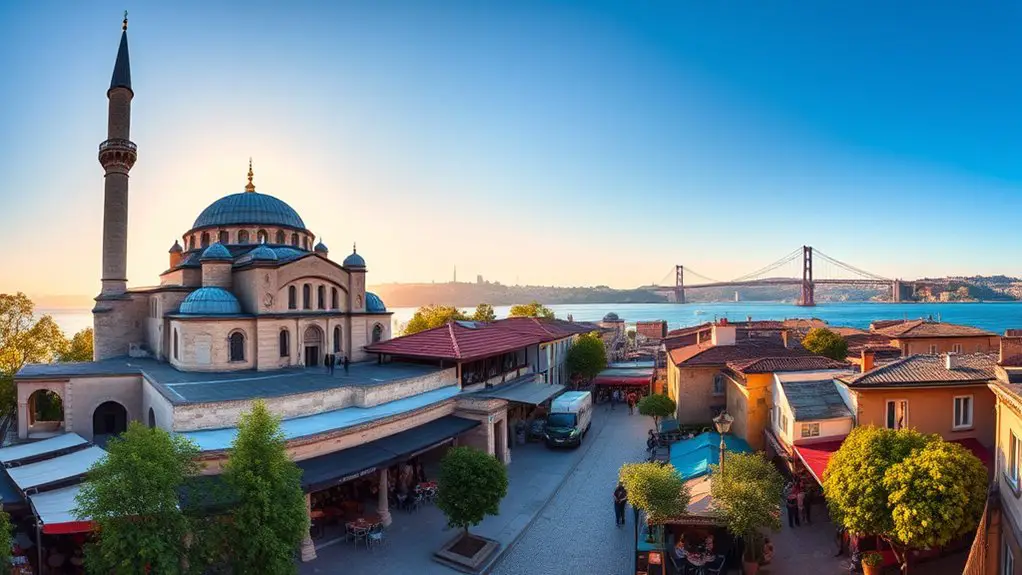
Eyüpsultan offers some of the best Golden Horn photography in Istanbul, combining panoramic viewpoints, Ottoman religious architecture, historic cemeteries, waterfront scenes, and living neighborhood life. Pierre Loti Hill and the Eyüp Sultan Mosque complex are the essential stops, while places such as Artİstanbul Feshane, Zal Mahmud Paşa Mosque, and Manzaram Eyüpsultan give you more varied compositions without leaving the district.
Quick Answer
The best Instagram spots in Eyüpsultan are Pierre Loti Hill for Golden Horn panoramas, Eyüp Sultan Mosque and its historic surroundings for Ottoman architecture, Eyüpsultan Cemetery for atmospheric stonework, and the waterfront around Artİstanbul Feshane for water, industrial heritage, and sunset scenes.
Key Takeaways
- Pierre Loti Hill is the standout viewpoint for photographing the Golden Horn from above.
- Eyüp Sultan Mosque, the Tomb of Abu Ayyub al-Ansari, and the surrounding cemetery are active sacred spaces, so photography should remain discreet and respectful.
- Balat and the Edirnekapı Mihrimah Sultan Mosque are in Fatih, while Miniatürk is in Beyoğlu; all three work better as nearby detours than as Eyüpsultan attractions.
- The T5 tram connects central Istanbul with Eyüpsultan, and the TF2 cable car climbs from Eyüp to Pierre Loti.
- Early morning gives you quieter streets and courtyards, while late afternoon and sunset are generally strongest for Golden Horn panoramas.
Note: Eyüpsultan is often grouped with other Golden Horn neighborhoods in Istanbul travel guides. Balat, Mihrimah Sultan Mosque at Edirnekapı, and Miniatürk are nearby but lie outside Eyüpsultan district, so they are labeled as detours below.
Disclosure: As an Amazon Associate I earn from qualifying purchases. Some links on this page are affiliate links, at no extra cost to you.
Best Eyüpsultan Photo Spots at a Glance
| Location | Best For | Best Light |
|---|---|---|
| Pierre Loti Hill | Golden Horn panoramas and layered city views | Late afternoon to sunset |
| Eyüp Sultan Mosque | Domes, minarets, courtyard details, street atmosphere | Morning or late afternoon |
| Eyüpsultan Cemetery | Historic gravestones, paths, texture, atmosphere | Soft morning or afternoon light |
| Artİstanbul Feshane and waterfront | Industrial heritage, contemporary culture, Golden Horn reflections | Late afternoon and blue hour |
| Zal Mahmud Paşa Mosque | Ottoman architecture and quieter courtyard compositions | Morning |
| Manzaram Eyüpsultan | Elevated Golden Horn views | Late afternoon |
Pierre Loti Hill
For a classic Eyüpsultan photograph, start with Pierre Loti Hill. The elevated viewpoint opens across the Golden Horn, giving you water, bridges, neighborhoods, hills, and Istanbul’s layered skyline in a single composition.
The viewpoint is named for French writer and naval officer Pierre Loti, who spent time in Eyüpsultan and became closely associated with the café and Golden Horn view. Eyüpsultan Municipality documents that history on its Pierre Loti Café page.
Late afternoon is especially useful for landscape photography because the lower sun gives buildings and hills more depth. At sunset, expose for the sky first so bright highlights do not wash out, then lift the darker foreground when editing.
You can walk uphill through the historic cemetery or use the TF2 Eyüp–Piyer Loti cable car. The cable car itself can provide an additional elevated perspective over the hillside.
Pro Tip: Photograph the broad panorama first, then look for tighter compositions using boats, minarets, cemetery trees, and the curve of the Golden Horn as foreground or leading elements.
Eyüp Sultan Mosque
Eyüp Sultan Mosque is both an important religious destination and one of the district’s most recognizable architectural subjects. The original mosque was built in 1458. After severe earthquake damage in 1766, the present mosque was reconstructed beginning in 1798 and opened in 1800, according to Eyüpsultan Municipality’s historical record.
| Feature | Photography Idea |
|---|---|
| Dome and minarets | Step back in the surrounding square and use a vertical frame to emphasize height. |
| Courtyard | Use arches, fountains, and the historic plane tree area to frame architectural details. |
| Exterior details | Look for stonework, calligraphy, doors, windows, and repeating geometric forms. |
| Street setting | A wider frame can show how the mosque relates to the busy historic center of Eyüp. |
Warning: This is an active place of worship, not a photo studio. Türkiye’s Presidency of Religious Affairs advises visitors to dress modestly, remove shoes where required, remain quiet, and obtain permission before taking photographs or video inside a mosque. Never block worshippers or stage elaborate shoots during prayer.
Nearby Detour: Balat District in Fatih
Balat deserves its reputation as one of Istanbul’s most photographed neighborhoods, but it is important to place it correctly: Balat is in Fatih district, not Eyüpsultan. Fatih’s official district records list Balat Mahallesi, and the municipality describes its steep streets, historic buildings, and colorful neighborhood fabric.
Because Balat sits farther down the Golden Horn, it can still fit naturally into an Eyüpsultan photography day. The T5 tram makes the connection straightforward, with separate Balat and Eyüpsultan-area stops along the line.
For photos, arrive earlier in the day if you want cleaner street compositions. Instead of photographing only famous painted façades, look for steep sightlines, windows, shopfronts, doorways, laundry, street cats, and the everyday neighborhood details that give Balat its character.
See the Fatih District Governorate’s Balat guide for official background.
Nearby Detour: Mihrimah Sultan Mosque, Edirnekapı
The Mihrimah Sultan Mosque described in the original route is another worthwhile photography stop, but it stands at Edirnekapı in Fatih, rather than Eyüpsultan. Fatih Municipality records that Mimar Sinan built the complex for Mihrimah Sultan between 1562 and 1565.
Architectural Beauty
The mosque is notable for its large central dome, elegant proportions, numerous windows, and elevated setting near Istanbul’s historic land walls. The abundance of openings brings substantial daylight into the interior and gives photographers strong opportunities for repeating arches, geometric framing, and contrasts between bright windows and darker structural elements.
You can verify the location and architectural history through Fatih Municipality’s mosque guide.
Best Photo Angles
Outside, use the mosque’s relationship with Edirnekapı and the historic walls rather than relying only on close façade shots. Wider frames communicate its elevated urban setting, while longer focal lengths can isolate domes, windows, and minaret details.
As at Eyüp Sultan Mosque, avoid disrupting prayer and ask before photographing inside.
Eyüpsultan Waterfront and Artİstanbul Feshane
Rather than searching for an ambiguously defined “Eyüp Park,” head to the Golden Horn waterfront around Feshane. It offers open water, promenades, greenery, changing reflections, ferries, and views across the inlet.
The historic Feshane complex began as an Ottoman textile-production site and has been restored as Artİstanbul Feshane, a cultural venue with exhibition, library, event, café, and public spaces. Istanbul Metropolitan Municipality reopened the restored complex under its current cultural role in 2023, and it continues to host events and exhibitions.
The brick-and-industrial character of the building gives you a different visual language from Eyüpsultan’s mosques and cemeteries. Check Istanbul Metropolitan Municipality’s Feshane information before your visit.
Late afternoon works well along the waterfront. Stay into blue hour if you want softer skies, building lights, and longer reflections across the Golden Horn.
Golden Horn
The Golden Horn is the visual thread connecting many of the best Eyüpsultan photo locations. From waterfront level you can photograph ferries, small boats, bridges, waterside buildings, reflections, and daily life. From Pierre Loti and other elevated viewpoints, the same inlet becomes a broad landscape composition.
Do not limit yourself to sunset. Early mornings can produce calmer water and quieter promenades, while overcast days are useful for architecture because softer light reduces harsh contrast.
Another option is to photograph from the water. Istanbul’s City Lines operates ferry services that include Eyüpsultan, giving you changing angles on both sides of the Golden Horn.
For the strongest Eyüpsultan photo story, combine one elevated Golden Horn panorama, one architectural scene, one close detail, and one image of everyday waterfront life instead of taking ten versions of the same viewpoint.
The Tomb of Abu Ayyub Al-Ansari
Beside the mosque complex is the Tomb of Abu Ayyub al-Ansari, known locally as Eyüp Sultan. Abu Ayyub was a companion of the Prophet Muhammad, and the tomb is the spiritual center around which Eyüp’s religious importance developed.
Eyüpsultan Municipality records that the tomb was built for him by Sultan Mehmed II soon after the Ottoman conquest of Constantinople. You can read the municipality’s historical account on the official tomb page.
| Feature | Photography Approach |
|---|---|
| Architecture | Photograph exterior details and the relationship between the tomb and mosque complex. |
| Courtyard setting | Use doorways, trees, and architectural frames rather than photographing visitors closely. |
| Religious significance | Prioritize respectful observation over staged or intrusive photography. |
Note: The tomb receives pilgrims and worshippers. Avoid photographing people during private prayer or grief without clear permission.
Nearby Detour: Miniatürk in Beyoğlu
Miniatürk is a fun photography stop along the broader Golden Horn route, but its official address is in Sütlüce, Beyoğlu, not Eyüpsultan.
The open-air attraction presents scale models of architectural landmarks from Istanbul, Anatolia, and other parts of the former Ottoman geography. Wide views create playful “miniature city” scenes, while lower camera angles can make individual models appear much larger than they are.
Unlike the public viewpoints and religious sites in central Eyüpsultan, Miniatürk is a ticketed attraction with set visitor hours. Opening days, seasonal hours, payment rules, and admission can change, so use the official Miniatürk visitor-information page rather than relying on old prices from travel blogs.
Eyüpsultan Cemetery and Gümüşsuyu Cemetery
The historic burial ground around Eyüp is more accurately referred to as Eyüpsultan Cemetery. Eyüpsultan Municipality explains that the section around the main mosque includes the Cami-i Kebir burial area, while the cemetery climbing toward Pierre Loti Hill is known as Gümüşsuyu Cemetery.
The cemetery contains a wide range of Ottoman gravestones and calligraphic forms. For photographers, its strongest features are weathered stone, narrow paths, trees, changing elevation, and occasional framed views toward the surrounding city.
Rather than treating it as a dramatic photo prop, photograph slowly and discreetly. Keep to established paths, do not sit on or lean equipment against graves, and avoid photographing mourners without permission.
For historical background, see the Eyüpsultan Municipality cemetery guide.
Zal Mahmud Paşa Mosque and Complex
For a quieter architectural stop within Eyüpsultan, add Zal Mahmud Paşa Mosque and Complex. The complex stands between Defterdar and Zal Paşa streets and was built by Mimar Sinan in the 16th century.
The combination of mosque, courtyard, medrese rooms, stone stairs, fountain area, arches, and changing ground levels creates more compositional variety than a simple frontal mosque photograph.
Eyüpsultan Municipality provides a detailed architectural history of the Zal Mahmud Paşa complex.
Morning is a good time to visit if you want softer light and a calmer setting. Because it remains a religious site, follow the same respectful photography practices you would use at Eyüp Sultan Mosque.
Manzaram Eyüpsultan
Manzaram Eyüpsultan provides another elevated perspective for photographers who want Golden Horn scenery beyond the familiar Pierre Loti composition. Eyüpsultan Municipality continues to promote it as one of the district’s scenic visitor locations and specifically highlights its Golden Horn views.
This makes it useful when you want visual variety: photograph Pierre Loti for the classic postcard-like panorama, then try Manzaram Eyüpsultan for a different relationship between hills, water, and urban development.
A Simple One-Day Eyüpsultan Photography Route
- Begin at Eyüp Sultan Mosque and the tomb in the morning. The area is generally calmer and the light is softer.
- Walk through the historic streets and Eyüpsultan Cemetery. Photograph details rather than rushing directly uphill.
- Continue to Pierre Loti Hill. Walk through the cemetery or take the TF2 cable car.
- Return toward the waterfront. Visit Zal Mahmud Paşa Mosque and then continue toward Feshane.
- Photograph the Golden Horn and Artİstanbul Feshane in late afternoon.
- Finish at an elevated viewpoint near sunset if weather and daylight allow.
For public transport, the T5 Eminönü–Alibeyköy tram serves the Golden Horn corridor and connects with the TF2 cable car at Eyüpsultan. City Lines ferries also serve Eyüpsultan on selected Golden Horn routes.
Pro Tip: Photograph central Eyüp before the busiest part of the day, then save the elevated Golden Horn viewpoints for later light. This gives you better crowd control in the morning and warmer landscape light toward evening.
Photography Etiquette and Practical Tips
Eyüpsultan is not only a sightseeing district. Its mosques, tombs, and cemeteries are active religious spaces visited by worshippers, pilgrims, families, and mourners.
- Ask mosque staff before photographing or filming inside.
- Avoid flash, tripods, lighting stands, or staged sessions unless you have explicit permission.
- Keep clear of entrances, prayer rows, and pedestrian routes.
- Do not photograph worshippers or mourners closely without consent.
- Dress modestly and follow shoe and head-covering requirements when entering mosques.
- Use quieter electronic or silent shutter modes where appropriate.
- Check official transport and attraction pages on the day of your visit because schedules, closures, and ticket rules can change.
Frequently Asked Questions
What is the best time to visit Eyüpsultan for photos?
Early morning is best for quieter streets, mosque exteriors, and architectural details. Late afternoon through sunset usually works better for Pierre Loti Hill and Golden Horn panoramas because lower-angle light gives the landscape more depth.
Are there entrance fees for these Instagram spots?
Public waterfront areas, exterior viewpoints, cemeteries, and active mosques generally are not conventional ticketed attractions, although access can be restricted for worship, ceremonies, maintenance, or special events. Miniatürk is a paid attraction, so check its official visitor page for the latest admission information.
Is public transportation available to reach these locations?
Yes. The T5 Eminönü–Alibeyköy tram serves the Golden Horn corridor and stops at Eyüpsultan Teleferik, where you can transfer to the TF2 cable car for Pierre Loti. City Lines also operates ferry services that include Eyüpsultan. Check official timetables before traveling.
Can I take professional photography equipment there?
Handheld cameras are practical in most outdoor locations, but do not assume a professional setup is permitted everywhere. Inside mosques, official visitor guidance says photography and video should be done with permission. Ask before using tripods, flash, lighting equipment, or conducting commercial or staged shoots.
Are there nearby cafés or restaurants for breaks?
Yes. The historic Pierre Loti Café is an obvious stop when visiting the viewpoint, and the Feshane waterfront area also has food and café options. Central Eyüpsultan has numerous local cafés and restaurants, so you do not need to travel to Sultanahmet simply to take a meal break.
Which locations in this guide are actually inside Eyüpsultan?
Pierre Loti Hill, Eyüp Sultan Mosque and tomb, Eyüpsultan Cemetery, Zal Mahmud Paşa Mosque, Manzaram Eyüpsultan, and the Feshane area are Eyüpsultan stops. Balat and the Edirnekapı Mihrimah Sultan Mosque are in Fatih, while Miniatürk is in Beyoğlu.
What should I wear when visiting Eyüp Sultan Mosque?
Wear modest clothing that covers the shoulders, arms, and knees. Visitors remove their shoes before entering the prayer area, and female visitors should cover their heads. Follow any instructions posted at the mosque or given by staff.
Conclusion
The best Instagram spots in Eyüpsultan are memorable because they show different sides of the same district: the broad Golden Horn panorama from Pierre Loti Hill, the living religious heritage around Eyüp Sultan Mosque, centuries of history in the cemetery, Ottoman architecture at Zal Mahmud Paşa Mosque, and the changing waterfront around Feshane. Photograph respectfully, plan the route around the light, and treat Balat, Mihrimah Sultan Mosque, and Miniatürk as optional nearby detours rather than Eyüpsultan landmarks.
Sources
- Eyüpsultan Municipality — Pierre Loti Café — Pierre Loti’s connection with Eyüpsultan and the Golden Horn viewpoint.
- Eyüpsultan Municipality — Eyüp Sultan Mosque — mosque history, rebuilding, and architecture.
- Metro İstanbul — T5 Eminönü–Alibeyköy Tram — current public-transport connections along the Golden Horn and at Eyüpsultan.
- Metro İstanbul — TF2 Eyüp–Piyer Loti Cable Car — access between Eyüp and Pierre Loti.
- Miniatürk — Official Visitor Information — location, admission policies, visitor days, and current opening information.
- Presidency of Religious Affairs — Mosque Visitor Rules — clothing, photography, footwear, and respectful visitor conduct.
