
Last Updated on July 30, 2026 by Daniel Globe
Cihangir rewards photographers who slow down. This hillside neighborhood in Beyoğlu combines Bosphorus viewpoints, narrow residential streets, historic architecture, cafés, antique shops, changing street art, and steep stairways. The best images usually come from ordinary neighborhood details rather than a single famous landmark, so plan time to wander and photograph respectfully.
Quick Answer
The best Instagram spots in Cihangir include Cihangir Sanatkarlar Parkı, the hilltop Cihangir Mosque, neighborhood stairways, changing street art, and the antique lanes toward Çukurcuma. Go early for quieter streets or before sunset for Bosphorus light, and respect worshippers, residents, private property, and hamam privacy.
Key Takeaways
- Use Cihangir Park and the mosque area for elevated Bosphorus views, especially in soft morning or late-afternoon light.
- Treat murals and painted stairs as changing features; colors, access, and artwork may differ from older photos online.
- Photograph Cihangir Mosque as an active place of worship, not merely a backdrop.
- Browse toward Çukurcuma for antiques, vintage textures, shopfronts, and design details instead of relying on unverified boutique lists.
- Wear comfortable shoes because steep hills, uneven paving, and long stairways are part of the route.
At a Glance
| Time Required | About 2–3 hours for a relaxed photo walk; longer with a café or hamam stop |
| Difficulty | Moderate because of steep streets, uneven paving, and stairs |
| Tools Needed | Phone or camera, charged battery, water, comfortable shoes, and a small lens cloth |
| Cost | Streets and park are free; allow extra for drinks, food, transport, or a booked hamam service |
Disclosure: As an Amazon Associate I earn from qualifying purchases. Some links on this page are affiliate links, at no extra cost to you.
Cihangir Park
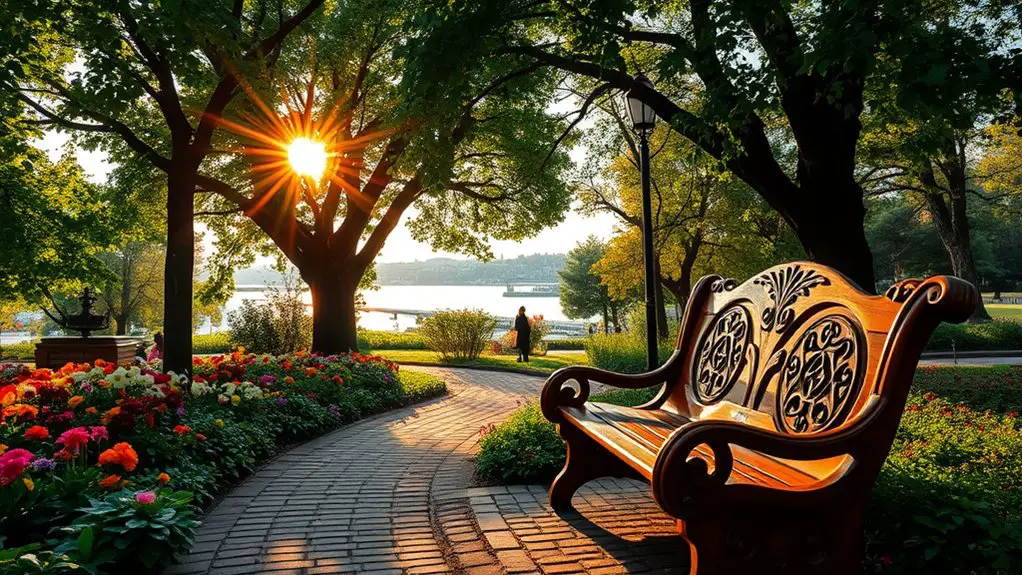
The most dependable outdoor viewpoint is the park area commonly identified as Cihangir Sanatkarlar Parkı. Istanbul Metropolitan Municipality places it in Kılıç Ali Paşa Mahallesi beside the Cihangir social facilities. Its elevated setting makes it useful for wide views, skyline layers, trees, benches, and neighborhood life.
For cleaner compositions, arrive early, when the paths and seating areas are usually less busy. Late afternoon can give the Bosphorus warmer light, but the viewpoint may also attract more visitors. Use railings, leaves, or a bench as a foreground element rather than placing the horizon in the center of every frame.
The original article promised year-round exhibitions, community gatherings, yoga, and live music. Those activities may happen occasionally, but there is no reliable public schedule showing that they are permanent park features. Check current municipal listings before planning a visit around an event.
Pro Tip: Expose for the bright sky at sunset, then lift the shadows slightly during editing. This keeps the Bosphorus and skyline from turning into a blown-out white band.
The Colorful Streets of Cihangir
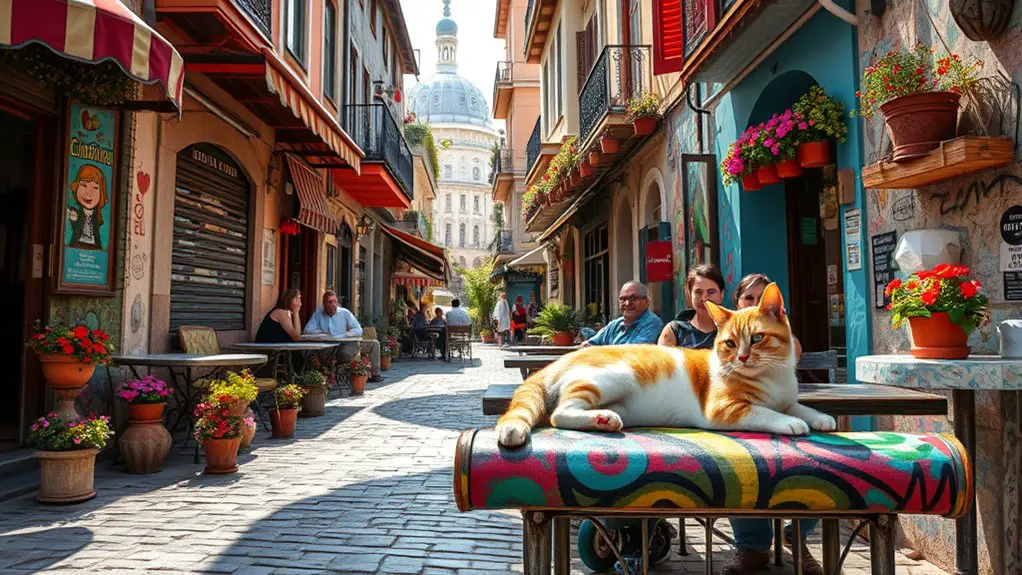
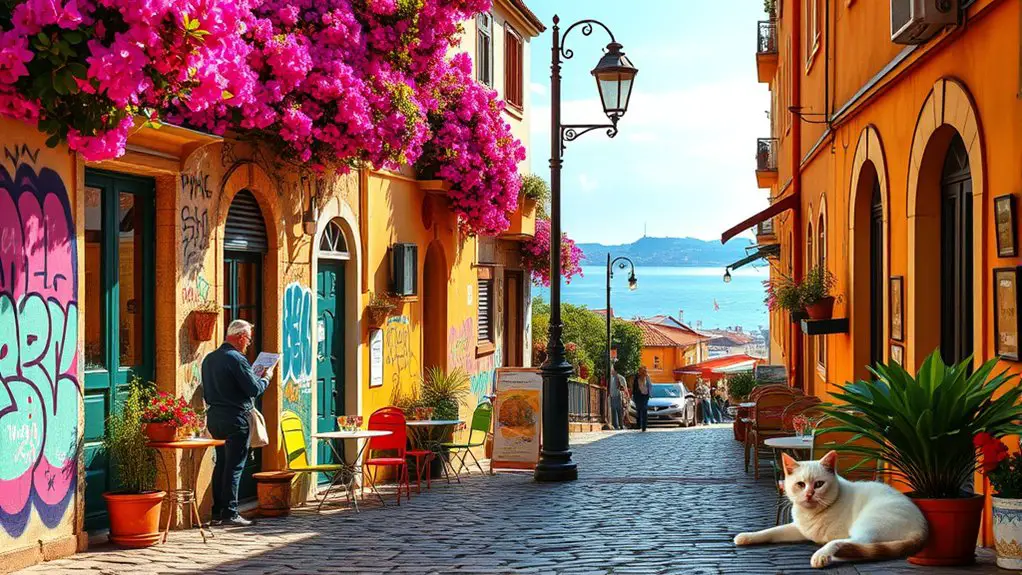
Cihangir’s strongest street photographs often come from contrasts: weathered walls beside fresh paint, cats resting under café chairs, plants spilling over balconies, and steep streets opening toward the water. The neighborhood is colorful, but not every block is covered with murals. Expect a mix of muted residential façades, painted shutters, signs, posters, and occasional large artworks.
Vibrant Street Art
Street art in Cihangir is temporary. A mural shown in an older guide may be repainted, covered, faded, or blocked by construction when you arrive. Explore the side streets around Cihangir and the lanes leading toward Çukurcuma instead of building the entire visit around one pinned wall.
Look for layered details: a small stencil beside an old doorway, stickers on utility boxes, painted shutters, or artwork framed by parked scooters. These smaller scenes often feel more specific to the neighborhood than a straight-on mural photograph.
Charming Local Architecture
Cihangir contains a varied urban fabric rather than one single architectural style. You will see late Ottoman and early modern apartment buildings, wrought-iron balconies, bay windows, narrow entrances, and newer renovations sharing the same steep streets.
Photograph upward to isolate balconies and window details, or shoot down a hill to show how the buildings stack against the skyline. Avoid aiming a camera through residential windows, and ask before making an identifiable portrait of someone at a doorway or balcony.
The Famous Cihangir Mosque
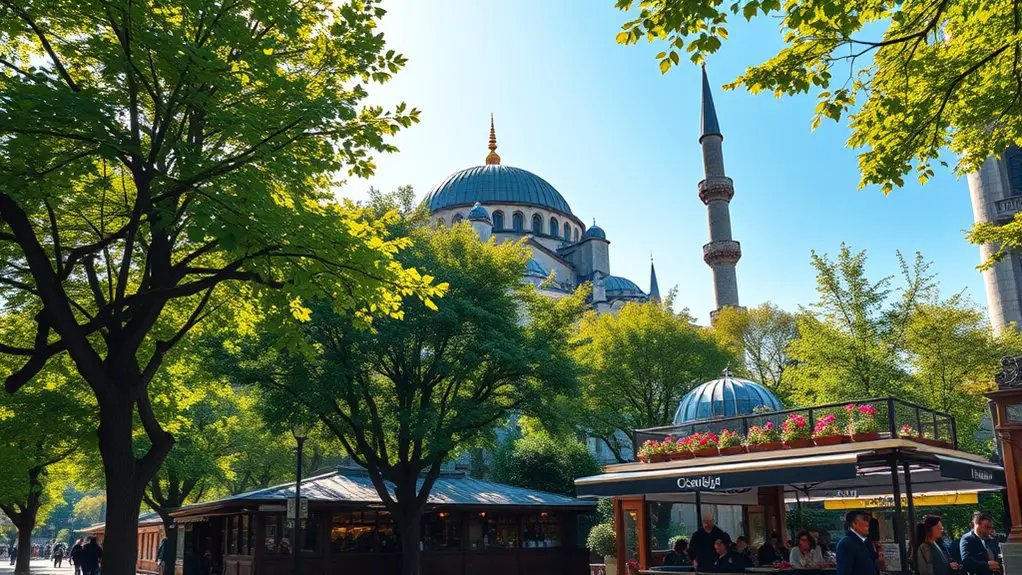
Cihangir Mosque is the neighborhood’s key historic landmark and one of its most meaningful photo stops. The mosque was first commissioned by Sultan Süleyman the Magnificent for his son Şehzade Cihangir and associated with architect Mimar Sinan. According to Türkiye’s Ministry of Culture and Tourism, the building suffered five fires, was rebuilt during the reign of Sultan Abdülhamid II, and reopened after restoration in 2018.
The hilltop position is as important photographically as the building itself. Frame the exterior with nearby trees or use the surrounding streets to show the mosque within the neighborhood. The Ministry notes that the site overlooks a broad stretch of Istanbul, from the Historic Peninsula toward the Asian shore.
Cihangir Mosque is best understood as both a living place of worship and a hilltop landmark overlooking the Bosphorus.
Inside, keep your phone silent, remove shoes where required, dress modestly, and avoid flash. Do not photograph people praying without clear permission. Access may be limited before or during prayer, religious holidays, or maintenance.
Note: The mosque is not simply a “19th-century mosque.” Its history begins with a 16th-century commission, while much of the present structure reflects later rebuilding and restoration.
The Historic Ağa Hamamı Near Cihangir
The original article referred to a “Historic Cihangir Hamam,” but that name does not clearly identify a verified landmark. A real and established option nearby is Ağa Hamamı in the Cihangir–Çukurcuma area. The venue traces its history to 1454 and publishes current booking information on its official website.
A hamam is primarily a bathing space, not an open photo studio. Exterior details and the entrance may provide useful travel photographs, but interior photography depends on the venue’s rules and the privacy of other guests. Confirm permission before taking out a phone or camera.
If you book a treatment, arrive with enough time to store valuables and understand the sequence of the service. Prices, packages, hours, and guest policies can change, so use the venue’s own website rather than an old travel article.
Warning: Never photograph changing, bathing, or treatment areas unless staff has explicitly approved it and no other guest can be identified.
Scenic Views From Cihangir’s Hilltop
“Cihangir Terrace” is not a clear, universally recognized public landmark. For reliable elevated views, use the park, the Cihangir social-facility area, and streets near the mosque. These locations give you layers of rooftops, water, minarets, ferries, and the Historic Peninsula without depending on an ambiguous map label.
Morning light is often softer and the air may be clearer. Before sunset, the water can catch warm color, while blue hour adds separation between the skyline and illuminated streets. Weather matters: haze can flatten distant detail, but it can also create a soft, atmospheric look.
Use a longer focal length to compress the skyline, or a wide lens to include railings, trees, and rooftops as context. Keep pedestrian paths open while you compose.
Quaint Cafés With a View
Cihangir has many cafés, but not every popular coffee shop has a panoramic view. For a dependable outlook, consider the municipal social-facility area beside the park. For street-level character, browse cafés around Akarsu Yokuşu and nearby lanes, where outdoor tables, signs, window reflections, and passing neighborhood life create stronger documentary images.
Business names, opening hours, terrace access, and seating policies change. Choose a café after checking its current location and recent official information, then buy something before using a table as a long photo setup.
Try photographing a coffee glass or cup against a window, but expose carefully so the view outside does not disappear. A simple table edge or hand in the foreground can make the image feel lived-in without showing another guest’s face.
Street Art and Murals
The second street-art section in the original article repeated earlier claims and added an unsupported statement about recurring international mural festivals. A more useful approach is to treat Cihangir’s street art as a changing layer of the neighborhood.
- Scan side streets: Small pieces often appear beside shutters, parking areas, utility boxes, and construction walls.
- Check the background: Remove distracting license plates, bins, or faces by changing your angle rather than editing the scene heavily.
- Respect property: Do not lean equipment against doors, block entrances, climb walls, or move residents’ belongings.
- Record the moment: Because murals change, add the month and year to captions when the artwork is central to the post.
Boutique Shops and Local Finds
The article’s original boutique tables used names such as “Cihangir Craft,” “EcoStyle Boutique,” and “Urban Treasures” without verifiable addresses or sources. A safer and more useful plan is to browse by real streets and neighboring districts. The Istanbul Provincial Directorate of Culture and Tourism identifies nearby Çukurcuma as an antiques center and notes the area’s mix of original antiques and newer design work.
Unique Local Boutiques
Use this area-based guide instead of relying on shop names that may be invented, relocated, or closed:
| Area | What to Look For | Best Photo Detail |
|---|---|---|
| Çukurcuma | Antiques, vintage furniture, ceramics, and curios | Layered shop windows and aged signs |
| Faik Paşa streets | Small antique dealers and restored objects | Doorways, brass details, and textured façades |
| Turnacıbaşı area | Independent shops, cafés, and neighborhood storefronts | Reflections, awnings, and street corners |
| Akarsu Yokuşu | Cafés, books, food stops, and people-watching | Outdoor tables on a sloping street |
| Tomtom, nearby | Design-focused businesses and galleries | Contemporary displays against older buildings |
Ask before photographing inside a small shop, especially when artwork, jewelry, or other original designs fill the frame.
Handmade Artisan Products
Handmade jewelry, ceramics, textiles, prints, and restored home objects can add color and scale to a travel story. Focus on craftsmanship rather than making broad claims that every item is locally made or sustainable. Read labels, ask the seller where an item was produced, and request permission before staging products for a photograph.
For a stronger image, photograph the maker’s hands only with consent, or show one object against the shop’s doorway or street texture. Avoid handling fragile antiques merely to improve a composition.
Vintage Treasure Hunts
A vintage hunt is more rewarding when you know what to verify before buying:
| Check | Why It Matters | Useful Question |
|---|---|---|
| Condition | Cracks, repairs, missing parts, and stains affect value | Has this piece been restored? |
| Age and origin | A decorative item is not automatically an antique | What is known about its date and source? |
| Transport | Large or fragile objects may be difficult to carry or ship | Can it be packed safely for travel? |
| Export rules | Cultural property restrictions may apply to some older objects | Is documentation available if required? |
When the goal is photography rather than shopping, keep bags and straps close to your body in narrow stores and do not block other customers.
The Iconic Cihangir Steps
Cihangir’s stairways connect the hilltop neighborhood with lower areas toward Fındıklı and Tophane. Some have been brightly painted at different times, which is why older travel photos often show rainbow colors. Paint, maintenance, barriers, and access can change, so visit for the geometry, view, and neighborhood setting rather than expecting an exact color scheme.
The stairways remain photogenic even when the paint changes: use repeating lines, steep perspective, rooftops, and the Bosphorus as the composition.
Shoot from the side to show depth, or place a person several steps away to create scale. Keep the center clear for residents, and never ask someone to stand in a roadway or on an unsafe ledge.
Warning: Steps can be steep, uneven, wet, or crowded. Use handrails where available and avoid walking backward while looking through a camera.
Suggested 2–3 Hour Cihangir Photo Walk
- Start near Taksim Square. Walk toward Sıraselviler and enter Cihangir through the upper streets.
- Explore Akarsu Yokuşu and side lanes. Photograph cafés, cats, balconies, signs, and sloping-street perspectives.
- Continue to Cihangir Mosque. Photograph the exterior and viewpoint while respecting prayer activity.
- Pause at Cihangir Park. Use the park and nearby social-facility area for Bosphorus and skyline frames.
- Descend by a stair route toward Fındıklı or Tophane. Stop only where you can keep pedestrian access clear.
- Finish in Çukurcuma. Browse antique streets, shop windows, and Ağa Hamamı’s exterior, or continue to a booked hamam session.
This route includes substantial downhill walking. Reverse it only if you are comfortable climbing steep streets and stairs.
Best Time and Photo Tips
- Early morning: Best for quieter streets, uncluttered shopfronts, and softer light.
- Late afternoon: Best for warm façades and Bosphorus views, but expect more people at viewpoints.
- Blue hour: Useful for city lights and a darker sky, provided you can hold the camera steady without blocking paths.
- Overcast weather: Good for murals, shop windows, and portraits because harsh shadows are reduced.
- Rain: Reflections can look dramatic, but stone paving and steps may become slippery.
Turn on your phone’s grid, clean the lens, and take both vertical and horizontal versions. Leave extra room around the subject so the image can be cropped for different social platforms.
Getting to Cihangir and Accessibility
From Taksim Square, the upper part of Cihangir is usually about a 10–20 minute walk, depending on the exact street and your pace. The route is generally downhill from Taksim. There is no direct tram that drops you in the center of the neighborhood.
Metro Istanbul’s F1 funicular connects Taksim and Kabataş. Kabataş is useful for waterfront connections, but reaching Cihangir from there involves an uphill walk or a short taxi ride. Check current service information before travel.
Cihangir is challenging for travelers with limited mobility. Steep grades, narrow sidewalks, uneven surfaces, and stair routes can make the full walk difficult. A taxi to the mosque or park area can reduce climbing, but step-free access is not guaranteed at every viewpoint or small business.
Practical Safety and Etiquette
- Keep phones, wallets, and camera bags secure in crowded streets and on public transport.
- Avoid demonstrations and give large crowds extra space.
- Do not photograph police, security activity, or people in vulnerable situations.
- Ask before photographing identifiable residents, shop staff, worshippers, or children.
- Check your government’s current Türkiye travel advice before departure. The U.S. Department of State travel advisory is one current reference.
For emergencies in Türkiye, the unified emergency number is 112. Save your accommodation address offline in case your phone loses data service.
Frequently Asked Questions
What is the best time to visit Cihangir for photos?
Early morning is best for quiet streets and clean architectural shots. Late afternoon through sunset is better for warmer Bosphorus light, although the park and viewpoints may be busier.
Are guided tours available in Cihangir?
Yes. Walking, food, architecture, and photography tours may include Cihangir or neighboring Çukurcuma. Confirm the exact route, group size, accessibility, and current stops before booking.
How do I get to Cihangir from Taksim Square?
Walk downhill from Taksim through Sıraselviler toward the upper Cihangir streets. The walk usually takes about 10–20 minutes, depending on your destination and pace. A taxi is useful if steep streets are difficult.
Is Cihangir safe for tourists?
Cihangir is a busy central neighborhood, but no urban area is risk-free. Secure valuables, avoid demonstrations, stay aware at night, and review current official travel advice for Türkiye before your trip.
Can I find restrooms in Cihangir?
Restroom availability varies. Plan to use facilities at a café or restaurant where you are a customer, at your booked hamam, or at another staffed venue. Do not assume every park or small shop has a public restroom.
Can I take photos inside Cihangir Mosque or Ağa Hamamı?
At the mosque, avoid prayer times, flash, and identifiable images of worshippers without permission. At the hamam, ask staff first; photography in changing, bathing, or treatment areas is normally inappropriate because of guest privacy.
Are Cihangir’s Instagram spots free?
Public streets and the park can be explored without an admission fee. Budget separately for food, drinks, transport, guided tours, shopping, or a hamam service. Access rules at religious and private venues can change.
Conclusion
Cihangir’s best Instagram spots are not limited to one terrace, mural, or staircase. The strongest route combines the park and mosque viewpoints with sloping streets, cafés, changing street art, antique windows, and the stairways toward the waterfront. Visit in good light, wear shoes suited to the hills, and let respect for residents, worshippers, businesses, and private spaces guide every photograph.
Sources
- Türkiye Ministry of Culture and Tourism — Cihangir Mosque restoration — mosque history, rebuilding, restoration, and viewpoint context
- Istanbul Provincial Directorate of Culture and Tourism — Cihangir, Çukurcuma antiques, cafés, and nearby design areas
- Istanbul Metropolitan Municipality — Cihangir Sanatkarlar Parkı — official park name, location, and neighboring social facility
- Metro Istanbul — F1 Taksim–Kabataş Funicular — official transport connection and interchange information
- Ağa Hamamı official website — venue identity, history claim, current hours, packages, and booking information
- U.S. Department of State — Türkiye Travel Advisory — current safety and crowd-awareness guidance
