
Last Updated on July 27, 2026 by Daniel Globe
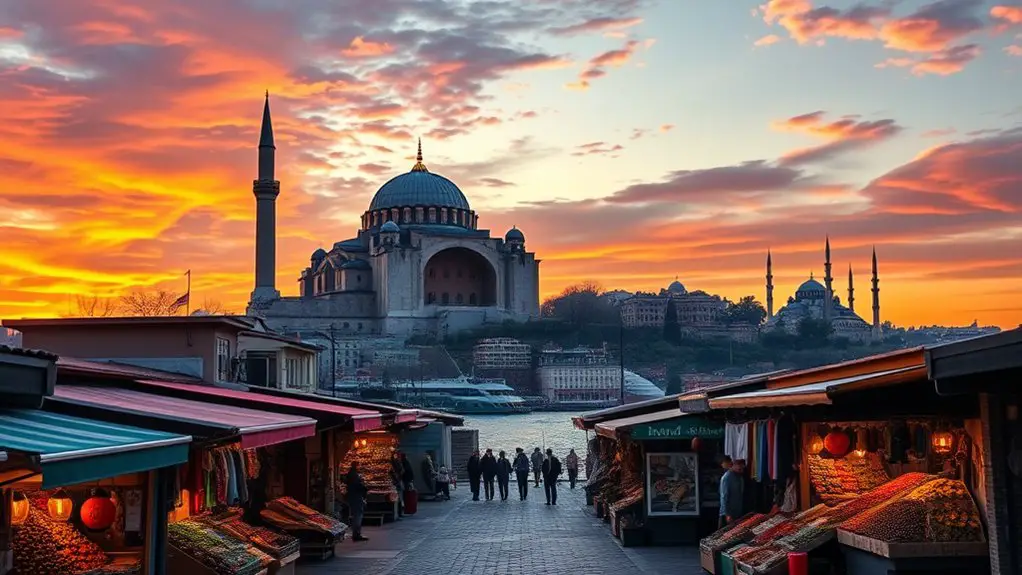
Istanbul rewards travelers who plan the practical details before they start sightseeing. The city stretches across Europe and Asia, combines Byzantine and Ottoman landmarks with lively modern neighborhoods, and is best explored by mixing walking with metro, tram, and ferry rides. A little preparation for airport transfers, attraction schedules, local customs, money, and safety will make your visit far easier.
Quick Answer
For a first trip to Istanbul, allow about three to five days, stay near reliable public transportation, use metro, tram, and ferries to move around, and group attractions by neighborhood. Check entry rules and opening hours before traveling, dress respectfully at mosques, carry some Turkish lira, and leave extra time for Istanbul’s traffic and crowds.
Key Takeaways
- Visit major landmarks such as Hagia Sophia, Sultanahmet Mosque, Topkapı Palace, and Galata Tower, but check current visitor hours before you go.
- Try Turkish staples including simit, kebabs, mantı, pide, meze, dolma, and baklava rather than eating only around the biggest tourist sites.
- Use Istanbul’s metro, trams, ferries, and an İstanbulkart for most city travel; both major airports have rail connections.
- Explore beyond Sultanahmet in neighborhoods such as Beyoğlu, Kadıköy, Balat, Beşiktaş, and Ortaköy.
- Check visa rules, official travel advice, mosque etiquette, payment methods, and airport transportation before departure.
Disclosure: As an Amazon Associate I earn from qualifying purchases. Some links on this page are affiliate links, at no extra cost to you.
Before You Go: Entry Rules, Money, and Trip Planning
Before booking attractions, check the entry requirements that apply to your passport. Visa rules differ by nationality. Türkiye’s official e-Visa portal lets travelers check whether they are eligible for an electronic visa.
For U.S. travelers, the U.S. Department of State’s Türkiye information currently says holders of regular U.S. tourist passports do not need a visa for visits of 90 days or less. It also advises travelers to have six months of passport validity beyond the date of entry. Travelers from other countries should verify their own requirements through Turkish authorities or the appropriate Turkish embassy or consulate.
Note: Visa, passport, admission, and transportation rules can change. Check official government and attraction websites again shortly before your trip instead of relying on an old screenshot or social-media post.
How Many Days Do You Need in Istanbul?
Three full days are enough for a fast-paced introduction, while four or five days give you more time for both sides of the Bosphorus without rushing every attraction.
A practical first visit might look like this:
- Day 1: Sultanahmet — Hagia Sophia, Sultanahmet Mosque, Hippodrome area, Basilica Cistern, and nearby streets.
- Day 2: Topkapı Palace, Eminönü, Spice Bazaar, Galata Bridge, Karaköy, and Galata.
- Day 3: Beyoğlu, Istiklal Avenue, Beşiktaş, or a Bosphorus ferry ride.
- Day 4: Cross to Kadıköy and explore the Asian side at a slower pace.
- Day 5: Add Balat, Üsküdar, the Princes’ Islands, museums, shopping, or a neighborhood you want to revisit.
Pro Tip: Group attractions by neighborhood. Istanbul looks compact on a map, but hills, crowds, ferry crossings, traffic, security lines, and transfers can turn a short distance into a long trip.
Top Attractions to Visit
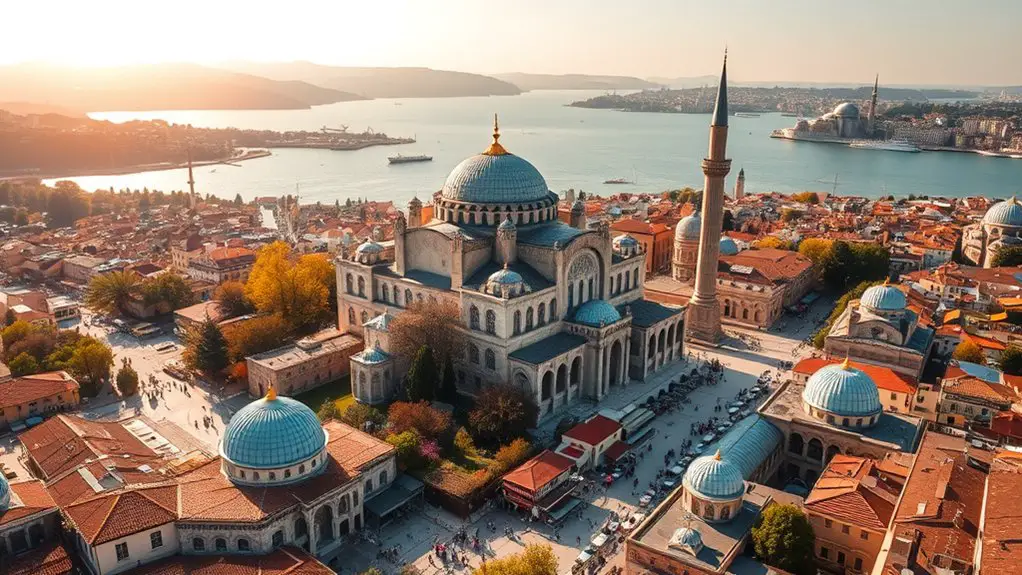
Istanbul’s most famous sights tell different parts of the city’s Byzantine and Ottoman history. For a first visit, begin in Sultanahmet, where several major landmarks are within walking distance of one another.
Hagia Sophia is one of the city’s defining monuments, with architecture shaped by centuries of Byzantine and Ottoman history. Because it functions as a mosque and visitor arrangements can change, check current access rules and prayer schedules before arriving.
Across Sultanahmet Square, the Sultanahmet Mosque, commonly called the Blue Mosque, is known for its domes, six minarets, and interior tilework. It remains an active place of worship, so visitors should plan around prayers and follow the mosque’s dress and conduct rules.
Allow several hours for Topkapı Palace, the former seat of Ottoman sultans. Its courtyards, collections, Harem, and views over the Bosphorus make it a larger visit than many travelers expect. The official National Palaces ticket system identifies Tuesday as Topkapı Palace’s regular closed day, but schedules can change around holidays, so confirm details on the National Palaces website.
For elevated city views, head to Galata Tower. The surrounding Galata and Karaköy streets are worth exploring even if you do not go inside the tower.
Pierre Loti Hill in Eyüpsultan offers another broad view, particularly over the Golden Horn. The area works well when you want a break from the dense sightseeing around Sultanahmet and Beyoğlu.
The easiest way to see more of Istanbul is not to race between landmarks. Spend each half-day in one part of the city and let the metro, tram, or ferry handle the longer jumps.
Delicious Turkish Cuisine You Must Try
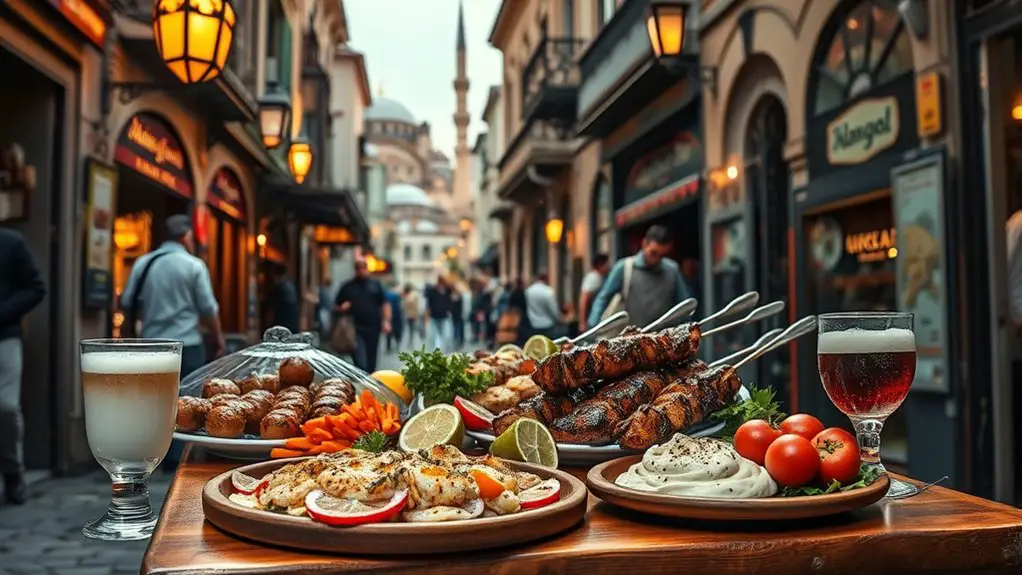
Food is one of the easiest ways to experience Istanbul beyond its monuments. You’ll find bakeries, grills, lokantas, meyhanes, dessert shops, market counters, and street vendors throughout the city.
Try both quick street foods and sit-down dishes. Tourist districts are convenient, but neighborhoods such as Kadıköy, Beşiktaş, Karaköy, and the streets away from the biggest attractions can give you a broader look at everyday Turkish cooking.
Iconic Street Foods
Simit is a sesame-crusted bread ring sold by bakeries and street carts. It is an easy breakfast or snack and is commonly paired with tea or cheese.
Kebap covers many styles of grilled meat rather than one single dish. Depending on the restaurant, you may encounter Adana kebabı, şiş kebap, döner, chicken dishes, or regional specialties served with bread, rice, vegetables, and sauces.
Other foods worth looking for include balık ekmek near the waterfront, midye dolma stuffed mussels, kumpir in Ortaköy, roasted chestnuts in cooler weather, and börek from neighborhood bakeries.
Traditional Turkish Dishes
Traditional Turkish meals range from grilled meats to vegetable dishes, dumplings, breads, soups, and shared plates. Start with meze if you want to sample several flavors at once.
Five dishes worth trying include:
- Kebabs: A broad family of grilled meat dishes with regional variations.
- Dolma: Vegetables or grape leaves filled with combinations of rice, herbs, spices, and sometimes meat.
- Mantı: Small Turkish dumplings commonly served with yogurt and garlic, with sauces or spices added on top.
- Pide: Boat-shaped baked flatbread topped with ingredients such as cheese, minced meat, vegetables, or sucuk.
- Baklava: Thin layers of pastry with nuts and syrup, served in many pastry shops throughout the city.
Don’t overlook breakfast either. A traditional spread can include cheeses, olives, tomatoes, cucumbers, eggs, bread, honey, kaymak, preserves, and seemingly endless glasses of Turkish tea.
Navigating Istanbul’s Public Transportation
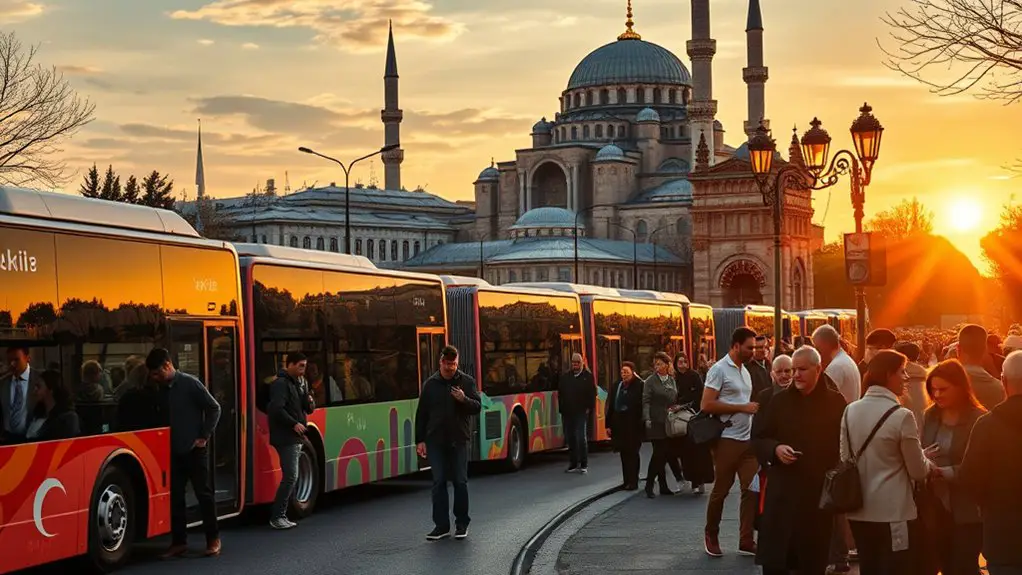
Istanbul’s public transportation network is often easier than driving or relying on taxis. Metro lines handle longer journeys, trams are useful in historic districts, and ferries connect waterfront neighborhoods while giving you excellent views of the Bosphorus.
The İstanbulkart is the city’s main transportation card system. Visitors can obtain a suitable card or limited-use ticket and load value as needed. Because fares can change, check the current tariff rather than planning around an old lira amount.
Getting From Istanbul Airport (IST)
Istanbul Airport is northwest of the central districts. A major 2026 change is the completion of the Gayrettepe–Istanbul Airport–Halkalı rail corridor. Türkiye’s Ministry of Transport announced that the final Halkalı–Arnavutköy section opened on June 19, 2026, with passenger operation starting June 20.
This gives travelers rail access toward both Gayrettepe and Halkalı, although reaching a hotel may still require another metro, bus, tram, or walking connection. Airport coaches and taxis remain useful when you have heavy luggage or are staying far from a convenient rail station.
Getting From Sabiha Gökçen Airport (SAW)
On the Asian side, Metro Istanbul’s M4 Kadıköy–Sabiha Gökçen Airport line connects the airport directly with Kadıköy and interchange points including Ayrılık Çeşmesi for Marmaray. The official line information lists an end-to-end journey of roughly 52 minutes.
Ferries, Trams, and Metro
The T1 tram is particularly useful around Sultanahmet, Eminönü, Karaköy, and the old-city corridor. Ferries can be both transportation and sightseeing; official Şehir Hatları timetables include routes linking Kadıköy, Üsküdar, Beşiktaş, Karaköy, Eminönü, the Princes’ Islands, and other Bosphorus stops.
Download a navigation app and keep an offline map as backup. Rush-hour vehicles can be crowded, so allow extra time when traveling with luggage.
Accessibility Note: Accessibility varies by station, pier, street, and historic attraction. Many modern metro stations have elevators, but Istanbul’s hills, cobblestones, old buildings, and occasional equipment outages can create barriers. Check station-facility information before a trip if step-free access is essential.
Best Neighborhoods to Explore
Istanbul is easier to understand when you treat it as a collection of neighborhoods rather than one giant sightseeing zone.
- Sultanahmet: Best for major historic landmarks including Hagia Sophia, Sultanahmet Mosque, Topkapı Palace, the Hippodrome area, and nearby museums.
- Beyoğlu: Good for Istiklal Avenue, galleries, restaurants, nightlife, historic passages, and easy access toward Galata and Karaköy.
- Kadıköy: A lively Asian-side district with produce markets, cafés, restaurants, bars, bookstores, and strong ferry connections.
- Balat and Fener: Known for steep streets, historic religious buildings, colorful facades, cafés, and Golden Horn scenery.
- Beşiktaş: Busy and local, with cafés, ferries, markets, and access to the Bosphorus waterfront.
- Ortaköy: Popular for waterfront views, Ortaköy Mosque, cafés, and kumpir.
- Üsküdar: A useful Asian-side base for waterfront walks, ferry rides, and views toward the European skyline.
Don’t try to fit all of them into one day. Choose two neighboring areas and leave time to walk, eat, and take a ferry without watching the clock constantly.
Shopping in Istanbul: Markets and Bazaars
The Grand Bazaar is one of Istanbul’s classic shopping experiences, with covered lanes selling jewelry, textiles, ceramics, leather goods, carpets, souvenirs, and many other products.
The nearby Spice Bazaar is smaller and focuses heavily on spices, sweets, teas, nuts, dried foods, and gift items, although surrounding Eminönü streets contain countless additional shops.
Bargaining can be appropriate in some bazaar shops, particularly for higher-priced goods, but it is not a rule everywhere. Restaurants, supermarkets, chain stores, pharmacies, and shops displaying firm prices generally are not places to negotiate.
Pro Tip: For expensive carpets, jewelry, antiques, or leather goods, slow down. Compare shops, ask for the total price in writing, understand the currency being quoted, and do not let free tea or a long sales presentation pressure you into buying.
Money, Cards, ATMs, and Tipping
Türkiye’s currency is the Turkish lira (TRY, ₺). Cards are widely useful in Istanbul, but carrying some lira is still convenient for smaller businesses, markets, tips, and places where card terminals are unavailable.
Exchange rates can move quickly. Do not assume that an airport desk, hotel, exchange office, or ATM automatically gives the best deal. Compare the amount you receive after commissions and fees.
When an ATM or card terminal offers to charge you in your home currency instead of Turkish lira, read the exchange rate carefully. This is known as dynamic currency conversion and can include an unfavorable conversion rate. You can usually choose to be charged in Turkish lira and let your card issuer handle the conversion, subject to your own card’s fees.
Tipping is discretionary. Check your restaurant bill first to see whether a service charge has already been included, then leave an additional amount for good service if you choose. There is no need to treat one fixed percentage as a universal Istanbul rule.
Cultural Etiquette and Local Customs
Istanbul is a large, diverse city, so there is no single social rule that applies to every person you meet. Basic courtesy goes much further than trying to memorize stereotypes.
Greetings and Social Norms
- “Merhaba” is a useful all-purpose hello.
- A handshake is common in many settings, but follow the other person’s lead rather than assuming physical contact is expected.
- Use normal respectful eye contact and personal space.
- Be patient in busy shops, restaurants, and transportation hubs.
- Hospitality is important in many Turkish social settings, but you can politely decline food or tea when necessary.
- Ask before photographing people closely, particularly inside markets or religious settings.
Dress Code Guidelines
Ordinary street clothing is fine throughout most of Istanbul. Religious sites require more care. Sultanahmet Mosque’s published visitor rules ask visitors to cover areas required by the mosque’s worship rules, respect separate worship and visitor spaces, and follow staff instructions.
| Occasion | Recommended Attire | What to Know |
|---|---|---|
| Visiting Mosques | Clothing that covers shoulders and knees; women should carry a scarf for hair covering | Shoes are removed before entering the prayer area; follow posted site rules |
| Exploring the City | Comfortable everyday clothing | Comfortable walking shoes matter because of hills and cobblestones |
| Dining Out | Casual to smart casual depending on the venue | Upscale restaurants may have their own dress expectations |
| Cultural Events | Match the venue and event | Check the organizer’s guidance for formal performances or ceremonies |
Note: Sultanahmet Mosque is an active place of worship. Its official visitor guidance says general tourist visits are closed until 14:30 on Fridays for cleaning and Friday-prayer preparations. Prayer schedules and access conditions can change, so check before visiting.
Dining Etiquette Tips
Dining etiquette in Istanbul is generally straightforward. Greet staff politely, wait to be shown to a table when appropriate, and do not feel you need to perform special rituals to eat correctly.
- Say “Merhaba” when greeting your host or restaurant staff.
- If you are eating in someone’s home, follow your host’s lead on when the meal begins.
- Shared meze plates are common, so leave space on the table and expect dishes to arrive in stages.
- Accepting tea can be a warm part of social interaction, but a polite refusal is fine.
- Check your bill for a service charge before deciding whether to leave an additional tip.
Tips for Staying Safe in Istanbul
Most visitors spend their trips sightseeing, eating, shopping, and using public transportation without serious problems, but Istanbul is a major city and normal urban precautions still matter.
As of June 11, 2026, the U.S. Department of State lists Türkiye at Level 2: Exercise Increased Caution. Its advisory cites terrorism, armed conflict, arbitrary detentions, demonstrations, and street crime. The advisory also specifically warns against travel near Türkiye’s borders with Syria and Iraq; those areas are far from Istanbul but are relevant to anyone extending a trip elsewhere in the country.
Warning: Demonstrations can develop quickly and may disrupt streets and public transportation. Avoid protests and large political gatherings, follow local instructions, and check current official travel advice before and during your trip.
In crowded places such as trams, bazaars, squares, and major attractions, keep your phone and wallet secure and avoid leaving bags open or unattended. Pickpocketing and other street crime can occur in busy tourist areas.
Common Tourist Problems to Watch For
- Taxi disputes: Use an official taxi, confirm that the meter is being used where applicable, and follow the trip on your map.
- Unexpected restaurant charges: Look at a current menu and clarify prices before ordering, particularly for seafood or items priced by weight.
- Overly persistent invitations: Be cautious when a stranger quickly tries to steer you toward a specific bar, club, carpet shop, or business.
- ATM and card issues: Use established bank ATMs when practical, shield your PIN, and review the amount and currency before approving a transaction.
- Crowded-area theft: Keep bags zipped and valuables away from easy-to-reach outer pockets.
Travel insurance can help with covered medical expenses, theft, cancellation, or disruption, depending on the policy. Read the exclusions and coverage limits rather than assuming every incident will be reimbursed.
Türkiye’s main emergency number is 112. The official emergency-call system coordinates urgent assistance through a single number.
At night, stick to active, well-lit routes and use reliable transportation when you are unfamiliar with an area. If a situation feels uncomfortable, move toward a busy public place rather than trying to prove that an area is safe.
Recommended Accommodations for Every Budget
Istanbul has hostels, guesthouses, apartment-style stays, boutique hotels, international chains, and luxury properties. Location is often more important than the number of hotel amenities because a poor transport connection can cost you hours over a multi-day trip.
For most first-time visitors, choose accommodation close to a metro, tram, ferry, or Marmaray station.
- Budget Hotels: Look beyond the streets directly beside major monuments for better value while keeping a convenient tram or metro connection.
- Boutique Hostels: Beyoğlu, Galata, Karaköy, and Kadıköy have social options suited to solo travelers and younger visitors.
- Luxury Stays: Bosphorus-side areas, Nişantaşı, Beşiktaş, and central Beyoğlu offer many upscale properties.
- Family Accommodations: Apartments or larger hotel rooms near public transportation can simplify trips with children.
- Guesthouses: Smaller properties in the historic center and residential neighborhoods can offer a more intimate stay.
Where to Stay by Neighborhood
| Sultanahmet | Best for first-time sightseeing and walking to major historic landmarks; quieter at night than the main nightlife districts. |
| Beyoğlu / Galata | Good for restaurants, nightlife, Istiklal Avenue, Galata, and central transport connections. |
| Beşiktaş | Busy local atmosphere, strong ferry access, cafés, markets, and easy Bosphorus exploration. |
| Kadıköy | Excellent food, cafés, nightlife, ferries, and a more residential Asian-side experience. |
Internet, Maps, and Staying Connected
Mobile data makes Istanbul much easier to navigate. Travelers can use international roaming, a Turkish SIM where eligible, or an eSIM compatible with their phone and travel needs.
Before leaving your hotel, download an offline map of Istanbul and save your accommodation address. Translation apps are also helpful outside heavily touristed areas.
Keep a portable battery or charging cable with you on long sightseeing days. Navigation, photography, translation, ride-hailing, tickets, and messaging can drain a phone faster than expected.
Pro Tip: Save a screenshot of your hotel’s name, full address, and nearest metro or tram stop. It can help when your data connection is weak or when you need to show a driver where you are going.
Essential Phrases for Communicating in Turkish
You can travel through major tourist areas using English, but a few Turkish words make everyday interactions smoother.
- Merhaba — Hello
- Lütfen — Please
- Teşekkür ederim — Thank you
- Bir su lütfen — A water, please
- Ne kadar? — How much?
- Tuvalet nerede? — Where is the restroom?
- İngilizce biliyor musunuz? — Do you speak English?
- Hesap lütfen — The bill, please
Pronunciation does not have to be perfect. Making a polite attempt is usually more valuable than worrying about saying every word flawlessly.
Frequently Asked Questions
What is the best time of year to visit Istanbul?
Spring and fall are often the most comfortable seasons for long days of walking. April and May bring mild conditions, while September and October can be pleasant after the hottest part of summer. Summer is lively but can be hot and crowded; winter is quieter, cooler, and wetter.
How do I exchange currency in Istanbul?
You can obtain Turkish lira through banks, established ATMs, or licensed exchange offices. Compare the final rate after fees instead of assuming one type of provider is always cheapest. Hotels and airports can be convenient but may not offer the most favorable conversion. When paying by card, check the currency before approving the transaction.
Are there dress codes for religious sites?
Yes. At mosques, wear clothing that covers shoulders and knees, and women should be prepared to cover their hair. Shoes are removed before entering prayer areas. Visitor access may pause around prayers, and individual mosques can have additional rules, so follow signs and staff instructions.
Is it safe to walk around Istanbul at night?
Busy, well-lit entertainment and central areas can remain active late, but no neighborhood is risk-free. Stay aware of your surroundings, secure valuables, avoid empty side streets when you do not know the area, stay away from demonstrations, and use reliable transportation when a route feels uncomfortable.
What local customs should I know?
Greet people politely, respect mosque rules, ask before taking close photographs of people, and follow your host’s lead in social situations. Tea and food are common forms of hospitality, but you may politely decline. Istanbul is diverse, so avoid treating one custom as a rule followed by every resident.
Do I need a visa to visit Istanbul?
It depends on your nationality, passport type, and length of stay. U.S. citizens using regular tourist passports currently do not need a visa for visits of 90 days or less, according to the U.S. Department of State. Travelers of other nationalities should check Türkiye’s official e-Visa portal or a Turkish embassy or consulate before traveling.
How many days should I spend in Istanbul?
Three days can cover the headline attractions at a brisk pace. Four or five days are more comfortable for a first visit because they give you time for both the European and Asian sides, ferries, neighborhoods, meals, and unexpected delays.
Can I take the metro from Istanbul’s airports?
Yes. Istanbul Airport is served by the Gayrettepe–Istanbul Airport–Halkalı rail corridor, whose final section entered service in June 2026. Sabiha Gökçen Airport is served by Metro Istanbul’s M4 line toward Kadıköy. Your final destination may require another connection.
Should tourists get an İstanbulkart?
For travelers using public transportation repeatedly, an İstanbulkart is convenient for moving through the city’s transit network. Check the official İstanbulkart information for the visitor card or ticket option that fits your trip and for current fares.
Conclusion
Istanbul is at its best when you balance the famous sights with ordinary city life. See Hagia Sophia and Topkapı Palace, but also cross the Bosphorus by ferry, eat in a neighborhood market, walk through Kadıköy or Beşiktaş, and leave room for an unplanned tea break. With current entry information, a sensible transport plan, respectful mosque etiquette, and a few basic Turkish phrases, you can spend less time solving logistics and more time enjoying the city.
Sources
- U.S. Department of State — Türkiye Travel Advisory — current entry, safety, crime, demonstration, and travel-advisory guidance.
- Republic of Türkiye Ministry of Foreign Affairs — e-Visa — official visa-eligibility and e-Visa information.
- Türkiye Ministry of Transport and Infrastructure — June 2026 completion and operation of the Gayrettepe–Istanbul Airport–Halkalı metro corridor.
- Metro Istanbul — official metro lines, network information, station facilities, and service updates.
- Sultanahmet Mosque — Visitor Rules — official visitor conduct, clothing, worship-area, and Friday-access guidance.
- Türkiye 112 Emergency Call Center — official information on Türkiye’s unified emergency-call system.
