
Last Updated on July 27, 2026 by Daniel Globe
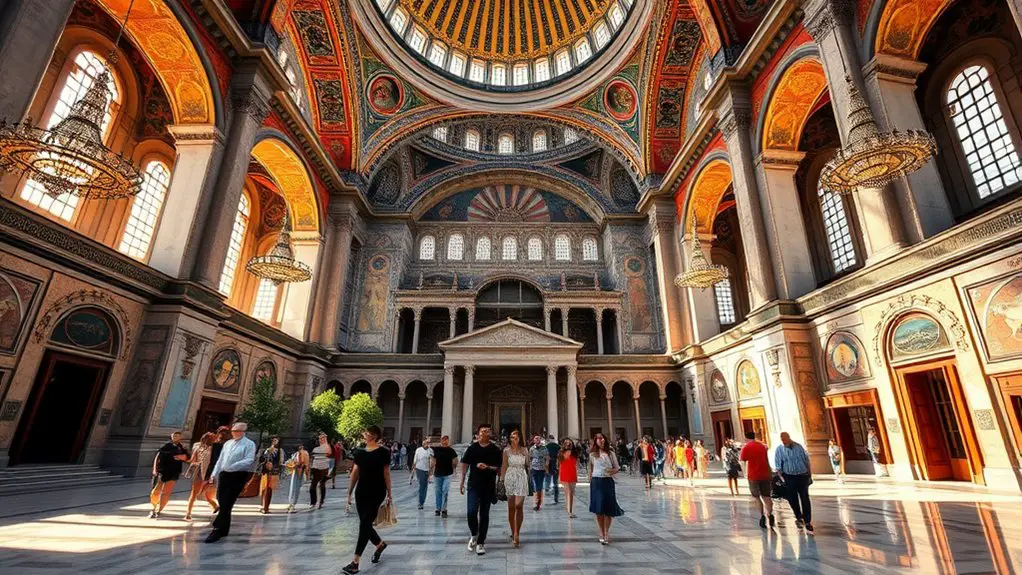
Visiting Hagia Sophia is still one of Istanbul’s essential experiences, but the visitor setup has changed significantly in recent years. Hagia Sophia is an active mosque, foreign cultural visitors follow a separate upper-gallery route, and major restoration work is continuing in 2026. Knowing the ticket system, dress rules, prayer schedule, and current access limitations before you arrive will make the visit much smoother.
Quick Answer
For a smooth Hagia Sophia visit in 2026, plan for a paid upper-gallery tourist route, modest mosque-appropriate clothing, security screening, and possible restoration-related obstructions. Visit outside busy midday periods and Friday congregational prayer, allow roughly 45–90 minutes, and remember that the main prayer floor and tourist route operate separately.
Key Takeaways
- Hagia Sophia has operated as a mosque again since 2020; it is no longer a museum.
- Foreign visitors making a cultural or sightseeing visit use the separate upper-gallery visitor route, which is ticketed.
- Dress modestly. Keep shoulders and knees covered, and women should be prepared to cover their hair.
- Daily prayer times change, and Friday midday is especially important to avoid when planning a sightseeing visit.
- Major restoration is continuing in 2026, so scaffolding and protective structures may affect some views.
- Do not confuse Hagia Sophia with the separate Hagia Sophia History and Experience Museum nearby; they are different attractions.
At a Glance
| Time Required | About 45–90 minutes for the visitor route, plus extra time for security or a guided tour |
| Difficulty | Easy for most visitors, but the historic upper-gallery route can be challenging for people with limited mobility |
| Tools Needed | Ticket, modest clothing, comfortable shoes, phone and headphones if using the QR audio information |
| Cost | The Ministry introduced a €25 fee for foreign cultural visitors using the upper-gallery route; tours and the separate History and Experience Museum cost extra |
Disclosure: As an Amazon Associate I earn from qualifying purchases. Some links on this page are affiliate links, at no extra cost to you.
Plan Your Visit Ahead of Time
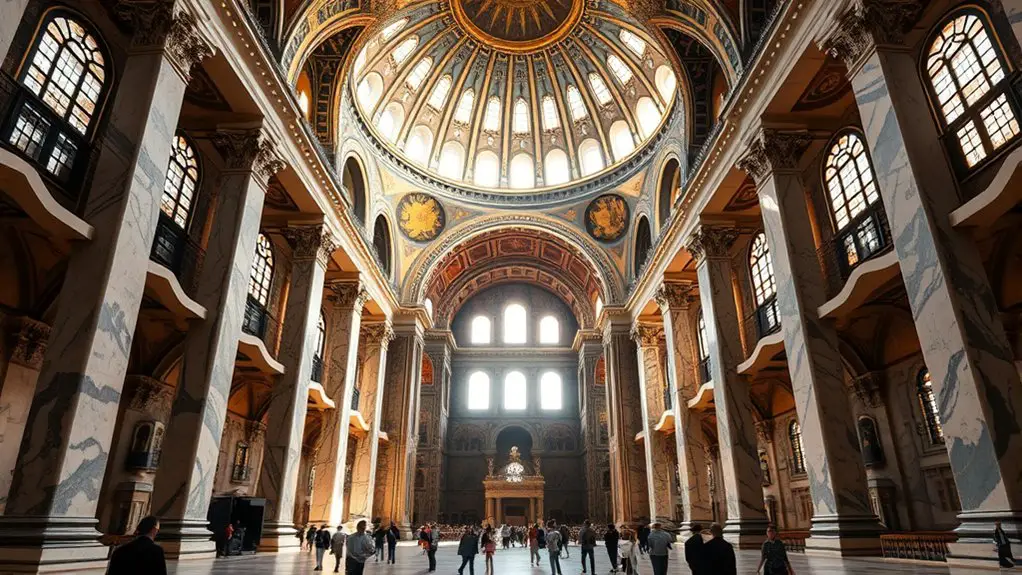
Before visiting Hagia Sophia, understand what you are entering. The building combines more than 1,500 years of Byzantine, Ottoman, and modern Turkish history, but it is also a functioning place of Muslim worship.
Hagia Sophia was completed in 537 during the reign of Emperor Justinian I. Its vast dome, marble surfaces, surviving Byzantine mosaics, Ottoman calligraphy, minarets, mihrab, and other later additions make the building one of the most important monuments in Istanbul. It forms part of the UNESCO-listed Historic Areas of Istanbul.
The most important practical change for modern visitors came in January 2024. Türkiye’s Ministry of Culture and Tourism introduced a visitor-management system that separates foreign cultural visitors from people using the mosque for worship. Sightseeing visitors are directed through the upper gallery rather than simply roaming the main prayer floor.
Note: Hagia Sophia is undergoing major restoration in 2026. The Ministry has confirmed extensive work on the dome, façades, structural elements, and other parts of the monument. Scaffolding, protective platforms, covered areas, or altered sightlines may therefore be part of your visit.
The restoration is being carried out while Hagia Sophia remains in use for worship and visitation. That means the exact route and what is visible can change as conservation work progresses.
Pro Tip: Treat Hagia Sophia as a living religious site rather than a conventional museum. Pack lightly, dress correctly before joining the line, and give yourself extra time for security and restoration-related changes.
Choose the Right Time to Go
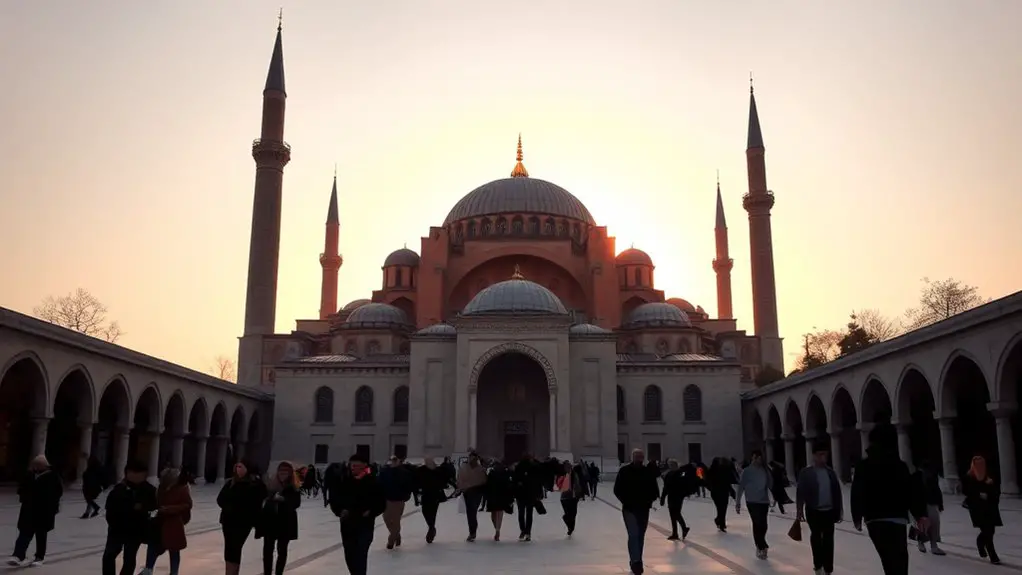
Timing matters at Hagia Sophia because you are balancing tourist crowds with the schedule of an active mosque. The quieter parts of the sightseeing day are generally near the start of the visitor period and later in the afternoon rather than around the middle of the day.
Hagia Sophia is both a major visitor attraction and an active mosque, so prayer schedules and restoration work matter just as much as ordinary crowd patterns.
Keep these timing tips in mind:
- Favor weekdays when possible: Weekend sightseeing periods can be busier.
- Be especially careful with Friday midday: Friday congregational prayer creates a longer period of religious activity than an ordinary midday prayer.
- Check the day’s prayer schedule: Islamic prayer times move throughout the year rather than occurring at one fixed clock time.
- Allow time for security: Even a relatively short gallery visit can take longer when entrance lines build.
- Expect restoration changes: Temporary closures or altered visitor flow can occur while conservation work continues.
Türkiye’s Presidency of Religious Affairs publishes the official daily prayer times for Istanbul. This is more reliable than assuming that the same visiting window applies every day of the year.
Understand the Entrance Fees and Tickets
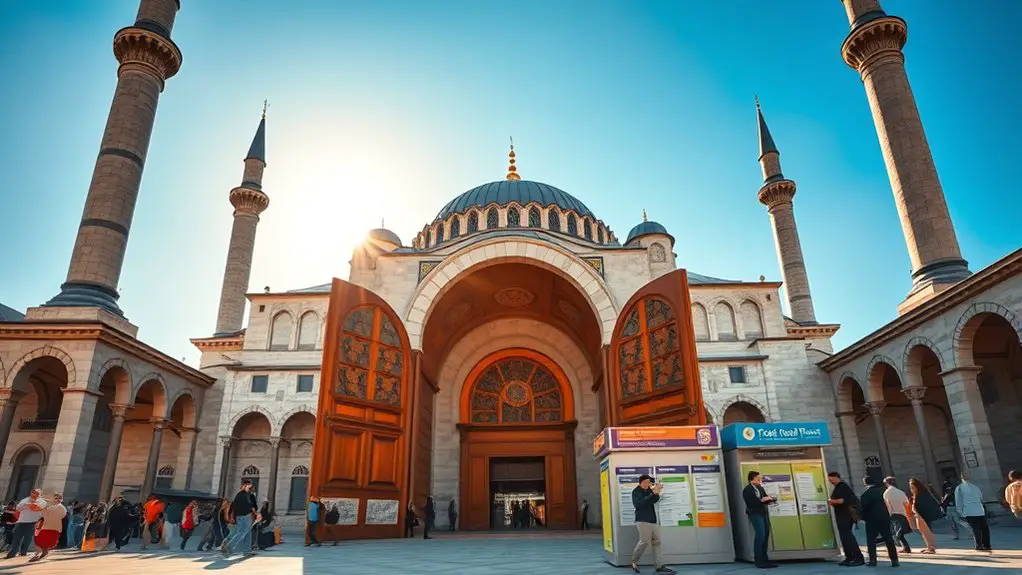
Do not arrive expecting free sightseeing admission. Under the visitor-management system introduced on January 15, 2024, foreign visitors entering Hagia Sophia for cultural or touristic purposes use a paid upper-gallery route.
The Türkiye Ministry of Culture and Tourism set the foreign tourist fee at €25 when the system began. The tourist route uses a separate entrance and allows visitors to view the main prayer space from above while seeing Byzantine mosaics and other features on the gallery level.
The main prayer floor and the tourist route should not be treated as interchangeable. A sightseeing ticket does not mean you can wander through every part of the mosque, and religious areas may be separated from ordinary cultural visitation.
Warning: Read ticket descriptions carefully. Hagia Sophia’s upper-gallery visit, guided-tour products, and the separate Hagia Sophia History and Experience Museum are not automatically the same product. Do not pay for a bundle unless you understand exactly what it includes.
Hagia Sophia vs. the Hagia Sophia History and Experience Museum
The Hagia Sophia History and Experience Museum is a separate attraction housed nearby in the historic Defter-i Hakani building. It uses multimedia exhibits and artifacts to explain Hagia Sophia’s Byzantine, Ottoman, museum, and modern mosque periods.
The official Ministry museum listing currently lists a €25 admission fee for that museum and states that MüzeKart is not valid there. Paying for the separate museum does not by itself mean that you have purchased the standard Hagia Sophia upper-gallery visit.
Dress Appropriately for the Occasion
Hagia Sophia is a mosque, so clothing should be respectful even when you are visiting primarily for its architecture or history. Dressing correctly before you reach security also prevents delays at the entrance.
Respect Religious Traditions
Choose modest clothing that covers your shoulders and knees. Women should also be prepared to cover their hair while entering mosque-controlled areas. A lightweight scarf is useful because it takes little space and avoids depending on whatever coverings happen to be available at the entrance.
- Cover shoulders and knees: Avoid sleeveless tops, short shorts, and similarly revealing clothing.
- Women should bring a head covering: A light scarf is usually the easiest option.
- Keep the outfit simple: You are visiting an active sacred space, not only a historic monument.
Keep voices low, silence your phone, and give worshippers plenty of personal space. Do not step into or block an active prayer area simply to get a photograph.
Comfortable Footwear Recommended
Comfortable shoes are important because the tourist route involves walking through a historic structure with ramps and uneven stone or marble surfaces.
Sneakers, walking shoes, or supportive sandals are better choices than unstable footwear. The upper-gallery approach is not comparable to a smooth modern museum floor, so good traction is useful.
Comfort also matters outside the building. Hagia Sophia sits in the heart of Sultanahmet, where most visitors combine several attractions on foot in the same day.
Weather-Appropriate Attire Necessary
Your clothing also needs to work for Istanbul’s weather because part of the visit may involve waiting outdoors.
- Warm weather: Choose loose, breathable clothing that still meets mosque dress requirements.
- Cool weather: Wear layers that can be removed easily once indoors.
- Rainy days: Bring a compact umbrella or lightweight waterproof layer, but keep bulky belongings to a minimum.
Summer afternoons can feel hot while standing in exposed queues, while winter conditions can be damp and chilly. A modest outfit does not have to be uncomfortable if you plan your layers carefully.
Explore the Rich History of Hagia Sophia
Hagia Sophia has stood for nearly 1,500 years, and understanding its changing role makes the building much easier to read. The present structure was completed in 537 under the Byzantine emperor Justinian I and became one of the defining works of Byzantine architecture.
| Period | Function | What Changed |
|---|---|---|
| 537–1204 | Byzantine imperial church | Great dome, marble interiors, and Byzantine decoration |
| 1204–1261 | Latin cathedral | Used by the Latin Empire after the Fourth Crusade |
| 1261–1453 | Byzantine Orthodox church | Returned to Byzantine Orthodox use |
| 1453–1934 | Mosque | Minarets and major Ottoman religious and architectural additions |
| 1935–2020 | Museum | The 1934 conversion decree was followed by the museum opening in 1935 |
| 2020–Present | Mosque | Active worship resumed while cultural visitation continued under changing visitor-management rules |
These layers are what make Hagia Sophia exceptional. Byzantine mosaics and marble sit within the same monument as Ottoman calligraphy, minarets, the mihrab, and other Islamic additions. Rather than belonging to one moment in history, the building records successive empires, religions, conservation campaigns, and political eras.
Take Your Time to Admire the Mosaics
The upper gallery is especially important for visitors interested in Hagia Sophia’s surviving Byzantine mosaics. One of the best known is the Deesis mosaic, which depicts Christ with the Virgin Mary and John the Baptist.
- Look closely at the Deesis: Much of it has been lost, but the surviving faces and gold background remain among Hagia Sophia’s most celebrated works.
- Notice the imperial panels: Gallery mosaics include images connected with Byzantine emperors and empresses.
- Look beyond figurative scenes: Decorative gold tesserae, geometric patterns, marble, and architectural surfaces also reveal different phases of the monument.
- Separate the artistic layers: The Christian mosaics are Byzantine works; the large Islamic calligraphic elements and mosque fittings belong to Hagia Sophia’s Ottoman and later Islamic history.
Restoration work can temporarily block individual sightlines, so do not assume that every mosaic, dome detail, or interior feature shown in older photographs will be completely unobstructed during your visit.
Consider a Guided Tour
A knowledgeable guide can make Hagia Sophia easier to understand because the building contains centuries of history in the same physical space. A guide can explain why the dome was revolutionary, how the upper galleries were used, what the mosaics represent, and how Ottoman architects adapted the former church for mosque use.
A guide is especially valuable if this is your first exposure to Byzantine architecture. Without context, it is easy to look at the dome, mosaics, calligraphy, columns, and later additions without understanding which period each belongs to.
However, a normal guided tour does not give automatic access to closed worship areas, construction zones, or other restricted spaces. Your access remains subject to the mosque’s visitor route, security rules, restoration work, and the specific ticket you purchased.
The Ministry’s visitor system also introduced QR-based audio information designed to let tourists learn about Hagia Sophia through headphones without disturbing worshippers. Bringing your own headphones can therefore be useful even if you do not book a human guide.
Be Mindful of Photography Etiquette
Photography can be part of the experience, but Hagia Sophia is not simply a photo location. Religious activity, heavy visitor traffic, narrow gallery areas, and conservation work all require a little restraint.
Respect Religious Practices
- Keep clear of worshippers: Never walk into somebody’s prayer space for a better angle.
- Avoid flash: It is distracting in a religious setting and rarely improves photographs of such a large interior anyway.
- Ask before photographing individuals: Do not assume that worshippers or other visitors want to appear in your photos.
- Follow temporary signs: Restoration or religious activity may create photography restrictions in particular areas.
Do Not Plan on Using a Tripod
Tripods and professional setups can obstruct a busy historic visitor route, and professional photography equipment may be subject to separate permission requirements.
For ordinary travel photography, use image stabilization, a higher ISO where needed, and a steady hand instead of leaning equipment against historic walls, columns, railings, or decorative surfaces.
This keeps the visitor flow moving while protecting the monument and respecting other people’s experience.
Know What to Bring and What to Leave Behind
Travel light for Hagia Sophia. Visitors should expect security screening, so unnecessary belongings slow down both you and the people behind you.
- Bring: Your ticket, a small bag, modest clothing, a scarf if needed, comfortable shoes, a charged phone, and headphones.
- Avoid: Suitcases, oversized backpacks, tripods, bulky photography equipment, and unnecessary valuables.
- Food and drinks: Eat before or after the visit rather than treating the mosque as a snack stop.
Small daypacks may be subject to inspection. Large luggage can be refused, and Hagia Sophia should not be treated as a reliable luggage-storage location.
Note: Do not rely on finding a restroom along the ticketed upper-gallery route. Using public facilities in the Sultanahmet area before joining the entrance line is the safer plan.
Accessibility and Mobility Considerations
Hagia Sophia is a historic sixth-century structure, and the current tourist route should not be described as fully accessible. The upper gallery is approached through historic ramps and includes uneven surfaces that can be difficult for anyone with limited mobility.
There is no modern museum-style circulation system with smooth floors and dependable elevator access throughout the tourist route. Visitors who use wheelchairs or who struggle with long ramps, uneven paving, or prolonged walking should plan cautiously rather than assuming that every gallery area will be reachable.
The prayer level and tourist gallery also operate differently, so information about step-free access to one part of the mosque should not be taken as proof that the paid cultural visitor circuit is fully wheelchair accessible.
Enjoy the Surrounding Area and Other Attractions
Hagia Sophia sits in one of the densest historic areas of Istanbul, so it makes sense to combine it with nearby attractions rather than making a separate journey for each one.
- Sultanahmet Square: Step outside for views of both Hagia Sophia and the Blue Mosque and to see part of the former Hippodrome area.
- Blue Mosque: Located directly across the square and easy to pair with Hagia Sophia, provided you also respect its prayer schedule.
- Basilica Cistern: A short walk away and an excellent contrast to Hagia Sophia’s soaring interior.
- Topkapı Palace: Nearby and worth several hours if you want to explore Ottoman court history in depth.
- Gülhane Park: A good place for a quieter walk after visiting the major monuments.
The Sultanahmet district also has cafés and restaurants where you can stop for Turkish food after your visit. For more variety and better value, walking a little beyond the most heavily touristed streets can be worthwhile.
Driving is usually less convenient than public transport in this part of the Old City. Parking close to the major monuments is limited and traffic can be slow, while the T1 tram stops at Sultanahmet within easy walking distance of Hagia Sophia.
Frequently Asked Questions
Is Hagia Sophia free to visit?
Not for an ordinary foreign cultural or sightseeing visit. Türkiye introduced a paid upper-gallery route for foreign visitors in January 2024, with a €25 fee at launch. Worship access and cultural tourist access operate separately, so “free mosque entry” should not be confused with the sightseeing route.
Can tourists visit the ground floor of Hagia Sophia?
The current visitor-management system separates cultural visitors from worshippers. Foreign sightseeing visitors are directed through the upper gallery, while the main prayer floor is managed separately for worship. Do not buy a standard tourist ticket expecting unrestricted access to the ground floor.
Is the Hagia Sophia History and Experience Museum the same attraction?
No. The Hagia Sophia History and Experience Museum is a separate nearby museum with multimedia displays and artifacts explaining the monument’s history. It has its own admission system and should not be confused with the ticketed upper-gallery visit inside Hagia Sophia itself.
Are there restrictions on food and drinks inside Hagia Sophia?
Treat the interior as a religious and heritage space rather than a place to eat. Have meals and snacks outside, keep the visitor route clean, and follow any instructions from security staff regarding bottles or other items.
Is there parking available near Hagia Sophia for visitors?
Paid parking exists in the wider historic peninsula, but parking immediately beside Hagia Sophia is limited and driving through Sultanahmet can be inconvenient. For most visitors, taking the T1 tram to Sultanahmet and walking the final few minutes is easier than driving.
Are restrooms available inside Hagia Sophia?
Do not rely on toilets being available along the upper-gallery tourist route. The safer approach is to use public restroom facilities in the surrounding Sultanahmet area before entering, particularly if entrance lines are long.
Can I bring a backpack or large bags inside?
A small daypack is more practical than a large bag and will be subject to security screening. Avoid bringing suitcases, oversized backpacks, or bulky equipment. Hagia Sophia should not be considered a dependable luggage-storage facility.
Is Hagia Sophia accessible for visitors with mobility challenges?
Accessibility is limited, particularly on the tourist upper-gallery route. Historic ramps and uneven surfaces can be difficult for wheelchair users and people with reduced mobility, and visitors should not assume that a modern elevator provides access to every area. The separate worship level and tourist gallery also have different access arrangements.
Conclusion
A rewarding Hagia Sophia visit starts with understanding how the site works today. It is an active mosque, foreign cultural visitors use a ticketed upper-gallery route, and major restoration is continuing in 2026. Dress modestly, plan around prayer activity, arrive with minimal baggage, and allow enough time for security.
Once inside, slow down and look beyond the famous dome. The Byzantine mosaics, marble surfaces, Ottoman calligraphy, mosque additions, and changing uses of the building tell a much richer story when viewed together. Afterward, continue through Sultanahmet Square to the Blue Mosque, Basilica Cistern, Topkapı Palace, or Gülhane Park for a fuller look at Istanbul’s historic center.
Sources
- Türkiye Ministry of Culture and Tourism — Hagia Sophia Visitor Management Plan — backs the separate tourist route, upper-gallery access, QR information system, and €25 foreign visitor fee introduced in January 2024.
- Türkiye Ministry of Culture and Tourism — 2026 Hagia Sophia Restoration Update — confirms the ongoing major restoration, structural work, dome project, scaffolding, and visitor-compatible conservation program.
- UNESCO World Heritage Centre — Historic Areas of Istanbul — supports Hagia Sophia’s World Heritage context, sixth-century construction, architecture, and historical significance.
- Presidency of Religious Affairs — Istanbul Prayer Times — provides the official changing daily prayer schedule for Istanbul.
- Türkiye Ministry of Culture and Tourism — Hagia Sophia History and Experience Museum — confirms that the nearby museum is a separate attraction with its own admission and visitor information.

1 Comment
Pingback: 7 Best Cheap Eats In Istanbul For Budget Food [2026]