
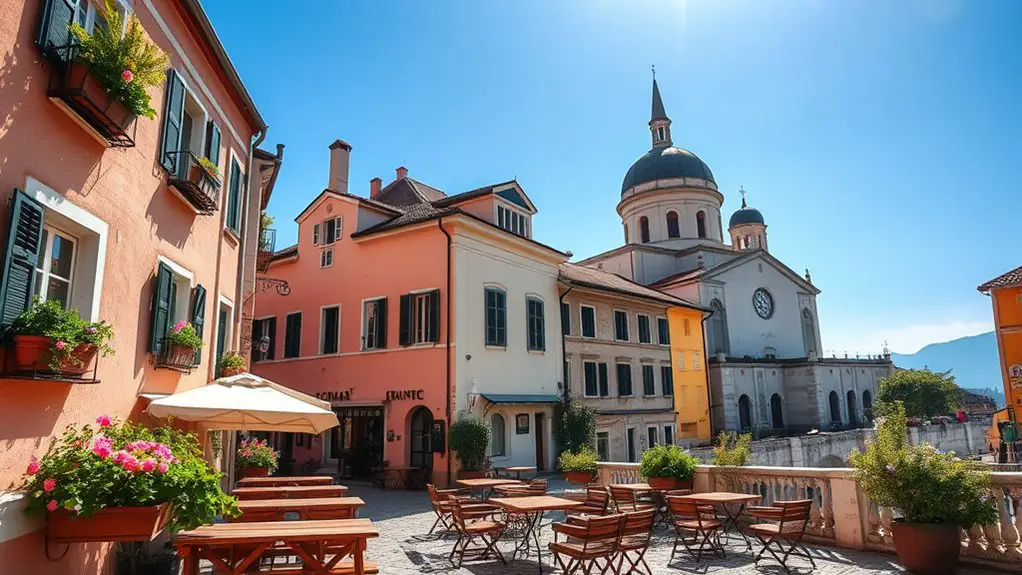
Last Updated on July 25, 2026 by Daniel Globe
Fener is one of Istanbul’s most rewarding neighborhoods for street and architectural photography. Set beside the Golden Horn in the Fatih district, it combines steep historic streets, colorful doors and façades, the red silhouette of Fener Rum High School, the Ecumenical Patriarchate, old churches, cafés, and nearby Balat’s famous rows of colorful houses. The key is knowing which photo spots are actually in Fener—and which similarly named places are elsewhere in Istanbul.
Quick Answer
The best Instagram spots in Fener include Fener Rum High School, the Ecumenical Patriarchate and St. George’s Church, the colorful streets around Yıldırım and Vodina, Camcı Çeşmesi’s bright doors, the Golden Horn waterfront, and the historic houses extending into neighboring Balat. Nearby Merdivenli Yokuş is especially popular for colorful-house photos.
Key Takeaways
- Photograph the red-brick Fener Rum High School from the surrounding hillside streets and lower Golden Horn area.
- Visit the Ecumenical Patriarchate and St. George’s Church for historic architecture, while respecting worshippers and posted photography rules.
- Explore Yıldırım and Vodina streets for colorful cafés, shopfronts, doors, street details, and everyday neighborhood scenes.
- Walk into neighboring Balat for Merdivenli Yokuş and some of the area’s best-known rows of colorful cumba houses.
- Use the Golden Horn promenade for sunset, reflection, skyline, and wider environmental photographs.
Note: Fener and Fenerbahçe are different places. Fener is the historic Golden Horn neighborhood covered in this guide. Fenerbahçe is in Kadıköy on Istanbul’s Asian side, so Fenerbahçe Lighthouse and attractions there should not be confused with Fener.
Disclosure: As an Amazon Associate I earn from qualifying purchases. Some links on this page are affiliate links, at no extra cost to you.
The Colorful Streets of Fener
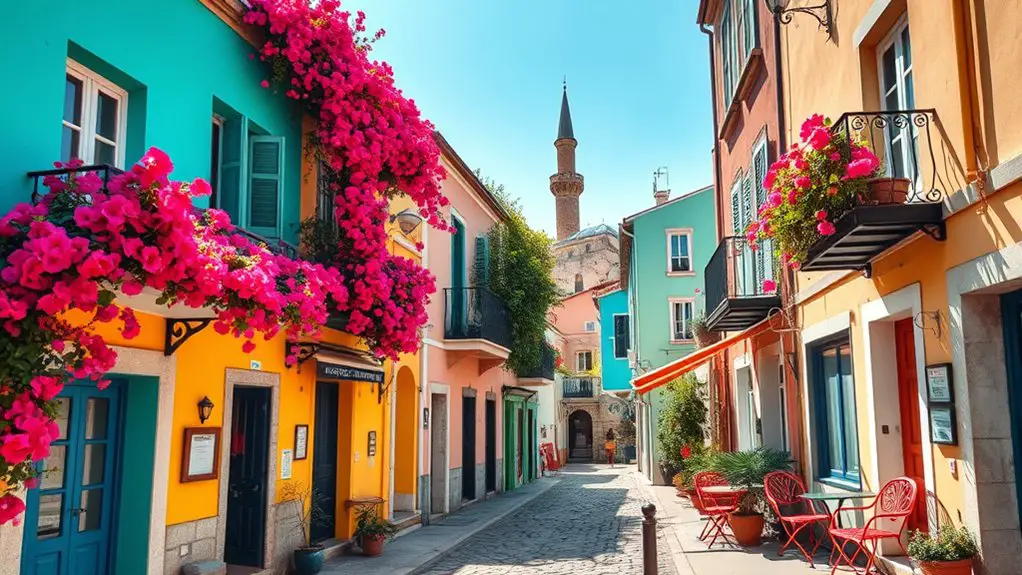
Walking through Fener is less about finding one perfect rainbow street and more about noticing layers of color, age, and architecture. Painted doors sit beside weathered masonry, enclosed bay windows project above narrow streets, and the steep terrain creates changing views as you climb.
The wider Fener-Balat area is particularly known for historic houses with projecting enclosed balconies called cumba. Türkiye’s official tourism guide highlights these houses as one of the defining architectural features of the two neighboring districts and specifically identifies Merdivenli Yokuş as a popular place for social-media photography.
For the strongest street photographs, look beyond bright paint alone. Weathered shutters, door knockers, window frames, hanging plants, stone steps, cats, signs, and the contrast between restored and timeworn surfaces often make more distinctive compositions.
Pro Tip: Walk slowly uphill and turn around regularly. Fener’s steep streets often reveal a stronger composition behind you, with layered roofs, façades, and slices of the Golden Horn appearing between buildings.
Golden Horn Waterfront Views in Fener
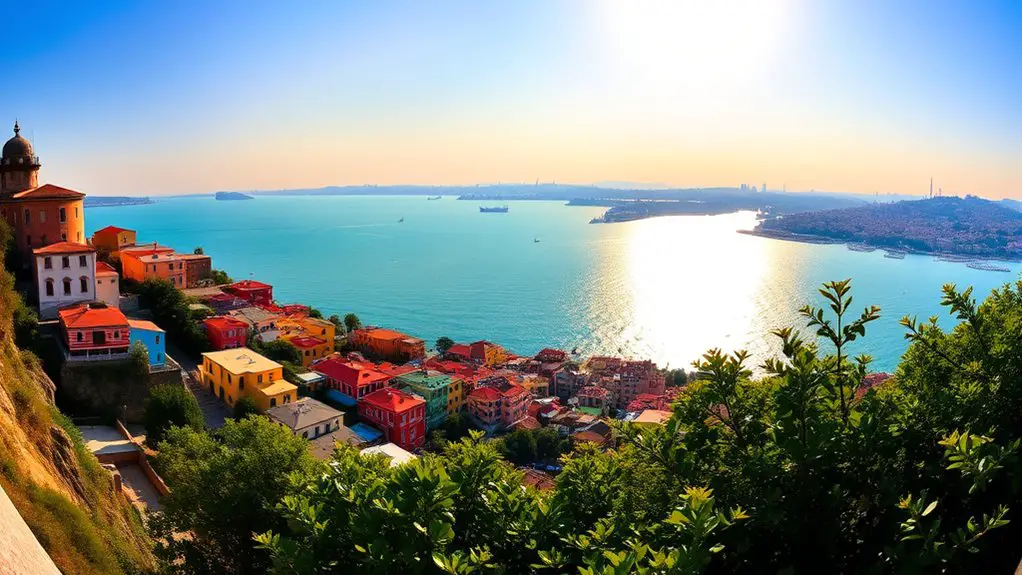
For wider views, head downhill toward the Golden Horn rather than looking for a lighthouse in Fener. Official destination information describes a shore promenade and cycle route along this part of the Golden Horn, giving photographers a more open perspective than the neighborhood’s tight hillside streets.
The waterfront works especially well when you want to show Fener in context. Instead of filling the frame with one colorful façade, you can include water, shoreline activity, distant buildings, passing boats, and changing skies.
Sunset and Blue-Hour Photos
Late-day light can soften the Golden Horn and give the waterfront warmer tones. Arrive before sunset so you have time to test both wide and vertical compositions before the light changes.
After sunset, stay a little longer for blue hour. Reflections from shoreline lights can become more noticeable as the sky darkens, while silhouettes of buildings and boats give the frame extra depth.
| Time | Good Subjects | Photo Approach |
|---|---|---|
| Morning | Streets, façades, doors | Look for side light and quieter lanes |
| Late Afternoon | Architecture and street life | Use warmer light on textured surfaces |
| Sunset | Golden Horn waterfront | Include water and sky in wider frames |
| Blue Hour | Reflections and silhouettes | Keep the camera steady in lower light |
Waterfront Architecture and Reflections
The waterfront gives you breathing room that is hard to find inside Fener’s narrow streets. Try placing railings, shoreline walls, moored boats, or the edge of the promenade in the foreground and using the water to lead the eye through the image.
On calmer days, reflections can add symmetry without needing a perfectly still surface. Small ripples often create more interesting texture than a mirror-flat reflection.
Panoramic Golden Horn Views
Fener’s water views are of the Golden Horn, not the Bosphorus. A wide lens can emphasize the breadth of the inlet, while a longer focal length can compress distant buildings and isolate architectural details along the shore.
For a stronger Instagram carousel, combine one wide waterfront image with closer photographs from the hillside streets. The contrast tells a more complete story of the neighborhood than either approach alone.
Historic Churches and Their Architectural Details
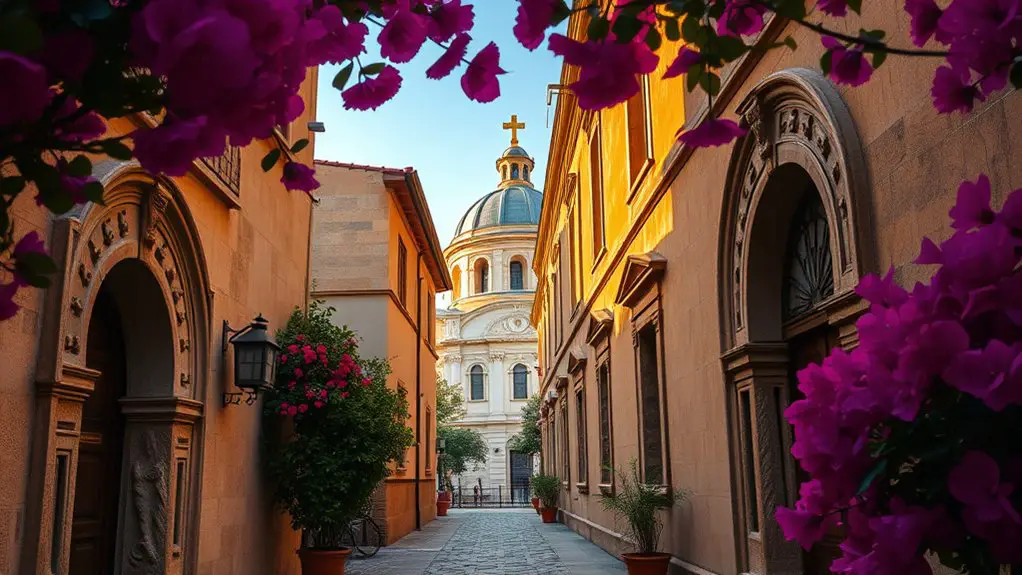
Fener’s religious architecture is one of the strongest reasons to bring a camera, but the buildings should not all be described as one generic “Byzantine” style. They come from different periods and communities and have distinct architectural identities.
The Patriarchal Church of St. George sits within the Ecumenical Patriarchate complex in Fener. Its significance comes not from a huge skyline-dominating exterior but from its role as the Patriarchal church and its richly decorated sacred interior.
Nearby, the Bulgarian St. Stephen Church, commonly called the Iron Church, provides a very different subject. The present building opened in 1898 and is celebrated for its metal construction and ornate exterior detailing.
For exterior photography, pay attention to doors, window surrounds, crosses, reliefs, ironwork, stonework, and the way each building meets the surrounding streetscape rather than trying to photograph every church in the same style.
Warning: These are active religious sites, not photography sets. Follow posted rules, avoid disrupting services, do not photograph worshippers without permission, and put the camera away whenever staff request it.
The Lively Street Scene Around Yıldırım and Vodina
Instead of searching for a supposed “Fenerbahçe Market” in Fener, concentrate on the lively streets around Yıldırım and Vodina. Official GoTürkiye guidance identifies the area near these streets and the Golden Horn shore as one of Fener’s liveliest sections, with colorful cafés and restaurants lining the route.
Colorful Cafés and Shopfronts
Painted café fronts, small tables, hanging signs, ceramics, plants, antique-style objects, and old façades create plenty of close-up photo opportunities. Rather than photographing every storefront straight on, try shooting diagonally along the street so several façades overlap in the frame.
Doorways are especially useful for portrait photographs because they provide a natural frame without needing to block the center of a narrow street.
Local Food and Coffee Details
Turkish coffee, tea glasses, pastries, breakfast plates, and café tables can add variety to a gallery that would otherwise consist only of buildings. Ask before arranging a long photo session inside a small business, especially when it is busy.
Close-up food and drink photographs also work well between wider street images in a social-media carousel because they add a sense of place without repeating the same façade shot.
Authentic Street Atmosphere
Fener is a lived-in neighborhood, so some of its most interesting images come from ordinary details rather than staged attractions: a chair outside a doorway, laundry above a lane, a delivery cart, a café being opened for the day, or a cat resting on a windowsill.
Keep candid photography respectful. Avoid pointing a camera directly into homes or making identifiable residents the main subject without permission.
Streetside Cafés With Traditional Charm
Fener and neighboring Balat are known for small cafés set into old buildings. Some lean into vintage décor with mismatched furniture, ceramics, lanterns, old signs, and shelves of decorative objects, while others are simple neighborhood places where the architecture provides most of the visual interest.
In Fener, the strongest café photograph often includes the street around the café rather than treating the business as an isolated backdrop.
Try framing a table through an open doorway, using a row of chairs as a leading line, or photographing a tea glass against a softly blurred façade. These small scenes can make a photo set feel more personal than a sequence of landmark images alone.
Always ask before photographing employees or customers at close range. A quick request is more respectful and usually produces a more relaxed photograph.
Sunset in Neighboring Balat
Balat sits beside Fener and is commonly explored on the same walk, but it is worth keeping the two names distinct. Many of the intensely colorful houses seen in Istanbul social-media posts are associated with Balat and the wider Fener-Balat area rather than with a single Fener street.
Merdivenli Yokuş is specifically highlighted by GoTürkiye as a popular place to photograph rows of colorful cumba houses. The stepped street gives your composition a natural leading line, while the slope helps stack façades vertically within the frame.
For sunset itself, the Golden Horn shoreline usually gives you more visible sky than the enclosed residential lanes. Photograph the houses while there is still enough directional light on their façades, then move toward the water as the sun gets lower.
Hidden Alleyways, Painted Doors, and Street Art
Fener rewards wandering because its visual character changes from one lane to the next. Instead of relying only on permanent “mural spots,” which can be painted over or changed, look for a broader mix of painted doors, shutters, signs, textured walls, small pieces of street art, steps, and architectural details.
Colorful Doors and Street Details
One specific stop worth looking for is the Camcı Çeşmesi slope. GoTürkiye’s official Fener guide points visitors toward the colorful doors found there.
Doors work especially well as vertical compositions. Keep enough of the surrounding wall in the frame to show texture, and avoid standing so close that you block a resident’s entrance.
- Painted doors against weathered walls
- Old shutters and projecting bay windows
- Geometric patterns in steps, railings, and façades
- Small street-art details that may change over time
Quiet Alleyway Corners
The side lanes above the busier streets can feel completely different from the café areas below. Narrow passages create strong natural frames, and shafts of sunlight can isolate individual doors or balconies against darker walls.
These lanes are also where photography etiquette matters most. Many photogenic houses are private homes. Stay on public streets, keep entrances clear, and never climb stairs, terraces, walls, or rooftops simply to improve an angle.
The Ecumenical Patriarchate and St. George’s Church
The Ecumenical Patriarchate of Constantinople is one of Fener’s defining historic institutions. The Patriarchal Church of St. George is located within the complex and remains an active place of worship.
The Patriarchate gives Fener something more important than a decorative backdrop: a direct connection between the neighborhood’s present-day streets and its continuing Orthodox heritage.
From a photography standpoint, slow down and look for individual architectural features rather than trying to capture everything in one frame. Entrances, chandeliers, iconography, carved details, paving, doors, and the relationship between the church and its courtyard can all produce stronger images than a rushed wide shot.
Check signs and instructions when you arrive because access and photography rules can change according to services, ceremonies, security, and other events.
Traditional Cumba Houses in Fener and Balat
The historic houses of Fener and Balat are associated with the Golden Horn neighborhoods, not a line of named villas along the Bosphorus. One of their most recognizable features is the cumba, an enclosed projecting bay window that extends above the street.
These projections make the streets particularly photogenic because they create layers of shadows, repeating forms, and changing perspective as you walk uphill. Some façades are brightly restored, while others retain worn timber, masonry, and muted colors.
| Feature | What to Look For | Photo Idea |
|---|---|---|
| Cumba bay windows | Repeating projections above narrow streets | Shoot diagonally along several façades |
| Painted façades | Contrasting doors, trim, and walls | Use a vertical frame for portraits |
| Weathered surfaces | Peeling paint, timber, brick, and stone | Move closer for texture studies |
| Steep streets | Layered houses climbing the hill | Use the slope as a leading line |
Serene Golden Horn Spots for Reflection Photos
After photographing Fener’s steep streets, return to the Golden Horn for a visual reset. The more open waterfront lets you work with reflections, negative space, boats, clouds, and distant architecture.
Pairing one quiet Golden Horn reflection with Fener’s dense street scenes can give a photo series much stronger visual rhythm.
Look for safe public areas along the promenade where you can step out of pedestrian and bicycle traffic before composing a photograph. Low viewpoints can emphasize reflections, while slightly higher positions make it easier to separate boats and shoreline objects.
Wind and boat traffic constantly change the water. Instead of waiting for a perfect mirror reflection, experiment with the broken patterns created by ripples.
A Simple Fener Photo Walking Route
A good photography walk does not need to chase every colorful street in Istanbul. Keep the route compact and let the changing architecture provide variety.
- Start near the Golden Horn waterfront for wide establishing images.
- Walk toward the Ecumenical Patriarchate and St. George’s Church for historic and religious architecture.
- Continue through Yıldırım and Vodina streets for cafés, shopfronts, doors, and everyday street scenes.
- Climb toward Fener Rum High School and photograph its red silhouette from public streets.
- Look for Camcı Çeşmesi’s colorful doors and quieter architectural details nearby.
- Continue into neighboring Balat for Merdivenli Yokuş and additional colorful houses.
- Finish back beside the Golden Horn if you want sunset or blue-hour photographs.
The route also keeps the geography clear: Fener and Balat sit beside one another on the Golden Horn, while Fenerbahçe is a separate neighborhood across Istanbul in Kadıköy.
Photography Etiquette in Fener
Many of Fener’s most photogenic scenes are homes, places of worship, cafés, schools, and ordinary streets rather than purpose-built attractions. Treat them accordingly.
- Do not block residential doors, shop entrances, or narrow sidewalks.
- Ask before taking close portraits of residents, workers, or worshippers.
- Follow photography restrictions inside churches and the Patriarchate complex.
- Keep voices and equipment unobtrusive during religious services.
- Use only public streets or clearly authorized terraces for elevated photographs.
- Do not climb roofs, walls, gates, or private staircases for a better angle.
Note: Murals, painted façades, café décor, opening conditions, and access rules can change. Treat architecture and official landmarks as the dependable anchors of your route, then enjoy temporary street details as bonuses.
Frequently Asked Questions
What are the best times of day for photography in Fener?
Morning is useful for quieter streets and architectural details, while late afternoon gives façades warmer light. For sunset and blue-hour photographs, move toward the Golden Horn waterfront where you have a clearer view of the sky. Exact light angles vary with the season, so scout your favorite street before waiting for a specific shot.
Are there restrictions on taking photos at the Patriarchate?
Treat the Ecumenical Patriarchate and St. George’s Church as active religious sites. Follow signs and staff instructions, avoid interrupting services, and ask before photographing people at close range. Access or photography rules may change during ceremonies or special events.
Which streets are best for colorful Instagram photos?
In Fener, explore the Yıldırım and Vodina street area and look for the colorful doors around Camcı Çeşmesi. For the famous rows of colorful historic houses, continue into neighboring Balat, where Merdivenli Yokuş is specifically recognized as a popular social-media photo location.
Can I access rooftops for panoramic views?
Do not assume a rooftop is publicly accessible. Use only terraces, cafés, or viewpoints that clearly allow visitors, and ask staff before setting up photography equipment. Never enter a residential roof, stairwell, or private terrace without explicit permission.
Are there guided tours focused on photogenic Fener and Balat?
Private and group walking tours of Fener and Balat are commonly offered, and some emphasize photography. Availability changes, so check the current itinerary before booking and make sure it includes the specific Fener landmarks or streets you want to photograph rather than using “Balat” and “Fener” interchangeably.
Conclusion
Fener does not need a fictional lighthouse or market to be photogenic. Its real strengths are more distinctive: the red Fener Rum High School rising above the hillside, the Ecumenical Patriarchate and St. George’s Church, colorful doors and cafés around its winding streets, historic cumba houses, and the Golden Horn below.
Allow enough time to continue into neighboring Balat, where streets such as Merdivenli Yokuş add some of the area’s best-known colorful-house compositions. Photograph respectfully, stay on public routes, and focus on the details that make these neighborhoods lived-in places rather than treating them simply as Instagram backdrops.
Sources
- GoTürkiye — Fener and Balat Neighbourhoods — supports Fener’s Golden Horn location, the Red School, St. George’s Church, Yıldırım and Vodina streets, Camcı Çeşmesi, historic cumba houses, and Merdivenli Yokuş.
- Visit Istanbul — The Patriarchal Church of St. George — supports the location and significance of St. George’s Church within the Fener Patriarchate.
- Visit Istanbul — Bulgarian St. Stephen Church — supports the history and architecture of the nearby Iron Church.
- Ecumenical Patriarchate of Constantinople — official institutional source for the Patriarchate in Fener.
