

Last Updated on July 30, 2026 by Caleb Warren
An anti-theft backpack can make quick-access theft harder, but the bag works best when you use its security features correctly. Choose a model that fits your daily load, keep critical items in the most protected compartment, secure the zipper pulls in crowded places, and combine the bag with low-profile travel habits and a plan for lost cards, documents, and devices.
Quick Answer
Use an anti-theft backpack with securable zippers, hidden storage, cut-resistant panels or straps, and a comfortable fit. Lock the main compartment in crowds, keep passports and backup cards close to your body, avoid displaying valuables, and remember that no backpack can prevent every theft or protect you during a robbery.
Key Takeaways
- Prioritize securable zippers, protected compartments, cut-resistant construction, and a strap that can be anchored when appropriate.
- Treat RFID blocking as an optional layer, not the main reason to buy a bag.
- Carry the bag where you can control it in crowds, and never leave it hanging from a chair or resting unattended.
- Split cash, cards, and document copies so one theft does not take everything.
- Do not fight over property during a robbery; personal safety comes first.
At a Glance
| Time Required | 10–15 minutes to set up and test the bag |
| Difficulty | Easy |
| Tools Needed | Built-in zipper clips or locks; optional small padlock, cable lock, and document pouch |
| Cost | About $0 to upgrade a bag you own; roughly $60–$270+ for current security-focused bags, depending on size and features |
Disclosure: As an Amazon Associate I earn from qualifying purchases. Some links on this page are affiliate links, at no extra cost to you.
Understanding the Importance of Anti-Theft Backpacks
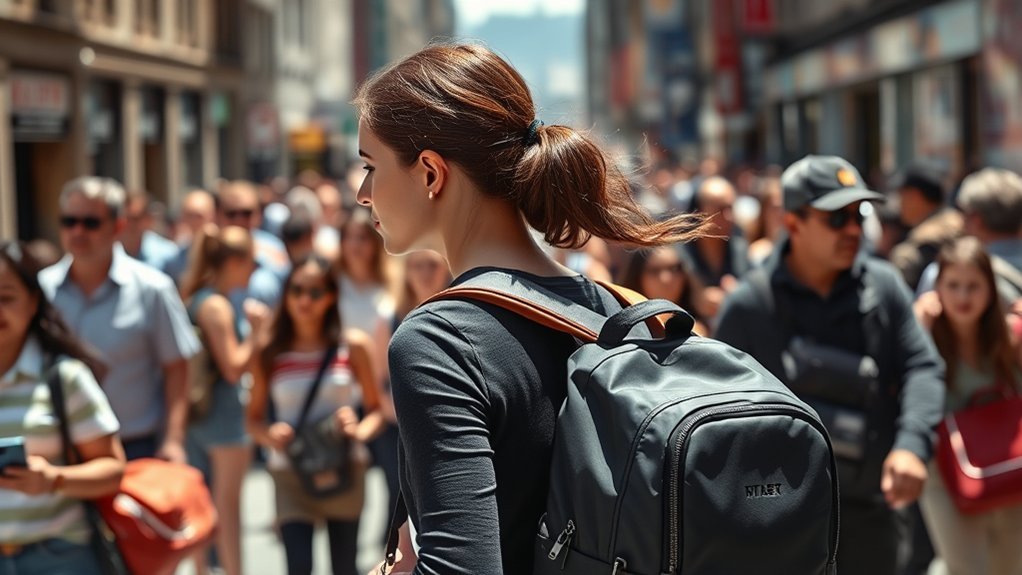
An anti-theft backpack is designed to slow down common crimes of opportunity, such as opening an exposed zipper, cutting a strap, or grabbing an unattended bag. Useful designs may include securable zipper pulls, concealed openings, cut-resistant panels, lock-down straps, and protected card pockets.
These features can add time and effort to a theft attempt, which may encourage an opportunistic thief to move on. They do not make a bag theft-proof. A thief can still take an unattended bag, force you to surrender it, or exploit an unlocked compartment. The best protection comes from combining the bag with awareness, sensible storage, and a clear response plan.
Warning: Never physically resist a robbery over a backpack, phone, wallet, or camera. U.S. Department of State travel guidance repeatedly advises travelers not to resist robbery attempts. Move to safety and contact local authorities when you can.
A secure bag can delay unauthorized access, but low-profile behavior and control of the bag remain your first line of defense.
Key Features of Effective Anti-Theft Backpacks
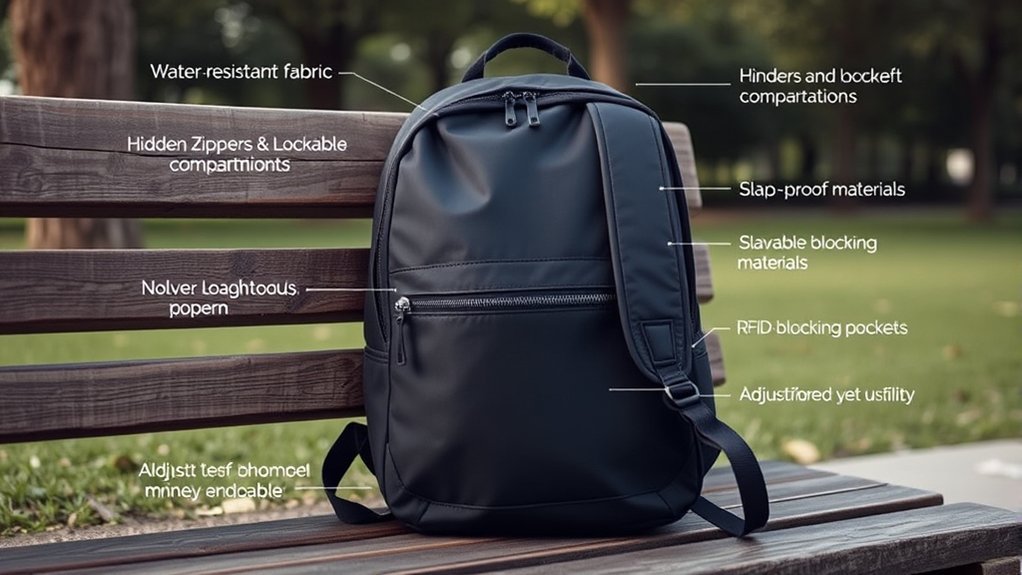
Choose features based on the way you travel. A commuter carrying a laptop needs different protection from a sightseer carrying a phone, passport, and compact camera.
Locking Zippers and Secure Openings
Look for zipper pulls that clip to a fixed point, interlock, or accept a small padlock. Built-in clips are usually faster to operate than a separate combination lock, so you are more likely to use them every time. Rear-facing or concealed openings also make quick access harder when the bag is worn.
Some travel packs add puncture-resistant double zippers. These may help resist a common luggage-tampering method in which a pointed object is pushed through ordinary zipper coils. Confirm that the feature protects the compartment you will actually use for valuables.
Slash-Resistant Panels and Straps
Cut-resistant mesh, reinforced fabric, or embedded cable can help deter cut-and-run theft. Check whether protection covers only the shoulder strap or also the sides and bottom of the bag. A reinforced strap is most useful when it includes a lock-down mechanism that can loop around a fixed object.
Hidden Compartments and Organization
A hidden pocket against your back is useful for items you do not need often. Keep frequently used items in a separate secured pocket so you do not expose your passport, backup cards, or emergency cash every time you buy something.
RFID-Blocking Technology
RFID-blocking material can reduce radio communication with compatible cards or documents inside the protected pocket. However, the original claims that RFID skimming accounts for a large share of identity theft are not supported by reliable evidence. Modern EMV contactless payments generate a one-time security code for each transaction, and contactless cards normally communicate at short range. RFID blocking is best treated as an optional privacy layer rather than a substitute for card alerts, account monitoring, and prompt reporting.
U.S. passport cards use RFID at land-border Ready Lanes, while passport books use different electronic-document security. Store each document according to its issuer’s guidance rather than assuming every passport or card has the same radio technology.
Fit, Capacity, and Weather Protection
Measure your laptop or tablet before buying, then compare the device dimensions with the manufacturer’s sleeve dimensions—not only the advertised screen size. The bag should sit close to your back without pulling on your shoulders. For longer walks, padded straps, a breathable back panel, and a sternum strap may matter more than an extra lock.
Water-resistant fabric can handle brief splashes or light rain, but it is not the same as a waterproof bag. Check the manufacturer’s material rating, zipper design, and seam construction. Use a rain cover or waterproof inner pouch for passports and electronics during heavy rain.
| Feature | What to Check | Main Limitation |
|---|---|---|
| Securable zippers | Easy-to-use clip, latch, or lock point on the main compartment | Provides no benefit when left open or unsecured |
| Cut-resistant construction | Coverage in the strap, body panels, and base | Does not stop someone from taking the whole bag |
| Hidden pocket | Position against the back and enough room for documents | Can be awkward for items needed often |
| RFID-blocking pocket | Clearly marked pocket with enough space for your cards or document | Does not protect physical cards from loss or online account fraud |
| Lock-down strap | Reinforced strap and secure attachment hardware | Only delays removal; the anchor must be solid |
Top Recommendations for Anti-Theft Backpack Models
Compare current specifications instead of choosing by brand name alone. Product names, prices, and availability change. The manufacturer-listed details below were checked on July 30, 2026.
| Model | Best For | Verified Highlights |
|---|---|---|
| Pacsafe V Anti-Theft Urban Sling | Urban day trips and compact everyday carry | 5-liter capacity; lockable zippers; cut-resistant lining and strap; RFID-blocking pocket; water-resistant fabric; listed at $109.95 |
| Travelon Anti-Theft Classic Travel Bag | Small crossbody carry with organized card and passport storage | 4-liter capacity; locking compartments; slash-resistant body and strap; RFID slots; lock-down strap; listed at $94 |
| Pacsafe GO Anti-Theft Crossbody Bag | Phone, wallet, passport, and a small tablet | 2.5-liter capacity; securable zippers; cut-resistant body and strap; RFID-blocking pocket; listed at $74.95 |
| EVERKI security-focused backpacks | Laptop commuting and business travel | Some models include RFID protection and concealed pockets; verify lockable zippers, cut resistance, laptop fit, and warranty on the exact model |
Note: The Pacsafe product formerly promoted at the “Metrosafe X Urban Sling” URL is currently named the Pacsafe V Anti-Theft Urban Sling. Confirm the current model name, dimensions, and features before purchasing from a third-party seller.
How to Set Up an Anti-Theft Backpack
- Choose the protected zone. Put your passport, backup payment card, emergency cash, and keys in the hardest-to-reach secured compartment.
- Separate daily-use items. Keep one payment card and a small amount of cash in a convenient pocket so you do not reveal your backup supply.
- Fit the straps. Adjust the bag so it stays close to your body and does not swing when you walk.
- Practice the locks. Open and close every zipper clip, latch, or combination lock before leaving home.
- Test the anchor. Learn how the lock-down strap or cable works, but use it only on a solid, stationary object.
- Protect electronics. Turn on device tracking, use a strong screen lock, and back up important data before the trip.
- Prepare document copies. Keep copies separate from the originals and leave another set with a trusted person, following the U.S. Department of State International Traveler’s Checklist.
Pro Tip: Load the bag with your real travel gear and wear it for at least 30 minutes before the trip. A secure bag that is uncomfortable, oversized, or difficult to operate may tempt you to leave compartments open or set the bag down.
Additional Security Measures to Consider
Bag features work best as part of a layered system. Protect the items inside, control the bag itself, and reduce the damage if something is lost.
RFID Protection Strategies
Use the designated RFID-blocking pocket for contactless cards or identity documents when you want an extra privacy layer. Do not rely on improvised foil or gum wrappers; they can tear, leave gaps, and provide inconsistent shielding. A tested wallet or built-in pocket is easier to use correctly.
RFID protection does not stop online fraud, magnetic-stripe skimming, phishing, or theft of the physical card. Turn on transaction alerts and report a missing card immediately. The EMVCo contactless-chip overview explains that a one-time security code is generated for each contactless transaction.
Concealed Storage Options
Use concealed storage for backup items rather than for everything you need during the day. Repeatedly reaching under clothing or opening a hidden pocket can draw attention to the location.
| Storage Option | Security Benefit | Best Use |
|---|---|---|
| Hidden back-panel compartment | Harder to reach while the bag is worn | Passport copy, backup card, or emergency cash |
| RFID-blocking pocket | Reduces radio communication with compatible items | Contactless cards and documents that fit the pocket |
| Concealed money belt | Keeps backup valuables under clothing | Emergency money and documents not needed often |
| Secured organizer pocket | Separates small items and limits exposure | Daily card, transit pass, and small cash amount |
| Waterproof inner pouch | Protects against rain and spills | Passport, phone, medication list, and paper copies |
Locking Mechanisms and Techniques
A zipper clip is useful for active carry because it is quick to open and resecure. A small padlock offers more resistance but is slower at checkpoints and during frequent access. A cable lock can join zipper pulls or attach a reinforced strap to a fixed object in a hostel, train compartment, or café.
- Anchor only to a solid object that cannot be lifted or easily cut.
- Keep the bag within sight even when it is anchored.
- Do not attach the bag to emergency equipment, doors, railings, or another person’s property.
- Do not wrap a locking cable around your body; you need to be able to move away quickly.
- Check that the lock does not damage the zipper pulls or block an emergency exit.
Personal Safety Strategies While Traveling
Security hardware is only one part of safe travel. Stay alert, keep a low profile, and avoid routines that expose where you store valuables.
Stay Aware of Surroundings
- Move the backpack to your front or hold it by the top handle in tightly packed crowds, boarding lines, and public transit.
- Keep a crossbody bag in front with the opening facing your body.
- Be cautious when a stranger creates a sudden distraction, spill, bump, or urgent request for help.
- Avoid displaying large amounts of cash, expensive jewelry, or an unlocked phone near doors and platforms.
- Stay close to companions and agree on a meeting point in case you become separated.
- Trust your instincts and leave an area when behavior around you feels unsafe.
Use Concealed Money Belts
A concealed money belt can hold backup cash, a passport, or a spare card under clothing. It should be comfortable, breathable, and large enough to keep documents flat. Do not use it as your everyday wallet; opening it in public reveals the hiding place.
| Feature | Benefit | Recommendation |
|---|---|---|
| Low-profile design | Less visible under clothing | Choose a thin, neutral design without bulky hardware |
| Moisture-resistant pouch | Helps protect paper and cards from sweat or rain | Use an inner sleeve for a passport or paper copies |
| Separate backup storage | Reduces the impact of losing your main wallet | Carry one backup card and limited emergency cash |
Secure Valuables in Pockets
- Use the most protected pocket for your passport, backup card, and emergency cash.
- Keep your phone out of loose outer pockets, especially near train or bus doors.
- Divide valuables across at least two secure locations.
- Close and clip each compartment immediately after use.
- Keep your hand on the bag or place it between your feet when seated.
- Never hang the bag from the back of a chair where it is out of sight.
Tips for Staying Vigilant in Crowded Areas
Use this quick checklist in airports, stations, markets, festivals, and tourist attractions:
- Before entering: Put away your phone, secure the main zipper, and move the bag where you can see or feel it.
- While moving: Keep the bag close, avoid stopping in bottlenecks, and watch for coordinated distractions.
- On public transport: Hold the bag in front, keep it off the floor, and stay alert near doors.
- At a café: Place the bag between your feet or anchor a reinforced strap to a solid chair frame while keeping it in sight.
- At an ATM: Put cash and cards away before leaving the machine, then move to a safer place to reorganize.
- When approached: Maintain control of your belongings, create space, and leave if the interaction feels wrong.
What to Do If Your Bag Is Lost or Stolen
- Move to safety. Do not chase or confront a thief.
- Contact local authorities. Request a report number or written police report when available; it may be needed for insurance or document replacement.
- Report cards immediately. The Federal Trade Commission advises contacting the card issuer as soon as possible because protections depend partly on how quickly the loss is reported.
- Secure your phone or laptop. Use Apple’s Find My or Google’s Find Hub to locate, lock, or erase a missing device if those services were enabled.
- Report a missing passport. U.S. travelers abroad should follow the Department of State lost or stolen passport process and contact the nearest U.S. embassy or consulate.
- Change exposed passwords. Start with email, banking, password-manager, and cloud accounts.
- Document the loss. Save receipts, serial numbers, screenshots, and correspondence for travel insurance or warranty claims.
Frequently Asked Questions
How do I choose the right size anti-theft backpack?
List what you carry every day, measure your largest device, and compare those measurements with the manufacturer’s internal sleeve dimensions. Choose the smallest capacity that fits your normal load without overstuffing. A close, comfortable fit is easier to control in crowds than an oversized bag.
Can I use a regular backpack as an anti-theft option?
Yes. Improve a regular backpack by clipping zipper pulls together, keeping valuables in an internal pocket, using a small waterproof document pouch, and carrying the bag in front in dense crowds. It will not gain cut-resistant panels or a reinforced lock-down strap, but good habits still reduce easy access.
Are anti-theft backpacks waterproof or water-resistant?
It depends on the model. Many use water-resistant fabric that handles light rain, but seams and zippers may still leak. Look for a clear waterproof rating and sealed construction if you need protection in sustained rain. Otherwise, add a rain cover and waterproof inner pouch.
How much should I expect to spend on an anti-theft backpack?
Small security-focused crossbody bags often start around $60, while larger travel packs with reinforced panels, puncture-resistant zippers, and laptop storage can cost $200 or more. Current manufacturer listings checked in July 2026 ranged from about $75 for a compact Pacsafe crossbody to roughly $270 for premium travel packs. Prices change, so compare features rather than price alone.
Do anti-theft backpacks come with warranties or guarantees?
Many do, but coverage varies. Read the warranty before buying and save the receipt. Pacsafe currently lists a limited five-year warranty for bags against qualifying manufacturing defects. Normal wear, misuse, theft, or accidental damage may not be covered.
Do anti-theft backpacks prevent all theft?
No. They can delay quick zipper access, strap cutting, or tampering, but they cannot stop every thief, prevent forced robbery, or protect an unattended bag. Keep the backpack under your control and use the security features every time.
Is RFID blocking necessary in an anti-theft backpack?
It is optional for most travelers. A blocking pocket can add privacy for compatible cards and documents, but it does not replace physical security, card alerts, strong account passwords, or prompt reporting. Prioritize secure zippers, bag control, and a comfortable fit first.
Conclusion
An anti-theft backpack can make opportunistic theft more difficult when it has practical locks, protected compartments, reinforced construction, and a fit you can control. Set it up before the trip, keep it secured in crowded places, divide critical valuables, and prepare for a lost card, phone, or passport. Most importantly, put personal safety ahead of property and never physically resist a robbery.
Sources
- U.S. Department of State — International Traveler’s Checklist — document copies, destination research, and emergency preparation
- U.S. Department of State — Lost or Stolen Passport Abroad — reporting and replacement steps
- Federal Trade Commission — Lost or Stolen Cards — prompt reporting and consumer protections
- EMVCo — EMV Contactless Chip — contactless transaction security
- Pacsafe — Anti-Theft Technology — manufacturer descriptions of zipper, cut-resistant, lock-down, and RFID features
- Travelon — 5-Point Anti-Theft Security — manufacturer descriptions of slash-resistant construction and locking compartments

