

Last Updated on August 26, 2026 by Daniel Globe
Wyndham Hotels & Resorts is an independent public hotel-franchising company, but that does not mean it owns every Super 8, Days Inn, Ramada, La Quinta, or other hotel carrying one of its brands. Shareholders own the corporate company, while independent franchisees and other third-party owners own and operate most individual properties. Understanding that distinction makes Wyndham’s ownership structure much easier to follow.
Quick Answer
Wyndham Hotels & Resorts, Inc. (NYSE: WH) has no parent company. It is an independent, publicly traded corporation owned by its shareholders. Most hotels carrying Wyndham brands are not corporate-owned buildings; they are owned or operated by independent franchisees and other third parties under agreements with Wyndham.
Key Takeaways
- Wyndham Hotels & Resorts is an independent public company trading on the New York Stock Exchange under WH; it has no corporate parent.
- Wyndham’s 2026 proxy listed Vanguard, BlackRock, and T. Rowe Price Investment Management among shareholders beneficially owning more than 5% of the company, based on the ownership disclosures cited in that filing.
- Individual Wyndham-branded hotels are generally owned by independent hotel owners and franchisees rather than Wyndham itself.
- As of Wyndham’s July 22, 2026 results, the company reported approximately 8,400 hotels, more than 873,000 franchised and affiliated rooms, 25 brands, and approximately 100 countries.
- Wyndham Hotels & Resorts is separate from Travel + Leisure Co., the company formerly called Wyndham Destinations that operates vacation-ownership businesses including Club Wyndham.
- Choice Hotels’ attempted acquisition of Wyndham ended in March 2024 without a transaction.
What’s in This Article
- How Wyndham Became the Company It Is Today
- The Current Ownership Structure of Wyndham Hotels
- Who Owns Individual Wyndham Hotels?
- Wyndham Hotels vs. Travel + Leisure and Club Wyndham
- The Choice Hotels Takeover Attempt (2023–2024)
- Wyndham’s Expansion and Acquisition Strategy
- The Role of Franchisees in Wyndham Hotels
- Wyndham’s Brand Portfolio and Market Presence
- The Impact of Ownership on Wyndham’s Business Strategy
- What Wyndham’s Ownership Model Means for Travelers
- The Financial Performance of Wyndham Hotels
- The Influence of Ownership on Wyndham’s Corporate Culture
- Wyndham’s Ownership and Sustainability Initiatives
- The Future of Wyndham Hotels
- Frequently Asked Questions
Disclosure: As an Amazon Associate I earn from qualifying purchases. Some links on this page are affiliate links, at no extra cost to you.
How Wyndham Became the Company It Is Today
Wyndham’s name has roots that predate today’s Wyndham Hotels & Resorts corporation. According to Crow Holdings’ corporate history, real-estate developer Trammell Crow founded the Wyndham Hotel Company in 1981 to operate hotels developed by the Trammell Crow Hotel Company. That earlier Wyndham business went public on the New York Stock Exchange in 1996.
The corporate lineage behind today’s Wyndham Hotels & Resorts followed another path. Hospitality Franchise Systems, or HFS, was incorporated in 1990 and built a large hotel-franchising business around brands such as Howard Johnson, Ramada, Days Inn, and Super 8. HFS merged with CUC International in 1997 to form Cendant Corporation.
The two histories came together in 2005. The Blackstone Group acquired Wyndham International in August 2005, and later that year Cendant acquired the Wyndham hotel brand, franchise system, selected management contracts, and worldwide Wyndham brand rights. Cendant then separated its hospitality businesses into Wyndham Worldwide Corporation in 2006.
On May 31, 2018, Wyndham Worldwide completed another separation. Its hotel business became today’s independent Wyndham Hotels & Resorts, Inc., while the remaining vacation-ownership company became Wyndham Destinations. Wyndham Hotels & Resorts began regular-way NYSE trading under the ticker WH on June 1, 2018.
Note: The 1996 Wyndham IPO and the 2018 launch of NYSE: WH refer to different stages of Wyndham’s corporate history. Today’s Wyndham Hotels & Resorts became a standalone public company in 2018.
The Current Ownership Structure of Wyndham Hotels
Wyndham Hotels & Resorts operates as an independent, publicly traded corporation under the ticker WH on the NYSE. It does not have a parent company. Its owners are the people and institutions that hold Wyndham common stock.
Like many large public companies, much of Wyndham’s stock is held through institutional investment managers. Wyndham’s 2026 proxy statement listed the following beneficial owners above 5%:
| Disclosed Beneficial Owner | Shares Listed in 2026 Proxy | Percent of Class |
|---|---|---|
| The Vanguard Group | 8,311,030 | 11.05% |
| BlackRock, Inc. | 7,084,595 | 9.42% |
| T. Rowe Price Investment Management, Inc. | 4,606,963 | 6.13% |
The proxy reported CEO Geoffrey A. Ballotti at 1.11% and all directors and executive officers as a group at 2.33%. These figures are beneficial-ownership disclosures, not permanent ownership percentages. Institutional positions can change, and the proxy’s figures rely on underlying shareholder filings with different reporting dates.
No shareholder shown in the proxy owns a majority of Wyndham’s outstanding stock. Corporate control therefore remains subject to the normal governance structure of a public company, including its elected board of directors and shareholder voting rights.
Who Owns Individual Wyndham Hotels?
This is where the phrase “who owns Wyndham Hotels?” can become confusing. Wyndham Hotels & Resorts owns and controls hotel brands, franchise systems, technology, distribution tools, intellectual property, and related services. It generally does not own the physical hotel building you stay in.
Most Wyndham-branded properties are owned by independent franchisees or other third-party hotel owners. Those owners invest in the property, hire or contract for hotel operations, maintain the building, and follow the requirements of their franchise or management agreement.
That means two hotels carrying the same Wyndham brand can have different legal owners. For example, one Days Inn may be owned by a local hotel company while another is owned by a completely different investment group. Both may use the Days Inn brand because they have agreements with Wyndham.
Wyndham’s business is primarily about franchising hotel brands and systems to hotel owners—not buying thousands of hotel buildings.
Wyndham’s asset-light model has become even more franchise-focused over time. Its 2025 Form 10-K says the company exited its U.S. select-service management business, sold its two owned hotels, and exited substantially all of its U.S. full-service management business in earlier restructuring.
There can still be exceptions. In its second-quarter 2026 results, Wyndham disclosed that it had taken ownership of two Revo-related hotels through foreclosure amid the European franchisee’s insolvency. That does not change the broader franchise-led structure.
Wyndham Hotels vs. Travel + Leisure and Club Wyndham
Wyndham Hotels & Resorts is often confused with Club Wyndham because both businesses grew out of Wyndham Worldwide.
They are now separate public companies:
- Wyndham Hotels & Resorts, Inc. (NYSE: WH) — the hotel franchising company behind brands such as Super 8, Days Inn, Ramada, La Quinta, Wyndham Grand, Microtel, and others.
- Travel + Leisure Co. (NYSE: TNL) — the vacation-ownership and membership-travel company formerly called Wyndham Destinations. Its businesses include vacation ownership associated with names such as Club Wyndham.
The separation occurred in 2018, when the hotel business was spun off. Wyndham Destinations later acquired the Travel + Leisure brand and changed its corporate name to Travel + Leisure Co. in February 2021. The companies may share historical roots and related brand names, but Travel + Leisure Co. is not the parent company of Wyndham Hotels & Resorts.
The Choice Hotels Takeover Attempt (2023–2024)
One of the most significant recent ownership events was Choice Hotels International’s attempted acquisition of Wyndham.
In October 2023, Wyndham announced that its board had rejected Choice’s unsolicited proposal with a nominal value of $90 per Wyndham share. The proposal was structured as 55% cash and 45% Choice stock. Wyndham’s board said the offer undervalued the company and carried execution and regulatory risks.
Choice later took the proposal directly to Wyndham shareholders through an exchange offer launched in December 2023 and nominated candidates for Wyndham’s board.
The effort ended in March 2024. Choice said it would not extend the exchange offer because several conditions remained unsatisfied, including the minimum tender condition, and because Wyndham’s board had continued to decline substantive engagement. No Wyndham shares were purchased through the offer.
The Federal Trade Commission separately said it had been closely scrutinizing the proposed takeover and board-replacement effort because they raised serious competition questions. The FTC described their abandonment as a positive outcome for consumers.
Wyndham therefore remained an independent public company rather than becoming part of Choice Hotels.
Wyndham’s Expansion and Acquisition Strategy
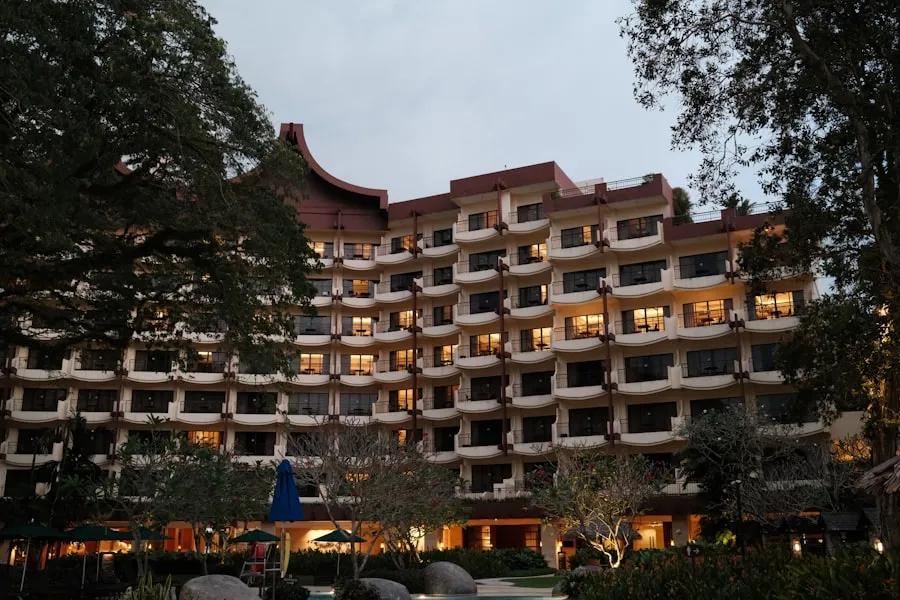
Wyndham has expanded through a mix of acquisitions, brand launches, conversions, new hotel development, and strategic relationships with hotel owners.
A major acquisition came on May 30, 2018, when Wyndham completed its $1.95 billion cash purchase of La Quinta’s hotel-franchising and hotel-management business. The transaction added more than 900 franchised hotels and nearly 89,000 rooms, significantly increasing Wyndham’s position in the midscale and upper-midscale segments. Travelers can now find the brand through La Quinta by Wyndham.
Earlier portfolio expansion included the AmericInn acquisition in 2017 and the TRYP hotel chain acquisition in 2010. In April 2024, Wyndham added its 25th brand through a strategic relationship with WaterWalk, bringing 11 hotels and more than 1,500 rooms into the Wyndham system as WaterWalk Extended Stay by Wyndham.
The company’s current growth plan relies heavily on franchise development rather than large-scale ownership of real estate. As of June 30, 2026, Wyndham reported a record development pipeline of approximately 261,000 rooms across more than 2,200 hotels, excluding the effect of Revo’s insolvency. About 69% of the pipeline was in midscale-and-above segments, 17% was extended stay, 42% was in the United States, and 78% represented new construction.
The Role of Franchisees in Wyndham Hotels
| Area | Typical Responsibility |
|---|---|
| Property investment | The independent hotel owner generally funds the real estate, construction, conversion, renovation, and property-level capital needs. |
| Hotel operations | The franchisee or a third-party operator handles day-to-day operations at most franchised hotels. |
| Brand and systems | Wyndham supplies the brand, reservation and distribution systems, marketing programs, training, technology, and operating standards required by the agreement. |
| Franchise fees | Hotel owners pay royalties and other fees under their franchise agreements. Wyndham says ongoing royalties are typically based on a percentage of gross room revenue. |
| Guest experience | Wyndham establishes brand requirements, while the local owner/operator is responsible for executing many property-level services. |
Franchisees are therefore central to Wyndham’s business model. They supply most of the property-level capital and operations, while Wyndham earns fees for access to its brands and commercial systems.
Wyndham’s 2025 Form 10-K states that its standard franchise agreements typically run for 10 to 20 years. They can require royalty payments as well as marketing and reservation fees that support systems such as reservations, e-commerce, advertising, global sales, training, and operations support.
Pro Tip: Anyone considering a Wyndham franchise should review the current Franchise Disclosure Document and the exact agreement for the chosen brand. Initial costs, royalty rates, required renovations, marketing fees, and performance obligations can differ by brand and deal.
Wyndham’s Brand Portfolio and Market Presence
As of July 2026, Wyndham reported approximately 8,400 hotels across approximately 100 countries on six continents, representing more than 873,000 franchised and affiliated rooms. Its portfolio contains 25 hotel brands serving economy, midscale, upscale, luxury, and extended-stay markets.
The portfolio includes Super 8, Days Inn, Travelodge, Microtel, Howard Johnson, La Quinta, Ramada, Baymont, AmericInn, Wingate, Wyndham Alltra, Wyndham Garden, Ramada Encore, Trademark Collection, TRYP, Wyndham, Wyndham Grand, Dazzler, Esplendor, Dolce, Vienna House, Registry Collection Hotels, ECHO Suites, Hawthorn Extended Stay, and WaterWalk Extended Stay.
Wyndham’s 2025 Form 10-K described the company as the world’s largest hotel franchisor by number of franchised properties. Its concentration remains particularly strong in economy and midscale lodging.
The Wyndham Rewards loyalty program had more than 126 million enrolled members according to Wyndham’s July 22, 2026 results.
Note: You may see different Wyndham hotel totals on different company webpages. In 2025, Wyndham changed its investor-reporting methodology to exclude rooms associated with its Super 8 China master license from reported system size. For corporate system-size comparisons, its latest investor filings provide the clearest definition.
The Impact of Ownership on Wyndham’s Business Strategy

Wyndham’s shareholder-owned corporate structure and franchise-heavy operating model influence how it allocates capital. Instead of spending most of its capital buying and operating hotel real estate, it can concentrate resources on brands, franchise development, distribution, loyalty, technology, and services for owners.
That approach also means Wyndham’s financial results depend heavily on the health of its franchise network. Its annual filing says a significant portion of revenue comes from fees tied to room revenue at franchised hotels. Occupancy, room rates, franchisee finances, property quality, hotel openings, and franchise contract retention can therefore affect Wyndham even though the underlying buildings are generally owned by other parties.
As a public corporation, Wyndham also returns capital directly to shareholders. During the second quarter of 2026, it repurchased approximately 657,000 shares for $54 million and paid $32 million in common-stock dividends.
What Wyndham’s Ownership Model Means for Travelers
For guests, the franchise model explains why a Wyndham-branded stay can combine centralized brand systems with locally controlled operations.
- Brand standards: Wyndham establishes standards and provides brand, reservation, distribution, marketing, loyalty, and technology systems.
- Property operations: Independent owners or operators commonly handle staffing, maintenance, housekeeping, and many day-to-day service decisions.
- Rates and cancellation rules: These can vary by hotel, rate plan, booking channel, and reservation terms, so travelers should check the exact conditions before booking.
- Wyndham Rewards: The loyalty program operates across participating Wyndham properties even though those properties may have different owners.
- Property-specific problems: Some issues may need to be handled directly with the local hotel’s owner or management team, while reservation, loyalty, and brand-level matters may also involve Wyndham support.
This is similar to the structure used by many large hotel groups. A familiar hotel brand does not necessarily mean the corporate franchisor owns the land and building.
The Financial Performance of Wyndham Hotels
Wyndham’s financial performance reflects its fee-based franchise model, but the original claim that both revenue and net income have grown consistently every year is too broad.
| Period | Net Revenue | Net Income | Adjusted EBITDA |
|---|---|---|---|
| Full Year 2025 | $1.429 billion | $193 million | $718 million |
| Q2 2026 | $375 million | $102 million | $212 million |
For full-year 2025, net revenue increased 1% from $1.408 billion to $1.429 billion, while GAAP net income declined from $289 million to $193 million. Adjusted EBITDA increased from $694 million to $718 million.
In the second quarter of 2026, net income increased 17% year over year to $102 million and adjusted EBITDA increased 9% to $212 million. Net revenue, however, fell 6% to $375 million, partly because the prior-year quarter included pass-through revenue from Wyndham’s May 2025 global franchisee conference and because of other items including the Revo situation.
Wyndham’s July 2026 outlook called for full-year 2026 net revenue of approximately $1.48 billion to $1.50 billion and adjusted EBITDA of $735 million to $745 million. Those figures are company guidance rather than guaranteed results.
Note: Financial results, shareholder positions, forecasts, dividends, and share-repurchase activity change over time. These figures explain Wyndham’s ownership and business model and are not investment advice; investors should review the latest SEC filings before making decisions.
This financial model also differs from a traditional hotel owner that earns most of its money directly from rooms at properties it owns. Wyndham’s recurring revenue is heavily tied to franchise royalties, marketing and reservation programs, licensing, partnerships, and other services across its network. Its hospitality-industry peers use variations of similar asset-light models.
The Influence of Ownership on Wyndham’s Corporate Culture
As a public company, Wyndham’s corporate employees work within governance, performance, and shareholder-accountability systems. Its workforce programs also include professional development, workplace training, human-rights initiatives, and formal stock-ownership requirements for senior executives and directors.
For example, Wyndham’s 2026 proxy says its executive stock-ownership guidelines require the CEO to hold Wyndham stock with a market value of at least six times base salary, while other named executive officers have a three-times-base-salary requirement. These rules are intended to align senior leaders’ financial interests with shareholders.
Wyndham’s corporate responsibility reporting also describes annual pay-equity analysis and employee training initiatives. It is important, however, to separate the culture of Wyndham’s corporate organization from employment practices at individual independently owned franchise hotels, where the local owner or operator may be the employer.
Wyndham’s Ownership and Sustainability Initiatives
Wyndham’s franchise structure also shapes its environmental strategy because most properties are owned by other parties. Its Wyndham Green program is designed to give franchisees standards and tools covering areas such as energy efficiency, water conservation, waste diversion, responsible purchasing, and environmental performance tracking.
Wyndham’s 2025 Corporate Responsibility Report showed mixed progress against environmental targets rather than claiming every goal had already been achieved. Based on 2024 progress, Wyndham reported a 29% reduction in water intensity from its baseline, 63% renewable energy use at its corporate headquarters and North American offices, and Wyndham Green certification at 95% of managed hotels.
The report also said Wyndham was reassessing some earlier targets, including its absolute Scope 1 and 2 emissions target and a goal related to eliminating single-use plastics. That qualification matters because Wyndham’s shift toward an even more franchise-led model changes how much environmental activity it directly controls.
The Future of Wyndham Hotels
Wyndham’s disclosed development pipeline gives a clearer picture of its future direction than broad predictions about travel demand. At June 30, 2026, the company reported approximately 261,000 rooms and more than 2,200 hotels in its pipeline, excluding Revo-related impacts.
Its expansion is increasingly aimed at higher-fee segments while retaining a large economy and midscale base. About 69% of the June 2026 pipeline was in midscale-and-above brands, while approximately 17% was in extended stay. International development also remains important, with Wyndham reporting strong direct-franchised room growth in parts of Asia Pacific and continued expansion across EMEA and Latin America.
Technology, loyalty, franchise-owner economics, conversions, new construction, and extended-stay development are therefore likely to remain central to Wyndham’s strategy. The company raised parts of its full-year 2026 outlook in July, but future hotel openings, revenue, and earnings will still depend on travel demand, financing conditions, franchisee health, construction activity, and broader economic conditions.
Frequently Asked Questions
Who owns Wyndham Hotels?
Wyndham Hotels & Resorts, Inc. is an independent public company trading on the NYSE as WH. Its shareholders own the company; it does not have a parent corporation.
Who owns individual Wyndham hotel properties?
Most individual Wyndham-branded hotels are owned by independent franchisees or other third-party hotel owners. Wyndham generally provides the brand, franchise system, reservations, marketing, loyalty program, technology, and operating standards rather than owning each building.
Is Wyndham Hotels a franchise?
Wyndham Hotels & Resorts is a hotel franchisor. Independent hotel owners operate most properties under Wyndham brands through franchise agreements.
How many hotels does Wyndham have?
Wyndham’s July 22, 2026 investor update reported approximately 8,400 hotels, more than 873,000 franchised and affiliated rooms, 25 hotel brands, and a presence in approximately 100 countries.
What brands does Wyndham own?
Its 25-brand portfolio includes Super 8, Days Inn, Ramada, La Quinta, Baymont, Microtel, Travelodge, Howard Johnson, AmericInn, Wingate, Wyndham Garden, Wyndham Grand, Trademark Collection, Registry Collection Hotels, ECHO Suites, WaterWalk, and other brands.
Where is Wyndham Hotels headquartered?
Wyndham Hotels & Resorts is headquartered at 22 Sylvan Way in Parsippany, New Jersey.
Is Wyndham Hotels part of Travel + Leisure Co. or Club Wyndham?
No. Wyndham Hotels & Resorts and Travel + Leisure Co. have been separate public companies since the 2018 hotel-business spin-off. Travel + Leisure Co. is the former Wyndham Destinations and operates vacation-ownership and membership-travel businesses, while Wyndham Hotels & Resorts operates the hotel-franchising business.
Is Wyndham owned by Hilton, Marriott, or Choice Hotels?
No. Wyndham Hotels & Resorts is independent from Hilton, Marriott, and Choice Hotels. Choice attempted to acquire Wyndham in 2023–2024, but the exchange offer expired without a transaction.
Sources
- Wyndham Hotels & Resorts Q2 2026 Results — current hotel, room, brand, loyalty, pipeline, financial, and 2026 outlook figures.
- Wyndham Hotels & Resorts 2025 Form 10-K — company history, franchise model, property counts, financial results, revenue structure, and reporting methodology.
- Wyndham Hotels & Resorts 2026 Proxy Statement — major disclosed shareholders, executive ownership, governance, and stock-ownership requirements.
- Federal Trade Commission Statement on the Choice Hotels Proposal — competition review and termination of the attempted acquisition.
- Crow Holdings Corporate History — Trammell Crow’s founding of the Wyndham Hotel Company in 1981 and the earlier Wyndham IPO.
- Wyndham 2025 Corporate Responsibility Report — Wyndham Green, environmental targets, workforce initiatives, and reported progress.
