
Last Updated on July 26, 2026 by Daniel Globe
Conrad Hilton built one of the best-known names in hospitality, but the Hilton company of today is no longer a privately owned family business. Hilton Hotels & Resorts is a brand within Hilton Worldwide Holdings Inc., a publicly traded hospitality company whose shares are held by investors. Understanding that distinction also helps explain why many individual Hilton hotels have different property owners.
Quick Answer
Hilton Hotels is part of Hilton Worldwide Holdings Inc., a public company listed on the New York Stock Exchange under ticker HLT. No single person or company owns all of Hilton today. Its equity is held by shareholders, with Vanguard and BlackRock among the largest investors disclosed in Hilton’s 2026 proxy statement.
Key Takeaways
- Hilton Worldwide Holdings Inc. is publicly traded on the NYSE under the ticker HLT.
- There is no single current owner of Hilton; shareholders own equity in the public company.
- Hilton’s 2026 proxy listed The Vanguard Group at 11.1% and BlackRock at 8.4% as its two principal shareholders above 5%.
- HNA held about 25% of Hilton after a 2017 transaction but fully sold its investment in April 2018.
- Blackstone acquired Hilton in 2007, Hilton returned to the public market in 2013, and Blackstone fully exited its investment in May 2018.
- Many Hilton-branded hotels are owned by third parties and operate under management or franchise agreements rather than being real estate owned directly by Hilton Worldwide.
Disclosure: As an Amazon Associate I earn from qualifying purchases. Some links on this page are affiliate links, at no extra cost to you.
Who Owns Hilton Hotels Today?
The corporate company behind Hilton’s hotel brands is Hilton Worldwide Holdings Inc. It is incorporated in Delaware and its common stock trades on the New York Stock Exchange under the symbol HLT. Hilton therefore does not have a single parent company or private owner above it.
Instead, investors own shares of Hilton Worldwide Holdings Inc. According to Hilton’s 2026 proxy statement, the principal shareholders reported above the 5% threshold were The Vanguard Group, with 11.1%, and BlackRock, Inc., with 8.4%, based on the ownership information cited in the proxy.
| Corporate company | Hilton Worldwide Holdings Inc. |
| Ownership structure | Publicly traded; equity held by shareholders |
| Stock exchange | New York Stock Exchange |
| Ticker | HLT |
| Founder | Conrad N. Hilton |
| HNA Group ownership today | None; HNA fully divested in April 2018 |
Who Are Hilton’s Major Shareholders?
Hilton’s shareholder mix changes as shares are bought and sold. In the company’s April 2026 proxy statement, The Vanguard Group was listed with 25,386,450 shares, or 11.1% of Hilton’s outstanding common stock, while BlackRock was listed with 19,333,160 shares, or 8.4%.
President and CEO Christopher J. Nassetta was listed with about 2.0% in the same proxy statement. Holding shares does not make the CEO the sole owner; ownership of the public corporation remains distributed among shareholders.
Note: Institutional ownership percentages can change as investment managers buy or sell shares. The percentages above are the figures disclosed in Hilton’s 2026 proxy statement, not permanent ownership percentages.
Does the Hilton Family Still Own Hilton Hotels?
The Hilton family remains closely associated with the name and with Conrad Hilton’s philanthropic legacy, but Hilton Worldwide is not a privately held Hilton-family company today.
The family connection is strongest through the history of the business and the independent Conrad N. Hilton Foundation. Hilton Worldwide Holdings Inc., by contrast, is a separate public corporation with stock traded on the NYSE.
This means descendants of Conrad Hilton can own Hilton shares like other investors, but the family does not collectively own or control the entire public company simply because it bears the Hilton name.
Does Hilton Worldwide Own Every Hilton Hotel?
No. The company behind a hotel brand and the owner of a hotel building are often different entities.
Hilton operates a capital-light business in which many properties are managed or franchised for independent hotel owners. Under a franchise arrangement, a property owner receives the right to use a Hilton brand and participate in Hilton systems while following the company’s brand standards and paying required fees.
Hilton’s first-quarter 2026 property summary reported 9,260 properties and 1,362,278 rooms across its total system as of March 31, 2026. That total included 46 properties in Hilton’s ownership segment, 875 managed properties, and 8,339 franchised or licensed properties.
The distinction is just as clear within the flagship Hilton Hotels & Resorts brand. Hilton reported 620 Hilton Hotels & Resorts properties as of March 31, 2026: 43 in the ownership segment, 309 managed, and 268 franchised or licensed. The company’s Q1 2026 property summary provides the complete breakdown.
A Hilton sign on a hotel does not automatically mean Hilton Worldwide owns that building. Many Hilton properties belong to third-party owners and use Hilton’s brand through management or franchise agreements.
How Hilton’s Ownership Changed Over Time
Hilton has moved through family-led growth, public ownership, private-equity ownership, and a return to the stock market. The most important ownership milestones are:
- 1919: Conrad Hilton entered the hotel business by purchasing the Mobley Hotel in Cisco, Texas.
- 1925: The Dallas Hilton opened as the first hotel formally bearing the Hilton name.
- 1946: Hilton Hotels Corporation was formed and listed on the New York Stock Exchange.
- 2007: An affiliate of Blackstone acquired Hilton and took the company private.
- 2013: Hilton Worldwide Holdings Inc. returned to the public market. HLT shares began trading on the NYSE on December 12, 2013.
- 2017: HNA acquired an approximately 25% equity interest in Hilton from Blackstone.
- April 2018: HNA fully divested its Hilton investment.
- May 2018: Blackstone fully divested its remaining Hilton investment.
- Today: Hilton Worldwide Holdings Inc. remains a publicly traded company owned by its shareholders.

Conrad Hilton’s Early Life
Conrad Nicholson Hilton was born on December 25, 1887, in San Antonio, New Mexico. His father, Augustus Hilton, was a Norwegian immigrant whose family operated a general store, while his mother, Mary Genevieve Laufersweiler Hilton, was German-American and deeply religious.
The family did experience financial pressure, but the better-documented story is more specific than simply describing Conrad as growing up in poverty. Historical records say that in 1907 his father converted part of the family’s general store into lodging to help meet financial obligations. This gave Conrad an early look at the hospitality business.
Hilton studied at institutions in New Mexico including St. Michael’s College and the New Mexico School of Mines. Historical records also document military schooling in his earlier education. The claim that he later attended the University of New Mexico is not supported by the stronger biographical sources reviewed for this article.
Before entering hotels full time, Hilton worked as a clerk, trader, and businessman. He also served in New Mexico’s first state legislature and served in the U.S. Army during World War I.
After returning from military service, Hilton traveled to Texas with the intention of pursuing a banking opportunity. Instead, the trip led him to the business that would define his career.
Rise to Success in the Hotel Industry
The Humble Beginnings
Hilton entered the hotel industry in 1919 when he purchased the Mobley Hotel in Cisco, Texas. The property had about 40 rooms and was busy with travelers drawn to the area’s oil economy.
Hilton saw that strong occupancy and efficient use of hotel space could make lodging a profitable business. He began developing methods for improving operations, using space effectively, and serving travelers in a consistent way.
Innovative Approach to Hospitality
Hilton’s later hotels became known for operational improvements and guest amenities, but some innovations in the original article were attributed too early.
According to Hilton’s official historical timeline, the Waco Hilton opened in 1927 with cold running water and air conditioning in its public rooms. In 1955, Hilton began a major program to air-condition every hotel in the chain.
Other milestones included a multi-hotel reservation system in 1948 and the HILCRON central reservation office in 1955. These developments helped travelers book rooms across a growing network rather than dealing with every property as an isolated business.
Expansion and Recognition
Hilton expanded rapidly through Texas during the 1920s. In 1925, he opened the Dallas Hilton, the first hotel formally named a Hilton and his first newly constructed hotel.
The Dallas property helped turn “Hilton” from the name of one hotel operator into a recognizable lodging brand. Hilton continued adding hotels and later expanded into major U.S. cities and international markets.
Acquisition and Expansion of the Hilton Hotel Brand
The 1940s marked an important stage in Hilton’s national growth. The key 1943 milestone was not an airport hotel. Hilton’s official history states that the company became the first coast-to-coast hotel chain in the United States after purchasing the Roosevelt and Plaza hotels in New York City.
Hilton Hotels Corporation was formed in 1946 and listed on the New York Stock Exchange. In 1949, the Caribe Hilton in Puerto Rico marked the beginning of Hilton International, while Conrad Hilton also acquired the Waldorf Astoria in New York.
One of the largest deals came in 1954, when Hilton acquired the Statler Hotel Company for approximately $111 million. The acquisition added a major group of properties to Hilton’s portfolio and was described at the time as an extraordinary hotel and real-estate transaction.
Hilton also helped develop the airport-hotel model, but the correct milestone came in 1959, when the 380-room San Francisco Airport Hilton opened. That property gave air travelers convenient lodging near the airport as commercial aviation expanded.
International expansion continued through locations such as Istanbul and other major destinations, helping make Hilton one of the most recognizable U.S. hotel brands abroad.
Blackstone, the Hilton IPO, and HNA Group
Modern Hilton ownership changed dramatically in 2007 when an affiliate of Blackstone acquired Hilton and took the company private.
During the following years, Hilton expanded its management and franchise model. In December 2013, Hilton Worldwide Holdings Inc. returned to the public market through an initial public offering. Shares began trading on the New York Stock Exchange under the familiar ticker HLT.
HNA entered the story later. On October 24, 2016, Hilton, HNA, and Blackstone announced an agreement under which HNA would acquire an approximately 25% equity interest in Hilton from Blackstone. The transaction was completed in March 2017.
That did not make HNA the sole owner of Hilton. It was a large minority shareholder.
Hilton’s SEC filings state that HNA fully divested its investment in April 2018. Blackstone fully divested its Hilton investment the following month.
Pro Tip: Older articles that name HNA or Blackstone as Hilton’s owner are describing an earlier ownership period. Check the publication date and current SEC filings before relying on an ownership claim.
Philanthropy and Community Involvement
| Organization | Community Involvement | Philanthropic Initiative |
| Conrad N. Hilton Foundation | Established by Conrad Hilton in 1944 to formalize his charitable work | Humanitarian grants intended to relieve suffering and support disadvantaged people |
| University of Houston | Conrad Hilton supported hospitality education | Hilton pledged $1.5 million in 1969 toward facilities for the hospitality school that now bears his name |
Conrad Hilton believed that financial success carried a responsibility to help others. In 1944, he established the Conrad N. Hilton Foundation to advance his charitable work.
Hilton later left nearly all of his wealth to the Foundation. It has continued supporting humanitarian programs long after his death, guided by the broad goal of relieving human suffering.
Education was another important part of his giving. In 1969, Hilton pledged $1.5 million toward facilities for the University of Houston hospitality school that became the Conrad N. Hilton College of Global Hospitality Leadership.
The Foundation and Hilton Worldwide Holdings Inc. should not be confused. The Foundation is an independent philanthropic organization, while Hilton Worldwide is the publicly traded hospitality company.
Business Ventures Outside of the Hotel Industry
Conrad Hilton’s career included interests beyond hotel rooms. Historical records document activity in banking, real estate, credit services, and other investments. He later purchased the Carte Blanche Credit Company and held an interest in American Crystal Sugar Company.
The relationship with Trans World Airlines is often reported incorrectly. Conrad Hilton did not acquire TWA in 1961.
Instead, Hilton International became a separate company in 1964. In 1967, Trans World Airlines acquired Hilton International, and Conrad Hilton stepped down as its president to become chairman. The domestic Hilton Hotels Corporation remained separate.
Gaming also became part of the broader Hilton company’s history under the next generation of leadership. In 1970, during Barron Hilton’s leadership, Hilton Hotels Corporation acquired major Las Vegas properties including the Las Vegas Hilton and Flamingo Hilton.
Personal Life and Family

Conrad Hilton’s personal life included three marriages and four children. In 1925, he married Mary Barron. They had three sons: Conrad Nicholson Hilton Jr., William Barron Hilton, and Eric Michael Hilton. The marriage later ended in divorce.
Hilton married actress Zsa Zsa Gabor in 1942. They had a daughter, Constance Francesca Hilton. Their marriage also ended in divorce.
Later in life, at age 89, Hilton married longtime friend Mary Frances Kelly. They lived at his Casa Encantada residence in Bel Air.
The Hilton family remained associated with both the hotel business and philanthropy after Conrad Hilton’s lifetime. Barron Hilton eventually became president and CEO of Hilton Hotels Corporation and later chairman.
The family name therefore remains highly visible, but that family history should not be confused with the ownership structure of today’s public Hilton Worldwide Holdings Inc.
Challenges and Controversies in the Business World
Conrad Hilton’s career included serious financial setbacks as well as expansion. During the Great Depression, reduced travel pushed his hotel operation close to bankruptcy. Historical records show that he lost control of some properties and had to rebuild his business during the 1930s.
Major acquisitions also attracted regulatory scrutiny. After Hilton acquired the Statler hotel system in 1954, the U.S. government brought an antitrust case involving Hilton and Statler under the Clayton Act. The U.S. Department of Justice maintains a historical record of the Hilton antitrust judgment.
These episodes provide a better documented picture of Hilton’s business challenges than unsupported claims about specific labor disputes or private negotiations.
As the organization expanded, another long-term challenge was maintaining brand standards across hotels with different owners and operating arrangements. Management contracts, franchise agreements, reservation systems, inspections, and standardized brand requirements became increasingly important as Hilton grew.
Legacy and Impact on the Hospitality Industry
Conrad Hilton’s impact on hospitality goes beyond simply building a large collection of hotels. His company helped demonstrate how a recognizable hotel brand could operate across many cities while offering travelers a more consistent experience.
Hilton’s documented milestones include becoming the first coast-to-coast U.S. hotel chain in 1943, listing Hilton Hotels Corporation on the New York Stock Exchange in 1946, developing an early multi-hotel reservation system in 1948, expanding internationally, and opening the San Francisco Airport Hilton in 1959.
The business model continued changing after Conrad Hilton’s lifetime. Today, Hilton relies heavily on management, franchising, licensing, brand systems, and relationships with hotel owners rather than simply owning every hotel itself.
That approach has allowed the network to grow dramatically. As of March 31, 2026, Hilton reported 9,260 properties and more than 1.36 million rooms across its total system. Hilton’s April 2026 earnings release described its brands as spanning 144 countries and territories.
Conrad Hilton’s philanthropic legacy also remains active through the independent Conrad N. Hilton Foundation, which he established in 1944.
In practical terms, the Hilton story now has three distinct parts: Conrad Hilton founded the hotel business; Hilton Worldwide Holdings Inc. is today’s publicly traded hospitality company; and many individual Hilton-branded hotels are owned by separate property owners.
Travel Resources for Hilton Guests
Knowing who owns Hilton can be useful when researching a hotel brand, while the next step is often preparing for the trip itself. Travelers looking for luggage can review these 5 Must-Have Softside Carry-On Luggage with Wheels for Spring 2025. Travelers who use positive airway pressure therapy can compare the best travel CPAP machines, while campers and backpackers can explore the best sleeping bag for backpacking travel.
Products Worth Considering

Lightweight Softside Construction: Durable polyester and rugged ballistic polymer build a flexible, structured shell that holds its shape through checked baggage handling. Backed by a 10-year limited warranty.
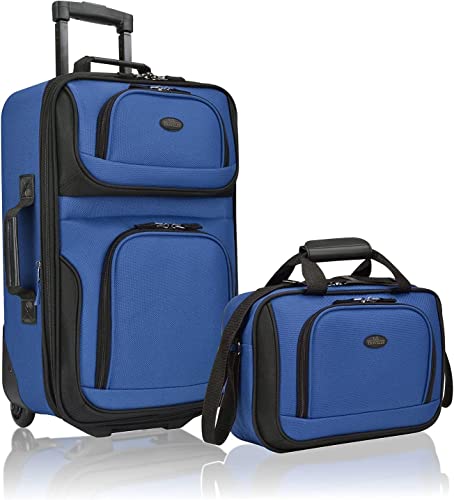
INTERIOR DETAILS: Our carry-on luggage suitcases are fully lined with mesh zip pockets and compression straps. A spacious, organized main compartment makes packing your carry-on essentials easy. 2" expansion provides additional packing space, perfect for last-minute items like souvenirs. Pack heavier items at the bottom to prevent tipping.
Frequently Asked Questions
Who is the current owner of Hilton Hotels?
There is no single current owner. Hilton Hotels & Resorts is part of Hilton Worldwide Holdings Inc., a publicly traded corporation listed on the New York Stock Exchange under ticker HLT. The company’s equity is held by its shareholders.
Does HNA Group still own Hilton Hotels?
No. HNA acquired an approximately 25% equity interest in Hilton from Blackstone in March 2017. Hilton’s SEC filings state that HNA fully divested its Hilton investment in April 2018.
Has Hilton Hotels always been publicly owned?
No. Hilton Hotels Corporation became publicly traded in 1946. Blackstone acquired Hilton in 2007 and took it private. Hilton Worldwide Holdings Inc. returned to the public stock market in December 2013.
Who founded Hilton Hotels?
Conrad N. Hilton founded the hotel business associated with the Hilton name. He entered the hotel industry when he purchased the Mobley Hotel in Cisco, Texas, in 1919. The first hotel formally named a Hilton opened in Dallas in 1925.
Is Hilton Hotels a publicly traded company?
The corporate parent, Hilton Worldwide Holdings Inc., is publicly traded on the New York Stock Exchange under the ticker symbol HLT.
Who are Hilton’s biggest shareholders?
Hilton’s 2026 proxy statement listed The Vanguard Group with 11.1% of outstanding common stock and BlackRock, Inc. with 8.4%. Ownership levels can change as shares are traded, so current SEC filings should be checked for later changes.
Does the Hilton family still own Hilton?
The Hilton family remains connected to Conrad Hilton’s legacy, but Hilton Worldwide is not a privately owned family company. Hilton Worldwide Holdings Inc. is publicly traded and its equity is distributed among shareholders.
Does Hilton own every Hilton-branded hotel?
No. Many Hilton-branded hotels belong to independent property owners and operate under franchise or management agreements. As of March 31, 2026, Hilton reported 8,339 franchised or licensed properties and 875 managed properties across its total system, compared with 46 properties in its ownership segment.
Is the Conrad N. Hilton Foundation part of Hilton Worldwide?
No. Conrad Hilton established the Foundation in 1944, but the Conrad N. Hilton Foundation is an independent philanthropic organization. Hilton Worldwide Holdings Inc. is the separate publicly traded hospitality company.
Sources
- Hilton Worldwide Holdings Inc. 2025 Form 10-K — U.S. Securities and Exchange Commission — corporate structure, hotel ownership model, franchising, and year-end property data.
- Hilton Worldwide Holdings Inc. 2026 Proxy Statement — U.S. Securities and Exchange Commission — current public ownership and principal shareholder disclosures.
- Hilton Worldwide Holdings Inc. 2018 Form 10-K — U.S. Securities and Exchange Commission — HNA and Blackstone investment history and their 2018 exits.
- The Story of Hilton — Hilton — official company chronology covering the Mobley Hotel, Dallas Hilton, coast-to-coast expansion, airport hotels, and Hilton International.
- Conrad N. Hilton — University of Houston Conrad N. Hilton College — Conrad Hilton’s education, family, business history, and educational philanthropy.
- Founder and History — Conrad N. Hilton Foundation — creation of the Foundation and Conrad Hilton’s philanthropic legacy.
