
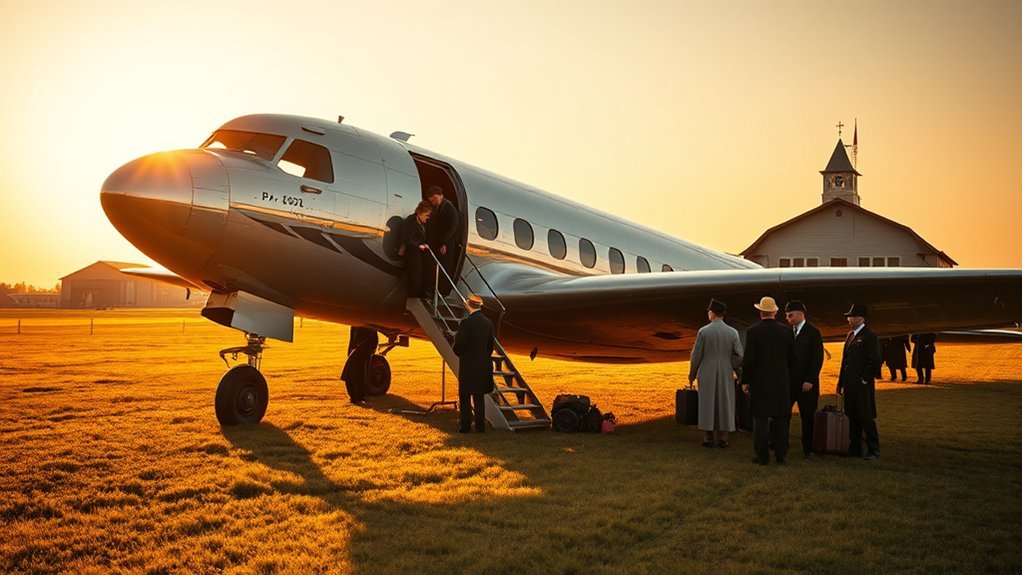
Last Updated on September 11, 2026 by Daniel Globe
Commercial aviation began as a tiny one-passenger service across Tampa Bay and grew into a global transport system. The key starting date is January 1, 1914, when the St. Petersburg-Tampa Airboat Line began the first scheduled passenger airline service. Airmail contracts, federal safety rules, better aircraft, jet engines, and deregulation later made flying more practical and widely available.
Quick Answer
Commercial aviation is generally dated to January 1, 1914, when the St. Petersburg-Tampa Airboat Line began the world’s first scheduled passenger airline service. Pilot Tony Jannus carried one paying passenger across Tampa Bay in 23 minutes. Regular tickets cost $5, while the inaugural seat sold at auction for $400.
Key Takeaways
- The first scheduled passenger airline service began between St. Petersburg and Tampa, Florida, on January 1, 1914.
- The normal one-way fare was $5. The often-quoted $400 price applied only to the auctioned inaugural seat.
- Government airmail contracts helped early airlines build routes and survive while passenger demand remained small.
- Federal regulation, the DC-3, pressurized cabins, jet aircraft, and the Boeing 747 helped turn flying into mass transportation.
- The 1978 Airline Deregulation Act changed U.S. fares, routes, and market entry, while modern aviation now carries billions of passengers each year.
What Counts as Commercial Aviation?
Commercial aviation means operating aircraft to carry passengers, cargo, or mail for payment. It is part of civil aviation, which also includes private flying, flight training, corporate aircraft, and other nonmilitary operations. The 1914 Tampa Bay service matters because it combined a published schedule, a regular route, and paying passengers, the basic features of an airline.
When Did Commercial Aviation Start?
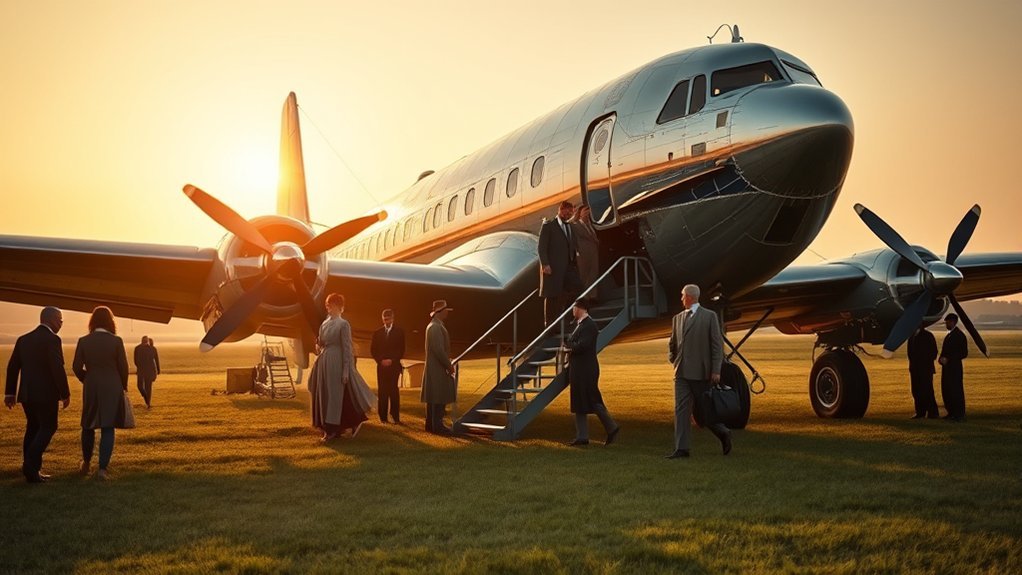
Commercial passenger aviation began on January 1, 1914, when pilot Tony Jannus flew a Benoist Model XIV airboat from St. Petersburg to Tampa, Florida. The trip covered about 18 miles and took 23 minutes, compared with a much longer trip around the bay by rail. The aircraft carried only the pilot and one passenger in an open cockpit.
Former St. Petersburg mayor A. C. Phiel paid $400 at auction for the honor of taking the first flight. That was not the regular ticket price. Later passengers paid $5 each way. The airline operated for about three months and carried roughly 1,200 passengers before closing when its local subsidy and seasonal tourist demand were no longer enough to support it. The Smithsonian National Air and Space Museum documents the route, fare, aircraft, and short operating history.
Note: The $400 figure was the auction price for the first seat. It should never be described as the normal fare, which was $5 one way.
The First Commercial Flights and Early Airlines
The St. Petersburg-Tampa Airboat Line proved that people would pay for a scheduled flight, but it did not create a stable airline industry by itself. Early passenger ventures often failed because aircraft carried few people, operating costs were high, weather disrupted schedules, and demand was limited.
After World War I, a surplus of aircraft and trained pilots encouraged new aviation businesses. Airlines gradually connected more cities, but mail contracts and government support remained essential. By the late 1920s and 1930s, larger aircraft such as the Ford Tri-Motor and Douglas DC-3 made scheduled passenger service more practical.
| Year | Milestone | Why It Mattered |
|---|---|---|
| 1914 | First scheduled passenger airline service | Showed that a published route and paid passenger service could work. |
| 1918 | Scheduled U.S. airmail service began | Created routes, demand, and operating experience for future airlines. |
| 1925 | Air Mail Act | Allowed the government to contract private companies to carry mail. |
| 1926 | Air Commerce Act | Established federal roles in pilot licensing, aircraft certification, airways, and traffic rules. |
| 1938 | Civil Aeronautics Act | Strengthened federal oversight of safety and airline economics. |
| 1958 | U.S. international jet service with the Boeing 707 | Made long-distance travel faster and helped start the American Jet Age. |
| 1978 | Airline Deregulation Act | Reduced federal control over U.S. fares, routes, and airline entry. |
Why Early Air Travel Felt So Rough
Early passenger flying was often cold, noisy, cramped, and physically tiring. The exact experience depended on the aircraft and year. The 1914 Benoist airboat had an open cockpit, while many later airliners had enclosed cabins. Even enclosed aircraft were commonly unpressurized, poorly insulated, and easily disturbed by weather.
Open Cockpit Conditions
In open-cockpit aircraft, passengers and pilots faced wind, spray, rain, cold, and engine noise directly. Short routes reduced the exposure, but the ride still felt more like an outdoor adventure than modern transportation. Airmail pilots also flew open-cockpit aircraft and often navigated by visible landmarks in difficult weather.
- Passengers needed warm clothing and protection from wind.
- Weather could delay or cancel a flight with little warning.
- Small aircraft offered almost no space for baggage or movement.
Loud, Shaky Flights
Early enclosed airliners were not quiet. The Smithsonian reports that a typical Ford Tri-Motor could reach nearly 120 decibels during takeoff. Engine vibration, propeller noise, and airflow made normal conversation difficult. Unpressurized aircraft also flew lower, where turbulence and weather could make the ride rougher.
Crude Onboard Comfort
Cabin comfort improved slowly. Early airlines used basic seats and offered limited heating, ventilation, food, and toilet facilities. Air sickness was common. Crews sometimes used megaphones to speak over the engine noise, and airlines offered simple items such as chewing gum to help passengers cope with pressure changes.
In 1930, Ellen Church became the first female airline stewardess after convincing Boeing Air Transport that trained nurses could improve safety, comfort, and public confidence. Flight attendants later became central to passenger safety as well as onboard service. The Smithsonian’s early commercial aviation collection explains these cabin conditions and passenger trends.
How Air Mail Kept Airlines Flying
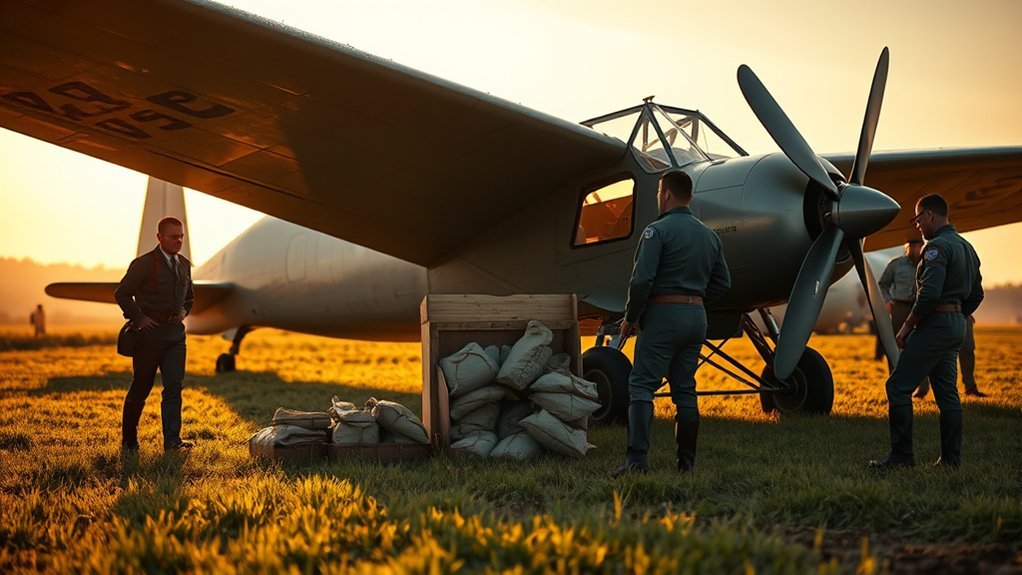
Passenger demand alone could not support most early airlines. Airmail gave carriers a dependable reason to fly regular routes and helped pay for aircraft, pilots, maintenance, and ground facilities. The U.S. Post Office Department began scheduled airmail service between Washington, Philadelphia, and New York on May 15, 1918. The U.S. Postal Service identifies it as the first U.S. scheduled airmail route.
Air Mail Revenue
The Air Mail Act of 1925, also called the Kelly Act, allowed the federal government to contract private companies to carry mail. Those contracts encouraged the formation and expansion of airlines. The FAA’s aviation history says the act helped create a profitable commercial airline industry.
The Air Commerce Act of 1926 then gave the federal government responsibility for air traffic rules, pilot licensing, aircraft certification, airways, and navigation aids. The Civil Aeronautics Act of 1938 strengthened federal oversight after public concern about aviation safety.
Early Navigation Tools
Early pilots used maps, compasses, railroad tracks, rivers, towns, and other landmarks to stay on course. Night airmail routes later gained lighted beacons, while radio communication, weather reporting, and federal airways made scheduled service more reliable. These systems were far more important to navigation than ordinary clothing or equipment such as coats and helmets.
Pro Tip: When comparing early aviation milestones, separate passenger service, mail service, aircraft technology, and government regulation. Each developed on a different timeline.
From the DC-3 to Pressurized Airliners
The Douglas DC-3, introduced in the mid-1930s, helped airlines carry more passengers with better speed, range, reliability, and operating economics. By 1938, it handled most U.S. commercial airline traffic. Its success showed that passenger revenue could become more important, although mail remained valuable.
Pressurization also changed the experience. The Boeing 307 Stratoliner, first flown in the late 1930s, was the first airliner with a pressurized fuselage. Pressurized aircraft could fly higher above much of the weather, improving comfort and helping pave the way for postwar long-distance travel.
World War II accelerated aircraft production, navigation, airport development, and pilot training. After the war, larger and more capable piston airliners carried growing numbers of passengers. In 1955, more Americans traveled by air than by train for the first time.
How the Jet Age Changed Flying
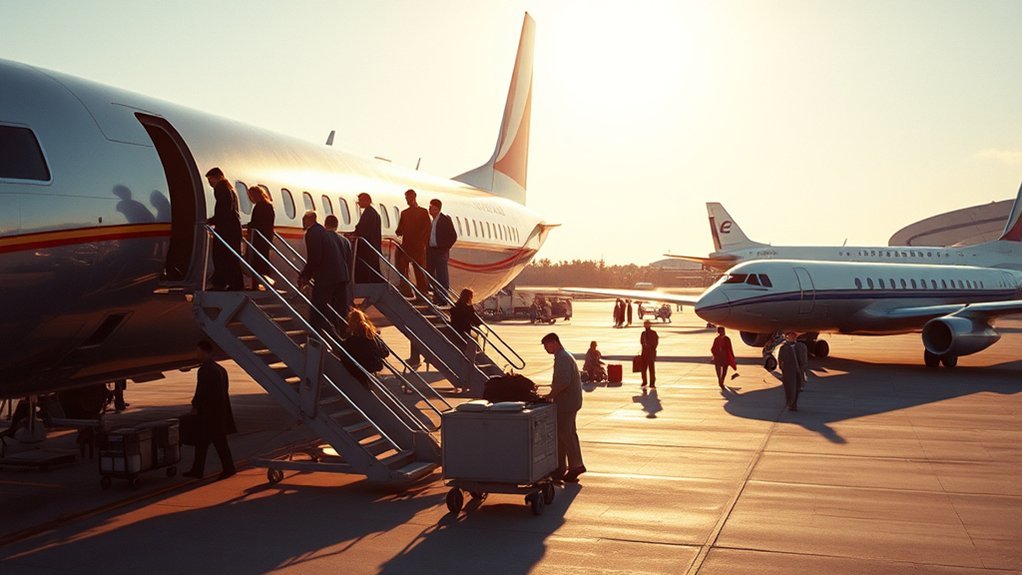
Jet airliners made commercial flying faster, higher, and more productive. In October 1958, Pan American began U.S. international jet service with the Boeing 707. The Douglas DC-8 followed, and jets quickly replaced many long-range piston airliners.
Jets shortened trips and allowed airlines to schedule more passenger miles with each aircraft. They also offered a smoother cabin experience than many earlier piston aircraft, although early jet engines created significant exterior noise around airports.
- Faster aircraft made same-day long-distance business travel possible.
- Higher capacity lowered operating cost per seat on many routes.
- More dependable schedules made air travel easier to plan.
- The Boeing 747, which entered service in 1970, brought wide-body capacity to long-distance routes.
The Smithsonian’s Jet Age history explains how the 707, 747, falling fares, and social change expanded access to flying.
Who Could Afford Flying as Fares Fell?
For decades, commercial flying remained mostly for wealthy travelers and business passengers. In 1929, U.S. airlines carried only about 6,000 passengers. That figure rose to more than 450,000 by 1934 and about 1.2 million by 1938, but trains and buses still carried far more people.
After World War II, larger aircraft, better airports, higher incomes, and falling travel times expanded the market. Between 1955 and 1972, U.S. airline passenger numbers more than quadrupled. By 1972, almost half of Americans had flown at least once, although business travelers still made up much of the market.
Access did not expand equally. Ticket prices, geography, racial discrimination, segregated airport facilities, and limited service kept many people from enjoying the same benefits. The history of mass air travel is therefore a story of both wider mobility and uneven access.
How Deregulation Reshaped U.S. Air Travel
Before 1978, the federal government controlled many parts of the U.S. airline market, including routes, entry, and fares. The Airline Deregulation Act of 1978 reduced that economic control. Airlines gained more freedom to choose routes and prices, while new carriers could enter the market more easily.
Deregulation increased competition and helped produce more fare choices on many routes. It also encouraged hub-and-spoke networks and frequent-flyer programs. The results were not identical everywhere. Large markets often gained more competition, while some smaller communities needed continued federal support to preserve scheduled service.
How Commercial Aviation Affects Travel Today
Commercial aviation now connects cities, families, businesses, tourism markets, cargo networks, and emergency operations around the world. Online booking, computerized scheduling, modern air traffic control, stronger security systems, and high-capacity aircraft have made scheduled flight a routine part of global life.
According to the International Civil Aviation Organization, scheduled airlines carried about 4.7 billion passengers on 37.4 million departures in 2024. Those preliminary figures show how far the industry has grown from one passenger crossing Tampa Bay.
Commercial aviation grew from one scheduled passenger on January 1, 1914, to about 4.7 billion scheduled passengers worldwide in 2024.
Modern aviation still faces important challenges. Airlines, regulators, airports, and manufacturers must manage safety, security, congestion, passenger rights, noise, emissions, climate risks, and access for smaller communities. Sustainable aviation fuel, more efficient aircraft, improved operations, and new propulsion research are part of the effort to reduce environmental impact.
Frequently Asked Questions
When did commercial aviation really start?
Commercial passenger aviation is generally dated to January 1, 1914, when the St. Petersburg-Tampa Airboat Line began the first scheduled passenger airline service. Earlier flights carried people, but this service had a regular route, published schedule, and paying passengers.
How much did the first commercial airline ticket cost?
The regular one-way fare was $5. A. C. Phiel paid $400 at auction for the honor of taking the inaugural flight, so the $400 figure should not be treated as the standard ticket price.
Why was airmail important to early airlines?
Airmail contracts provided steady revenue when few people could afford passenger flights. They also supported regular routes, pilot experience, navigation systems, airports, and aircraft development.
When did the Jet Age begin in the United States?
The American commercial Jet Age is commonly linked to October 1958, when Pan American began international Boeing 707 service. Domestic U.S. jet services followed soon afterward.
What are the 5 C’s in aviation?
The phrase is commonly used as a memory aid for a pilot who is lost: Climb, Communicate, Confess, Comply, and Conserve. Wording can vary by training source. It is not a five-part model of capacity, cost, convenience, customer service, and communication.
What is the 3-to-1 rule for pilots?
The 3-to-1 rule is a descent-planning estimate: allow about 3 nautical miles for each 1,000 feet of altitude to lose. It is a mental planning tool, not a substitute for an approved procedure, air traffic control instruction, aircraft performance data, or safe operating judgment.
Is Angelina Jolie a licensed pilot?
She has been widely described in public profiles as a private pilot. However, this celebrity fact is unrelated to when commercial aviation began and does not help explain airline history. It should not be used as evidence for any commercial aviation claim.
Conclusion
Commercial aviation started on January 1, 1914, with a 23-minute scheduled flight across Tampa Bay. The service was small and short-lived, but it introduced the basic airline model: a regular route, a timetable, and paying passengers. Airmail contracts, federal oversight, better aircraft, pressurization, jets, mass-market fares, and deregulation then transformed that experiment into a global transportation system.
Sources
- Smithsonian National Air and Space Museum: Early Airlines You Might Not Have Heard Of — first scheduled route, flight time, fare, passenger total, and closure.
- Smithsonian National Air and Space Museum: Early Commercial Aviation — early cabin conditions, noise, passenger growth, and flight attendants.
- U.S. Postal Service: Start of Scheduled Airmail Service — May 15, 1918, scheduled U.S. airmail route.
- Federal Aviation Administration: A Brief History of the FAA — the Air Mail Act, Air Commerce Act, Civil Aeronautics Act, and deregulation.
- Smithsonian National Air and Space Museum: The Jet Age — Boeing 707, Boeing 747, falling fares, and expanding access.
- International Civil Aviation Organization: The World of Air Transport in 2024 — global scheduled passenger and departure statistics.
