
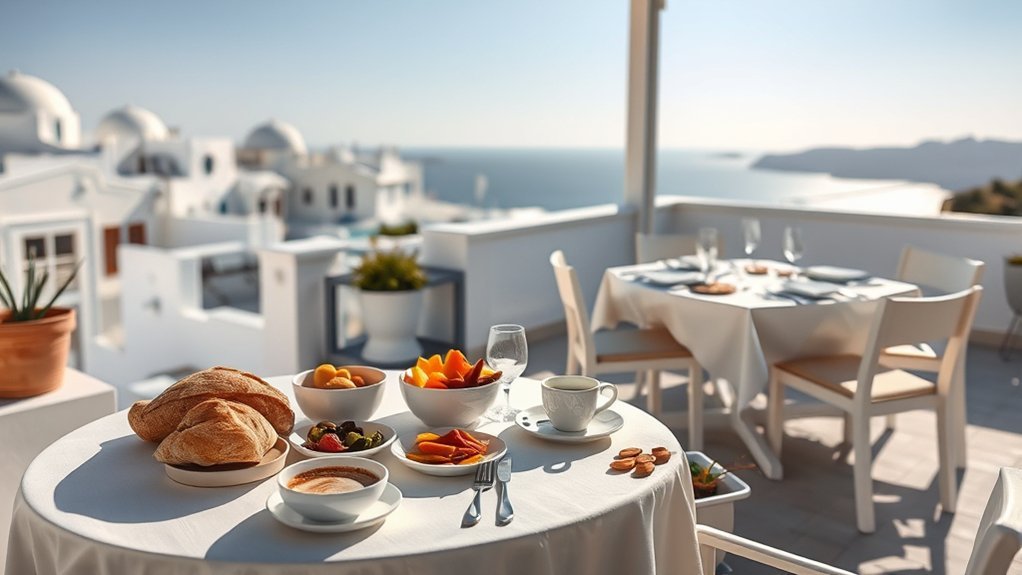
Last Updated on September 11, 2026 by Daniel Globe
In Greece, half board, sometimes shown as HB or 1/2 board, usually means your room rate includes breakfast and dinner but not lunch. The exact meal format, drinks, restaurant access, and swap rules depend on the hotel, so the booking description matters more than the label alone.
Quick Answer
Half board in Greece normally includes your hotel room, breakfast, and an evening meal. Lunch, snacks, room service, minibar items, and most dinner drinks are usually extra unless the hotel lists them. Some properties let you exchange dinner for lunch or use a dining credit, but you must confirm this before booking.
Key Takeaways
- Standard half board usually covers breakfast and dinner, while lunch remains at your expense.
- Dinner drinks are often excluded, although water or selected beverages may be included at some hotels.
- Buffets are common, but set menus, à la carte credits, reservations, and dress codes vary by property.
- Half board works best when you plan to explore during the day but want a predictable evening meal.
- Compare the half-board price with the bed-and-breakfast rate before deciding whether it offers real value.
Disclosure: As an Amazon Associate I earn from qualifying purchases. Some links on this page are affiliate links, at no extra cost to you.
What Is Half Board in Greece?
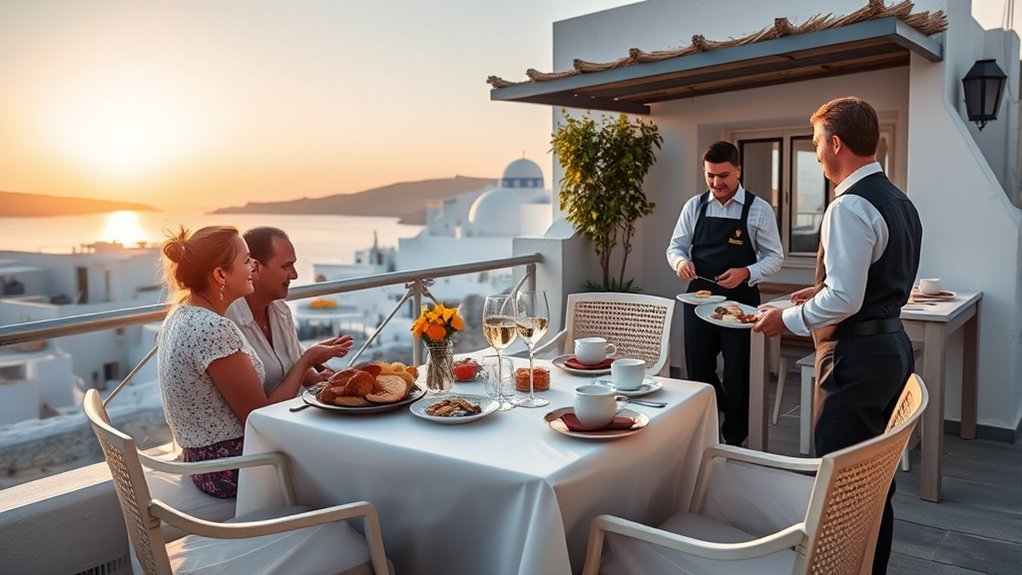
Half board is a hotel meal plan that normally includes breakfast and an evening meal. Lunch is not part of the standard plan. This matches the common travel-industry definition used for hotel bookings, including the board-basis guidance published by TUI.
In practice, Greek hotels set their own details. Breakfast and dinner may be served in the main buffet restaurant, through a set menu, or through a limited dining-credit system. A few hotels allow you to replace dinner with lunch when you notify the restaurant in advance. Treat that as a property-specific benefit, not a standard half-board right.
What’s Included in Half Board in Greece?
The following table shows what you can generally expect. Your hotel’s booking confirmation and meal-plan terms always take priority.
| Item | Typical Half-Board Coverage | What to Confirm |
|---|---|---|
| Accommodation | Your selected room type | Occupancy, extra-bed rules, and room taxes or fees |
| Breakfast | Usually buffet or set breakfast | Serving hours, early breakfast, and included drinks |
| Second meal | Usually dinner | Buffet, set menu, lunch swap, or dining credit |
| Breakfast beverages | Often coffee, tea, juice, or water | Fresh juice, specialty coffee, and bottled drinks |
| Dinner beverages | Often charged separately | Whether water, soft drinks, beer, or wine is included |
Pro Tip: Save a screenshot or copy of the meal-plan description when you book. It gives you a clear record of the meals, drinks, restaurant access, and special conditions included in your rate.
What Half Board Usually Does Not Include
Unless your booking says otherwise, plan to pay separately for:
- Lunch and food bought during day trips
- Snacks, ice cream, pool-bar food, and late-night food
- Alcoholic drinks and most soft drinks with dinner
- Minibar items and room service
- Premium dishes, special events, or lobster nights
- À la carte restaurants outside the included allowance
- Replacement meals or refunds when you miss the scheduled service
Note: “Half Board Plus” is not the same as standard half board. It commonly adds selected drinks with meals, but the type, quantity, and serving times vary by hotel.
How Half Board Works Day to Day
A typical half-board day starts with breakfast at the hotel, followed by sightseeing, beach time, or a day trip. You arrange and pay for lunch yourself, then return during the hotel’s dinner service. This routine gives you a reliable start and end to the day without requiring you to return for a midday meal.
Meal Format and Restaurant Access
Many Greek resorts use a main buffet restaurant for half-board meals. Other properties serve a set menu or allow a credit toward selected à la carte restaurants. Reservations, supplements, and excluded menu items may apply. For example, Atrium Hotels & Resorts includes breakfast and dinner in the main restaurant but excludes beverages and applies separate conditions to à la carte dining.
Drinks and Upgrades
Do not assume dinner drinks are included. Some hotels charge for every beverage, while others include still water or selected drinks. The Apollonia Beach Resort & Spa, for example, lists breakfast and dinner under half board, includes limited beverages under specified conditions, and charges for other dinner drinks. Some hotels also let you upgrade to all-inclusive, but the upgrade may need to cover every guest and every remaining night.
Lunch Swaps and Dining Credits
A lunch swap is possible at some hotels but not all. Grecotel Caramel states that half-board guests may replace dinner with lunch on the same day when they inform the restaurant team in advance. It also offers a defined credit at participating à la carte restaurants. Always ask whether advance notice or a reservation is required.
Children, Dietary Needs, and Dress Codes
Children’s prices, free-meal ages, kids’ menus, and baby-food services vary. Contact the hotel before booking when these details affect your budget. For food allergies or intolerances, notify the property in advance and speak with restaurant staff when you arrive. European food-information rules cover foods supplied by mass caterers and require information about specified allergens, but you should still confirm how the hotel manages cross-contact. Some resort restaurants also require smart-casual clothing and appropriate footwear at dinner.
Half Board vs. Full Board in Greece
Full board normally includes breakfast, lunch, and dinner. Half board removes the included lunch, which can suit travelers who spend most of the day away from the hotel.
| Feature | Half Board | Full Board |
|---|---|---|
| Meals | Breakfast and usually dinner | Breakfast, lunch, and dinner |
| Daytime freedom | More freedom to eat while exploring | Best value when you return for lunch |
| Drinks | Usually limited or extra | May still be limited or extra |
| Best for | Day trips and flexible lunches | Resort days and predictable meal schedules |
Full board is not automatically all-inclusive. It normally covers three meals, while drinks, snacks, and other services may still cost extra.
Half Board vs. Bed and Breakfast in Greece

Bed and breakfast includes your room and breakfast only. It gives you the most freedom to choose a different restaurant every evening. Half board adds a planned second meal, which can reduce daily decision-making and make dinner costs more predictable.
Choose bed and breakfast when your hotel is near many restaurants, you expect to stay out late, or local dining is a major part of your trip. Choose half board when the hotel is isolated, nearby dinner options are limited, or you prefer returning to a meal that is already arranged.
Half Board vs. All-Inclusive in Greece
All-inclusive plans normally cover more food and drinks than half board, but there is no single universal package. Included brands, restaurant choices, snack times, minibar access, and premium items can differ sharply between resorts. Read the exact hotel description rather than relying on the words “all-inclusive” alone.
Meal Inclusions Compared
| Feature | Half Board | All-Inclusive |
|---|---|---|
| Breakfast | Included | Usually included |
| Lunch | Usually extra | Usually included |
| Dinner | Included | Usually included |
| Snacks | Usually extra | Often included at set times |
| Drinks | Often extra outside breakfast | Selected drinks usually included under hotel rules |
Cost and Flexibility
Half board often has a lower listed price than all-inclusive at the same hotel, but it is not always the cheaper trip overall. Add your expected lunch, drinks, snacks, and restaurant spending before comparing totals. All-inclusive may offer better value when you plan to spend most days at the resort and use the included food and drinks. Half board may offer better value when you will be away for much of the day.
A useful comparison is:
Half-board upgrade per night ÷ number of included dinners = effective prepaid dinner cost.
Compare that figure with the type of dinner you would realistically buy outside the hotel. Use the actual rates for your travel dates instead of relying on a general savings percentage.
Best Fit for Travelers
| Choose Half Board When… | Choose All-Inclusive When… |
|---|---|
| You plan regular day trips | You expect to spend most days at the resort |
| You want lunch at local tavernas | You want meals, snacks, and selected drinks covered |
| You drink little at the hotel | You expect to use the included drink plan |
| You want structure without a full resort package | You value predictable on-site spending |
Half Board Plus and Dine-Around Plans
Some Greek hotels offer upgraded versions of half board. Half Board Plus may include selected beverages with meals. A dine-around plan may let you use certain restaurants or apply a fixed credit toward à la carte dining. These names are marketing terms rather than standardized packages, so check the included restaurants, reservation rules, credits, supplements, and excluded menu items.
Products Worth Considering

Is Half Board Worth Booking in Greece?
Half board can be worth booking when the included dinner matches your schedule and the price difference from bed and breakfast is reasonable. It is less useful when you expect to eat out every night, return after dinner service, or stay in an area where you specifically want to explore many local restaurants.
Cost vs. Convenience
Use the hotel’s real prices to compare the plans. Check the total rate for the same room, dates, occupancy, and cancellation terms. Then consider the cost of dinner, drinks, transport to restaurants, and the value of having a meal ready at the hotel. Avoid assuming that half board saves a fixed percentage because prices vary by island, season, hotel category, and promotion.
Dining Flexibility
Half board leaves lunch open, which works well for beach days, archaeological sites, boat trips, and village visits. Dinner is less flexible because you need to return during the hotel’s service hours. A lunch-swap option can help, but only when the property allows it and you follow its notice rules.
Best for Travelers
- Families who want a predictable breakfast and evening meal
- Couples who plan daytime excursions but prefer easy dinners
- Guests staying at remote resorts with limited nearby dining
- Travelers who want more freedom than full board or all-inclusive
Bed and breakfast may be better for food-focused city or island trips with many restaurants nearby. Full board may be better for guests who will remain at the property for lunch. All-inclusive may be better for resort-centered stays where included snacks and drinks will be used often.
What to Check Before Booking Half Board
- Which two meals are included? Confirm whether the second meal is dinner or a choice of lunch or dinner.
- Are dinner drinks included? Ask specifically about water, soft drinks, beer, and wine.
- Where are meals served? Check whether half board is limited to the main restaurant.
- Is the meal a buffet, set menu, or credit? Ask about supplements and excluded dishes.
- What are the serving hours? Make sure dinner times fit your flights and day trips.
- Can you swap or skip a meal? Ask about advance notice, packed meals, and missed-meal rules.
- What applies to children? Confirm age bands, child prices, kids’ menus, and baby-food support.
- Can dietary needs be handled safely? Contact the hotel before booking when allergies or strict diets are involved.
Products Worth Considering

Frequently Asked Questions
What is half board in Greece?
Half board in Greece usually includes your hotel room, breakfast, and dinner. Lunch is normally excluded. The hotel may serve buffet meals, a set menu, or a dining credit, so check the individual booking terms.
Does half board include drinks in Greece?
Breakfast drinks are often included, but dinner drinks are commonly limited or charged separately. Some hotels include water, and Half Board Plus may include selected beverages. Confirm the exact drink policy before booking.
Can you choose lunch instead of dinner?
Sometimes. Certain hotels allow a same-day lunch swap when you notify the restaurant in advance, but many plans include dinner only. The option must be stated by the hotel or confirmed directly.
Is half board better than all-inclusive?
Half board is often better for travelers who spend their days exploring and want lunch away from the hotel. All-inclusive can be better for resort-centered trips where you will use the included lunch, snacks, and drinks.
Is half board the same as all-inclusive?
No. Half board normally covers two meals a day. All-inclusive generally covers three meals plus selected snacks and drinks, although the exact inclusions vary by resort.
Is half board worth it for families?
It can be, especially when the hotel offers suitable child pricing, familiar food, and convenient dinner hours. Compare the family-rate difference with what you would otherwise spend on dinner, and check whether children’s drinks are included.
What happens if you miss dinner?
Policies vary, so do not assume you will receive a replacement meal or refund. Ask the hotel what happens after late arrivals or full-day excursions and whether advance notice is required.
Conclusion
Half board in Greece gives you a useful middle ground: breakfast and usually dinner are arranged, while lunch remains free for local tavernas, beach cafés, and day trips. Its value depends on the hotel’s price difference, drink policy, meal quality, service hours, and restaurant rules. Check those details before paying, then choose the plan that matches how you will actually spend your days.
Sources
- TUI: What do I get within my board basis? — definitions of bed and breakfast, half board, full board, Half Board Plus, and all-inclusive.
- Atrium Hotels & Resorts: Half Board Package — a Greek hotel example covering breakfast, dinner, drinks, and à la carte conditions.
- Apollonia Beach Resort & Spa: Meal Plan Information — a Greek resort example covering included meals, beverages, upgrades, and restaurant rules.
- Grecotel Caramel: Dining and Meal Plans — lunch swaps, dining credits, beverages, dietary needs, and dress code.
- EUR-Lex: Regulation (EU) No 1169/2011 — food-information and allergen requirements that apply to mass caterers.
