
Last Updated on July 25, 2026 by Daniel Globe
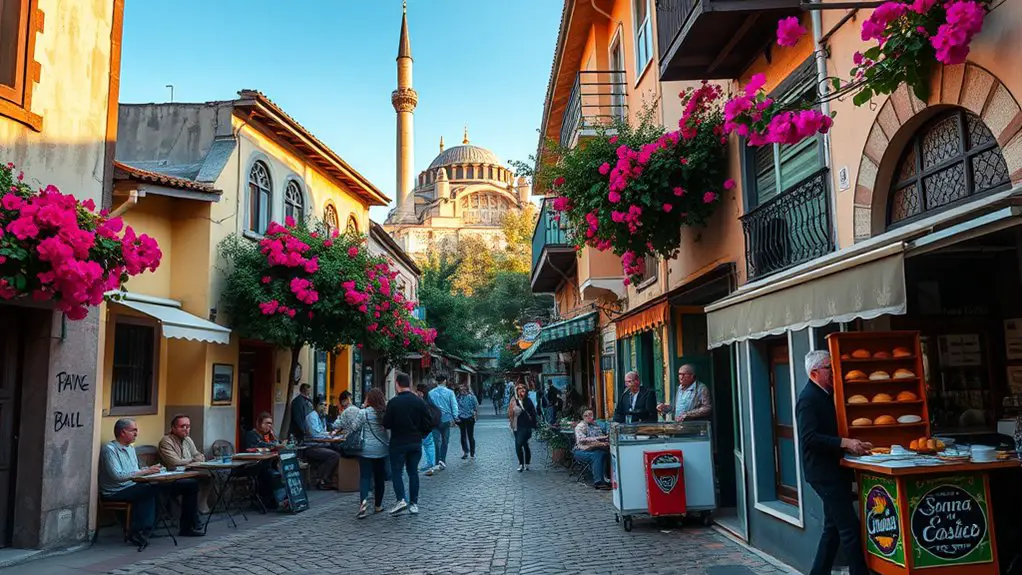
Balat is one of Istanbul’s most rewarding neighborhoods to explore on foot, but the best walk usually includes neighboring Fener as well. Together, the two areas offer steep historic streets, colorful houses, Orthodox churches, Jewish heritage, cafés, antique shops, and Golden Horn views. A little planning helps because several famous sights are active places of worship, and some are not open for casual walk-in visits.
Quick Answer
A good Balat walking tour takes about half a day. Start in Fener for the Ecumenical Patriarchate, continue toward the Bulgarian St. Stephen Church and Ahrida Synagogue area, then climb into Balat for Kiremit Caddesi, stepped lanes, cafés, and antique shops. Wear grippy shoes, allow extra time for hills, and arrange synagogue access in advance.
Key Takeaways
- Treat Balat and Fener as neighboring but distinct quarters; many popular “Balat” walks include important sights in both.
- The Patriarchal Church of St. George is a three-aisled basilica in Fener, while St. Stephen is a Bulgarian Orthodox iron church completed in 1898.
- Ahrida Synagogue is a major Balat heritage site, but visits should be arranged through the Turkish Jewish Community or its listed visitor contacts before you arrive.
- Kiremit Caddesi and the surrounding uphill lanes are known for colorful façades, but these are residential streets, so photograph them respectfully.
- The T5 Eminönü–Alibeyköy tram serves both Fener and Balat, making it the simplest public-transport backbone for this walk.
At a Glance
| Time Required | About 3–4 hours for a relaxed walk with photo and café stops; longer if you enter multiple religious sites |
| Difficulty | Easy to moderate, with steep slopes, stairs, and uneven paving |
| Tools Needed | Comfortable shoes, water, phone or map, weather protection, and identification if required for a pre-arranged synagogue visit |
| Cost | Walking the streets is free; budget separately for transit, food, guided tours, donations, and any site-specific charges |
Disclosure: As an Amazon Associate I earn from qualifying purchases. Some links on this page are affiliate links, at no extra cost to you.
Balat vs. Fener: Know the Difference Before You Walk
Balat and Fener sit side by side along the Golden Horn, and travel guides often combine them into one walking route. That is practical, but the distinction matters. Balat is especially associated with Istanbul’s historic Jewish community and Ahrida Synagogue, while Fener is closely tied to the Greek Orthodox Patriarchate and the Patriarchal Church of St. George.
This means several attractions commonly described as “Balat sights” are actually in Fener or on the boundary between the two quarters. Thinking of the trip as a Fener and Balat walking tour gives you a more accurate picture of the area’s layered history.
Suggested Balat and Fener Walking Route
- Start near Fener: Use the T5 tram and get off at Fener. Walk toward the Ecumenical Patriarchate and the Patriarchal Church of St. George.
- See Fener’s historic streets: Continue through the lanes below the Fener Greek High School. The school is an active institution, so treat it as an exterior architectural stop unless access is specifically authorized.
- Walk toward the Golden Horn: Continue to the Bulgarian St. Stephen Church, the famous iron church on the waterfront.
- Enter Balat: Head toward Ahrida Synagogue. Do not assume walk-in entry; arrange a visit beforehand if seeing the interior is important to you.
- Climb to the colorful streets: Explore Kiremit Caddesi and nearby stepped lanes such as Merdivenli Yokuş. Expect steep grades and residential doorways.
- Finish with food or coffee: Wander the café and antique-shop streets around central Balat, then return toward the waterfront and the Balat T5 stop.
Pro Tip: Walk from Fener toward Balat rather than zigzagging between isolated photo spots. You will see the religious and civic landmarks first, then finish in the more café-heavy and colorful residential streets.
Exploring the Historic Streets of Balat
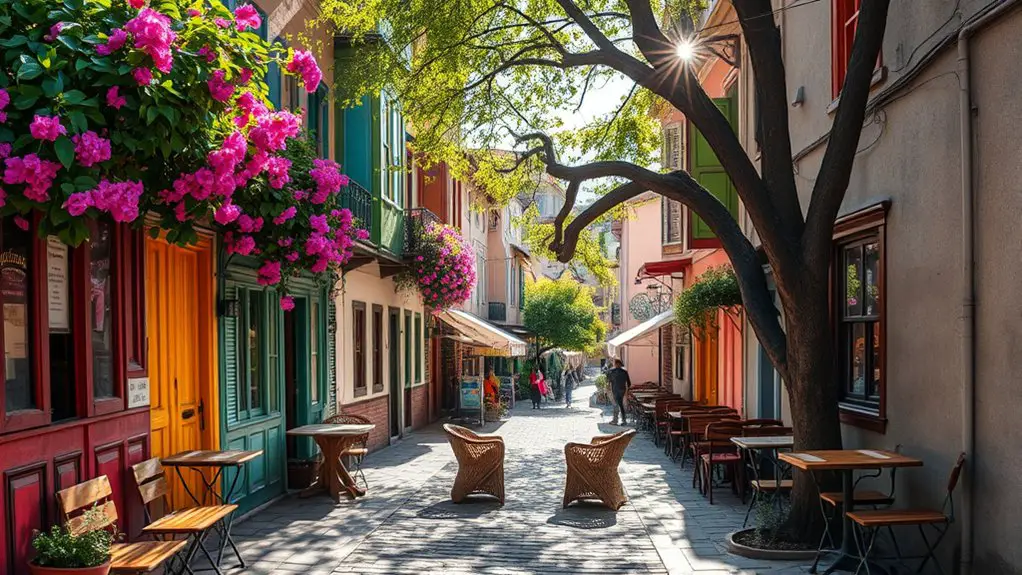
As you stroll through Balat’s narrow streets, the neighborhood’s history appears in rows of timber and masonry houses, projecting upper floors, small courtyards, workshops, religious buildings, and later restorations. UNESCO has documented rehabilitation work in the Fener and Balat districts, reflecting the long-running effort to conserve this historic urban fabric.
It is safer to describe the area as a mix of Ottoman-era vernacular housing and later urban architecture than to label the colorful façades broadly as “Byzantine.” Many of the buildings visitors photograph today were built or altered long after the Byzantine period.
Pay attention to the details: bay windows, wooden trim, ironwork, worn stone, steep street alignments, and the way newer paint sits beside visibly older construction. These contrasts make the neighborhood feel layered rather than frozen in one period.
Balat is best understood as a lived-in historic neighborhood, not an open-air museum: its architecture, shops, homes, schools, and places of worship are still part of everyday city life.
Must-See Churches and Synagogues
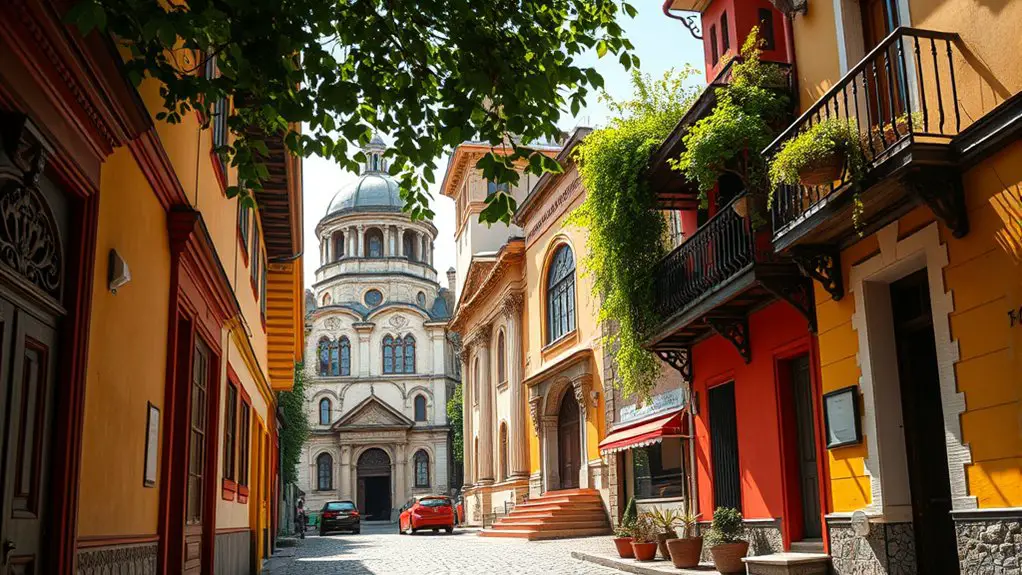
Religious heritage is one of the strongest reasons to walk through Fener and Balat, but several original descriptions need careful distinction.
Patriarchal Church of St. George
The Ecumenical Patriarchate’s official history describes the current Church of St. George in Fener as a traditional three-aisled basilica. The church was refurbished in 1614, rebuilt after a fire in 1720, repaired in 1836, and later restored. Its interior is notable for its iconostasis, icons, relics, woodwork, and other sacred furnishings rather than for a simple “Byzantine architectural style” label.
Because it is an active church, visit quietly, dress respectfully, and avoid disrupting services. Service times and special observances can affect what visitors can see.
Ahrida Synagogue
Ahrida Synagogue is one of Balat’s most important Jewish heritage sites. The Turkish Jewish Community identifies it as an early-15th-century synagogue named for Ohrid, the town from which its founders came. Its best-known interior feature is the ship-prow-shaped bimah, or Torah reading platform.
Warning: Do not build your day around walking into Ahrida Synagogue without prior arrangements. The Turkish Jewish Community publishes separate visitor contact information for Balat synagogues. Confirm access requirements before your trip and follow all security instructions you receive.
Bulgarian St. Stephen Church
The waterfront St. Stephen Church is Bulgarian Orthodox, not Greek Orthodox. Istanbul’s official tourism site dates its completion to 1898 and describes its Neo-Gothic and Neo-Baroque character and extensive iron construction. This makes it a very different architectural experience from St. George.
The combination of St. George, Ahrida Synagogue, and St. Stephen Church helps explain why Fener and Balat are so closely associated with Istanbul’s Greek Orthodox, Bulgarian Orthodox, and Jewish histories.
The Vibrant Colorful Houses and Murals
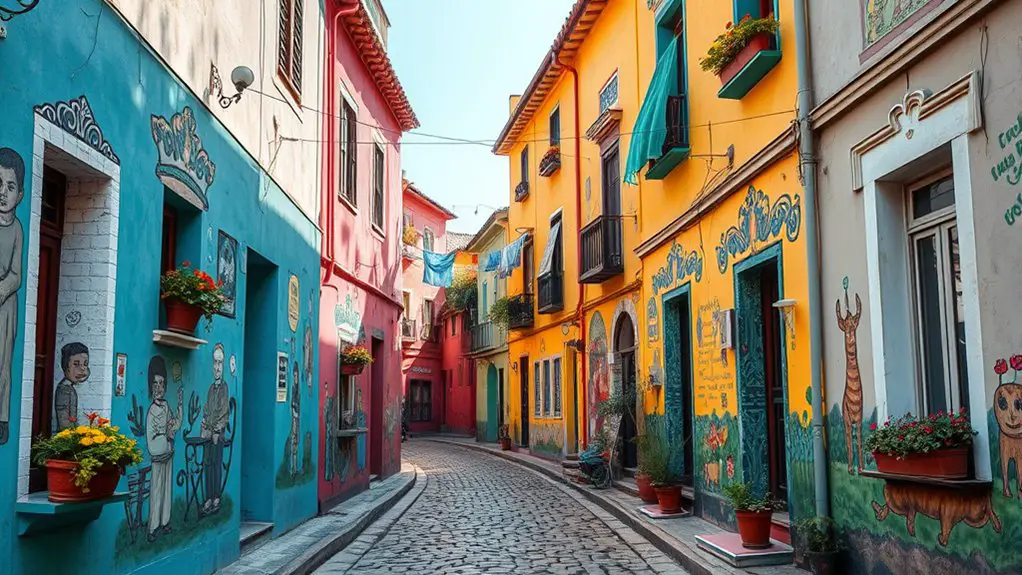
Balat’s bright façades are among its most photographed features. Kiremit Caddesi and nearby uphill lanes are common stops for visitors who want rows of colorful houses, textured walls, stairways, and street scenes.
Street art and painted walls add to the visual mix, but avoid assigning a fixed symbolic meaning to every color or mural unless a specific artist or project documents it. A painted façade may simply reflect a restoration, a business choice, or a resident’s taste.
For better photos and a better experience, slow down and treat the area as a residential neighborhood. Keep doorways clear, avoid leaning on private property, and ask permission before taking close photographs of residents.
- Look for color, texture, bay windows, balconies, and changing street levels.
- Use wider street views rather than blocking a doorway for a posed photo.
- Visit earlier in the day if you prefer quieter streets.
- Keep voices low near homes and active places of worship.
- Expect some façades to look different from older social-media photos because paint and restoration work change over time.
Hidden Gems and Local Markets
Balat rewards wandering, but it is misleading to present the neighborhood as if it has a permanent tourist market packed with standardized spice, textile, and craft stalls. What you are more likely to find are small neighborhood shops, antique and vintage stores, bakeries, cafés, workshops, and changing street-level businesses.
If a market is a major part of your Istanbul plans, treat it as a separate stop and verify its location and operating day. Do not assume a place described online as a “Balat market” is a permanent daily bazaar.
Local Shops, Antique Stores, and Market Reality
The fun of shopping in Balat comes from browsing individual storefronts rather than following a single formal market aisle. Stock changes, and some businesses are geared toward visitors while others serve local residents.
- Browse antique and vintage shops for small décor, prints, records, and secondhand objects.
- Look for independent studios and boutiques rather than assuming every “handmade” item is locally produced.
- Check prices before buying and ask questions if provenance matters to you.
- Use cafés and bakeries as breaks between steep walking sections.
- Choose souvenirs you genuinely like instead of expecting one signature “Balat craft.”
Historic Neighborhood Gems
Beyond the best-known photo streets, several verified heritage stops give the walk more context. Some are best viewed from outside, while others may have access restrictions.
| Place | Why It Matters | Visitor Note |
|---|---|---|
| Fener Greek High School | Landmark red-brick school associated with Fener’s Greek heritage | Treat as an exterior stop unless access is authorized |
| Camcı Çeşmesi area | A restored historic fountain and a quieter example of neighborhood-scale heritage | Good short detour while exploring residential streets |
| Golden Horn waterfront | Provides a flatter walking segment and a visual break from the steep interior streets | Useful for returning to the T5 tram |
Cafés, Restaurants, and Traditional Eateries
Balat’s food scene mixes long-running neighborhood businesses with newer cafés and visitor-oriented spots. Rather than treating every menu as a preserved “traditional” experience, use food stops as a chance to compare older local institutions with newer coffee, brunch, bakery, and dessert businesses.
Turkish coffee and tea are easy choices for a walking break, while bakeries and casual restaurants can make a practical lunch stop. Menus change frequently, so it is better to choose by what looks busy, clean, and appealing on the day than to rely on a generic list of “must-eat” dishes.
- Pause for Turkish coffee or tea between uphill sections.
- Try a bakery for fresh bread, pastries, or sweets.
- Look for small lokantas or casual restaurants if you want a fuller meal.
- Check recent menus and opening hours before making a special trip to one restaurant.
- Remember that popular photo cafés can be busier and more expensive than nearby local options.
These food stops work best as part of the walk rather than as proof that every café represents a centuries-old culinary tradition.
Tips for a Memorable Walking Experience
Preparation matters because Balat is hilly. Wear shoes with good grip, carry water in warm weather, and keep your route compact so you do not repeat the steepest climbs. A small bag keeps your hands free for railings, a camera, or your phone.
Dress for both the weather and the possibility of entering active religious sites. Light layers help in changing conditions, while modest clothing makes church or synagogue visits easier. Always follow posted rules and staff instructions.
| Tip | Why It Matters | Practical Example |
|---|---|---|
| Wear comfortable footwear | Steep and uneven streets can tire your feet quickly | Walking shoes or sneakers with good tread |
| Carry water | Uphill walking feels harder in warm weather | A refillable bottle in a small day bag |
| Plan a one-way route | Reduces unnecessary backtracking on hills | Fener sights first, Balat streets second |
| Dress respectfully | You may enter active places of worship | Carry a light layer and follow each site’s rules |
| Respect residents | Many famous photo spots are private homes | Do not block doors, windows, or narrow lanes |
Practical Information for Visitors
Spring and autumn are comfortable seasons for long walks, but Balat can be visited year-round. In summer, an earlier start helps you avoid the hottest part of the day. In winter, rain can make steep paving more slippery, so footwear matters even more.
Getting to Balat and Fener
The T5 Eminönü–Alibeyköy tram has both Fener and Balat stations. That makes it useful for a one-way walking plan: enter the area at one stop and leave from the other. Buses also serve the Golden Horn corridor, but tram service is easier to explain and usually simpler for first-time visitors.
Accessibility and Terrain
Accessibility is uneven. The waterfront is comparatively flat, but many of Balat’s most photographed streets are steep, narrow, stepped, or paved unevenly. Visitors who use wheelchairs, walkers, or who have limited stamina may prefer to focus on the waterfront religious sites and choose individual uphill stops carefully rather than attempting the entire loop.
Note: Opening hours, worship schedules, security procedures, and visitor access can change. Check the official site or community contact for any religious landmark you consider essential before setting out.
Best Time of Day
Weekday mornings are a good choice for quieter residential streets and easier photography. Late afternoon can also be pleasant, especially near the Golden Horn, but do not assume every church, synagogue, shop, or café will still be open. Build your schedule around the place with the strictest access rules.
Frequently Asked Questions
Are there guided walking tours available in Balat?
Yes. Licensed guides and tour companies offer Fener and Balat walking tours. Compare the route, group size, language, and whether any restricted religious-site entry is actually arranged rather than merely viewed from outside.
What is the best time of year to visit Balat?
Spring and autumn are usually comfortable for a long walk because temperatures are milder than midsummer. Balat is still visitable year-round; adjust your start time, clothing, and footwear for heat, rain, or cold.
Is Balat suitable for visitors with mobility challenges?
Only partly. The Golden Horn waterfront is much easier than the steep residential streets. Cobblestones, uneven paving, steps, and strong slopes can make the classic photo-route difficult. A shorter route focused on Fener, the waterfront, and selected Balat stops may work better.
Are there any annual festivals or events in Balat?
Do not plan a trip around a generic “Balat Festival.” A recurring annual event under that exact name is not documented on the current official Balat tourism page. Cultural events, exhibitions, religious observances, and neighborhood programs can change, so check current official Istanbul listings close to your travel dates.
Can I find souvenir shops or local crafts in Balat?
Yes, but Balat is better approached as a neighborhood of individual antique, vintage, boutique, and small retail shops than as one large craft market. Ask about an item’s origin if you specifically want locally made work.
How long do you need for a Balat walking tour?
Allow about three to four hours for a relaxed Fener-and-Balat route with photo and café stops. Add more time if you have confirmed interior visits or want a full meal.
Can I visit Ahrida Synagogue without a reservation?
Do not count on walk-in entry. The Turkish Jewish Community publishes visitor contact information specifically for Balat synagogues. Arrange and confirm access in advance, then bring any identification requested in your confirmation.
What is the easiest public transport to Balat?
The T5 Eminönü–Alibeyköy tram is the clearest option for most visitors because it stops at both Fener and Balat. Choose the stop that best fits the direction of your walking route.
Conclusion
A Balat walking tour is most rewarding when you look beyond the colorful façades. Pair Balat with neighboring Fener, give the religious sites enough context, and leave time for the hills, cafés, and quieter side streets. The Patriarchal Church of St. George, Bulgarian St. Stephen Church, Ahrida Synagogue, historic housing, and the Golden Horn together tell a much richer story than a quick photo stop.
Plan access before you arrive, use the T5 tram to simplify transportation, wear dependable shoes, and remember that much of what you are visiting is still a residential and religious landscape. That approach makes the walk more accurate, respectful, and memorable.
Sources
- Ecumenical Patriarchate — History of the Patriarchal Church of St. George — church history, rebuilding dates, basilica plan, and interior heritage.
- Turkish Jewish Community — Ahrida Synagogue history and current visitor contact information for Balat synagogues.
- Visit Istanbul — Bulgarian St. Stephen Church — Bulgarian identity, 1898 completion, iron construction, and architectural style.
- Metro Istanbul — T5 Eminönü–Alibeyköy Tram Line — current route and Fener/Balat stations.
- UNESCO World Heritage Centre — Rehabilitated houses in Fener and Balat — documented conservation of historic neighborhood housing.
- Visit Istanbul — Balat — official destination overview of Ahrida Synagogue, St. Stephen Church, the Patriarchate, and Fener Greek High School.
