
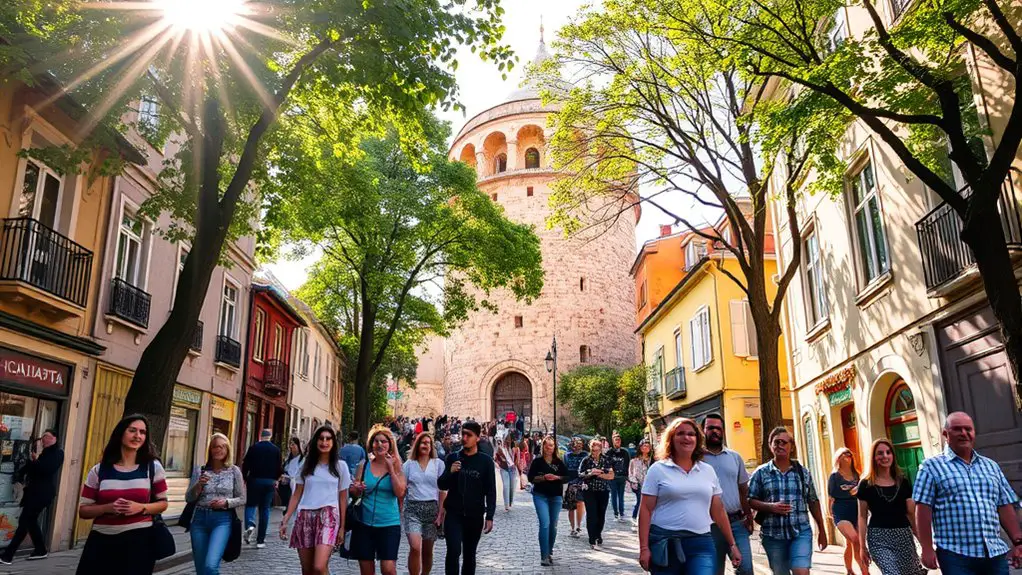
Last Updated on July 27, 2026 by Daniel Globe
Galata is best explored on foot, but it is not a flat, neatly bounded sightseeing district. The lanes around Galata Tower spill downhill into Karaköy and uphill toward Tünel and İstiklal, so route order matters. A smart Galata walking tour combines the tower, Mevlevi history, 19th-century streets, the Kamondo Stairs, food stops, and the waterfront without unnecessary backtracking.
Quick Answer
A good Galata walking tour starts near Şişhane or Tünel, descends past the Galata Mevlevi Lodge to Galata Tower, winds through Serdar-ı Ekrem and Bankalar Caddesi, pauses at the Kamondo Stairs, then finishes in Karaköy and at Galata Bridge. Allow 2–4 hours and wear shoes with good grip.
Key Takeaways
- Start around Şişhane or Tünel and walk downhill through Galata if you want to reduce the amount of climbing.
- Galata Tower, the Galata Mevlevi Lodge, Kamondo Stairs, Bankalar Caddesi, Karaköy, and Galata Bridge form a practical core route.
- Galata’s cobbles, hills, steps, and uneven pavement make supportive shoes more important than the short distances suggest.
- Cezayir Sokak, Taksim Square, and the Kılıç Ali Paşa complex are worthwhile extensions, but they are not all part of the compact Galata core.
- Leave time for Turkish coffee, simit, baklava, meze, or a relaxed meal rather than treating the neighborhood as a checklist of photo stops.
At a Glance
| Time Required | About 2–4 hours, depending on Galata Tower, museum, café, and meal stops |
| Difficulty | Moderate — short distances but steep slopes, cobbles, stairs, and uneven pavement |
| Tools Needed | Supportive shoes, water, phone or offline map, weather protection, and modest clothing if entering a mosque |
| Cost | Free to walk; attraction tickets, public transport, food, drinks, and hammam services cost extra |
Disclosure: As an Amazon Associate I earn from qualifying purchases. Some links on this page are affiliate links, at no extra cost to you.
A Practical Galata Walking Tour Route
This route starts high and works downhill toward the Golden Horn. That makes it easier on your legs than beginning at the waterfront and climbing every steep lane. You can reverse it if you enjoy uphill walking or want Galata Bridge to be your starting point.
1. Start at Şişhane and Tünel
Take the M2 metro to Şişhane, then head toward Tünel and Galip Dede Street. Metro Istanbul lists Şişhane on the M2 Yenikapı–Hacıosman line and shows connections in this area with the historic Karaköy–Beyoğlu Tünel route. Check the official M2 line information before traveling if service changes could affect your visit.
Near the top of the hill is the Galata Mevlevi Lodge, founded in the Ottoman period and now operated as a museum. It is an excellent first stop if you want cultural context before heading into the busiest tower streets. Current visitor details are available from the official Galata Mevlevi Lodge museum page.
2. Walk Down Galip Dede Street to Galata Tower
Continue downhill toward Galata Tower. Music shops, cafés, small stores, and side streets make this stretch worth walking slowly rather than rushing directly to the tower.
The tower is the neighborhood’s most recognizable landmark. According to Türkiye’s Ministry of Culture and Tourism, the present structure was built by the Genoese in the mid-14th century when Galata was a Genoese colony during the Byzantine era. It later served several purposes under Ottoman rule and now functions as a museum and viewing point.
As of July 2026, the official Galata Tower Museum page lists regular visiting hours from 08:30 to 18:30 and a night-museum period from 18:30 to 23:00, with the night box office closing earlier. Hours and ticket rules can change, so check that page again shortly before your visit.
Pro Tip: You do not have to enter Galata Tower to enjoy this walk. Skipping the museum saves time and money, while entering gives you one of the clearest elevated views over the Golden Horn, Bosphorus, and surrounding city.
3. Explore Serdar-ı Ekrem and the Side Streets
After the tower, wander through Serdar-ı Ekrem and the surrounding lanes. This is where Galata feels less like a single monument and more like a neighborhood. Look for historic apartment façades, small design shops, cafés, and views framed between buildings.
Businesses change regularly, so it is better to enjoy the street itself than build your entire route around one particular shop or café.
4. Descend Toward the Kamondo Stairs
Work your way toward Bankalar Caddesi and the Kamondo Stairs. Istanbul’s official visitor site describes these historic stairs as a 19th-century landmark associated with the Kamondo family and located between Karaköy and Galata. Their curving form makes them one of the neighborhood’s most recognizable pieces of urban architecture.
You can read more about their history on the official Visit Istanbul Kamondo Stairs page.
5. Walk Bankalar Caddesi and Consider SALT Galata
Continue along Bankalar Caddesi, historically associated with finance and commerce. The grand façades here provide a useful contrast with the medieval tower streets above.
If it is open, SALT Galata is a worthwhile indoor stop. It occupies the former Imperial Ottoman Bank building and hosts exhibitions, research spaces, and cultural programs. Its official venue page currently lists free admission, though opening days and exhibitions should be checked before you go.
6. Finish in Karaköy and at Galata Bridge
From Bankalar Caddesi, continue downhill into Karaköy. This is a good place for lunch, dessert, Turkish coffee, or a longer rest before reaching the waterfront.
Finish at Galata Bridge, where you can watch ferries and fishing activity along the Golden Horn. Crossing the bridge takes you toward Eminönü and the Historical Peninsula, while staying on the Karaköy side leaves you close to the T1 tram and waterfront connections.
Galata makes more sense when you follow the hill: medieval tower streets above, 19th-century banking architecture below, and the working waterfront at Karaköy.
History and Significance of Galata
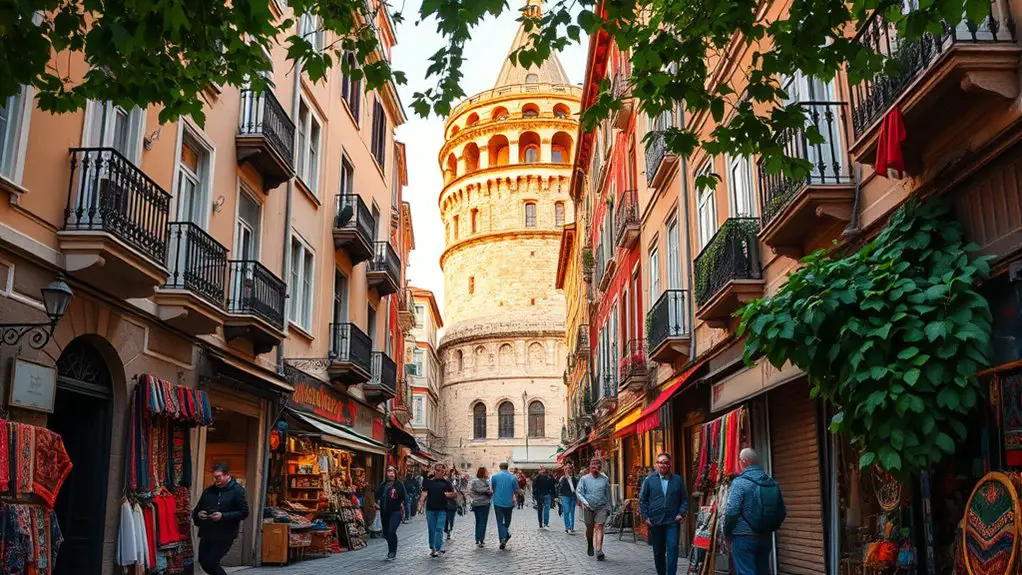
As you walk through Galata, you are moving through several different periods of Istanbul’s history rather than one uniform architectural era.
The area north of the Golden Horn became especially important during the Byzantine period, when the Genoese established a colony in Galata. The present Galata Tower was constructed by the Genoese in the mid-14th century as part of the area’s fortifications. After the Ottoman conquest of Constantinople, the neighborhood and tower took on new functions and continued to evolve.
Later Ottoman buildings, religious sites, European-influenced apartment buildings, banks, shops, and cultural institutions added further layers. For that reason, it is more accurate to think of Galata as a neighborhood shaped by successive communities and building periods than to label every street simply “Byzantine, Genoese, and Ottoman.”
The result is a compact area where a medieval tower, Ottoman religious heritage, 19th-century commercial architecture, and modern cafés can exist within a few minutes’ walk of one another.
Iconic Landmarks to Visit
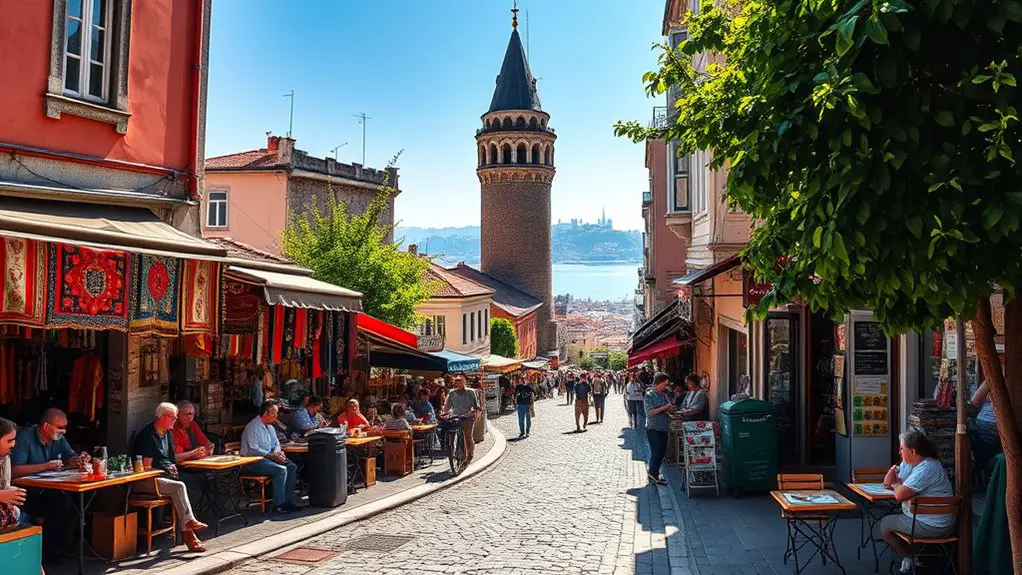
Galata Tower
Galata Tower is the obvious centerpiece. Even without buying admission, its stone exterior and the streets converging around it make the tower worth seeing. Going inside adds museum displays and elevated views across Istanbul.
If views are your priority, consider an early visit for lighter streets or an evening visit when current museum hours permit. Weather, visibility, queues, and seasonal sunset times all affect the experience.
Galata Mevlevi Lodge
The Galata Mevlevi Lodge adds important Ottoman cultural context to the walk. It sits near the upper end of the route, making it easy to combine with Tünel and Galip Dede Street before heading to the tower.
Kamondo Stairs
The Kamondo Stairs are a smaller landmark but fit naturally into a walking itinerary because they connect the upper Galata streets with the historic banking area below. Give yourself a few minutes to appreciate the stonework rather than treating them only as a photo backdrop.
Galata Bridge and the Waterfront
Galata Bridge is best treated as the waterfront finale rather than as a landmark beside Galata Tower. From the bridge you can look back toward Karaköy and Galata while also seeing the Historical Peninsula across the Golden Horn.
As dusk arrives, Galata and Karaköy become livelier with cafés, restaurants, bars, and music venues. Exact businesses change, so explore based on the atmosphere you find rather than relying on an old list of venues.
Culinary Delights: Where to Eat
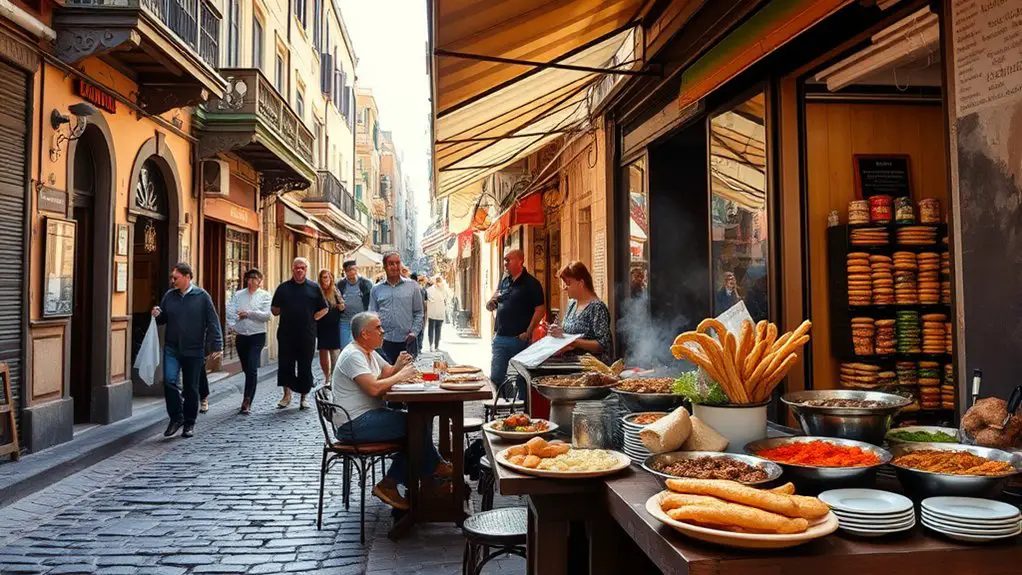
Food is one of the easiest ways to slow down your Galata walking tour. Rather than searching for one must-visit “food market,” look for bakeries, cafés, casual restaurants, street snacks, and dessert shops throughout Galata and neighboring Karaköy.
For a quick bite, try simit, the sesame-coated ring bread sold throughout Istanbul. Turkish coffee or tea makes an easy café break, while baklava and other pastries work well if you want something sweet.
For a fuller meal, look for menus featuring meze, grilled meats, kebabs, soups, vegetable dishes, or regional Turkish specialties. Karaköy generally gives you a wider spread of lunch and dinner choices once you reach the bottom of the hill.
Do not feel pressured to choose a restaurant simply because it has a tower view. Check the menu and prices first, especially around the most heavily visited streets.
Hidden Gems and Local Favorites
Galata’s quieter appeal lies in its side streets, old apartment façades, music shops, cultural spaces, and smaller architectural details. Serdar-ı Ekrem and the streets between the tower and Bankalar Caddesi are particularly good for unhurried wandering.
| Location | Why Visit | How It Fits the Route |
|---|---|---|
| Galata Tower | Museum, landmark architecture, and panoramic views | Core Galata stop |
| Kamondo Stairs | Historic 19th-century staircase and photography stop | Core stop between upper Galata and Bankalar Caddesi |
| Kılıç Ali Paşa | Mimar Sinan mosque and historic hamam complex in Tophane | Optional waterfront extension east of Karaköy |
| Cezayir Sokak | Steep Beyoğlu lane known for cafés, galleries, bars, and colorful surroundings | Optional extension toward Cihangir and İstiklal, not the core Galata loop |
| Taksim Square | Major Beyoğlu transport and public-space hub | Optional endpoint after continuing up İstiklal Avenue |
If you want to extend the walk to Kılıç Ali Paşa, continue from Karaköy toward Tophane. The historic hamam was designed by Mimar Sinan as part of the Kılıç Ali Paşa complex; its official history dates the bathhouse to the late 16th century.
Note: Cezayir Sokak and Taksim Square belong to a longer Beyoğlu outing rather than the compact Galata route. Keep them as optional extensions if you still have energy after the tower, Karaköy, and the waterfront.
Getting to Galata and Getting Around
The easiest starting point depends on whether you prefer to walk downhill or uphill.
- M2 metro to Şişhane: Best for starting high and walking downhill through Tünel and Galata. See the official M2 line.
- T1 tram to Karaköy: Best if you want to begin at the waterfront and climb toward Galata Tower. See the official T1 line.
- Historic Tünel connection: Useful for avoiding part of the steep climb between Karaköy and upper Beyoğlu.
- Galata Bridge: Provides an easy walking link with Eminönü if you are combining Galata with the Historical Peninsula.
Public transport is usually more useful than taxis for this compact central area because traffic can be slow and many of the most interesting streets are best experienced on foot.
Accessibility and Terrain
Galata can be challenging for wheelchair users and anyone who has difficulty with steep grades. Cobblestones, narrow sidewalks, stairs, uneven paving, and sharp slopes are common.
The T1 tram uses low-floor vehicles and Metro Istanbul describes accessible platform arrangements along the line. However, accessible transit does not mean the surrounding historic streets are step-free.
Galata Tower also should not be described as a fully step-free attraction. Official museum information describes stair sections within the historic structure. If full step-free access is essential, contact the museum before visiting and confirm which areas are reachable on the day.
For a less strenuous version of the neighborhood, begin at Şişhane, stay on the gentler main streets where possible, skip the Kamondo Stairs themselves, and use public transport rather than walking back uphill from Karaköy.
Tips for an Enjoyable Walking Tour
Galata rewards slow exploration, but a little preparation makes the hills much more pleasant.
- Wear shoes with grip. Smooth cobbles and steep grades can become slippery in rain.
- Carry water. Summer afternoons can be warm, especially when you are climbing.
- Start early if you dislike crowds. Streets around Galata Tower tend to become busier as the day develops.
- Check attraction hours shortly before leaving. Museum schedules, ticket rules, exhibitions, and closures can change.
- Watch for vehicles. Some narrow streets that feel pedestrian-oriented still carry local traffic.
- Respect religious sites. If entering a mosque, dress modestly, remove shoes where instructed, keep your voice low, and avoid interrupting prayer.
- Leave room for spontaneous stops. A coffee, pastry, gallery, or quiet side street is often more memorable than rushing to the next landmark.
Warning: Stay aware of your surroundings in crowded tourist areas, keep phones and wallets secure, and avoid demonstrations or large gatherings that make you uncomfortable. The U.S. State Department currently advises travelers to exercise increased caution in Türkiye; travelers should also check guidance from their own government before departure. See the current Türkiye travel advisory.
Frequently Asked Questions
What Is the Best Time of Year to Visit Galata?
April through May and September through October are often comfortable choices for a walking tour because average temperatures are milder than in midsummer. Istanbul weather can still change quickly, so check the forecast before leaving. The Turkish State Meteorological Service publishes official Istanbul climate statistics.
Are There Accessibility Options for Disabled Visitors?
Accessible public transport can get you close to Galata, but the historic neighborhood itself is difficult in places because of steep slopes, cobbles, stairs, and uneven sidewalks. Galata Tower also includes stair sections. A step-reduced visit should start near Şişhane, use main streets where possible, skip staircase attractions, and confirm accessibility directly with any museum you plan to enter.
How Safe Is Galata for Tourists?
Use the same precautions you would in any busy urban tourist district: secure valuables, pay attention in crowds, use licensed transportation, and avoid demonstrations. Do not rely on broad claims that the area is completely risk-free. Check current official travel advice before your trip.
Can I Find Guided Walking Tours in English?
Yes. English-language walking tours are commonly offered in central Istanbul. Compare the route, group size, duration, attraction tickets, cancellation terms, and whether the guide is licensed before booking. A guided tour is most useful if you want deeper historical context rather than simply directions between sights.
Is There Public Transportation Available Near Galata?
Yes. Şişhane station on the M2 metro is convenient for the upper part of Galata, while Karaköy on the T1 tram is useful for the waterfront. The historic Tünel connection can also save you part of the steep climb between Karaköy and upper Beyoğlu.
How Long Does a Galata Walking Tour Take?
Allow about 2–4 hours for the core route. Two hours works if you mainly walk and photograph the sights. Three to four hours is more realistic if you enter Galata Tower or the Mevlevi Lodge, stop at SALT Galata, and sit down for coffee or food.
Do I Need a Galata Tower Ticket to Enjoy the Walk?
No. The neighborhood walk works perfectly well without entering Galata Tower. You can see the exterior, explore the surrounding streets, visit the Kamondo Stairs, continue through Bankalar Caddesi and Karaköy, and finish at Galata Bridge. Buy a Tower ticket mainly if the museum and panoramic viewing level are priorities.
Conclusion
A Galata walking tour works best when you follow the neighborhood’s geography instead of jumping between unrelated attractions. Begin high near Şişhane and Tünel, explore Galata Tower and the surrounding lanes, descend past the Kamondo Stairs and Bankalar Caddesi, then finish with food in Karaköy and views from Galata Bridge.
Take your time on the steep streets, pause for Turkish coffee or simit, and treat Tophane, Cezayir Sokak, İstiklal, and Taksim as optional extensions rather than mandatory stops. Galata is compact enough to explore in a few hours but layered enough to reward a much slower walk.
Sources
- T.C. Ministry of Culture and Tourism — Galata Tower Museum — official history, current visitor hours, museum status, and nearby attractions.
- Metro Istanbul — T1 Kabataş–Bağcılar Tram Line — Karaköy station, operating information, connections, and low-floor accessibility information.
- Metro Istanbul — M2 Yenikapı–Hacıosman Metro Line — Şişhane station and connections with the Tünel area.
- Visit Istanbul — Kamondo Stairs — location and historical background for the Kamondo Stairs.
- Turkish State Meteorological Service — Istanbul Climate Statistics — official monthly temperature observations used for seasonal walking guidance.
- U.S. Department of State — Türkiye Travel Advisory — current general safety guidance for travelers.
