

Last Updated on September 11, 2026 by Daniel Globe
State Farm vacation liability coverage can help protect you from injury claims tied to camping, travel, and storage. Your basic RV policy may include only limited campsite liability, often around $10,000, so extra protection can matter if guests or visitors get hurt. Higher limits, even up to $500,000, may be available for a modest annual cost. If you travel often or park long-term, comparing options can show where your current coverage falls short and what else you may need.
Quick Answer
State Farm vacation liability coverage protects RV owners against third-party bodily injury and property damage claims occurring while parked at a campsite or vacation spot. While basic policies include about $10,000 in campsite liability, endorsement add-ons can boost limits to $500,000 for around $9.70 annually.
Key Takeaways
- Basic Limits Are Low: Standard RV policies often include only $10,000 in campsite liability, leaving significant financial exposure during severe accidents.
- Inexpensive Upgrade: Raising your coverage to $500,000 typically costs under $10 per year as an optional State Farm endorsement.
- The Unhitched Gap: Auto liability covers towed trailers while attached to a vehicle, but unhitched trailer campsite incidents require dedicated vacation liability.
- Vacation vs. Full-Timer Coverage: Vacation liability covers temporary recreational stays; full-time RVers require a specialized policy resembling homeowners insurance.
At a Glance: Vacation Liability Endorsement
| Standard Base Limit | $10,000 (often included at no extra charge) |
| Upgraded Coverage Limits | Up to $500,000 per occurrence |
| Estimated Annual Cost | ~$9.70 per year for maximum endorsement limits |
| Key Scope | Slip-and-fall claims, guest injuries, unhitched trailer premises risk |
Disclosure: As an Amazon Associate I earn from qualifying purchases. Some links on this page are affiliate links, at no extra cost to you.
What Is Vacation Liability Insurance?

Vacation liability insurance is coverage that helps protect you if someone gets hurt on your property while you’re renting or camping, such as from a trip-and-fall accident. You use it to limit financial exposure when an injury claim arises at your campsite or rented spot. According to general insurance principles outlines provided by the Insurance Information Institute, third-party liability insurance pays for legal defense and medical costs if a guest sustains accidental bodily harm on premises you temporarily control.
Typical limits can reach $500,000, and some policies start around $9.70 per year, so a coverage comparison can reveal strong protection at a modest cost. You should also check your RV policy, because many plans include only limited vacation liability, sometimes just $10,000 at no extra charge. If you stay in campgrounds or on private land, this coverage can help defend you against lawsuits and legal costs that can grow quickly. For you, the vacation insurance benefits are practical: more security, less risk, and greater freedom to travel without carrying avoidable financial pressure.
How Campsite Liability Protects You
Campsite liability insurance helps you cover claims if someone trips, falls, or gets hurt on your camping property. You can often get about $500,000 in coverage for roughly $9.70 a year, but your RV policy may already include limited protection, so you should check the details. If you leave cords, hoses, or other hazards exposed, liability coverage can help protect you from the legal and financial costs of an accident.
Accident Coverage Basics
Even a simple slip, trip, or fall on your site can trigger a liability claim, and campsite liability coverage is designed to help protect you from those costs. You’re covered when accidents happen on your own property, especially in campgrounds or on private land where injuries can become expensive fast. Many policies offer about $500,000 in protection for roughly $9.70 a year, while some RV plans include only about $10,000 unless you add more.
Pro Tip: Always secure leveling blocks, outdoor carpets, and utility hoses with high-visibility markers or cord covers. Preventing a trip-and-fall hazard is your first line of defense against campsite liability claims.
That gap matters. Review your policy carefully, because liability misconceptions can leave you exposed. Use accident prevention to reduce risk, but don’t assume a basic plan covers every hazard. Limited coverage may miss unhitched trailers or certain incidents, and legal claims can escalate quickly, putting your freedom and finances at risk.
Liability For Campers
When you park an RV or camper on a campground site or private property, your liability exposure doesn’t stop at the vehicle itself. Campsite liability can shield you if a guest trips over a sewer hose or electrical cord and files a claim. You keep more control when you understand campground safety and your legal responsibilities.
| Coverage | Typical Limit | Note |
|---|---|---|
| Campsite liability | $500,000 | Often about $9.70 yearly |
| Basic RV policy add-on | $10,000 | May be included free |
| Trip-and-fall claims | Varies | Common on-site risk |
| Private property use | Varies | Check exclusions |
| Legal defense | Policy-specific | Limits matter |
If your policy’s limit is low, you could face uncovered losses. Review your coverage before you travel, so you’re not trapped by preventable financial risk.
What Your RV Policy Already Covers
Your RV policy may already include limited liability coverage for campsite incidents, often around $10,000, and it can also protect you against bodily injury claims from guests. It usually covers personal belongings inside the RV, but you should check for gaps during storage and travel, since basic policies can leave exposure. Review optional add-ons carefully, because separate vacation liability coverage can raise your limits for a relatively low annual cost.
Existing Liability Limits
Many RV insurance policies already include limited campsite liability, often around $10,000 at no extra cost, but the exact protection depends on the policy. You should examine your liability limits closely during a policy review, because basic RV insurance may cover bodily injury and property damage, yet the numbers can differ widely. Your protection may stop at initial legal costs, not the full claim.
State Farm options may also leave unhitched trailers outside coverage, which can expose you to direct financial responsibility. If you want broader protection, an umbrella policy can help, but only when your primary RV policy carries enough underlying liability. Knowing these terms lets you act with clarity, protect your freedom, and avoid preventable gaps in coverage.
Storage And Travel Gaps
While your RV sits in storage, State Farm’s RV insurance typically keeps covering certain losses such as fire and theft, which can help protect against off-road risks even when you’re not traveling. You still need to map storage risks and travel gaps carefully.
| Coverage Area | Typical Scope |
|---|---|
| Storage damage | Fire, theft, similar losses |
| Property accidents | Limited liability on personal property |
| Trailer injuries | Often excluded if unhitched |
| Liability ceiling | Can be as low as $10,000 |
That means your policy may shield you in some stationary situations, yet leave gaps once people, trailers, or lower limits enter the picture. Read the declarations page, check exclusions, and compare each use case. When you understand the boundaries, you keep your freedom mobile and your exposure measured, not assumed.
Policy Add-Ons To Review
Before you buy extra protection, check what’s already built into your RV policy, because some plans include limited campsite liability, often around $10,000, at no extra charge. You should verify whether your coverage also includes personal injury liability, since it can pay when others get hurt on your site. Some insurers extend extensive protection to your RV in storage, covering fire or theft, which can change your risk profile. Read the policy exclusions carefully, especially for unhitched trailers, because gaps can expose you to avoidable costs. Then run coverage comparisons against vacation liability add-ons. If your base policy leaves lawsuit exposure from campsite accidents, an add-on may give you the freedom to travel without carrying unnecessary financial risk.
Vacation Liability vs. Full-Timer Liability
It is essential to understand the distinction between temporary vacation liability coverage and comprehensive full-timer liability insurance. Vacation liability is specifically engineered for recreational users who park their RV or travel trailer at campgrounds for temporary stays, vacations, or seasonal outings. It functions similarly to premises liability, protecting against temporary guest injuries.
Conversely, if you live in your RV for 5 to 6 months or more per year (or use it as your primary residency), standard vacation endorsements will not suffice. Full-timer liability coverage operates more like traditional homeowners personal liability, offering continuous coverage for bodily injury, medical payments to others, and legal defense regardless of where your rig is parked long-term.
When You Need Extra Liability Protection
You need extra liability protection when your campsite exposure exceeds the limited liability built into a basic RV policy. If you park in a campground or on private property, you can face liability scenarios that a small policy limit won’t absorb. Some policies carry only $10,000, while Vacation Liability coverage from State Farm may offer $500,000 for about $9.70 a year.
Warning: When a travel trailer is unhitched from your tow vehicle, your auto insurance policy’s liability limits NO LONGER extend to cover premises accidents around the trailer. Without a dedicated vacation liability endorsement, unhitched injuries are entirely out-of-pocket risks.
That gap matters when an injury claim turns into a legal dispute, because legal costs and settlements can climb fast. Review your policy closely; coverage varies, and coverage misconceptions can leave you underinsured. You also should check whether your trailer is hitched or unhitched, since protection may differ. If you want independence on the road, pair your travel plans with liability limits that match your actual risk. The right coverage helps you keep freedom without surrendering control to one avoidable claim.
Common Campsite Risks And Claims
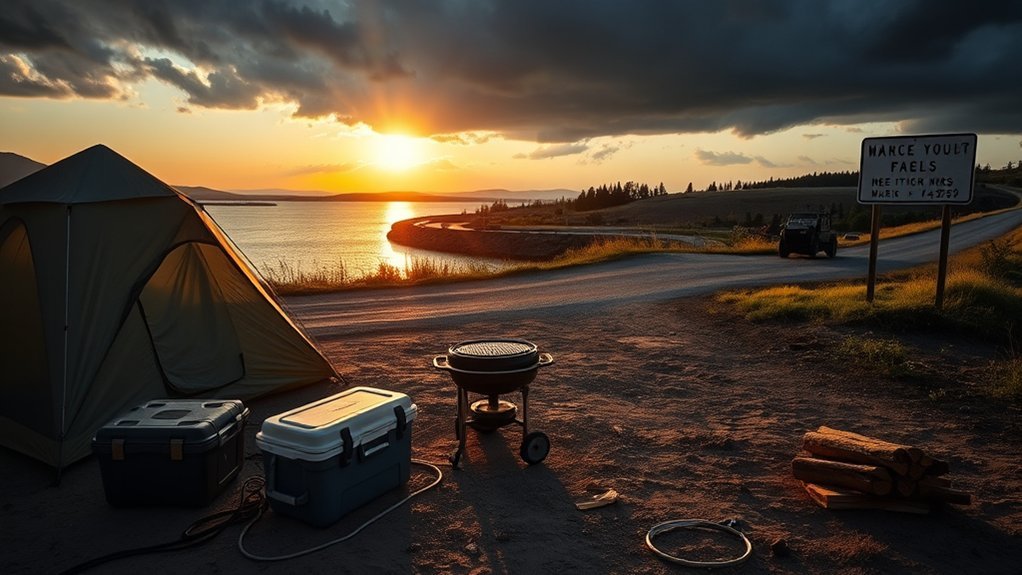
Campsite claims often start with ordinary hazards: uneven ground, loose electrical cords, and sewer hoses that can cause trips and falls. You face trip hazards whenever you move around a site, especially at dusk or in crowded areas. If someone gets hurt, injury claims can follow fast, and they can target you or the campground owner, depending on who controlled the area. Even a minor fall may trigger medical bills, legal demands, and dispute costs that grow quickly.
Data from the U.S. Consumer Product Safety Commission (CPSC) indicates that tens of thousands of camping and outdoor recreational injuries occur each year—with trip-and-fall incidents remaining among the top causes of emergency room visits.
You can reduce exposure by checking the ground, keeping cords secured, and noting where hoses cross walkways. Many RV policies include some campsite liability, but limits vary, so you shouldn’t assume you’re fully covered. Broader liability protection can add about $500,000 in coverage for roughly $9.70 a year, which can help shield your freedom from steep legal fallout.
Camping Trailer Coverage In Colorado Springs
State Farm offers dedicated coverage for camping trailers that can help protect against damage during trips and at campgrounds, giving you a clearer layer of financial protection. In regions like Colorado Springs and across mountain camping routes, local agents assess your travel patterns and match coverage to your trailer’s actual risks. That matters because policies may also protect personal belongings inside the trailer, which helps you avoid losses from theft or damage.
Note: Mountain and rugged terrain camping increases liability risk due to uneven ground, steep drops, and sudden weather shifts. Local agents can tailor endorsements based on terrain exposure.
You should review whether coverage extends to incidents on personal property and what liability gaps might still exist at a campsite. Regular policy reviews keep your limits aligned with your needs. Pair your insurance with trailer maintenance tips and camping safety essentials so you reduce preventable claims and stay ready for the road. When you know what’s covered, you can travel with more independence and less uncertainty.
Get a Quote From Jenni King
After reviewing trailer coverage and possible liability gaps, getting a quote from an experienced agent like Jenni King can help clarify what protection fits your travel plans. You can use her quote process to review your camping or travel exposure and identify insurance benefits that match your situation. She’ll help you estimate vacation liability options that often start near $500,000 in protection for about $9.70 a year, depending on your needs.
You can also ask about liability for unhitched trailers, since standard policies may leave that gap open. State Farm agents explain policy details in plain terms, so you can compare coverage choices without confusion or delay. If you want to move forward, you can contact her or your local State Farm representative through a secure form and share only the basics at first. That lets you evaluate your coverage freely, without giving up privacy while you decide what level of protection makes sense.
Frequently Asked Questions
What Does Vacation Liability Insurance Cover?
Vacation liability insurance covers third-party bodily injury and property damage claims occurring on your designated campsite or temporary rental spot. Key coverage benefits include defense costs against lawsuits, medical payments for injured visitors, and legal settlement costs stemming from trip-and-fall accidents or campsite hazard claims.
How Many Miles Does Roadside Assistance Cover?
State Farm emergency road service standard coverage typically pays for towing to the nearest repair facility or up to 15 to 50 miles depending on policy tiers. Additional expenses apply if travel distances exceed policy limits, but roadside support also includes battery jumps, flat tire changes, fuel delivery, and lockout help.
Does State Farm Do Vacation Insurance?
State Farm does not issue traditional standalone travel cancellation insurance directly, but they offer optional Vacation Liability endorsements for RV and travel trailer policies. Additionally, State Farm partners with third-party providers to offer broader trip protection insurance when requested.
What Happens if You’re 2 Days Late on Your Car or RV Insurance?
Being 2 days late on an auto or RV insurance payment usually falls within the standard grace period offered by State Farm. However, you should pay immediately to avoid potential late fees or policy cancellation notices. Contact your agent to verify account status and prevent coverage lapses.
Conclusion
When you’re vacationing in an RV or camper, liability gaps can appear fast. One unexpected accident can lead to medical or property claims, even if your base policy covers the vehicle. In fact, official safety reports document thousands of camping-related injuries each year, showing how quickly a trip can turn costly. Before you park, review your coverage and add protection where needed so you can travel with more confidence.
Sources
- State Farm Official RV Insurance Overview — Details on motorhome, travel trailer, and campsite liability endorsements.
- Insurance Information Institute (III) — Industry guidelines regarding premises liability and personal liability coverage definitions.
- U.S. Consumer Product Safety Commission (CPSC) — Statistics on outdoor recreation, camping equipment hazards, and annual injury data.
