
Last Updated on August 26, 2026 by Daniel Globe
“Hotel California” by the Eagles is not a documented history of one mysterious California hotel. The famous hotel in the song works mainly as a metaphor for excess, temptation, disillusionment, and the darker side of the American dream. Real hotels are connected to the song’s imagery and mythology, but none has been established as the literal hotel described in the lyrics.
Quick Answer
The Eagles’ “Hotel California” is not about one confirmed real hotel. Don Henley has described it as a journey from innocence to experience and a commentary on excess in America. The Beverly Hills Hotel appears on the album cover, while claims that a Hotel California in Todos Santos, Mexico inspired the lyrics have been disputed by the Eagles.
Key Takeaways
- There is no verified real hotel that serves as the literal setting of the Eagles’ “Hotel California.”
- Don Henley has explained the song in terms of American excess, loss of innocence, and a journey from innocence to experience.
- The Beverly Hills Hotel is the real building photographed for the front cover of the 1976 Hotel California album.
- Hotel California in Todos Santos, Baja California Sur, Mexico, has not been authenticated as the inspiration for the song.
- Ghost, Satanic, occult, and supernatural explanations are popular fan theories, not established explanations from the Eagles.
- The song was written by Don Felder, Glenn Frey, and Don Henley and won the 1978 GRAMMY Award for Record of the Year.
Is Hotel California a Real Hotel? Separating Myth From Fact
The easiest way to understand the mystery is to separate the fictional hotel in the song from real-world buildings that later became associated with it. The lyrics describe a strange, luxurious place that becomes increasingly unsettling, but the Eagles have not identified one real hotel as the setting of the story.
Don Henley told CBS News that the song represents a journey from innocence to experience and said its subject reaches beyond California to America more broadly. That explanation fits the song’s recurring ideas of attraction, excess, disillusionment, and difficulty escaping a seductive lifestyle.
Warning: Stories that describe a specific “Hotel California” as a documented haunted property, complete with vanished guests, ghost sightings, scandals, or paranormal investigations, should not be presented as historical fact unless they identify a real property and provide reliable evidence.
The “Vanishing Guest” Story
One recurring piece of Hotel California folklore describes a woman who supposedly checked into the hotel, disappeared, and continued to haunt its corridors. There is no reliable evidence connecting such an incident to the Eagles’ song, and there is no single verified Eagles-related hotel where the event can be documented.
The story is better understood as part of the mythology that grew around the song. Because the lyrics create an eerie setting without fully explaining what is happening, listeners have filled the gaps with ghost stories, conspiracy theories, and imagined histories.
Claims of Paranormal Experiences
Stories about whispers, unexplained music, moving shadows, flickering lights, cold spots, and apparitions are sometimes repeated online in connection with “Hotel California.” They should not be confused with facts about the Eagles’ composition. The band’s documented explanations focus on social themes and personal experience rather than paranormal events.
Why the Myths Became So Persistent
The song is deliberately cinematic and ambiguous. A traveler arrives at an attractive destination, meets unusual people, experiences growing unease, and discovers that leaving is more complicated than arriving. That structure resembles a supernatural story even when interpreted metaphorically, which helps explain why haunted-hotel legends became attached to it.
Note: Ambiguity is part of the song’s appeal. A symbolic interpretation does not mean every image has one fixed definition, but interpretations should be separated from claims about documented history.
The Truth Behind the Lyrics: What Does “Hotel California” Mean?
“Hotel California” appears on the Eagles’ 1976 album of the same name. The song was written by Don Felder, Glenn Frey, and Don Henley. The Recording Academy lists all three as its songwriters, and the recording won the GRAMMY Award for Record of the Year at the 20th Annual GRAMMY Awards in 1978.
The hotel can be read as an attractive environment that gradually reveals a darker side. What looks luxurious and liberating at first becomes restrictive. That progression supports the Eagles’ own descriptions of the song as dealing with excess, experience, and the less glamorous side of success.
Excess and the American Dream
Henley has repeatedly connected the song with excess in America and the dark side of the American dream. In that reading, the hotel is less a building than a symbol: people are drawn toward status, pleasure, wealth, and freedom, only to discover that those rewards may bring dependency, emptiness, or loss of control.
From Innocence to Experience
Another useful interpretation comes directly from Henley’s description of the song as a journey from innocence to experience. The traveler begins as an outsider. As the story develops, he sees more of the world he has entered and becomes aware that the glamorous surface conceals something more troubling.
The song’s enduring mystery comes from turning a recognizable theme—being seduced by success and excess—into the story of a hotel that feels real without needing to be a real place.
What Hotel Is on the Hotel California Album Cover?
| Aspect | Verified Information |
| Album | Hotel California, released in 1976 |
| Front-Cover Hotel | The Beverly Hills Hotel in Beverly Hills, California |
| Cover Photographer | David Alexander |
| Art Direction | Kosh, with album art direction also credited to Don Henley |
| Songwriters | Don Felder, Glenn Frey, and Don Henley |
| Confirmed Inspiration for Lyrics? | No single real hotel has been confirmed as the literal hotel in the song |
The real building seen on the front cover is the Beverly Hills Hotel. The Los Angeles Times has identified its exterior as the basis of the famous album image.
That distinction matters. A real hotel was used to create the visual identity of the album, but photographing the Beverly Hills Hotel does not mean the song is a literal account of events at that property. The image works because it visually communicates California luxury while retaining the slightly mysterious mood of the record.
Was the Hotel California in Todos Santos the Inspiration?
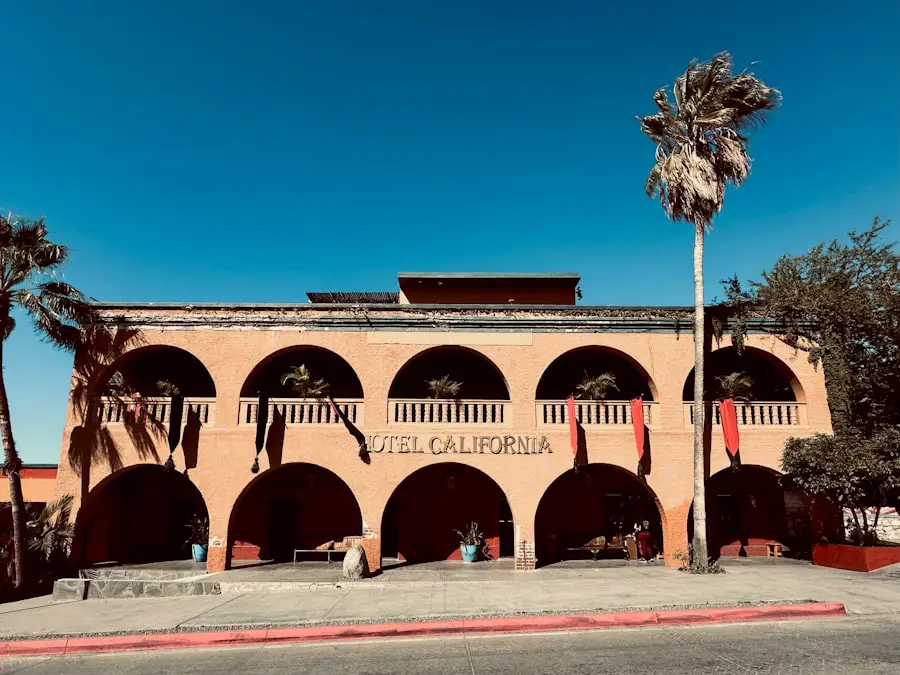
Another frequently mentioned property is Hotel California in Todos Santos, Baja California Sur, Mexico. The hotel is real, but its connection to the Eagles song is not established. In 2017, the Eagles filed a trademark lawsuit in which they alleged that consumers were being encouraged to believe the property was associated with the band and had inspired the lyrics. Reporting on the filing quoted the Eagles’ position that the inspiration claim was false.
The dispute was later settled after the hotel owners withdrew a U.S. trademark application. The Mexican property continued using the Hotel California name in Mexico, while stating that it claimed no association with the Eagles or their song.
Pro Tip: When you see a hotel promoted online as “the real Hotel California,” check whether the claim means it appears on the album cover, shares the name, or supposedly inspired the lyrics. Those are three very different claims.
The Cultural Impact of “Hotel California”
“Hotel California” became one of the defining recordings of the Eagles’ career. Its unusual narrative, instantly recognizable guitar work, and open-ended symbolism have kept it in public discussion for decades.
The Recording Academy awarded the recording Record of the Year at the 1978 GRAMMY Awards. It also lists Don Felder, Glenn Frey, and Don Henley as the songwriters. The title track and album became so closely associated with the Eagles that “Hotel California” now functions as cultural shorthand for the glamorous but potentially destructive side of success.
The album itself has also remained commercially significant. In January 2026, the Eagles announced that Hotel California had been certified 28× Platinum and remained the third-best-selling album in U.S. history.
Its lasting influence also comes from its ambiguity. Listeners can recognize themes of ambition, temptation, disillusionment, dependency, nostalgia, and lost innocence without requiring every object or character in the song to correspond to a real person or location.
The Dark Side: Satanic, Occult, and Conspiracy Theories
The darker imagery in “Hotel California” has produced decades of rumors. Some listeners have claimed that the lyrics contain references to Satanism, secret rituals, cults, supernatural forces, or an actual haunted building. Similar theories have been attached to figures visible in album artwork.
These theories are part of the song’s cultural mythology, but they should not be confused with the Eagles’ documented explanations. Henley’s comments instead emphasize American excess, experience, and the darker underside of an attractive lifestyle.
Does the Album Artwork Contain a Satanic Figure?
A shadowy person visible in the album’s interior artwork has sometimes been used to support occult theories. An indistinct figure in a photograph, however, is not evidence of a Satanic connection. No reliable evidence establishes that the Eagles designed the album around Satanism or that a hidden occult leader was intentionally placed in the artwork.
Are the Ghost Stories Real?
There is also no verified history tying the song to a haunted hotel where guests disappear, spirits walk the halls, or paranormal investigators have confirmed unusual activity. Such stories work well with the song’s eerie atmosphere, which is probably why they continue to circulate, but they remain folklore rather than established Eagles history.
The Spiritual Connection: Symbolism Without the Supernatural Claims
Listeners are free to find spiritual or philosophical meaning in “Hotel California.” The story can support questions about desire, attachment, identity, freedom, temptation, and the consequences of pursuing pleasure without limits. Those readings can be meaningful even though they are interpretations rather than confirmed explanations for every lyric.
The movement from an inviting arrival to a feeling of entrapment is especially important. It mirrors a common human experience: something that initially promises freedom can become a source of dependency. Fame, money, status, relationships, substances, or consumer culture can all fit that broader pattern, which helps explain why the song continues to resonate with listeners from very different backgrounds.
Calling the hotel a literal spiritual portal, however, goes beyond what reliable evidence supports. The song does not need a supernatural explanation to communicate danger or moral ambiguity.
Why “Hotel California” Still Endures
The song remains compelling because it offers enough detail to create a vivid world without fully explaining that world. Listeners know how the traveler feels, but they are never given a simple map of what every person, room, image, or event represents.
That ambiguity has allowed the song to survive changing generations. A listener in the 1970s could hear a criticism of Los Angeles excess and the music business. A modern listener might hear a warning about materialism, status, addiction, celebrity culture, or any attractive system that becomes difficult to escape.
The continuing success of the album reinforces that cultural reach. The Eagles’ 2026 announcement that Hotel California had reached 28× Platinum certification shows that the record remains commercially important roughly half a century after its original release.
The mystery therefore comes less from a secret haunted building and more from the songwriting itself. The Eagles created a place vivid enough to feel physical while leaving it open enough to function as a metaphor.
For readers planning real journeys rather than exploring music history, TakeTravelInfo also covers practical travel gear such as rechargeable hand warmers. That travel guide is separate from the history and interpretation of the Eagles song discussed here.
Frequently Asked Questions
What is the song “Hotel California” about?
The Eagles have connected “Hotel California” with excess in America, the darker side of the American dream, and a journey from innocence to experience. The fictional hotel works as a powerful metaphor for an attractive lifestyle that becomes increasingly unsettling and difficult to escape.
Is “Hotel California” based on a real hotel?
No single real hotel has been confirmed as the literal inspiration or setting of the song. Real hotels became associated with it later, especially the Beverly Hills Hotel because it appears on the album cover and Hotel California in Todos Santos because of its name and later mythology.
What hotel appears on the Hotel California album cover?
The exterior photographed for the front cover is the Beverly Hills Hotel in Beverly Hills, California. Photographer David Alexander created the famous image, with Kosh responsible for the cover design and art direction.
Did Hotel California in Todos Santos, Mexico inspire the song?
There is no verified evidence that it did. During a 2017 trademark dispute, the Eagles specifically challenged the idea that the Todos Santos property was associated with the band or served as the inspiration for the lyrics.
What are the main themes of “Hotel California”?
Common themes include excess, temptation, materialism, fame, disillusionment, loss of innocence, and the difficulty of escaping a lifestyle that initially appears attractive. The exact meaning of individual images remains open to interpretation.
Is “Hotel California” about Satanism or the occult?
There is no reliable evidence that Satanism is the intended meaning of the song. Occult interpretations have circulated among listeners for decades, but the Eagles’ own explanations emphasize excess, America, experience, and the darker side of success rather than Satanic worship.
Who wrote “Hotel California”?
The song was written by Don Felder, Glenn Frey, and Don Henley. The Recording Academy credits all three as songwriters.
Did “Hotel California” win a GRAMMY?
Yes. The Eagles’ recording of “Hotel California” won Record of the Year at the 20th Annual GRAMMY Awards in 1978.
Sources
- CBS News — Don Henley interview — Henley’s explanation of the song’s broader meaning.
- Recording Academy — 1978 Record of the Year — confirms the GRAMMY win.
- Recording Academy — 20th Annual GRAMMY Awards — confirms songwriter credits and award nominations.
- Eagles official website — current 2026 certification and album legacy information.
- Los Angeles Times — identifies the Beverly Hills Hotel as the exterior used for the album cover.
- ABC News / Reuters — documents the Eagles’ dispute over claims connecting the Todos Santos hotel with the song.
