
Last Updated on July 26, 2026 by Daniel Globe
The security of your hotel room door is paramount when it comes to ensuring your safety and peace of mind during your travels. While hotels are generally safe, rooms can occasionally be vulnerable to unauthorized access or theft. Taking proactive steps to verify and reinforce your door’s locking mechanisms transforms a temporary room into a secure sanctuary.
Quick Answer
To secure a hotel room door, inspect the primary deadbolt, latch, and door frame immediately upon check-in. Always engage both the deadbolt and secondary swing bar while inside. For maximum safety, reinforce the entry with a portable travel door lock, heavy-duty wedge alarm, or jammer bar, and keep key cards protected from unauthorized cloning.
Key Takeaways
- Inspect Integrity Immediately: Test deadbolts, strike plates, peepholes, and frame alignment upon entering your room.
- Layer Primary & Secondary Locks: Always throw the deadbolt and flip the swing bar or chain lock while inside.
- Use Portable Devices: Deploy travel locks, door wedge alarms, or door jammer bars to block key-card override attempts.
- Protect Electronic Key Cards: Store RFID cards securely, report lost keys immediately, and never broadcast your room number.
- Select Rooms Strategically: Request rooms on floors 2 through 6 to prevent ground-level access while remaining within fire ladder reach.
At a Glance
| Time Required | 2–5 minutes upon room entry |
| Difficulty | Beginner / Easy |
| Tools Needed | Portable travel door lock, door stop wedge alarm, peephole cover |
| Cost Range | $10 – $35 for portable security accessories |
Choosing a Secure Hotel Room
When selecting a hotel room, room location significantly influences overall safety. Opting for a room on higher floors is generally wiser than staying on the ground floor, as ground-level windows and doors are easily accessible from exterior walkways. Security experts recommend choosing rooms between the 2nd and 6th floors. This range elevates you above ground-level entry points while remaining accessible to emergency fire department ladder trucks.
Additionally, rooms situated away from stairwells and main elevators experience lower foot traffic, reducing opportunistic monitoring by outsiders. Avoid booking rooms directly adjacent to emergency fire exit doors, as these doors are often unmonitored and can provide quick escape routes for intruders.
Modern hotels utilize electronic key card systems (RFID or smart card access) that feature automated locking mechanisms and audit trails. According to the American Hotel & Lodging Association (AHLA), updated electronic locks dramatically reduce unauthorized access compared to traditional metal keys. When booking, verify that your hotel utilizes updated locking technology and maintains 24/7 front desk staffing.
Pro Tip: When checking in, ask the front desk clerk to write down your room number on the key card sleeve rather than speaking it aloud. This prevents strangers in the lobby from overhearing where you are staying.
Products Worth Considering

Gialer 250 pack Hotel & Motel key cards welcome enjoy your stay card

𝗛𝗢𝗧𝗘𝗟 𝗞𝗘𝗬 𝗖𝗔𝗥𝗗 with the "Welcome" design
Inspecting the Door and Locks
Upon entering your hotel room, perform a thorough physical inspection of the entrance door and hardware before unpacking your luggage. Close the door firmly to ensure the automatic latching mechanism engages completely without needing extra pressure.
- Primary Deadbolt: Turn the manual deadbolt thumb-turn to ensure the bolt extends fully into the metal strike plate. Check that the strike plate is firmly screwed into the door frame without loose hardware.
- Secondary Latches: Test swing bar locks, flip latches, or chain locks to confirm they move smoothly and hold securely when pulled from inside.
- Door Frame Integrity: Examine the gap between the door and frame. Excessive gaps allow intruders to insert shims or latch-bypass tools.
- Peephole Inspection: Look through the door peephole to ensure the lens is clean and uncompromised. Beware of loose or inverted peepholes; installing a simple stick-on peephole cover ensures complete visual privacy against reverse-peephole viewer devices.
Warning: If you discover a broken deadbolt, loose strike plate, or malfunctioning door latch, report it to the front desk immediately and request a room transfer. Never stay in a hotel room that cannot be securely locked.
Products Worth Considering

PRIVACY AND SECURITY: Protect your personal space with our door viewer peephole cover. Designed to safeguard your privacy, it blocks unwanted views into your home while preventing dust and debris from entering and affecting the peephole's functionality.(Please confirm the size before purchase)

PRIVACY AND SECURITY: Protect your personal space with our door viewer peephole cover. Designed to safeguard your privacy, it blocks unwanted views into your home while preventing dust and debris from entering and affecting the peephole's functionality.(Please confirm the size before purchase)

PRIVACY AND SECURITY: Protect your personal space with our door viewer peephole cover. Designed to safeguard your privacy, it blocks unwanted views into your home while preventing dust and debris from entering and affecting the peephole's functionality.(Please confirm the size before purchase)
Using Additional Security Measures
While primary hotel door locks provide standard protection, staff master keys, emergency override cards, and specialized entry tools can bypass them. Deploying portable travel security devices creates an independent physical barrier that prevents forced entry even if electronic locks are unlocked from the outside.
| Security Measure | Effectiveness | Implementation & Cost |
|---|---|---|
| Portable Travel Door Lock | High (Anchors directly into strike plate; stops key-card overrides) | Low cost ($10–$15), installs without tools in seconds |
| Door Stop Wedge Alarm | High (Physical rubber block + 120dB audible siren) | Low cost ($12–$18), battery powered, immediate floor placement |
| Security Door Jammer Bar | Very High (Braces lever handle against floor to withstand heavy force) | Medium cost ($20–$35), collapsible for carry-on luggage |
| Peephole Privacy Shield | Medium (Blocks external reverse-lens optical viewers) | Very Low cost ($3–$8), simple slide or flip cover |
A portable travel lock (such as an Addalock) inserts directly into the door’s existing strike plate slot. When the door closes, a metal claw locks into place, preventing the door from opening even if a valid key card or master key is scanned. Door wedge alarms sit firmly under the door base; if pressed during an entry attempt, they grip the floor while sounding a high-decibel alarm to scare off intruders and alert you instantly.
Note: To prevent “under-door tool” attacks—where thieves slide a flexible wire under the door to hook the internal lever handle—roll up a thick bath towel and place it firmly against the bottom crack of the door while inside.
Products Worth Considering
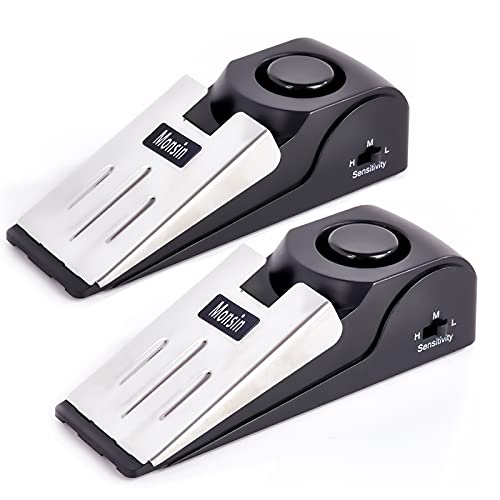
[Dual Function]: Can be used as a door stop alarm and door stopper, Its high damping rubber bearing can prevent the door sliding and prevent the bad guys into.

One-Piece Travel Door Lock: Slips into the door gap with no tools needed. This portable door lock for travel delivers a snug fit for hotel room doors, apartments, or dorms

【Warm Note】 While the door stop is equipped with a non-slip pad on the bottom and its textured surface ensures it remains non-slip during use, please note that it should not be used on slippery floor, and avoid leaving any water stains on the floor to prevent sliding.
Keeping Your Key Card Secure
Modern hotel key cards use RFID (Radio-Frequency Identification) technology or magnetic stripes. Protecting key cards prevents unauthorized cloning and lost access.
Keep your key card in a dedicated wallet slot or RFID-blocking pouch rather than carrying it loosely in pockets or bags. Avoid placing key cards directly next to smartphones or magnets, which can corrupt magnetic strip data. If you lose a key card, inform the front desk immediately so staff can reprogram your room’s lock and deactivate the lost card in the central management system.
“Never leave your key card lying on restaurant tables, poolside loungers, or hotel bar counters. Unattended key cards make easy targets for room number theft and unauthorized duplication.”
Being Mindful of Strangers
Maintaining situational awareness in corridors and public spaces reinforces physical door security. Guidance from the Federal Bureau of Investigation (FBI) Travel Safety Advisory emphasizes observing your surroundings when returning to your room.
Be cautious if someone follows you closely off the elevator or lingers in the hallway near your room door. If you feel uncomfortable, walk past your room toward the lobby or call front desk security. If someone knocks on your door claiming to be hotel maintenance or housekeeping without prior request, do not open the door immediately; call the front desk to confirm their identity first.
Reporting Suspicious Activity
Promptly reporting unusual behavior helps maintain safety for all hotel guests. Contact hotel management or security if you observe:
- Individuals loitering near guest room corridors or emergency stairwell exits without key access.
- Unverified individuals attempting to test door handles along hallway corridors.
- Evidence of tampered door frames, taped latches, or damaged key-card readers.
When reporting an issue, provide precise details including floor numbers, time of observation, and physical descriptions of individuals involved. Rapid reporting enables hotel security to respond quickly and review surveillance camera footage.
Creating an Emergency Plan
In addition to preventing unauthorized entry, your hotel security routine must accommodate fast egress during emergencies such as fires or power outages. Review the evacuation map posted on the back of your room door immediately upon check-in.
Count the number of doors between your room and the nearest emergency stairwell exit. In thick smoke or dark hallways, knowing the door count allows you to navigate to safety by feeling along the wall. Keep essential items—including your phone, wallet, identification, medication, and shoes—on a bedside table so you can grab them quickly during a night evacuation. Guidelines aligned with NFPA 101 Life Safety Code standards emphasize ensuring all secondary travel locks can be released quickly with a single motion from inside during emergencies.
Frequently Asked Questions
What are some common security concerns with hotel room doors?
Common hotel room door vulnerabilities include unauthorized key-card cloning, master key overrides, worn or misaligned strike plates, broken deadbolts, reverse-peephole viewer devices, and under-the-door wire tools designed to pull internal handles.
What are some effective ways to secure a hotel room door while inside?
To secure your door while inside, throw the primary deadbolt and flip the secondary swing bar latch. For added safety, install a portable travel lock into the strike plate slot, position a rubber door wedge alarm under the frame, and place a towel against the bottom door gap.
Are there additional security measures travelers can take beyond door locks?
Yes. Keep key cards in RFID-blocking sleeves, never reveal your room number in public, place a “Do Not Disturb” sign on the exterior handle, keep the television on low volume when away, and verify unexpected service personnel with the front desk before opening the door.
What should I do if I encounter a security issue with my hotel room door?
If your door lock, deadbolt, or frame latch is broken or malfunctioning, notify front desk management immediately and request a room change. Never stay in a room that cannot be locked securely. In cases of immediate danger or forced entry, call emergency services (e.g., 911) and hotel security right away.
Sources
- American Hotel & Lodging Association (AHLA) — Lodging security and electronic lock standards
- Federal Bureau of Investigation (FBI) — Safety awareness guidelines for business and leisure travelers
- U.S. Department of State – Bureau of Consular Affairs — Hotel security and overseas travel precautions
- National Fire Protection Association (NFPA) — Emergency egress and life safety codes (NFPA 101)
