
Last Updated on September 11, 2026 by Tyler Morgan
Turkish Airlines is a strong option for U.S. travelers who want a large international network, full-service Economy Class, lie-flat Business Class, and useful connection benefits in Istanbul. The experience can vary sharply by aircraft, however, so checking the seat map, baggage allowance, connection time, and operating plane before booking is essential.
Quick Answer
Turkish Airlines is generally a good choice for travel between the United States, Istanbul, Europe, Asia, Africa, and the Middle East. Its main strengths are meals, route coverage, lounges, and lie-flat Business Class. Its main weakness is product variation, because privacy, aisle access, Wi-Fi, and seat layouts depend on the aircraft.
Key Takeaways
- Turkish Airlines currently sells nonstop Istanbul service from 14 U.S. gateways, although frequencies and aircraft can change.
- The Boeing 787-9 and many Airbus A350-900 flights usually provide the best Business Class privacy and direct aisle access.
- The Boeing 777-300ER has lie-flat seats, but its 2-3-2 layout gives some passengers no direct aisle access.
- Baggage allowance, seat-selection costs, Wi-Fi, and refund rules depend on the fare, aircraft, and itinerary.
- Transit hotels, Stopover in Istanbul, and Touristanbul are separate programs with different eligibility rules.
Where Turkish Airlines Flies in the U.S.
Turkish Airlines currently lists nonstop flights from 14 U.S. gateways to Istanbul Airport. These flights make it possible to connect through Istanbul to destinations across Europe, Asia, Africa, and the Middle East.
- Atlanta, Georgia: ATL
- Boston, Massachusetts: BOS
- Chicago, Illinois: ORD
- Dallas/Fort Worth, Texas: DFW
- Denver, Colorado: DEN
- Detroit, Michigan: DTW
- Houston, Texas: IAH
- Los Angeles, California: LAX
- Miami, Florida: MIA
- Newark, New Jersey: EWR
- New York City: JFK
- San Francisco, California: SFO
- Seattle, Washington: SEA
- Washington, D.C.: IAD
You can confirm current gateways and available travel dates on the official Turkish Airlines U.S. flight page. Flight frequency varies by city and season, and not every route operates with the same aircraft each day.
The airline’s network is a major advantage, but the aircraft assigned to your specific flight may matter more than the route itself.
Which Planes Turkish Airlines Uses on U.S. Routes
Turkish Airlines mainly uses four wide-body aircraft families on flights between the United States and Istanbul: the Boeing 777-300ER, Boeing 787-9, Airbus A350-900, and Airbus A330-300. The airline may substitute aircraft for operational reasons, so the plane shown when you book is not guaranteed.
| Aircraft | Typical Business layout | Main advantage | Main drawback |
|---|---|---|---|
| Boeing 787-9 | 1-2-1 | Direct aisle access and a modern cabin | Some seats can feel enclosed around the feet |
| Airbus A350-900 | Usually 1-2-1 | Quiet cabin, direct aisle access, and modern controls | Different subfleets may have different seats |
| Boeing 777-300ER | 2-3-2 | Wide lie-flat seats and an open cabin | Middle seats and limited direct aisle access |
| Airbus A330-300 | Commonly 2-2-2 | Good for couples traveling together | Less privacy and no aisle access from every seat |
Turkish Airlines states that its Business Class seat features vary by aircraft. Its long-haul product can include seats that convert into beds, adjustable privacy screens, power outlets, storage, and large entertainment screens. Review the airline’s official fleet information and the live seat map before choosing a flight.
Warning: An aircraft type is not guaranteed. Maintenance, weather, scheduling, or operational needs can result in a last-minute aircraft change and a different seat layout.
Turkish Airlines Seat Maps by Aircraft
The seat map helps you determine whether your Business Class seat has direct aisle access, whether your Economy seat is near a lavatory, and whether a paid extra-legroom seat provides enough value. Do not rely only on the aircraft name because the same aircraft family can have more than one configuration.
U.S. Route Aircraft
On most U.S. routes, the Boeing 787-9 and Airbus A350-900 are the strongest choices for solo Business Class passengers because their common 1-2-1 layouts provide direct aisle access. Couples may still prefer the center seats on these aircraft.
The Boeing 777-300ER has lie-flat Business Class seats, but its 2-3-2 configuration includes a middle seat. A window passenger may also need to step past another traveler to reach the aisle. The A330-300 commonly uses a 2-2-2 layout, which works well for couples but offers less privacy than a 1-2-1 cabin.
Cabin Layout Differences
- Best for solo Business Class travelers: Boeing 787-9 or a standard Airbus A350-900 configuration.
- Best for couples: Paired center seats on the 787 or A350, or paired seats on the A330.
- Most open Business cabin: Boeing 777-300ER.
- Best Economy layout for avoiding a middle seat: The A330’s common 2-4-2 layout gives pairs along both sides of the cabin.
- Most important check: Compare the seat map during booking and again before check-in.
Pro Tip: Take a screenshot of the seat map after selecting your seat. Check it again a few days before departure. A major change in row numbers or seat arrangement can indicate an aircraft swap.
How to Find Your Turkish Airlines Plane
You can usually find the scheduled aircraft in your reservation or seat-selection screen. The seat map often gives more useful information than the aircraft name because it shows the actual cabin arrangement currently assigned to the flight.
- Open your booking confirmation and note the flight number.
- Use Turkish Airlines’ Manage Booking section or mobile app.
- Open the seat-selection screen and review the cabin layout.
- Compare the layout with the aircraft information shown in the reservation.
- Check again before online check-in opens.
- Watch for email or app notifications about schedule and equipment changes.
Online and mobile check-in normally opens 24 hours before departure. Even after check-in, Turkish Airlines may change the operating aircraft, so keep watching the app and airport screens.
Turkish Airlines Economy Class Review
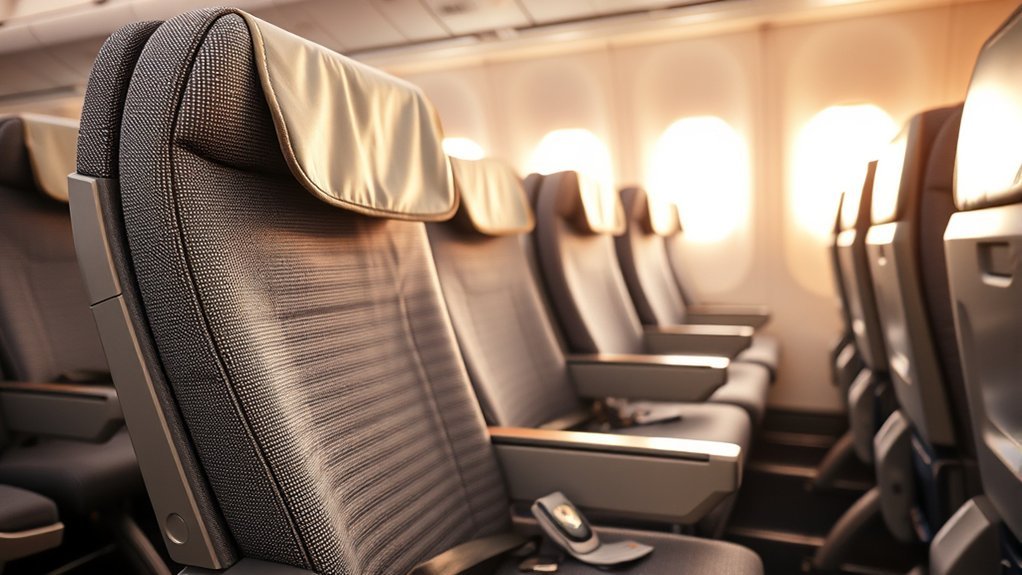
Turkish Airlines Economy Class is generally competitive for long international trips. Meals, seatback entertainment, and cabin service are included on long-haul flights, although the exact menu, amenity items, screen size, and seat dimensions vary by aircraft and route.
| Feature | What to expect |
|---|---|
| Meals | Complimentary meal service on long-haul flights, often with Turkish and international choices |
| Entertainment | Seatback screens with movies, television, music, and flight information |
| Seat layout | Usually 3-3-3 on the 777, 787, and A350, and commonly 2-4-2 on the A330 |
| Seat selection | May cost extra depending on the fare package, seat type, and membership status |
| Wi-Fi | Available on a growing number of aircraft, with performance and packages varying by flight |
The A330’s 2-4-2 Economy layout can be especially useful for couples because the two side seats avoid a third passenger. On the 787, A350, and 777, early seat selection is more important if you want an aisle, window, bulkhead, or exit-row seat.
The main Economy Class drawbacks are aircraft variation, possible seat-selection charges, and uneven Wi-Fi performance. During disruptions, the airport experience may also depend on the station, connection, and reason for the delay.
Turkish Airlines Business Class Review
Turkish Airlines Business Class combines lie-flat seating on long-haul aircraft with priority airport services, lounge access, full meal service, and additional baggage benefits. The food and lounge experience are major strengths, but the amount of privacy depends on the aircraft.
- Seating comfort: Long-haul Business Class seats can convert into beds. The 787 and many A350 layouts provide direct aisle access, while the 777 and A330 commonly do not provide it from every seat.
- Airport services: Eligible passengers receive priority check-in, priority boarding, and lounge access.
- Amenity kits: Long-haul kits usually contain basic sleep and personal-care items, but brands and contents can change.
- Dining: Multi-course meal service and Turkish menu options are central parts of the experience.
- Entertainment and power: Seatback entertainment, power outlets, and USB connections are available, but hardware differs by plane.
For a solo traveler, the 787-9 or a standard A350-900 configuration is usually the better choice. The 777-300ER may suit travelers who value a wider, more open seat but do not mind reduced privacy. The A330 can work well for couples who want to sit together.
Turkish Airlines Food, Service, and Wi-Fi
Food is one of the airline’s strongest selling points. Menus vary by route, season, cabin, and departure station, so a specific dish or beverage should never be treated as guaranteed. Long-haul flights normally include complimentary meals, drinks, and seatback entertainment.
Turkish Airlines provides internet service on an increasing number of aircraft. According to its current connectivity policy, international-flight benefits can include:
- Business Class with Elite or Elite Plus status: Unlimited internet on eligible aircraft.
- Other Business Class passengers: A data allowance plus unlimited messaging.
- Elite or Elite Plus members in Economy: A data allowance plus unlimited messaging.
- Classic Plus members: A smaller data allowance plus unlimited messaging.
- Classic members: Unlimited messaging on eligible flights.
- Other passengers: Paid messaging and internet packages may be available during the flight.
Satellite coverage, weather, restricted airspace, the number of connected passengers, and the operating aircraft can affect speed and availability.
Note: Joining Miles&Smiles before departure may provide free messaging on an eligible international flight. Sign in with the same membership information attached to your booking.
Turkish Airlines Baggage and Seat Selection
Always use the allowance printed on your ticket because checked-baggage limits vary by route, fare package, and operating carrier.
Carry-On Baggage
- Economy Class: One cabin bag up to 23 x 40 x 55 cm and 8 kg, plus one personal item up to 40 x 30 x 15 cm and 4 kg.
- Business Class: Two cabin bags, each up to 23 x 40 x 55 cm and 8 kg, with a combined maximum of 16 kg, plus one personal item up to 4 kg.
Special handling can apply on flights departing from the United States. Review the current cabin-baggage rules before packing.
Checked Baggage
On routes using the piece system, an Economy bag can generally weigh up to 23 kg and a Business bag up to 32 kg. The number of included pieces depends on the ticket. No single bag may weigh more than 32 kg, and the usual maximum total dimensions are 158 cm.
Use the airline’s checked-baggage calculator rather than assuming that every international ticket includes the same allowance.
Economy Seat Selection
Standard, preferred, exit-row, and extra-legroom seats may require payment on international Economy tickets. The fee depends on the fare package, route, and seat type. Business Class seat selection is generally included. Review the current seat-selection terms before paying.
How to Book Turkish Airlines With Points
Turkish Airlines belongs to Star Alliance, so eligible award seats may be booked through Miles&Smiles or participating partner programs. Availability, taxes, surcharges, cancellation rules, and mileage prices vary by program.
The current official Miles&Smiles award table lists the following one-way levels between Türkiye and North America:
| Cabin | Promotional award | Regular award |
|---|---|---|
| Economy Class | 40,000 miles | 55,000 miles |
| Business Class | 65,000 miles | 135,000 miles |
Promotional awards are capacity-controlled and may not be available on your preferred date. Regular awards require more miles. Taxes, fees, and carrier-imposed charges may also apply.
- Search Turkish Airlines for available award seats before transferring points.
- Compare the total miles and cash charges with eligible Star Alliance programs.
- Confirm that the award is for the cabin you want on every segment.
- Check the operating aircraft and seat map.
- Review change, refund, and cancellation rules.
- Transfer points only after confirming availability because transfers are usually irreversible.
Warning: Do not rely on an old partner award chart or blog post. Partner programs can change mileage prices, routing rules, and access to Turkish Airlines award seats without matching the Miles&Smiles chart.
Turkish Airlines Stopovers, Lounges, and Airports
Turkish Airlines offers several Istanbul connection benefits, but they are not interchangeable. Eligibility depends on your cabin, connection length, ticket, route, and available alternative flights.
Complimentary Transit Hotel
Economy passengers with a connection of at least 12 hours and Business passengers with a connection of at least nine hours may qualify for a hotel when no shorter connection is available for the route. Both flights generally need to be international connections on the same confirmed ticket.
Passengers must visit the Hotel Desk after arrival. The service is outside the transit area, so you are responsible for meeting Türkiye’s passport and visa requirements. Read the full transit-hotel conditions before travel.
Stopover in Istanbul
The advance-booked Stopover in Istanbul program is designed for eligible international itineraries with a stop of at least 20 hours and up to seven days.
- Economy passengers may receive one night in a contracted four-star hotel.
- Business passengers may receive two nights in a contracted five-star or boutique hotel.
- The trip must originate in an eligible country.
- Applications should be completed at least 72 hours before the qualifying flight.
- The benefit can normally be used once, on either the outbound or inbound journey.
Touristanbul
Eligible passengers connecting between international flights may join a complimentary Istanbul city tour when the layover is between six and 24 hours and fits an available tour schedule. The flights must meet the program’s ticket and reservation conditions. Check the current Touristanbul schedule and eligibility rules.
Istanbul Airport Lounges
Eligible Business Class passengers and qualifying status holders can use Turkish Airlines lounges at Istanbul Airport. Amenities include hot meals, drinks, work areas, Wi-Fi, showers, relaxation rooms, children’s areas, and flight-information screens. Some private suites have additional eligibility requirements.
Review the airline’s current lounge access and amenity information before your trip.
Note: Istanbul Airport is large. Leave enough time for walking, security checks, passport control, and possible gate changes. Do not plan a city visit based only on the published connection time.
Turkish Airlines Booking Tips
- Compare aircraft, not only departure times: A slightly longer itinerary may provide a much better Business Class layout.
- Check both JFK and Newark: Travelers in the New York area may find different fares, times, or aircraft.
- Review the fare package: Seat selection, baggage, refunds, and ticket changes can differ even within Economy Class.
- Allow a realistic connection: Istanbul Airport requires considerable walking between some gates.
- Confirm entry rules: A hotel or city-tour benefit may require you to enter Türkiye.
- Recheck your reservation: Aircraft and schedules can change after booking.
- Compare cash and award totals: Include taxes and surcharges when judging an award ticket.
Who Should Choose Turkish Airlines?
Turkish Airlines is especially suitable for travelers who:
- Need one-stop access to destinations beyond Istanbul.
- Value included meals and seatback entertainment.
- Can use an Istanbul stopover, city tour, or qualifying transit hotel.
- Want lie-flat Business Class and are willing to select the aircraft carefully.
- Have Miles&Smiles miles or access to a suitable Star Alliance award program.
You may prefer another airline when you need stronger schedule recovery within North America, a guaranteed direct-aisle Business Class seat, a separate premium-economy cabin, or a simpler itinerary without an international connection.
Frequently Asked Questions
Is Turkish Airlines a good airline to fly with?
Yes. Turkish Airlines is a good choice for many long-haul travelers because it offers a large route network, included meals, seatback entertainment, and lie-flat Business Class. The aircraft and seat configuration should be checked before booking because privacy and aisle access vary.
Which airline is better, Delta or Turkish Airlines?
Turkish Airlines is often better for connecting through Istanbul to Europe, Asia, Africa, and the Middle East. Delta may be more convenient for U.S. domestic connections, irregular-operation support within North America, and travelers invested in SkyMiles. The best choice depends on your route, aircraft, fare, and loyalty status.
What is Turkish Airlines’ most popular U.S. route?
Turkish Airlines does not publish a definitive public ranking of its most popular U.S. routes. New York-JFK is one of its major gateways, but schedules, passenger demand, and frequency change over time.
What reputation does Turkish Airlines have?
Turkish Airlines is known for its international network, onboard meals, Istanbul lounges, and long-haul Business Class. Passenger experiences can vary during delays, at different airports, and between older and newer aircraft.
Does Turkish Airlines provide a free hotel in Istanbul?
It may. Economy passengers can qualify for a transit hotel with a connection of at least 12 hours, while Business passengers can qualify at nine hours, provided no shorter connection is available. A separate Stopover in Istanbul program can provide one Economy or two Business hotel nights on eligible itineraries.
Which Turkish Airlines aircraft has the best Business Class?
The Boeing 787-9 and standard Airbus A350-900 layouts are usually the best choices for privacy and direct aisle access. The Boeing 777-300ER has lie-flat seats but uses a less private 2-3-2 arrangement.
Does Turkish Airlines have Wi-Fi on U.S. flights?
Many Turkish Airlines long-haul aircraft offer Wi-Fi, but availability and performance depend on the aircraft, route, satellite coverage, and flight conditions. Miles&Smiles members may receive complimentary messaging or data on eligible flights.
Conclusion
Turkish Airlines is a compelling choice when its Istanbul network, onboard meals, lounges, or connection programs fit your trip. Economy Class offers a solid full-service experience, while Business Class can be excellent on the right aircraft.
Before booking, compare the seat map, fare rules, baggage allowance, connection length, and total award charges. Travelers who choose a 787-9 or suitable A350 configuration and understand the Istanbul program rules are most likely to get the airline’s best experience.
Sources
- Turkish Airlines flights from the United States — current U.S. gateways and booking availability
- Turkish Airlines fleet — aircraft families and cabin information
- Turkish Airlines cabin baggage rules — carry-on dimensions and weight allowances
- Turkish Airlines onboard connectivity — Wi-Fi availability, allowances, and limitations
- Miles&Smiles award tickets — current regional award levels and capacity rules
- Turkish Airlines hotel service — transit-hotel eligibility and connection requirements
