
Last Updated on September 11, 2026 by Daniel Globe
A Rooblinos spinning reel can be a practical choice for freshwater and light inshore fishing, but you need to identify the exact model before relying on any specification. Rooblinos sells several reel families and sizes, so gear ratio, maximum drag, line capacity, materials, and saltwater protection can vary. This guide shows you how to check your reel, spool it correctly, set the drag, cast, troubleshoot problems, and care for it after use.
Quick Answer
To use a Rooblinos spinning reel, first confirm its model, size, line capacity, and drag rating. Mount it securely, spool the correct line under steady tension, set the drag according to line strength, open the bail to cast, and close the bail by hand before retrieving. Rinse and dry it after saltwater use.
Key Takeaways
- Rooblinos specifications vary by model and reel size, so check the spool, reel foot, box, or original listing.
- A 5.2:1 gear ratio describes rotor rotations, not the exact amount of line retrieved per handle turn.
- Set drag according to the weakest line, leader, or knot in your setup rather than the expected fish weight.
- Correct spooling, manual bail closure, and steady line tension help prevent loops and line twist.
- After saltwater use, rinse the reel gently with cool freshwater, dry it fully, and avoid unnecessary disassembly.
At a Glance
| Time Required | 15 to 30 minutes for mounting, spooling, and initial adjustment |
| Difficulty | Beginner |
| Tools Needed | Fishing line, scissors or line cutters, clean cloth, and an optional spring scale or line spooler |
| Cost | About $0 to $20 beyond the reel, depending on whether you already own suitable line and tools |
Unique Design Features of the Rooblinos Reel
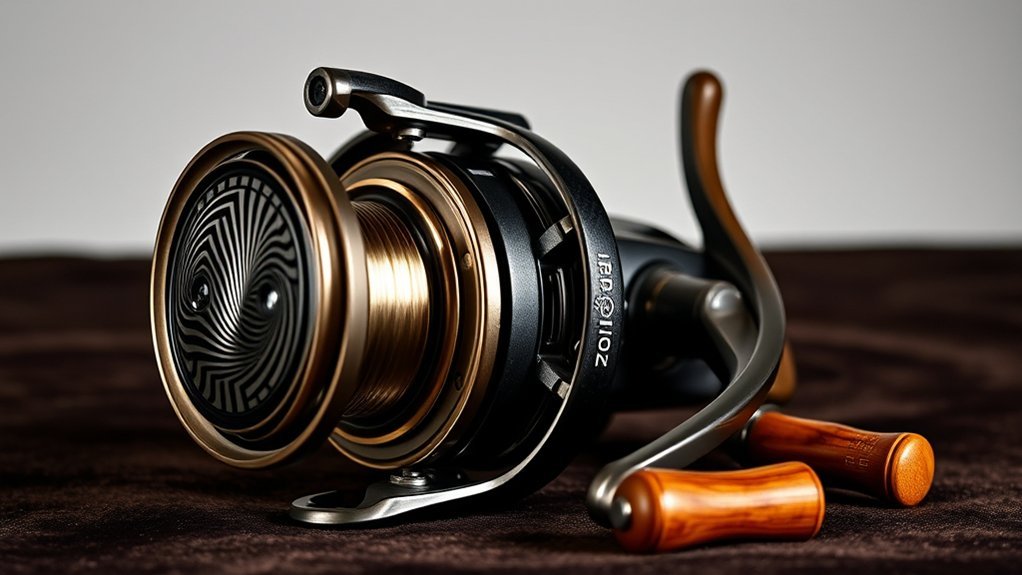
Rooblinos sells several spinning-reel series, including models in sizes commonly labeled from 1000 through 7000. The exact construction varies, so do not assume that every Rooblinos reel has the same frame, spool, bearings, drag washers, handle, or water resistance.
Before using the reel, inspect the spool, reel foot, box, or product listing for these details:
- Model or series name: This separates one Rooblinos design from another.
- Reel size: A smaller number usually indicates a lighter reel, but size numbers are not fully standardized between manufacturers.
- Gear ratio: Some Rooblinos spinning models are marked 5.2:1, while other models may use a different ratio.
- Line capacity: Match the printed diameter and length recommendations instead of guessing from reel size alone.
- Maximum drag: Use only the figure printed for your exact model. Do not combine specifications from another Rooblinos reel.
- Saltwater suitability: A corrosion-resistant description does not make a reel maintenance-free or fully waterproof.
Note: Maximum drag is not a maximum fish-weight rating. Anglers can land fish heavier than a reel’s drag rating because the rod, line, drag, technique, water depth, current, and fish behavior all share the load.
Choosing the Right Rod, Line, and Reel Size
Your reel should balance the rod and handle the line and lure weights you plan to use. A reel that is too large can make a light rod feel tip-heavy, while a reel that is too small may lack the line capacity needed for longer runs.
| General Reel Size | Typical Use | Important Check |
|---|---|---|
| 1000 to 2000 | Ultralight and light freshwater fishing | Confirm that the rod and spool support your thin line without excessive coiling. |
| 2500 to 3000 | General bass, trout, walleye, and similar freshwater use | Check rod balance, lure range, and printed line capacity. |
| 4000 | Heavier freshwater and some inshore applications | Make sure the exact model is approved for the environment and expected load. |
| 5000 to 7000 | Heavier line, larger baits, surf, carp, catfish, or inshore fishing | Verify weight, capacity, drag specification, and rod compatibility. |
Use the line-capacity markings on your spool as the primary guide. If you use braided line, select a diameter that fits the spool and rod guides. Remember that braid often breaks above its printed rating, has little stretch, and can slip around a smooth spool arbor without backing or tape.
Setting Up Your Rooblinos Reel
1. Attach the Reel to the Rod
Place the reel foot inside the rod’s reel seat. Tighten the locking rings until the reel cannot shift, but do not force plastic or graphite threads. Check that the spool and first rod guide line up straight.
2. Choose the Handle Side
Many spinning reels allow you to move the handle from one side to the other. Remove the handle or opposite-side cap according to the reel’s design, install the handle on your preferred side, and tighten it securely by hand.
3. Prepare the Spool
Open the bail before tying line to the spool. This prevents you from finishing the knot and then discovering that the line cannot pass beneath the bail.
For monofilament or fluorocarbon, tie the line to the spool arbor with an arbor knot or another secure spool knot. For braid, use a short monofilament backing section or a small piece of suitable arbor tape if the spool does not have a braid-ready gripping surface.
Warning: Do not pull braided line tightly with bare fingers. Thin braid can cut skin. Use a cloth, gloves, a scale, or a smooth tool when applying tension.
4. Spool the Line Evenly
- Place the supply spool so the line can leave it without twisting excessively.
- Hold the line under light, steady tension with a clean cloth.
- Turn the reel handle slowly and watch how the line lays across the spool.
- After several turns, lower the rod tip and create a little slack. If the line coils into tight loops, turn the supply spool over and test again.
- Continue until the line sits evenly and stops about 1/8 inch below the spool lip.
Underfilling reduces casting distance. Overfilling allows coils to jump from the spool and can create wind knots, loops, and tangles. Berkley’s spinning-reel spooling guide also recommends matching line size to the reel and controlling line orientation and tension.
Pro Tip: Stop every 20 to 30 handle turns and check the spool. Correcting loose or uneven line early is much easier than stripping off a full spool later.
5. Thread the Rod Guides
Open the bail, pull out enough line, and pass it through every guide from the one closest to the reel to the rod tip. Check that the line has not wrapped around the rod blank or missed a guide.
6. Set the Initial Drag
Turn the front drag knob clockwise to increase resistance and counterclockwise to reduce it. Start light. Pull line through the rod guides and confirm that it leaves the spool smoothly without sticking or surging.
For a more accurate setting, attach a spring scale to the line and begin near one-third of the rated strength of the weakest line, leader, or connection. For example, a setup whose weakest reliable component is rated at 12 pounds can begin near 4 pounds of drag. Start lower when knots, abrasion, light hooks, or delicate leaders reduce practical strength. The Take Me Fishing drag guide explains how to test drag with a scale.
A lower, smooth drag setting is usually safer than tightening the reel to its advertised maximum.
The Impact of Gear Ratio on Performance
Gear Ratio Explained
If your Rooblinos reel is marked 5.2:1, the rotor turns about 5.2 times for every complete turn of the handle. This is generally a versatile ratio for common spinning-reel techniques.
Gear ratio does not tell you the complete retrieval speed. The amount of line collected per handle turn also depends on:
- Spool diameter
- How much line is currently on the spool
- Oscillation and line-lay design
- Handle and internal gearing
A larger, fuller spool may retrieve more line per turn than a smaller spool with the same gear ratio. Major manufacturers therefore list gear ratio and line retrieval per crank as separate specifications. You can see this distinction in Shimano’s spinning-reel specification chart.
Performance Under Varying Conditions
A moderate ratio can work well for soft plastics, live bait, small spoons, spinnerbaits, jerkbaits, and general-purpose fishing. Technique still matters more than the number alone.
- Slow presentations: Turn the handle slowly and pause as needed instead of relying on the gear ratio to create a slow retrieve.
- Fast-moving lures: A moderate ratio can work, but you may need a quicker handle cadence.
- Current or slack line: Focus on retrieving slack promptly while keeping the rod positioned to maintain contact.
- Fighting fish: Do not crank against a fish that is actively pulling line through the drag. Wait for the run to slow, then regain line.
Why the Drag System Matters in Your Fishing Game
The drag system controls how much resistance a fish feels before line leaves the spool. A correctly adjusted drag helps protect the line, knots, leader, hooks, rod, and reel from sudden loads.
Key Drag System Functions
- Protects the line system: The spool releases line before the weakest connection is overloaded.
- Absorbs sudden runs: Smooth release reduces sharp shock loads.
- Maintains controlled pressure: You can tire a fish without locking the spool.
- Supports different techniques: Light leaders generally need less drag than heavier line and strong hooks.
Impact on Line Control
A smooth drag should release line steadily rather than starting with a hard jerk. However, drag does not prevent line twist by itself. Line twist is more often caused by incorrect spooling, rotating lures, a dirty or stuck line roller, loose line, or turning the handle while a fish is already pulling line through the drag.
Warning: Do not tighten the drag to maximum simply because the reel advertises a high maximum-drag figure. Excess pressure can break line, straighten hooks, damage a light rod, or overload the reel.
Adjusting for Fish Size
Fish size is only one factor. Set the drag according to your tackle system first, then make small adjustments for cover, current, hook size, line angle, and fish behavior.
- Use lighter drag with thin leaders, small hooks, or lightly hooked fish.
- Use controlled pressure around vegetation or structure, but stay within the safe range of the line and rod.
- Loosen the drag slightly if the line has abrasion or damaged knots.
- Check the setting again after changing line, leader, or spool.
Effective Casting Techniques for the Rooblinos Reel
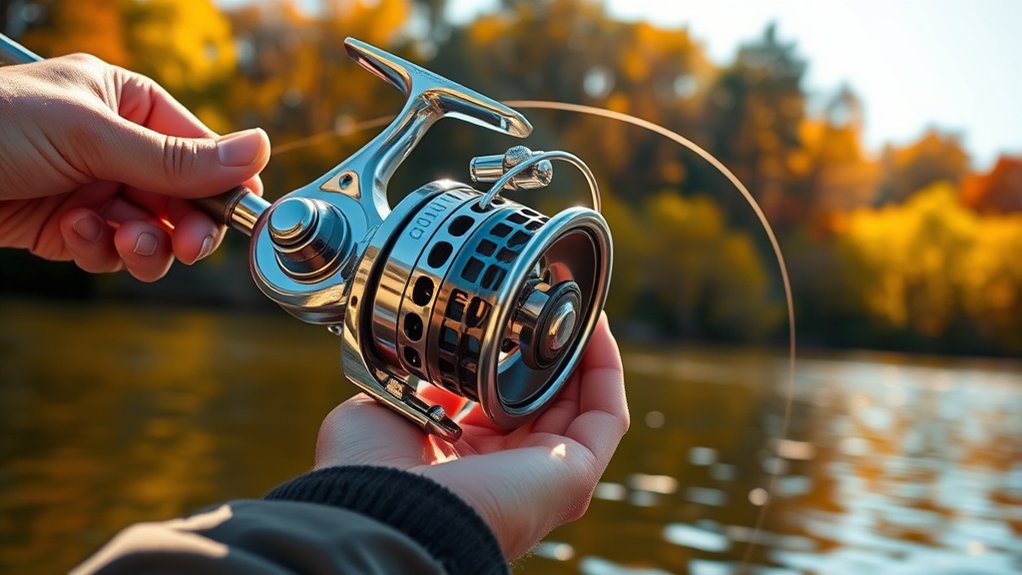
Good casting depends on spool fill, line control, lure weight, rod loading, and a smooth release. Avoid trying to force distance with a sudden, uncontrolled swing.
| Technique | How to Do It | Why It Helps |
|---|---|---|
| Check lure weight | Stay within the rod’s printed lure range. | Helps the rod load safely and predictably. |
| Control the line | Hook the line with your index finger before opening the bail. | Prevents the lure from dropping unexpectedly. |
| Use a smooth stroke | Accelerate the rod gradually and release the line at the correct point. | Improves control and reduces shock on the line. |
| Feather the line | Touch the spool lip lightly as the lure approaches the target. | Reduces excess slack and improves accuracy. |
| Close the bail by hand | Close the bail manually and confirm the line is in the roller. | Reduces loose coils and gives you immediate line control. |
Step-by-Step Casting Process
- Leave enough line between the rod tip and lure for the rod and casting style you are using.
- Place your index finger on the line and hold it against the rod grip.
- Open the bail while keeping control of the line.
- Check behind and beside you for people, branches, power lines, and other hazards.
- Move the rod smoothly through the cast and release the line from your finger.
- Feather the line near the target if you need to reduce speed or slack.
- Close the bail by hand.
- Pull the line lightly to confirm it sits in the line roller before retrieving.
Warning: Always inspect the space around you before casting. Fishing hooks can cause serious eye and skin injuries, and wet braid can be difficult for nearby people to see.
Best Fishing Techniques for the Rooblinos Reel
The most suitable technique depends on your reel size, rod, line, lure weight, and target species. A model marked 5.2:1 can support many general spinning techniques.
- Soft-plastic fishing: Use the reel to collect slack while the rod moves the lure. Avoid reeling continuously if the presentation needs pauses.
- Spinnerbaits and spoons: Maintain a steady retrieve and change handle speed until you find the depth and action the fish prefer.
- Jerkbaits: Move the lure mainly with the rod and use the reel to recover controlled amounts of slack.
- Live bait: Use a drag setting light enough to protect the leader and hook placement.
- Float fishing: Retrieve slack promptly while avoiding excessive tension that pulls the float out of position.
- Playing a larger fish: Let the drag release line during a strong run. When the fish slows, lift the rod smoothly and retrieve line as you lower it.
Do not reel while the drag is actively slipping. Doing so can add line twist and creates little useful line recovery.
Maintenance Tips for Your Reel
After Freshwater Use
- Wipe the body, spool, handle, and reel foot with a clean, lightly damp cloth.
- Remove mud, sand, plant material, and bait residue without forcing debris into moving parts.
- Check the line roller and bail joints for visible dirt.
- Dry the reel before placing it in a closed bag or storage box.
- Loosen the drag for long-term storage so the drag washers are not left compressed.
After Saltwater Use
- Keep the spool installed and lightly tighten the drag before rinsing.
- Use cool freshwater at low pressure.
- Do not submerge the reel.
- Do not use hot water, aggressive detergent, or a high-pressure spray.
- Wipe away excess water and allow the reel to air-dry fully.
- After drying, loosen the drag for storage.
Shimano’s reel-maintenance guidance recommends gentle cleaning after fishing, extra attention after saltwater exposure, no submersion, and only sparing use of oil on appropriate metal-to-metal moving points.
Lubrication and Servicing
Apply only a tiny amount of reel oil to approved external points such as the handle knob, bail hinge, or line roller when movement becomes dry and the reel’s instructions allow it. Too much oil can carry dirt into the reel or contaminate drag surfaces.
Do not fill the body with oil or grease. Internal gears, bearings, seals, anti-reverse parts, and drag washers may require different lubricants and procedures. If the reel grinds, binds, slips, or has internal corrosion, professional servicing is safer than unnecessary disassembly.
Common Rooblinos Reel Problems and Fixes
| Problem | Likely Cause | Practical Fix |
|---|---|---|
| Loops jump from the spool | Overfilled spool, loose line, or excessive memory | Remove some line, respool under tension, and close the bail by hand. |
| Line twist | Incorrect spooling direction, rotating lure, dirty line roller, or reeling against slipping drag | Untwist the line, check lure rotation, clean the roller, and stop cranking during drag release. |
| Line piles at one end of the spool | Spool-position or line-lay issue | Confirm the spool is seated correctly. Use only model-approved spacing washers if supplied. |
| Drag feels sticky | Contaminated, compressed, worn, or incorrectly assembled drag washers | Loosen and retest. Seek service if the drag still starts with a hard jerk. |
| Bail does not close smoothly | Sand, bent bail wire, weak spring, or damaged mechanism | Clean visible debris and close the bail manually. Do not force a bent or jammed assembly. |
| Handle turns backward | Anti-reverse switch is off or the anti-reverse system is slipping | Move the switch to the locked position. Seek service if it continues to slip. |
| Grinding or rough rotation | Sand, salt, damaged bearing, worn gear, or internal corrosion | Stop using the reel under load, rinse only if appropriate, dry it, and arrange inspection. |
Comparing the Rooblinos Reel to Other Models
Compare the exact Rooblinos model rather than the brand name alone. Two reels with the same size number or gear ratio can differ greatly in weight, line capacity, drag quality, sealing, spare-parts availability, and long-term durability.
Use this checklist when comparing reels:
- Actual model and size: Compare similar reel categories rather than a small freshwater reel against a large surf reel.
- Line retrieval per turn: This is more useful than gear ratio alone when retrieve speed matters.
- Measured weight: A light reel can reduce fatigue, but balance with the rod is equally important.
- Line capacity: Confirm capacity for your chosen line diameter.
- Drag behavior: Smooth startup and consistent pressure matter more than a large advertised maximum.
- Handle play: Excess movement can make a new reel feel less precise.
- Bail and line roller: Check alignment, smooth movement, and positive closure.
- Saltwater protection: Look for clear information about materials, seals, and maintenance requirements.
- Parts and service: Consider whether replacement spools, handles, bearings, and repair support are available.
- Warranty and return policy: Retailer support can matter as much as the initial price.
Do not assume that a high bearing count guarantees better performance. Bearing material, placement, shielding, alignment, gears, lubrication, tolerances, and sealing can matter more than the number printed in a listing.
How to Evaluate User Experiences With the Rooblinos Reel
User reviews can help identify patterns, but they should not be treated as controlled durability tests. Give more weight to reviews that name the exact model and size and explain how the reel was used.
| Review Detail | Why It Matters |
|---|---|
| Exact model and size | Prevents feedback from a different Rooblinos reel being applied to yours. |
| Length of ownership | A first-day impression cannot show long-term gear, bearing, or bail durability. |
| Freshwater or saltwater use | Salt exposure creates different maintenance and corrosion demands. |
| Line type and lure weight | Some line problems may come from setup rather than the reel. |
| Specific failure description | “Bail spring failed” or “drag started sticking” is more useful than “bad reel.” |
| Photos or video | Visual evidence can confirm model identity, line lay, wear, and damage. |
Be cautious with percentages that do not include the number of reviews, collection dates, verification method, model breakdown, and definition of failure.
Pre-Fishing Inspection Checklist
- Confirm that the reel is tight in the reel seat.
- Check that the handle is secure.
- Turn the handle and listen for grinding or clicking.
- Test the bail manually.
- Confirm that the line sits inside the line roller.
- Inspect the first 6 to 10 feet of line for cuts, abrasion, or flattening.
- Retie damaged or old knots.
- Pull line against the drag to confirm smooth release.
- Check that the spool is not overfilled.
- Confirm that the lure, line, and leader suit the rod’s printed ratings.
Frequently Asked Questions
How does the Baitrunner system work?
A Baitrunner-style or bait-feeder system uses a secondary, low-resistance spool setting that allows a fish to take line before the main drag is engaged. It normally has a separate rear lever or control. A standard front-drag Rooblinos spinning reel does not have this feature unless the exact model includes a clearly identified bait-feeder mechanism.
How do you use a fishing reel step by step?
Mount the reel, install suitable line under tension, thread the rod guides, tie on the rig, set the drag, hold the line with your index finger, open the bail, cast, close the bail by hand, and retrieve while maintaining controlled line tension.
What does the switch at the bottom of a spinning reel do?
When present, the switch normally controls anti-reverse. In the locked position, it prevents the handle from turning backward. In the unlocked position, it may allow back-reeling. It does not open or close the bail. Some modern spinning reels use permanent anti-reverse and have no external switch.
What is a major disadvantage of spinning reels?
Spinning reels can develop line twist, loose coils, wind knots, and loops when the spool is overfilled, line is installed incorrectly, the lure rotates, or the angler reels against a slipping drag. They are generally less prone to baitcaster-style backlash.
How much drag should I use on a Rooblinos reel?
Base the setting on the weakest part of your line system, not the reel’s advertised maximum. A common starting point is about one-third of the weakest reliable line or leader rating, measured with a scale. Start lighter when using small hooks, damaged line, or delicate leaders.
Can I use a Rooblinos spinning reel in saltwater?
Use it in saltwater only when the exact model is described as suitable for that environment. Even then, avoid submersion and rinse the reel gently with cool freshwater after each trip. Dry it fully and inspect it regularly for salt buildup or corrosion.
Why does line keep falling off my spinning reel?
The spool may be overfilled, the line may have too much memory, or loose coils may have formed during retrieval. Remove excess line, respool under steady tension, close the bail by hand, and check that the line enters the roller correctly.
Conclusion
A Rooblinos reel can perform well when its size, line, rod, and intended use match your fishing style. The most important step is to treat each Rooblinos model as a separate product rather than assuming that every reel has a 5.2:1 ratio, metal frame, carbon drag, or identical maximum-drag rating.
Check the model-specific markings, spool line under tension, set drag from the strength of your line system, close the bail by hand, and clean the reel carefully after use. These habits will do more for casting, line control, and reel life than relying on unverified marketing numbers.
Sources
- Berkley: Spooling a Spinning Reel — line selection, spool orientation, tension, and common spooling problems
- Take Me Fishing: How to Set the Drag — drag adjustment and spring-scale testing
- Take Me Fishing: Fishing Reel Parts — bail, drag, spool, handle, and anti-reverse functions
- Shimano: Reel Maintenance — freshwater rinsing, salt removal, drying, lubrication, and service precautions
- Shimano Spinning-Reel Specifications — distinction between gear ratio, spool capacity, maximum drag, and line retrieval per crank
