
Last Updated on July 24, 2026 by Caleb Warren
Uncomfortable hotel pillows are one of the most common causes of travel fatigue, morning neck stiffness, and disrupted sleep. Bringing your own personal travel pillow provides a familiar, hygienic, and ergonomically stable surface that helps maintain neutral spinal alignment regardless of the mattress quality. By selecting the right pillow density and combining it strategically with hotel bedding, you can turn any hotel room into an optimal sleeping environment.
Quick Answer
To fix uncomfortable hotel pillows, place a supportive memory foam or hybrid travel pillow directly on top of or between soft hotel pillows to achieve correct neck alignment. For side sleepers, bridge the shoulder-to-neck gap; for back sleepers, support the natural cervical curve without pushing the head forward.
Key Takeaways
- Spinal Alignment: A travel pillow fills structural gaps left by worn or overly soft hotel pillows, reducing cervical strain.
- Material Selection: High-density memory foam offers superior pressure relief, while inflatable TPU options maximize luggage space.
- Custom Height Layering: Folded hotel towels placed beneath your travel pillow allow precise millimeter-level loft customization.
- Hygiene Barrier: Personal travel pillows protect against unfamiliar hotel laundry detergents and potential dust mite allergens.
At a Glance
| Time Required | 3 to 5 minutes upon hotel check-in |
| Difficulty | Easy (Beginner) |
| Tools Needed | Personal travel pillow, hotel bath towels, pillowcases |
| Cost | $20 – $60 (One-time pillow purchase) |
Disclosure: As an Amazon Associate I earn from qualifying purchases. Some links on this page are affiliate links, at no extra cost to you.
Why a Personal Travel Pillow Is Essential for Hotel Stays
When staying in commercial accommodations, guaranteeing a restorative sleep cycle can be difficult. Hotel pillows are designed as crowd-pleasers—frequently filled with low-density polyester fiberfill or aged down that flattens under head weight. According to physical therapy research published by Spine-health, improper head elevation strains the levator scapulae and trapezius muscles, leading to tension headaches and morning stiffness.
A high-quality personal travel pillow delivers consistent firmness and contours tailored to your anatomy. Beyond biomechanical support, personal travel pillows provide notable sanitary advantages. Hotel bedding undergoes harsh industrial laundering processes containing aggressive bleach and synthetic fragrances, which can trigger skin irritation or respiratory sensitivities. Using your own pillow creates a clean, hypoallergenic barrier against common allergens and dust mites.
Pro Tip: Pack a dedicated zipped silk or high-thread-count cotton pillowcase for your travel pillow. It adds a layer of comfort, protects the foam core, and takes up virtually no luggage space.
Choose the Right Travel Pillow for Your Comfort
Selecting the ideal travel pillow requires matching core material properties with your personal sleep preferences and travel style. Clinical guidance from the Cleveland Clinic emphasizes that neck support should preserve the natural lordotic curve of your cervical spine during rest.
Pillow Material Breakdown
| Material Type | Support Level | Packability | Best Sleeping Position |
|---|---|---|---|
| Viscoelastic Memory Foam | High (Contouring) | Moderate (Compressible) | Side & Back Sleepers |
| Inflatable TPU Air Core | Adjustable (Firm to Soft) | Exceptional (Pocket-sized) | Back Sleepers & Transit Use |
| Microbead / Hybrid | Medium-Low | Low (Bulky) | Reclined / Sitting Sleepers |
| Shredded Latex / Memory Foam | High (Malleable) | Moderate | All Positions (Side, Back, Stomach) |
For standard hotel bed use, compressible memory foam or hybrid shredded foam models perform significantly better than basic inflatable neck rings designed strictly for upright flight seating. Look for models featuring removable, washable bamboo or micro-fleece covers that dissipate heat effectively throughout the night.
Pillow Placement Tips for Better Sleep
Optimal ergonomic placement depends heavily on your primary sleep orientation. Placing a travel pillow incorrectly can exacerbate cervical angles and worsen back pain.
“Maintaining a neutral neck position—where your ears align directly over your shoulders without tilt or rotation—is the single most effective way to eliminate sleep-induced neck strain.”
1. Side Sleepers
Side sleepers require the highest loft (pillow height) to fill the distance between the outside of the shoulder and the ear. Place your travel pillow on top of a flattened hotel pillow. If your travel pillow has a contoured shape, position the higher neck roll directly beneath your neck roll to support the cervical arch while allowing your head to rest neutrally.
2. Back Sleepers
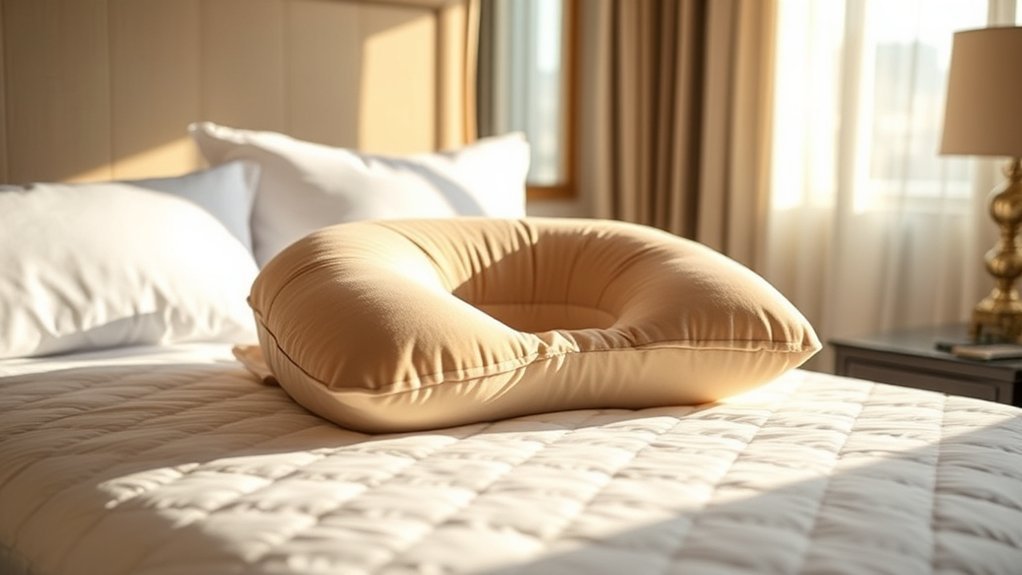
Back sleepers require a medium-to-low loft to prevent hyper-flexing the neck forward. Place the travel pillow directly beneath the base of the skull (occipital region). If using a horseshoe or wrap-around travel pillow on a hotel bed, position the thicker padded section under your neck, letting your head rest flat in the central opening.
3. Stomach Sleepers
Stomach sleeping puts natural strain on the neck due to extreme lateral rotation. If you cannot sleep in another position, place a very thin inflatable or soft travel pillow under your lower abdomen and hips rather than under your head. This neutralizes stress on the lumbar spine and minimizes neck twisting.
Warning: Avoid stacking multiple rigid, high-loft pillows under your head. Excessive elevation tilts your chin toward your chest, compressing airways and causing acute morning neck spasms.
Enhance Your Sleep With Hotel Pillows and Accessories
When your travel pillow alone doesn’t provide adequate elevation, integrating hotel amenities can refine your sleep arrangement. Ergonomic guidelines from the Sleep Foundation highlight the benefit of multi-pillow zoning to stabilize the body.
Strategic Stacking Techniques
- The Foundation Method: Place a large, soft hotel pillow flat on the mattress as an shock-absorbing base layer. Position your contoured personal travel pillow directly on top to handle structural neck support.
- The Lumbar & Knee Support System: Use spare hotel pillows between your knees (for side sleepers) or under your knees (for back sleepers). This stabilizes hip rotation and relieves lumbar stress.
- Side Bolstering: Place extra hotel pillows behind your back to prevent rolling onto your stomach during deep sleep cycles.
Making the Most of Hotel Bedding and Additional Comforts
If you find yourself in a hotel room with sub-par bedding and a travel pillow that feels slightly too low, you can create custom micro-adjustments using clean hotel bath towels.
The Towel-Tuning Method for Custom Loft
- Fold a standard hotel bath towel lengthwise into a smooth, flat rectangle.
- Place the folded towel underneath your personal travel pillow.
- Test your neck alignment in your preferred sleeping position.
- Add or remove single towel folds to adjust height by precise fraction-of-an-inch increments until your neck feels completely strain-free.
Note: Front desk staff almost always maintain a dedicated pillow menu. Do not hesitate to request firm, foam, or hypoallergenic feather alternatives upon arrival.
Frequently Asked Questions
What materials should I look for in a travel pillow?
Look for high-density viscoelastic memory foam if neck support and pressure relief are your primary goals. If luggage space is your main priority, opt for inflatable TPU (thermoplastic polyurethane) pillows with a plush outer fabric. For versatile sleeping positions, shredded memory foam or latex fills offer the best balance of malleability and breathability.
How do I clean my travel pillow while traveling?
For quick maintenance, spot-clean fabric covers with a damp cloth and mild hotel soap, then allow it to air dry. Always use a removable outer cover on your travel pillow. If the core material is memory foam, never submerge it in water; instead, spray it lightly with a fabric sanitizer spray and let it air-dry out of direct sunlight.
Can I use a travel pillow on a plane?
Yes, travel pillows are ideal airplane accessories. Inflatable and wrap-around neck models work exceptionally well in upright economy seats by preventing lateral head-bobbing. Compressible memory foam options can also double as lumbar support cushions during long-haul flights.
How do I pack a travel pillow efficiently?
To pack efficiently, roll memory foam travel pillows tightly into their designated travel compression sacks, which can reduce their volume by up to 60%. Alternatively, use air-tight space-saver bags or attach the pillow’s external snap straps to the outside handle of your carry-on bag.
What are the best travel pillows for side sleepers?
Side sleepers benefit most from contoured memory foam travel pillows with a higher loft (at least 4 to 5 inches) or cube-shaped travel pillows. These shapes fill the wide space between your ear and shoulder, preventing lateral spinal tilt while resting on hotel mattresses.
Conclusion
Bringing a personal travel pillow along on hotel stays is an effective, simple strategy for securing restful, pain-free sleep. By understanding your anatomical support needs, choosing resilient pillow materials, and utilizing clever towel-layering hacks, you can easily adapt to inconsistent hotel bedding. Prioritizing your spinal alignment while traveling pays dividends in energy, physical comfort, and overall travel enjoyment.
Sources
- Sleep Foundation — Comprehensive ergonomic criteria and material analysis for travel pillows.
- Spine-health — Physical therapy guidelines on cervical spine alignment and sleep posture.
- Cleveland Clinic — Clinical research regarding cervical support and pillow loft mechanics.
- Mayo Clinic — Medical analysis on neck pain prevention and sleep ergonomics.
