
Last Updated on July 26, 2026 by Daniel Globe
The Eagles formed in 1971 with an original lineup of Glenn Frey, Don Henley, Bernie Leadon, and Randy Meisner. Their mix of country, folk, rock, R&B, and pop helped define the Southern California sound of the 1970s. By the time they recorded Hotel California, Joe Walsh had replaced Leadon, and the band was already one of the biggest acts in American music.
Quick Answer
Don Henley sings lead on the Eagles’ studio recording of “Hotel California.” He also plays drums and percussion. Don Felder, Glenn Frey, Joe Walsh, and Randy Meisner contribute instruments and backing vocals, while Felder and Walsh perform the famous closing guitar leads. Felder, Henley, and Frey share songwriting credit.
The band’s self-titled debut arrived in 1972 and introduced the harmonies and melodic songwriting that would become Eagles trademarks. Four years later, Hotel California expanded that sound with a stronger rock edge. Rather than creating the band’s success from scratch, the album cemented an already remarkable commercial run and became its most celebrated studio record.
Key Takeaways
- Don Henley is the lead singer on the original Eagles recording of “Hotel California.”
- Don Felder, Don Henley, and Glenn Frey are the song’s credited writers.
- Don Felder and Joe Walsh play the celebrated closing guitar leads and harmonized guitar lines.
- The album was released in December 1976; the title track was released as a U.S. single in February 1977.
- As of January 2026, the RIAA certifies Hotel California at 28× Platinum in the United States.
Who Sings “Hotel California”?
Don Henley sings the lead vocal on the original studio version of “Hotel California.” Henley was both the Eagles’ drummer and one of the group’s principal singers and songwriters. On the recording, he performs the lead vocal while also playing drums and percussion.
The Eagles were unusual in having several members capable of singing lead. Glenn Frey, Randy Meisner, Joe Walsh, and other members fronted different songs, which can make the answer less obvious to casual listeners. On “Hotel California,” however, the lead singer is Henley. The official Rhino/Elektra recording credits identify Henley on vocals, drums, and percussion.
Note: The Eagles did not have just one lead singer. Glenn Frey, Don Henley, Randy Meisner, Joe Walsh, and others sang lead on different songs. “Hotel California” is specifically a Don Henley lead vocal.
The Making of Hotel California
The creation of Hotel California combined careful songwriting with unusually detailed studio work. Produced by Bill Szymczyk, the album was recorded between Criteria Studios in Miami and the Record Plant in Los Angeles, rather than at Criteria alone.
The album also marked an important lineup change. Joe Walsh had replaced founding guitarist Bernie Leadon, giving the band an additional rock-oriented lead guitarist alongside Don Felder. Hotel California was Walsh’s first Eagles studio album and Randy Meisner’s last.
The title song began with music developed by Felder. According to producer Bill Szymczyk’s detailed account of the sessions, Felder’s early demo had a reggae-influenced feel and was informally known as “Mexican Reggae.” Henley and Frey then developed the lyrical concept. The finished song is officially credited to Don Felder, Don Henley, and Glenn Frey.
The recording itself was painstaking. Szymczyk recalled assembling the master from numerous takes and making dozens of tape edits before overdubbing the lead-guitar passages. That process helped produce the polished but still dynamic sound heard on the final recording.
The closing guitar section became one of the song’s defining features. Felder and Joe Walsh trade lead passages and then move into tightly arranged harmonized lines. Their contrasting styles give the ending much of its dramatic momentum.
The Lyrics and Meaning of Hotel California
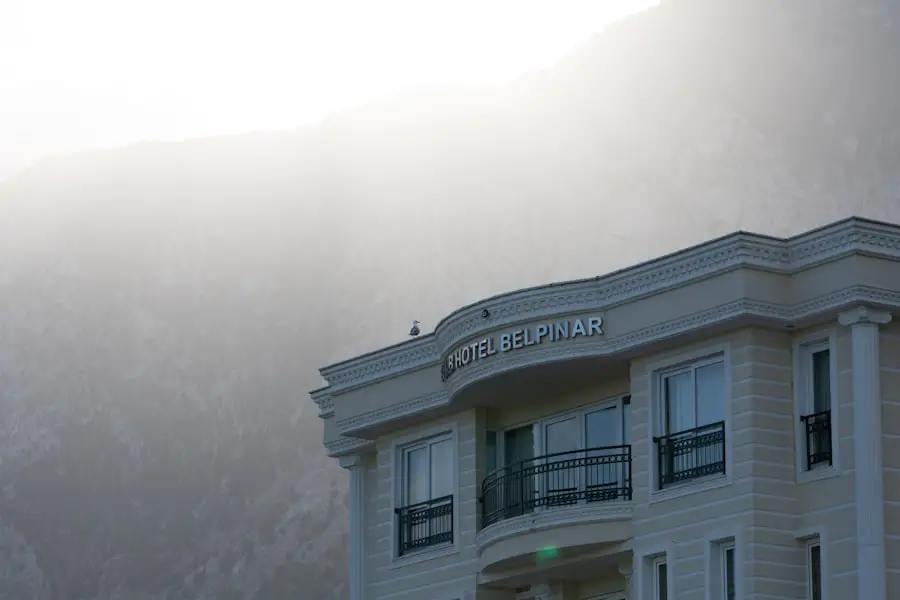
The lyrics of “Hotel California” tell the story of a traveler who encounters an attractive but increasingly unsettling place. The setting works less like a literal hotel story and more like an allegory. Pleasure, wealth, temptation, and confinement gradually blur together.
The songwriting process is important to understanding the credits. Felder originated the musical framework, while Henley and Frey developed much of the lyrical narrative. All three are officially credited as writers.
Henley has described the song as being about the “dark underbelly of the American dream”. That explanation fits the song’s contrast between glamorous surfaces and an underlying feeling of excess, disillusionment, and loss of control.
Listeners have offered many interpretations over the decades, but the writers’ own comments point most clearly toward a critique of materialism and the seductive side of the Southern California entertainment world. The mysterious imagery is part of the design: the song presents scenes and impressions without reducing them to one literal storyline.
That ambiguity helps explain why the lyrics have remained so widely discussed. The hotel can be heard as a symbol for fame, wealth, indulgence, the music business, or a broader culture in which getting what you want can create new forms of confinement.
The Vocal Performance of Hotel California
| Role | Recording Credit |
|---|---|
| Lead vocal | Don Henley |
| Drums and percussion | Don Henley |
| 12-string guitar | Don Felder and Glenn Frey |
| Electric guitar and closing leads | Don Felder and Joe Walsh |
| Bass | Randy Meisner |
| Backing vocals | Don Henley, Don Felder, Glenn Frey, Joe Walsh, and Randy Meisner |
Henley’s vocal performance is controlled rather than flashy. He delivers the opening with a restrained, almost conversational quality that suits the song’s first-person storytelling. As the narrative becomes darker, his delivery gains intensity without losing clarity.
That balance is a major reason the performance works. Henley sounds detached enough to act as the narrator while still suggesting unease beneath the surface. His grainy vocal tone also contrasts effectively with the smooth guitars and carefully arranged background harmonies.
The group vocals are equally important. Rather than treating the backing parts as decoration, the Eagles use close harmony to thicken key phrases and give the recording the polished ensemble sound associated with the band.
The Impact and Legacy of Hotel California
“Hotel California” became one of the defining recordings of the Eagles’ career. The title track reached No. 1 in the United States in 1977, and at the 20th Annual Grammy Awards it won Record of the Year. Another song from the album, “New Kid in Town,” won the Grammy for Best Vocal Arrangement for Two or More Voices. The album itself was nominated for Album of the Year, which went to Fleetwood Mac’s Rumours.
As of January 22, 2026, the RIAA certifies Hotel California at 28× Platinum, making it the third-highest certified album in the United States.
The current certification is especially notable because it corrects older figures that continue to circulate online. The RIAA’s current top-album tally lists Hotel California at 28 million certified U.S. units.
The song’s long-term reputation depends on more than sales. Its opening guitar pattern, Henley’s lead vocal, unusual narrative, and extended Felder-Walsh ending give it several instantly recognizable musical elements. Those features have helped make it a frequent reference point for guitarists, singers, producers, and classic-rock listeners.
The song has also been widely performed and interpreted by other musicians. Rather than belonging only to its original 1970s setting, it has remained part of popular listening culture for decades.
The Singer’s Influence on Music

Don Henley’s importance to the Eagles goes beyond singing “Hotel California.” He was a founding member, drummer, vocalist, and one of the group’s central songwriters. His role combined rhythm, melody, lyrics, and lead singing in a way that helped shape many of the Eagles’ best-known recordings.
His writing often pairs personal stories with broader social observations. That approach can be heard in Eagles songs about relationships, ambition, fame, and disillusionment and later became central to his solo work.
Henley’s vocal style is similarly distinctive. Instead of relying on elaborate vocal runs, he often uses phrasing, grain, restraint, and changes in intensity to carry a lyric. On “Hotel California,” that approach helps the song move from curiosity to unease without requiring a dramatic change in vocal style.
His broader career has also included environmental work, artists’ rights advocacy, and other charitable efforts. Those activities are separate from the recording itself, but they form part of Henley’s public career beyond the Eagles.
The Singer’s Solo Career
After the Eagles stopped working together around 1980, Henley established a major solo career. His debut solo album, I Can’t Stand Still, arrived in 1982 and included “Dirty Laundry,” a pointed song about sensationalism in television news.
He followed it with Building the Perfect Beast in 1984, which included “The Boys of Summer.” In 1989, The End of the Innocence continued his commercial and critical success. Songs such as “The Heart of the Matter” showed the reflective side of his writing while the album’s title track addressed broader cultural change.
Henley’s solo catalog allowed him to move beyond the Eagles’ group format without abandoning the careful writing and vocal phrasing that had helped define his earlier work. The Eagles later reunited in the 1990s, allowing Henley to continue both parts of his musical identity.
The Enduring Appeal of Hotel California
The enduring appeal of “Hotel California” comes from the way its individual parts reinforce one another. The opening guitars create an immediately recognizable mood. Henley’s vocal draws the listener into the narrative. The lyrics offer enough detail to feel cinematic while leaving enough unexplained to invite interpretation.
Then the arrangement gives the song an unusually long instrumental payoff. Felder and Walsh’s closing guitar work does not simply repeat the vocal melody; it develops the tension established throughout the track and gives the recording a distinctive ending.
The album reached its 50th anniversary in 2026, yet the title song still functions as both a classic-rock staple and a piece listeners continue to analyze. Its staying power comes less from any single mystery than from the combination of songwriting, performance, production, and atmosphere.
The Eagles’ legacy remains closely connected to the song, but “Hotel California” is also a showcase for the individual musicians involved: Felder’s musical foundation, Henley and Frey’s lyrical work, Henley’s lead vocal, Meisner’s bass, and the Felder-Walsh guitar partnership.
If you’re a fan of the Eagles’ “Hotel California” and want to explore more from its lead singer, the official Don Henley music archive covers his solo albums from I Can’t Stand Still through his later releases.
Frequently Asked Questions
Who is the singer of “Hotel California”?
Don Henley sings lead on the Eagles’ original studio recording of “Hotel California.” He also plays drums and percussion on the track.
What band is Don Henley a part of?
Don Henley is a founding member of the Eagles. The original band formed in 1971 with Henley, Glenn Frey, Bernie Leadon, and Randy Meisner.
Is Don Henley the only singer on “Hotel California”?
Henley is the lead singer, but the studio recording also uses backing vocals from Eagles members Don Felder, Glenn Frey, Joe Walsh, Randy Meisner, and Henley himself.
Has Don Henley performed “Hotel California” as a solo artist?
Yes. Henley has performed “Hotel California” during solo concerts as well as with the Eagles.
Who wrote “Hotel California”?
Don Felder, Don Henley, and Glenn Frey share the official songwriting credit. Felder originated the musical foundation, while Henley and Frey developed the lyrical concept.
Who plays the guitar solos on “Hotel California”?
Don Felder and Joe Walsh perform the famous closing guitar leads. They trade lead phrases before joining in harmonized guitar lines near the end of the recording.
Was “Hotel California” released in 1976 or 1977?
Both dates appear because they refer to different releases. The Hotel California album was released on December 8, 1976. The title song was then released as a U.S. single on February 22, 1977.
Sources
- Recording Industry Association of America — Gold & Platinum Top Tallies — current 28× Platinum U.S. certification for Hotel California.
- Recording Academy — 20th Annual Grammy Awards — Record of the Year win, Album of the Year nomination, and related 1978 awards.
- Rhino — Happy 40th: Eagles, Hotel California — album release, recording studios, lineup, and production history.
- Sound On Sound — Classic Tracks: The Eagles’ Hotel California — producer Bill Szymczyk’s detailed account of the recording process, Felder’s original music, and the Felder-Walsh guitar ending.
- Don Henley — Official Music Discography — Henley’s solo releases including I Can’t Stand Still and The End of the Innocence.
- Associated Press — Hotel California songwriting history — Henley’s explanation of the song’s themes and the development of its lyrics.
