
Last Updated on September 27, 2026 by Caleb Warren
Does insurance cover an electric scooter? The answer depends on whether you own or rent it, what type of scooter you use, and how the loss happened. A policy that pays for your medical treatment may not cover damage to the scooter or injuries you cause to someone else. Understanding these differences can help you avoid costly surprises.
Quick Answer
Insurance may cover an electric scooter, but standard auto and homeowners policies often exclude riding-related losses. Health insurance generally helps with covered medical treatment. Separate scooter or umbrella coverage may provide additional protection. Medically necessary mobility scooters follow different rules and may qualify for Medicare coverage. Always confirm your policy’s terms before riding.
Disclosure: As an Amazon Associate I earn from qualifying purchases. Some links on this page are affiliate links, at no extra cost to you.
Will Insurance Cover an Electric Scooter?
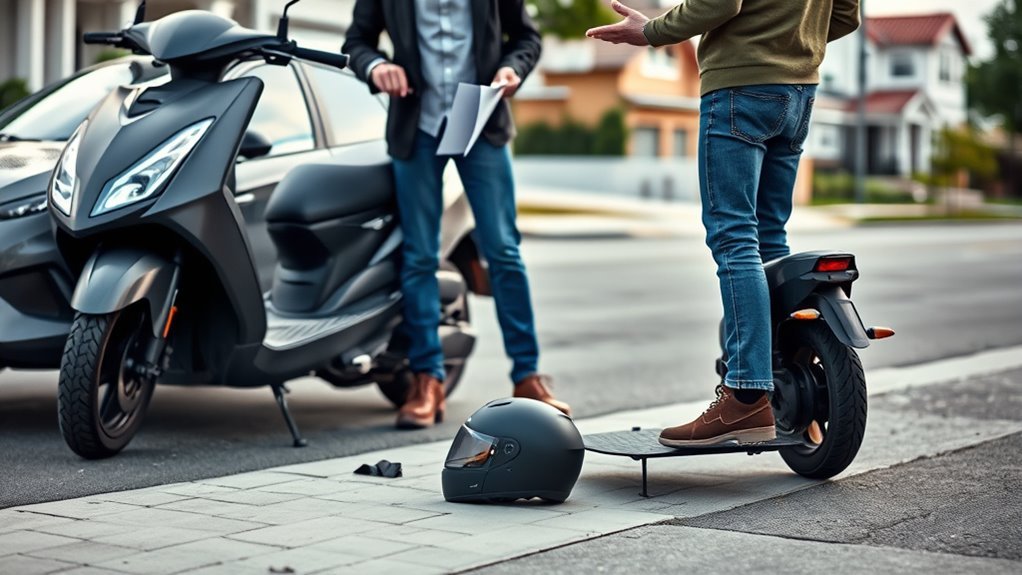
Insurance can cover certain electric scooter losses, but no single standard policy protects you against every risk. Coverage depends on the scooter’s classification, the type of accident, your policy wording, and applicable state or local rules.
For a typical stand-up electric scooter, you need to consider four separate risks:
- Your injuries: Medical bills after a fall or collision.
- Third-party liability: Injuries or property damage you cause to someone else.
- Scooter damage: Repair or replacement after an accident.
- Theft: Loss of your scooter at home or elsewhere.
These risks may require different types of insurance. Having coverage for one does not mean you have protection against the others.
The Wisconsin Office of the Commissioner of Insurance explains that standard personal policies can leave significant gaps for electric scooter riders.
Local rules also matter. Some jurisdictions impose insurance requirements on scooter rental operators, but that does not automatically mean the operator’s policy protects individual riders.
Which Policies Can Cover an Electric Scooter?
Several insurance policies may help after an electric scooter accident. However, each protects against different losses, and exclusions can prevent a claim from being paid.
The main options are auto insurance, homeowners or renters insurance, health insurance, personal umbrella coverage, and dedicated scooter insurance.
Auto and Home Coverage
Standard auto insurance generally does not cover liability arising from riding a stand-up electric scooter. Many policies limit coverage to qualifying vehicles and exclude vehicles with fewer than four wheels.
Homeowners and renters insurance may provide personal liability or property protection in certain circumstances. However, motorized vehicle exclusions often restrict scooter-related claims.
For example, if you collide with a parked car while riding, your homeowners liability coverage may not pay for the damage.
The situation can differ if your scooter is stolen from your home. Personal property coverage and motorized vehicle exclusions must be considered separately.
Personal umbrella insurance may provide additional liability protection. Some umbrella policies cover risks excluded by underlying auto or homeowners policies, but this is not guaranteed.
Ask your insurer whether coverage applies to your specific scooter, including its intended use and vehicle classification.
Health and Mobility Plans
Health insurance generally helps pay for covered medical treatment following an electric scooter accident. It does not normally pay to repair your scooter or compensate someone you injure.
You may still owe deductibles, copayments, or coinsurance. Lost income and other expenses may also remain uncovered.
A medically necessary mobility scooter is different from a recreational electric scooter.
Medicare Part B may cover a qualifying power-operated mobility scooter as durable medical equipment. According to the official Medicare coverage guidance, you generally pay 20% of the Medicare-approved amount after meeting your Part B deductible, provided the supplier accepts assignment.
Medicare therefore generally pays 80% of the approved amount under those conditions. This does not mean everyone receives a free scooter.
Eligibility requires medical necessity, a face-to-face examination, and a written order from a treating provider.
The Centers for Medicare & Medicaid Services also requires the scooter to address mobility limitations affecting daily activities in the home.
To prepare for an application:
- Discuss your mobility limitations with your healthcare provider.
- Complete the required medical assessment.
- Obtain the necessary written order and supporting records.
- Use an eligible equipment supplier that accepts Medicare.
- Confirm that the proposed scooter meets your coverage requirements before ordering.
Medicaid and private insurance may also provide mobility equipment benefits. Eligibility, approved equipment, authorization requirements, and your share of the cost vary by plan and state.
Note: Recreational e-scooter insurance and medically necessary mobility equipment coverage are different benefits. Confirm insurance questions with your insurer and mobility eligibility with your healthcare provider or benefits administrator.
Why Auto Insurance Usually Excludes E-Scooters?
Most personal auto insurance policies are designed for vehicles that meet the policy’s covered-vehicle definitions. A typical stand-up electric scooter often falls outside those definitions.
This does not mean every injury involving a scooter is automatically excluded from all auto insurance benefits.
Auto Policy Exclusions
Standard auto policies often exclude liability arising from vehicles with fewer than four wheels. An electric scooter may therefore fall outside your car’s liability protection.
Common coverage questions include:
- Does the policy’s vehicle definition include your scooter?
- Does an exclusion apply to self-propelled or motorized vehicles?
- Does the policy distinguish privately owned scooters from rentals?
- Does an endorsement provide additional coverage?
Motorcycle insurance is not automatically a solution. A policy designed for a seated motorcycle or moped may not cover a stand-up scooter.
The safest approach is to obtain written confirmation rather than relying on a general description of your existing policy.
No-Fault Coverage Gaps
Personal Injury Protection (PIP) is a type of auto insurance coverage that can pay eligible medical and related expenses following a qualifying motor vehicle accident.
However, riding an electric scooter does not automatically make every fall or collision a covered auto accident.
A scooter-only crash may fall outside applicable auto PIP requirements. A collision involving an insured car can raise different coverage questions.
Michigan provides an example of why the circumstances matter. Its official no-fault insurance guidance explains that eligibility and payment responsibilities can depend on whether a motor vehicle was involved and other details of the accident.
Michigan’s motorcyclist rules should not be assumed to apply identically to every electric scooter. The device’s legal classification and the specific accident still matter.
If a car hits you while you are riding, report the accident and ask the relevant insurers to review possible benefits. Do not assume that your claim is automatically excluded simply because you were riding a scooter.
Why Scooter Classification Matters
An electric scooter may be treated differently under traffic laws and insurance contracts. These definitions serve different purposes.
A state may regulate your scooter as a distinct transportation device, while your insurer uses a broader motorized vehicle exclusion.
That distinction can affect:
- Whether your existing policy covers the scooter.
- Whether you need separate liability protection.
- Whether an accident qualifies for applicable auto insurance benefits.
- Whether local registration or insurance requirements apply.
Stand-up electric scooters, mopeds, electric bicycles, and medically necessary mobility scooters should not be treated as interchangeable.
Check the classification of your actual device and the definitions in your insurance contract.
Does Homeowners or Renters Insurance Help?
Homeowners or renters insurance may provide limited protection for certain scooter-related losses. However, standard policies commonly exclude liability arising from motorized vehicle use.
Personal liability coverage generally protects against qualifying third-party injuries or property damage. It does not guarantee coverage for every activity involving a scooter.
The National Association of Insurance Commissioners recommends reviewing policy coverage, exclusions, limits, and deductibles to understand your protection.
| Policy feature | Possible effect | Your action |
|---|---|---|
| Personal liability | May cover qualifying third-party losses | Confirm scooter-related protection and limits |
| Motorized vehicle exclusion | May exclude riding-related claims | Review the exact definition |
| Personal property | May cover certain theft or damage losses | Confirm the scooter is eligible property |
| Reckless use | Coverage depends on the applicable policy terms and circumstances | Understand exclusions and ride responsibly |
| Intentional acts | Intentional injury or damage is commonly excluded | Review the policy’s intentional-loss wording |
Will Insurance Cover a Stolen or Damaged Scooter?
A stolen electric scooter may qualify for personal property coverage under some homeowners or renters policies. However, motorized vehicle exclusions can apply to the scooter itself, not just liability claims.
Where coverage exists, the deductible and settlement method affect the payment. Actual cash value accounts for depreciation, while replacement cost coverage follows different policy terms.
Damage caused while riding may be treated differently from theft or another covered property loss.
Ask these questions before buying or relying on coverage:
- Is my exact scooter covered against theft?
- Does protection apply away from home?
- Are accidental collisions and damage while riding covered?
- What deductible and reimbursement method apply?
If your existing policy excludes the scooter, ask whether a separate policy or endorsement is available.
What Happens After an E-Scooter Accident?
After an electric scooter accident, your first priority is safety and medical care. Then document the incident and contact the insurers that may have responsibility for the resulting losses.
Fault, vehicle classification, policy exclusions, and whether you owned or rented the scooter can all affect the claim.
- Check for injuries. Move out of traffic if you can do so safely. Seek emergency help for serious injuries.
- Document the scene. Photograph the scooter, involved vehicles, visible damage, and relevant road conditions.
- Collect information. Record contact and insurance details for involved parties and contact information for witnesses.
- Report the accident. Contact the police when required or appropriate. If you rented the scooter, follow the rental company’s incident-reporting instructions.
- Contact your insurers. Ask which policies may cover medical treatment, liability, and scooter damage.
- Keep your records. Save medical bills, receipts, repair estimates, rental information, and claim correspondence.
If you need to document damaged property, the California Department of Insurance claims guidance recommends photographs, receipts, and other records that help establish the loss.
Who Pays if You Injure Someone Else?
If you cause an accident that injures a pedestrian or damages another person’s property, you may be legally responsible for the resulting losses.
Health insurance generally covers your own eligible treatment, not another person’s injury claim against you.
Liability coverage through an applicable scooter policy, umbrella policy, or other qualifying insurance may help with covered damages and legal defense costs.
If no applicable coverage exists, you may face personal financial responsibility.
Warning: Do not assume a scooter rental company’s insurance protects you against injuries or damage you cause. Rental agreements may assign significant responsibility to riders, and operator insurance may not cover individual claims.
What if You Were Riding a Rental Scooter?
Rental scooter coverage depends on the company’s agreement and applicable local requirements.
Some municipalities require rental operators to carry insurance. However, that coverage may protect the operator or public property without providing comprehensive protection to individual riders.
The Texas Department of Insurance warns that scooter rental agreements commonly place liability on users and that personal home or auto policies may not cover the resulting accident.
Before renting, review the agreement for liability, rider eligibility, permitted use, damage charges, and any available protection.
How to Confirm Scooter Coverage Before You Ride?
The most reliable way to confirm electric scooter insurance is to ask your insurer about your specific device and intended use. A general statement that you have liability or property insurance is not enough.
Use this checklist before you ride:
- Identify your scooter. Record the make, model, type, and whether you own or rent it.
- Review local rules. Confirm any registration, operating, or insurance requirements that apply where you ride.
- Check existing policies. Review your auto, homeowners, renters, health, and umbrella coverage, where applicable.
- Ask about third-party liability. Find out whether injuries or property damage you cause while riding are covered.
- Confirm physical damage protection. Ask specifically about theft, collisions, and accidental scooter damage.
- Review your financial responsibility. Identify coverage limits, deductibles, exclusions, and any required additional policy.
- Request written confirmation. Keep the insurer’s response or the applicable policy endorsement with your records.
If existing policies leave gaps, ask about dedicated electric scooter coverage or an appropriate endorsement. Availability and benefits vary by insurer and location.
Compare policies by the protection they provide, not just their price.
A useful policy should clearly explain whether it covers your injuries, third-party liability, scooter damage, theft, and rental use.
Pro Tip: Ask your insurer to identify the policy provision that covers or excludes your scooter. Keeping that written response can help you understand the protection you purchased and avoid relying on assumptions.
Frequently Asked Questions
How to Qualify for a Free Scooter?
You may qualify for a medically necessary mobility scooter through Medicare, Medicaid, or private insurance if you meet the plan’s eligibility requirements. A treating provider must document your mobility limitations and medical need. Medicare generally does not pay the entire approved cost, so a scooter is not automatically free.
Does Insurance Cover an Electric Scooter?
Insurance may cover certain electric scooter losses, but standard auto and homeowners policies often exclude riding-related claims. Health insurance generally helps with eligible medical treatment. Separate scooter or umbrella coverage may provide additional protection for liability, theft, or damage, depending on the policy.
Who Is Entitled to a Free Mobility Scooter?
No one is automatically entitled to a free mobility scooter. Medicare may cover qualifying equipment when medical necessity and other requirements are met. Medicaid or additional insurance may reduce remaining costs, but benefits depend on eligibility, the approved equipment, and the applicable plan.
Can You Drive a Mobility Scooter if You Have Seizures?
Having seizures does not automatically establish whether you can safely operate a mobility scooter. The risks depend on seizure symptoms, awareness, control, and the device. Discuss your situation with your healthcare provider before riding, especially if seizures could cause a sudden loss of control. Follow applicable local safety rules.
Will Renters Insurance Cover a Stolen Electric Scooter?
Renters insurance may cover a stolen electric scooter if the policy includes it as eligible personal property. However, motorized vehicle exclusions can prevent payment. Confirm whether theft protection applies at home and away from home, along with the deductible and reimbursement method.
Conclusion
Insurance can protect you against some electric scooter losses, but coverage depends on the policy and circumstances. Standard auto and homeowners insurance often leave gaps, while health insurance generally helps with covered medical expenses.
Before riding, confirm your protection against injuries, third-party liability, theft, and scooter damage. A written answer from your insurer is more useful than assuming your existing coverage applies.
Sources
- Wisconsin Office of the Commissioner of Insurance: E-scooter liability, auto exclusions, rental risks, and umbrella coverage.
- Texas Department of Insurance: Rental scooter agreements, personal insurance gaps, and accident coverage.
- Medicare: Wheelchairs and Scooters: Medical necessity, eligibility, supplier requirements, and payment responsibilities.
- Centers for Medicare & Medicaid Services: Power mobility device requirements and qualifying mobility limitations.
- Michigan Department of Insurance and Financial Services: No-fault insurance, PIP benefits, and accident-specific eligibility.
- National Association of Insurance Commissioners: Homeowners and renters coverage, liability, exclusions, and policy limits.
- California Department of Insurance: Insurance claim documentation, photographs, receipts, and property-loss records.
