
Last Updated on July 27, 2026 by Daniel Globe
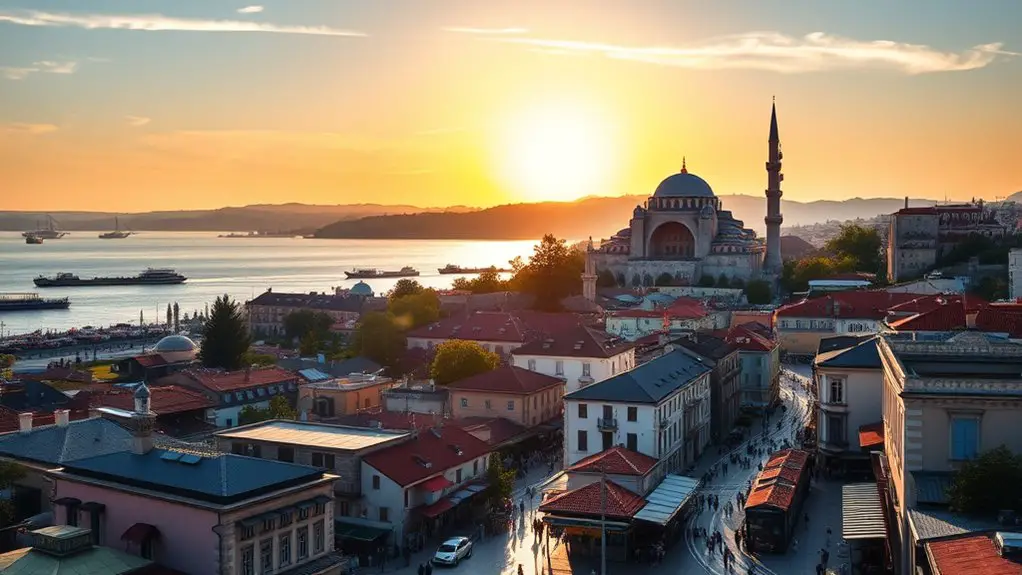
Two full days in Istanbul are enough to see the city’s biggest landmarks without spending the entire weekend in transit, but the order matters. Keep your first day around Sultanahmet and the Historic Peninsula, then use your second day for Çamlıca, Kadıköy, Moda, and a ferry ride across the Bosphorus. This route gives you Byzantine and Ottoman history, local food, markets, waterfront views, and time to slow down between the major sights.
Quick Answer
Spend Day One in Sultanahmet visiting the Blue Mosque, Hagia Sophia, Hippodrome, Basilica Cistern, Topkapı Palace, and Grand Bazaar. On Day Two, cross to the Asian side for Çamlıca Hill, Kadıköy Market, Moda, and a sunset ferry. Check palace closures and mosque prayer times before setting out.
Key Takeaways
- Keep Day One on the Historic Peninsula so you can walk between Hagia Sophia, the Blue Mosque, Hippodrome, Basilica Cistern, Topkapı Palace, and the bazaar district.
- Topkapı Palace is closed on Tuesdays, while the Grand Bazaar is normally closed on Sundays, so adjust the order if your trip falls on those days.
- Use ferries, trams, and the metro instead of relying on taxis through Istanbul traffic.
- On Day Two, visit Çamlıca before heading to Kadıköy and Moda to avoid unnecessary backtracking.
- Save time for simit, döner, fish sandwiches, meze, baklava, künefe, and the food stalls and shops around Kadıköy.
At a Glance
| Time Required | 2 full days, ideally with an early start each morning |
| Difficulty | Moderate; expect substantial walking, stairs, crowds, and public transport |
| Tools Needed | Comfortable shoes, phone with maps, transit payment method, modest mosque-ready clothing, and a portable charger |
| Cost | Variable; mosques, paid museums, palace admission, meals, and optional cruises have different fees, so check official prices shortly before your visit |
Disclosure: As an Amazon Associate I earn from qualifying purchases. Some links on this page are affiliate links, at no extra cost to you.
Before You Start: Plan Around Closures and Transport
Istanbul is much easier to explore when you group attractions by neighborhood. For a short stay, Sultanahmet, Sirkeci, or nearby parts of the Historic Peninsula make convenient bases because the first day’s major attractions are close together and the T1 tram links the area with Eminönü, Karaköy, and Kabataş.
For metro information, network maps, and service updates, check Metro İstanbul. For public ferries, use the current timetables from Şehir Hatları.
Warning: Topkapı Palace is closed to visitors on Tuesdays. The Grand Bazaar is normally closed on Sundays, and mosque tourist access can pause around prayers. Check official opening information on the morning of your visit before locking in the day’s order.
Pro Tip: Think of the ferry as public transportation, not just sightseeing. A regular ferry from Kadıköy to Karaköy, Eminönü, or Kabataş gives you excellent Bosphorus views while moving you toward your next stop.
Day One: Exploring the Historic Peninsula
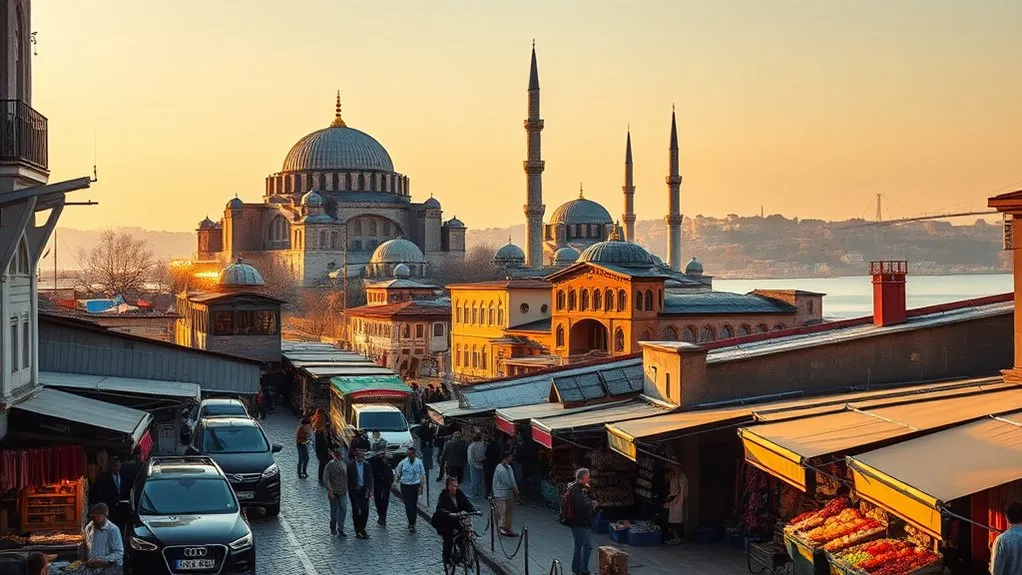
Start Day One early in Sultanahmet, where several of Istanbul’s most important landmarks sit within walking distance of one another. A practical order is the Blue Mosque, Hagia Sophia, Hippodrome, Basilica Cistern, Topkapı Palace, and finally the bazaar district.
Morning: Blue Mosque and Hagia Sophia
Begin at the Blue Mosque, officially the Sultan Ahmed Mosque. The mosque remains an active place of worship, so dress modestly, remove your shoes where required, keep your voice low, and avoid disturbing people who are praying. Visitor access can pause around prayer periods.
Walk across Sultanahmet Square to Hagia Sophia. The present building was commissioned by Emperor Justinian in the sixth century, became a mosque after the Ottoman conquest of Constantinople in 1453, served as a museum during much of the 20th century, and returned to mosque status in 2020. The Türkiye Ministry of Culture and Tourism provides historical background, while the official Hagia Sophia mosque site provides mosque information.
Because Hagia Sophia is a functioning mosque, tourist circulation, security arrangements, and access to specific sections can change. Check the current rules rather than assuming an old ticket guide still applies.
Late Morning: Hippodrome and Basilica Cistern
Continue through the historic Hippodrome area, once the center of public ceremonies and chariot racing in Byzantine Constantinople. The surviving monuments around Sultanahmet Square make this an easy outdoor stop between the two major mosques and the cistern.
Then walk to the Basilica Cistern. Its columns, vaulted brickwork, water reflections, and underground setting provide a striking contrast with the monuments above ground. The official Basilica Cistern visitor site publishes current visiting information.
Afternoon: Topkapı Palace
Allow a substantial block of time for Topkapı Palace. The former Ottoman imperial complex is not a single palace building but a series of courtyards, chambers, pavilions, collections, and gardens. The Treasury and Harem can make the visit considerably longer for travelers interested in Ottoman history.
Do not schedule Topkapı on a Tuesday. Current visitor and ticket information is published by the Republic of Türkiye Directorate of National Palaces.
Late Afternoon: Grand Bazaar
If your visit falls on a day when it is open, finish the sightseeing portion of Day One at the Grand Bazaar. Wander through its covered lanes for jewelry, textiles, ceramics, leather goods, lamps, and souvenirs. Ask sellers about where goods were made rather than assuming everything on display was handcrafted by the person selling it.
The Grand Bazaar is normally closed on Sundays. For a Saturday–Sunday weekend, this is one reason to keep it on Day One.
After the bazaar, walk or take the tram toward Eminönü for an evening meal, a fish sandwich, or a waterfront stroll before returning to your hotel.
Note: This is an ambitious sightseeing day. If you fall behind, skip extra shopping before cutting time from the monuments you came specifically to see. Topkapı alone can occupy several hours.
Must-See Landmarks: A Journey Through Time
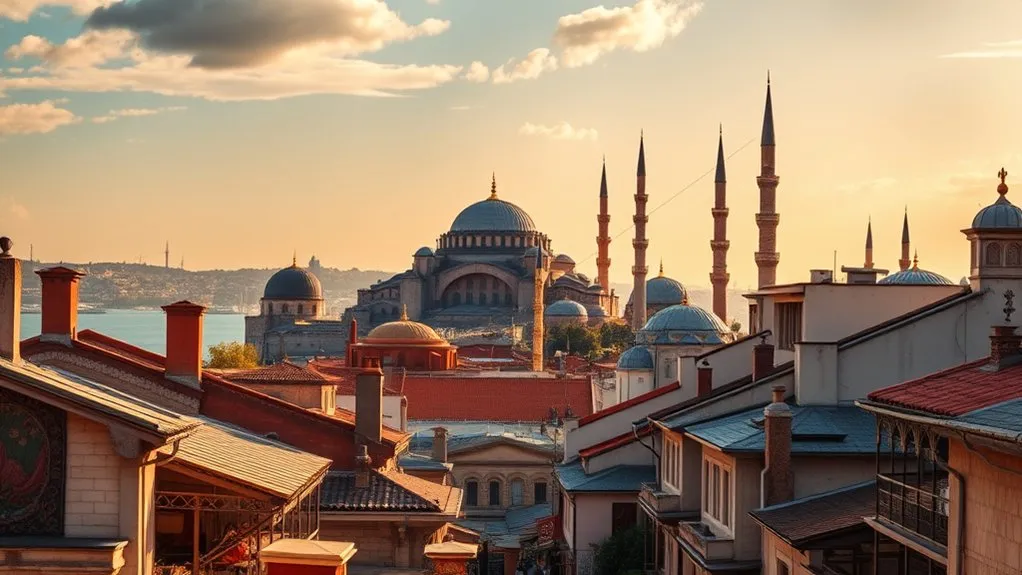
The Historic Peninsula works so well for a two-day itinerary because Istanbul’s Byzantine and Ottoman heritage is concentrated within a relatively compact area. Instead of crossing the city between every attraction, you can spend much of Day One walking.
Historic Sultanahmet District
The Sultanahmet District was at the heart of both Byzantine Constantinople and Ottoman Istanbul. The Blue Mosque, Hagia Sophia, Hippodrome, Topkapı Palace, and Basilica Cistern sit close enough together to form a natural walking route.
The ancient Hippodrome once hosted chariot races, ceremonies, and political gatherings. Nearby monuments and public spaces still reveal how central this district was to imperial life.
Today, the area remains busy with residents, worshippers, vendors, guides, and visitors. Give yourself time to look beyond the checklist of attractions and notice the transition between monumental architecture, residential streets, gardens, shops, and places of worship.
Iconic Architectural Marvels
Hagia Sophia is one of the clearest examples of Istanbul’s layered history. Its vast dome originated in Byzantine imperial architecture, while minarets, calligraphy, furnishings, and other additions reflect centuries of Ottoman use.
Across the square, the Blue Mosque represents early 17th-century Ottoman mosque architecture, with its cascading domes, six minarets, broad courtyard, and famous İznik tile decoration.
Topkapı Palace offers a different architectural experience. Instead of one monumental central building, the palace developed as an Ottoman complex of courtyards, gates, administrative rooms, residential spaces, kiosks, gardens, and ceremonial areas.
Seeing these landmarks on the same day makes Istanbul’s historical layers much easier to understand than viewing each site in isolation.
Culinary Delights: A Taste of Istanbul
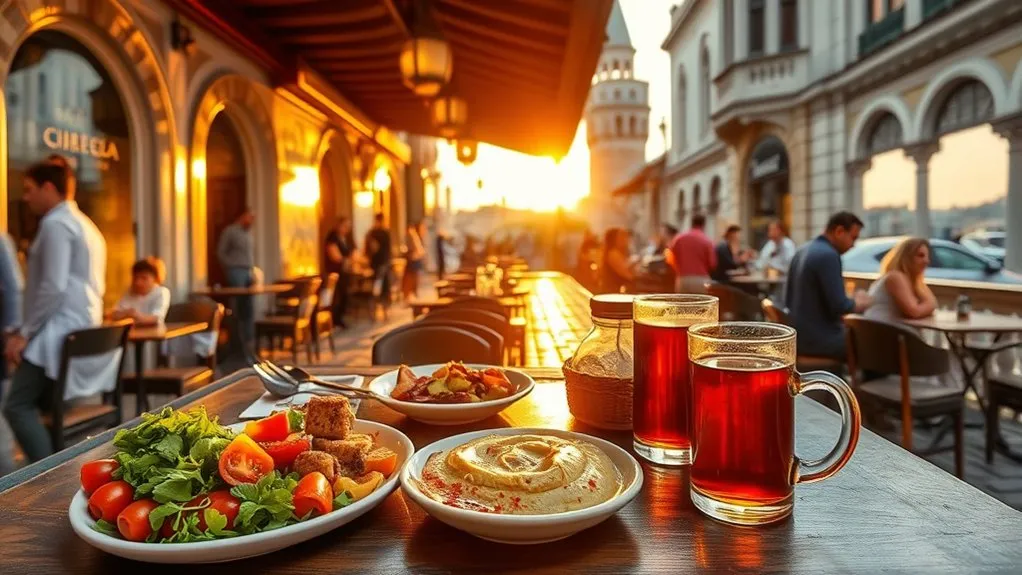
Food deserves space in a two-day Istanbul itinerary, but you do not need a formal food tour for every meal. Use the neighborhoods already on your route: grab a quick breakfast near Sultanahmet, snack around Eminönü, and leave more time for Kadıköy’s food scene on Day Two.
| Savory Food | Good Area to Try It | Sweet Finish |
|---|---|---|
| Simit — sesame-crusted bread ring | Sultanahmet or ferry piers | Baklava |
| Döner or grilled kebab | Kadıköy or Historic Peninsula | Turkish delight |
| Balık ekmek — fish sandwich | Eminönü waterfront | Künefe |
| Börek or gözleme | Kadıköy | Dondurma |
| Meze platter | Traditional meyhane | Halva or rice pudding |
The Spice Bazaar, Grand Bazaar, Kadıköy Çarşı, Beşiktaş, and Ortaköy all offer different food and market experiences, although you will not have time to explore all of them properly in just 48 hours. Kadıköy is the best fit for this particular route.
Cooking classes and food tours can be worthwhile if cuisine is the main purpose of your trip, but they usually require sacrificing one or more major sightseeing stops on a two-day schedule. The same applies to food festivals: check the official event calendar for your travel dates rather than assuming one will be running.
Day Two: Discovering the Asian Side
Day Two trades palace interiors and major monuments for viewpoints, neighborhood life, food, parks, and the Bosphorus. To reduce backtracking, visit Çamlıca Hill first, continue to Kadıköy, relax in Moda, and finish with a ferry back toward the European side.
Morning: Visiting Çamlıca Hill
Start the morning at Çamlıca Hill on the Asian side. From this elevated area, you can look across sections of the Bosphorus, the Historic Peninsula, and Istanbul’s wider skyline.
The gardens and walking areas provide a welcome change from the dense sightseeing of Day One. On a clear morning, spend time enjoying the panorama before the day’s crowds and heat build.
A cup of Turkish tea or coffee here makes a relaxed start before you travel downhill toward Kadıköy.
Midday: Exploring Kadıköy Market
Continue to Kadıköy, one of the Asian side’s busiest commercial and food districts. Around Kadıköy Çarşı, you’ll find produce, fish, cheese, olives, breads, sweets, cafés, casual restaurants, and specialty food shops.
Try a simit, döner, börek, or another quick local meal rather than turning every food stop into a long restaurant visit. The goal is to leave time to walk through the neighborhood.
You may also see ceramics, textiles, gifts, and independent shops. As with the Grand Bazaar, ask about the origin of handmade goods instead of assuming every item is produced by the seller.
Afternoon: Relaxing at Moda Park
From central Kadıköy, continue toward Moda for a slower final afternoon. The waterfront and green spaces give you views over the Sea of Marmara and a place to sit after two busy sightseeing days.
Walk the neighborhood streets, stop at a café, watch everyday local life, or take a break in the park. This is the point in the itinerary to stop rushing.
If the weather is pleasant, stay until late afternoon before returning toward the Kadıköy ferry terminal.
Evening: Cross the Bosphorus by Ferry
Finish the day on the water. Regular Şehir Hatları ferries connect Kadıköy with Karaköy and Eminönü, while other routes connect the Asian side with additional European-side piers.
A public ferry is different from a dedicated Bosphorus sightseeing cruise: it follows a normal transit route rather than lingering around landmarks. For a two-day trip, however, it gives you the water-level city views without requiring another large block of sightseeing time.
Try to time the crossing for late afternoon or evening light, then continue to dinner after you reach the European side.
Hidden Gems: What to Add Only If You Have Time
Istanbul is packed with quieter corners, but a two-day itinerary can become exhausting if you keep adding stops. Treat these as replacements rather than mandatory extras.
For an underground historical experience beyond the Basilica Cistern, consider the Şerefiye Cistern, also known as the Theodosius Cistern. It is a real historic cistern and a better-defined option than searching for vague “underground bazaars.”
On the Asian side, the streets around Yeldeğirmeni offer cafés, neighborhood architecture, independent businesses, and street art away from Sultanahmet’s main tour groups. Around Kadıköy and Moda, simply turning into residential side streets can also reveal a calmer side of the city.
If gardens are your priority, use the green spaces already near your route rather than crossing Istanbul for a so-called “secret garden.” Gülhane Park, the grounds around Çamlıca, and Moda’s waterfront greenery are easier to fit into a 48-hour plan.
Local cultural events and festivals can add something special when your dates happen to align, but verify the venue and schedule before building your day around one.
Tips for Making the Most of Your Weekend
Start early, especially in Sultanahmet. Security lines, prayer periods, ticket queues, meal stops, and simple photo breaks can quickly push a carefully planned morning into the afternoon.
- Group attractions by area. Do not zigzag between Europe and Asia several times in one day.
- Use public transport. Trams, metro lines, and ferries are usually more predictable than crossing central Istanbul by road during heavy traffic.
- Check closures first. Topkapı is closed Tuesday, the Grand Bazaar is normally closed Sunday, and mosque access changes around worship.
- Dress for mosques. Wear respectful clothing and be prepared to remove your shoes where required. A lightweight scarf is useful for travelers who need a head covering.
- Leave room in the schedule. A two-day itinerary should feel full, not like a race between ticket gates.
For dinner, a traditional meyhane can be a good place to share meze and spend a slower evening. Some venues feature live music, but folk dancing is not a standard part of every meyhane experience. Book a dedicated cultural performance separately if that is something you specifically want to see.
Note: Conditions, access rules, ferry schedules, and security advice can change. Recheck official attraction pages, transport sites, and your government’s Türkiye travel guidance shortly before departure.
Frequently Asked Questions
Is two days enough for Istanbul?
Two full days are enough for a first look at Istanbul if you keep the itinerary focused. Spend one day in Sultanahmet and the Historic Peninsula and the other on the Asian side and Bosphorus. You will not see the whole city, so save neighborhoods such as Beyoğlu, Balat, Ortaköy, and the Princes’ Islands for a longer visit.
What is the best time of year to visit Istanbul?
April through May and September through October are strong choices for sightseeing because temperatures are generally milder than during peak summer. Istanbul can still have rain and rapid weather changes, so check the forecast before departure. Historical climate data are available from the Turkish State Meteorological Service.
How do I get around Istanbul efficiently?
Combine walking with Istanbul’s tram, metro, and ferry networks. Sultanahmet’s major attractions are close together, while ferries make crossings between the European and Asian sides part of the sightseeing experience. Check Metro İstanbul and Şehir Hatları for current service information.
Are there any cultural customs I should be aware of?
Be especially respectful inside working mosques. Dress modestly, follow posted instructions, remove shoes where required, speak quietly, and avoid obstructing or closely photographing people who are praying. In restaurants or private homes, follow your host’s lead and a simple teşekkür ederim, meaning “thank you,” is always appreciated.
What should I pack for a weekend in Istanbul?
Bring comfortable walking shoes, weather-appropriate layers, a lightweight jacket, sunglasses, a portable charger, and a small day bag. A lightweight scarf is useful for mosque visits. Check the forecast before leaving because conditions vary significantly by season.
Is it safe to travel in Istanbul as a solo traveler?
Many people visit Istanbul independently, but no city is risk-free. Stay alert in crowded tourist areas and transit hubs, secure your valuables, avoid demonstrations, use established transportation options, and tell someone where you are going when heading out alone late at night. Check the latest U.S. State Department Türkiye Travel Advisory or your own government’s equivalent before departure.
What should I do if my Istanbul weekend includes Sunday?
Put the Grand Bazaar on Saturday because it is normally closed Sunday. Use Sunday for the Asian-side route, ferries, parks, food neighborhoods, and attractions that are open. Always recheck individual opening schedules before your trip because holidays and special events can change normal hours.
Conclusion
Two days will never reveal all of Istanbul, but they are enough to understand why the city deserves a return trip. Day One gives you the Byzantine and Ottoman landmarks of Sultanahmet, while Day Two adds the Asian side, neighborhood food, green spaces, and a Bosphorus crossing. Keep the route compact, check closures before you leave, and resist the urge to squeeze one more distant attraction into every open hour.
Sources
- Türkiye Ministry of Culture and Tourism — Hagia Sophia — historical background and current mosque status.
- Republic of Türkiye Directorate of National Palaces — Topkapı Palace — official palace visitor information.
- Basilica Cistern — official visitor information and opening details.
- Şehir Hatları — official Istanbul ferry routes and timetables.
- Turkish State Meteorological Service — Istanbul climate statistics and seasonal conditions.
- U.S. Department of State — Türkiye Travel Advisory — current travel-security guidance.

