
Last Updated on August 2, 2026 by Daniel Globe
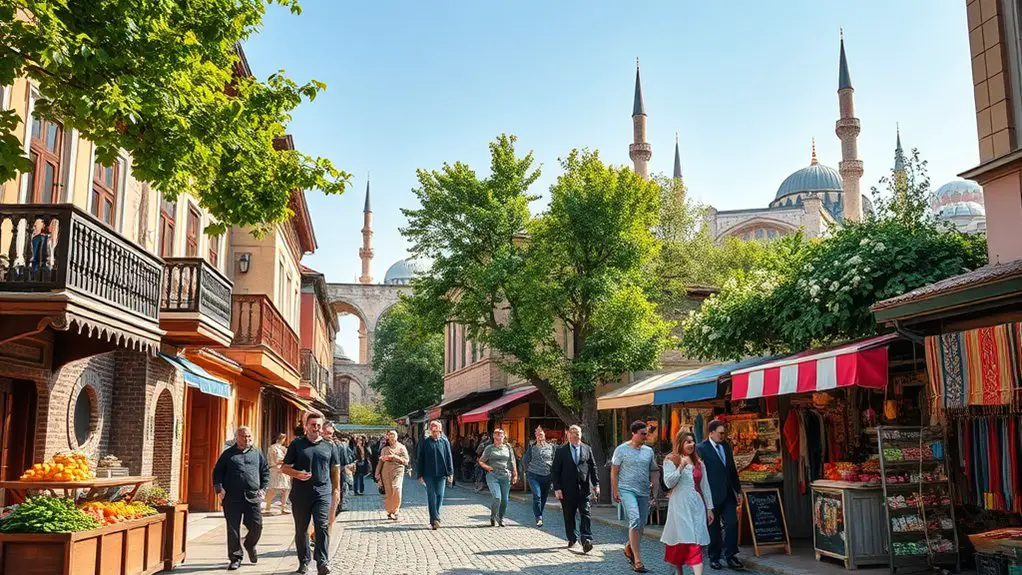
An Eyüpsultan walking tour is one of the best ways to experience the quieter, more historic side of Istanbul’s Golden Horn. Within a compact area, you can visit the deeply significant Eyüp Sultan Mosque and tomb, see Ottoman architecture, explore a restored cultural venue, browse market streets, and finish with the view from Pierre Loti Hill. The central sights are close together, but the hill and cemetery paths add slopes, so good shoes and a little planning make the day much easier.
Quick Answer
An Eyüpsultan walking tour works best as a half-day route along the Golden Horn: start near Artİstanbul Feshane, continue to Zal Mahmud Paşa Külliyesi and Eyüp Sultan Mosque and tomb, then ride the TF2 cable car to Pierre Loti Hill. Allow about 3–5 hours, dress respectfully for religious sites, and expect some slopes.
Key Takeaways
- Eyüp Sultan Mosque and the tomb of Abu Ayyub al-Ansari are the historic and spiritual heart of the neighborhood.
- For a fuller walk, include Artİstanbul Feshane and the Zal Mahmud Paşa Külliyesi before heading toward the mosque.
- The T5 Eminönü–Alibeyköy tram serves both Feshane and Eyüpsultan Teleferik, where it connects with the TF2 cable car.
- Pierre Loti Hill is easiest to reach by TF2; walking through the hillside cemetery is steeper and less suitable for visitors with limited mobility.
- Treat the mosque, tomb, and cemetery as active religious spaces: dress modestly, follow posted rules, keep voices low, and avoid photographing people at prayer without permission.
At a Glance
| Time Required | About 3–4 hours for the core sights; allow 4–5 hours if you spend time at Artİstanbul Feshane and stop for food or tea. |
| Difficulty | Easy to moderate. The waterfront and central streets are manageable, but the Pierre Loti and cemetery area includes steep or uneven sections. |
| Tools Needed | Comfortable walking shoes, water, Istanbulkart for public transport, sun or rain protection, and modest clothing for mosque visits. |
| Cost | Low. Budget mainly for public transport, food, and drinks — expect roughly 50–150 TL for tea or simit and more for a full meal. Artİstanbul Feshane currently lists admission as free. |
Disclosure: As an Amazon Associate I earn from qualifying purchases. Some links on this page are affiliate links, at no extra cost to you.
Historical Significance of Eyüpsultan
Eyüpsultan developed around one of Istanbul’s most important religious sites: the tomb associated with Abu Ayyub al-Ansari, known in Türkiye as Eyüp Sultan. He was a companion of the Prophet Muhammad and hosted him in Medina after the Hijra. The neighborhood later took its name and much of its identity from this connection.
The first Eyüp Sultan Mosque was built after the Ottoman conquest of Constantinople, with the Turkish Ministry of Culture and Tourism dating it to 1458. The mosque was repaired repeatedly over the following centuries, and the structure seen today largely reflects the major rebuilding undertaken in the reign of Sultan Selim III at the end of the 18th century. The Ministry of Culture and Tourism’s Eyüp Sultan Mosque entry provides further architectural details.
Eyüp also had an important place in Ottoman ceremonial life. The tomb became associated with dynastic legitimacy, and Ottoman sultans took part in ceremonial sword-girding rituals in Eyüp following accession. The district consequently attracted mosques, tombs, charitable complexes, schools, fountains, cemeteries, and residences built by members of the dynasty and senior officials, as documented by the TDV İslâm Ansiklopedisi history of Eyüp.
Eyüpsultan is more than a viewpoint stop: its mosque, tombs, cemeteries, Ottoman complexes, waterfront, and market streets preserve layers of Istanbul’s religious and social history.
Must-See Attractions
The two landmarks most visitors associate with Eyüpsultan are Eyüp Sultan Mosque and Pierre Loti Hill. They are close enough to combine easily, but each offers a very different experience: one centers on history and worship, while the other opens onto the Golden Horn landscape.
Pierre Loti Hill
Pierre Loti Hill overlooks the Golden Horn from above Eyüp and is one of the neighborhood’s classic viewpoints. Rather than making a steep climb, most visitors can use the TF2 Eyüp–Piyer Loti cable-car line.
According to Metro Istanbul, TF2 runs between Eyüp and Piyer Loti and covers a short 384-meter route. The lower station connects with the T5 tram. Folding cabin seats also allow wheelchair users to travel on the cable car, although accessibility elsewhere on the hillside varies.
At the top, pause for the panorama over the Golden Horn, take photographs, or have Turkish tea or coffee at one of the cafés. The view is the main attraction, so there is no need to rush.
Pro Tip: Use the cable car for the uphill journey if you want to save energy. Visitors comfortable with slopes can consider walking down afterward, but the cemetery paths may be steep or uneven.
Eyüp Sultan Mosque and Tomb
Eyüp Sultan Mosque is the spiritual center of the district. The first mosque on the site dates to 1458, while the present building largely reflects its late-18th-century reconstruction. Its courtyards, domes, calligraphy, fountain, and neighboring tomb make it one of the most historically layered religious complexes on the Golden Horn.
The tomb associated with Abu Ayyub al-Ansari is the reason the site has such deep religious importance. It remains a place of devotion rather than simply a tourist attraction, so visitors should allow worshippers space and follow any instructions posted at entrances. Because the complex occasionally undergoes maintenance or restricts access during major prayer times and religious holidays, it’s worth checking recent visitor reports or the site itself on the day you plan to go.
Warning: This is an active mosque and pilgrimage site. Wear modest clothing, remove shoes where required, keep your voice low, and avoid obstructing people who are praying. Access to particular areas may change during prayers or busy religious dates.
Self-Guided Eyüpsultan Walking Route
For a practical half-day walk with minimal backtracking, approach the historic center from the Golden Horn waterfront and finish on Pierre Loti Hill.
- Start at Feshane. Take the T5 tram to Feshane station if arriving from Eminönü, or use an Eyüpsultan ferry service when the timetable works for your trip.
- Visit Artİstanbul Feshane. Explore the restored Ottoman industrial building and its current exhibitions if the venue is open.
- Continue to Zal Mahmud Paşa Külliyesi. This Mimar Sinan-era complex adds a quieter architectural stop before the busy mosque district.
- Walk toward Eyüp Sultan Mosque and the tomb. Give yourself time for the courtyard, architectural details, and the atmosphere around the complex.
- Browse the surrounding market streets. This is a convenient place for tea, simit, börek, sweets, or a full meal.
- Continue to Eyüpsultan Teleferik station. Take TF2 to Pierre Loti Hill.
- Finish at Pierre Loti Hill. Enjoy the Golden Horn view and return by cable car, or walk downhill only if you are comfortable with steep and uneven paths.
Note: Service hours, exhibition schedules, religious access, and ferry timetables can change. Check the official transport and venue pages on the day of your visit rather than relying on an old screenshot or travel-blog timetable.
Hidden Gems to Discover
Eyüpsultan’s most rewarding secondary sights are documented historic and cultural places that fit naturally into the walk.
Artİstanbul Feshane
Artİstanbul Feshane occupies one of the Ottoman Empire’s early industrial buildings on the Golden Horn. Istanbul Metropolitan Municipality restored the complex and reopened it as a public culture-and-art venue in June 2023.
The official Artİstanbul Feshane listing currently states that it is open Tuesday through Sunday from 10:00 to 20:00, closed Monday, and free to enter. The specific exhibition on display rotates every few months, so check the official page before visiting rather than expecting a particular show.
Zal Mahmud Paşa Külliyesi
The Zal Mahmud Paşa Külliyesi is a rewarding architectural stop for visitors who want to look beyond Istanbul’s largest imperial mosques.
The complex was commissioned by Zal Mahmud Paşa and Şah Sultan and is associated with Mimar Sinan. It includes a mosque, medrese buildings, a tomb, and a fountain arranged over sloping terrain. Its unusual levels and galleries make it especially interesting for anyone curious about how Sinan-era architects worked with difficult sites. More historical detail is available from the TDV İslâm Ansiklopedisi.
Eyüp Cemetery
The historic cemetery climbing the hillside above the mosque is an important part of Eyüp’s landscape. Its gravestones and tombs reflect the long-standing desire of Ottoman officials, scholars, and other prominent figures to be buried near the sacred district.
It can also provide a walking connection toward Pierre Loti Hill, but this should be treated as a respectful cemetery visit rather than a shortcut. Stay on established paths, avoid touching or climbing on graves, and keep photography considerate. As with any quiet, less-trafficked path, keep valuables secure and stick to marked routes, especially later in the day.
Architectural Wonders
Eyüpsultan contains architecture from several periods of Ottoman history, from the religious complex around Eyüp Sultan to major Sinan-era work and later charitable foundations.
Historic Mosques and Complexes of Eyüpsultan
For a walking tour centered on Eyüpsultan, focus on monuments genuinely located in the district:
| Landmark | Why It Matters |
|---|---|
| Eyüp Sultan Mosque and Tomb | The district’s central religious landmark, with a foundation dating to the years after the Ottoman conquest and a major rebuilding completed around 1800. |
| Zal Mahmud Paşa Külliyesi | A 16th-century complex associated with Mimar Sinan, notable for its mosque, medreses, tomb, fountain, and sloping site. |
| Şah Sultan Külliyesi | A late-18th-century foundation beside the Zal Mahmud Paşa complex that illustrates another period of Eyüp’s Ottoman patronage. |
Do not confuse these with other famous Istanbul mosques. The Edirnekapı Mihrimah Sultan complex and Rüstem Paşa Mosque are in Fatih, Kılıç Ali Paşa is in Tophane, and Sancaklar Mosque is much farther west in Büyükçekmece. They may be worthwhile on other days, but they do not belong on a compact Eyüpsultan walking route.
Unique Ottoman Architecture Features
As you walk, look beyond the size of each building and pay attention to how Ottoman complexes combine architecture with daily life. Mosques were often accompanied by medreses, fountains, tombs, schools, charitable facilities, and landscaped courtyards.
Common details include domes, slender minarets, carved stonework, calligraphy, İznik tiles, wooden doors, fountains, and covered porticoes. At Zal Mahmud Paşa, the handling of the steep site is especially important: different parts of the complex sit at different elevations rather than on one flat monumental platform. At Eyüp Sultan Mosque, the architectural experience is inseparable from the courtyard and tomb, which together illustrate how religion, ceremonial life, burial traditions, and urban design became intertwined in Ottoman Istanbul.
Spiritual Landmarks
Eyüpsultan’s religious character is still visible in everyday life. It is important to approach these places as living sacred spaces rather than museum exhibits.
- Eyüp Sultan Mosque: The central place of worship and the neighborhood’s best-known religious monument.
- Tomb of Abu Ayyub al-Ansari: The focal point that gave Eyüp much of its spiritual significance.
- Eyüp Cemetery: A historic burial landscape climbing the hillside behind the central district.
- Zal Mahmud Paşa Külliyesi: A historic mosque and educational complex that broadens the architectural story beyond the main shrine.
- Other historic tombs and foundations: Eyüp contains numerous smaller religious monuments linked to Ottoman officials, scholars, members of the dynasty, and charitable patrons.
During a visit, avoid walking in front of someone who is praying, keep phone calls outside prayer areas, and ask before taking close photographs of people. If a religious service or large gathering is underway, give the congregation priority and return later if necessary.
Local Cuisine and Dining Options
A walking tour through Eyüpsultan is easy to combine with familiar Turkish foods. Around the central streets and market area, you can stop for simit, börek, pide, kebabs, tea, Turkish coffee, sweets, or a more substantial sit-down meal.
For a quick break, simit with tea is convenient before continuing uphill. Börek or pide makes a more filling lunch, while baklava or another Turkish dessert works well with coffee later in the day. Street snacks and tea are inexpensive; a full sit-down meal costs more, so budget accordingly if you plan to eat twice during the walk.
The important point is not to treat any one common Turkish dish as uniquely “Eyüpsultan.” Instead, enjoy the neighborhood as a place where religious visitors, residents, families, and tourists all use the surrounding cafés, bakeries, and restaurants.
Tips for an Enjoyable Walking Tour
- Wear comfortable shoes: Historic paving, slopes, and cemetery paths can be harder on your feet than the total distance suggests.
- Carry water: This matters most in warm weather or if you plan to walk the hill rather than use TF2.
- Dress for religious sites: Choose clothing that covers shoulders and knees, and carry a scarf if you may need one to meet posted mosque dress rules.
- Remove shoes where instructed: Follow signs and local practice when entering carpeted prayer areas.
- Give worshippers priority: Do not block entrances or prayer lines while taking photographs.
- Pack for the weather: Bring sun protection and a hat in summer, and a light rain layer in spring or autumn, since much of the route is outdoors.
- Keep valuables secure: Use a crossbody bag or similar in crowded market streets and quieter cemetery paths alike.
- Download an offline map: It helps with smaller lanes and prevents unnecessary backtracking.
- Use official transport information: Service changes are more reliably reflected by Metro Istanbul and Şehir Hatları than by an old blog post.
Pro Tip: A good rhythm is culture and architecture first, the mosque district next, then Pierre Loti Hill last. That leaves the panoramic viewpoint for a relaxed tea break rather than putting the steepest part of the visit at the beginning.
Best Time to Visit Eyüpsultan
Spring and autumn are usually the most comfortable seasons for an Eyüpsultan walking tour because milder temperatures make the hills easier to manage. Summer can still be enjoyable, but starting earlier in the day helps you avoid the strongest midday heat.
Weather is not the only consideration. Eyüp Sultan Mosque is an important place of worship, so crowd levels can rise around Friday congregational prayer, Ramadan evenings, religious holidays, and other significant dates.
For a quieter sightseeing visit, a weekday morning is often a sensible choice. If your goal is to experience the district’s religious atmosphere, busier periods can be meaningful as well, but visitors should remain especially conscious of worshippers’ space.
Art exhibitions and cultural programs do not follow a fixed spring-or-autumn pattern, so check the current Artİstanbul Feshane and municipal event calendars rather than assuming an event will be running during a particular season.
Navigating the Neighborhood
Public transport is usually easier than driving into central Eyüpsultan.
T5 Tram
The T5 Eminönü–Alibeyköy tram is particularly useful. Relevant stops include Feshane and Eyüpsultan Teleferik. The latter connects directly with TF2. Metro Istanbul states that T5 uses low-floor vehicles and that station entrances were constructed with ramps suitable for disabled access, making it a strong option for visitors who want to minimize street-level obstacles before reaching the historic center.
TF2 Cable Car
The TF2 Eyüp–Piyer Loti line links the Golden Horn side of Eyüp with Pierre Loti Hill. It is especially useful for avoiding the steep uphill walk.
Ferry
Eyüpsultan is also served by Golden Horn ferry services. Current routes and times change, so consult the official Şehir Hatları timetable before building your day around a ferry connection.
Guided Tours
Commercial private and group tours of Eyüpsultan are available, but schedules and operators change. If having a professional licensed guide matters to you, Türkiye’s Tourist Guides Association database provides a way to check registered guides.
Frequently Asked Questions
Are there guided walking tours available in Eyüpsultan?
Yes. Private guides and tour operators offer walks that include Eyüp Sultan Mosque, the surrounding historic district, and Pierre Loti Hill. Availability changes, so compare the route before booking. If you specifically want a professional licensed guide, you can check the TUREB guide database.
What is the average duration of an Eyüpsultan walking tour?
Allow about 3–4 hours for Eyüp Sultan Mosque and tomb, the surrounding streets, the TF2 cable car, and Pierre Loti Hill. An extended route including Artİstanbul Feshane, Zal Mahmud Paşa Külliyesi, a meal, and longer museum or café stops can easily take 4–5 hours.
Is Eyüpsultan accessible for visitors with mobility issues?
Some parts are considerably easier than others. Metro Istanbul states that T5 stations use low-floor vehicles and accessible ramps, and TF2 cable-car cabins can accommodate wheelchairs. Historic streets, cemetery paths, hills, steps, and entrances to individual heritage buildings may still present barriers, so a fully step-free tour should be planned stop by stop.
Are there public restrooms during the walking tour?
Do not assume that a public restroom will be available at every stop. Use facilities at transport hubs, cultural venues, restaurants, or cafés when available, and take the opportunity before going up Pierre Loti Hill or beginning a longer cemetery walk.
Can I find parking near the start of the walking tour?
Driving is possible, but parking conditions near the historic center can vary with traffic, prayer times, events, and crowds. For most visitors coming from central Istanbul, the T5 tram or a Golden Horn ferry is simpler and avoids spending part of the trip searching for parking.
What should I wear when visiting Eyüp Sultan Mosque?
Wear modest clothing that covers shoulders and knees and follow the dress instructions posted at the mosque. Visitors entering carpeted prayer spaces should remove their shoes where instructed. Women should carry a scarf in case a head covering is required for the areas they plan to enter.
Conclusion
A well-planned Eyüpsultan walking tour brings together several sides of Istanbul in one half-day: Ottoman history, an active pilgrimage site, neighborhood streets, contemporary culture, local food, and a panoramic Golden Horn viewpoint. Start near Feshane, include Zal Mahmud Paşa Külliyesi, spend unhurried time around Eyüp Sultan Mosque and the tomb, then finish at Pierre Loti Hill. The route is compact enough to feel relaxed while still giving you a much deeper understanding of Eyüpsultan than a quick cable-car visit alone.
Sources
- Republic of Türkiye Ministry of Culture and Tourism — Eyüp Sultan Mosque — mosque history and architectural details.
- TDV İslâm Ansiklopedisi — Eyüp — history of the district, Ottoman ceremonial importance, cemeteries, and major monuments.
- TDV İslâm Ansiklopedisi — Zal Mahmud Paşa Külliyesi — complex history, patronage, architecture, and Mimar Sinan association.
- Metro Istanbul — T5 Eminönü–Alibeyköy Tram Line — stations, TF2 integration, operations, and accessibility.
- Metro Istanbul — TF2 Eyüp–Piyer Loti Cable Car — route, station integration, operating information, and wheelchair accommodation.
- Istanbul Metropolitan Municipality — Artİstanbul Feshane — restoration, cultural use, current opening information, and admission.
