
Last Updated on July 27, 2026 by Daniel Globe
Hiking combines movement, time outdoors, changing scenery, and a break from everyday routines. Those ingredients can support mental well-being in several ways. Research on physical activity, nature exposure, green exercise, and nature walks has linked these experiences with less short-term anxiety, lower rumination, better mood, and improved well-being. The evidence is encouraging, but hiking should be viewed as a healthy support—not a guaranteed treatment for a mental health condition.
Quick Answer
Hiking can support mental health by combining physical activity, time in nature, focused attention, and social connection. Research links these factors with lower short-term anxiety, less rumination, and better mood. Hiking can complement mental-health care, but it should not be treated as a replacement for professional treatment when depression or anxiety is persistent or severe.
Key Takeaways
- Physical activity can reduce short-term feelings of anxiety and is associated with a lower risk of depression over time.
- Nature exposure may add mental-health benefits by reducing rumination and helping people shift attention away from repetitive negative thoughts.
- Hiking with other people can combine exercise with companionship, shared goals, and regular social contact.
- There is no proven minimum number of hikes required for mental-health benefits. Consistency and choosing an activity you can sustain matter more than chasing a specific trail mileage.
- Hiking can support treatment for anxiety or depression, but it is not a substitute for individualized professional care.
The Connection Between Nature and Mental Well-Being
Hiking is unusual among common forms of exercise because it often combines physical activity with direct exposure to green or natural surroundings. Both parts may matter.
A landmark Stanford-led experiment published in Proceedings of the National Academy of Sciences compared healthy adults who took a 90-minute walk in a natural setting with people who walked for the same amount of time in an urban setting. The nature group reported less rumination, meaning repetitive negative thinking about oneself, and showed reduced activity in a brain region associated with that pattern of thought.
That study is useful evidence, but it is important to describe it accurately. It involved 38 healthy participants and did not test hiking as a treatment for depression or another diagnosed mental-health condition. Its value is that it offers one possible explanation for why spending time walking in nature can feel mentally restorative.
Broader research on nature-based activities also points in the same direction. Nature walks, green exercise, gardening, and other structured outdoor activities have been associated with improvements in mood, stress, anxiety, and well-being. Because these studies use different activities and participant groups, the results should not be interpreted as proof that every hike will have the same effect for every person.
Note: Much of the evidence often described as research on “hiking” actually studies walking, exercise, nature exposure, or green exercise. Those findings are highly relevant to hiking, but they are not identical to hiking-specific clinical trials.
How Hiking May Reduce Stress and Anxiety
One reason hiking may feel calming is simple: it gives your attention something immediate to do. You watch the trail, adjust your steps, notice changes in terrain, and respond to what is around you. That can interrupt the cycle of checking messages, worrying about unfinished tasks, or replaying the same thoughts.
The exercise itself also matters. According to the Centers for Disease Control and Prevention, a single session of moderate-to-vigorous physical activity can reduce short-term feelings of anxiety in adults. Regular activity also supports sleep, brain health, and long-term mental health.
This does not mean that endorphins alone explain why a hike improves mood. Exercise affects many biological and psychological processes, and researchers do not reduce its mental-health effects to one brain chemical. On a hike, those exercise effects occur alongside nature exposure, attention to the environment, time away from routine stressors, and sometimes social interaction.
In the Stanford experiment, a 90-minute walk in a natural setting reduced self-reported rumination compared with a 90-minute urban walk.
Hiking is not calming for everyone in every situation. A remote trail, fear of getting lost, difficult terrain, wildlife concerns, or being alone can increase anxiety instead. Someone who feels uneasy in remote places may get more benefit from a familiar park loop, greenway, or busy local trail.
What Research Says About Mood and Depression
Research supports physical activity as a meaningful tool for reducing symptoms of depression, but this finding needs careful wording. It does not mean that a hike can be prescribed as a universal replacement for psychotherapy or medication.
A 2026 British Journal of Sports Medicine systematic umbrella review synthesized 63 reviews covering 1,079 component studies and 79,551 participants. Exercise was associated with reductions in both depressive and anxiety symptoms. Aerobic exercise showed particularly strong results, and group or supervised exercise often performed well for depression.
Hiking can provide aerobic activity, especially when the pace, incline, or terrain raises your breathing and heart rate. Still, the BJSM analysis studied exercise broadly rather than hiking alone.
| Research | What It Found | Important Limitation |
|---|---|---|
| Bratman et al., PNAS, 2015 | A 90-minute nature walk reduced self-reported rumination and activity in the subgenual prefrontal cortex compared with an urban walk. | Only 38 healthy participants; it was not a depression-treatment trial. |
| Marselle et al., Ecopsychology, 2014 | Nature group walkers were associated with lower depression, perceived stress, and negative affect and with better positive affect and mental well-being. | Longitudinal observational research rather than a randomized hiking trial. |
| Green-exercise meta-analysis, 2026 | A review of 51 studies found favorable effects of green exercise on well-being and emotional outcomes compared with several control conditions. | Green exercise includes more than hiking, and individual studies differ in design and outcome measures. |
| Munro et al., BJSM, 2026 | An umbrella review found that exercise reduced depression and anxiety symptoms across a wide range of populations. | The analysis covers exercise generally, not hiking specifically, and does not mean hiking should replace individualized treatment. |
For someone experiencing low mood, hiking may also provide small, concrete goals: reaching a viewpoint, completing a loop, walking for 20 minutes, or simply getting outside. Completing a manageable goal can create a sense of progress on a day when larger tasks feel difficult.
That sense of accomplishment can be useful, but it should not become another source of pressure. A short, easy walk can still be worthwhile. Mental-health benefits do not depend on climbing a mountain or setting a mileage record.
Warning: Hiking can support mental well-being, but it is not a substitute for professional diagnosis or treatment. The National Institute of Mental Health notes that depression treatment commonly involves psychotherapy, medication, or both. Seek professional help when symptoms are persistent, severe, worsening, or interfering with everyday life, and seek immediate emergency or crisis support for thoughts of self-harm.
Hiking as a Form of Mindfulness and Meditation
Hiking naturally gives you opportunities to practice mindfulness: paying attention to what is happening now without needing to solve every thought that enters your mind.
You might notice the pressure of your feet against the ground, the rhythm of your breathing, changing temperatures, birds, wind, tree bark, water, or the shape of the trail ahead. Bringing your attention back to those details can give repetitive thoughts less room to dominate your attention.
This does not make hiking identical to formal mindfulness meditation. Instead, it can function as a form of mindful movement.
Pro Tip: Try a five-minute “no-phone” section of your next hike. Walk at a comfortable pace and deliberately notice what you can see, hear, and feel. When your mind wanders, return your attention to your next few steps rather than trying to force the thought away.
A trail can also create space for reflection because it temporarily removes many everyday distractions. Some people find that problems feel easier to put in perspective after walking. That experience is personal, however, and should not be presented as a guaranteed creativity or insight effect.
Social Benefits of Hiking for Mental Health
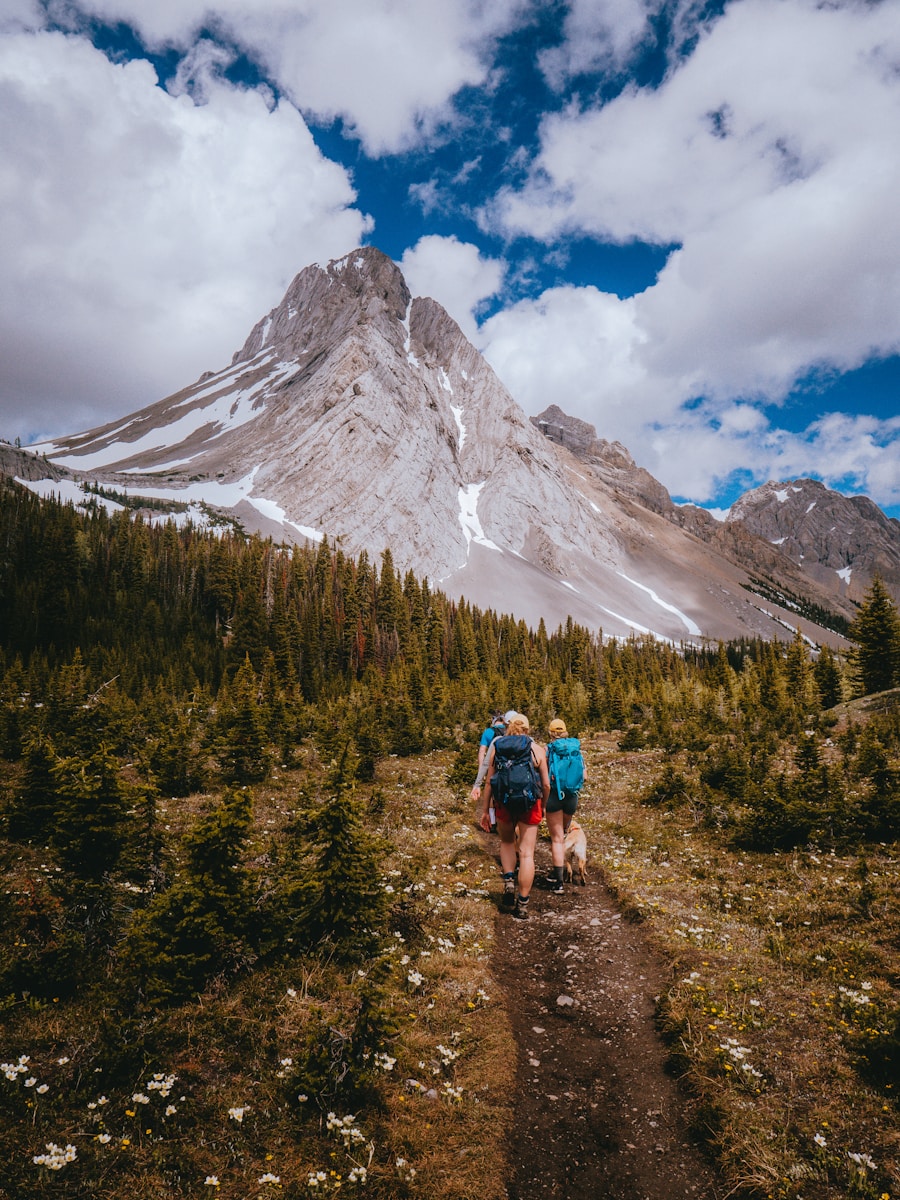
Hiking can also be social. A walk with a friend, family member, club, or community group creates time together without requiring constant eye contact or a formal social setting. That can make conversation feel easier for some people.
The 2014 group-walking study published in Ecopsychology found that participation in group walks in nature was associated with lower depression, perceived stress, and negative affect as well as better positive affect and mental well-being.
There is an important nuance: the study did not find a significant between-group difference in its measure of social support. In other words, its results support mental and emotional benefits of nature group walking, but they should not be stretched into proof that hiking clubs automatically create stronger support networks.
In everyday life, however, a regular hiking partner or organized group can provide something research statistics do not fully capture: a reason to show up, shared experiences, and regular contact with other people. That can be especially useful for someone whose routine has become socially isolated.
Hiking and Self-Esteem: Building Confidence in Nature
Hiking offers repeated opportunities to practice manageable challenge. A beginner may first complete a flat one-mile loop, later try a longer route, and eventually feel comfortable with steeper or more technical terrain.
Those experiences can build a sense of competence: “I prepared for this, handled it, and finished it.” That kind of mastery may support confidence, although direct hiking-specific evidence for long-term changes in self-esteem is less developed than the evidence for exercise, mood, and nature exposure.
The useful goal is not to prove toughness. Choose challenges that match your current fitness, experience, health, and comfort level. Turning every hike into a test of endurance can replace a restorative habit with another source of stress.
How Often Should You Hike for Mental Health Benefits?
There is no scientifically established rule that says you must hike a certain number of miles or a certain number of times per week to improve mental health.
The broader physical-activity evidence provides a useful reference point. The CDC recommends that adults work toward at least 150 minutes of moderate-intensity aerobic activity each week, or 75 minutes of vigorous activity, plus muscle-strengthening activity on at least two days. Hiking can contribute to the aerobic portion when it reaches an appropriate intensity.
Those targets are general health guidelines, not a prescription for treating anxiety or depression. Some people may notice that even a short walk outdoors helps them reset, while others benefit most from a regular routine.
A practical starting point is a comfortable 20- to 30-minute walk or easy hike that you can repeat without excessive soreness, exhaustion, or schedule pressure. From there, increase distance, elevation, or frequency only when it feels sustainable.
How to Use Hiking as a Mental Health Habit
You do not need wilderness, expensive equipment, or an all-day trek. A local park, wooded path, riverside trail, accessible nature path, or greenway can provide movement and outdoor exposure with far less planning.
- Start with a route that feels easy. Removing performance pressure makes it easier to focus on the experience.
- Pick a repeatable time. A short Saturday-morning trail walk may be more useful than an ambitious hike you only manage twice a year.
- Decide whether solo or social hiking works better for you. Some people value quiet; others feel safer and more motivated with company.
- Give part of the hike your full attention. Put the phone away briefly and notice the trail, sounds, temperature, breathing, and scenery.
- Track how you feel, not only how far you walked. Notice mood, anxiety, energy, and sleep afterward. Keep the routine that genuinely helps you.
For readers with mobility limitations, “hiking” does not have to mean steep or uneven mountain terrain. Paved park paths, accessible trails, nature preserves, and gentle greenways can offer many of the same basic ingredients: movement, outdoor surroundings, and a change of environment.
Hiking Safety and When the Trail Is Not Relaxing
A hike that leaves you lost, dehydrated, injured, or frightened is unlikely to feel restorative. Basic outdoor preparation matters even when mental well-being is the main reason you are heading outside.
The National Park Service’s Hike Smart guidance recommends checking weather and trail conditions, knowing the route and terrain, bringing appropriate food and water, carrying essential equipment, and choosing a hike that fits your abilities.
Warning: Do not let a mileage goal override changing weather, pain, fatigue, heat, darkness, unsafe trail conditions, or your own comfort level. Tell someone where you are going when appropriate, and turn around when conditions no longer feel safe.
Mental state matters too. If remote terrain increases panic or fear, choose a familiar route near other people, hike with someone you trust, or use a local park instead. The goal is to create a form of activity you can return to safely—not to force yourself through distress because hiking is “supposed” to be relaxing.
Conclusion: Embracing the Mental Health Benefits of Hiking
Hiking can support mental well-being through several overlapping pathways. It gets the body moving, creates contact with nature, shifts attention toward the present environment, provides achievable goals, and can create time with other people.
The strongest interpretation of the research is not that hiking cures anxiety or depression. It is that physical activity and nature exposure are useful, evidence-supported parts of a healthy mental-health routine. Recent exercise research strengthens that case, while nature-walking studies suggest outdoor surroundings may add benefits for rumination, mood, and stress.
That makes hiking valuable partly because it can be simple. The useful version may be a mountain trek, but it may just as easily be a familiar wooded loop after work. A sustainable hike that leaves you feeling calmer, more connected, or more capable is more useful than an extreme route chosen only because it looks impressive.
Hiking supports physical health as well as mental well-being, and those two areas are closely connected. When the activity is safe, enjoyable, and realistic for your life, regular time on a trail or in a local green space can become one practical tool for managing everyday stress and supporting emotional health.
Frequently Asked Questions
What are the mental health benefits of hiking?
Hiking may help reduce short-term anxiety, interrupt repetitive negative thinking, improve mood, provide a sense of accomplishment, and create opportunities for mindfulness and social connection. These benefits are supported by research on exercise, nature exposure, walking, and green exercise, although not every finding comes from hiking-specific trials.
How does hiking improve mental health?
Hiking combines several potentially helpful factors at once: physical activity, outdoor surroundings, focused attention, a break from routine stressors, achievable goals, and sometimes companionship. Researchers are still studying how much each individual factor contributes.
Can hiking help with stress and anxiety?
It can. Physical activity can reduce short-term feelings of anxiety, and nature-based activities have been associated with lower stress and better emotional well-being. The effect varies by person, and remote or difficult trails can increase anxiety for people who feel unsafe or uncomfortable there.
Does hiking have an impact on depression?
Exercise is supported by substantial research as a way to reduce depressive symptoms, and hiking can provide aerobic exercise along with nature exposure. Hiking may therefore be a useful part of a mental-health plan, but it should not be treated as a universal replacement for psychotherapy, medication, or other professional care.
Are there studies supporting the mental health benefits of hiking?
Yes, although the evidence comes from several related areas. Stanford researchers found lower rumination after a 90-minute nature walk compared with an urban walk. Research on nature group walks has found favorable associations with depression, stress, and well-being, while newer reviews support both exercise and green exercise for mental-health outcomes.
How often should someone hike to experience mental health benefits?
There is no proven hiking-specific minimum. Even one exercise session can have short-term effects such as reduced feelings of anxiety, while regular physical activity provides broader long-term benefits. Choose a frequency and duration you can sustain rather than treating a specific number of hikes as a mental-health prescription.
Is hiking better for mental health than exercising indoors?
Both can help. Exercise itself has strong evidence for mental-health benefits. Some research suggests that exercising in natural surroundings may provide additional benefits for well-being or emotional state, but the size and consistency of that added effect varies among studies. The best option is usually one you enjoy and can do regularly.
Can hiking replace therapy or antidepressant medication?
No general recommendation supports replacing prescribed mental-health treatment with hiking on your own. Exercise can be a valuable part of care, but depression treatment is individualized and may involve psychotherapy, medication, or both. Discuss major treatment changes with a qualified health professional.
Sources
- Centers for Disease Control and Prevention — Health Benefits of Physical Activity for Adults — supports the physical-activity, anxiety, sleep, and long-term depression-risk statements.
- National Institute of Mental Health — Depression — supports treatment and professional-care guidance.
- Bratman et al., PNAS — Nature Experience Reduces Rumination and Subgenual Prefrontal Cortex Activation — supports the 90-minute nature-walk findings.
- Marselle, Irvine, and Warber — Examining Group Walks in Nature and Multiple Aspects of Well-Being — supports the group nature-walking evidence.
- British Journal of Sports Medicine — Effect of Exercise on Depression and Anxiety Symptoms — provides current evidence on exercise interventions and mental-health symptoms.
- U.S. National Park Service — Hike Smart — supports trail-planning and hiking-safety guidance.
