
Last Updated on July 27, 2026 by Daniel Globe
The Appalachian Trail is more than a famous long-distance route through the eastern United States. It is the world’s longest hiking-only footpath, linking the Appalachian Mountains from Georgia to Maine. Its combination of history, rugged terrain, wildlife, trail towns, and more than two thousand miles of walking makes it one of the best-known hiking routes anywhere.
Quick Answer
The Appalachian Trail is the world’s longest hiking-only footpath. Its official 2026 length is 2,197.9 miles, running through 14 states from Springer Mountain in Georgia to Katahdin in Maine. The Pacific Crest Trail is longer in raw mileage, but it is open to both hikers and equestrians.
Key Takeaways
- The Appalachian Trail is the world’s longest hiking-only footpath and measures 2,197.9 miles in 2026.
- It passes through 14 states between Springer Mountain, Georgia, and Katahdin, Maine.
- Its highest point is Kuwohi in Great Smoky Mountains National Park at 6,643 feet; its lowest point is about 124 feet at Bear Mountain, New York.
- Most thru-hikers need about five to seven months to complete the entire trail.
- Weather, trail closures, permits, water, food storage, bears, and rugged terrain all require advance planning.
- Leave No Trace practices help protect the trail and its wildlife for future visitors.
Disclosure: As an Amazon Associate I earn from qualifying purchases. Some links on this page are affiliate links, at no extra cost to you.
How the Appalachian Trail Began
The Appalachian Trail grew from an idea proposed by forester and regional planner Benton MacKaye. In 1921, MacKaye published “An Appalachian Trail: A Project in Regional Planning”. His vision went beyond recreation. He imagined a long Appalachian corridor that could connect people with nature while supporting conservation, health, and community life.
The first A.T.-specific trail sections were completed around Bear Mountain in New York in 1923. The Appalachian Trail Conference, now the Appalachian Trail Conservancy, formed in 1925 to coordinate construction and management. By 1937, the route had been fully connected from Maine to Georgia.
The original trail did not have exactly the same route hikers follow today. For example, the southern terminus was once Mount Oglethorpe, Georgia. It was moved north to Springer Mountain in 1958 as development encroached on the earlier route. In 1968, Congress designated the Appalachian Trail as one of the first National Scenic Trails under the National Trails System Act.
The Trail’s Length and Route
The official length of the Appalachian Trail in 2026 is 2,197.9 miles. Its mileage changes slightly from year to year as sections are relocated, repaired, measured more accurately, or temporarily detoured.
The route crosses 14 states: Georgia, North Carolina, Tennessee, Virginia, West Virginia, Maryland, Pennsylvania, New Jersey, New York, Connecticut, Massachusetts, Vermont, New Hampshire, and Maine. The southern terminus is on Springer Mountain in Georgia, while the northern terminus is on Katahdin in Maine’s Baxter State Park.
The Appalachian Trail measures 2,197.9 miles in 2026 and crosses 14 states from Georgia to Maine.
The route is far from level. Hikers cross forested mountains, rocky ridgelines, river valleys, farmland, wetlands, and high-elevation terrain. Even stretches that look modest on a map can include repeated climbs and descents.
Highest and Lowest Points
The A.T.’s highest point is Kuwohi in Great Smoky Mountains National Park. Formerly known as Clingmans Dome, the mountain reaches 6,643 feet above sea level. Its Cherokee name, Kuwohi, was officially restored in 2024.
The trail’s lowest elevation is about 124 feet at Bear Mountain in New York. That enormous elevation range helps explain why hikers can experience very different climates, vegetation, and trail conditions during one end-to-end journey.
Why the Appalachian Trail Is the Longest Hiking-Only Trail
The phrase “hiking-only” is important. Other long-distance trails have greater total mileage, but they permit other types of travel.
The Pacific Crest Trail, for example, has a January 2026 best estimate of approximately 2,655.84 miles. However, the Pacific Crest Trail Association states that the entire PCT is open to riders and their horses. It is therefore a hiker-and-equestrian trail rather than a hiking-only footpath.
Note: A longer trail is not automatically the longest hiking-only trail. The A.T. holds the hiking-only distinction, while the longer PCT is designed for both hikers and equestrians.
Unique Challenges and Attractions Along the Trail
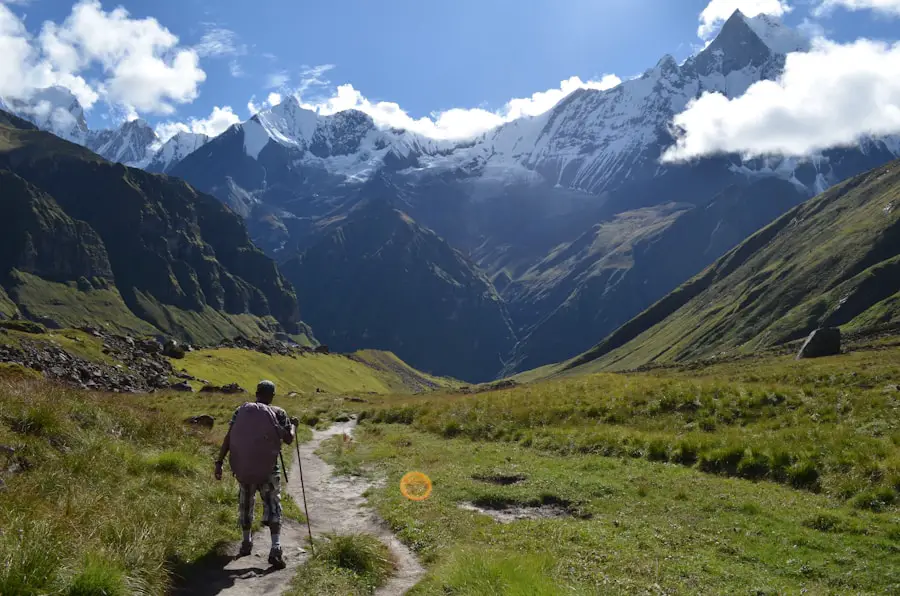
Hiking the Appalachian Trail can range from a short woodland walk to one of the toughest backpacking trips in the United States. Most of the A.T. is hiking rather than technical climbing, but several sections involve steep rock, ladders, exposed terrain, or hands-on scrambling.
The White Mountains of New Hampshire are especially demanding. Rapid weather changes, long climbs, exposed ridges, and rocky footing can slow even experienced hikers. Farther north, Mahoosuc Notch in Maine is famous for a roughly mile-long boulder-filled passage that the Appalachian Trail Conservancy describes as the hardest mile on the A.T.
The challenges are balanced by major scenic attractions. McAfee Knob in Virginia is among the most photographed viewpoints on the trail. The A.T. also passes through areas such as Great Smoky Mountains National Park and Shenandoah National Park, along with national forests, state parks, wildlife habitat, rivers, waterfalls, and historic landscapes.
Conditions can change sharply with elevation. High mountains may be cold, windy, foggy, or icy even when valleys below are mild. Hikers should never assume that weather at a nearby town reflects conditions on an exposed ridge.
The Importance of Leave No Trace Principles on the Appalachian Trail
Millions of recreation visits put pressure on campsites, water sources, vegetation, wildlife, and popular viewpoints. Leave No Trace practices help reduce that impact. The seven principles below are the framework taught by the Leave No Trace organization.
| Leave No Trace Principle | Why It Matters on the A.T. |
|---|---|
| Plan Ahead and Prepare | Helps hikers handle weather, regulations, closures, water needs, and emergencies. |
| Travel and Camp on Durable Surfaces | Protects plants and reduces erosion around trails and campsites. |
| Dispose of Waste Properly | Protects water, campsites, wildlife, and other hikers. |
| Leave What You Find | Preserves plants, rocks, artifacts, and historic resources. |
| Minimize Campfire Impacts | Reduces wildfire risk and damage to campsites and surrounding habitat. |
| Respect Wildlife | Prevents animals from becoming conditioned to people or human food. |
| Be Considerate of Others | Protects the trail experience in shelters, campsites, viewpoints, and narrow sections. |
Leave No Trace Seven Principles © 1999 by the Leave No Trace Center for Outdoor Ethics.
Staying on established tread is especially important around fragile vegetation and heavily used viewpoints. Food scraps should never be left behind because they can attract animals and teach wildlife to associate hikers with food.
Campfire rules are not the same everywhere. Some land managers prohibit fires outside designated fireplaces or during periods of high fire danger. Always follow the rules for the specific section you are visiting.
Tips for Hiking the Appalachian Trail
A successful A.T. trip starts well before reaching the trailhead. The preparation needed for a two-hour day hike is very different from what is required for a section hike or a multi-month thru-hike.
Choose the Right Type of Hike
Most people experience only a small portion of the trail. A day hike returns to the trailhead the same day, while backpackers spend one or more nights outside. Section hikers complete the A.T. in separate trips over months or years.
Thru-hikers attempt the entire trail in one continuous journey. They may travel northbound from Georgia, southbound from Maine, or use a “flip-flop” route that starts somewhere in the middle. According to the Appalachian Trail Conservancy, most thru-hikes take five to seven months, with the average finishing just under six months.
Pro Tip: Before attempting a long section or thru-hike, take at least one multi-night practice trip with the same backpack, shelter, footwear, cooking system, and water setup you plan to use on the A.T.
Build Fitness Gradually
The A.T. is mountainous for almost its entire length. Training hikes with a loaded backpack help condition the legs, feet, shoulders, and cardiovascular system while exposing gear problems before a long trip.
New long-distance hikers should resist the urge to start with their highest possible daily mileage. Gradually increasing distance gives the body time to adapt and can reduce overuse problems.
Choose Gear for the Conditions
A properly fitted backpack, dependable shelter, weather-appropriate sleeping system, rain protection, and suitable footwear form the core of a backpacking setup. Weight matters, but removing essential safety gear simply to make a pack lighter can create new risks.
Carry a navigation method you know how to use. Digital navigation is convenient, but batteries fail and phones can be damaged. A map or other backup can be useful on remote sections.
Treat Natural Water
Most backpackers rely on springs and streams rather than faucets. Clear-looking water can still contain microorganisms that cause illness. The Appalachian Trail Conservancy recommends treating or filtering natural water before using it for drinking, cooking, or cleaning.
Water availability also changes with weather and season. Some sources marked on maps may become weak or dry during prolonged hot or dry periods.
Check Permits, Closures, and Food-Storage Rules
There is no single permit covering every mile of the Appalachian Trail. Rules depend on the park, forest, state, or other land manager. For example, overnight backcountry camping in Great Smoky Mountains National Park and Shenandoah National Park requires permits.
Food-storage regulations also vary. Bears occur along large portions of the trail, and the Appalachian Trail Conservancy strongly recommends hard-sided bear-resistant canisters for overnight hikers. Some areas impose specific mandatory storage methods, so check the rules for every section on your itinerary.
Warning: Trail conditions can change after floods, storms, wildfires, bridge damage, wildlife activity, and construction. Check the current Appalachian Trail alerts immediately before your trip and again during longer hikes when possible.
For more gear-specific preparation, the existing guides on portable water bottles, the best hiking backpack for a multi-day trek, and the best ultralight tent for backpacking can help you compare common backpacking essentials.
Wildlife and Flora Along the Trail
The Appalachian Trail passes through a wide range of habitats, so wildlife changes from one region to another. Black bears and white-tailed deer occur along many sections, while hikers in parts of Maine may also encounter moose. Numerous songbirds and raptors use the forests and ridgelines along the route.
Hikers should give all wildlife space and never feed animals. Food, trash, toothpaste, and other scented items should be stored according to local rules. A bear that repeatedly obtains human food can lose its natural fear of people, creating danger for both hikers and the animal.
Ticks are another concern in many A.T. states. Long pants or treated clothing, repellent used according to its label, and regular tick checks can reduce exposure during and after hiking.
The plant communities change dramatically with latitude and elevation. Lower elevations include oak, maple, hickory, and other deciduous forests. Higher mountain environments support spruce, fir, and other cold-adapted species.
Spring wildflowers such as trillium add color to the forest floor, while mountain laurel and other shrubs create seasonal displays. Staying on established trail tread helps protect these plants, especially around heavily visited viewpoints and high-elevation habitats.
The Appalachian Trail Community and Culture
The human community surrounding the A.T. is almost as distinctive as the footpath itself. Long-distance hikers often adopt “trail names,” share shelters and campsites, exchange information, and develop friendships while moving through the same sequence of mountains and towns.
A person attempting the whole trail in one journey is generally called a thru-hiker. Someone completing it over separate trips is a section hiker. Northbound, southbound, and flip-flop hikers may have very different schedules but still share much of the same trail culture.
Trail towns are central to long journeys. Communities such as Damascus, Virginia, and Harpers Ferry, West Virginia, provide places to buy food, find lodging, repair equipment, do laundry, and rest. These towns also connect the A.T. with the people who live and work around it.
Volunteers are another essential part of the culture. Thousands of people help maintain tread, clear vegetation, repair structures, monitor boundaries, and protect the surrounding landscape.
The Future of the Appalachian Trail
The A.T. faces the difficult task of welcoming large numbers of visitors while protecting a narrow trail corridor stretching across 14 states. In March 2026, the Appalachian Trail Conservancy reported that the trail received an estimated 16.9 million recreation visits in 2025. That figure counts visits rather than unique individuals, but it shows the scale of modern use.
Heavy use can increase erosion, campsite damage, wildlife conflicts, parking problems, and pressure on popular viewpoints. Climate-driven storms and other severe weather can also damage bridges, tread, trees, and access roads. Trail maintainers therefore have to balance recreation with long-term conservation.
Technology can make trips safer and easier to plan. Digital maps, weather forecasts, current trail alerts, and updated condition reports help hikers make better decisions. They should still be treated as tools rather than substitutes for judgment, basic navigation skills, and preparation for changing conditions.
The Appalachian Trail has changed repeatedly since Benton MacKaye first proposed it in 1921, and its exact route will continue to evolve. What remains constant is the work required to protect a continuous footpath where people can travel on foot through more than 2,000 miles of Appalachian landscapes.
Frequently Asked Questions
What is the longest hiking-only trail in the world?
The Appalachian Trail is the world’s longest hiking-only footpath. The official 2026 route measures 2,197.9 miles between Springer Mountain in Georgia and Katahdin in Maine.
How long is the Appalachian Trail in 2026?
The Appalachian Trail Conservancy lists the official 2026 length as 2,197.9 miles. The total changes slightly over time because of reroutes, detours, construction, and improved measurements.
Where does the Appalachian Trail begin and end?
Its southern terminus is Springer Mountain in Georgia. Its northern terminus is Katahdin in Baxter State Park, Maine. The trail crosses 14 states between those two points.
Is the Pacific Crest Trail longer than the Appalachian Trail?
Yes. The Pacific Crest Trail’s January 2026 best estimate is about 2,655.84 miles. However, it is open to hikers and equestrians, so it does not qualify as a hiking-only trail. That is why the Appalachian Trail holds the hiking-only record.
How long does it take to hike the entire Appalachian Trail?
Most thru-hikers take about five to seven months. The Appalachian Trail Conservancy says the average is a little less than six months, although weather, fitness, route direction, injuries, and pace can change the total time.
What are the highest and lowest points on the Appalachian Trail?
The highest point is Kuwohi, formerly called Clingmans Dome, in Great Smoky Mountains National Park at 6,643 feet. The lowest point is about 124 feet above sea level at Bear Mountain in New York.
Sources
- Appalachian Trail Conservancy — Facts About the Appalachian Trail — official hiking-only distinction, current mileage, states, and termini.
- Appalachian Trail Conservancy — ATC History — Benton MacKaye, first trail sections, organization history, and 1937 completion.
- Appalachian Trail Conservancy — Thru-Hiking — thru-hike duration and long-distance hiking guidance.
- Appalachian Trail Conservancy — Trail Updates — current closures, detours, wildlife alerts, and changing trail conditions.
- Appalachian Trail Conservancy — Water & Water Treatment — natural water availability and treatment guidance.
- Leave No Trace — Seven Principles — minimum-impact outdoor ethics used throughout the article.

