

Last Updated on July 27, 2026 by Daniel Globe
Hitchhiking can reduce transportation costs and create unusual travel experiences, but it also means accepting a ride from someone you do not know and spending time near moving traffic. Those risks cannot be eliminated by experience or good planning. Laws also vary by country, state, road type, and even the exact place where you stand.
Modern hitchhiking became especially visible in the United States after automobiles became common in the 1920s. It expanded during the Great Depression, when many people traveled in search of work, and later became associated with the counterculture of the 1960s and early 1970s. Today, anyone considering it should put legal checks, roadside safety, reliable communication, and a backup transportation plan ahead of spontaneity.
Quick Answer
Hitchhiking may save money, but it carries personal-safety, traffic, legal, and stranding risks. Check local laws before starting, stay completely out of moving traffic, travel in daylight when possible, keep a trusted person informed, refuse questionable rides, and use a seat belt every time. Official travel authorities often recommend using verified transportation instead.
Key Takeaways
- Hitchhiking laws vary widely, particularly on freeways, controlled-access roads, ramps, shoulders, and roadways.
- No technique can guarantee that a stranger or an unfamiliar vehicle is safe, so declining a ride is always reasonable.
- Choose a legal, highly visible location where a vehicle can leave moving traffic and stop safely.
- Keep your phone charged, share your plans with someone you trust, carry offline navigation, and maintain a backup transportation or lodging option.
- Never ride with a driver who appears impaired, and use a working seat belt on every trip.
- Government travel authorities may recommend against hitchhiking entirely, especially in destinations with elevated crime, kidnapping, or transportation risks.
Warning: Hitchhiking cannot be made risk-free. The U.S. Department of State’s crime-prevention guidance for international travelers advises travelers not to hitchhike and recommends licensed or tracked transportation instead. Always check current destination-specific safety advice before relying on a ride from a stranger.
Disclosure: As an Amazon Associate I earn from qualifying purchases. Some links on this page are affiliate links, at no extra cost to you.
A Brief History of Hitchhiking
Hitchhiking as we recognize it today developed alongside widespread automobile ownership. In the United States, hitching rides was already attracting attention in the 1920s. During the Great Depression, people increasingly traveled long distances looking for jobs and affordable transportation, and asking motorists for rides became more common.
The practice gained another place in American road culture during World War II, when wartime fuel and rubber conservation encouraged shared transportation. In the 1960s and early 1970s, hitchhiking became strongly associated with young travelers and the counterculture movement. Its popularity later declined as car ownership increased, interstate highways made roadside pickups more difficult, laws became more restrictive in many places, and public concern about crime increased.
For more background on this history, see HISTORY’s overview of the rise and decline of hitchhiking in the United States.
The Benefits and Risks of Hitchhiking
Potential Cost Savings
The clearest financial benefit is that a traveler may cover part of a route without buying a bus, train, rideshare, or fuel. That does not make a hitchhiking trip truly free. Food, phone service, emergency lodging, local transportation, replacement gear, and an unexpected ticket home can still cost money.
A sensible budget therefore includes enough money to stop hitchhiking and switch to another form of transportation when conditions change.
Unexpected Encounters and Friendships
Hitchhiking can bring travelers into contact with people they would not otherwise meet. A ride may include useful local advice, conversation, or a perspective on the area that is difficult to get from ordinary tourist transportation.
These benefits depend on mutual respect. A friendly conversation is not a reason to ignore boundaries or abandon a planned drop-off point, and a traveler never owes a driver personal information, continued company, or a change of itinerary.
Risks and Concerns
The risks fall into several categories. A driver or passenger may behave unpredictably. A vehicle may be poorly maintained or lack a usable seat belt. The driver may be tired or impaired. A hitchhiker may also be stranded far from services or exposed to rain, heat, cold, or darkness.
Roadside danger deserves just as much attention as personal security. The National Highway Traffic Safety Administration advises pedestrians to use sidewalks when available and, where there is no sidewalk, to stay as far from traffic as possible. A hitchhiker should never stand in a travel lane or choose a place where a stopping vehicle would block traffic.
The most important hitchhiking decision is often not which ride to take, but whether the location, driver, vehicle, and destination give you enough reason to decline it.
Is Hitchhiking Legal?
There is no single rule that applies everywhere. Laws may regulate hitchhiking itself, pedestrian access to certain highways, where a person may stand, where a vehicle may stop, or whether solicitation is allowed along a controlled-access road.
For example, California Vehicle Code Section 21957 prohibits standing in a roadway to solicit a ride. Washington RCW 46.61.255 prohibits soliciting a ride where a vehicle cannot safely stop off the main traveled portion and generally restricts ride solicitation within the right-of-way of limited-access facilities except where specifically permitted.
Note: Never rely on a general online map that labels an entire state or country “legal” or “illegal.” Check the current law for the exact jurisdiction and road type you plan to use, including rules for freeways, ramps, shoulders, rest areas, and pedestrian access.
When traveling internationally, also review official destination guidance. Local laws and security conditions can change, and some government travel advisories specifically tell visitors not to hitchhike.
Essential Tips for Safer Hitchhiking

1. Choose a Legal, Visible Pickup Location
A good location gives drivers time to see you and provides a place where they can pull completely out of moving traffic. Avoid blind curves, bridges, tunnels, narrow shoulders, high-speed traffic lanes, and any road where pedestrians are prohibited.
Service areas, legal parking areas, and other off-road locations may be more practical than standing beside fast traffic, but local rules still apply.
Pro Tip: Plan the drop-off before accepting the ride. A driver who can take you farther is not necessarily helpful if the final drop-off is an isolated interchange, a prohibited freeway shoulder, or a place with no safe pedestrian route.
2. Travel in Daylight When Possible
Visibility is poorer at night and in bad weather, and pedestrians are harder for drivers to see. Darkness also makes it harder to inspect a vehicle, read a license plate, judge a pickup location, find services, or change plans after being dropped off.
Plan an end time. If you have not reached your destination by then, use your backup accommodation or transportation option rather than automatically continuing into the night.
3. Tell Someone Your Route
Give a trusted person your intended route, destination, and expected check-in time. For international trips, the U.S. Department of State recommends sharing an itinerary and keeping communication options available.
Keep your phone charged and accessible rather than buried in your backpack. Download offline maps before leaving reliable service areas, save local emergency numbers, and carry a power bank.
4. Evaluate the Ride Before Getting In
You do not have to accept a ride simply because someone stops. Before entering:
- Confirm where the driver is going and agree on a safe drop-off point.
- Look for a usable seat with a working seat belt.
- Do not ride with a driver who appears intoxicated, drug-impaired, extremely tired, aggressive, or unable to operate the vehicle safely.
- Pay attention to other occupants and the general condition of the vehicle.
- Keep your phone, identification, medication, money, and other essentials on your person.
- Share vehicle or trip details with a trusted contact when practical and safe to do so.
- Decline the ride immediately if something feels wrong.
The CDC’s road-safety guidance specifically advises travelers not to ride with a driver impaired by alcohol or another substance.
5. Buckle Up on Every Ride
Stranger-related risk is only one part of riding in an unfamiliar car. Traffic crashes remain a major transportation hazard. NHTSA states that a correctly worn seat belt reduces the risk of fatal injury for front-seat passenger-car occupants by about 45% and recommends buckling up in every seating position.
Do not treat a missing, damaged, or inaccessible belt as a minor inconvenience. Choose another ride.
6. Know How to Decline a Ride
You do not need to accuse the driver of anything. A brief statement such as “Thanks, but I’m waiting for a ride going farther in my direction” is enough. Stay in a public place while deciding and do not allow a stranger to pressure you into entering quickly.
Once inside a vehicle, speak up if the route changes unexpectedly or the driving becomes unsafe. Ask to be let out at a busy, well-lit public place where stopping is legal. In an immediate emergency, contact local emergency services as soon as you safely can.
Packing Essentials: What to Bring When Hitchhiking
| Item | Quantity | Why It Matters |
| Backpack | 1 | Carries essential gear while keeping your hands free. |
| Phone and power bank | 1 each | Communication, navigation, emergency calls, and check-ins. |
| Map / offline maps | 1 set | Helps you evaluate routes and drop-off points without mobile data. |
| Water bottle | At least 1 | Helps prevent dehydration during long waits and walks. |
| Nonperishable snacks | Trip-dependent | Provides food when services or rides are delayed. |
| First aid kit and personal medication | 1 kit | Covers minor injuries and essential health needs. |
| Identification and emergency contacts | 1 set | Important for emergencies, accommodation, and border travel. |
| Weather layers and rain protection | As needed | Protects against temperature and weather changes. |
| Comfortable shoes | 1 pair | You may need to walk between legal pickup locations and services. |
| Flashlight or headlamp | 1 | Useful during emergencies or after dark, although roadside hitchhiking at night is best avoided. |
| Backup money/payment method | Trip-dependent | Lets you switch to commercial transportation or accommodation. |
| Tent | Optional | Useful only when legal camping is part of the planned trip. |
| Sleeping bag | Optional | Provides warmth when the itinerary includes legal overnight camping. |
| Portable stove | Optional | Only needed for trips that include camping where stove use is permitted. |
Pack light enough that you can walk comfortably, but do not remove emergency items merely to save weight. The CDC Yellow Book travel-health-kit guidance recommends carrying a personal first-aid kit and tailoring its contents to the itinerary, duration, access to medical care, and individual health needs.
A journal or sketchbook can still be a worthwhile optional item for documenting the trip, but communication, navigation, water, medication, weather protection, and backup funds should take priority.
Understanding Hitchhiking Etiquette
Good etiquette begins before entering the vehicle. Confirm the destination and drop-off point clearly so the driver does not feel pressured into an unplanned detour. Thank the driver for stopping even if the ride does not fit your route.
Once inside, respect the fact that you are in someone else’s vehicle. Ask before smoking, eating messy food, changing music, opening windows, or taking photographs. Do not pressure a driver to speed, make unsafe stops, or change direction.
Conversation should also be voluntary. Some drivers enjoy talking throughout the trip, while others prefer to focus quietly on driving. Respect personal boundaries in both directions and avoid asking for private information that is not relevant to the journey.
If you choose to offer help with fuel or buy a snack as a thank-you, discuss it openly rather than assuming payment is expected. Local rules can distinguish informal ride-sharing from commercial transportation, so avoid presenting an informal lift as an unlicensed paid taxi service.
Before leaving, take your belongings, remove any trash, and offer a sincere thank-you.
The Art of Conversation: Making Connections While Hitchhiking
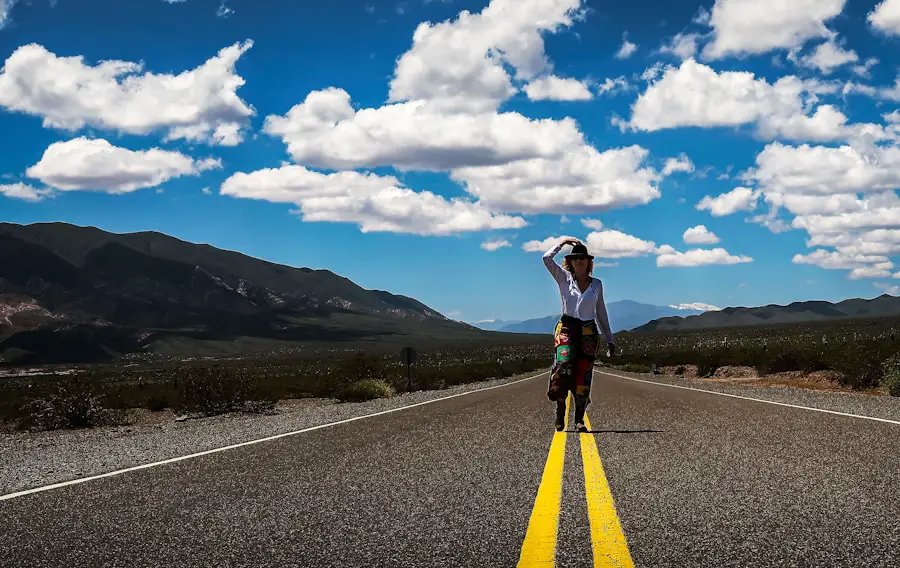
Conversation can turn an ordinary lift into a memorable travel experience. Simple questions about the area, local food, road conditions, or places worth visiting often give a driver room to share useful knowledge without becoming too personal.
Active listening matters more than filling every quiet moment. Pay attention to whether the driver seems interested in talking and let silence be normal when they are concentrating on traffic.
Protect your privacy at the same time. You do not need to give a stranger your exact accommodation address, financial information, full future itinerary, or details about where you will be alone later. Friendly conversation and sensible boundaries can exist together.
Navigating Different Cultures: Hitchhiking Around the World
Attitudes toward hitchhiking differ widely. A gesture that drivers understand in one place may be uncommon elsewhere, and a road that looks suitable may have rules that prohibit pedestrians or ride solicitation.
Do not assume that a country’s reputation among backpackers reflects current law or current security conditions. Before traveling, check:
- Official national or local traffic laws.
- Rules for motorways, expressways, toll roads, ramps, and service areas.
- Government travel advisories for crime, kidnapping, civil unrest, or road safety.
- Local emergency telephone numbers.
- Available licensed taxis, buses, trains, and app-based rideshare services.
- Whether your phone will have coverage along the intended route.
The U.S. Department of State’s international crime-prevention guidance recommends using reputable transportation and advises against hitchhiking. Destination-specific guidance may contain even stronger warnings.
Embracing Spontaneity Without Abandoning Your Safety Plan
Unpredictability is part of hitchhiking’s appeal. A ride may end earlier than expected, a conversation may reveal an interesting town, or weather may force a change in plans. Flexibility can make travel more interesting, but it should operate inside clear limits.
Decide in advance what you will not compromise: legal pickup locations, safe driving, a working seat belt, communication with a trusted contact, weather limits, and a safe place to sleep. Do not agree to an isolated destination or overnight arrangement merely because changing plans feels awkward.
A spontaneous detour is only useful when you still know roughly where you are, how you can leave, and what you will do if the next ride never arrives.
What to Do If You Get Stranded
Long waits and failed connections are normal possibilities, so build a backup plan before the trip starts.
- Move to a lawful public place away from moving traffic.
- Tell your trusted contact where you are.
- Check commercial buses, trains, licensed taxis, or tracked rideshare options.
- Use your offline map to identify nearby towns, accommodation, police stations, hospitals, or staffed service areas.
- Do not keep walking along a controlled-access highway where pedestrian access is prohibited.
- Use backup funds rather than continuing in worsening weather, darkness, illness, or exhaustion.
- Contact local emergency services if you face immediate danger or a medical emergency.
Note: A backup bus ticket, hotel room, taxi, or rideshare is not a failed hitchhiking trip. It is a normal part of responsible contingency planning.
Safer Alternatives to Hitchhiking
Travelers who want flexibility without accepting unverified roadside rides have several alternatives. Depending on the destination, these may include scheduled buses, trains, licensed taxis, registered car-share services, and app-based rideshare services that record the driver, vehicle, route, and trip history.
No form of transportation is completely risk-free, but verified services usually provide more accountability than getting into an unidentified vehicle. When using app-based rides, confirm that the vehicle and license plate match the information in the app before entering and share trip details with someone you trust.
Additional Travel Planning Resources
For general information about this website, review its terms and conditions. Hydration is especially important during long waits or walking between transportation points, so the site’s portable water bottle guide may also be useful when preparing your gear. For broader trip-planning ideas, see the site’s guide to travel gifts for her.
Frequently Asked Questions
What is hitchhiking?
Hitchhiking is a form of informal transportation in which a traveler asks a passing driver for a ride, traditionally by signaling from beside a road or asking motorists at an appropriate stopping place.
Is hitchhiking legal?
It depends on the jurisdiction and the road. Some laws restrict where a person may stand rather than banning all requests for rides. Freeways, limited-access highways, ramps, shoulders, and other locations may have separate rules. Check current state, local, or national law before hitchhiking.
Is hitchhiking safe?
Hitchhiking has risks that cannot be eliminated, including unsafe drivers, crime, traffic exposure, bad weather, and being stranded. U.S. Department of State crime-prevention guidance for international travelers recommends not hitchhiking and using reputable transportation instead.
What are the potential risks of hitchhiking?
Risks include entering a vehicle with an unsafe person, riding with an impaired or reckless driver, traveling without a usable seat belt, standing too close to traffic, being dropped in an unsafe location, losing phone service, and becoming stranded in severe weather or after dark.
What are the most important safety precautions for hitchhiking?
Check local law first, stay outside moving traffic, travel during daylight when possible, tell someone your route, carry a charged phone and offline maps, agree on a safe drop-off point, refuse impaired or aggressive drivers, and use a working seat belt on every ride.
Where should you stand when hitchhiking?
Only use a location where pedestrians are legally allowed and where a driver can see you early enough to pull completely out of traffic. Do not stand in a travel lane, on a blind curve, or in a freeway or controlled-access area where pedestrian access or ride solicitation is prohibited.
Should you hitchhike alone at night?
Nighttime adds visibility, navigation, traffic, and personal-security problems. A safer plan is to travel during daylight and set a cutoff time when you switch to commercial transportation or accommodation instead of continuing to wait beside a road.
How do you refuse a ride?
A simple “No thanks, I’m waiting for a ride going farther in my direction” is enough. You do not need to justify the decision. Stay outside the vehicle and in a public place while deciding whether to accept any ride.
What should you pack for a hitchhiking trip?
Prioritize a charged phone, power bank, offline maps, identification, emergency contacts, water, food, first-aid supplies, necessary medication, weather protection, comfortable footwear, and enough money for backup transportation or lodging. Camping equipment is optional and should match the itinerary.
What are the benefits of hitchhiking?
Potential benefits include lower transportation costs, flexible routing, meeting local people, and reaching places with limited public transit. Those benefits need to be weighed against legal restrictions, traffic hazards, personal-security risks, and the possibility of delays or being stranded.
Sources
- U.S. Department of State — Crime Prevention While Abroad — transportation, communication, personal-security, and hitchhiking guidance.
- National Highway Traffic Safety Administration — Pedestrian Safety — roadside visibility and pedestrian safety guidance.
- National Highway Traffic Safety Administration — Seat Belt Safety — seat-belt effectiveness and passenger protection.
- CDC Yellow Book — Travel Health Kits — first-aid and travel-health-kit recommendations.
- California Legislative Information — Vehicle Code §21957 — example of a state restriction on soliciting rides from a roadway.
- Washington State Legislature — RCW 46.61.255 — example of ride-solicitation and limited-access-road restrictions.

