
Last Updated on July 25, 2026 by Daniel Globe
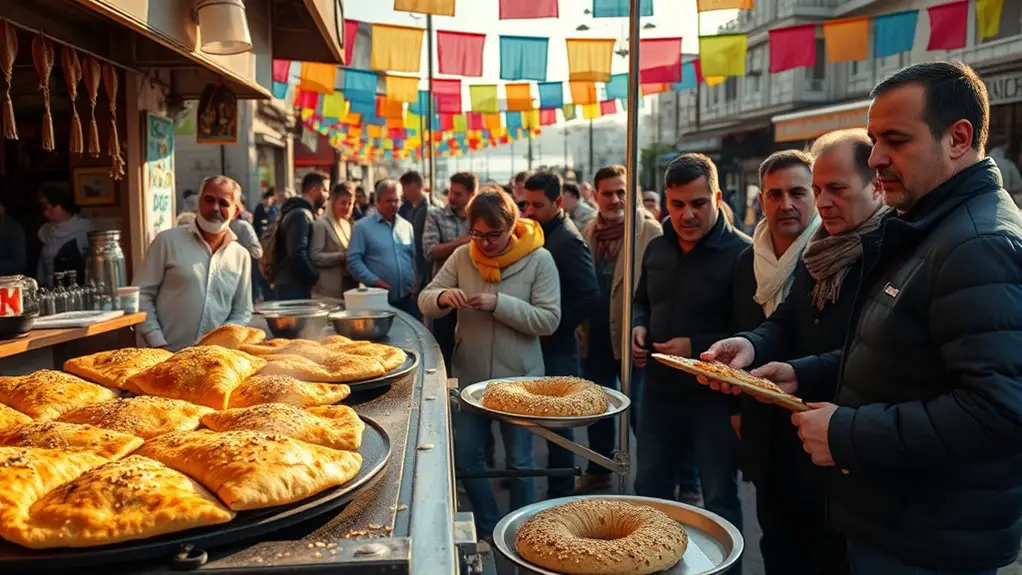
Üsküdar is one of the easiest places in Istanbul to combine quick Turkish food with a Bosphorus walk. Around the ferry square, market streets, bakeries, and waterfront, you can start with warm simit, move on to döner or köfte, and finish with baklava. The key is knowing which foods are truly easy to find in Üsküdar and which are better known in other Istanbul neighborhoods.
Quick Answer
Üsküdar’s easiest street-food choices are fresh simit near the ferry square, hot döner or köfte sandwiches, seasonal roasted corn or chestnuts, and baklava from a busy pastry shop. Balık ekmek is available near some waterfront areas, while kumpir is an Istanbul-wide food most closely associated with Ortaköy.
Key Takeaways
- Start around Üsküdar Ferry Square and Üsküdar Market Street for the widest mix of bakeries, sandwich shops, sweets, and takeaway food.
- Simit is the simplest breakfast snack, while döner, köfte ekmek, gözleme, and rice dishes make more filling meals.
- Kumpir may be available in Üsküdar, but Ortaköy is the Istanbul neighborhood most closely associated with loaded baked potatoes.
- Balık ekmek is an Istanbul classic, although Eminönü and Karaköy are its best-known traditional waterfront hubs.
- Choose food that is cooked to order and served hot, and be more cautious with shellfish, raw toppings, dairy sauces, and food held at room temperature.
Disclosure: As an Amazon Associate I earn from qualifying purchases. Some links on this page are affiliate links, at no extra cost to you.
Where to Find Street Food in Üsküdar
The official Üsküdar Municipality visitor guide places Üsküdar Market Street, the waterfront, Salacak, and Kuzguncuk within the district’s main visitor routes. Individual vendors and opening hours change, but these areas provide useful starting points.
- Üsküdar Ferry Square: Look for simit carts, bakeries, döner shops, tea, desserts, and quick takeaway meals near the transport hub.
- Üsküdar Market Street: Explore the lanes behind the waterfront for bakeries, grills, pastry shops, produce sellers, and small restaurants.
- Waterfront toward Salacak: This is a good area for tea, simit, seasonal corn or chestnuts, and food with a Bosphorus view. The exact mix of carts varies by season and time of day.
- Kuzguncuk: This neighborhood is better suited to a slower bakery, café, pastry, or chocolate stop than a dense row of street-food carts.
Note: Kadıköy Market is in the separate district of Kadıköy, not Üsküdar. It is reachable by public transport, but it should not be presented as an Üsküdar food market.
Simit: The Classic Turkish Sesame Bread Ring
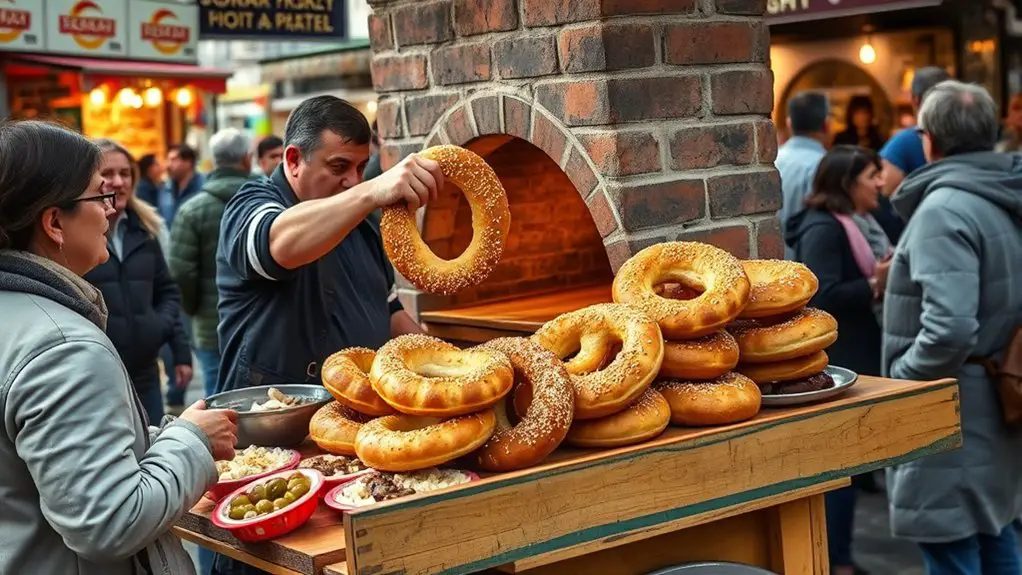
Simit is a ring-shaped bread coated with toasted sesame seeds. It is sometimes compared with a bagel because of its shape, but the preparation and texture are different. A good simit has a crisp, deeply browned crust and a chewy but light center.
It is one of the easiest foods to find around Istanbul ferry terminals. In Üsküdar, it works especially well as a quick breakfast before a ferry trip or as a snack during a waterfront walk.
Eat it plain or pair it with Turkish tea, ayran, white cheese, olives, or a small container of cream cheese. Some bakeries also turn simit into sandwiches, but fillings differ from shop to shop and are modern serving options rather than one standard recipe.
Pro Tip: Ask for a warm simit by saying “sıcak simit var mı?”—“Do you have hot simit?” Morning usually offers the best chance of getting one soon after baking.
Kumpir: A Customizable Loaded Baked Potato
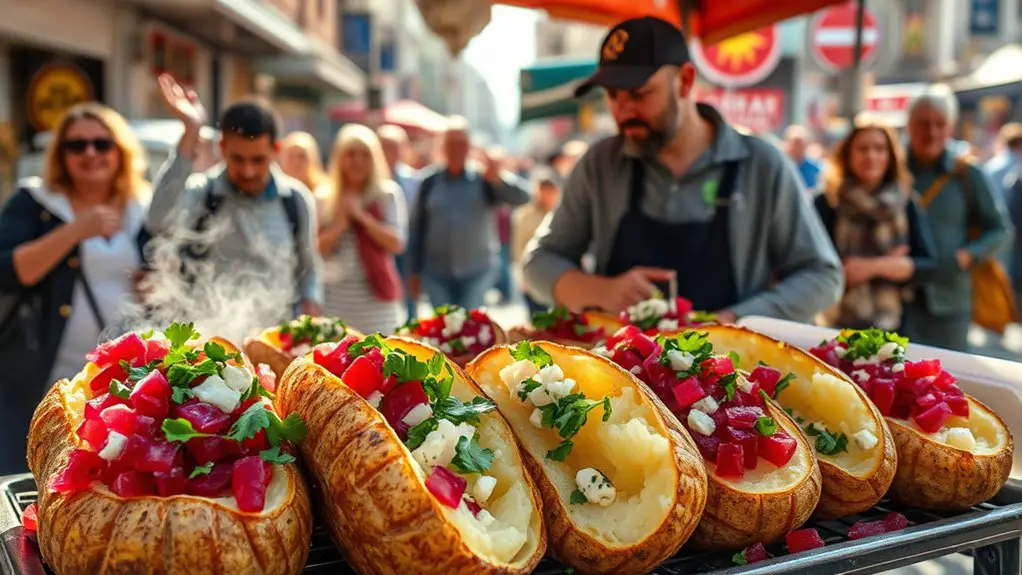
Kumpir begins with a large baked potato. The hot interior is mashed with butter and kaşar-style cheese until creamy, then covered with toppings selected by the customer.
Common choices include corn, olives, pickles, peas, carrots, Russian-style salad, sausage, sauces, and extra cheese. Because the toppings are displayed at the counter, point to each one you want rather than assuming that every topping is included in the advertised price.
Kumpir can be found in different parts of Istanbul, including some Üsküdar shops. However, Ortaköy is the neighborhood most strongly associated with Istanbul’s kumpir stands. Treat it as an optional find in Üsküdar rather than a guaranteed waterfront specialty.
- Simple vegetarian: Corn, olives, pickles, vegetables, butter, and cheese.
- Spicy: Pickled peppers, hot sauce, and spicy sausage if available.
- Fresh and crunchy: Corn, cabbage, carrots, pickles, and olives.
- Rich and creamy: Extra cheese with one or two mayonnaise-based salads.
Note: Kumpir is easy to make vegetarian, but it is not automatically vegan because the potato is normally mixed with butter and cheese. Mayonnaise-based toppings may also contain egg.
Döner: Meat Sliced From a Vertical Rotisserie
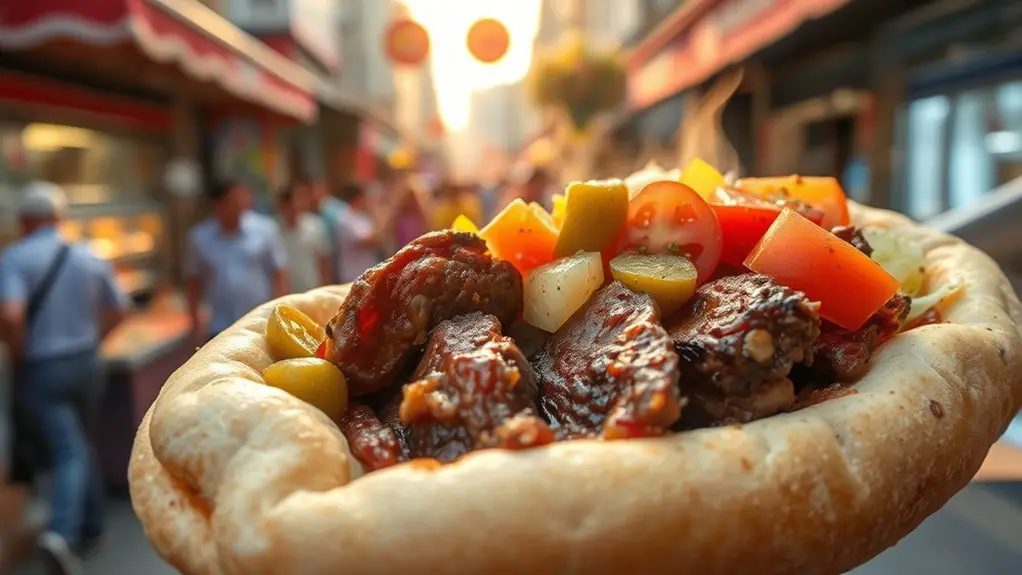
Döner is prepared by stacking seasoned meat on a vertical rotisserie. As the outside browns, the cook slices off thin pieces for sandwiches, wraps, rice plates, or other servings.
Chicken, beef, lamb, or a mixture may be used. A basic döner sandwich often includes bread, meat, tomato, onion, greens, or pickles, while a dürüm wraps the filling in thin flatbread. Sauces and garnishes are not identical at every shop.
For the best texture, choose a shop where meat is actively cooking and being sliced for each order. The outside should be browned, while the served meat should be thoroughly cooked and hot rather than cut in advance and left cooling in a tray.
- Ekmek arası döner: Döner served inside bread.
- Döner dürüm: Meat and garnishes rolled in flatbread.
- Porsiyon döner: A plated portion that may include rice, bread, vegetables, or yogurt.
- Kaşarlı dürüm: A toasted wrap with kaşar-style cheese, when offered.
Pro Tip: Ask whether the listed price is for chicken or red-meat döner. Beef and lamb versions may cost more, and portion size can differ between bread, dürüm, and plate servings.
Balık Ekmek: A Waterfront Fish Sandwich
Balık ekmek literally means “fish bread.” A typical version contains grilled fish in bread with onion, tomato, lettuce, or other greens. Lemon and pickle juice may be offered on the side.
Fish sandwiches suit Üsküdar’s waterfront setting, and individual restaurants or seasonal vendors may sell them. However, Istanbul’s most famous balık ekmek scene is traditionally associated with Eminönü and Karaköy. Do not assume that every Üsküdar waterfront cart serves it.
Good preparation matters more than claims that the fish was caught locally or on the same day. Look for fish being kept chilled before cooking and grilled for each order. Ask which type of fish is being served because the species can change with supply and season.
- Check the menu: Confirm the fish type, portion, and price before ordering.
- Watch the cooking: Choose a sandwich prepared hot rather than one assembled far in advance.
- Consider the toppings: Raw onions and salad add freshness but require clean handling and washing.
- Eat it promptly: A hot fish sandwich is best eaten soon after preparation.
Warning: Avoid fish or shellfish that has been sitting warm, smells strongly unpleasant, or appears poorly chilled before cooking. Lemon juice may improve flavor, but it does not make mishandled seafood safe.
Baklava: A Sweet Finish
Baklava is made from many thin pastry layers, butter or clarified butter, nuts, and sweet syrup. Pistachio and walnut are two of the most familiar fillings, although pastry shops may sell many shapes, textures, and regional styles.
Instead of buying a large box immediately, order one or two pieces with tea. This makes it easier to compare a classic square of fıstıklı baklava with walnut baklava, kuru baklava, pistachio rolls, or another shop specialty.
Fresh baklava should have crisp, distinct layers rather than a wet or collapsed texture. It will still be rich and syrupy, so a small portion is often enough after döner, kumpir, or a fish sandwich.
A piece of baklava and a small glass of Turkish tea offer an easy way to finish an Üsküdar food walk without committing to a full dessert box.
Pro Tip: Baklava may be priced by piece, portion, or weight. Ask “tanesi ne kadar?” for the price per piece or “kilosu ne kadar?” for the price per kilogram before the shop packs your order.
Other Street Foods Worth Trying in Üsküdar
Börek, Poğaça, and Gözleme
Neighborhood bakeries broaden the breakfast choices beyond simit. Börek is a layered savory pastry that may contain cheese, spinach, potatoes, or minced meat. Poğaça is a soft breakfast roll, often filled with cheese, olives, or potatoes. Gözleme is thin dough folded around a filling and cooked on a hot griddle.
These are useful vegetarian options when filled with spinach, potatoes, or cheese. Ask whether the pastry contains butter, egg, or meat stock if you follow a vegan diet or avoid particular ingredients.
Köfte Ekmek and Rice Dishes
Köfte ekmek is a bread sandwich filled with grilled Turkish meatballs and may include tomato, onion, parsley, or peppers. It is a good alternative when you want grilled meat but not döner.
You may also encounter rice served with chickpeas or shredded chicken. These dishes are often sold from small shops or carts and can provide a filling, straightforward lunch. Choose servings that are visibly hot and moving quickly through the service line.
Roasted Corn and Chestnuts
Boiled or charcoal-roasted corn is an easy waterfront snack in warmer weather. Roasted chestnuts are more common during cool autumn and winter days. Because cart locations are seasonal, availability can change from one visit to the next.
Çiğ Köfte and Midye Dolma
Commercial çiğ köfte is normally a meat-free mixture of fine bulgur, tomato or pepper paste, herbs, and spices. It may be served in lettuce or wrapped in flatbread, making it one of the city’s most convenient vegetarian choices.
Midye dolma consists of mussels filled with seasoned rice and served with lemon. It is popular around Istanbul but requires more caution than dry bread snacks or food cooked directly in front of you. Buy it only where the mussels are kept properly chilled and the preparation area appears clean.
A Simple Üsküdar Street-Food Route
- Start near the ferry square in the morning. Buy a warm simit or bakery pastry with Turkish tea.
- Walk through Üsküdar Market Street. Check bakeries and small shops for börek, poğaça, gözleme, or çiğ köfte.
- Choose a filling lunch. Order döner, köfte ekmek, a rice dish, or kumpir when you find a clean shop displaying its prices.
- Continue toward Salacak. Enjoy the waterfront with tea, roasted corn, chestnuts, or another light snack depending on the season.
- Finish with baklava. Buy one or two pieces from a pastry shop rather than carrying a large box during the entire walk.
Üsküdar is connected with Karaköy and Eminönü by ferry, so travelers who specifically want the better-known balık ekmek experience can check the current Şehir Hatları timetable before crossing the Bosphorus.
Vegetarian, Allergy, and Dietary Notes
- Vegetarian choices: Simit, cheese or spinach börek, vegetable gözleme, meat-free çiğ köfte, roasted corn, chestnuts, many kumpir combinations, and baklava.
- Vegan choices: Plain simit and meat-free çiğ köfte may be suitable, but recipes vary. Ask whether butter, milk, egg, yogurt, mayonnaise, or animal-based stock is used.
- Sesame: Simit is heavily coated with sesame and may be prepared near other sesame products.
- Gluten: Simit, döner bread, dürüm, börek, gözleme, baklava, and most sandwiches contain wheat.
- Dairy: Kumpir normally contains butter and cheese. Pastries, sauces, and desserts may also contain dairy.
- Nuts: Baklava commonly contains pistachios or walnuts. Cross-contact with other nuts is possible in pastry shops.
- Seafood: Balık ekmek contains fish, while midye dolma contains shellfish.
- Cross-contact: Small kitchens may use the same grill, knife, counter, or fryer for meat and vegetarian foods.
Note: Travelers with severe allergies should not rely only on visual inspection. Carry a translated allergy card and ask about ingredients and shared preparation surfaces before ordering.
How to Choose Street Food More Safely
The CDC’s food and water guidance for travelers recommends choosing food that is thoroughly cooked and served hot. A busy stall can indicate rapid turnover, but turnover is only one factor.
- Choose meat, fish, eggs, and rice that are cooked thoroughly and served steaming hot.
- Avoid food that has been left uncovered or held at room temperature for a long period.
- Check that mussels, fish, dairy toppings, and mayonnaise-based salads are kept cold before serving.
- Prefer vendors who separate raw ingredients from cooked food and use clean utensils.
- Be cautious with raw salad or herbs if you cannot judge how they were washed.
- Use hand sanitizer or wash your hands before eating.
- Choose factory-sealed drinks when water quality or ice handling is uncertain.
- Confirm the price before ordering, especially when food is sold by weight or toppings cost extra.
Warning: Leave food uneaten when it is undercooked, lukewarm when it should be hot, poorly chilled when it should be cold, or handled with visibly dirty utensils. A crowded stall does not cancel those warning signs.
Frequently Asked Questions
What are the best times to enjoy street food in Üsküdar?
Visit in the morning for warm simit, poğaça, and börek. Döner, köfte, rice dishes, and gözleme work well from lunch into the evening. The waterfront is most atmospheric near sunset, while roasted chestnuts are mainly a cool-weather treat. Individual vendors may keep different hours.
Are there vegetarian options available for street food in Üsküdar?
Yes. Look for simit, cheese or spinach börek, vegetable gözleme, roasted corn, chestnuts, meat-free çiğ köfte, vegetarian kumpir, and baklava. Ask about butter, cheese, egg, mayonnaise, and shared grills when you need a vegan meal or want to avoid cross-contact.
Is street food in Üsküdar safe to eat?
It can be, but no stall is risk-free. Choose food cooked to order and served hot. Check that seafood, dairy toppings, and prepared salads are stored at safe temperatures. Avoid undercooked meat, lukewarm rice, poorly chilled mussels, dirty utensils, and food that has been standing uncovered.
Where can I find street food vendors in Üsküdar?
Begin around Üsküdar Ferry Square and continue through Üsküdar Market Street. The waterfront toward Salacak may have tea, simit, corn, chestnuts, and seasonal food carts. Kuzguncuk is useful for bakeries, cafés, pastries, and sweets. Kadıköy Market is in Kadıköy, not Üsküdar.
How much should I expect to spend on street food in Üsküdar?
Prices change quickly. As a broad mid-2026 planning guide, allow about 20–50 TL for a simple simit, 100–250 TL for many sandwiches, wraps, rice dishes, or loaded potatoes, and 150–450 TL or more for fish, larger portions, or tourist-facing waterfront food. Check the posted menu before ordering.
Is kumpir an Üsküdar specialty?
Not specifically. Kumpir is sold in different parts of Istanbul and may be available in Üsküdar, but Ortaköy is the neighborhood most closely associated with rows of loaded-potato stands. In Üsküdar, consider it a possible menu option rather than a guaranteed local specialty.
Conclusion
For an easy Üsküdar food outing, begin with warm simit near the ferry square, explore the market streets for börek, gözleme, döner, or köfte, and continue toward Salacak for a Bosphorus walk. Finish with one or two pieces of baklava and tea. Keep your plan flexible, check displayed prices, and favor food that is cooked to order and served at the proper temperature.
Sources
- Üsküdar Municipality Visitor Guide — district map, Üsküdar Market Street, Salacak, and Kuzguncuk visitor areas.
- GoTürkiye: 16 Foods to Try in Türkiye — simit’s description, history, and role as a breakfast and street food.
- GoTürkiye: Iconic Street Foods — definitions of döner, kumpir, and balık ekmek.
- GoTürkiye: Istanbul Street Food — Istanbul’s waterfront fish-sandwich tradition and common ingredients.
- GoTürkiye: Baklava Varieties — traditional baklava styles and fillings.
- CDC: Food and Drink Considerations When Traveling — food temperature, raw-food, street-vendor, and traveler-safety guidance.
