
Last Updated on July 28, 2026 by Daniel Globe
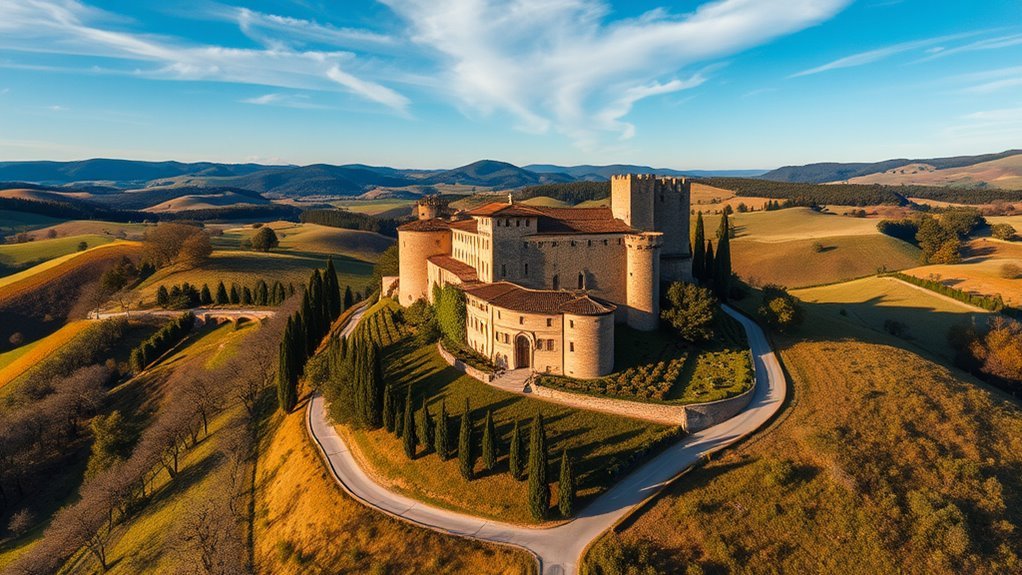
Tuscany’s castles range from working wine estates and luxury hotels to medieval museums and private landmarks. The best choice depends on whether you want to tour historic rooms, taste wine, stay overnight, photograph a coastal view, or simply admire architecture from outside. Because access varies widely, check each property’s official page before you travel and reserve tastings or guided visits when required.
Quick Answer
The best castles in Tuscany include Castello di Brolio for Chianti history, Poppi Castle for medieval art, Castello Banfi for a luxury wine stay, and Castello del Boccale for coastal views. Access is not equal: some welcome day visitors, some require reservations, and Sammezzano remains closed during restoration.
Key Takeaways
- Best for wine history: Castello di Brolio, Castello di Verrazzano, Castello Banfi, and Castello di Nipozzano.
- Best public historic interior: Poppi Castle, with medieval rooms, a library, prisons, a tower, and frescoes.
- Best for an overnight stay: Castello Banfi, Castello di Montalto, and the lodging connected with Verrazzano and Nipozzano.
- View from outside only: Castello del Boccale is mainly a private residential property.
- Currently closed: Castello di Sammezzano and its park are closed for safety and restoration, with a planned public opening in 2028.
Disclosure: As an Amazon Associate I earn from qualifying purchases. Some links on this page are affiliate links, at no extra cost to you.
Reasons to Visit Tuscany’s Iconic Castles
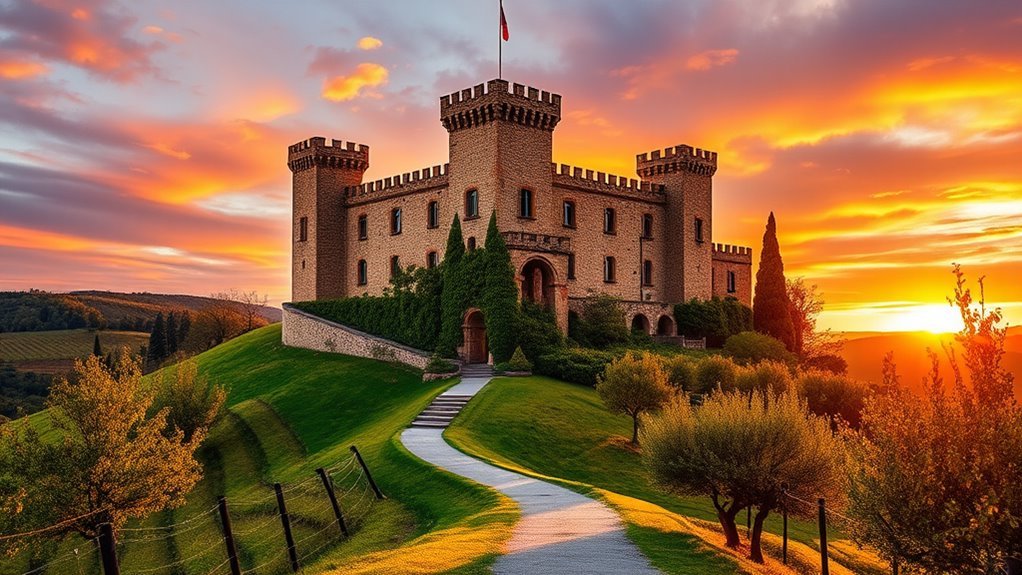
Tuscany’s castles reveal how the region developed through border wars, noble families, farming, trade, and wine. Their architecture is equally varied. You can see medieval defensive walls at Poppi, nineteenth-century revival details at Brolio, Moorish Revival interiors at Sammezzano, and a neo-medieval coastal silhouette at Boccale.
Many castle estates are still active places rather than static monuments. Some produce Chianti Classico, Chianti Rufina, or Brunello di Montalcino; others operate hotels, farm stays, restaurants, museums, or event spaces. That variety makes careful planning important. A “castle visit” may mean a ticketed museum tour, a reserved wine tasting, an overnight stay, or an exterior photo stop.
The most rewarding Tuscan castle trips pair architecture with the landscape around it: vineyards in Chianti, the Casentino Valley around Poppi, or the rocky coast south of Livorno.
Best Castles in Tuscany at a Glance
| Castle | Area | Best For | Typical Access |
|---|---|---|---|
| Castello di Brolio | Gaiole in Chianti | Chianti history, gardens, museum, tastings | Ticketed visits; some experiences require booking |
| Castello di Verrazzano | Greve in Chianti | Cellar tours, wine and food | Reserved guided experiences |
| Castello di Sammezzano | Reggello | Moorish Revival architecture | Closed to the public during restoration |
| Castello Banfi | Montalcino | Luxury stay, Brunello, dining | Hotel, restaurants, booked tours and tastings |
| Poppi Castle | Casentino | Medieval history, frescoes, valley views | Public monument with ticketed access |
| Castello di Montalto | Near Castelnuovo Berardenga | Quiet farm stay and long history | Guest accommodations and arranged events |
| Castello del Boccale | Livorno coast | Sea views and photography | Private property; admire from public areas |
| Castello di Nipozzano | Chianti Rufina | Frescobaldi wines, cellar visits, intimate stays | Visits and stays arranged in advance |
Note: Opening days, tour formats, prices, and event closures can change. Use each castle’s official website for the date of your visit rather than relying on a general seasonal rule.
Explore Chianti Wine at Castello di Brolio
Castello di Brolio is one of the strongest choices for travelers who want history and wine in the same visit. The Ricasoli family’s documented connection to Brolio dates to 1141. Baron Bettino Ricasoli did not establish the castle in 1872; rather, he recorded his influential formula for Chianti wine that year.
The estate’s official visitor program includes the castle grounds, gardens, and Ricasoli Collection. Wine experiences and selected guided tours may add winery access, tastings, or special areas. The family residence is not automatically part of every standard visit, so read the exact tour description before booking.
- Walk through historic gardens and defensive areas.
- See objects connected with the Ricasoli family and Brolio’s history.
- Learn why Bettino Ricasoli became important to the development of Chianti.
- Pair the visit with a tasting or a meal at the estate when available.
Check the official Castello di Brolio visitor page for current opening dates and ticket options.
Pro Tip: Allow extra time for the approach and viewpoints. Brolio’s hilltop setting is part of the experience, and rushing straight from a tasting to another appointment can make the visit feel cramped.
Is Castello di Verrazzano a Good Choice for Weddings and Wine?
Castello di Verrazzano sits in Greve in Chianti, between Florence and Siena. Its official visitor experiences focus on guided tours of the Renaissance gardens and historic cellars, followed by tastings or food-and-wine programs. The setting can feel romantic, but the original claim that guests stay in “charming rooms within the castle” is misleading.
Overnight lodging is offered through Agriturismo La Casanova, the estate’s guesthouse among the vineyards. The official booking information describes it as about a one-kilometer walk from the castle through the woods. Couples considering a ceremony or private event should contact the property directly about availability, guest limits, spaces, catering, and wet-weather plans rather than assuming a standard wedding package.
- Reserve a guided wine experience before arriving.
- Confirm whether the chosen program includes food, cellar access, or only a tasting.
- Ask about transport between the reception point, guesthouse, and castle.
- For lodging details, review the official agritourism page.
Castello di Sammezzano: Accessibility and Visiting Tips
Castello di Sammezzano is famous for its colorful Moorish Revival decoration, but it is not currently a normal sightseeing stop. The property’s official website states that the castle, historic buildings, and park are unsafe for public visitation during clearance and restoration work. The planned public opening is in 2028.
Warning: Do not enter the Sammezzano estate, follow unofficial “hiking” directions into the park, or cross barriers. The property is private and closed for safety. Follow updates only through the official Sammezzano website.
For now, architectural fans can learn about the building through official updates and reputable heritage coverage. Avoid travel pages that still describe occasional public tours or open park trails without a current date. The status has changed, and older advice is no longer reliable.
Experience Luxury at Castello Banfi Amid Vineyards
Castello Banfi combines a historic setting with an upscale hotel, restaurants, winery tours, and tastings in the Brunello di Montalcino area. The complex is based at the fourteenth-century Castle of Poggio alle Mura, now known as Castello Banfi. It suits travelers who want a polished wine-country stay rather than a stand-alone museum visit.
Exquisite Wine and Dine
The estate offers booked winery and vineyard experiences, a wine shop, and dining options that range from traditional Tuscan cooking to fine dining. Its official hospitality page identifies La Sala dei Grappoli as Michelin-starred and La Taverna as a restaurant centered on Tuscan flavors.
- Reserve tastings and restaurant tables in advance, especially in busy travel months.
- Read the experience description to see whether it covers the winery, vineyards, food, or a combination.
- Plan safe transport if you are tasting wine and not staying on the property.
- Visit the estate’s Bottle and Glass Museum and Balsameria when included in your plans.
Current options are listed on the official Castello Banfi hospitality page.
Romantic Getaway Destination
Hotel Il Borgo places guests in the castle complex with vineyard views and easy access to the estate’s dining and wine experiences. It is a strong choice for a honeymoon, anniversary, or quiet luxury break. The appeal comes from the full package: historic surroundings, modern comfort, food, and wine, not from unrestricted access to every room of the castle.
Why Is Poppi Castle Perfect for History Lovers?
Poppi Castle, also called the Castle of the Guidi Counts, is one of the best choices in this article for a traditional public castle visit. It overlooks the Campaldino plain in the Casentino area and contains historic rooms, a library, old prisons, a chapel, and a tower with wide valley views.
Historical Artifacts and Frescoes
The chapel contains a fourteenth-century fresco cycle attributed to Taddeo Gaddi, a major follower of Giotto. The castle also houses the Rilliana Library, founded in 1828, with more than 25,000 volumes and about 800 manuscripts. These features give visitors more than exterior scenery; they provide a direct look at medieval art and later scholarship.
- See the frescoed chapel and noble rooms.
- Visit the historic library collection.
- Explore the old prisons.
- Climb the tower when access is available and conditions permit.
Counts Guidi Family Legacy
The Guidi family shaped the castle and the political history of the Casentino. Coats of arms, rooms, and defensive elements help explain how a fortified residence could serve as both a home and a center of power. The original article’s claim that the walls measure seven meters thick is not supported by the official visitor sources reviewed and should not be repeated as fact.
Strategic Mountain Location
The hilltop site provided a commanding view over routes and settlements in the valley. Poppi also overlooks the area associated with the Battle of Campaldino, fought on June 11, 1289, between forces aligned with Florence and Arezzo. A museum display inside the castle helps visitors understand the battle.
Review current visitor information through the official Tuscany tourism page for Poppi Castle and the linked municipal site.
Discover the Historical Retreat of Castello di Montalto
Castello di Montalto is a restored medieval hamlet near Castelnuovo Berardenga, between Siena and Arezzo. Its recorded story spans more than a thousand years and includes conflict along the changing border between Siena and Florence.
Today, Montalto functions mainly as a private agriturismo estate rather than a walk-in castle museum. Guests can book self-catering villas and apartments in restored buildings, including part of the inner castle. The estate also hosts arranged events and offers a quiet base for exploring the Chianti countryside.
The farm is certified organic and covers about 270 hectares, much of it woodland, with cultivated land, olive groves, and local honey production. Read the property’s official history and agriturismo information before planning a stay or event.
Castello del Boccale: Coastal Views and Historical Significance
Castello del Boccale stands on the rocky coast south of Livorno, near the road toward Quercianella. Its history is more layered than the original article suggests. An earlier watchtower formed the oldest core, but the castle-like residence seen today was shaped by later expansion and neo-medieval remodeling, especially around the late nineteenth and early twentieth centuries.
The building is now mainly private residential property. It should be treated as an exterior landmark, not as a public museum with regular interior tours.
Architectural Marvels
The appeal of Boccale comes from the mix of fortified forms, towers, stone walls, and its dramatic position above the sea. Calling the entire present building a sixteenth-century Medici castle oversimplifies its history. A more accurate description is a later castle-style residence built around an older coastal watchtower.
The property’s own history page outlines several later owners and alterations: Castello del Boccale history.
Scenic Coastal Vistas
The public coastal road and lawful public viewpoints provide the safest way to photograph the building. Sunrise, late afternoon, and sunset can produce softer light, but parking and pedestrian safety matter more than the perfect angle.
| Feature | What to Know | Photography Advice |
|---|---|---|
| Coastal Views | The landmark overlooks the Tyrrhenian coast south of Livorno. | Use lawful public viewpoints and stay clear of traffic. |
| Architectural Style | The present appearance is largely neo-medieval, developed around an older tower. | Side light can bring out the stone texture and towers. |
| Public Access | The property is private and is not a standard public castle attraction. | Do not enter private gates, gardens, paths, or terraces. |
Warning: The Romito coast has cliffs, rocky access points, and a busy road. Park only where permitted, keep away from unstable edges, and never trespass for a photograph.
Scenic Beauty at Castello di Nipozzano
Castello di Nipozzano is a historic Frescobaldi estate in Chianti Rufina, northeast of Florence. The official estate history describes it as a defensive stronghold dating to around the year 1000, set above the Arno Valley near the Tuscan Apennines.
Unlike an open-entry monument, Nipozzano offers visits tailored by request. Experiences may include historic cellars, estate wines, and time in the village. The property also advertises four exclusive guest rooms, making it a more intimate stay than a large resort.
- Request a visit before traveling to the estate.
- Confirm the language, length, and tasting format.
- Ask whether the visit includes the private cellar or other restricted areas.
- Do not describe its wines simply as “Chianti” when the more precise area is Chianti Rufina.
Use the official Castello di Nipozzano page for visits and stays.
More Tuscan Castles Worth Visiting
The original list focuses heavily on wine estates. Travelers seeking a broader view of Tuscany’s castle heritage should also consider the following sites featured by the region’s official tourism portal.
Castello di Meleto
Castello di Meleto, near Gaiole in Chianti, combines castle architecture with tours, tastings, guest rooms, and an unusual eighteenth-century theater. It works well in the same Chianti itinerary as Brolio, but check for private events before visiting.
Malaspina Castle in Fosdinovo
Malaspina Castle offers a different landscape and history in Lunigiana, in northern Tuscany. Its towers, courtyards, walls, and long connection with the Malaspina family make it a strong choice for travelers more interested in medieval fortifications than wine.
Castello di Porciano
Castello di Porciano rises above the Casentino landscape near Stia. It pairs naturally with Poppi for a history-focused route through eastern Tuscany. Because access at smaller historic properties can be limited, confirm opening arrangements before making the drive.
See the regional overview of 10 fairy castles in Tuscany for more ideas.
How to Plan a Tuscan Castle Itinerary
Tuscany is too large for a practical single-day tour of every castle in this article. Group stops by area and access type.
Chianti Day
Choose two or three nearby estates such as Brolio, Verrazzano, and Meleto. Reserve timed tastings first, then build the driving route around them. Avoid stacking alcohol-heavy experiences, and designate a driver or arrange transport.
Casentino History Day
Make Poppi the main interior visit, then add Porciano or a nearby village if its access works with your date. This route is better for medieval history, mountain scenery, and museums than for luxury wine tourism.
Montalcino Luxury Day
Use Castello Banfi as the anchor for a tasting, meal, or overnight stay. Keep enough time for Montalcino itself and avoid treating the estate as a quick photo stop.
Livorno Coast Photo Stop
Visit Castello del Boccale only as part of a wider Livorno coast drive. It is not a substitute for a ticketed castle interior, and the stop should remain short, lawful, and safety-conscious.
Accessibility, Transport, and Booking
Historic castles often have steep paths, cobblestones, stairs, narrow doors, uneven ground, and limited elevator access. Accessibility can also differ between the grounds, museum rooms, cellars, restaurants, and guest accommodations.
- Ask specific questions: Do not ask only whether a site is “accessible.” Ask about step-free parking, restroom access, cellar stairs, tower climbs, and seating.
- Use a car carefully: Rural castles are often difficult to reach by public transport, but narrow roads and wine tastings can make driving stressful.
- Reserve timed experiences: Wine estates commonly use guided slots rather than open entry.
- Check event closures: Weddings, private dinners, and estate events may change normal access.
- Allow buffer time: Parking, rural roads, check-in, and walking from reception can take longer than expected.
Pro Tip: Save the official booking confirmation and entrance instructions offline. Mobile service can be weak on rural roads, and some estates use a reception point that is separate from the castle itself.
Essential Tips for Visiting Tuscany’s Castles
There is no single “castle season” that applies to every property. Poppi is promoted as open year-round, Brolio publishes its own seasonal calendar, and several wine estates require advance arrangements. Sammezzano is closed, while Boccale is private.
| Tip | Details | When to Do It |
|---|---|---|
| Verify Access | Confirm that the castle, park, museum, or cellar you want is actually open. | Before booking transport or lodging |
| Reserve Tours | Book wine tours, tastings, meals, and special guided visits. | As soon as travel dates are fixed |
| Confirm Mobility Needs | Ask about stairs, slopes, cobbles, restrooms, and step-free routes. | Before purchasing a ticket |
| Plan Safe Transport | Use a designated driver or arranged transport for wine tastings. | Before the tasting day |
| Photograph Respectfully | Follow signs, avoid private areas, and do not block roads or entrances. | Throughout the visit |
| Check the Weather | Rain can affect gardens, gravel paths, views, and outdoor ceremonies. | A few days before travel |
Frequently Asked Questions
What is the most beautiful place in Tuscany, Italy?
Beauty is subjective, but the Val d’Orcia is one of Tuscany’s most celebrated landscapes and is recognized by UNESCO as a cultural landscape. For castle scenery, choose Chianti’s vineyard estates, Poppi’s Casentino views, or the Livorno coast around Boccale.
What is the most beautiful castle in Italy?
There is no official winner. In Tuscany, Poppi is excellent for a visitable medieval interior, Brolio combines architecture with Chianti history, and Sammezzano is visually extraordinary but closed during restoration. Neuschwanstein is sometimes named in European castle lists, but it is in Bavaria, Germany, not Italy.
Will Italy pay you $32,000 to move to Tuscany?
No blanket offer currently pays anyone $32,000 simply to move to Tuscany. A 2024 regional program offered eligible applicants €10,000 to €30,000 toward buying a qualifying home in certain small mountain municipalities, subject to strict conditions and a closed application window. A separate 2025 program also closed in November 2025. Always check the Tuscany regional government for a current call.
Where should you not miss in Tuscany?
First-time visitors often combine Florence, Siena, the Val d’Orcia, and a hill town such as San Gimignano or Volterra. For castle lovers, add a Chianti estate and one true historic interior such as Poppi so the trip includes both wine-country scenery and medieval history.
Can you visit Castello di Sammezzano now?
No. The official property website states that the castle, historic buildings, and park are closed because they are unsafe during restoration and clearance work. The planned opening is in 2028, but travelers should verify that schedule before making plans.
Which Tuscan castles offer overnight stays?
Castello Banfi operates Hotel Il Borgo, Castello di Montalto offers villas and apartments, and Castello di Nipozzano advertises four rooms. Verrazzano offers lodging at Agriturismo La Casanova near the castle rather than standard guest rooms inside the main castle building.
Conclusion
Tuscany’s castles are not all the same kind of attraction. Brolio and Verrazzano connect history with Chianti wine, Banfi offers a luxury Brunello stay, Poppi provides the strongest museum-style medieval visit, Montalto and Nipozzano reward advance planning, and Boccale is best admired responsibly from outside. Sammezzano remains a future visit, not a current one. Choose by access and interest, confirm the latest details, and leave enough time to enjoy the landscape around each castle.
Sources
- Visit Tuscany: 10 Fairy Castles in Tuscany — regional overview and additional castle ideas.
- Ricasoli: Castello di Brolio — history, visitor access, and current opening information.
- Castello di Verrazzano — estate history, guided tours, and agritourism.
- Castello e Parco di Sammezzano — official closure and restoration status.
- Castello Banfi Hospitality — hotel, restaurants, tours, tastings, and events.
- Visit Tuscany: Poppi Castle — library, frescoes, prisons, tower, and Battle of Campaldino context.
