
Last Updated on August 26, 2026 by Daniel Globe
If you’re looking for the 10 best beaches in Tuscany, you can choose everything from polished Versilia sands to wild Maremma coves and island beaches. Forte dei Marmi is ideal for beach-club comfort, Marina di Cecina and Giannella suit relaxed family days, Cala Violina rewards walkers, Le Rocchette combines sand with snorkeling, and Cala di Forno offers a much more demanding protected-park experience. Campese on Giglio Island, Baratti, Feniglia, and Castiglioncello round out a coast with very different styles of beach day.
Quick Answer
The best beaches in Tuscany range from Forte dei Marmi’s serviced sands to Cala Violina’s protected cove, Le Rocchette’s clear water, Giannella and Feniglia’s family-friendly shores, Baratti’s archaeological setting, and Giglio Island’s Campese. Access varies greatly, so check summer reservations, parking, ferry schedules, and protected-park rules before you travel.
Key Takeaways
- Best for beach clubs: Forte dei Marmi offers wide sand, established bathing facilities, dining, and an upscale Versilia atmosphere.
- Best for families: Marina di Cecina, Giannella, Feniglia, Forte dei Marmi, and Le Rocchette all offer family-friendly options, although sea conditions can change.
- Best for nature: Cala Violina, Cala di Forno, and Feniglia place you close to protected landscapes, but they also require more planning.
- Best for snorkeling: Le Rocchette, Castiglioncello’s rocky coves, and Giglio Island offer more interesting underwater terrain than Tuscany’s long sandy resort beaches.
- Check 2026 access rules: Cala Violina has controlled summer entry, while Cala di Forno has strict seasonal park-access arrangements.
Disclosure: As an Amazon Associate I earn from qualifying purchases. Some links on this page are affiliate links, at no extra cost to you.
Best Beaches on the Tuscan Coast
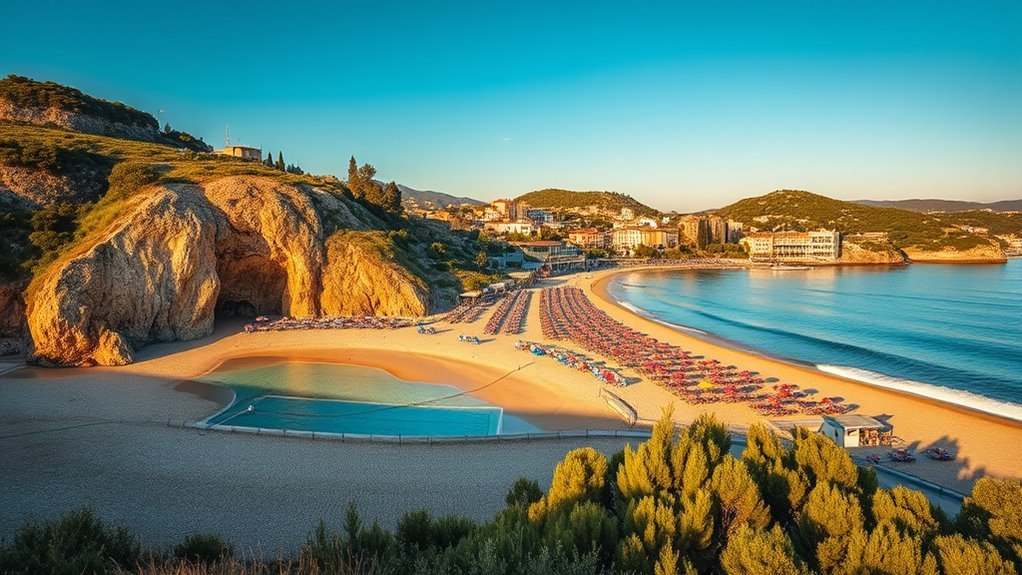
Tuscany’s coastline and islands give you a much wider choice than one single beach style. In Versilia, you’ll find long sandy shores, historic bathing establishments, restaurants, and easy resort-town access. Along the Etruscan Coast, sand alternates with rocky coves that are better suited to snorkeling and diving. Farther south, Maremma adds dunes, pine forest, protected reserves, and beaches where getting there can be part of the experience. The Tuscan Archipelago then adds island coves and especially clear water.
For current environmental-award information, the FEE Italia 2026 Blue Flag list includes Forte dei Marmi, Castiglioncello, Marina di Cecina, Rocchette, Giannella, Feniglia, and several other Tuscan coastal areas. Treat the award as one useful quality indicator rather than a substitute for checking daily sea conditions and lifeguard warnings.
| Beach | Best For | Beach Style | Access Note |
|---|---|---|---|
| 1. Forte dei Marmi | Beach clubs, families, dining | Wide sandy shore | Easy resort-town access |
| 2. Castiglioncello | Scenery, snorkeling, rocky coves | Sand, pebbles, rocks | Multiple coves and town access points |
| 3. Marina di Cecina | Families, cycling, easy facilities | Long sandy beach | Free stretches and bathing establishments |
| 4. Giannella | Families, long beach days | Sandy tombolo | Numerous roadside access points |
| 5. Cala Violina | Nature, walking, clear water | Protected sandy cove | Summer reservation required |
| 6. Le Rocchette | Snorkeling and families | Golden sand plus rocky edge | Paid parking available nearby |
| 7. Cala di Forno | Serious hiking, protected nature | Remote cove | Strict park rules; summer guided access |
| 8. Campese, Giglio | Island stay, sunsets, services | Large reddish-sand beach | Reach Giglio by ferry from Porto Santo Stefano |
| 9. Baratti | Beach plus archaeology | Dark reddish sand and sheltered gulf | Mostly public beach with facilities |
| 10. Feniglia | Families, walking, long sandy shore | Dunes and pine forest | Several access areas along a long beach |
Pro Tip: Don’t try to cover the entire Tuscan coast from one base. Versilia, the Etruscan Coast, and southern Maremma are spread far apart, so choose a beach that fits the part of Tuscany you are already visiting or divide a longer trip between two coastal bases.
Forte Dei Marmi for Chic Sandy Shores
Forte dei Marmi brings a polished, resort-style atmosphere to Tuscany’s northern coast. The broad golden beach, shallow seabed near shore, historic bathing establishments, restaurants, and Apuan Alps backdrop make it especially appealing when comfort matters as much as scenery.
You can reserve loungers and umbrellas at one of the town’s established beach clubs, spend time on the promenade, and stay for dinner or evening shopping. Families also appreciate the gently shelving seabed, although adults should always judge conditions on the day rather than assume the sea will be calm.
FEE Italia lists the Forte dei Marmi litorale among Tuscany’s 2026 Blue Flag beaches. The town remains one of the strongest choices if you want organized services, fashionable surroundings, and an easy beach day rather than a remote natural cove.
Castiglioncello’s Cliffs and Clear Water
Castiglioncello gives you a different kind of Tuscan coast. Red cliffs, rocky ledges, sheltered coves, pine trees, and small sand or pebble beaches create more visual variety than the long sandy stretches of Versilia. Baia del Quercetano is one of the best-known swimming areas, while rocky seabeds around the wider coast suit snorkeling and diving.
- Choose a sheltered cove when you want swimming and a scenic setting.
- Bring water shoes if you plan to explore rocky entry points.
- Use the rockier shoreline for snorkeling when visibility and sea conditions are suitable.
The area also has a genuine artistic history. Castiglioncello became closely associated with the Macchiaioli painters and later with Italian cinema, so the town works well if you want culture and coastline on the same day.
Castiglioncello appears on FEE Italia’s 2026 Blue Flag list. If you also want to visit Calafuria, treat it as a separate rocky-coast excursion farther north toward Livorno rather than as part of Castiglioncello itself.
Cecina Beach for Easy Family Days
Marina di Cecina is one of the easiest options for a traditional family beach day on the Etruscan Coast. A long sandy shoreline is backed by the Tomboli di Cecina pine forest, and free beach sections alternate with established bathing facilities.
The town has restaurants, bars, accommodation, cycling opportunities, sailing and water-sport facilities, while the nearby nature reserve gives you an easy change of scenery when you want shade or a walk away from the sand. FEE Italia lists Marina di Cecina and Le Gorette among its 2026 Blue Flag beaches.
- Use the free stretches if you prefer to bring your own umbrella and beach gear.
- Choose a bathing establishment if you want loungers, shade, changing facilities, and nearby food.
- Walk or cycle near the Tomboli di Cecina Nature Reserve for a break from the midday beach.
- For a full family attraction day, Acqua Village Cecina is also located in the area.
Marina di Cecina is particularly useful when you want a beach with town services rather than a destination that requires a long hike or reservation.
Giannella Beach in Maremma
Giannella is a long sandy tombolo linking the mainland with Monte Argentario. It is one of the most practical southern Tuscany beaches if you want plenty of shoreline, multiple access points, and a mixture of free sand and equipped bathing areas.
- Choose a free section for a simple beach day with your own equipment.
- Use an equipped section if you want loungers, shade, or food nearby.
- Combine the beach with Orbetello, Porto Santo Stefano, or another Argentario stop.
Giannella is included in FEE Italia’s 2026 Blue Flag list for Orbetello. Its generally sandy character makes it popular with families, but wind, waves, currents, and swimming conditions still vary from day to day.
Cala Violina’s Secluded Cove
Cala Violina is one of Maremma’s best-known natural beaches, set inside the Scarlino coastal reserve between Follonica and Punta Ala. Its pale, quartz-rich sand and clear water make it especially attractive, but the protected setting also means you should plan the visit rather than simply drive up expecting immediate beach access.
For the 2026 regulated summer season, the Municipality of Scarlino limits entry to 700 people per day during controlled hours and requires online booking. The municipality charges a €1 reservation contribution per person, with different rules for young children. Access is on foot or by bicycle, and the Val Martina parking area can also be reserved when available. The walk from that parking area is roughly 1.8 km.
Note: Check the Municipality of Scarlino’s current Cala Violina information before traveling. During the regulated 2026 season, reservations are required, dogs are generally not admitted to the beach except where specific exemptions apply, and seasonal toilets and a refreshment point are available.
The beach is no longer best described as having virtually no services during summer, but you should still bring drinking water, sun protection, suitable walking shoes, and everything you need for the trail. There are no reasons to rush once you arrive; the main appeal is the combination of reserve scenery, sand, and swimming.
Le Rocchette for Snorkeling and Coves
At Le Rocchette near Castiglione della Pescaia, golden sand meets clear water and a rockier headland beneath the historic Forte delle Rocchette. The sandy seabed slopes gradually over much of the main beach, while the rocky side creates more interesting underwater terrain for snorkeling and diving.
There are both bathing establishments with bars and restaurants and stretches of free beach. Paid parking is available in the area, although summer spaces can fill quickly. Rocchette/Roccamare also appears on FEE Italia’s 2026 Blue Flag list.
Snorkeling Spots
If snorkeling is your priority, focus on the rocky end of Le Rocchette rather than the open sandy center. Clear conditions can reveal fish, rock formations, and vegetation around the edges. Beginners should stay in sheltered water and avoid entering close to rocks when waves or swell make the approach uncomfortable.
- Move slowly to avoid stirring sand and reducing visibility.
- Stay clear of boat traffic and respect marked swimming areas.
- Use water shoes where rock entries are rough or slippery.
- Choose calm conditions instead of relying on how the water looked earlier in the day.
Hidden Coves
The rockier shoreline beneath the headland contains small inlets that give Le Rocchette more variety than a simple sandy resort beach. Some coves around the rocky section are most naturally approached from the water, so don’t assume every inlet has an easy land path.
If you prefer to stay on shore, the main sandy beach still gives you a scenic view toward the fort and enough space to alternate between swimming, sunbathing, and the services of nearby beach establishments.
Beach Access
Follow signs for Rocchette from Castiglione della Pescaia and use the designated parking areas rather than roadside spaces. From the parking zone, pedestrian access leads toward the main beach through the coastal area.
- Arrive early in peak summer if parking matters to you.
- Bring your own equipment for free-beach sections.
- Use a bathing establishment if you want rentals, drinks, or food.
- Families can favor the gradually shelving sandy portion, while snorkelers can explore the rockier side in suitable conditions.
Cala Di Forno in Maremma Park
Cala di Forno is not an ordinary drive-up beach. It lies inside Maremma Regional Park beneath the Uccellina hills, and its value comes partly from the fact that reaching it is tightly controlled. The small beach is surrounded by Mediterranean vegetation and cliffs in one of the least developed parts of Tuscany’s coast.
Warning: Do not plan Cala di Forno as a casual two-kilometer beach walk. In summer 2026, Maremma Regional Park lists access on specific guided dates and the main excursion at roughly 16 km and about 8 hours with the beach stop. Rules vary by season, so check the park immediately before your visit.
Secluded Park Beach
The official visitor route is the A4 Cala di Forno itinerary. The trail passes through pine forest, old olive groves, Mediterranean scrub, and viewpoints above the coast before descending toward the cove.
This is a destination for travelers who genuinely want a substantial nature excursion, not simply a secluded beach reached after a few minutes on foot. Once there, the reward is a protected shoreline with very little development around it.
- Plan the beach as part of the park excursion rather than a stand-alone swimming stop.
- Carry enough water, food, sun protection, and suitable footwear.
- Follow guide and park instructions around wildlife and protected habitats.
Wildlife And Dunes
The route to Cala di Forno crosses several important coastal habitats. Pine forest, Mediterranean scrub, dune areas, wetlands farther along the Maremma coast, and the Uccellina hills support a wide range of wildlife.
| Feature | What You May Notice |
|---|---|
| Coastal vegetation | Mediterranean scrub, pines, rosemary and cistus |
| Cliffs | Long views across an undeveloped coastline |
| Wildlife | The park notes animals including deer and wild boar in the area |
| Beach | A small protected inlet below the hills |
| Protection | Access and visitor behavior are controlled by park rules |
Access And Tips
Summer access is the detail you cannot afford to overlook. According to the park’s 2026 summer visitor information, Cala di Forno is offered on scheduled guided outings, with the excursion listed at approximately 16 km, around eight hours, and medium-high difficulty.
- Check the official park calendar before making the drive to Alberese.
- Reserve when the seasonal program requires it.
- Wear proper walking footwear rather than beach sandals for the hike.
- Carry enough water for a long excursion in exposed summer conditions.
- Do not rely on food, shade rentals, or ordinary beach-club infrastructure at the cove.
Current seasonal information is available from Maremma Regional Park.
Campese and Giglio Island’s Best Beaches
Giglio Island deserves a place among Tuscany’s best beach destinations, but its principal beaches are Campese, Cannelle, Arenella, and Caldane. Giglio Porto is the ferry arrival point rather than the island’s main sandy beach.
Campese, on the west coast, is the island’s largest beach and the best single Giglio choice for this top-ten list. Its sand has reddish tones, the bay is framed by a rocky sea stack and historic tower, and the area has the main services you expect from an established beach resort.
- Cannelle: south of Giglio Porto, with pale granular sand, clear water, and relatively easy access.
- Arenella: north of the harbor, smaller and known for sand with golden reflections.
- Caldane: the smallest of the four principal beaches, reached by a coastal path or by boat.
- Cala dell’Allume: a more rugged hiking detour on the western side if you want something beyond the main serviced beaches.
The island is also excellent for snorkeling and diving because of its clear water and rocky seabed. To get there, take a ferry from Porto Santo Stefano to Giglio Porto, then continue by bus, taxi, scooter, walking route, or boat depending on the beach.
Baratti Beach for Sea and Etruscan History
Baratti adds something most Tuscan beaches cannot: you can combine swimming with one of the region’s most important archaeological landscapes. The beach sits in the Gulf of Baratti near Populonia, with pine forest behind it and darker reddish sand influenced by the area’s long history of ironworking.
Much of the shore is public, with some equipped beach facilities. The sheltered gulf attracts swimmers as well as sailing, windsurfing, and paddling enthusiasts. Nearby, the Archaeological Park of Baratti and Populonia preserves Etruscan necropolises and remains of ancient Populonia.
If you want a more rugged extension, the headland trail toward Buca delle Fate leads to a rocky cove that is better suited to confident walkers and snorkelers than to travelers seeking easy sandy access.
Feniglia for Long Sand and Pine Forest
Feniglia is one of southern Tuscany’s best choices when you want a long, uncomplicated stretch of sand backed by nature. The dune system runs for roughly seven kilometers between the Argentario area and Ansedonia, with the Duna Feniglia Nature Reserve and pine forest directly behind the shore.
The sandy seabed and generally gradual entry make sections popular with families, while the beach’s length lets you choose between more organized access areas and quieter stretches farther along the shore. Feniglia also appears on the 2026 Blue Flag list in the Argentario/Orbetello area.
The main advantage is space: rather than squeezing into a small rocky cove, you can walk farther along the beach or retreat toward the pine forest when you want a change from the sun.
Choosing the Right Tuscan Beach
The best Tuscan beach depends less on a universal ranking and more on what you want from the day. Forte dei Marmi is strongest for resort comfort; Cecina and Feniglia work well for long sandy days; Le Rocchette and Castiglioncello suit travelers who want rocks and snorkeling; Cala Violina combines a protected setting with a manageable walk; Cala di Forno is a genuine hiking excursion; Baratti adds archaeology; and Giglio gives you an island experience.
Beach Types And Vibes
You can roughly divide Tuscany’s coast into four beach styles:
- Polished resort beaches: Forte dei Marmi and the wider Versilia coast offer bathing establishments, restaurants, nightlife, and easy town access.
- Etruscan Coast beaches: Castiglioncello, Cecina, and Baratti mix coves, sand, pine forest, water sports, and historic sights.
- Natural Maremma beaches: Cala Violina, Rocchette, Giannella, Feniglia, and Cala di Forno range from easy-access sand to strictly controlled protected areas.
- Island beaches: Giglio’s Campese, Cannelle, Arenella, and Caldane give you clear water and a slower island pace.
You will also see the Italian distinction between spiaggia libera, where you use a public/free beach section and bring your own equipment, and a stabilimento balneare or bagno, where you pay for services such as loungers, umbrellas, changing facilities, food, or showers. Many Tuscan resort beaches offer both types in different sections.
Best Areas By Traveler
Families: Start with Marina di Cecina, Forte dei Marmi, Le Rocchette, Giannella, or Feniglia. Their sandy sections and easier facilities simplify the day, but always supervise children closely and follow current lifeguard instructions.
Snorkelers: Le Rocchette, Castiglioncello, and Giglio generally offer more rocky underwater structure than the long sandy shores of Versilia.
Couples: Cala Violina, Baratti, Castiglioncello, and Giglio combine beach time with walking, scenery, dining, or evening atmosphere.
Hikers and nature lovers: Cala di Forno is the most demanding option here, while Cala Violina and Feniglia offer easier ways to combine beach time with protected landscapes.
Travelers without much time: Choose a beach near your existing Tuscany itinerary. Trying to day-trip repeatedly between Versilia, Maremma, and Argentario can turn a beach holiday into hours of driving.
For fewer peak-season crowds, June and September can be easier than July and August, although weather, water conditions, ferry frequency, lifeguard coverage, and beach services are seasonal. Always check the individual destination shortly before traveling.
Frequently Asked Questions
What Is the Nicest Beach Town in Tuscany?
Forte dei Marmi is one of the strongest choices if you want an elegant beach town with established bathing clubs, restaurants, shopping, nightlife, sandy shoreline, and views toward the Apuan Alps. For a more natural atmosphere, consider Castiglione della Pescaia or an Argentario base instead.
Are There Any Sandy Beaches in Tuscany?
Yes. Tuscany has many sandy beaches, including Forte dei Marmi, Marina di Cecina, Giannella, Feniglia, Campese, Baratti, and Le Rocchette. Cala Violina is another sandy cove, although access is more regulated than at ordinary resort beaches.
Where Should You Stay in Tuscany for Beaches?
Stay in Forte dei Marmi or another Versilia town for an organized resort holiday; Cecina for the Etruscan Coast; Castiglione della Pescaia for northern Maremma; Orbetello or Monte Argentario for Giannella and Feniglia; or Giglio Island if the island beaches themselves are the main purpose of your trip.
Which Part of Tuscany Has the Most Beautiful Coast?
Beauty is subjective, but Maremma and the Argentario area are excellent if you prefer protected landscapes, dunes, clear-water coves, and less urbanized scenery. Castiglioncello is stronger for cliffs and rocky bays, while Giglio Island adds some of the region’s clearest island water.
Do You Need to Reserve Cala Violina?
Yes during the regulated summer period. For 2026, the Municipality of Scarlino limits daily entry and requires online reservations. Check the official municipal information immediately before your visit because dates, parking arrangements, and visitor rules can change between seasons.
Are Beaches in Tuscany Free?
Many beaches include free public sections called spiagge libere, but large parts of resort beaches are also operated by paid bathing establishments. Even when the beach itself is free, you may still pay for parking, ferry transportation, park admission, or controlled access.
What Is the Best Time for a Tuscany Beach Holiday?
July and August are the main peak months and usually bring the heaviest demand for parking, beach clubs, ferries, and protected-beach reservations. June and September can be easier if you want fewer peak-season crowds, but always check weather, water conditions, transport, and seasonal services for your exact dates.
Sources
- Visit Tuscany — Journey Around the Most Beautiful Beaches in Tuscany — regional coastal areas, beach types, and destination context.
- FEE Italia — Blue Flag Beaches 2026 — current 2026 Blue Flag locations in Tuscany.
- Comune di Scarlino — Cala Violina Summer 2026 — reservations, daily visitor limit, rules, and seasonal services.
- Maremma Regional Park — Summer 2026 Visitor Information — Cala di Forno access, excursion length, difficulty, and booking arrangements.
- Visit Tuscany — Giglio Island: What to See and Do — Campese, Cannelle, Arenella, and Caldane beach information.
- Visit Tuscany — Baratti — beach characteristics, public access, and archaeological context.
Conclusion
The best beaches in Tuscany are different enough that choosing the right one matters more than following a single ranking. Pick Forte dei Marmi for beach-club comfort, Cecina or Feniglia for easy sand, Le Rocchette for snorkeling, Baratti for archaeology, Cala Violina for a protected coastal walk, Cala di Forno for a serious park excursion, or Giglio for an island escape. Check access and sea conditions before you leave, then choose the stretch of coast that best matches the kind of beach day you actually want.
