
Last Updated on September 10, 2026 by Daniel Globe
Seeing a moose on a hiking trail can be an unforgettable experience, but these large wild animals need plenty of space. Moose are usually more interested in feeding or moving through their habitat than interacting with people. Problems can develop when a moose feels crowded, surprised, cornered, stressed, or protective of a calf.
Quick Answer
If you encounter a moose while hiking, stop and give it plenty of room. Back away or reroute instead of approaching. If the moose shows agitation, increase your distance and put solid cover nearby. If it charges, run to a tree, vehicle, building, or other solid barrier. If knocked down, curl up and protect your head.
Key Takeaways
- Stay at least 25 yards (about 23 meters) from moose where no stricter local rule applies, and move farther away whenever a moose reacts to your presence.
- Never approach, surround, feed, or try to force a moose off a trail.
- Be especially cautious around cows with calves, bulls during the fall rut, and stressed moose during harsh winter conditions.
- Warning signs can include ears laid back, raised hair along the hump, lip licking, stomping or pawing, and a deliberate approach.
- If a moose charges, run toward solid cover rather than waiting to see whether the charge is a bluff.
- Keep dogs leashed and under control because dogs can provoke defensive behavior from moose.
At a Glance
| Time Required | React within seconds; you may need to wait several minutes or reroute if a moose blocks the trail. |
| Difficulty | Simple steps, but calm judgment is important. |
| Tools Needed | None required. Binoculars and a leash for dogs are useful. Wildlife deterrent may be appropriate where legal and recommended locally. |
| Cost | $0 for the safety steps themselves; optional hiking and wildlife-safety equipment varies. |
Disclosure: As an Amazon Associate I earn from qualifying purchases. Some links on this page are affiliate links, at no extra cost to you.
Understanding Moose Behavior
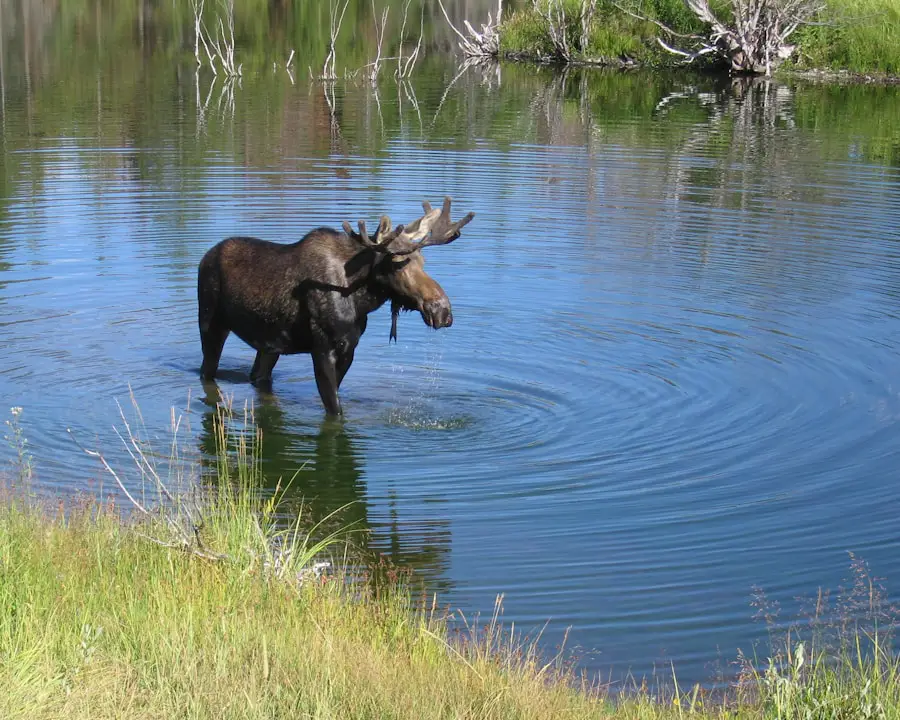
Moose (Alces alces) live across northern parts of North America, Europe, and Asia. Unlike herd-forming animals such as caribou, moose are usually solitary or found in small family groups. However, being solitary does not mean they defend permanent territories. The National Park Service notes that moose are generally not territorial and can tolerate other animals within their home ranges.
Moose behavior changes with the season. Bulls become focused on breeding during the fall rut and may be more unpredictable around other moose and people. Cows can be highly defensive of calves in spring and early summer. Winter can also make encounters more difficult because deep snow, hunger, and limited food may leave animals stressed or reluctant to move from packed trails and roads.
Moose are browsers. According to the Alaska Department of Fish and Game, their diet includes willow, birch, and aspen leaves and twigs as well as sedges, grasses, horsetails, pond weeds, and other vegetation. Their long legs also help them wade into shallow water to feed on aquatic plants.
Heavy browsing can change the composition and structure of local vegetation. The effect varies by habitat and moose density, so it is more accurate to say that moose can reshape plant communities than to assume their feeding always increases biodiversity.
Moose may be particularly active around dawn and dusk in some areas, but they can be encountered at any time. Stay alert around wetlands, ponds, streams, willow thickets, dense brush, and other habitat where a large animal can be difficult to see until you are close.
Hiking in Moose Territory
Planning Your Hike
Before hiking in known moose habitat, check the park, forest, or wildlife agency website for trail closures, current wildlife alerts, and required viewing distances. Local rules take priority over general guidance.
Well-used and clearly marked trails can make navigation easier, but they do not eliminate wildlife encounters. Moose frequently use human trails and roads because they provide convenient routes through thick vegetation or deep snow.
Safe Hiking Practices
Pay close attention around blind corners, dense vegetation, streams, ponds, and noisy water where you or a moose may have little warning of the other’s presence. Normal conversation can reduce surprise encounters when visibility is poor, but do not yell, clap at, whistle at, or otherwise try to scare a nearby moose out of your way.
Hiking with other people can improve general backcountry safety, but do not assume a group will cause a moose to move. Give the animal the same amount of space whether you are alone or with several hikers.
Pro Tip: As you enter dense moose habitat, notice where the nearest large trees, buildings, vehicles, fences, or other solid barriers are. Knowing where cover is located can save valuable time if an animal becomes defensive.
Enhancing Your Experience
Binoculars or a telephoto lens let you enjoy a better view without approaching. Never move closer for a photograph, selfie, or video. If a moose changes what it is doing because of your presence, increase your distance.
The safest moose encounter is one in which the animal has enough room that it does not need to react to you.
Signs of Moose Presence
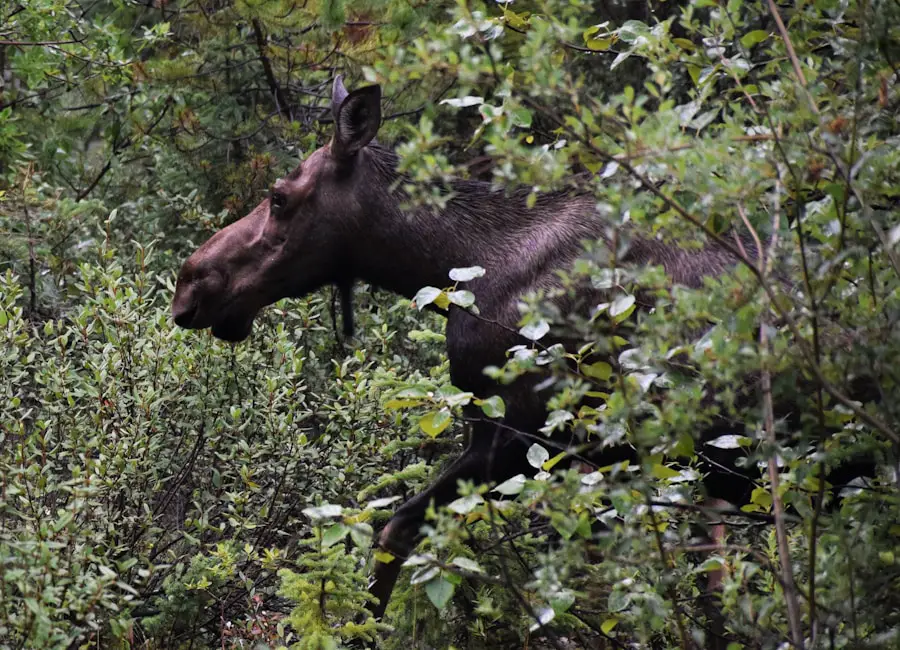
Tracks, scat, browsed vegetation, and stripped or broken woody stems can tell you that moose are using an area. Moose tracks are made by large cloven hooves and may also show impressions from two dew claws, especially in snow or soft ground. The Alaska Department of Fish and Game’s moose sign guide describes the main hoof impressions as two crescent-shaped halves.
Moose scat changes with the season. Hard, dry, elongated pellets are common in winter when moose eat woody browse. During summer, moisture-rich green vegetation can produce softer or much looser scat. This seasonal difference makes scat alone an imperfect way to judge how recently a moose was present.
You may also notice heavily browsed willow, birch, or aspen stems and paths through dense vegetation. Treat fresh tracks or scat as a reminder to slow down and watch ahead, especially where brush limits visibility.
What to Do If You Encounter a Moose
| Encounter Situation | Recommended Action |
|---|---|
| Moose has not noticed you | Keep it that way if possible. Quietly back away or reroute without moving closer. |
| Moose sees you but remains calm | Talk softly if necessary, move away slowly, and give it a clear escape route. |
| Moose blocks the trail | Stop. Wait from a safe distance, turn around, or take a safe alternative route. Do not crowd or try to force it to move. |
| Moose on or beside a road | Slow down, stop if necessary, and allow the animal plenty of time and room to leave the roadway. |
| Moose appears agitated | Increase your distance immediately and position a large tree, vehicle, building, or similar barrier between you and the animal if possible. |
| Moose charges | Run away and get behind solid cover. Do not wait to determine whether the charge is a bluff. |
| Moose knocks you down | Curl into a ball, protect your head and neck with your arms or hands, and remain still until the moose has moved a safe distance away. |
When you first see a moose, assess the situation before moving closer. A relaxed animal that is feeding or traveling away from you usually needs only space and an unobstructed route. Back away or change your route rather than trying to pass closely.
If the moose knows you are there, the National Park Service recommends speaking softly and moving away slowly. Avoid aggressive gestures and do not try to scare it away.
Warning: The response changes if a charge is imminent. Unlike common bear-encounter advice, it is appropriate to run from a charging moose. Head for a large tree, vehicle, building, fence, or another solid barrier. If the moose knocks you down, curl up, cover your head, and stay still until it has moved well away.
Many moose charges are warning or bluff charges, but you should never stand in place to test whether a charging animal intends to make contact. The Alaska Department of Fish and Game advises running and getting behind something solid as soon as a charge develops.
Moose Safety Precautions
Where no stricter regulation applies, stay at least 25 yards (about 23 meters) from a moose. Some parks and wildlife areas require greater distances, and even 25 yards may be too close for a nervous animal. Always obey posted regulations and move farther away if the animal stops feeding, turns toward you, approaches, lays its ears back, or otherwise changes its behavior.
Note: A viewing-distance rule is a minimum, not a guarantee of safety. A cow with calves, a bull during the rut, an injured animal, or a stressed winter moose may need considerably more room.
Never feed a moose. Feeding can condition wildlife to approach people and may increase aggressive encounters. It can also be illegal under local wildlife regulations.
Use extra caution during three common high-risk periods:
- Spring and early summer: cows can be intensely protective of newborn calves. Never move between a cow and calf.
- Fall: bulls are focused on breeding during the rut and can be more unpredictable or aggressive.
- Harsh winter conditions: deep snow and poor food availability can leave moose stressed and more likely to use packed roads and trails.
Wildlife deterrent such as pepper spray may provide an additional last-resort option where it is legal and appropriate. ADF&G notes that pepper spray can sometimes provide protection from an aggressive moose, but it should not replace distance, awareness, escape routes, and solid cover.
For any wilderness hike, tell someone where you are going and when you expect to return. Carry navigation, weather-appropriate clothing, water, and a reliable means of communication where practical.
Avoiding Aggressive Moose
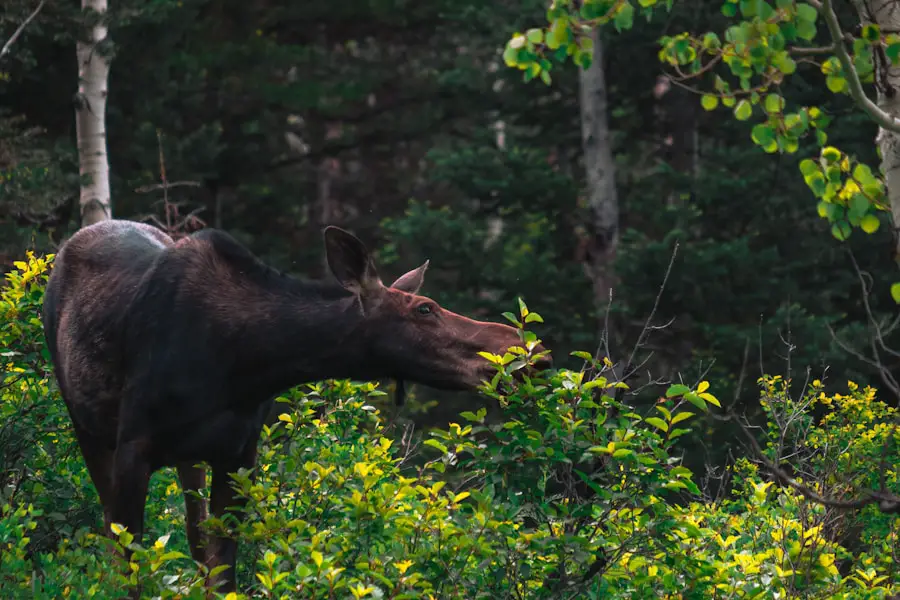
Most moose would rather avoid conflict, but they may defend themselves when they feel threatened, crowded, harassed, or cornered. Bulls deserve extra caution during the fall rut, while cows with calves deserve extra space in spring and early summer.
According to ADF&G and the National Park Service, warning signs that a moose is becoming upset can include:
- Ears laid or pinned back.
- Raised hair along the hump or shoulders.
- Lip licking.
- Pawing or stomping.
- A deliberate approach toward you instead of moving away.
Do not wait for every warning sign to appear. Some encounters escalate quickly. If a moose starts closing the distance, increase your distance and move toward cover.
Do not approach a calf, move between a cow and calf, surround a moose with other hikers, or walk toward an animal for a closer photograph. Always leave the moose an escape route that does not require it to pass through you.
Moose Encounters with Pets
Dogs can make moose encounters more dangerous. A barking, chasing, or fast-moving dog can resemble a natural predator and trigger defensive behavior. The Alaska Department of Fish and Game advises keeping dogs leashed or under close control around moose.
Use a sturdy leash before entering known moose habitat rather than waiting until you see an animal. Do not allow a dog to chase, bark at, or circle a moose.
If you unexpectedly meet a moose while hiking with a dog, back away and keep the dog as controlled and close to you as safely possible. Do not move toward an agitated moose to retrieve a loose pet. Prioritize getting yourself to a safe location and follow local wildlife-agency guidance if the situation becomes dangerous.
Reporting Moose Encounters
A routine sighting of a healthy moose in suitable habitat usually does not need to be reported unless the park or wildlife agency specifically requests observations.
Reporting becomes more useful when a moose is repeatedly charging people, creating an immediate hazard near a road or populated area, appears injured or entangled, or is behaving abnormally. Contact the park ranger office, local wildlife department, or appropriate emergency authority for the area rather than approaching the animal yourself.
When making a report, provide the location, time, number of animals, presence of calves, direction of travel, and the specific behavior you observed. This information can help wildlife staff evaluate whether intervention or a temporary warning is necessary.
If you’re preparing for more outdoor travel, TakeTravelInfo also covers hiking and backpacking planning. For overnight trips, this backpacking sleeping bag guide can help with trip preparation after you have reviewed the wildlife rules for your destination.
Love travel? Join Our Facebook Community For More Tips.
Frequently Asked Questions
What should I do if I see a moose while hiking?
Stop and give the moose plenty of room. If it has not noticed you, quietly back away or change your route. If it knows you are there, move away slowly and avoid threatening behavior. Never approach or feed it.
How far away should I stay from a moose?
Stay at least 25 yards, or about 23 meters, away where no stricter rule applies. Parks and wildlife areas may require greater distances. Move farther away whenever a moose reacts to your presence or appears uncomfortable.
What are signs that a moose is agitated?
Common warning signs include ears laid back, raised hair along the hump, lip licking, pawing or stomping, and deliberately approaching you. Treat these behaviors as a signal to increase your distance and move toward solid cover.
Should I make noise to alert a moose to my presence?
Normal conversation can help reduce surprise encounters when hiking around blind corners or dense brush. Once you see a nearby moose, however, do not yell, clap at it, or deliberately try to frighten it into moving. Give it space instead.
What should I do if a moose charges me?
Run away and get behind a large tree, vehicle, building, fence, or another solid barrier. Do not stand still to find out whether the charge is a bluff. Current wildlife-agency guidance supports running from a charging moose.
What should I do if a moose knocks me down?
Curl into a ball, protect your head and neck with your hands or arms, and remain still. Do not try to stand while the moose remains nearby because movement may cause it to renew the attack. Wait until it has moved a safe distance away.
What should I do if a moose is blocking the trail?
Do not squeeze past it. Wait at a safe distance, turn around, or use a safe alternate route. Give the animal room and a clear escape path. Trying to force a moose off the trail can turn a calm encounter into a defensive one.
Are moose more dangerous when I have a dog?
They can be. Dogs may bark at or chase moose and can trigger defensive behavior. Keep dogs leashed and close to you in moose habitat, especially around cows with calves.
Sources
- National Park Service — Moose Safety, Kenai Fjords National Park — current distance, warning-sign, charge, and knockdown guidance.
- Alaska Department of Fish and Game — What to Do About Aggressive Moose — aggressive behavior, escape, cover, feeding, and pepper-spray guidance.
- Alaska Department of Fish and Game — Moose Species Profile — diet, habitat, reproduction, rut, and life-history information.
- Alaska Department of Fish and Game — Moose Sign — track and seasonal scat identification.
- National Park Service — Moose, Rocky Mountain National Park — solitary behavior, non-territorial behavior, diet, and calf protection.

