
Last Updated on July 27, 2026 by Daniel Globe
Seeing a bear while hiking can be unforgettable, but trying to “scare it away” is not always the safest response. What you should do depends on whether the bear has noticed you, whether it appears defensive or curious, and whether it is approaching. The safest strategy starts before an encounter: avoid surprising bears, secure every food and scented item, know the rules for the area, and carry bear spray where it is recommended and allowed.
Quick Answer
Do not try to frighten every bear you meet. If it has not noticed you, quietly leave. If it sees you, stay calm, do not run, give it space, and prepare your bear spray. Loud, intimidating behavior is mainly for a persistent, non-defensive bear or situations where local wildlife officials specifically recommend hazing.
Key Takeaways
- Never run from or intentionally approach a bear.
- Make human noise before an encounter, especially around blind corners, dense brush, streams, and other low-visibility areas.
- Do not rely on bear bells as your main warning method; talking, calling out, and clapping are more useful.
- Carry EPA-registered bear spray where it is recommended and legal, keep it immediately accessible, and follow its label.
- Store food, trash, toiletries, pet food, and other scented items according to the rules for the land you are visiting.
- Your response to an aggressive bear should account for its behavior, not simply its fur color or species.
At a Glance
| Time Required | 10–15 minutes to review local bear rules and practice your response before a hike |
| Difficulty | Moderate — staying calm and recognizing bear behavior takes preparation |
| Tools Needed | Current park or land-agency guidance, bear spray where recommended and allowed, and approved food storage when required |
| Cost | Varies by bear-spray and bear-resistant food-storage requirements; some parks lend or rent approved food canisters |
Warning: There is no single bear response that guarantees safety. Never deliberately approach or provoke a bear just to make it leave. Bear behavior, species, terrain, and local management practices differ, so check the current rules and alerts for the park, forest, refuge, or other land you are visiting.
Disclosure: As an Amazon Associate I earn from qualifying purchases. Some links on this page are affiliate links, at no extra cost to you.
Understanding Bear Behavior
Bears are intelligent, adaptable wild animals. Many bears avoid people when they have enough warning, but any bear can react unpredictably when surprised, crowded, defending cubs or food, seeking human food, or investigating a person.
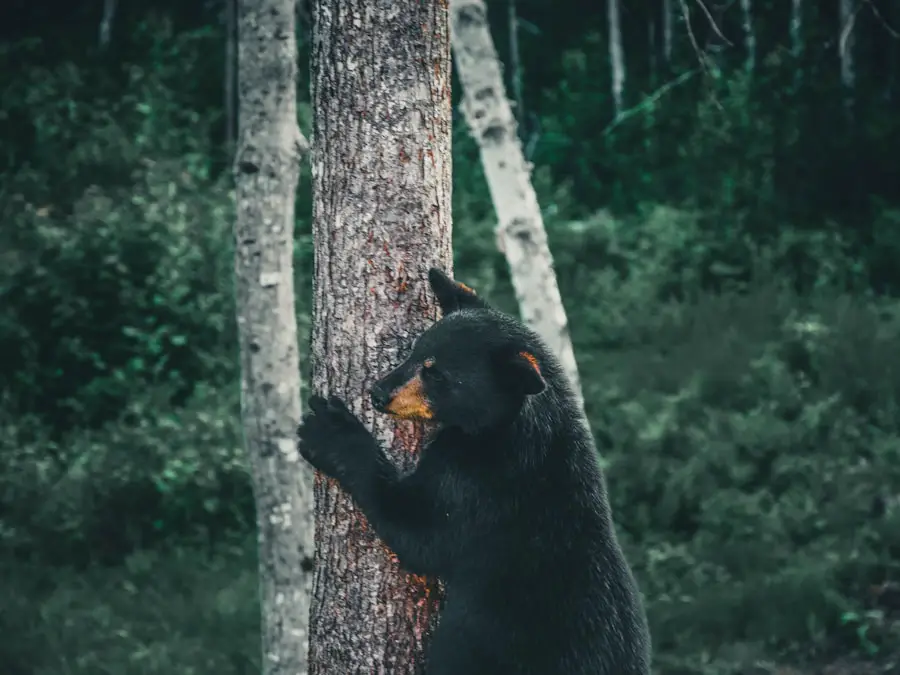
A bear standing on its hind legs is not automatically threatening you. According to the National Park Service, a standing bear is often trying to get a better look or smell so it can identify what you are.
A bear standing upright is often gathering information rather than preparing to attack. Watch the bear’s overall behavior instead of judging one posture by itself.
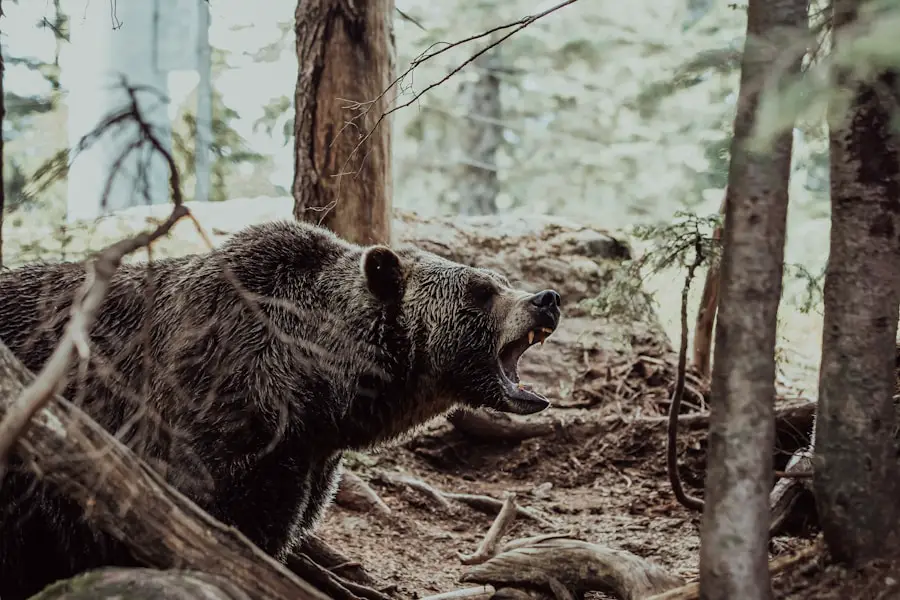
Warning signs can include huffing, jaw popping or clacking, swatting the ground, lowering the head, laying the ears back, or making a sudden charge. A defensive bear usually wants more space. A non-defensive bear may instead approach slowly, follow you, investigate your food, or remain unusually focused on you.
Bears also learn quickly when they obtain human food. A bear that finds food, garbage, coolers, toiletries, or other attractants around people may return and become increasingly comfortable around campsites and developed areas. Preventing access to attractants protects both people and bears.
Check Bear Conditions Before You Hike
Bear safety is not identical everywhere. Before starting a hike, check the official website, trailhead notices, visitor center, or ranger station for recent sightings, temporary closures, food-storage rules, minimum wildlife-viewing distances, and bear-spray restrictions.
The National Park Service specifically advises visitors to follow park-level guidance because bear species, terrain, regulations, and recommended responses can differ by location.
Note: Bear spray is strongly recommended in some parks but prohibited or considered unnecessary in others. Always check the rules for the exact area you will visit rather than assuming one policy applies everywhere.
Proper Food Handling and Storage
One of the best ways to prevent bear problems is to keep bears from obtaining human food. Bears have a highly developed sense of smell, and the National Park Service treats far more than meals as potential attractants.
Depending on local regulations, scented items can include food, beverages, garbage, cooking equipment, coolers, toothpaste, cosmetics, sunscreen, insect repellent, pet food, and toiletries. Store these items using the method required for your destination, such as a bear-resistant food container, provided food locker, or secured hard-sided vehicle.
Do not assume a normal cooler, plastic tote, or zipped backpack is bear-resistant. Where a bear-resistant food container is required, use an approved model and follow local instructions.
Cook and clean away from your sleeping area when backcountry guidance calls for it. Some areas, including parts of Alaska, recommend separating sleeping, cooking, and food-storage locations by about 100 yards, but required distances vary. Follow the rule for your destination rather than applying a universal number.
Pack out food scraps and garbage unless an approved bear-resistant trash container is available. Never deliberately leave food for a bear to distract it. A food reward can teach the animal to approach the next person.
Making Noise on the Trail
Making noise before you encounter a bear helps reduce the chance of surprising one at close range. Talk with your companions, call out periodically, sing, or clap when approaching blind corners, dense vegetation, hill crests, streams, or other places where a bear may have trouble seeing or hearing you.
Human voices are particularly useful because they help wildlife recognize that people are approaching.
Do not rely on a bear bell as your primary warning method. National Park Service guidance from places such as Grand Teton and Glacier states that bear bells are often not loud enough. Talking, calling out, and clapping are better choices.
Hiking with other people also helps. Groups tend to make more noise and are easier for bears to detect. Stay together rather than spreading far apart.
Avoid headphones or earbuds that reduce your awareness. Jogging and fast cycling can also increase the chance of suddenly surprising wildlife because you cover ground quickly.
Pro Tip: Make extra noise before entering thick brush or rounding a blind corner and beside noisy water. Those are situations where neither you nor a bear may hear the other until the distance is dangerously short.
Carrying and Using Bear Spray
Bear spray is a powerful last-line deterrent designed for aggressive or attacking bears. It is different from ordinary personal pepper spray and should be carried only where it is legal and recommended.
The Interagency Grizzly Bear Committee recommends choosing a product specifically labeled as bear spray or bear deterrent, registered with the U.S. Environmental Protection Agency, and containing at least 7.9 ounces (225 grams) of product. Check the expiration date and follow the EPA-approved label on your specific canister.
| Evidence or Guidance | Finding | Source |
|---|---|---|
| Alaska bear-spray study | Spray stopped undesirable bear behavior more than 90% of the time in the documented incidents summarized by IGBC; three of 175 people were injured, none seriously. | IGBC / Journal of Wildlife Management study |
| Polar-bear study | Bear spray stopped undesirable behavior in 18 of 19 documented incidents studied from 1986 through 2019. | U.S. Geological Survey / Wildlife Society Bulletin |
| Selection guidance | Use an EPA-registered product specifically labeled for deterring bears and follow its instructions. | IGBC / EPA |
Keep bear spray in a hip or chest holster where you can reach it in seconds. A can buried inside a backpack may be useless during a sudden charge.
Do not assume every can has the same range or discharge time. Depending on the product, approved labels specify different performance characteristics. Read your own label before entering bear country.
When an aggressive bear is close enough for your product’s labeled range, remove the safety and deploy the spray according to the label, accounting for wind and the bear’s movement. Many products instruct users to create a cloud or barrier of spray in the bear’s path and direct the spray toward its face.
Practice beforehand with an inert training canister when available. This lets you rehearse removing the safety, gripping the canister, aiming, and pressing the trigger without releasing capsaicin or partially emptying your live can.
Warning: Bear spray is a deterrent, not a repellent. Never spray it on your body, tent, backpack, campsite, or other equipment. Pre-spraying objects does not create a protective barrier and may attract wildlife to investigate the residue.
Keeping a Clean Campsite
A clean campsite reduces the chance that a bear will associate your sleeping area with food. Do not leave meals, food scraps, dirty cookware, garbage, pet food, toiletries, or other attractants unattended.
Wash cookware after use and store it according to local bear-storage rules. Pack out garbage and food waste unless an approved bear-resistant disposal system is provided.
Do not sleep with food or scented items in your tent. When required, place them in an approved bear-resistant container or food locker at the prescribed storage location.
Choosing unscented products can reduce unnecessary fragrance, but “unscented” does not make toiletries safe to keep inside your tent. Treat toiletries and cosmetics as attractants whenever local guidance requires it.
Choosing the Right Hiking Gear
Good hiking gear helps you stay mobile, alert, and prepared, but clothing itself does not reliably frighten bears. Bright clothing can make you easier for other hikers or rescuers to see, but it should not be treated as a bear deterrent.
Wear footwear appropriate for the terrain, carry enough water, and keep navigation and emergency equipment accessible. In areas where bear spray is recommended, carry it on your body rather than inside your pack.
For overnight trips, add the bear-resistant food-storage system required for your destination. Keep children close, and where pets are allowed, keep dogs under control and follow leash rules. A loose dog can chase wildlife and bring a defensive bear back toward its owner.
Recognizing Bear Signs
Watch for tracks, scat, torn or overturned logs, digging, claw or rub marks, tufts of hair, heavily used animal trails, and carcasses. These signs can tell you that bears are using the area.
Fresh or abundant sign calls for extra awareness, but it does not tell you exactly where a bear is or establish a fixed “territory.” If you find a carcass, smell dead wildlife, or see scavengers gathering, leave the area because a bear may be feeding nearby and may defend the food source.
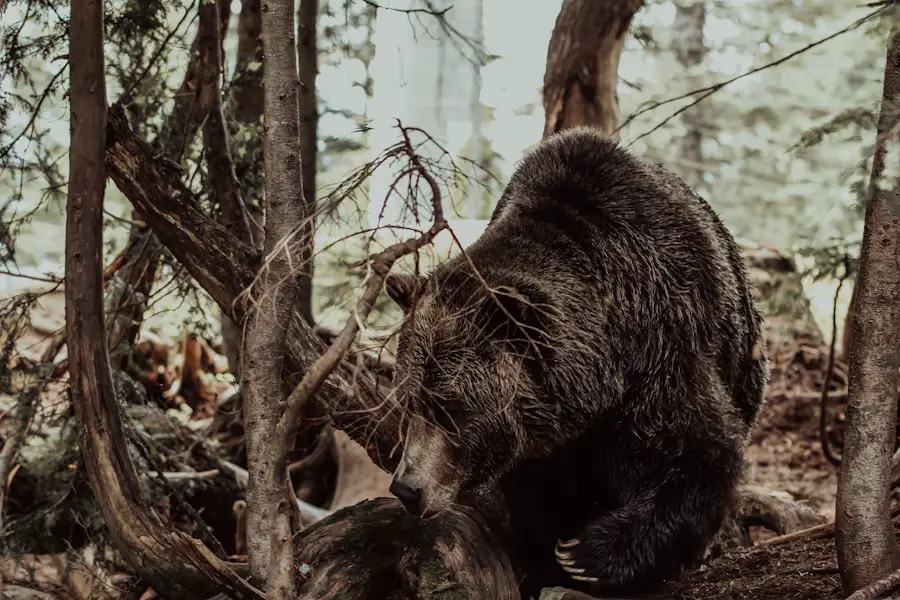
Do not identify a bear species from color alone. Black bears can be black, brown, cinnamon, blond, or other shades, while brown/grizzly bears also vary in color. The National Park Service bear-identification guide recommends using several features together.
- Brown/grizzly bears: usually have a prominent shoulder hump, a dish-shaped facial profile, shorter rounded ears, and longer front claws.
- American black bears: generally lack a shoulder hump, have a straighter facial profile, taller ears, and shorter curved front claws.
Tracks can also differ, but size alone is unreliable. Grizzly/brown-bear toes tend to form a straighter line and claw marks are often visible; black-bear toes form a more curved arrangement and claw marks may be absent.
When Should You Actually Try to Scare a Bear Away?
There is an important difference between warning a bear that you are coming and trying to drive away a bear that already sees you.
If a bear has not noticed you, do not yell at it simply to make it run. Quietly back away and change your route.
If the bear notices you but is calm and not approaching, identify yourself with a normal, steady voice and increase your distance without running.
If a bear persistently approaches, follows you, investigates your food, attempts to enter your camp, or otherwise behaves in a non-defensive way, some wildlife agencies recommend becoming more assertive: group together, stand your ground, make yourself look larger, use a firm voice, and prepare your deterrent.
By contrast, if the bear was surprised at close range, has cubs or a food source, and reacts explosively with defensive behavior, your goal is generally to reduce the perceived threat rather than challenge it. Stay calm, do not run, talk calmly, give it room, and have bear spray ready.
Note: Some parks specifically tell visitors to haze certain black bears in developed areas, while others do not. The National Park Service warns that advice to scare a bear can be dangerous when applied in the wrong park or situation.
Knowing What to Do in a Bear Encounter
If the Bear Has Not Seen You
Keep it that way. Do not approach for a photograph. Quietly move away, change your route, and give the bear plenty of space.
If the Bear Sees You
Stay calm. Do not run. Speak in a normal, steady voice so the bear can identify you as a person. Keep the bear in view without aggressively staring it down, and slowly increase your distance if the bear is stationary.
Keep your backpack on. Do not throw food or abandon your pack to distract the bear. Leave the bear an escape route and never place yourself between a mother and her cubs.
If the Bear Follows or Persistently Approaches
Stop retreating if continued retreat encourages the bear to follow. Group together, make yourself look larger, use a firm voice, and prepare bear spray. Current guidance from Denali National Park treats this slow, curious or food-focused behavior differently from a sudden defensive encounter.
If the Bear Charges
Do not run. A charge can be defensive and may stop before contact. Stand your ground, keep your bear spray ready, and use it when the bear enters the effective range specified on the canister’s label.
Do not assume that shouting at every charging bear is helpful. If the bear is clearly defensive after being surprised, around cubs, or near a food source, calm behavior and de-escalation are preferred while you prepare your spray.
If a Bear Makes Physical Contact
Your response depends on the circumstances.
- Defensive brown/grizzly attack: if contact occurs after a surprise encounter or while the bear is defending cubs or food, leave your pack on and play dead. Lie face down, clasp your hands behind your neck, spread your legs for stability, and remain still until the bear leaves.
- Black-bear attack: National Park Service guidance generally says not to play dead. Get to a secure vehicle or building if possible; otherwise fight back aggressively, concentrating on the face and muzzle.
- Persistent or predatory attack: fight back if any bear stalks you and attacks, enters your tent and attacks, or continues a prolonged attack after a defensive encounter. Use whatever objects are available.
The behavior-based distinction matters. Recent Denali guidance notes that both black and brown/grizzly bears can be involved in defensive and non-defensive encounters, so species alone should not determine every decision.
Warning: Never run from a bear and never climb a tree as your primary escape plan. Both black bears and grizzlies can climb, and bears can run far faster than a person.
After a Bear Encounter
Once the bear has moved away, leave the area without running and move toward a secure location when possible. Do not follow the bear, even to take photographs.
Report aggressive encounters, food-conditioned behavior, campsite incidents, or unusual bear activity to the responsible ranger or land-management agency as soon as it is safe. Reports help managers warn other visitors and address developing human-bear conflicts.
If anyone is injured, seek emergency medical help. Bear attacks can cause serious injuries even when wounds initially look limited.
These instructions focus mainly on American black bears and brown/grizzly bears. Polar-bear country requires specialized precautions; follow the U.S. Fish and Wildlife Service or the responsible local authority rather than relying solely on black/grizzly guidance.
Frequently Asked Questions
What should I do if I encounter a bear while hiking?
Stay calm and do not run. If the bear has not noticed you, quietly leave. If it sees you, identify yourself with a calm voice, give it space, keep your pack on, and slowly move away if it remains stationary. Prepare bear spray if you are carrying it.
How can I scare a bear away while hiking?
Do not automatically try to scare every bear. If it is unaware of you, leave quietly. Loud, assertive behavior is more appropriate for a persistent, curious, food-seeking, or non-defensive bear, or where local rangers specifically recommend hazing. A defensive bear should generally be de-escalated rather than challenged.
Should I use bear spray to scare away a bear?
Bear spray is intended as a close-range deterrent for an aggressive, charging, or attacking bear, not as a tool for spraying distant bears. Carry an EPA-registered bear deterrent where recommended and allowed, keep it immediately accessible, and use it according to its label.
What should I do if a bear charges at me?
Do not run. Stand your ground and prepare your bear spray. A defensive bear may bluff charge and stop before contact. Use bear spray when the bear is within your product’s labeled effective range. Avoid unnecessarily escalating a defensive encounter with screaming or aggressive movement.
Should I play dead if a bear attacks?
Play dead mainly when a brown/grizzly bear makes contact during a defensive attack, such as after being surprised or while protecting cubs or food. Do not play dead during a typical black-bear attack, a stalking or predatory attack, a tent attack, or an attack that becomes prolonged. Fight back in those situations.
Do bear bells work while hiking?
Do not rely on them. National Park Service guidance says bear bells may not be loud enough to warn bears effectively. Talking, calling out, singing, and clapping are stronger ways to announce your presence, particularly around blind corners and noisy streams.
What can I do to prevent bear encounters while hiking?
Check current bear reports and closures, hike in groups when possible, stay alert, avoid headphones, make human noise in low-visibility areas, keep children and pets close, give bears plenty of space, stay away from carcasses and cubs, and secure all food, garbage, and scented items correctly.
Sources
- National Park Service — Staying Safe Around Bears — encounter, attack, and bear-spray guidance.
- Denali National Park & Preserve — Bear Safety — current defensive versus non-defensive behavior guidance and food-storage practices.
- National Park Service — Bear Safety: Storing Food — food, garbage, toiletries, and other attractants.
- Interagency Grizzly Bear Committee — Bear Spray — selection, carrying, use, limitations, and research summary.
- National Park Service — Bear Identification — black-bear and brown/grizzly identification features.
- U.S. Geological Survey — Efficacy of Bear Spray as a Deterrent Against Polar Bears — peer-reviewed bear-spray evidence published in Wildlife Society Bulletin.

