
Last Updated on July 27, 2026 by Daniel Globe
Planning a 7-day trip to London becomes much easier when you group nearby sights instead of crisscrossing the city. This one-week London itinerary combines royal landmarks, major museums, markets, river walks, local neighborhoods, and one flexible day trip. It assumes you have seven full sightseeing days, but you can shorten individual days if your arrival or departure falls during the week.
Quick Answer
Spend seven days in London by grouping nearby attractions: Westminster first, royal and West End sights next, the Tower and South Bank on Day 3, South Kensington museums on Day 4, central shopping and culture on Day 5, one day trip on Day 6, and Greenwich on Day 7.
Key Takeaways
- Group attractions by neighborhood so you spend more time sightseeing and less time crossing London.
- Reserve high-demand sights early, especially Westminster Abbey, the Tower of London, Buckingham Palace interiors, and free Sky Garden slots.
- Use the same contactless card, phone, watch, or Oyster card throughout each TfL journey so fare capping works correctly.
- Take advantage of London’s major free museums, including the Natural History Museum, Science Museum, V&A, National Gallery, and British Museum.
- Keep Day 6 flexible: choose Windsor Castle, Hampton Court Palace, or Kew Gardens and Richmond rather than trying to combine them.
At a Glance
| Time Required | 7 full sightseeing days |
| Difficulty | Moderate; expect substantial walking plus Tube, bus, rail, or river journeys |
| Tools Needed | Contactless payment or Oyster, TfL journey planner, comfortable shoes, weather layer, and attraction reservations |
| Cost | Many national museums are free; paid attractions and meals vary. As of July 2026, the adult TfL pay-as-you-go daily cap for Zones 1–2 is £8.90. |
Disclosure: As an Amazon Associate I earn from qualifying purchases. Some links on this page are affiliate links, at no extra cost to you.
Before You Start: Planning a Week in London
Check Your UK Entry Requirements
Before booking non-refundable plans, check whether you need a visa or an Electronic Travel Authorisation. Most international visitors need either an ETA, a visa, or another valid immigration status before travelling. Requirements depend on nationality and personal circumstances, so use the official GOV.UK ETA guidance. As of July 2026, an ETA costs £20.
Use Contactless or Oyster for London Transport
For most visitors, London’s public transport system is easiest with a contactless bank card, compatible mobile wallet, or Oyster card. Tube, Elizabeth line, DLR, London Overground, buses, and many National Rail journeys within London are integrated into Transport for London fare rules.
Always touch in and out where required with the same card or the same device. A physical card and the same card stored in a phone wallet are treated as separate payment methods.
As of July 2026, adult pay-as-you-go travel within Zones 1–2 is capped at £8.90 per day when eligible journeys are made using the same payment method.
Check current prices before travelling on the official TfL fare-capping page. Contactless weekly capping follows a Monday-to-Sunday period, which matters if your seven-day visit starts in the middle of the week.
Book These London Attractions First
You do not need reservations for every stop, but book fixed-time attractions before filling the rest of your schedule. Prioritize Westminster Abbey, the Tower of London, Buckingham Palace interiors when available, special museum exhibitions, and Sky Garden.
A central hotel near a Tube station can also save significant time. Westminster, Covent Garden, South Bank, Bloomsbury, Victoria, and areas around major Zone 1 stations all make practical bases, but the best choice depends on your budget and arrival airport.
Note: Attraction hours, royal ceremonies, rail engineering work, and palace closures can change. Treat this itinerary as your route framework and confirm time-sensitive details on each attraction’s official website shortly before your visit.
Day 1: Westminster, Parliament, and Royal London
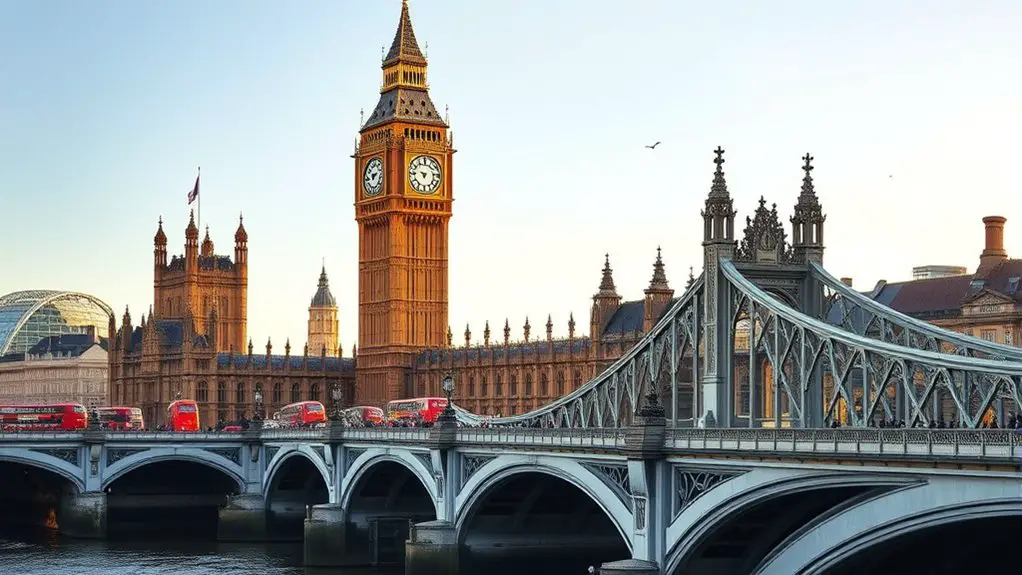
Begin your first full day in Westminster, where several of London’s most famous political and royal landmarks sit within walking distance of one another.
Morning: Westminster Abbey and Parliament
Start at Westminster Abbey. The Abbey has hosted English and British coronations for centuries and remains a working church, so visitor hours can vary around services and special events.
Afterward, walk to the Palace of Westminster, better known as the Houses of Parliament. Look up at the Elizabeth Tower, which contains the Great Clock and Big Ben. Although “Big Ben” is often used informally for the entire landmark, the name originally belongs to the Great Bell inside the tower.
Continue to Westminster Hall. This medieval hall has witnessed major state events and historic trials, including the trial of Charles I. It also hosted coronation banquets for newly crowned monarchs between the Middle Ages and the 19th century; the coronation ceremonies themselves took place at Westminster Abbey.
Afternoon: Westminster Bridge and Buckingham Palace
Cross Westminster Bridge for a classic view back toward Parliament, then return to the north side of the Thames. From Parliament Square, walk through St James’s Park toward Buckingham Palace.
Buckingham Palace is the King’s official London residence and a working royal palace. The exterior can be seen year-round, while State Room visits are seasonal. If seeing the Changing of the Guard matters to you, check the official schedule before building your day around it because ceremony times and dates can change.
You will also be near St James’s Palace, one of London’s historic royal palaces. It remains a working royal site rather than a normal public palace attraction, so appreciate it primarily from the surrounding streets rather than planning an interior visit.
Evening: South Bank and the London Eye
Finish around the Thames. Walk across to the South Bank for views of Parliament as the light changes. The London Eye is an optional paid addition if you want an elevated panorama; otherwise, the riverside walk itself gives you plenty of classic London scenery without another ticket.
Day 2: Buckingham Palace, Art, and the West End
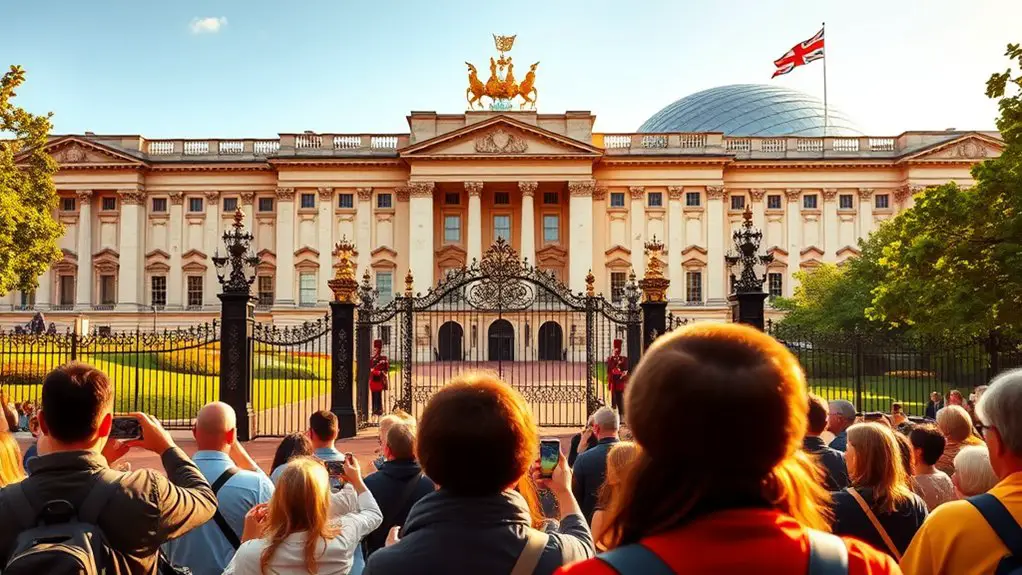
Day 2 stays in central London, combining royal heritage with Trafalgar Square, major art, and the West End. Keeping these sights together avoids the original itinerary’s long detour between Buckingham Palace, the Tower of London, Bankside, and South Kensington.
Royal Heritage Sites
If you only viewed Buckingham Palace briefly on Day 1, return this morning for a scheduled interior visit when the State Rooms are open. According to the Royal Collection Trust, Buckingham Palace is a working royal residence, and public access varies by season.
Note: For 2026, Buckingham Palace’s State Rooms are open during the summer from July 9 through September 27. At other times, access is much more limited, so do not assume the interior will be open on your travel dates.
The Tower of London is another essential royal heritage site, but save it for Day 3. That keeps today’s route compact and gives the Tower enough time instead of rushing across the city.
Artistic Landmarks
Walk from the palace through St James’s Park or along The Mall to Trafalgar Square. The National Gallery holds works by artists including Leonardo da Vinci and Vincent van Gogh. General admission to the permanent collection is free, although some exhibitions require tickets.
From Trafalgar Square, continue into Covent Garden. The piazza, surrounding lanes, theaters, shops, and cafés make this an easy place for lunch or an afternoon break.
Spend the evening in Soho, Chinatown, Leicester Square, or at a West End performance. A show is optional, but seven days gives you enough time to include London’s theater district without sacrificing a major sightseeing day.
Day 3: Tower of London, Borough Market, and Modern London
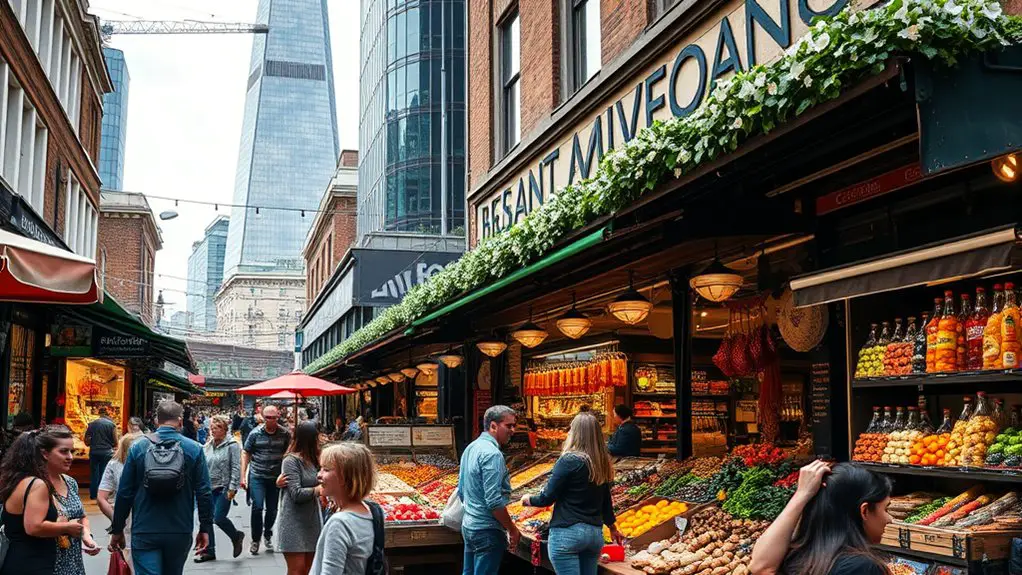
Day 3 combines the eastern City of London with the river and Bankside. It is one of the fullest days of the week, so start early.
Morning: Tower of London and Tower Bridge
Begin at the Tower of London. Allow several hours if you want to explore the fortress properly rather than only seeing the Crown Jewels. The Crown Jewels are a working collection of ceremonial objects and regalia protected at the Tower.
After leaving, walk beside the Thames to Tower Bridge. Crossing the bridge on foot is free, while its exhibition and upper walkways require a separate ticket.
Lunch: Borough Market
Continue west on the south side of the river to Borough Market. Fresh produce, bakeries, specialist food traders, and international dishes make it one of the easiest places to build lunch around several small tastes rather than a long restaurant stop.
Afternoon: Tate Modern, Millennium Bridge, and St Paul’s
Walk along Bankside to Tate Modern, housed in the former Bankside Power Station. Its main collection offers a large introduction to international modern and contemporary art, with separate charges for some exhibitions.
From Tate Modern, cross the Millennium Bridge toward St Paul’s Cathedral. The bridge itself is a useful piece of modern London architecture and gives one of the city’s most recognizable views toward the cathedral.
If cathedral history and architecture are a priority, book an interior visit to St Paul’s. Otherwise, enjoy the exterior and continue toward the City.
Late Afternoon: Sky Garden
Finish at Sky Garden for elevated views across the capital. Public access is free during designated hours, but capacity is controlled.
Pro Tip: Sky Garden currently releases free public tickets up to three weeks ahead, generally in weekly batches. Reserve a slot rather than relying on limited walk-in capacity.
If you still have energy, continue west along the Thames toward the Southbank Centre. Otherwise, stop here; London is more enjoyable when every evening is not treated as another checklist.
Day 4: South Kensington Museums and Kensington Gardens
Spend Day 4 around South Kensington, one of London’s easiest museum districts. The Natural History Museum, Science Museum, and Victoria and Albert Museum sit within a few minutes’ walk of one another.
Natural History Museum
Begin at the Natural History Museum. Alfred Waterhouse’s landmark combines Gothic Revival influences with Romanesque architecture and elaborate terracotta decoration inspired by the natural world.
Inside, explore the dinosaur galleries, fossils, minerals, biodiversity exhibits, and Hintze Hall. General museum admission is free, although temporary exhibitions and special experiences may cost extra.
Science Museum or V&A
Next door, the Science Museum covers science, engineering, medicine, technology, transport, and space. Its general galleries are free, while some experiences require paid tickets.
The nearby Victoria and Albert Museum focuses on art, design, fashion, decorative arts, furniture, sculpture, and performance. General admission is also free, with charges for selected exhibitions.
Trying to study all three museums deeply in one day can become exhausting. Choose two as your priorities and use the third for a shorter highlights visit.
Late Afternoon: Kensington Gardens
After several hours indoors, walk toward Kensington Gardens for a quieter finish. Depending on your energy, continue toward Hyde Park or stop at a café in South Kensington.
This slower afternoon balances the museum-heavy morning and gives you breathing room before the second half of the week.
Day 5: British Museum, Shopping, and the West End
On your fifth day, combine central London’s cultural sights with its best-known shopping streets and an easy evening near the Thames.
Morning: British Museum
Start in Bloomsbury at the British Museum. Its permanent collection covers thousands of years of human history and culture, making it a major omission from many rushed London itineraries. General admission is free, although special exhibitions can carry a charge.
Because the collection is enormous, choose a handful of galleries instead of attempting to see everything.
Afternoon: Oxford Street, Regent Street, and Soho
Continue toward Oxford Street for major high-street stores, then turn onto Regent Street for grand architecture, flagship shops, and easy access to Carnaby and Soho.
| Location | Highlights | Tips |
|---|---|---|
| Oxford Street | Major stores and department-store shopping | Visit earlier in the day if you dislike heavy crowds |
| Regent Street | Flagship shops and elegant streetscape | Explore Carnaby and Soho side streets as well |
| Thames Riverside | Bridges, skyline views, walking paths, and the London Eye area | Use Embankment or the South Bank for an easy evening stroll |
Evening: Thames Riverside
After shopping, head toward Embankment or the South Bank. Take a break at a riverside café, watch boats moving along the Thames, and enjoy the illuminated skyline.
If you skipped a West End performance on Day 2, this is another good evening for one because the theater district is close to Soho and central shopping streets.
Day 6: Choose a London Day Trip or Green Escape
Your sixth day is deliberately flexible. Choose one of the following options based on your interests rather than attempting to combine them.
Option 1: Windsor Castle
Choose Windsor if royal history is your priority. Windsor Castle is a working royal residence, so opening days, State Apartment access, and closures can vary when official functions take place.
The Royal Collection Trust recommends allowing at least 1½ to 2 hours inside the castle itself, but the town and travel time make Windsor a comfortable day trip rather than a quick side stop.
Check the official Windsor Castle visitor information before selecting Day 6 because it is not open every day of the week.
Option 2: Hampton Court Palace
Choose Hampton Court Palace for Tudor history, Henry VIII, royal apartments, courtyards, the Great Hall, and extensive gardens.
The palace is closer to London than many traditional out-of-town excursions, but it still deserves most of the day. Opening schedules and conservation-related route closures change throughout the year.
Option 3: Kew Gardens and Richmond
If you prefer nature, spend the day at Kew Gardens or combine a shorter Kew visit with Richmond. Kew’s large botanical collections and historic glasshouses reward slow exploration rather than rushing between attractions.
Richmond Park offers woodland, open grassland, broad views, and free-roaming red and fallow deer.
Warning: Richmond Park’s deer are wild and unpredictable. The Royal Parks asks visitors to remain at least 50 metres away, never feed or touch deer, and take extra care during birthing and rutting seasons.
Any of these choices gives you a welcome change of pace after five busy central-London days.
Day 7: Greenwich and a Relaxed Farewell to London
For your final full day, make Greenwich the main destination instead of trying to rush through Greenwich, Brixton, and Hampstead in a single route.
Morning: Greenwich Riverfront
Travel to Greenwich by DLR, rail, bus, or river service. Begin around the Cutty Sark and Greenwich Market. The historic Cutty Sark requires a ticket, while browsing the market and walking the riverside can be enjoyed without one.
Afternoon: Royal Observatory and Greenwich Park
Walk uphill through Greenwich Park toward the Royal Observatory. A ticket is required for the Observatory, including the historic Prime Meridian area, while Greenwich Park itself is free.
You can also visit the National Maritime Museum or Queen’s House, both of which offer free general admission, before enjoying the broad city view from the park.
Optional Neighborhood Swaps
If Greenwich is not your style, use Day 7 for one of the original neighborhood ideas instead.
Hampstead: Spend a slower day around Hampstead village and Hampstead Heath, where open green space and elevated views offer a peaceful contrast to central London.
Brixton: Choose Brixton if you would rather explore street art, markets, independent businesses, music heritage, and a wide range of food.
You can also visit Greenwich during the day and head to Brixton for dinner, but adding Hampstead as well creates too much cross-city travel for a relaxed final day.
As your trip winds down, take time at a café or pub rather than squeezing in another major attraction. A final Thames journey or neighborhood walk is often a better ending than another queue.
How to Make This 7-Day London Itinerary Work
Leave Space for Weather and Fatigue
London rewards walking, but seven consecutive sightseeing days can become tiring. Treat one museum, park, café, or evening activity each day as optional. That gives you room for rain, transport disruption, longer meals, or a sight that takes more time than expected.
Pair Free and Paid Attractions
You do not need a paid ticket for every half-day. Major collections at the National Gallery, Natural History Museum, Science Museum, V&A, British Museum, National Maritime Museum, and Queen’s House can be visited without a general-admission charge, although donations, special exhibitions, and ticketed experiences may cost extra.
Avoid Overbooking Timed Entry
One or two fixed reservations per day is usually enough. Leave transit and meal buffers between them. London journeys that look short on a map can take longer once station walking, security checks, queues, and crowded streets are included.
Frequently Asked Questions
What are the best local eateries near major tourist landmarks?
For variety rather than a single restaurant, use food-focused areas near your sightseeing route. Borough Market works well after Tower Bridge, Soho and Chinatown are convenient after the West End, Covent Garden has many central choices, and Greenwich Market is an easy lunch stop on Day 7.
How can I use public transportation efficiently around London?
Use contactless payment or Oyster and check routes with Transport for London. Use the same card or device when touching in and out. As of July 2026, the adult pay-as-you-go Zones 1–2 daily cap is £8.90. Walking between nearby attractions is often faster than taking the Tube for one short stop.
Are there free or discounted attractions in London?
Yes. General admission is free at many national museums and galleries, including the Natural History Museum, Science Museum, V&A, National Gallery, British Museum, National Maritime Museum, and Queen’s House. Special exhibitions and experiences may still require paid tickets.
What are good family-friendly activities during this itinerary?
Strong family choices include the dinosaur galleries at the Natural History Museum, interactive exhibits at the Science Museum, London’s parks, Tower Bridge, Cutty Sark, the National Maritime Museum, and Greenwich. Allow extra breaks rather than trying to complete every stop with younger children.
How do I stay safe and avoid tourist scams in London?
Stay aware in crowded stations and sightseeing areas, keep phones and wallets secure, and avoid leaving valuables exposed on café tables. Use official ticket websites and recognized transport services. Be cautious when strangers create distractions or pressure you into paying for an unsolicited service.
Do I need an Oyster card for seven days in London?
Not necessarily. Many visitors can use an accepted contactless bank card or mobile wallet and receive TfL fare capping automatically. Oyster remains useful for travelers whose cards are not accepted, who want to control prepaid spending, or who qualify for certain discounts.
Is seven days too long for London?
No. Seven days gives first-time visitors enough time for London’s headline landmarks, several museums, different neighborhoods, parks, a theater evening, and one day trip without forcing everything into exhausting back-to-back sightseeing.
Which attractions should I book before arriving?
Prioritize any must-see paid attraction with timed admission, especially Westminster Abbey, the Tower of London, Buckingham Palace interiors when available, popular temporary exhibitions, and your chosen Day 6 palace. Sky Garden is free but should also be reserved ahead when possible.
Conclusion
A strong 7-day London itinerary is less about fitting in every famous sight and more about putting the right sights together. Spend your week moving through Westminster, royal and West End London, the Tower and Bankside, South Kensington, central shopping districts, one carefully chosen day trip, and Greenwich. With advance reservations, sensible transport planning, and a little flexibility, you can see London’s major landmarks without making every day feel rushed.
Sources
- GOV.UK — Electronic Travel Authorisation — current UK ETA requirements and fee.
- Transport for London — Fare Capping — current Oyster and contactless daily and weekly caps.
- UK Parliament — Big Ben — distinction between Big Ben, the Great Clock, and Elizabeth Tower.
- Westminster Abbey — Prices and Entry Times — visitor admission and current opening information.
- Royal Collection Trust — Buckingham Palace — official residence, seasonal State Room access, and visitor information.
- Historic Royal Palaces — Crown Jewels — official information about the Crown Jewels at the Tower of London.
