
Last Updated on July 27, 2026 by Daniel Globe
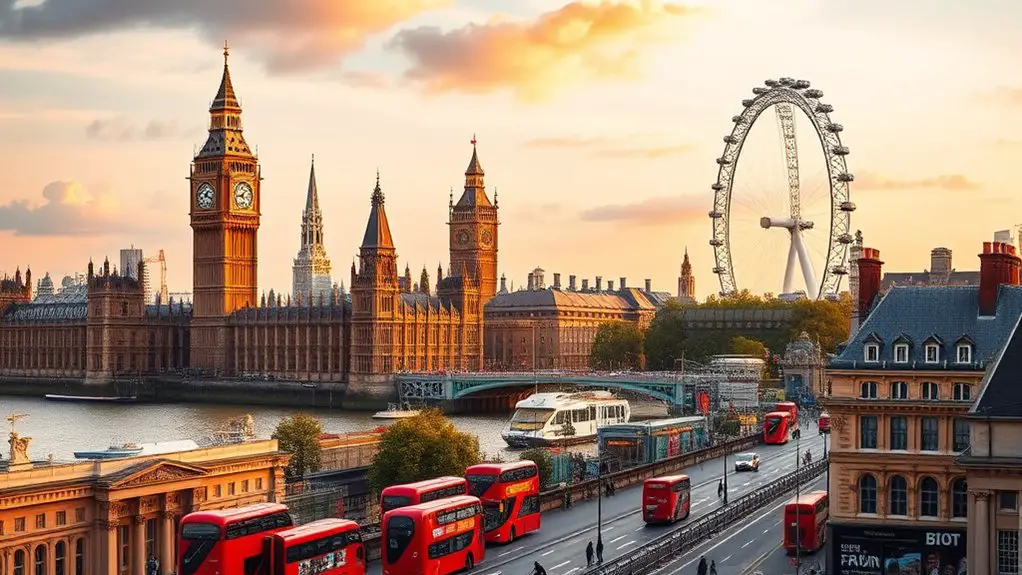
Spending 48 hours in London means making choices. The city has far more museums, royal landmarks, markets, neighborhoods, and historic sites than you can comfortably cover in two days. The most enjoyable approach is to group nearby attractions, reserve your highest-priority paid sights in advance, and treat the rest as optional swaps rather than a checklist you must finish.
Quick Answer
For 48 hours in London, spend Day 1 around Kensington, Westminster, Soho, and the West End, then use Day 2 for Borough Market, Tower Bridge, the Tower of London, St. Paul’s, and Bankside. Pre-book major paid attractions, use contactless or Oyster for transport, and choose only one or two museums.
Key Takeaways
- Build your two days around geographic clusters instead of crossing London repeatedly.
- Choose one major museum in South Kensington rather than trying to tour the V&A, Science Museum, and Natural History Museum properly on the same morning.
- Book high-demand attractions and experiences before your trip, especially Westminster Abbey, Big Ben tours, the Tower of London, the London Eye, Buckingham Palace visits, afternoon tea, and West End shows.
- Use free attractions such as the Royal Parks, National Gallery, V&A, British Museum, and Tate Modern to keep your itinerary flexible.
- Treat Notting Hill, Oxford Street, Churchill War Rooms, afternoon tea, rooftop drinks, and extra museums as swaps, not additional mandatory stops.
At a Glance
| Time Required | Two full days, ideally with two nights in London |
| Difficulty | Moderate; expect substantial walking and time on public transport |
| Tools Needed | Comfortable shoes, smartphone, portable charger, contactless payment card or Oyster card, and pre-booked tickets |
| Cost | Flexible: parks and many museums are free, while royal sites, observation attractions, afternoon tea, and theatre tickets can raise the total significantly |
The best 48-hour London itinerary is built around neighborhoods, not the number of landmarks you can tick off a list.
Disclosure: As an Amazon Associate I earn from qualifying purchases. Some links on this page are affiliate links, at no extra cost to you.
Arrival and Getting Settled
When you arrive in London, leave your luggage at your accommodation before starting serious sightseeing. If your room is not ready, ask whether the hotel can store your bags. Major rail stations and commercial luggage-storage services are another option when hotel storage is unavailable.
Keep your passport or ID, phone, payment card, tickets, and portable charger with you rather than inside stored luggage. Before leaving the hotel, check the route to your first stop and any same-day transport disruptions.
Getting Around London for 48 Hours
For most short-stay visitors, London is easiest to navigate by combining walking with the Tube, buses, and occasional rail services. Transport for London accepts contactless payment and Oyster on most journeys, with pay-as-you-go fare capping available under the applicable rules. Check the current options on the Transport for London fares page before your trip.
Always use the same payment method or device when touching in and out. For example, do not touch in with a physical bank card and touch out with the same card loaded in a phone wallet, because the system may treat them as different payment methods.
Pro Tip: Save your longest walks for sightseeing areas such as the Royal Parks, Westminster, the South Bank, and the City. Use the Tube when moving between clusters rather than walking several miles simply to connect neighborhoods.
What to Book Before You Arrive
London rewards flexibility, but some experiences work much better with advance reservations. Give priority to attractions that use timed entry or regularly develop queues.
- Book first: Westminster Abbey, Tower of London, London Eye, official Big Ben tours, Buckingham Palace visits when available, afternoon tea, and a specific West End show.
- Reserve when recommended: free museum tickets where the venue offers or requires them.
- Keep flexible: Royal Parks, Trafalgar Square, Covent Garden, Soho, Chinatown, Regent Street, Carnaby Street, Leadenhall Market, and most outdoor river walks.
Warning: Do not try to complete every attraction in this guide during one 48-hour trip. Several sections below are intentional alternatives. Pick the places that matter most to you and leave room for queues, meals, transport, and simply enjoying the city.
Day 1: West London, Westminster, and the West End
Day 1 works best as a west-to-east route through Kensington and Westminster before ending around Soho, Covent Garden, the West End, or the South Bank. Notting Hill, Changing the Guard, afternoon tea, and extra museums are best treated as swaps.
Morning Coffee and Breakfast Near Paddington
If you are staying near Paddington, begin with a quick breakfast before walking toward Kensington Gardens. Paddington Station and the surrounding streets have numerous cafés, bakeries, and casual breakfast spots, so there is little reason to cross the city for your first meal.
Cozy coffee shops: Choose a busy, currently operating café close to your hotel or station rather than building your morning around an unverified “hidden gem.” For a more scenic stop later on the route, the Italian Gardens Café offers indoor and outdoor seating beside the water gardens.
Breakfast classics nearby: A full English breakfast is filling but can take time. Travelers on a tight schedule may prefer eggs, toast, pastries, fruit, or another lighter option before a walking-heavy day.
Scenic breakfast option: Rather than looking for a Thames-view café near Paddington, walk toward Kensington Gardens and stop beside the Italian Gardens. Paddington itself is not on the Thames.
Exploring Hyde Park and Kensington Gardens
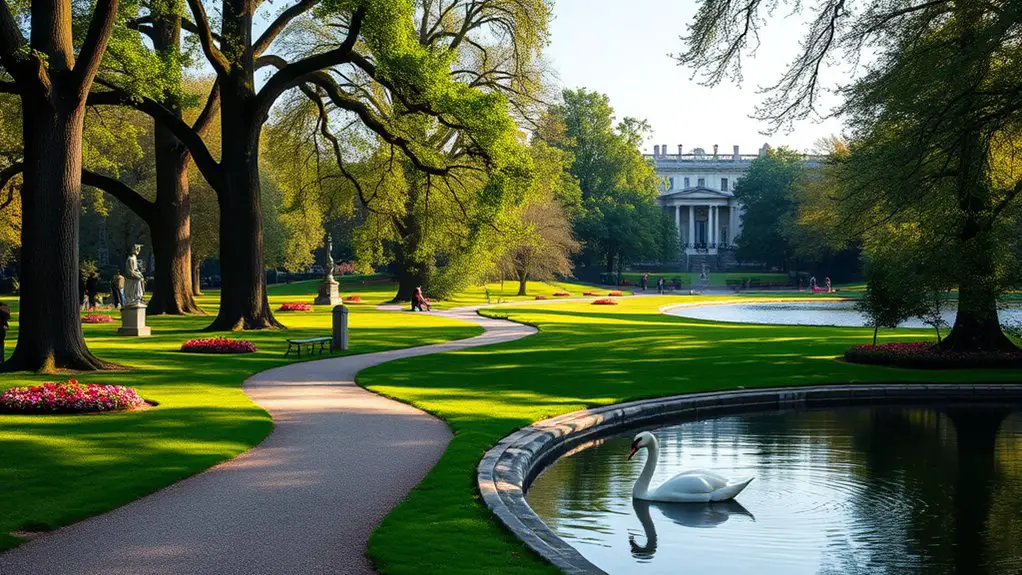
Hyde Park and Kensington Gardens sit side by side but contain different landmarks. Walking through them is an excellent low-cost start to a London weekend because you can adjust the route to match the weather and your energy level.
Hyde Park landmarks: The Serpentine is the park’s central body of water. Weather permitting, visitors can hire a rowing boat or pedalo. The Diana Memorial Fountain is also in Hyde Park, not Kensington Gardens. The Royal Parks describes the memorial as a granite watercourse where water flows from a high point in two directions before meeting in a calm pool. Check the Royal Parks visitor page because maintenance or severe weather can temporarily close the memorial.
At Hyde Park Corner, the Achilles statue stands near Queen Elizabeth Gate. It commemorates the Duke of Wellington, but it does not sit on top of Wellington Arch.
Kensington Gardens highlights: Cross into Kensington Gardens for the Italian Gardens, Round Pond, Peter Pan statue, flower walks, Albert Memorial, and views toward Kensington Palace. The Italian Gardens date from the 1860s and feature four ornamental basins, fountains, urns, and formal stonework.
Outdoor activities: Walking, running, cycling on permitted routes, boating, and picnicking are straightforward choices. Public swimming is restricted to the designated Serpentine Lido when it is open; do not assume you can swim or paddleboard anywhere on the lake.
Visiting Kensington Palace and Gardens
Kensington Palace is a worthwhile paid stop for travelers especially interested in royal history. The palace contains historic royal apartments and changing exhibitions, while its formal palace gardens can also be enjoyed as part of the wider park visit.
The key question is time. A palace visit can consume a substantial part of the morning, so choose between a full interior visit and a quick exterior/garden stop if you also plan to see a major South Kensington museum.
Check current opening hours and tickets through Historic Royal Palaces. The palace gardens have separate access arrangements from the ticketed interiors.
Optional Swap: Strolling Through Notting Hill
Notting Hill works best as an alternative to a long Kensington Palace or museum visit rather than an extra stop squeezed between them. Its appeal comes from residential streets, colorful façades, independent shops, cafés, and Portobello Road.
Walk slowly and remember that many of the photogenic houses are private homes. Keep doorways clear and avoid treating residential steps and gardens as photo sets.
Lunch in Portobello Road Market
If you choose the Notting Hill route, Portobello Road can provide an easy lunch stop. Market activity varies by day, and the famous antiques scene is strongest on its principal trading days, so check the current schedule before making it the centerpiece of your morning.
Food options can include baked goods, international street food, produce, cafés, and restaurants. Choose a busy stall with food being prepared and turned over regularly rather than relying on a specific vendor that may not trade every day.
Walking Along the Royal Albert Hall and Museums Area
From the southern side of Kensington Gardens, continue toward the Albert Memorial and Royal Albert Hall before reaching Exhibition Road and the South Kensington museums.
This compact area contains three of London’s biggest free general-admission museums: the Victoria and Albert Museum, Science Museum, and Natural History Museum. In a 48-hour itinerary, the smart approach is to choose one for a proper visit or sample a small number of galleries at two.
Discovering the Victoria and Albert Museum
The V&A South Kensington is especially strong for art, design, fashion, furniture, decorative arts, sculpture, textiles, jewelry, ceramics, photography, and architecture. General admission is free, although some exhibitions require paid tickets.
Museum highlights and exhibits: Rather than trying to cover the whole museum, select two or three collection areas that genuinely interest you.
Architectural highlights: The historic museum building is part of the experience, with grand galleries, decorative interiors, courtyards, and a mix of Victorian and later design.
Art and design collections: Travelers interested in fashion, textiles, jewelry, ceramics, furniture, and decorative arts will usually get more value from the V&A than from trying to rush all three South Kensington museums.
Admiring the Science Museum and Natural History Museum
The Science Museum offers free general admission but currently requires a free pre-booked general-admission ticket. Its permanent galleries cover science, engineering, medicine, aviation, space, mathematics, communications, and technology.
The Natural History Museum also offers free general admission. Advance booking is recommended to guarantee entry, especially at busy times. Its dinosaurs, fossils, minerals, wildlife, and dramatic Hintze Hall make it a strong choice for families and natural-history fans.
Note: Three major museums in one morning sounds efficient because they are neighbors, but it produces a poor visit. Give one museum roughly two hours or make short, targeted visits to two.
Optional Swap: Afternoon Tea at a Classic London Tearoom
Traditional afternoon tea can be one of the most memorable London experiences, but it is also a major time commitment. Expect finger sandwiches, scones with clotted cream and jam, pastries, and tea served over a leisurely sitting.
Well-known choices include The Ritz and Fortnum & Mason, but reservations, dress codes, prices, and service times vary. Book directly with the venue and allow enough time to enjoy the experience rather than squeezing it between timed attractions.
For a two-day trip, afternoon tea should usually replace a museum, shopping session, or another paid attraction.
Visiting Westminster Abbey
Move east to Westminster for the afternoon. Westminster Abbey deserves more than a quick photograph if British royal, religious, or literary history interests you. Visitors can see the Coronation Church, memorials, tombs, Poets’ Corner, the Shrine of St Edward the Confessor, and other historic spaces when open to sightseeing visitors.
Opening hours vary because the Abbey remains an active church. Check the official Westminster Abbey entry calendar and book an appropriate slot before building the rest of the afternoon around it.
Seeing Big Ben and the Houses of Parliament
Outside the Abbey, walk toward Parliament Square for views of the Palace of Westminster and Elizabeth Tower. “Big Ben” technically refers to the Great Bell, although the nickname is commonly used for the tower and clock.
You can admire the exterior for free. It is also possible to enter Elizabeth Tower on an official Big Ben tour. These must be booked in advance and involve 334 steps, high noise levels from the clock mechanism and bells, and a visit lasting up to about 90 minutes. Standard tours are therefore not suitable for every traveler.
Crossing the Thames via Westminster Bridge
Westminster Bridge provides one of the easiest free views of the Houses of Parliament, Elizabeth Tower, the Thames, and the London Eye. The present bridge opened in 1862 and is made of cast iron with stone piers and Gothic detailing designed to complement the Palace of Westminster.
Iconic views and landmarks: Look back toward Parliament from the south side of the river for a classic skyline composition.
Architectural highlights: The bridge has seven metal spans with Gothic ornament and distinctive green-painted ironwork.
Photo opportunities: Early morning and the period around sunset can offer softer light, but pedestrian traffic is often heavy. Keep out of cycle paths and allow other people to pass while taking photographs.
Exploring St. James’s Park and Buckingham Palace
If you stay on the north side of the Thames instead, walk through St. James’s Park toward Buckingham Palace. The lake, flower beds, bridges, and views toward the palace make the park a pleasant break from Westminster’s traffic.
Buckingham Palace is a working royal residence. Exterior viewing is free, while the State Rooms open during selected periods. For 2026, the main summer opening runs from July 9 through September 27. Check current dates and tickets directly with the Royal Collection Trust.
Optional Morning Swap: Watching the Changing of the Guard
Changing the Guard is not a ceremony you can simply assume will happen every morning. The official Household Division publishes a calendar that can change for operational, ceremonial, or weather-related reasons.
As of July 2026, the published pattern lists the King’s Guard change at Buckingham Palace at 11 a.m. on Monday, Wednesday, and Friday. Check the official Household Division schedule immediately before your visit.
If the ceremony is a priority, restructure Day 1 around it and arrive in the area well before 11 a.m. You will sacrifice some morning time in Kensington, but the itinerary will remain realistic.
Visiting Trafalgar Square and the National Gallery
From Buckingham Palace, walk along The Mall or through central streets toward Trafalgar Square. Nelson’s Column, the fountains, public art, and surrounding architecture make the square worth a short stop even when you do not enter a museum.
The National Gallery has free general admission to its permanent collection. Advance free booking is recommended. A short visit works well in a 48-hour itinerary: choose a few rooms or specific painters rather than attempting the entire collection.
Shopping at Regent Street and Carnaby Street
If shopping matters more than art, make Regent Street and Carnaby your alternative to a longer National Gallery visit. Regent Street is known for major flagships and grand architecture, while Carnaby and the surrounding Soho streets mix fashion, beauty, restaurants, and smaller brands.
Liberty sits just off Regent Street near the Carnaby area. Hamleys is another famous Regent Street stop for families. Apple also operates a prominent Regent Street store.
Exploring Covent Garden and Its Markets
Covent Garden works well in late afternoon because shopping, dining, architecture, and street entertainment are concentrated in a small area.
Covent Garden market stalls: Browse the Apple Market and surrounding market spaces for crafts, artwork, gifts, antiques on applicable trading days, and specialty shops.
Hidden cafés: Side streets around the piazza, Seven Dials, and nearby Neal’s Yard provide quieter alternatives to the busiest tables directly on the main square.
Street performers: Covent Garden has a long tradition of licensed street entertainment. Performances vary by day and time, so treat them as a spontaneous bonus rather than a scheduled attraction.
Enjoying Street Performers and Cafés in Covent Garden
If performers are active, pause for one act rather than trying to watch every show. Musicians, magicians, living statues, circus-style acts, and other entertainers rotate through the area.
When you stop at a café, use the break to decide how much energy you have left. A West End performance, South Bank walk, London Eye ride, and rooftop drinks are all possible evening activities, but attempting all four creates another rushed checklist.
Dinner in Soho’s Vibrant Dining Scene
Soho is one of the easiest areas in which to finish an active sightseeing day because you can choose from British, Italian, Chinese, Japanese, Korean, Thai, Middle Eastern, Indian, vegetarian, vegan, and many other cuisines within a compact district.
Popular restaurants often book up, especially on Friday and Saturday nights. Reserve somewhere specific when food is a priority, or stay flexible and choose a busy restaurant with an available table.
Exploring the West End and Theatre District
The West End covers numerous theatres around Soho, Covent Garden, Leicester Square, Shaftesbury Avenue, the Strand, and nearby streets. Current venues include the Palace Theatre, Lyceum Theatre, Apollo Victoria Theatre, Sondheim Theatre, Prince Edward Theatre, Victoria Palace Theatre, and many more.
The former Queen’s Theatre on Shaftesbury Avenue reopened as the Sondheim Theatre in 2019. Check the official theatre or production website rather than relying on old venue names or outdated show listings.
Catching a West End Show
A West End show is a strong choice for your first evening because it lets you sit down after a long walking day. Book a specific production in advance when it matters to you, or check reputable same-day ticket channels when you are flexible about the show.
Arrive with enough time for venue security and finding your seat. Dress requirements are generally relaxed at most commercial West End theatres, so comfortable smart-casual clothing is usually more practical than overdressing.
Evening Stroll Through Chinatown
London’s Chinatown is centered on Gerrard Street and surrounding streets close to Leicester Square and Soho. In the evening, illuminated signs, restaurants, bakeries, dessert shops, supermarkets, and crowds create a lively atmosphere.
Evening atmosphere: Do not expect a permanent Asian-style night market with rows of craft stalls. The district’s evening appeal is primarily its restaurants, shops, decorations, and street life.
Chinese cuisine: You can find Cantonese cooking alongside dishes and businesses representing other parts of China and East Asia. Dumplings, roast meats, noodles, hot pot, bakery items, and desserts are common choices, but menus and opening times vary by business.
Alternative Evening: Walk Along the South Bank
If you skip the theatre, cross to the South Bank for river views. The busiest stretch around the London Eye, Southbank Centre, National Theatre, and Bankside combines architecture, cultural venues, restaurants, and occasional street entertainment.
Riverside views and landmarks: From the central South Bank you can see Parliament, bridges, St. Paul’s Cathedral from certain stretches, and the changing skyline of the City.
Street performers and atmosphere: Performers are common in busy pedestrian areas, but acts vary and should not be treated as a guaranteed scheduled show.
Taking in the Views From the London Eye
The London Eye is a paid observation wheel on the South Bank opposite Westminster. A complete rotation lasts about 30 minutes, although your total visit will be longer once queuing and security are included.
Timed tickets are recommended, particularly during peak periods. The capsules provide elevated views toward Parliament and across the central London skyline.
Visiting the Tate Modern Art Gallery
Tate Modern is farther east along Bankside, so it fits better on Day 2 than immediately after a Westminster-focused evening unless you deliberately choose an art-heavy route.
The museum occupies the former Bankside Power Station and focuses on international modern and contemporary art. Entry to the permanent collection is free, while some exhibitions require paid tickets. Check current visitor information at Tate Modern.
Exploring Shakespeare’s Globe Theatre
Shakespeare’s Globe stands on Bankside near Tate Modern. The present Globe is a reconstruction inspired by the open-air theatre associated with Shakespeare’s company, built using extensive historical research and traditional design principles.
The Globe Theatre Guided Tour is the dependable way to explore the auditorium outside a performance. Access to specific areas can depend on rehearsals and theatre operations, so do not assume every tour includes standing on the stage.
Optional Nightcap at a Rooftop Bar With City Views
A rooftop drink can be a relaxed finale if you skipped the theatre or London Eye. Book a real venue directly and verify its dress code, minimum spend, age policy, and closing time before going.
Sky Garden is another option for elevated views, although its free public-access system uses timed entry and should not be treated as an unrestricted late-night rooftop.
Day 2: The Tower, City, and Bankside
Day 2 concentrates on London Bridge, the Tower of London, the historic City, St. Paul’s, and Bankside. This route minimizes backtracking and gives you a clear choice between history-heavy attractions and free riverfront sightseeing.
Morning Breakfast in Borough Market
Borough Market is an excellent food stop, but it is not an early-breakfast market every day. Its regular schedule currently lists Monday as closed, Saturday opening at 9 a.m., and most other trading days opening at 10 a.m.
If your second day is Monday or you want breakfast earlier than the market opens, eat near your accommodation or London Bridge Station and return to Borough Market later for lunch.
When open, the market offers produce, baked goods, cheese, meat, seafood, prepared foods, coffee, and international dishes. Not every trader is present every day.
Walking Across Tower Bridge
From London Bridge or Borough Market, travel east toward Tower Bridge. Walking across the bridge at road level is free and provides views of the Tower of London, Thames, modern City skyline, and former City Hall building.
Architectural marvels and views: Tower Bridge opened in 1894 and combines a bascule bridge with suspension sections and two prominent towers. A paid Tower Bridge visit adds the elevated walkways, exhibitions, and glass-floor sections.
Historical significance: Focus on the bridge’s verified Victorian engineering, its role in maintaining river navigation while connecting the growing districts on either side of the Thames, and its continuing operation. Avoid unsupported stories about its bascules being raised to block enemy attacks during World War II.
Exploring the Tower of London and Crown Jewels
The Tower of London is one of the paid attractions most worth reserving in advance on a first trip. Admission includes the Crown Jewels, Yeoman Warder tours, ravens, the White Tower, battlements, and several other historic areas.
Historic Royal Palaces recommends allowing at least two hours, and many visitors benefit from closer to three. Arriving early can reduce the time spent in the busiest Crown Jewels queues.
The Tower’s history includes its use as a fortress, palace, prison, armory, treasury, and site associated with royal executions and political imprisonment. A Yeoman Warder tour is a useful introduction before exploring independently.
Strolling Through the City’s Historic Financial District
Leave the Tower and continue into the City of London. The Square Mile mixes medieval street patterns, churches, historic institutions, Victorian commercial architecture, and modern office towers.
Look for the Royal Exchange, Bank of England exterior, Mansion House, modern towers, and smaller lanes around Bank and Cornhill. This part of London feels very different on a weekday compared with a quiet weekend.
Exploring Leadenhall Market and the City
Leadenhall Market is a useful short stop between the Tower and St. Paul’s. Its ornate covered architecture, shops, pubs, and restaurants occupy a site with centuries of commercial history.
Historical gems and architecture: Look up at the richly decorated roof, painted details, and narrow passages instead of rushing straight through.
Shopping and dining: Business hours vary, and some City venues are quieter or closed at weekends, so verify a specific shop or restaurant before making a special trip.
Visiting St. Paul’s Cathedral
Continue west toward St. Paul’s Cathedral. A sightseeing ticket provides access to the Cathedral Floor and Crypt and, when open, the Dome Galleries.
The St. Paul’s dome climb is physically demanding. The Whispering Gallery is reached after 257 steps, the Stone Gallery after 376, and the Golden Gallery after 528 total steps. Travelers with mobility concerns, medical conditions, claustrophobia, or discomfort with heights should assess whether the climb is appropriate.
The crypt contains memorials and tombs associated with important British figures, including Admiral Lord Nelson and the Duke of Wellington.
Discovering the Millennium Bridge and Tate Modern
From St. Paul’s, walk downhill to the pedestrian Millennium Bridge. Crossing south gives you a strong view back toward the cathedral dome and leads directly toward Tate Modern.
This is one of the most efficient London sightseeing connections because several major sights can be enjoyed without additional transport. Spend 45–90 minutes at Tate Modern if contemporary art interests you, or simply explore the riverside architecture and continue toward Shakespeare’s Globe.
Walking Along the South Bank to Millennium Bridge
You can also reverse this route. Starting near Borough Market, walk west along Bankside past Southwark Cathedral, Shakespeare’s Globe, Tate Modern, and then cross Millennium Bridge toward St. Paul’s.
The path is largely level, though busy sections, cobbles, construction diversions, and bridge approaches can affect accessibility. This reverse route works particularly well if the Tower of London is not part of your day.
Visiting Tate Modern on Day 2
Day 2 is the natural place for the Tate Modern visit mentioned earlier. Prioritize the permanent collection areas that interest you rather than attempting every floor.
Because general collection admission is free, Tate is also a useful weather-proof stop when rain interrupts a South Bank walk.
Exploring Shakespeare’s Globe on Day 2
If you skipped the Globe on your first evening, Day 2 offers a more logical opportunity. A guided tour typically requires around an hour, while attending a full performance will reshape the remainder of your schedule.
Travelers who mainly want to see the building can admire its exterior from Bankside and continue walking without purchasing a tour.
Lunch by the River Thames
Lunch along Bankside can be as simple or elaborate as you like. Riverside pubs, cafés, restaurants, and Borough Market are all within walking distance of this route.
Fish and chips, pies, sandwiches, seafood, and modern international cooking are widely available, but there is no need to force a “traditional” dish if another option looks better. A quick lunch keeps more time available for the Tower or St. Paul’s.
Exploring the Shard and Borough Market
The Shard rises above London Bridge and is easy to see from the surrounding streets. Its observation attraction, The View from The Shard, is a separate paid experience, so it usually makes sense to choose between it, the London Eye, and Sky Garden rather than paying for several skyline viewpoints in one short trip.
Borough Market sits nearby, making this a convenient combination for food and architecture. Remember that the market is closed on regular Mondays.
Visiting the London Museum
This section requires an important 2026 update. The former Museum of London site at London Wall is no longer operating as the old visitor attraction.
The new London Museum at Smithfield is scheduled to open its permanent galleries on November 28, 2026. Travelers visiting before that date should not plan a Smithfield museum visit.
Before November 28, 2026, the London Museum Docklands remains the institution’s main open public museum. It is in Canary Wharf, however, so adding it to a 48-hour central-London route requires extra travel and works best as a deliberate substitute for another major attraction.
Note: If your London trip is on or after November 28, 2026, check the new Smithfield museum’s current opening information before adding it to Day 2.
Relaxing in a Classic British Pub
A traditional pub is an easy way to slow down after several hours of sightseeing. Historic City pubs and Bankside pubs can provide real ale, cider, alcohol-free drinks, and familiar dishes such as fish and chips, pies, sausage and mash, or Sunday roasts depending on the venue and day.
Choose a pub based on atmosphere and current reviews rather than assuming every old-looking building provides the same experience. Table service, bar ordering, kitchen hours, and reservations vary.
Optional Swap: Afternoon Tea at a Historic Hotel
If you skipped afternoon tea on Day 1, you can use part of Day 2 for the experience instead. Famous hotel teas at venues such as The Ritz or Claridge’s usually require advance reservations and can take around two hours once seating and service are included.
This is a substitute for another major attraction, not a quick snack between the Tower of London and St. Paul’s.
Optional Swap: Discovering the Churchill War Rooms
The Churchill War Rooms are in Westminster rather than the City, so they are best used as a substitute for part of Day 1 or for another Day 2 attraction if wartime history is a high priority.
The Imperial War Museums site preserves the underground headquarters used by Britain’s wartime government and includes the Churchill Museum.
Secret bunker history: Visitors can see preserved rooms connected with wartime planning, communications, administration, and daily life underground.
Wartime operations: The Cabinet War Rooms supported decision-making and coordination during the Second World War. Exhibits, maps, equipment, and reconstructed or preserved spaces help explain how the complex functioned.
Churchill’s personal space: The rooms associated with Churchill help humanize the political leadership, but avoid attaching invented personal stories or objects to him unless the museum itself identifies them.
Optional Swap: Shopping in Oxford Street
Oxford Street is useful for travelers who prioritize shopping over historic attractions. Selfridges anchors the western portion, while international chains and department stores line the surrounding district.
Because Oxford Street is away from the Day 2 Tower–City–Bankside route, combine it with Soho, Regent Street, or the British Museum rather than traveling there between City attractions.
Optional Swap: Visiting the British Museum
The British Museum is one of London’s strongest free indoor attractions. The permanent collection spans human history and culture across multiple continents, including Egyptian antiquities, the Rosetta Stone, the Sutton Hoo collection, Assyrian material, Greek sculpture, and many other collections.
General admission is free and advance booking is recommended. Security and bag checks can add time, and large wheeled luggage is not permitted.
For a short visit, choose two or three galleries rather than attempting the whole museum. The institution increasingly refers to the sculptures from the Parthenon by the collection name rather than relying only on the older term “Elgin Marbles.”
Relaxing in a Cozy Café in Bloomsbury
If you visit the British Museum, Bloomsbury is a sensible place for a coffee break. The neighborhood has cafés, bookshops, garden squares, university buildings, and quieter streets within a short walk of the museum.
Choose a café that is convenient when you arrive rather than crossing the neighborhood for a single heavily promoted venue. This keeps a 48-hour schedule flexible.
Returning to the West End and Theatre District
Travelers who skipped the West End on Day 1 can move toward Soho and Theatreland after the British Museum. Leicester Square, Covent Garden, Shaftesbury Avenue, and the Strand contain many of the best-known theatres.
Check each theatre’s current show directly. Productions change, and venue names from older travel guides may be obsolete.
Catching a West End Show on Your Second Evening
If your departure is the following morning rather than late on Day 2, a theatre performance is a comfortable final evening. Keep the hours before the show relatively light so you are not rushing from a distant attraction.
When booking, compare the actual seat location and view rather than simply buying the cheapest category. Some historic theatres have pillars, overhangs, steep upper levels, or restricted-view seats.
Evening Stroll Through Chinatown on Day 2
Chinatown is a natural pre- or post-theatre food stop because it lies beside Soho and Leicester Square. Walk through Gerrard Street and the surrounding blocks, browse bakeries and supermarkets, or choose a restaurant for dinner.
The lively nighttime atmosphere comes from restaurants, shops, lighting, and crowds rather than a permanent night market.
Enjoying Evening Views From Sky Garden or a Rooftop Lounge
Sky Garden offers free public-access tickets during designated hours, subject to availability and closures. Tickets are normally released in advance and have a specified entry time.
Current public-access hours vary between weekdays and weekends, and free walk-in availability is not guaranteed. Book ahead if the view matters to you.
A commercial rooftop bar offers more flexibility for drinks but may have reservations, minimum spends, dress codes, or age restrictions. Verify these directly with the venue.
Optional Early-Morning Walk Along the Thames
If you wake early on either day, a short Thames walk can provide quieter views before the busiest visitor areas fill up.
Sunrise views and landmarks: Westminster, the South Bank, London Bridge, and Tower Bridge can all work well, but sunrise direction and light vary with the season.
Riverside serenity: Early morning is particularly pleasant for photography and walking because commuter and tourist crowds are lighter. Do not try to walk from Tower Bridge all the way to Westminster before a tightly scheduled morning attraction unless you have allowed enough time.
How to Choose Between London’s Big Attractions
Most travelers enjoy London more when they make deliberate tradeoffs. Use these pairings to keep the trip realistic.
| If you prefer… | Prioritize… |
|---|---|
| Royal history | Westminster Abbey, Tower of London, Kensington Palace or Buckingham Palace |
| Art and design | V&A, National Gallery, Tate Modern |
| Science and families | Natural History Museum or Science Museum |
| Views | Choose one of London Eye, The View from The Shard, Sky Garden, or a rooftop venue |
| Food and neighborhoods | Borough Market, Soho, Chinatown, Covent Garden, or Notting Hill |
| Wartime history | Churchill War Rooms |
Rainy-Day Options
Rain does not have to ruin a London weekend. Replace long park walks with the V&A, Natural History Museum, Science Museum, National Gallery, British Museum, Churchill War Rooms, Tower of London interiors, or an afternoon tea.
Carry a compact umbrella or lightweight waterproof layer rather than assuming you will spend the whole day indoors. Weather can change quickly, and many London routes involve outdoor walking between stations and attractions.
Practical Safety Tips for Two Days in London
Central London is heavily visited, so common-sense urban precautions matter more than alarm. Keep phones and wallets secure in crowded stations, shopping streets, nightlife areas, and around major tourist attractions. Be especially attentive when standing close to the curb with your phone out.
Look in the correct direction before crossing roads and use marked crossings where possible. Keep bags closed on public transport, avoid displaying large amounts of cash, and use licensed taxis, booked private-hire vehicles, or established public transport rather than accepting unsolicited rides.
For timed attractions, buy tickets through the official venue or a reputable authorized seller. Be cautious with unofficial street ticket offers.
Departure From London
On departure day, build a buffer around your train or flight rather than using every remaining minute for sightseeing. London traffic, Underground disruption, rail engineering work, airport security, and long terminal walks can all affect travel time.
Pack the night before and confirm your route to the station or airport. If your accommodation can hold luggage after checkout, you may still have time for a nearby breakfast, park walk, or museum before leaving.
For flights, follow your airline and airport’s recommended arrival time rather than relying on a generic rule. For rail departures, check the operator’s current service information before leaving your hotel.
Sources
- Transport for London — Fares — official guidance on Oyster, contactless payment, and London public-transport fares.
- The Royal Parks — Hyde Park — official information on the Serpentine, Diana Memorial Fountain, park attractions, opening information, and recreation.
- Household Division — Changing the Guard — official ceremony information and scheduling.
- UK Parliament — Big Ben Tours — official Elizabeth Tower visitor requirements and tour information.
- Historic Royal Palaces — Tower of London — official visitor information for the Tower and Crown Jewels.
- London Museum — Smithfield — official information on the new museum and its November 28, 2026 opening.
Frequently Asked Questions
What are the best local transportation options for a 48-hour London stay?
Walking plus the Tube and buses works well for most visitors. Contactless pay-as-you-go and Oyster are widely accepted across the Transport for London network. Use the same card or device for every touch-in and touch-out, and check TfL for current fares and service changes.
How can I find affordable accommodations in central London?
Compare hotels and hostels slightly outside the most expensive tourist streets but close to a Tube or rail station. Paddington, Earl’s Court, King’s Cross, Southwark, and other well-connected areas can be practical depending on your dates. Compare the full stay price, cancellation terms, and transport convenience rather than room price alone.
Are there lesser-known attractions worth visiting?
Yes, but on a first 48-hour trip they are best used as substitutes for major sights. Smaller museums, historic churches, garden squares, quieter City lanes, local markets, and residential neighborhoods can provide a calmer experience when you have already seen London’s headline landmarks.
What safety tips should I keep in mind while exploring London?
Keep phones, wallets, and bags secure in crowded places, pay attention when using a phone near roads, use marked crossings, and rely on official transport or licensed/booked vehicles. Purchase attraction tickets through official or authorized channels and remain aware of your surroundings late at night.
When is the best time of year to visit London?
Late spring and early autumn often offer a useful balance of daylight, moderate temperatures, and manageable crowds, but London is a year-round destination. Summer brings long days and major events but heavier demand, while winter offers seasonal celebrations and shorter sightseeing days.
Can you really see London in 48 hours?
You can see a strong selection of central London in 48 hours, but not everything. Two days are enough for several major landmarks, one or two museums, a market, a neighborhood, and an evening experience when you group nearby sights and avoid excessive backtracking.
Which London attractions should I book in advance?
Prioritize advance booking for official Big Ben tours, Westminster Abbey, the Tower of London, the London Eye, Buckingham Palace when its State Rooms are open, popular afternoon teas, and specific West End productions. Free museums may also recommend or require timed reservations.
Conclusion
Forty-eight hours is enough to experience several sides of London when you resist the urge to see everything. Spend your first day around Kensington, Westminster, Soho, and the West End, then devote your second to Tower Bridge, the Tower of London, the City, St. Paul’s, and Bankside. Use museums, afternoon tea, shopping, Notting Hill, Churchill War Rooms, and skyline attractions as deliberate swaps based on your interests. With a few advance reservations and a geographically sensible route, a short London visit can feel full without becoming exhausting.
