
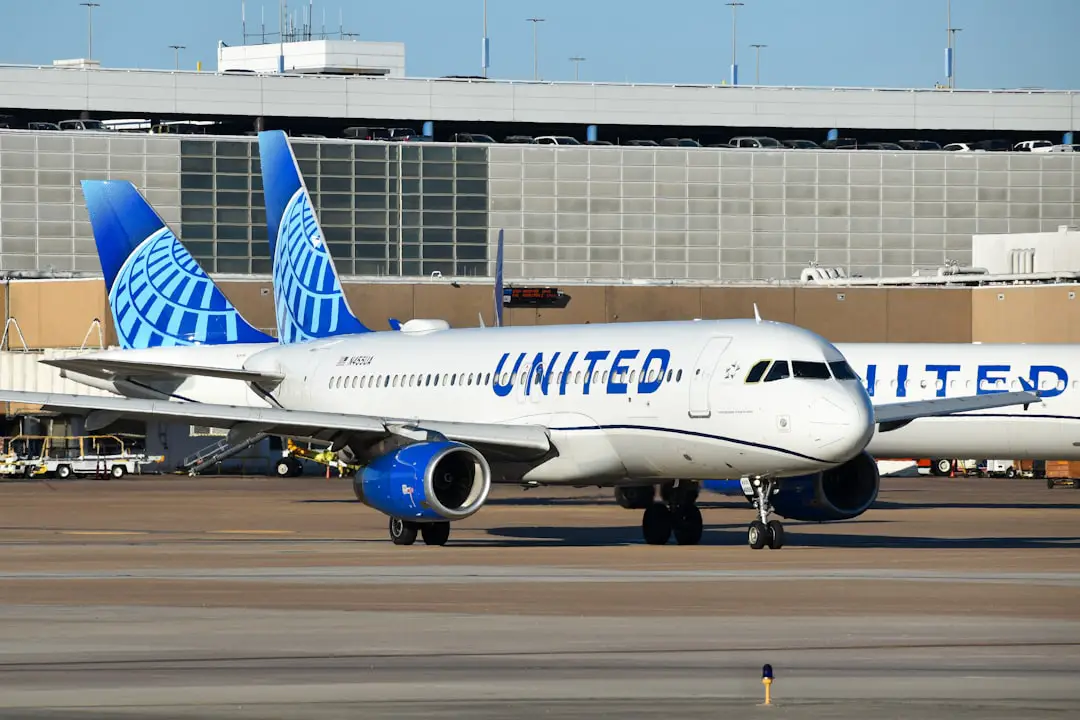
Last Updated on September 10, 2026 by Daniel Globe
United Airlines is one of the world’s largest passenger airlines, and travelers understandably want to know how its safety record compares with modern aviation standards. United has experienced serious accidents and incidents during its long history, but the most useful way to judge its safety today is to look at current regulatory oversight, pilot qualifications, maintenance controls, independent audits, accident investigations, and recent safety performance rather than relying on isolated headlines.
Quick Answer
Yes. United Airlines is generally considered a safe major airline. It operates under FAA Part 121 requirements, uses an FAA-approved Safety Management System, is IOSA registered, and currently holds a 7/7 safety rating from AirlineRatings. Like other large airlines, however, United continues to experience incidents that regulators and investigators review.
Key Takeaways
- United is a U.S. Part 121 airline subject to ongoing FAA oversight of its flight operations, pilot training, and maintenance programs.
- AirlineRatings currently gives United a 7/7 safety rating and lists the airline as IOSA registered.
- United’s last fatal mainline operational accident excluding terrorism was Flight 585 in 1991; United Flights 175 and 93 were destroyed during the September 11, 2001 terrorist attacks.
- A series of incidents triggered enhanced FAA scrutiny in 2024, and safety oversight has remained an important subject, including a 2026 DOT Inspector General report concerning FAA maintenance oversight.
- No airline can eliminate every incident. Accident severity, investigation findings, regulatory compliance, training, and long-term performance are more useful than raw incident counts alone.
IATA reported 51 accidents among 38.7 million commercial flights in 2025, an all-accident rate of 1.32 per million flights.
Disclosure: As an Amazon Associate I earn from qualifying purchases. Some links on this page are affiliate links, at no extra cost to you.
Safety Measures and Protocols
United Airlines operates under the U.S. Federal Aviation Administration’s rules for large commercial air carriers. The FAA’s United Airlines Certificate Management Office has oversight responsibility for United’s air-carrier certificate and repair station, including flight operations, aircrew training, and worldwide maintenance activities.
Like other Part 121 airlines, United must maintain a formal Safety Management System, or SMS. The FAA describes an SMS as an organization-wide system for identifying hazards, managing safety risk, checking whether risk controls are effective, and promoting a strong safety culture.
United says its own FAA-approved SMS is organized around four components: safety policy, safety risk management, safety assurance, and safety promotion. The airline says it uses operational data and trend analysis to identify hazards and track corrective actions.
Note: A safety management system cannot guarantee that incidents will never happen. Its purpose is to identify hazards, control risk, learn from events, and continually improve safety performance.
Products Worth Considering


Pilot Training and Experience
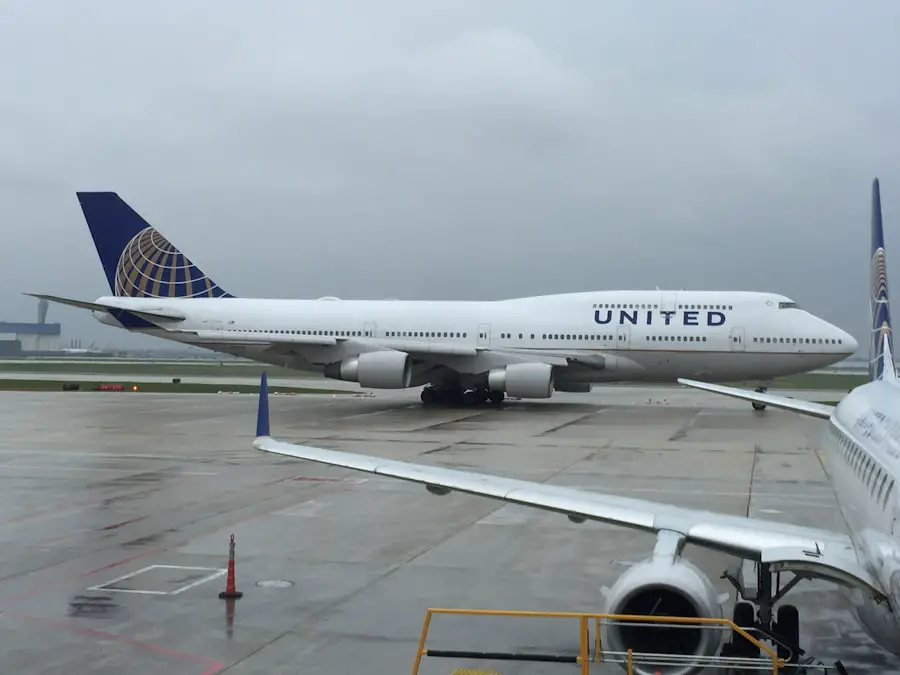
Pilot qualification is an important part of airline safety, but United pilots do not operate under airline-created standards alone. FAA certification and qualification rules apply to pilots serving at U.S. Part 121 airlines.
The FAA states that virtually all new airline-pilot applicants need at least 1,500 hours of flight experience for an unrestricted Airline Transport Pilot certificate. Certain military pilots and graduates of qualifying aviation-degree programs may be eligible for a restricted ATP certificate with lower hour thresholds under specified rules.
Part 121 training programs also include initial, transition, qualification, checking, and recurrent training. Recurrent training is designed to keep flight crews proficient in their aircraft type and current on company procedures, emergency responsibilities, and changes in the operating environment.
Modern airline training also includes simulator-based preparation for situations that crews may rarely encounter during normal flights. FAA requirements have been strengthened over time to address subjects such as stall prevention, upset recovery, adverse weather, and other high-risk conditions.
Pro Tip: When comparing airline safety, give more weight to regulator-approved training systems, audit status, investigation findings, and long-term accident performance than to claims that one airline simply has “more experienced” pilots.
Aircraft Maintenance and Inspections
Aircraft maintenance is another major part of United’s safety system. FAA inspectors assigned to United oversee its maintenance program and repair-station activities, while the airline is responsible for performing required inspections, preventive maintenance, repairs, airworthiness work, and continuing-airworthiness procedures under applicable regulations and approved programs.
| Safety area | What can be verified | Why it matters |
| FAA oversight | The FAA maintains a dedicated United Airlines Certificate Management Office. | United’s operations and maintenance are subject to continuing federal surveillance. |
| Safety Management System | United describes its SMS as FAA approved and aligned with FAA and ICAO requirements. | SMS provides a structured process for identifying hazards and controlling safety risk. |
| Maintenance supervision | FAA offices in Houston and San Francisco have primary responsibility for oversight of United’s worldwide maintenance program. | Maintenance compliance is independently overseen rather than left solely to the airline. |
Maintenance oversight also deserves continuing scrutiny. In February 2026, the U.S. Department of Transportation Office of Inspector General published an audit titled FAA’s Oversight of United Airlines’ Maintenance Practices Is Hindered by Inadequate Inspection Resources, Ineffective Workforce Planning, and Impediments to Accessing Air Carrier Data.
The report identified shortcomings in FAA inspection resources, workforce planning, training, and access to airline data used for oversight. That finding should not be misread as a determination that United’s entire fleet was unsafe. It was primarily an assessment of whether the FAA had enough resources and effective processes to oversee United’s maintenance practices.
Products Worth Considering

Compliant Inspection Records: Meets federal requirements for driver vehicle inspection report books, ensuring your fleet stays audit-ready.


Incident and Accident History
United’s history includes serious accidents, and an accurate safety assessment should not minimize them. On March 3, 1991, United Airlines Flight 585, a Boeing 737-200 approaching Colorado Springs, crashed after an uncontrolled descent. The NTSB records that all 25 people aboard were killed.
The historical record also requires an important distinction concerning September 11, 2001. United Airlines Flight 175 was hijacked and crashed into the World Trade Center, while United Airlines Flight 93 was hijacked and crashed near Shanksville, Pennsylvania. These were terrorist attacks involving criminal intent rather than normal airline operational accidents.
For that reason, the clearest formulation is that United’s last fatal mainline operational accident excluding terrorism was Flight 585 in 1991. Saying simply that United has had no fatal passenger-flight event since the 1990s would omit the victims of Flights 175 and 93 and create a misleading impression.
Products Worth Considering


Recent United Airlines Safety Incidents
United also experienced a cluster of highly publicized incidents in 2024, including an aircraft losing a wheel after departure, a Boeing 737 MAX leaving the paved surface in Houston, and a Boeing 737-800 being found with a missing exterior panel after landing. The events led to enhanced FAA scrutiny of the airline’s operations.
More recently, the NTSB opened an investigation into a May 3, 2026 event involving a United Boeing 767 operating a scheduled passenger flight from Venice to Newark. According to the NTSB investigation page, the aircraft sustained substantial damage. The three flight crew members, eight cabin crew members, and 220 passengers deplaned without injury. The investigation remains ongoing, so conclusions about its cause should wait for investigators’ findings.
Warning: Do not treat every diversion, mechanical warning, rejected takeoff, component problem, or emergency landing as proof that an airline is unsafe. Incident severity and investigation findings vary widely, and precautionary procedures are themselves part of aviation safety.
Safety Ratings and Industry Standards
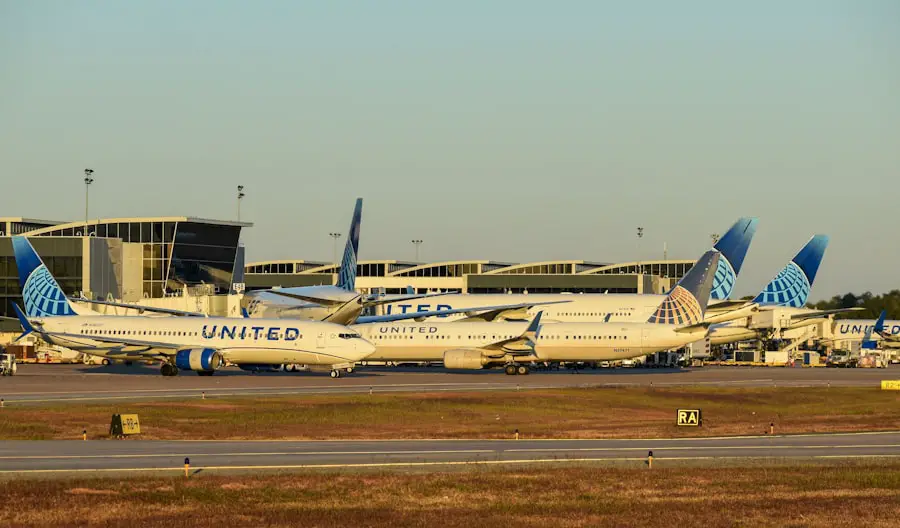
Independent safety ratings offer another data point, although they should not be treated as a guarantee of future performance. AirlineRatings currently gives United Airlines a 7 out of 7 safety rating and identifies it as IOSA registered.
IOSA, the IATA Operational Safety Audit, examines an airline’s operational management and control systems against industry standards. IATA’s 2025 safety report, released in March 2026, found that IOSA-registered airlines collectively recorded a lower accident rate than non-IOSA airlines during 2025.
The IATA 2025 Annual Safety Report recorded 51 accidents among 38.7 million commercial flights, or 1.32 accidents per million flights. It reported an accident rate of 0.98 for IOSA-registered airlines compared with 2.55 per million flights for non-IOSA carriers.
Those figures apply to groups of airlines rather than United individually, but they provide useful context for understanding the extremely low frequency of commercial-airline accidents and the role of standardized operational audits.
How Should United Be Compared With Other Airlines?
There is no single statistic that definitively proves one large airline is safer than another. Raw incident totals can be especially misleading because a carrier operating hundreds of thousands of flights will naturally have more opportunities for reportable events than a much smaller airline.
A more useful comparison considers several factors together:
- Fatal-accident history and the circumstances behind each event
- Current regulator oversight and enforcement actions
- IOSA or comparable audit status
- Pilot certification, qualification, and recurrent-training standards
- Maintenance systems and regulatory surveillance
- Severity and causes of recent incidents
- Whether investigators identify systemic problems or isolated failures
- The airline’s response to identified hazards and corrective actions
Passenger Feedback and Satisfaction
Passenger feedback can tell you a great deal about seat comfort, delays, baggage handling, communication, cabin service, and how professionally a crew appeared to handle a disruption. It is much less useful for measuring an airline’s technical safety performance.
A passenger usually cannot evaluate maintenance records, flight-data trends, pilot qualification files, engineering procedures, or regulatory compliance. For those questions, FAA oversight records, NTSB investigations, audit programs, and official safety reports are stronger evidence than customer reviews.
Passenger perceptions can still matter. Clear crew communication, compliance with safety instructions, orderly boarding and evacuation procedures, and professional handling of turbulence or other disruptions can increase travelers’ confidence. However, customer-satisfaction scores should not be presented as proof that an airline is technically safe or unsafe.
Is United a Safe Airline?
Based on the available evidence, United Airlines can reasonably be considered a safe major airline. It operates within the same extensive FAA regulatory framework that applies to large U.S. passenger carriers, uses an FAA-approved Safety Management System, is subject to continuing federal oversight, and is IOSA registered.
Its history is not incident-free. United has experienced fatal accidents in earlier decades, its two passenger aircraft were involved in the September 11 terrorist attacks, a cluster of incidents attracted heightened FAA attention in 2024, and the airline has continued to have reportable events and investigations since then.
Those facts should be acknowledged rather than hidden. At the same time, an incident does not automatically indicate a systemic safety failure. Investigations examine what happened, why it happened, whether regulations or procedures contributed, and what corrective measures are needed.
Current third-party assessments also remain favorable: AirlineRatings gives United a 7/7 safety rating. Travelers should nevertheless remember that no airline can promise absolute safety, and ratings can change as new events and investigation findings emerge.
If you are considering flying with United Airlines and want to make your trip more comfortable, you may also be interested in this article on 5 Wired Noise Cancelling Earbuds Perfect for Your Next Flight. A good pair of noise-canceling earbuds can reduce cabin noise and make a long flight more relaxing.
Frequently Asked Questions
Is United Airlines a safe airline to fly with?
Yes. United operates under FAA Part 121 safety requirements, maintains an FAA-approved Safety Management System, is IOSA registered, and currently holds a 7/7 safety rating from AirlineRatings. No airline is risk-free, so recent investigations and regulatory findings should still be monitored.
What safety measures does United Airlines have in place?
United uses a formal Safety Management System covering safety policy, risk management, safety assurance, and safety promotion. Its flight operations, aircrew training, and maintenance programs are also subject to FAA regulations and continuing oversight.
Has United Airlines had major safety incidents or accidents in the past?
Yes. United has experienced fatal operational accidents in its history, including Flight 585 in 1991. United Flights 175 and 93 were also destroyed during the September 11, 2001 terrorist attacks. More recent nonfatal incidents and accidents have been examined by the FAA and NTSB.
When was United Airlines’ last fatal crash?
The answer depends on what is being counted. United’s last fatal mainline operational accident excluding terrorism was Flight 585 in 1991. United Flights 175 and 93 were destroyed in the September 11, 2001 terrorist attacks, which involved criminal intent rather than an airline operational accident.
What is United Airlines’ current safety rating?
AirlineRatings currently gives United Airlines a 7/7 safety rating and lists the airline as IOSA registered. A rating is useful supporting evidence, but it does not guarantee future safety and should be considered alongside regulatory and investigation records.
How does United Airlines compare with other major airlines for safety?
United operates under the same core FAA Part 121 regulatory framework as other large U.S. passenger airlines. Comparing airlines accurately requires more than counting incidents; fleet size, flight volume, event severity, regulatory findings, audit status, and long-term accident history should all be considered.
Does an emergency landing mean an airline is unsafe?
No. Crews may divert or make precautionary landings because of warning indications, medical emergencies, mechanical problems, weather, smoke reports, or other concerns. The cause, severity, crew response, maintenance findings, and investigation results matter more than the fact that a diversion occurred.
Where can I check United Airlines’ safety record?
For primary information, check the FAA for regulatory oversight and requirements, the NTSB for U.S. accident and incident investigations, and IATA for industry safety data. Third-party airline-safety ratings can provide additional context but should not replace official records.
Sources
- Federal Aviation Administration — United Airlines Certificate Management Office — FAA oversight responsibilities for United flight operations, training, and maintenance.
- Federal Aviation Administration — Safety Management System — current SMS framework and safety-risk-management requirements.
- National Transportation Safety Board — United Airlines Flight 585 — official history of United’s 1991 fatal operational accident.
- National Transportation Safety Board — May 3, 2026 United investigation — current Newark accident investigation and injury information.
- U.S. Department of Transportation Office of Inspector General — FAA Oversight of United Airlines Maintenance — February 2026 assessment of FAA maintenance-oversight resources and processes.
- International Air Transport Association — 2025 Safety Report — current global accident-rate and IOSA safety-performance data.
