
Last Updated on July 28, 2026 by Daniel Globe
Philippine Airlines (PAL) is the Philippines’ flag carrier and Asia’s first commercial airline, with its first flight taking place on March 15, 1941. Headquartered in Pasay City, PAL operates a full-service domestic and international network while modernizing its long-haul fleet and expanding its global partnerships.
Quick Answer
Philippine Airlines is the Philippines’ full-service flag carrier and Asia’s first commercial airline. Cirium ranked PAL No. 1 in Asia-Pacific for 2025 on-time arrivals at 83.12%. Its newest flagship is the Airbus A350-1000, while additional A350s, Boeing 787-10s, and future oneworld membership are central to its current expansion.
Over more than eight decades, PAL has developed into an important link between the Philippines and destinations across Asia, North America, Australia, and the Middle East. Its long-running “Heart of the Filipino” identity emphasizes Filipino hospitality, while recent investments have focused on newer aircraft, premium cabins, punctuality, network growth, and a broader international partnership strategy.
Key Takeaways
- Philippine Airlines was founded in 1941 and remains the Philippines’ full-service flag carrier.
- PAL’s July 2026 corporate information lists 29 Philippine destinations and 40 international destinations, with Manila and Cebu as its main hubs.
- Cirium ranked PAL first among Asia-Pacific carriers for 2025 on-time performance, with 83.12% of measured flights arriving within its on-time window.
- PAL’s newest flagship is the 382-seat Airbus A350-1000, joining an operation that also uses Airbus narrowbodies and widebodies plus Boeing 777 aircraft.
- In July 2026 PAL announced plans for more A350-1000s and committed to a future Boeing 787-10 fleet as part of its long-haul modernization.
- PAL became a oneworld member-designate in June 2026, but travelers should not yet assume that all alliance benefits are fully integrated.
- Checked baggage varies by fare. In particular, PAL’s domestic Economy Supersaver fare does not include a free checked-baggage allowance.
Disclosure: As an Amazon Associate I earn from qualifying purchases. Some links on this page are affiliate links, at no extra cost to you.
Safety and Security
Airline safety is better judged through regulatory oversight, operating procedures, maintenance, recurrent training, and independent audit systems than through broad marketing claims. Philippine Airlines is listed as an International Air Transport Association member, with the airline designator PR.
The roles of the major aviation organizations are also worth separating. The International Civil Aviation Organization develops international standards and recommended practices that are implemented through national aviation authorities. IATA is an airline trade association whose safety programs include the IATA Operational Safety Audit, or IOSA, for eligible operators.
No single rating or membership makes an airline risk-free. For travelers, the more meaningful indicators are current regulatory compliance, approved maintenance programs, recurrent crew training, operational oversight, and transparent handling of safety issues.
PAL’s pilots, cabin crews, engineers, and operational staff work within recurrent training and aircraft-maintenance requirements. Routine inspections, scheduled maintenance, flight operations procedures, and emergency training are normal parts of maintaining an international airline operation. These safeguards are more useful to consider than an unsupported claim that any carrier is simply “safe” because it has received an award.
Fleet and In-Flight Experience
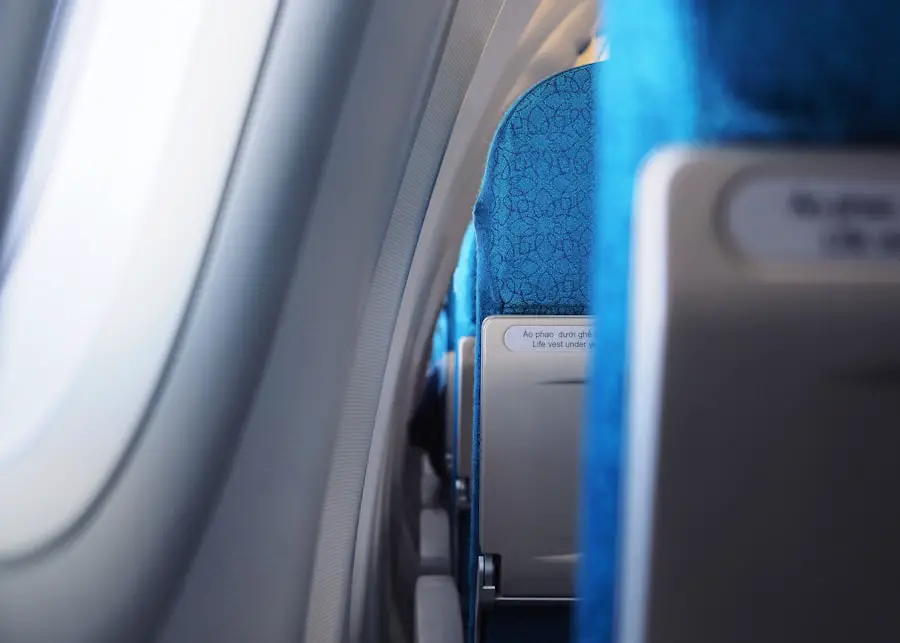
Philippine Airlines uses a mixed fleet suited to short domestic sectors, regional routes, and long-haul services. Its broader PAL and PAL Express operation includes Airbus A320-family aircraft, A330s and A350s, Boeing 777-300ERs, and regional aircraft. The most important current modernization story, however, is the expansion of PAL’s next-generation widebody fleet.
PAL received its first Airbus A350-1000 on December 22, 2025. It was the first airline in Southeast Asia to take the type. PAL welcomed its second A350-1000 in May 2026, and the aircraft has begun joining long-haul operations as more examples enter the fleet.
Pro Tip: Travelers who want PAL’s newest long-haul cabin should check the aircraft type during booking and again before departure. The A350-1000 has PAL’s latest business-class suites with sliding privacy doors, but aircraft substitutions can occur for operational reasons.
What the PAL A350-1000 Cabin Offers
PAL configures the A350-1000 with 382 seats across three cabins. According to the airline’s A350-1000 product information:
- Business Class: 42 seats in a 1-2-1 layout, with direct aisle access, fully flat beds, sliding privacy doors, multiple charging options, and complimentary Wi-Fi.
- Premium Economy: 24 seats in a 2-4-2 layout, with wider recliner seats, about 38 inches of pitch, legrests and footrests, and upgraded service.
- Economy: 316 seats in a 3-4-3 layout, with about 32 inches of pitch, personal entertainment screens, device holders, and charging options.
PAL’s A350-1000 seats 382 passengers: 42 in Business Class, 24 in Premium Economy, and 316 in Economy.
The in-flight experience still varies by aircraft and route. PAL offers meals or snacks, entertainment on equipped aircraft, and its characteristic Filipino-oriented service, but an older regional aircraft will not necessarily provide the same seat, screen, connectivity, or cabin experience as the new A350-1000.
PAL’s Latest Fleet Expansion
The original A350-1000 program called for nine aircraft. In July 2026, PAL and Airbus announced a memorandum of understanding for nine additional A350-1000s. If finalized, that would double PAL’s A350-1000 commitments to 18 aircraft.
PAL is also preparing to add the Boeing 787 Dreamliner to its future long-haul fleet. On July 20, 2026, Boeing announced that PAL had committed to an order for 15 Boeing 787-10s, with an opportunity to purchase five more once the agreement is finalized. Together, the A350 and 787 programs point to a much larger long-term widebody renewal than the airline’s early-2026 fleet snapshot suggested.
PAL reported a fleet of 82 aircraft during its 85th-anniversary activities in early 2026. Because deliveries, leases, returns, and aircraft transfers can change an airline’s fleet throughout the year, that figure is best treated as an early-2026 reference point rather than a permanent current total.
Routes and Destinations
Philippine Airlines connects the Philippines with destinations across Asia, North America, Australia, and the Middle East. PAL’s July 2026 corporate information lists 29 destinations in the Philippines and 40 international destinations.
The airline currently describes Manila and Cebu as its principal hubs. Clark and Davao remain important points in the wider PAL network, with selected services involving those airports, but they should not be presented as equivalent corporate hubs without qualification.
At a Glance: PAL’s Network and Fleet
| Domestic destinations | 29 across the Philippines, according to PAL’s July 2026 corporate information |
| International destinations | 40 across Asia, North America, Australia, and the Middle East |
| Main hubs | Manila and Cebu |
| Other operating points | Selected PAL services also involve airports including Clark and Davao |
| Fleet reference | PAL reported 82 aircraft in early 2026; the live total can change as aircraft are delivered, leased, returned, or transferred |
Ninoy Aquino International Airport in Manila remains PAL’s primary international gateway, supporting major routes such as Tokyo, Hong Kong, Los Angeles, San Francisco, New York, Sydney, and Toronto. Cebu provides another important connecting point for domestic and international travel.
North America is a major growth focus. PAL has announced additional Vancouver, Toronto, and New York capacity, plans to deploy the A350-1000 to San Francisco beginning in August 2026, and is scheduled to begin three-times-weekly Manila-Chicago service on November 9, 2026. Schedules can change, so travelers should confirm the operating days and aircraft through PAL’s official timetable when planning a trip.
On-Time Performance
Philippine Airlines posted a notable punctuality result in 2025. Aviation analytics company Cirium ranked PAL No. 1 among Asia-Pacific carriers for 2025 on-time performance, reporting an on-time arrival rate of 83.12%.
Cirium generally classifies an airline flight as on time when it arrives at the gate within 15 minutes of its scheduled arrival. That definition matters because an “83.12% on-time” figure does not mean every flight arrived at the exact scheduled minute.
Cirium measured 83.12% of Philippine Airlines’ 2025 flights as arriving within its on-time window, ranking PAL first among Asia-Pacific carriers for the year.
Punctuality can vary substantially by route, airport congestion, weather, air-traffic restrictions, maintenance events, and season. Travelers should therefore treat the annual ranking as a useful network-wide indicator rather than a guarantee for a particular flight. PAL also provides flight-status information through its website and digital channels for day-of-travel checks.
Customer Service and Support

PAL’s service proposition centers on full-service travel and Filipino hospitality rather than the stripped-down model of a low-cost carrier. Cabin crews handle meal service, onboard assistance, and passenger needs, while premium cabins add more personalized ground and inflight benefits.
For pre-travel and post-travel issues, PAL provides booking management, flight-status tools, contact-center support, customer-relations channels, and online information for baggage, refunds, travel requirements, and disruptions. Travelers with a time-sensitive problem should use the contact method PAL currently lists for their market because phone numbers and regional support arrangements can change.
Service experiences naturally vary. A smooth nonstop A350 flight can feel very different from an itinerary affected by a delay, aircraft substitution, baggage issue, or missed connection. That is why a useful Philippine Airlines review should consider both the onboard product and the practical rules attached to the ticket.
Loyalty Program and Benefits
PAL’s frequent-flyer program is Mabuhay Miles. Members earn qualifying miles through eligible PAL and PAL Express travel and participating partners, then redeem miles subject to the program’s award and availability rules.
The core status structure includes Classic, Elite, and Premier Elite membership, plus lifetime Million Miler recognition. Current PAL qualification rules state:
- Elite: 25,000 Tier/Flight Miles, 30 qualifying one-way flights in any eligible class, or 15 qualifying one-way Business Class flights within the applicable calendar-year qualification period.
- Premier Elite: 45,000 Tier/Flight Miles, 50 qualifying one-way flights in any eligible class, or 25 qualifying one-way Business Class flights.
- Million Miler: lifetime recognition after accumulating 1,000,000 cumulative Tier/Flight Miles on qualifying PAL and PAL Express travel. PAL describes Million Miler as a prestige recognition rather than an ordinary annual membership level.
Benefits rise with status and can include priority services, additional baggage allowances, lounge privileges, and other travel benefits under PAL’s current rules.
Mabuhay Miles should not be described simply as “never expiring.” PAL’s terms provide continuing mileage validity for engaged members, but prolonged inactivity during the program’s prescribed review period can lead to mileage forfeiture. Members who collect miles infrequently should therefore review their activity before assuming an old balance will remain indefinitely.
Philippine Airlines and oneworld
A major change occurred on June 6, 2026, when Philippine Airlines signed a memorandum of understanding to join the oneworld alliance. PAL is now a oneworld member-designate and is intended to become the alliance’s 16th full member once the joining and integration process is completed.
Note: As of July 2026, Philippine Airlines is a oneworld member-designate rather than a fully integrated alliance member. Travelers should not assume that every oneworld mileage, elite-status, lounge, or reciprocal benefit is already available on PAL itineraries. Check the current PAL and oneworld rules before relying on a specific alliance benefit.
The move is significant because full oneworld participation would broaden the value of PAL’s partnerships compared with its previous position outside the three major global airline alliances.
Pricing and Value for Money
Philippine Airlines sits between low-cost carriers and higher-end international full-service competitors. Its value depends on the route, cabin, fare family, baggage needs, schedule, and aircraft rather than the headline ticket price alone.
PAL Economy service generally includes food, but the form of service varies. The airline’s current Economy information describes hot meals on international flights, while domestic flights may receive lighter items such as sweet or savory buns depending on the service. Entertainment also varies by aircraft: some flights provide seatback systems, while supported aircraft and routes may use PAL’s digital entertainment options.
Promotional fares can make PAL competitive against low-cost alternatives, especially when the passenger values a nonstop schedule, included service, or a through-ticket connection. However, the cheapest PAL fare should not automatically be assumed to include every traditional full-service benefit.
Baggage, Fare Families, and What Is Included
Checked baggage is one area where the exact fare matters. PAL publishes different allowances by route, cabin, and fare family. On Philippine domestic flights, for example, the current Economy Supersaver fare carries no free checked-baggage allowance, while higher Economy fare families include varying amounts.
Warning: Do not assume that every Philippine Airlines ticket includes free checked baggage. PAL’s domestic Economy Supersaver fare currently includes no free checked-baggage allowance. Use the allowance shown for your exact route, cabin, and fare on PAL’s official baggage page and booking confirmation.
Before paying for a PAL ticket, compare:
- the free checked-baggage allowance, if any;
- carry-on limits;
- seat-selection rules;
- change, cancellation, and refund conditions;
- meal and entertainment expectations;
- the scheduled aircraft type; and
- the total price after any services you need are added.
The airline’s current allowances are published on its official baggage information pages. International allowances can differ by market, so the ticket and route-specific baggage rules take priority.
Sustainability and Corporate Social Responsibility
Fleet modernization is PAL’s clearest current sustainability lever. Airbus states that the A350 delivers roughly a 25% advantage in fuel burn and carbon-dioxide emissions compared with previous-generation competitor aircraft. Airbus also says its aircraft are currently able to operate with sustainable aviation fuel blends containing up to 50% SAF.
That SAF capability should not be confused with a claim that every PAL A350 flight currently uses a 50% SAF blend. Actual fuel use depends on supply, airport infrastructure, contracts, operating economics, and applicable regulations.
PAL has also publicly committed to a long-term net-zero emissions objective for 2050 and has discussed work on emissions assessment and a decarbonization roadmap. As with the wider aviation industry, reaching that goal depends on factors including newer aircraft, operational efficiency, sustainable fuel availability, technology, policy, and industry infrastructure.
Community programs are handled in part through the Philippine Airlines Foundation. PAL says the foundation uses the airline’s transport capacity and other resources for social-welfare projects, medical assistance, education, disaster relief, youth development, and environmental conservation.
Competitor Comparison
Philippine Airlines competes in a market that includes Philippine low-cost carriers such as Cebu Pacific as well as major international full-service airlines including Singapore Airlines and Cathay Pacific.
Compared with a low-cost carrier, PAL generally offers a more traditional full-service experience, particularly on international routes, with meal service, multiple cabin classes on selected aircraft, connecting itineraries, and premium services. The trade-off is that PAL is not always the lowest-priced option, and some entry-level fares do not include checked baggage.
Against larger premium Asian carriers, PAL’s strongest advantage for many passengers is its Philippines-centered network and availability of nonstop services between Manila and major long-haul destinations. The new A350-1000 substantially improves PAL’s flagship premium product, although cabin consistency still depends on which aircraft operates a particular flight.
PAL’s future oneworld membership should also strengthen its competitive position for connecting travelers and frequent flyers, but the alliance transition is still in progress as of July 2026.
Who Philippine Airlines Is Best For
PAL is especially worth considering for travelers who:
- want a nonstop or convenient one-ticket journey to, from, or within the Philippines;
- value a full-service experience over the lowest possible base fare;
- can book a route operated by the newer A350-1000 or another aircraft with the cabin features they prefer;
- value PAL’s strong recent punctuality performance;
- regularly earn Mabuhay Miles; or
- expect PAL’s developing oneworld relationship to become useful for future international travel.
Potential drawbacks include inconsistent cabins between aircraft types, fare-dependent baggage allowances, and the fact that oneworld integration is not yet complete. Travelers primarily choosing on price should compare PAL’s total trip cost with low-cost alternatives rather than assuming the full-service carrier will always deliver the cheapest fare.
Conclusion and Final Verdict
Philippine Airlines combines a long aviation history with some of the most significant modernization activity in its recent history. PAL’s 83.12% on-time result for 2025, the arrival of the Airbus A350-1000, expansion of North American flying, plans for additional A350s and Boeing 787-10s, and its move toward oneworld membership all strengthen its position going into the second half of 2026.
The airline is a particularly logical choice for travelers who value direct Philippine connections, full-service international flying, and the newest PAL cabins. It is still important to check the details of the exact ticket: baggage varies by fare, onboard products vary by aircraft, schedules can change, and full oneworld benefits are not yet available simply because PAL has become a member-designate.
Overall, PAL is a competitive full-service option rather than a universally best airline. Its strongest recent evidence comes from measurable operational performance and substantial fleet investment, while the smartest booking decision still depends on route, fare conditions, aircraft, schedule, and price.
Frequently Asked Questions
What is Philippine Airlines?
Philippine Airlines is the flag carrier of the Philippines and a full-service network airline. Founded in 1941, it is recognized as Asia’s first commercial airline and operates domestic and international services centered mainly on Manila and Cebu.
What services does Philippine Airlines offer?
PAL operates domestic and international passenger flights with Economy, Premium Economy, or Business Class available on selected aircraft. Services can include meals or snacks, entertainment, Wi-Fi on equipped aircraft, baggage allowances based on fare, airport lounges for eligible passengers, and the Mabuhay Miles loyalty program.
Is Philippine Airlines a good airline to fly with?
PAL can be a strong choice for travelers who value direct Philippine connections, full-service international travel, and newer aircraft such as the A350-1000. Cirium ranked PAL first in Asia-Pacific for 2025 on-time performance at 83.12%. Individual experiences still vary by route, fare, aircraft, disruption, and cabin.
What is the safety record of Philippine Airlines?
It is better to assess PAL through current regulatory oversight, maintenance, crew training, operating procedures, and recognized audit frameworks than through a blanket safety label. PAL is an IATA member, while ICAO standards, national aviation regulators, and programs such as IOSA form parts of the wider aviation-safety system. No airline or rating can guarantee zero risk.
Does Philippine Airlines include checked baggage?
Not on every fare. PAL’s free checked-baggage allowance varies by route, cabin, and fare family. On domestic flights, Economy Supersaver currently has no free checked-baggage allowance, while higher fare families provide different allowances. Check the baggage entitlement shown for the specific ticket before purchase.
Is Philippine Airlines in the oneworld alliance?
PAL is a oneworld member-designate as of July 2026. It signed an agreement to join the alliance in June 2026, but the integration process is not yet the same as being a fully integrated member. Travelers should verify current mileage, lounge, status, and reciprocal benefits before relying on them.
What is Philippine Airlines’ newest aircraft?
The Airbus A350-1000 is PAL’s newest in-service flagship. Its first example was delivered in December 2025 and its second arrived in May 2026. PAL configures the aircraft with 382 seats: 42 Business Class, 24 Premium Economy, and 316 Economy seats.
How does Philippine Airlines compare with other airlines?
Compared with Philippine low-cost carriers, PAL generally offers a fuller international service and more premium-cabin options, although its lowest fares do not always include checked baggage. Compared with large premium Asian airlines, PAL’s main strength is its Philippines-focused nonstop network, while cabin consistency can depend on the operating aircraft.
Sources
- Philippine Airlines — Our Heritage — founding history and first-flight background.
- Philippine Airlines — North America Services Expansion — July 2026 network counts, hubs, A350 deployment, and Chicago service.
- Cirium — Philippine Airlines: Asia Pacific’s Rising Star — 2025 Asia-Pacific on-time performance and 83.12% result.
- Airbus — Philippine Airlines to Order Nine More A350-1000s — July 2026 A350 fleet expansion and aircraft information.
- Boeing — Philippine Airlines 787 Dreamliner Commitment — July 2026 commitment for 787-10 aircraft.
- oneworld — Philippine Airlines to Join oneworld Alliance — June 2026 member-designate announcement.
