
Last Updated on September 11, 2026 by Daniel Globe
Irish Traveller fashion cannot be reduced to one recognizable outfit. Irish Travellers wear a wide range of contemporary clothing, much like other people in Ireland, while individuals and families may have their own preferences for everyday wear, religious occasions, weddings, funerals, and other important events. Historical garments also form part of Traveller heritage, but they should not be confused with a modern community-wide dress code.
Quick Answer
There is no single Irish Traveller fashion style. Traveller people generally wear the same broad range of modern clothing seen across Ireland. Formal outfits, makeup, jewelry, and modest or glamorous choices vary by person, family, age, faith, and occasion. Historical items such as beady pockets belong to Traveller heritage.
Key Takeaways
- Irish Traveller identity cannot be identified reliably from a person’s clothing, hair, makeup, or jewelry.
- Modern Traveller fashion overlaps with wider Irish and international fashion trends.
- Dress for weddings and other events varies according to the host, venue, family, religion, and level of formality.
- Beady pockets are documented historical Traveller garments, but they are not standard everyday clothing today.
- Respectful discussion avoids costume-like descriptions and lets Traveller people define their own style and identity.
What Irish Traveller Fashion Means
Irish Travellers are a distinct ethnic group within the Irish nation, formally recognized by the Irish State in 2017. Traveller identity is connected to a shared history, culture, traditions, family networks, and a nomadic heritage. Clothing may be one way for an individual to express personality or prepare for an important occasion, but it is not the feature that defines Traveller ethnicity. The Government of Ireland’s statement recognizing Traveller ethnicity describes Travellers as having their own distinct heritage, culture, and traditions.
There is no official uniform or fixed set of colors, fabrics, hairstyles, or accessories shared by every Traveller. A Pavee Point and health-service guide states that Traveller dress is broadly similar to dress in the rest of Irish society. The same guide warns readers to recognize wide diversity and treat each person as an individual.
This distinction matters because popular television, tabloids, and social media sometimes focus on especially glamorous weddings or highly styled individuals. Those images may show real people and real personal choices, but they do not represent every Traveller woman, man, or family.
Note: Irish Travellers, Roma, and Romany Gypsies are distinct communities. Their histories and identities should not be merged simply because government reports or media sometimes discuss them under a shared umbrella.
Is There One Irish Traveller Dress Code?
No. Modern Irish Traveller clothing includes the same broad mix found throughout Ireland: casual wear, sportswear, work clothes, school uniforms, business clothing, religious dress, formal suits, evening dresses, and occasion wear. Fashion also changes by generation, region, income, occupation, and personal taste.
Some people may prefer modest clothing. Others may favor fitted, colorful, designer, minimalist, sporty, or highly decorated outfits. These choices do not prove or disprove someone’s Traveller identity. They also should not be treated as rules followed by the entire community.
Irish Traveller identity is not a visual test. Clothing can express personal style, but it cannot reliably tell you a person’s ethnicity.
Traditional Irish Traveller Clothing and Beady Pockets
One well-documented part of historical Traveller women’s clothing is the beady pocket. The National Museum of Ireland describes these pockets as flat, decorated bags worn outside a skirt and tied at the back.
A beady pocket could hold money, jewelry, sewing tools, religious medals, documents, and other small valuables. Women decorated them with colored thread, buttons, brooches, medals, embroidery, and trim. Each pocket could reflect its maker’s skills and the owner’s personal memories. Buttons exchanged between friends could also carry emotional meaning.
Beady pockets are important heritage objects, but they should not be presented as standard modern clothing. Their historical value shows how clothing can preserve practical knowledge, craft, family memories, and relationships without creating a fixed costume for people living today.
Everyday Clothes That Work in Irish Weather
Ireland’s Atlantic climate can bring mild temperatures, wind, clouds, showers, and brighter periods within a relatively short time. The Met Éireann climate guide explains that Ireland’s position and changing Atlantic air masses produce variable weather.
Layering is therefore useful for Travellers and non-Travellers alike. A breathable base, a warm middle layer, and a rain-resistant outer layer let you adjust without carrying a very heavy coat throughout the day.
| Item | Why It Helps | How to Wear It |
|---|---|---|
| Light waterproof jacket | Protects against showers and wind | Choose a packable style with room for a sweater |
| Trousers or comfortable jeans | Works for daily travel, errands, and casual plans | Pair with trainers, walking shoes, or ankle boots |
| Sweater, cardigan, or fleece | Adds warmth without requiring a winter coat | Wear over a breathable top and under the rain layer |
| Supportive footwear | Improves comfort on wet pavements and uneven ground | Use water-resistant footwear when rain is expected |
| Scarf or light accessory | Provides adjustable warmth | Carry it in a bag when the weather becomes milder |
Pro Tip: Check the local forecast on the day of an event. A formal outfit can still work in changeable weather when you add a neat coat, compact umbrella, and comfortable shoes for outdoor walking.
How Irish Traveller Women Dress for Events
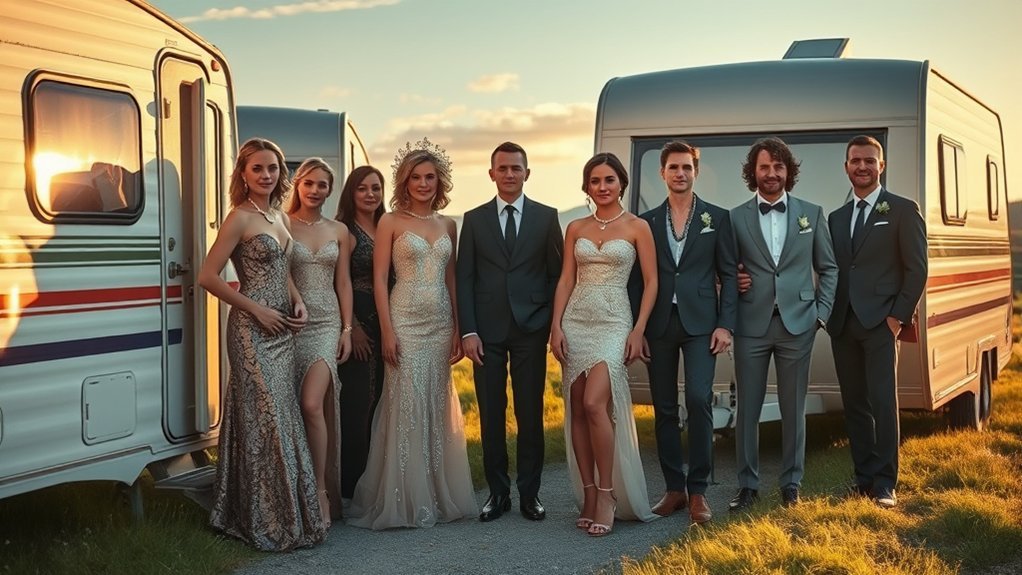
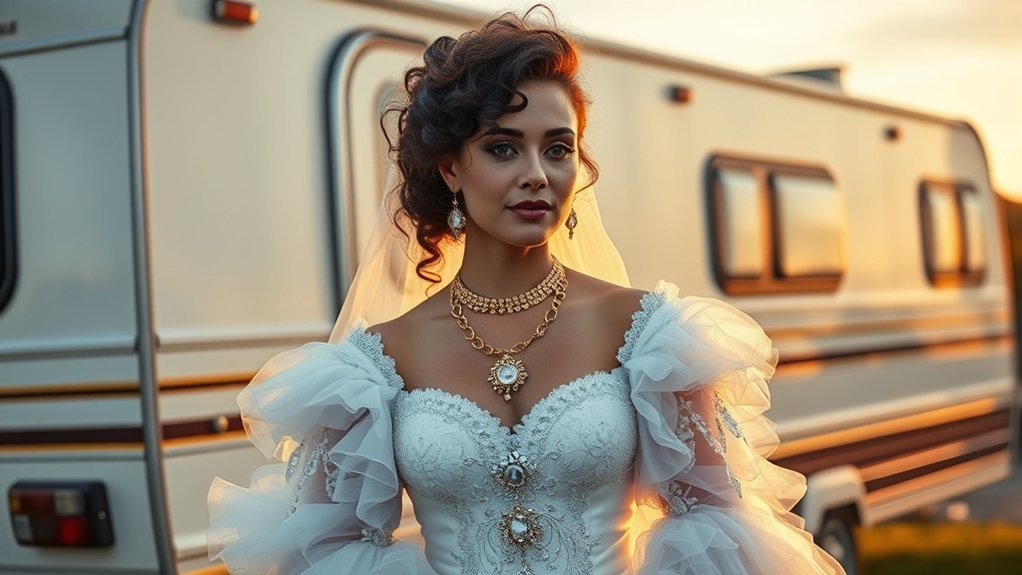
Traveller women do not follow one event uniform. Clothing may range from understated dresses, trouser suits, skirts, and tailored separates to bright evening wear, designer pieces, or highly decorated gowns. The choice depends on the individual and the occasion rather than on a universal ethnic rule.
Weddings, communions, confirmations, funerals, religious services, horse fairs, family parties, and public celebrations can each have different expectations. Some families may prefer traditional formality or modesty. Others may follow current high-street, luxury, social-media, or celebrity fashion. Age and personal comfort also shape the final outfit.
It is reasonable to say that people often make an extra effort for an important celebration. It is not reasonable to assume that every Traveller woman prefers a bold dress, long hemline, sparkling decoration, or a particular level of makeup.
Hair, Makeup, and Accessories
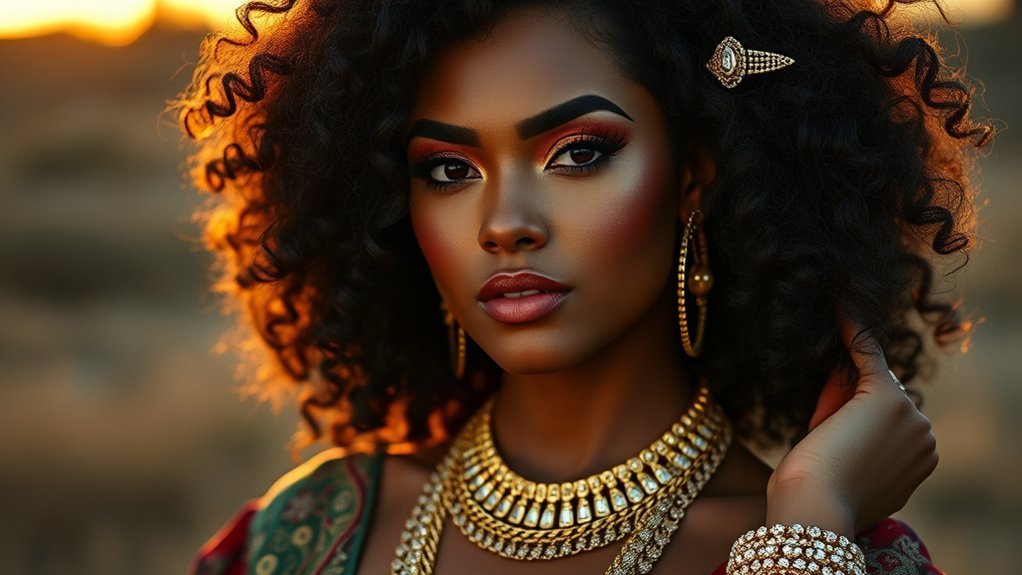
Hair, makeup, and accessories are personal style choices. A Traveller woman might wear no makeup, light everyday makeup, or a polished evening look. Hair may be natural, tied back, cut short, curled, straightened, braided, or arranged in a formal style. Jewelry can be minimal or prominent.
These choices may reflect current fashion, family influence, religion, practicality, personal confidence, or the formality of an event. They should not be used as clues for deciding whether someone is a Traveller.
When writing about a particular person’s outfit, describe what that individual is wearing rather than turning the look into a claim about all Traveller women. For example, “she chose a detailed evening dress and statement earrings” is more accurate than saying that Traveller women normally dress that way.
How Irish Traveller Men Dress
Traveller men also wear a broad range of contemporary clothing. Everyday outfits may include workwear, jeans, tracksuits, sports clothing, shirts, jackets, trainers, or boots. Business and formal clothing may include a suit, dress shirt, tie, waistcoat, smart coat, or polished shoes.
No single garment identifies a Traveller man. Caps, shirts, formal suits, sports brands, and work boots are worn throughout Ireland and many other countries. As with women’s clothing, the setting and the individual matter more than ethnicity-based assumptions.
Dress Respectfully and Avoid Stereotypes
Respectful dress begins with the event rather than with an attempt to imitate Irish Traveller fashion. When you are invited to a wedding, funeral, religious ceremony, or family gathering, ask the host what level of formality is expected.
- Follow the invitation. Terms such as formal, semi-formal, church dress, or smart casual are more useful than assumptions about ethnicity.
- Consider the venue. A church, hotel, outdoor fair, family home, and graveside service may require different clothing and footwear.
- Choose clean, comfortable clothing. You should be able to sit, walk, greet people, and take part without repeatedly adjusting your outfit.
- Respect religious settings. Follow the same standards of quiet, modest, and considerate behavior expected at the particular place of worship.
- Do not copy a television look. Oversized costume jewelry, exaggerated makeup, or imitation “Traveller” clothing can turn a living identity into entertainment.
- Ask before photographing people. An invitation to an event does not automatically give permission to photograph or publish someone’s outfit.
Warning: Do not describe someone as an Irish Traveller solely because of clothing, accent, housing, occupation, surname, or appearance. Traveller identity is based on self-identification and community belonging, not a visual checklist.
Respect also applies to language. Avoid treating “Traveller,” “Roma,” and “Romany” as interchangeable. Avoid phrases that suggest all Traveller women or men behave, believe, or dress alike. The National Traveller and Roma Inclusion Strategy II recognizes the need to tackle racism, discrimination, and negative attitudes while supporting cultural participation.
Frequently Asked Questions
What Is the 5 4 3 2 1 Packing Rule?
The 5-4-3-2-1 method is an informal capsule-packing guide, not an Irish Traveller tradition. A common version uses five tops, four bottoms, three pairs of shoes, two layering pieces, and one flexible item such as a dress, hat, or accessory. The categories can be adjusted for the trip, weather, and planned events.
How Do Irish Travellers Dress?
Irish Travellers wear a diverse range of modern clothing, including casual wear, sportswear, work clothes, business clothing, and formal outfits. There is no single color, garment, hairstyle, or accessory worn by all Travellers.
Is There Traditional Irish Traveller Clothing?
Yes, historical clothing traditions exist. One documented example is the beady pocket, a decorated external pocket once worn by Traveller women to carry valuables and personal objects. Historical garments should not be mistaken for a standard modern dress code.
Can You Identify an Irish Traveller by Clothing?
No. Clothing, makeup, jewelry, hairstyles, and brand choices cannot reliably establish a person’s ethnicity. Irish Traveller identity should be based on self-identification, not appearance-based assumptions.
Is Irish Traveller Fashion the Same as Roma Fashion?
No. Irish Travellers and Roma are distinct ethnic communities with different histories and cultural backgrounds. Individual members of either community may share wider European or global fashion trends, but their identities should not be merged.
How Do You Dress in Ireland Without Looking Like a Tourist?
Wear practical layers suited to the forecast rather than trying to copy a supposed local uniform. Comfortable shoes, trousers or jeans, a sweater, and a light rain jacket work for many casual plans. Bring smarter clothing when your itinerary includes a formal meal, religious service, or celebration.
What Is Considered Impolite in Ireland?
Basic courtesy matters more than a complicated set of fashion rules. Avoid interrupting ceremonies, mocking an accent or culture, taking photographs without permission, making assumptions about someone’s identity, or turning private family events into a spectacle. Follow the host’s guidance and the rules of the venue.
Sources
- Government of Ireland: Recognition of Travellers as an Ethnic Group — supports the explanation of Irish Traveller identity and formal State recognition.
- Pavee Point and Health Services: Providing Effective Services to Travellers — supports the statements that Traveller dress broadly overlaps with wider Irish dress and that individual diversity must be recognized.
- National Museum of Ireland: Beady Pockets — documents the design, use, decoration, and cultural history of traditional Traveller beady pockets.
- Met Éireann: Climate of Ireland — supports the practical guidance on Ireland’s variable Atlantic weather and clothing layers.
- National Traveller and Roma Inclusion Strategy II 2024–2028 — supports the need to challenge racism, discrimination, and negative stereotyping.
Conclusion
Irish Traveller fashion is diverse, contemporary, and personal. Some people prefer understated everyday clothing, while others enjoy formal, colorful, modest, sporty, designer, or glamorous looks. None of those choices represents every Traveller.
Historical items such as beady pockets provide a valuable connection to Traveller craft and heritage. Modern clothing, however, should be understood through the individual, the occasion, and the family—not through a stereotype. The most respectful approach is to listen, avoid appearance-based assumptions, follow the host’s guidance at events, and allow Traveller people to describe their own identity and style.
