Last Updated on September 11, 2026 by Logan Reeves
You want fly fishing to be approachable and rewarding from your very first outing. This guide focuses on the essentials you need to cast confidently, handle fish responsibly, and keep your kit working on the water.
With clear, expert-backed recommendations you will save time and money by choosing tools that actually help you learn and fish better.
Disclosure: As an Amazon Associate I earn from qualifying purchases. Some links on this page are affiliate links, at no extra cost to you.
Top Picks
|
Category |
Product |
Score |
|---|---|---|
|
🏆 Best Instructional Book |
95/100 |
|
|
💼 Best Guide’s Clamp |
88/100 |
|
|
🔰 Best All-Purpose Pliers |
90/100 |
|
|
💰 Best Budget Cutter |
80/100 |
|
|
⭐ Best Dry Fly Floatant |
92/100 |
|
|
🚀 Best Powder Floatant |
90/100 |
|
|
🛠️ Best Repair Adhesive |
91/100 |
|
|
🔪 Best Hook Sharpener |
85/100 |
|
|
🎯 Best Tying Aid |
89/100 |
Selection Criteria
You need gear that speeds learning, reduces frustration, and lasts through wet conditions. We prioritized items that are easy to use for beginners, durable enough for frequent river use, and versatile so the same tool handles multiple tasks.
Price and value matter because you are likely building a kit over time, so we favored affordable pieces that do one job very well. We also weighed portability, maintenance requirements, and endorsements from guides and experienced anglers so the picks work on the water, not just on paper.
Orvis Fly-Tying
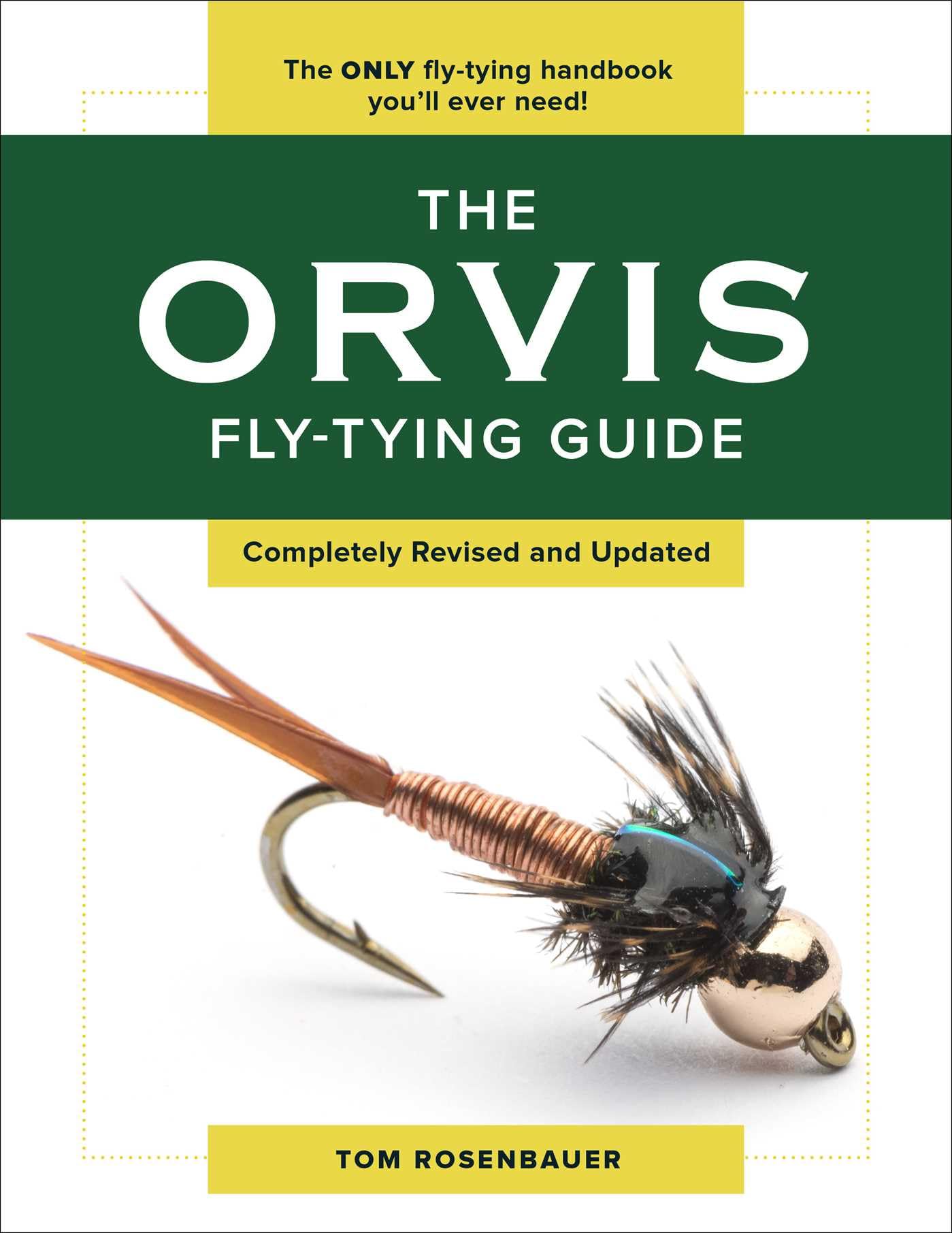
This revised Orvis guide walks you through tying fundamentals and dozens of proven patterns in a clear, image-driven format. You can use it to learn basic knots and building blocks, then progress to more complex flies without getting overwhelmed. It’s practical both when you’re practicing at home and when you need a reference at the vice.
If you want a single book that grows with your skills, this is one you’ll return to again and again.
What People Say
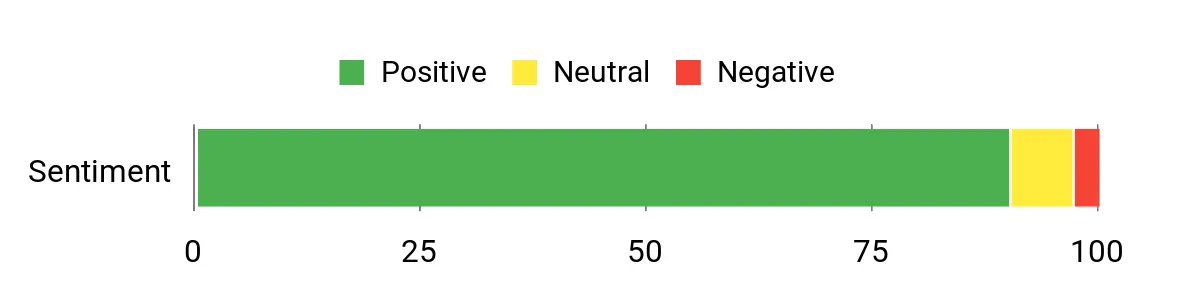
You’ll notice readers often praise the book’s photography and stepwise approach, which makes complicated techniques feel achievable. Many find the pattern selection and materials notes especially useful when planning tying sessions or restocking a kit.
Reviewers also mention the book works as both a beginner tutor and a lasting reference on the tying bench.
Overall Sentiment: Positive
Situational Benefits
|
Situation |
How It Helps |
|---|---|
|
Learning the Basics |
You get clear, photographed steps and simple explanations that make the first knots and wraps much less intimidating. |
|
Preparing for a Trip |
You can pick and tie patterns suited to the target species and water, using the book as a checklist for materials to pack. |
|
Teaching Others |
The logical progression and visual cues let you guide a novice through projects without inventing exercises on the fly. |
|
At the Tying Bench |
You can quickly reference techniques, measurements, and hacks when a pattern stalls or needs tweaking. |
Versatility
You can use this book as a learning guide, a pattern catalog, and a bench reference. It suits new tyers who need structure and experienced anglers who want reliable patterns and technique refreshers.
Key Benefits
- Clear step‑by‑step photos and instructions that speed learning
- Broad pattern library useful for trout and general freshwater fishing
- Revised edition with updated techniques and materials guidance
- Durable, well‑organized reference you can keep at the bench
Rating: 4.8 (total: 449+)
Umpqua Rivergrip
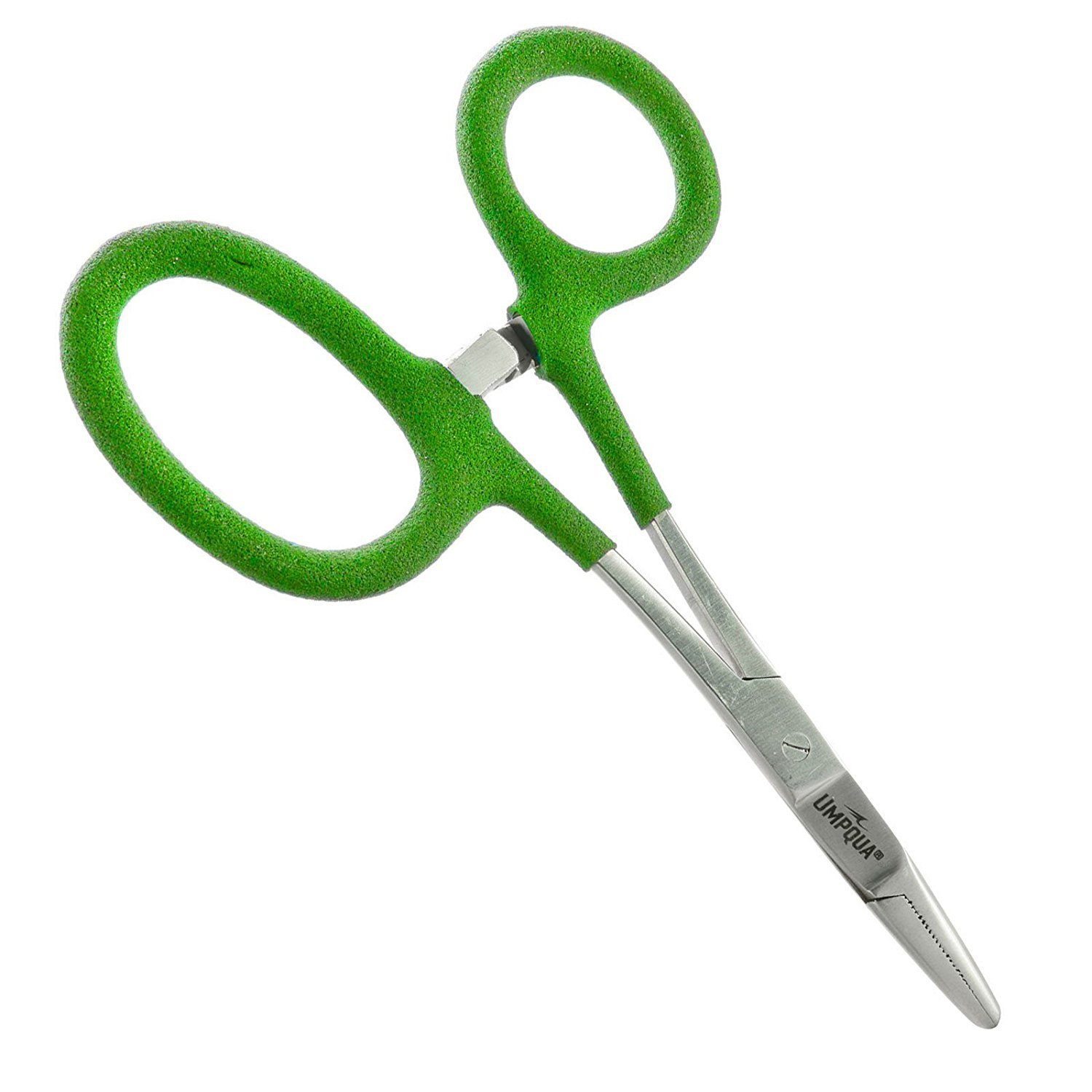
You’ll find this clamp feels like a tool built for real river work. The oversized finger loop keeps it usable with cold or wet hands, the dual‑textured jaws give a secure grip on hooks and barbs, and the built‑in shears handle cutting and trimming without swapping tools.
Use it on everyday wading trips or keep it on your guide pack for tougher, unpredictable situations. If you want one reliable multi‑tool that stays on your sling, this is a smart choice.
What People Say
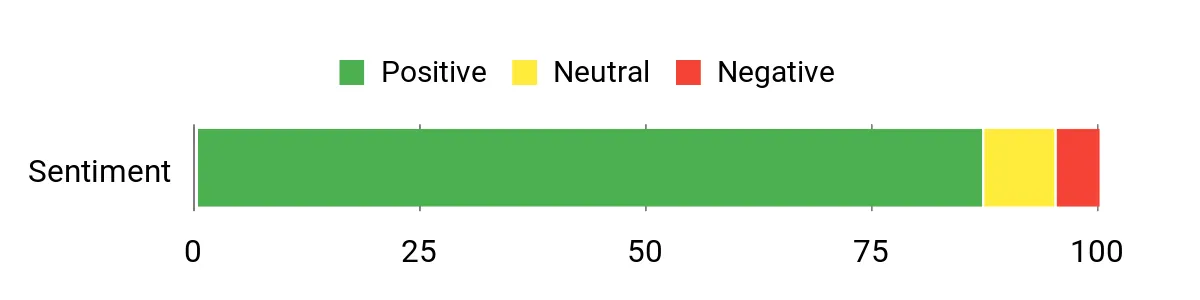
You’ll notice reviewers consistently highlight the clamp’s durability and practical design. Many point out the oversized loop and ambidextrous grip make it easy to use with cold or wet hands, while the sharp shears and reliable jaw alignment handle everyday line and hook tasks.
A few mention small enhancements like adding an eyelet would improve convenience, but overall the tool is praised for working exactly as intended.
Overall Sentiment: Positive
Situational Benefits
|
Situation |
How It Helps |
|---|---|
|
Wet Hands |
The large finger loop and textured handle let you operate the clamp securely when fingers are cold or slippery. |
|
Removing Barbed Hooks |
Half‑serrated jaws hold the hook while you compress or crimp the barb, reducing stress on the fish and your fingers. |
|
Quick Line Cuts |
Built‑in shears cut mono and fluorocarbon without swapping tools, speeding up knot changes and leader adjustments. |
|
Lost Gear Recovery |
The bright green finish makes the tool easier to spot in a pack or on shore when you need it most. |
Versatility
This clamp works as pliers, crimping tool, and scissors in one compact package, making it useful for casual anglers and professional guides alike.
Key Benefits
- Large finger loop stays usable with gloves or wet hands
- Half‑serrated, half‑smooth jaws grip hooks and crimp barbs securely
- Integrated shears reduce the need to carry extra cutters
- Bright color makes retrieval from packs or water easier
Rating: 4.5 (total: 139+)
KastKing Pliers

You’ll appreciate how these pliers balance toughness and everyday usability. Built for both fresh and saltwater, they cut mono, fluorocarbon, and braid close to knots with tungsten carbide cutters while the serrated jaws handle hook grips and light wire work.
The slim handle profile, spring-loaded action, and included sheath with lanyard keep the tool accessible when you need one-handed operation on the water. Keep them in your vest or boat for routine rigging, quick hook removals, and emergency fixes.
What People Say
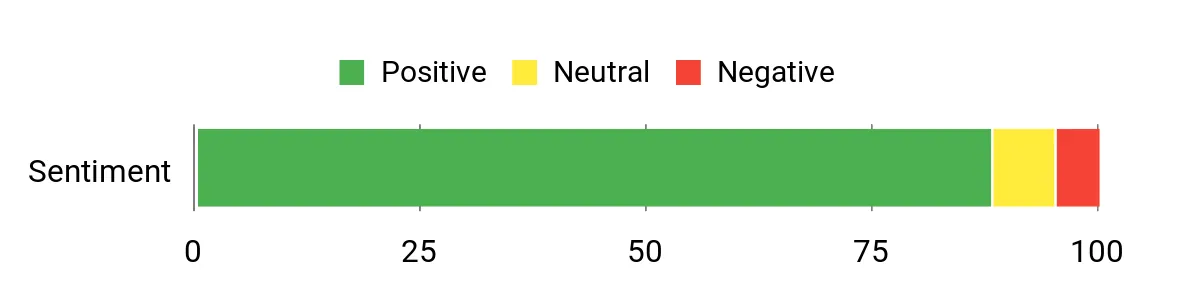
Readers frequently note the cutters and corrosion resistance as standout features, saying the pliers hold up well in saltwater. Many appreciate the ergonomic grip and spring action for quick, single-handed work, and the sheath plus lanyard make them easy to keep on your person.
Overall, users see them as a durable, practical addition to a tackle box.
Overall Sentiment: Positive
Situational Benefits
|
Situation |
How It Helps |
|---|---|
|
Saltwater Trips |
The 420 stainless construction and tough coating resist corrosion so the pliers last longer after repeated salt exposure. |
|
Cutting Line Close To Knots |
Tungsten carbide side cutters let you trim mono or fluorocarbon cleanly without slipping or crushing the knot. |
|
Quick Hook Removal |
Fine serrated jaws and a slim nose give secure grip on hooks and allow controlled removals with minimal damage to the fish. |
|
Working From A Boat |
Spring-loaded jaws and the included sheath with lanyard keep the pliers accessible for one-handed use when space is tight. |
Versatility
These pliers serve as cutters, crimpers, and hook grippers for fresh or saltwater applications, making them a multifunctional tool for anglers who want one reliable piece of kit.
Key Benefits
- Carbide cutters slice mono, fluorocarbon, and braid reliably
- Corrosion-resistant stainless steel and protective coating for saltwater use
- Spring-loaded, slim handles make one-handed operation easier
- Sheath and coiled lanyard keep the tool within reach
Rating: 4.6 (total: 6420+)
Booms FC2

You’ll find this little tool slips into your kit and stays useful. The retractable clipper and integrated knot tool handle quick leader trims and common knots without fuss, and the stainless steel cutter stands up to heavier leader materials.
Clip it to a vest or pack and rely on it for routine rigging, shore sessions, or when you need a compact back‑up on a trip. It’s an easy grab when space is limited and speed matters.
What People Say
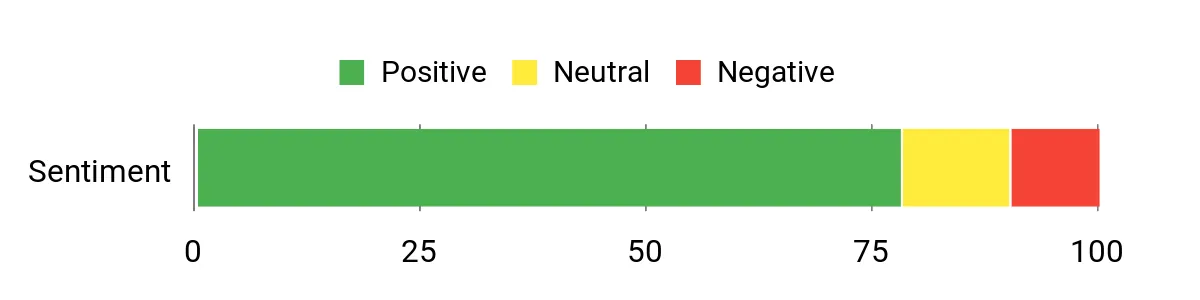
Readers often highlight how handy the FC2 is to carry and use, noting the retractable design and cutter performance for heavier leaders. Many appreciate the simple, low‑maintenance build that avoids common hinge problems. A few users feel the cutter isn’t the absolute sharpest, but most consider it dependable for everyday tasks.
Overall Sentiment: Positive
Situational Benefits
|
Situation |
How It Helps |
|---|---|
|
Saltwater Setup |
Stainless steel construction and simple mechanics reduce corrosion concerns on beaches and boats. |
|
Quick Leader Changes |
The cutter trims mono and fluorocarbon close to knots, speeding up leader swaps between casts. |
|
On‑shore Walks |
The clip‑on retractor keeps the tool handy without jostling in pockets during long wades. |
|
Gift For New Anglers |
Its straightforward design and ease of use make it a helpful starter tool for someone building a kit. |
Versatility
This tool works as a clipper, knot helper, and compact cutter for a variety of freshwater and saltwater situations, making it a practical multi‑use piece for small kits or travel.
Key Benefits
- Retractable clipper keeps the cutter accessible and tangle‑free
- Stainless steel blade handles heavier leader and resists corrosion
- Compact, clip‑on design frees up your hands and vest space
- Simple construction reduces hinge issues and maintenance
Rating: 4.3 (total: 943+)
Gehrke GINK

You’ll reach for GINK when you want reliable, long‑lasting floatation without fiddly reapplications. Its low specific gravity soaks into the fly body to restore buoyancy while preserving delicate hackle and dubbing. It’s convenient for bench work and just as handy on the river when a favorite dry needs a quick refresh.
If you prefer a liquid treatment that keeps flies high and natural‑looking, this is a go‑to option.
What People Say
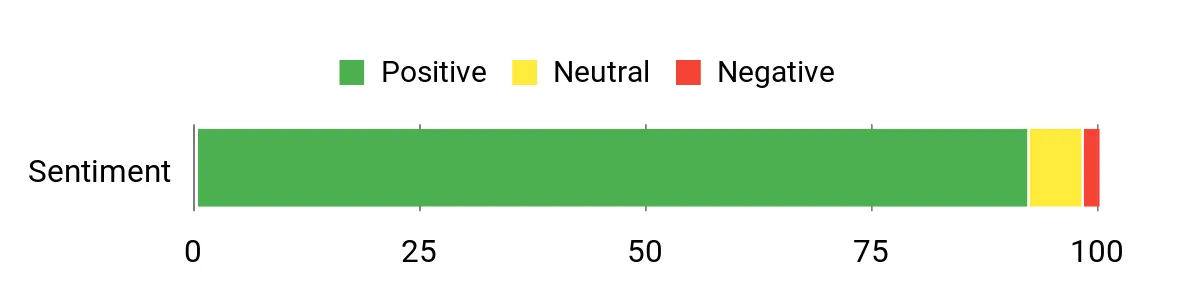
Customers commonly note how well GINK restores float without gumming up hackle or changing the fly’s action. Many appreciate that a small amount provides lasting buoyancy, and users report it’s easy to apply on the bench or for quick touchups on the water.
A few mention preferring powder options for certain patterns, but overall the liquid’s effectiveness is a recurring theme.
Overall Sentiment: Positive
Situational Benefits
|
Situation |
How It Helps |
|---|---|
|
Long Float Sessions |
Penetrates the fly so buoyancy lasts longer between reapplications, letting you fish dries confidently for extended periods. |
|
Windy Conditions |
Helps the fly ride higher and resist tipping when wind and chop threaten to swamp delicate hackle. |
|
Reviving Old Flies |
Reconditions tired or waterlogged flies quickly so you can reuse trusted patterns instead of tying replacements. |
|
Bench Reference |
Small, easy application during tying sessions helps you test and tune buoyancy before heading to the river. |
Versatility
GINK suits both bench and field use, working on a variety of dry fly styles and materials so you can treat a broad selection of flies with one product.
Key Benefits
- Deep penetration restores buoyancy through the fly body
- Low specific gravity keeps flies sitting high on the water
- Preserves fly silhouette and hackle movement
- Works on a wide range of dry fly materials
Rating: 4.7 (total: 3929+)
High N Dry
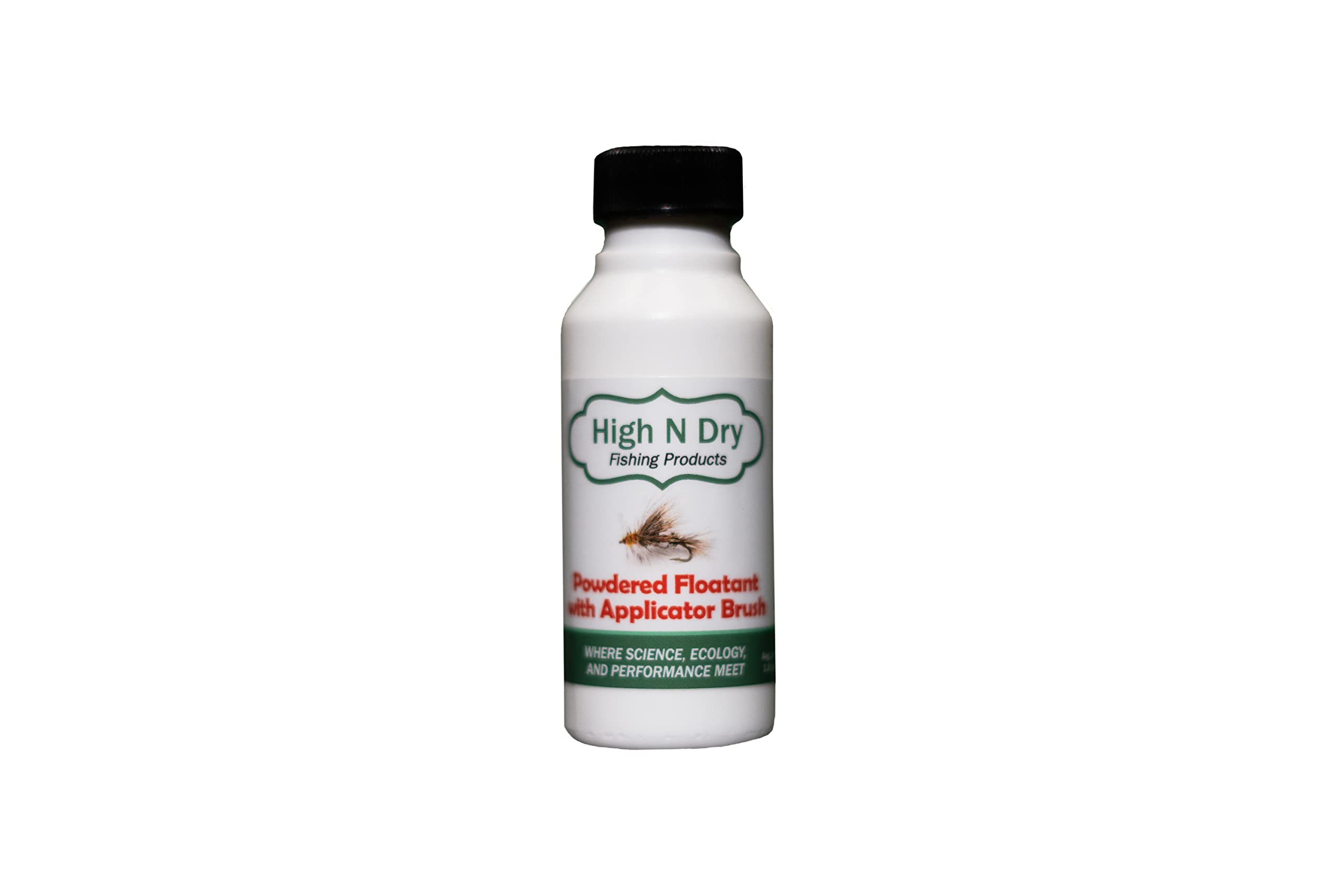
You’ll like this powdered floatant if you prefer a tidy, low‑mess way to revive dries. The brush applicator makes targeted applications simple, and the powder soaks into hackle without weighing fibers down. It’s handy for quick touchups on the bank or for treating a dozen flies at the bench before a long afternoon of fishing.
For everyday use and travel it’s an easy, dependable addition to a beginner’s kit.
What People Say
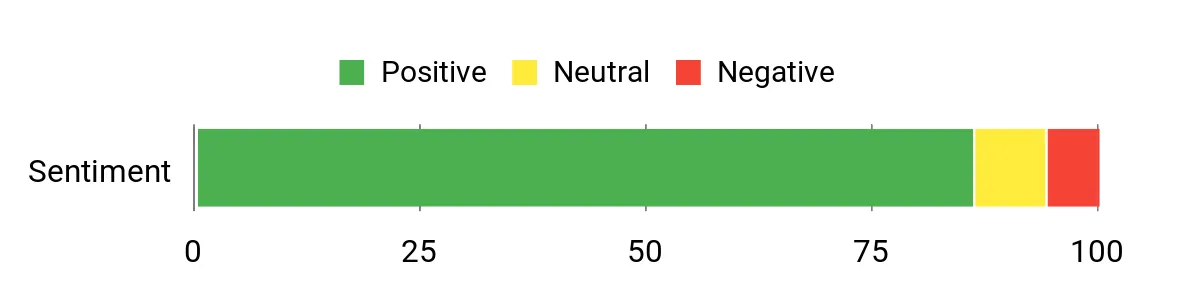
Users often praise the convenience of the brush and how the powder keeps flies afloat without leaving a sticky residue. Many appreciate its portability and ease of reapplying on the water, while a few note you need to tap off excess to avoid clumping. Overall it’s seen as a practical, low‑fuss floatant for regular use.
Overall Sentiment: Positive
Situational Benefits
|
Situation |
How It Helps |
|---|---|
|
Quick On‑Stream Touchups |
The brush allows you to treat specific flies fast so you can get back to fishing with minimal downtime. |
|
Pre‑Trip Prep |
You can dust multiple dries at the bench to ensure consistent buoyancy for a planned session. |
|
Travel and Wading |
Compact packaging and dry formula reduce spill risk and fit neatly into a vest pocket or tackle bag. |
|
Delicate Patterns |
Powder restores float without clumping hackle, preserving the fly’s natural silhouette and movement. |
Versatility
Suitable for a wide range of dry fly materials and scenarios, the powdered format works well for both quick fixes and routine bench applications.
Key Benefits
- Brush applicator enables precise, clean application
- Powder formula restores buoyancy without gumming hackle
- Compact size fits easily in a vest or pack
- Works well for both bench treatment and on‑water touchups
Rating: 4.6 (total: 59+)
Gear Aid Aquaseal
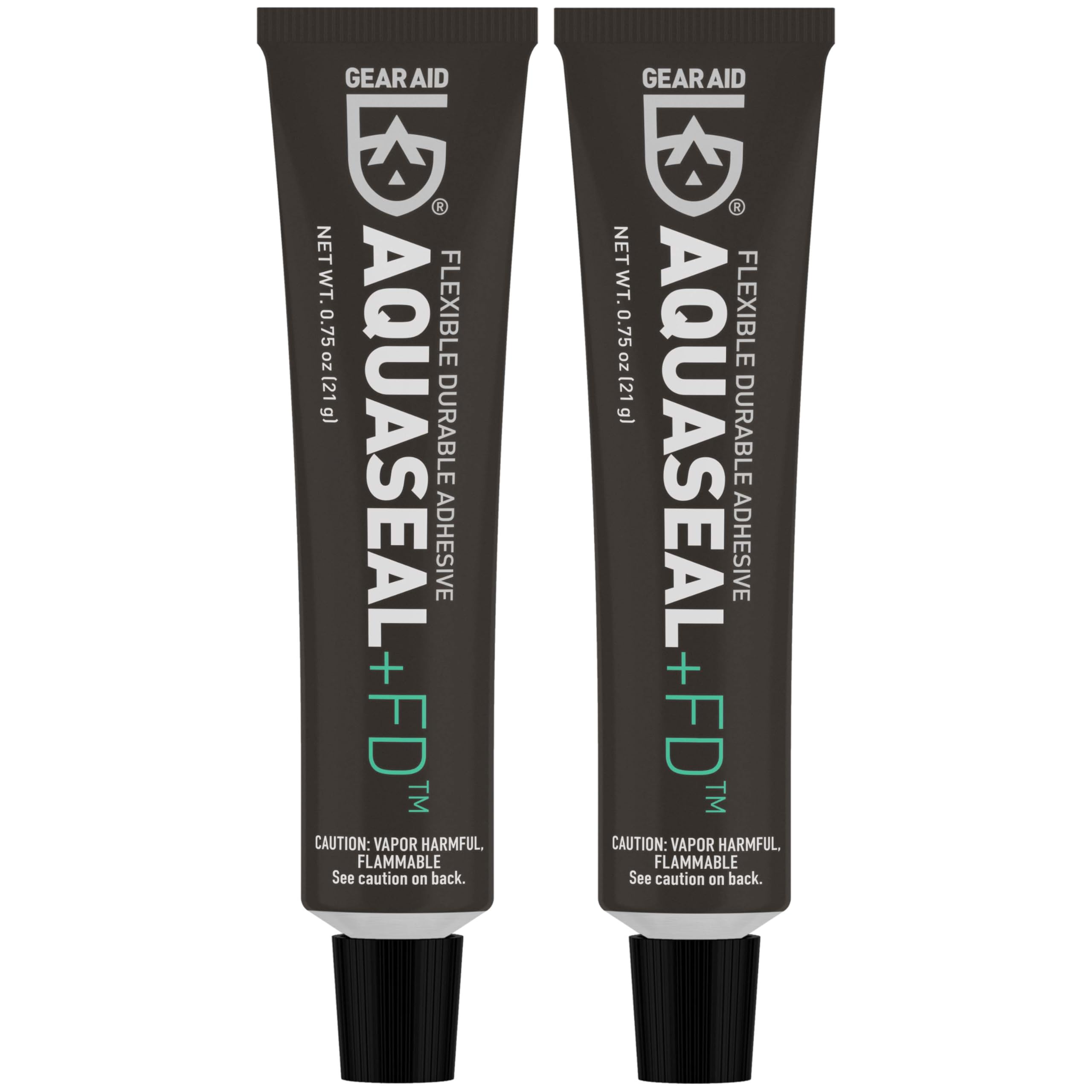
You’ll reach for Aquaseal when a small tear threatens to end your day. It bonds rubber, polyurethane, vinyl and neoprene with a flexible, waterproof finish that holds under repeated use. The clear cure keeps repairs discreet, and the adhesive’s abrasion resistance makes it suitable for both quick field fixes and planned workshop repairs.
Keep a tube in your pack so a rip doesn’t become a trip-ender.
What People Say
People frequently praise how reliably Aquaseal seals leaks and restores waders and inflatables, often noting the clear finish and flexibility after curing. Users also appreciate that it bonds a wide range of materials, making it a go-to for varied gear.
A few mention the cure time and recommend planning repairs with that window in mind, but most consider it worth the wait for a dependable, waterproof patch.
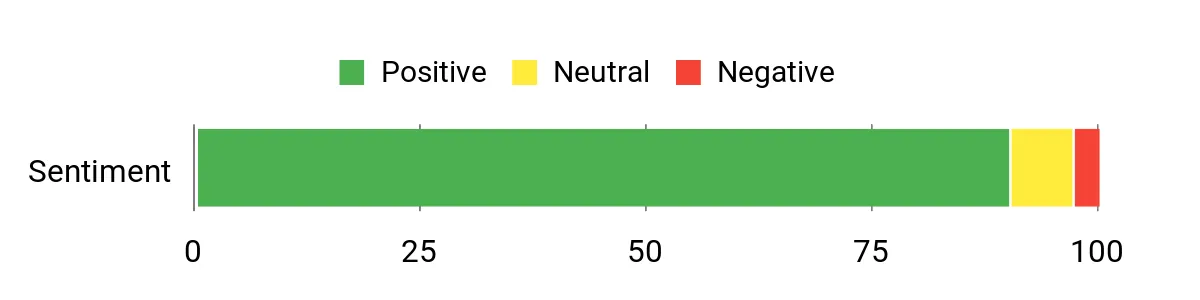
Overall Sentiment: Positive
Situational Benefits
|
Situation |
How It Helps |
|---|---|
|
Pinhole Leaks |
Seals tiny holes quickly and creates a waterproof barrier that holds under pressure. |
|
Torn Wader Seams |
Provides a flexible bond that moves with the fabric, preventing the seam from reopening when you walk or wade. |
|
Inflatable Repairs |
Adheres to PVC and vinyl to stop slow leaks and restore air pressure for short trips or emergency fixes. |
|
Boot and Bootie Scuffs |
Adds abrasion resistance to scraped areas so you can keep fishing while you arrange a permanent repair. |
Versatility
Works across neoprene, polyurethane, vinyl and rubber, making it useful for waders, wetsuits, inflatables and other outdoor gear both in the field and at home.
Key Benefits
- Flexible, durable waterproof bond for fabric and rubber
- Dries clear to keep repairs unobtrusive
- Suitable for pinholes, tears and seam leaks on many outdoor items
- Good abrasion resistance so patches last through regular use
Rating: 4.6 (total: 5723+)
SAMSFX Sharpener
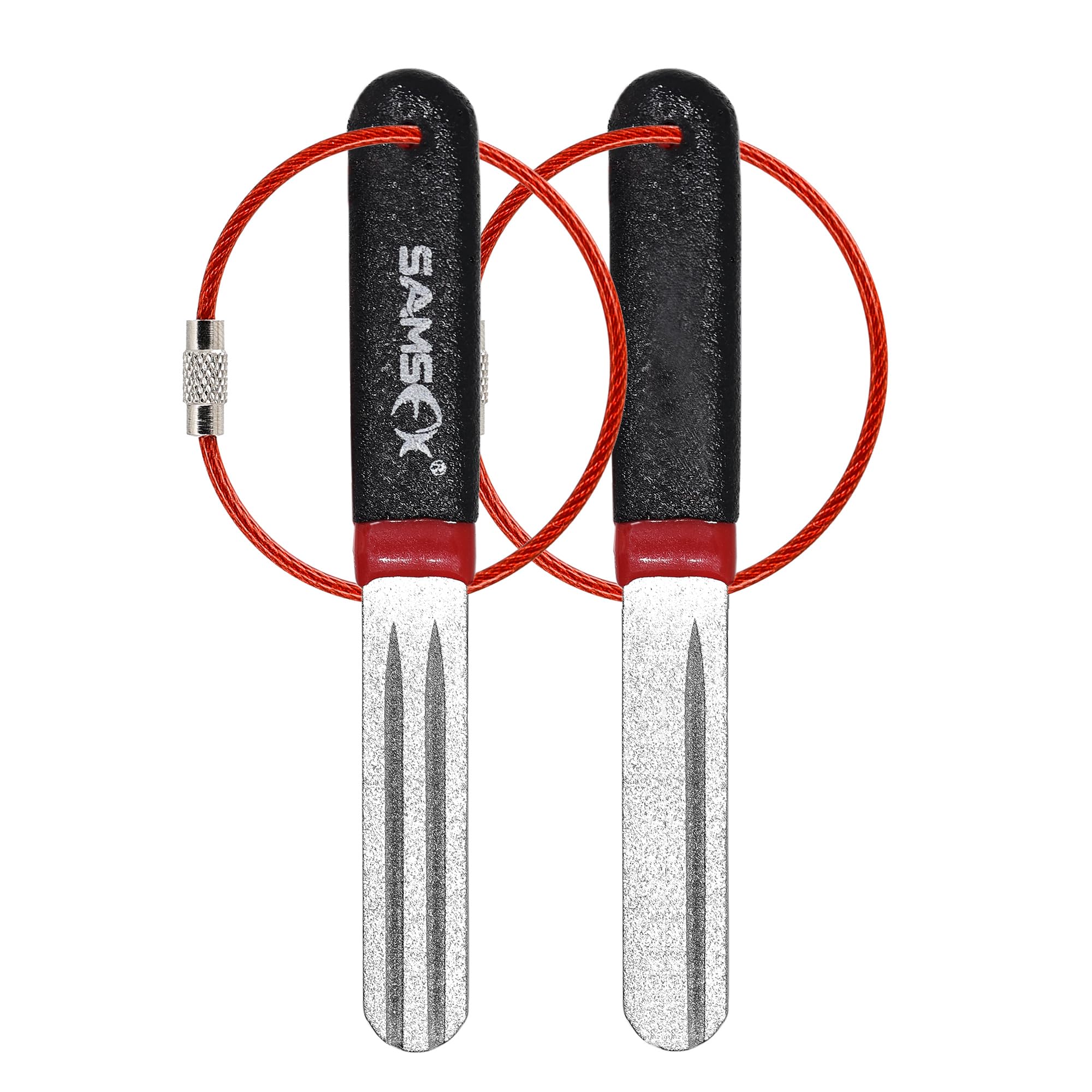
You’ll like how simple this sharpener is to use: a couple of swipes and dull hooks bite again. The compact size and attachment loop make it easy to carry on a pack or vest so you can tune hooks between fish.
It’s especially handy when you’re fishing species that dull hooks quickly or when you want to avoid retying after every snag. For routine sharpening on the bank or boat this is a low‑fuss, practical tool.
What People Say
Users commonly praise the sharpener for bringing dull hooks back to life quickly and for its portability. Many note the three grooves cover most hook sizes used for larger trout or bass, and the attachment loop keeps it from getting lost.
A minority point out it’s less effective on very small, thin hooks, but overall it’s seen as a reliable, inexpensive field tool.
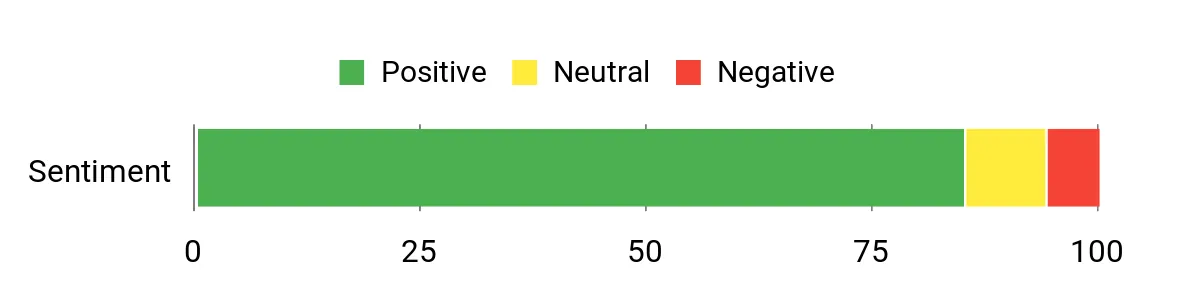
Overall Sentiment: Positive
Situational Benefits
|
Situation |
How It Helps |
|---|---|
|
Dull Hooks On The Water |
Restore a sharp point in seconds so you don’t miss hookups and can keep fishing without retying. |
|
Multiple Hook Sessions |
Quickly recondition several hooks between outings, extending the life of lures and reducing waste. |
|
Travel And Wading |
Compact size and attachment loop let you carry it on a vest or pack for immediate access. |
|
Larger Hooks And Saltwater Use |
Coarser grooves are effective on thicker wire often used for larger species, helping maintain bite readiness. |
Versatility
Works across many freshwater and saltwater hook types and fits easily into any carry system, making it useful for day trips, travel, and frequent sharpening needs.
Key Benefits
- Three grit grooves let you sharpen a range of hook profiles
- Small, lightweight and easy to attach to packs or lanyards
- Durable diamond surface restores points quickly
- Simple to use in the field without tools or power
Rating: 4.5 (total: 791+)
Easy Ty Tool
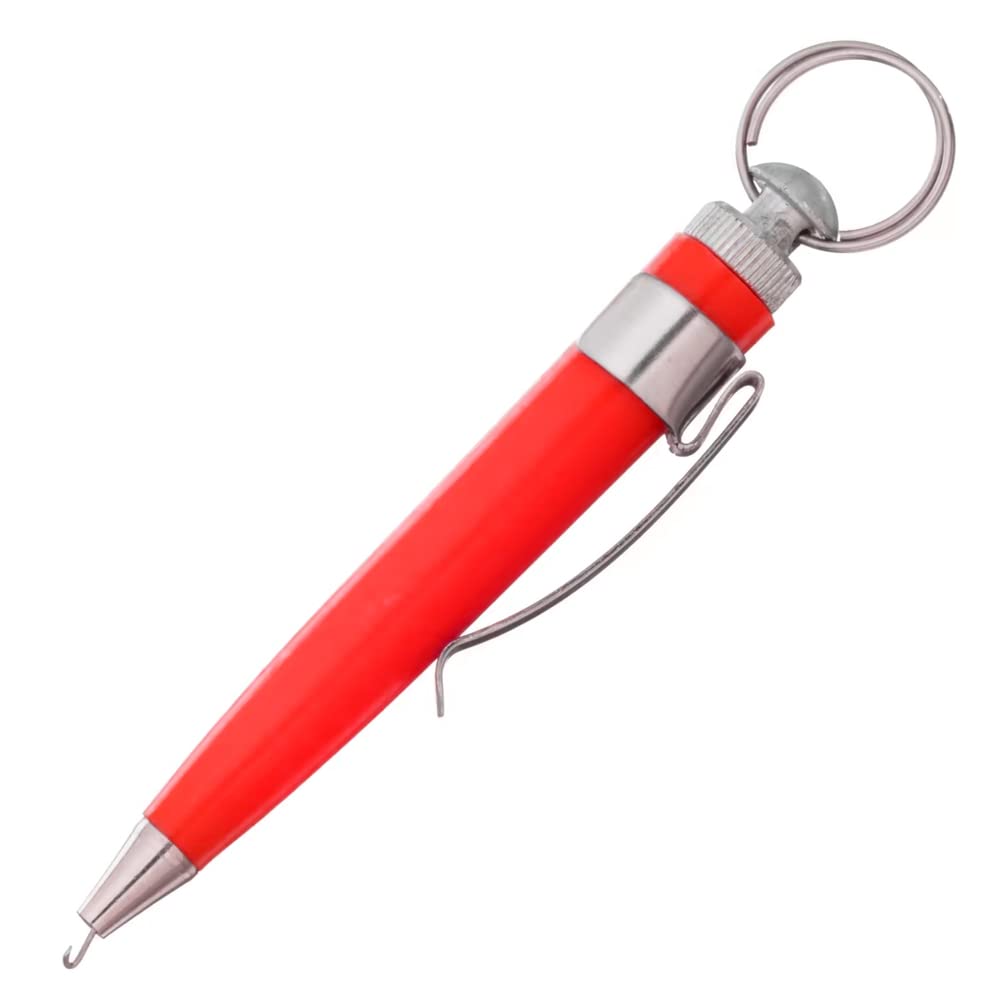
You’ll find this tool makes tying small flies far less fiddly by giving you a secure, easy-to-hold grip on the hook. Clip it to your vest or lanyard and use it as a steady handle while you attach flies to tippet, which is especially helpful when your fingers or eyesight aren’t at their best.
It’s compact enough for travel and simple enough to become a regular part of your tying routine.
What People Say
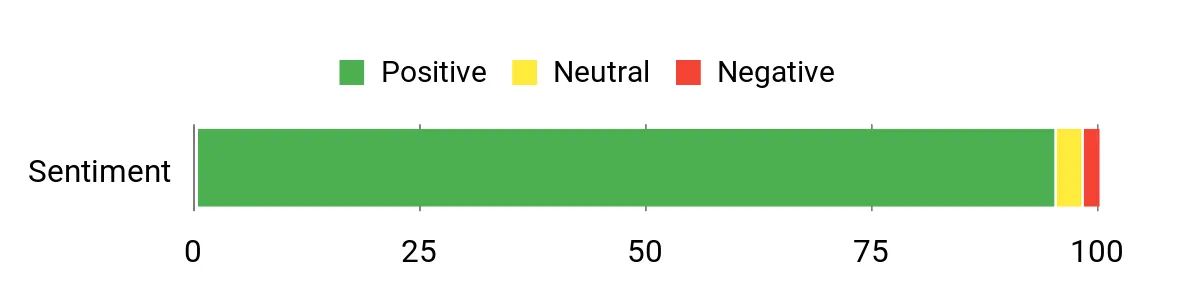
You’ll see users often praise how the tool restores confidence when tying tiny hooks, especially for those with reduced dexterity or eyesight. Many call out the clip-on convenience and how it prevents flies from slipping while you work.
A handful mention it’s best for standard and larger flies rather than ultra-tiny micro patterns.
Overall Sentiment: Positive
Situational Benefits
|
Situation |
How It Helps |
|---|---|
|
Tying Small Flies |
Acts as a stable handle so you can control the hook and thread without fumbling. |
|
Teaching Beginners |
Gives learners a predictable grip point, making demonstrations and guided tying easier. |
|
Limited Dexterity |
Reduces the need for fine fingertip control by providing a larger surface to hold. |
|
On‑Stream Adjustments |
Clip it to your vest and use it for quick leader or fly changes without sitting at a bench. |
Versatility
Simple, single-purpose design that still fits multiple workflows: bench tying, roadside fixes, and teaching scenarios.
Key Benefits
- Provides a stable, easy-to-grip handle when tying small flies
- Clips to vest, pack, or lanyard for quick access
- Reduces dropped flies and accidental pricks during tying
- Works with standard and larger fly sizes for versatility
Rating: 5.0 (total: 5+)
On the Nature of Animals

You’ll find this edition useful as a thoughtful companion to time on the water. Aelian’s anecdotes and natural history observations help you see animal behavior with more nuance, which can sharpen your instincts for insect hatches and fish activity. It’s light enough to carry on a trip and substantial enough to return to when you want context or a fresh way to watch the river.
What People Say
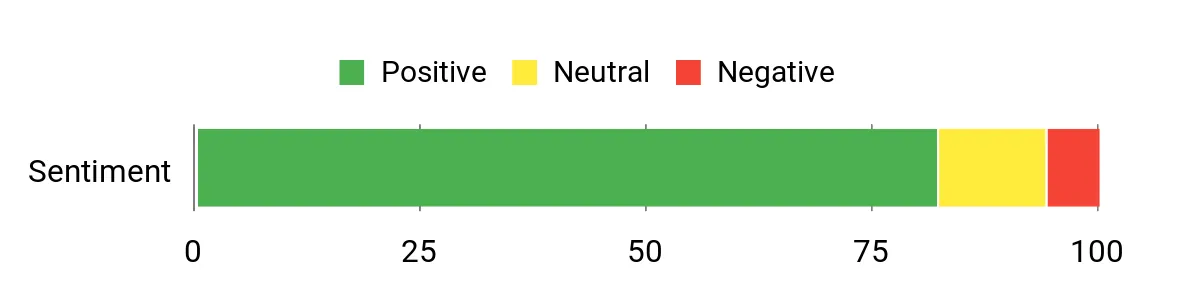
Reviewers generally appreciate the book’s readable translation and the insight it brings into animal behavior. Many note the compact size and clear organization make it easy to dip into on breaks, while others value the thoughtful commentary that ties ancient observations to modern natural history. A few readers mention the material can be uneven in focus, but most find it rewarding and stimulating.
Overall Sentiment: Positive
Situational Benefits
|
Situation |
How It Helps |
|---|---|
|
Pre‑Trip Reading |
Offers short, engaging passages that help you tune your attention to natural cues before heading out. |
|
Field Observation |
Provides context for animal behaviors you notice on the river, improving how you interpret insect and fish activity. |
|
Tying Inspiration |
Anecdotes about insects and small animals can spark pattern ideas or subtle adjustments to imitation profiles. |
|
Downtime Learning |
Compact chapters let you read a segment between casts or during a quiet evening, adding depth to your angling knowledge. |
Versatility
Suitable as light travel reading, a reference for natural history-minded anglers, and a source of observational exercises to practice on the water.
Key Benefits
- Readable translation that makes classical natural history approachable
- Compact format you can take on trips or read between sessions
- Rich anecdotes that refine observation skills useful to anglers
- Offers historical perspective on animal behavior and ecology
Rating: 4.6 (total: 9+)
Complete Fly Fishing
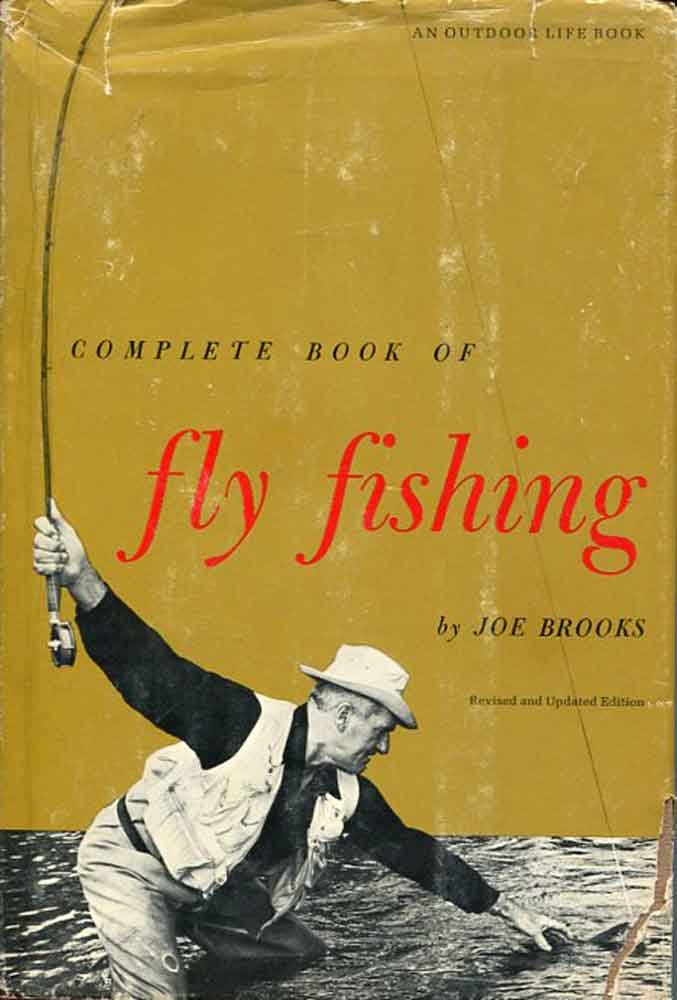
You’ll find this book reads like a mentor on paper: practical techniques, clear explanations of presentation and gear choices, and stories that clarify when and why certain approaches work. It’s useful for building fundamentals at home and for reference on trips when you need a quick reminder about tactics or fish behavior.
Keep it on your shelf for steady development and reach for it when you want technique-driven guidance rather than trends.
What People Say
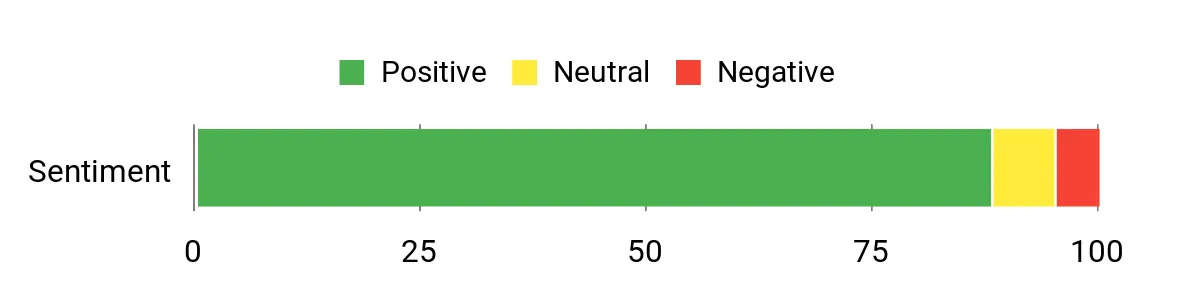
Readers consistently value the book’s depth and the author’s practical experience, saying the techniques still hold up decades after publication. Many highlight its clear, no-nonsense approach to presentation and strategy, and several note it’s a book you return to as your skills evolve. A small number of buyers mention edition or condition issues, but the instructional content remains the main attraction.
Overall Sentiment: Positive
Situational Benefits
|
Situation |
How It Helps |
|---|---|
|
Learning Fundamentals |
Breaks down casting, presentation, and reading water so you can focus practice on core skills that improve catch rates. |
|
Pre‑Trip Refresh |
Quickly revisits tactics and fly selection to help you plan a session for a specific stream or species. |
|
On‑Bench Study |
Short chapters and practical notes let you digest technique and apply it during tying or practice sessions. |
|
Teaching Others |
Clear explanations and real‑world examples make it easy to guide a novice through basic concepts and decision making. |
Versatility
Valuable as both a learning text for new anglers and a compact reference for experienced fishers who want to revisit core tactics and presentation strategies.
Key Benefits
- Time-tested instruction that focuses on fundamentals and presentation
- Practical tactics that translate directly to river scenarios
- Readable, experience-driven advice useful across skill levels
- Compact format makes it easy to consult between sessions
Rating: 4.7 (total: 16+)
Trout Bum
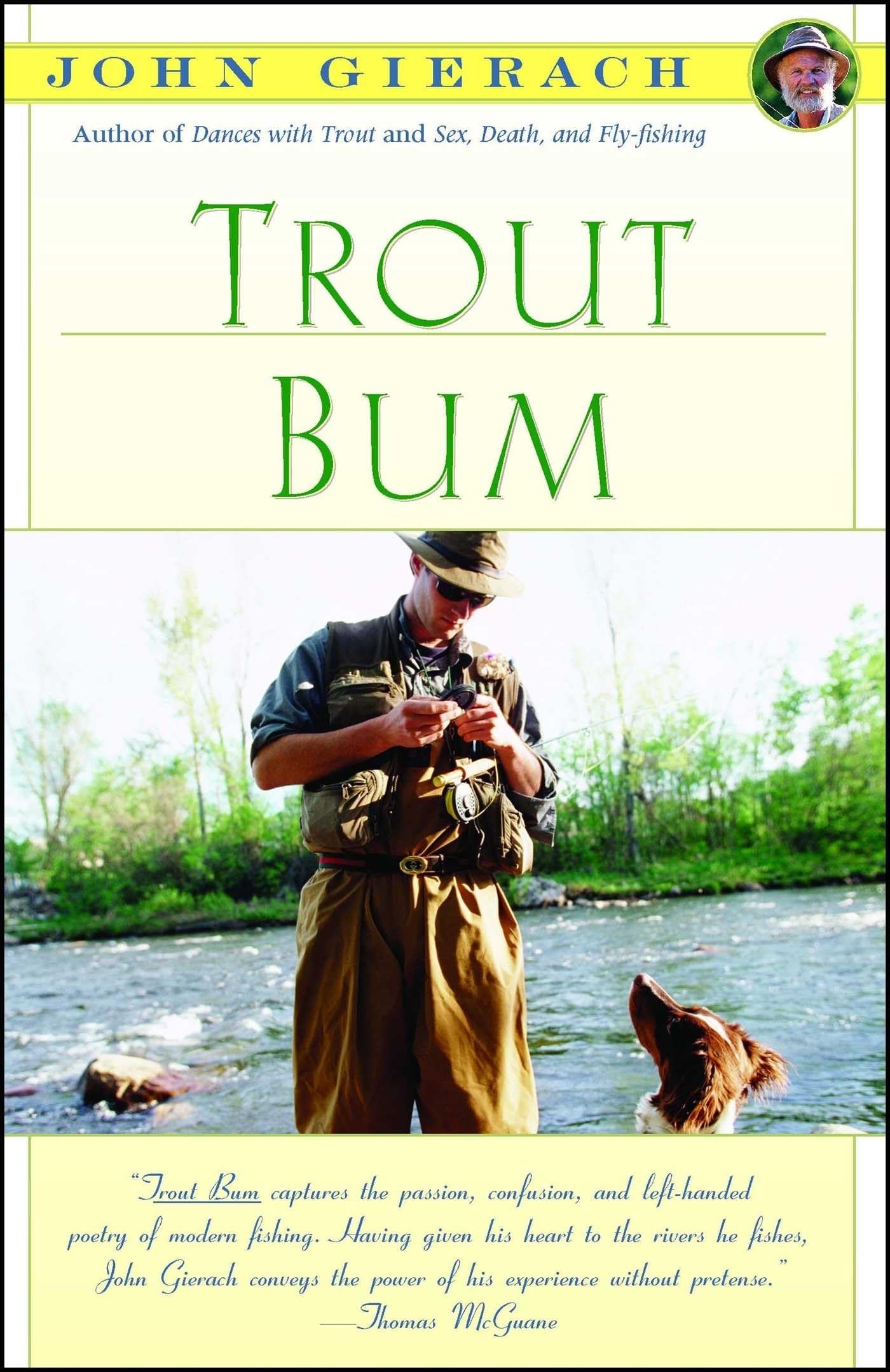
You’ll find Trout Bum reads like time spent on the river with a thoughtful companion. The essays mix humor, practical observations, and the kind of reflection that sharpens how you watch water and insects.
It’s light enough to carry on a trip, useful for downtime between casts, and often sparks ideas about technique and tactics without feeling like a how‑to manual. If you want a book that connects the culture and craft of fly fishing, this is an easy, rewarding pick.
What People Say
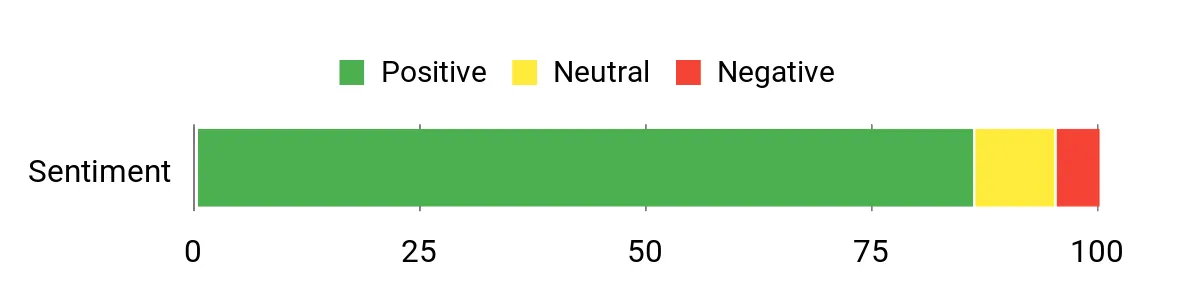
Readers frequently praise the book’s voice and storytelling, saying the essays are both entertaining and thought‑provoking. Many mention the relatable anecdotes and how the writing captures familiar river moments, while others note it’s a book you return to for perspective rather than step‑by‑step instruction.
Overall Sentiment: Positive
Situational Benefits
|
Situation |
How It Helps |
|---|---|
|
Pre‑Trip Reading |
Short essays help you relax and mentally prepare, tuning your attention to the details that matter on the water. |
|
Between Casts |
Compact chapters are perfect for quick reads during breaks, keeping you inspired without losing focus. |
|
Group Trips |
Stories and observations make for easy conversation starters and shared laughs around the campfire. |
|
Gift For Anglers |
Accessible prose and broad appeal make it an appreciated present for both newcomers and veteran fishers. |
Versatility
Works as casual reading, a source of angling perspective, and light inspiration for technique and observation; suitable for travel, camp, and the bookshelf.
Key Benefits
- Entertaining essays that capture the rhythm and culture of fly fishing
- Readable vignettes that are easy to digest between sessions
- Blends observation and philosophy to deepen your on‑water awareness
- Widely recommended by anglers for both new and seasoned readers
Rating: 4.6 (total: 915+)
A River Runs Through It
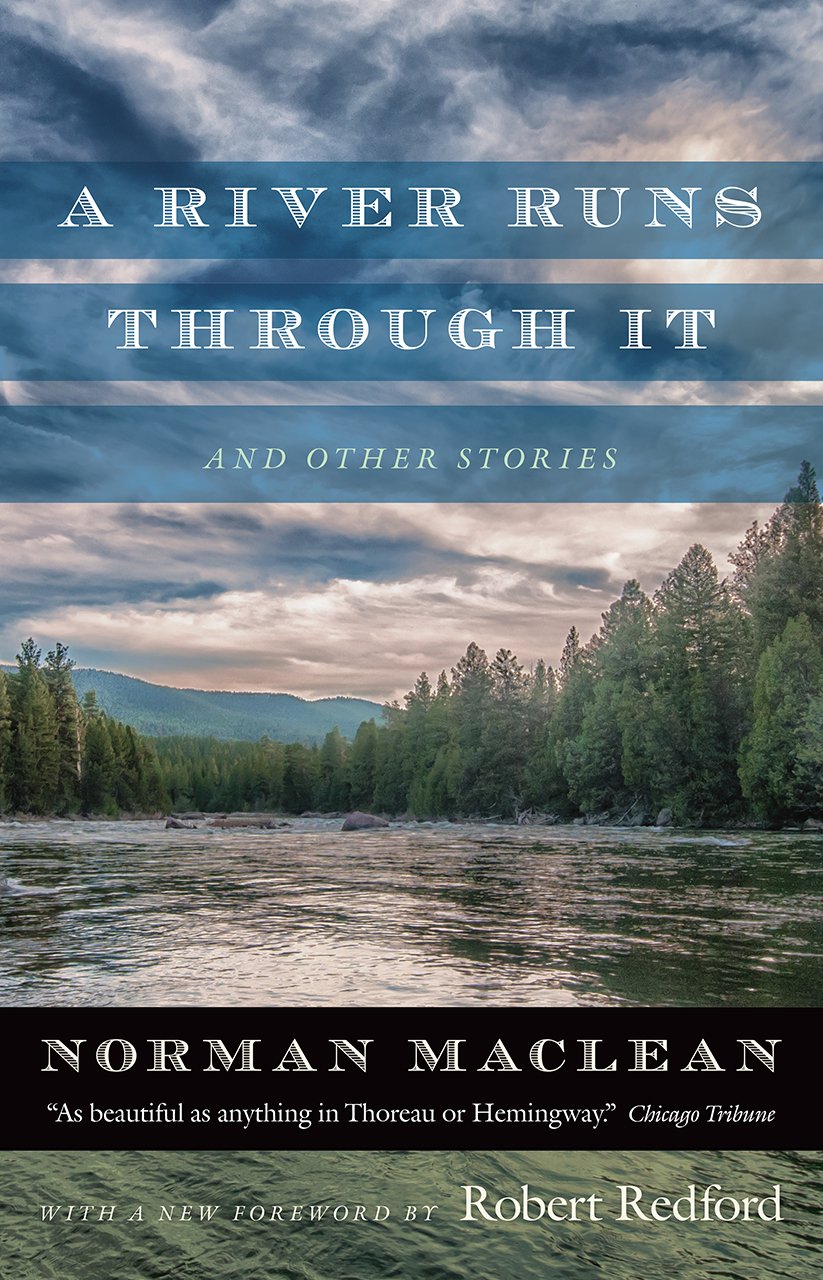
You’ll find this book reads like a quiet session on the river—meditative and precise. The title story in particular connects casting and observation to larger questions about family and purpose, so it resonates whether you fish or simply appreciate nature writing. It’s compact enough to carry on a trip and rich enough to return to when you want a reminder of why paying attention matters.
Treat it as reading that sharpens how you watch water and people.
What People Say
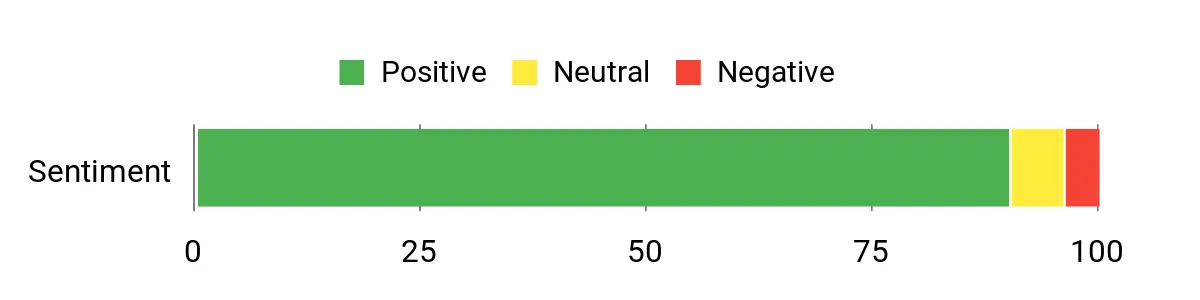
Readers often highlight the strength of the writing and how the stories stay with you long after reading. Many praise the title novella for its emotional depth and the way it frames fly fishing as both craft and metaphor. Several note the book’s portability and suitability as a thoughtful gift for anglers and non-anglers alike.
Overall Sentiment: Positive
Situational Benefits
|
Situation |
How It Helps |
|---|---|
|
Pre‑Trip Reading |
Short, evocative chapters set the right mood and sharpen your attention before you head to the river. |
|
Between Casts |
Compact essays and stories fit neatly into short breaks, giving you something meaningful to read without losing the flow of a day. |
|
Campfire Conversation |
The book’s themes spark discussion about technique, memory, and why we fish, making it great for group trips. |
|
Gift Giving |
Its reputation and accessible prose make it an appreciated present for anglers who value both craft and reflection. |
Versatility
Serves as literary reading, a source of angling perspective, and a compact travel companion that appeals to both fishermen and general readers.
Key Benefits
- Lyrical prose that deepens your appreciation of angling and landscape
- Short, evocative stories suitable for brief reading sessions
- A memorable title novella that connects technique with life themes
- Widely regarded as a staple of fishing literature and thoughtful gift material
Rating: 4.6 (total: 3562+)
FAQ
What Gear Do I Need To Start?
You want a simple, reliable outfit that lets you focus on learning rather than gear drama. Start with a medium‑action rod and a matched reel spooled with a floating line, plus a few leaders, tippets, and a small fly selection; add compact tools such as pliers or forceps, a cutter, and a floatant so you can handle routine tasks on the water.
Complement that kit with a quality reference like the Orvis Fly‑Tying Guide to speed up tying and fly selection as you progress.
How Can I Learn Casting Quickly?
Short, focused practice sessions beat long, unfocused hours when you’re starting out, so spend ten to fifteen minutes working on basic timing and smooth acceleration. Break the motion into a controlled back cast and a deliberate forward cast while aiming at a specific target and practice roll casts for tight spaces; video feedback or a single lesson from a guide will correct common faults faster than solitary practice.
Gradually increase distance only when your line control and loop shape are consistent.
How Do I Keep Flies Floating And Handle Fish Responsibly?
To keep dries working well, learn the difference between liquid and powdered treatments and use them sparingly to revive float without gumming hackle; liquid penetrants like GINK suit deep conditioning while powder with a small brush is great for quick touchups. When you land fish, wet your hands before handling, use pliers or a clamp to remove hooks, minimize air exposure, and release fish in the water after a gentle recovery so they swim off strongly.
Choosing barbless hooks or pinching barbs reduces handling time and lowers injury risk, which helps both fish and your catch rate over time.
Customer Preferences
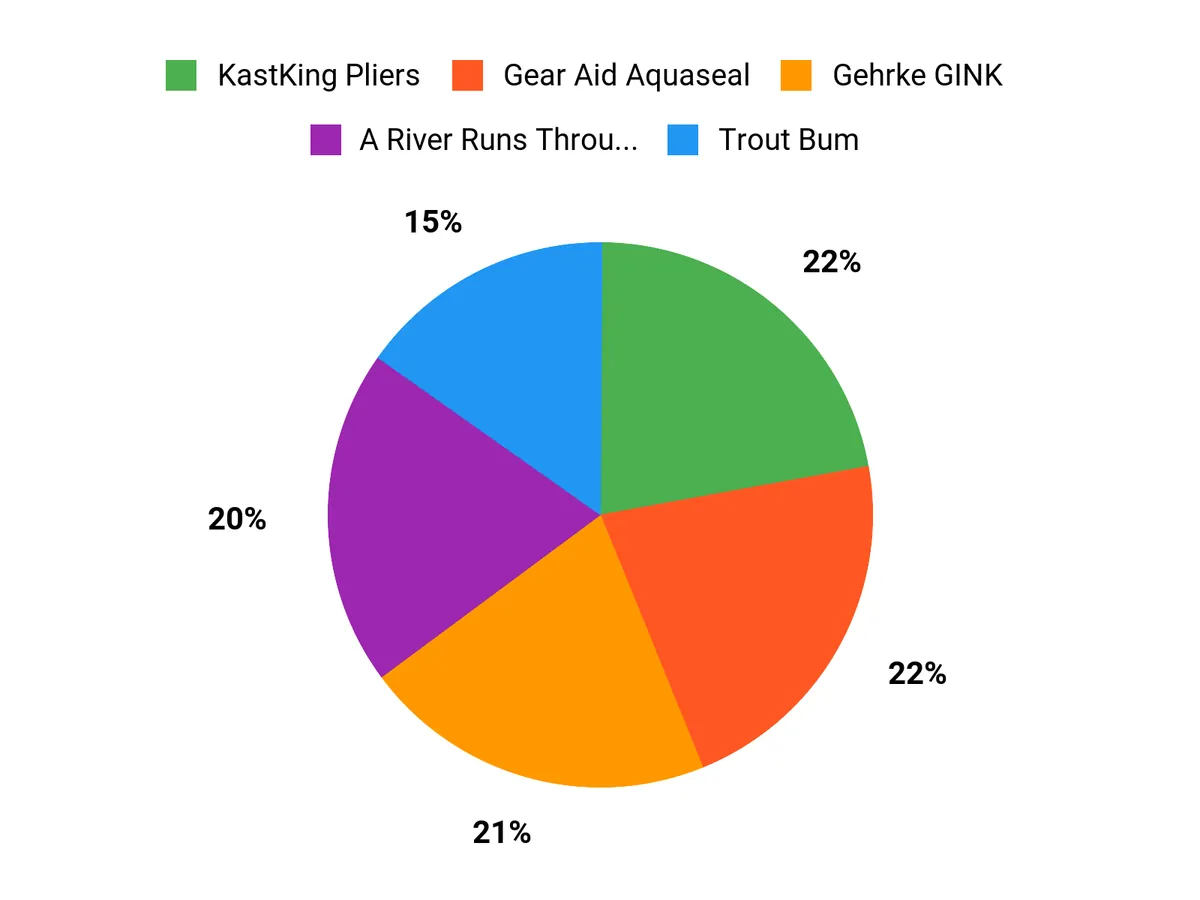
You tend to prioritize learning resources versus practical utility: choose the Orvis Fly‑Tying guide when you want structured instruction and a library of patterns to develop your skills, and opt for the Umpqua Rivergrip or KastKing pliers when you need durable, easy‑to‑use tools on the water. Between the two tool options you’ll weigh clamp and grip security against corrosion‑resistant cutters and one‑hand operation, generally picking the Rivergrip for precise hook work and the KastKing for versatile cutting and rigging.
Wrapping Up
You can make fast progress when you choose tools that match the tasks beginners face: learning to cast, keeping flies afloat, handling fish, and fixing gear in the field. Start with solid instruction like the Orvis guide, add a dependable clamp or pliers for fish and line work, and carry simple maintenance items such as floatant and adhesive so small problems do not cut a day short.
Practice your casts in short, focused sessions and maintain a compact kit so you spend more time on the water and less time troubleshooting.
| Product Name | Image | Rating | Material | Weight | Dimensions |
|---|---|---|---|---|---|
| The Orvis Fly-Tying Guide |
|
4.8/5 (N reviews) | N/A | 2.33 pounds | 8.54 x 1.05 x 11.01 inches |
| Umpqua River Grip 6” Scissor Clamp |
|
4.5/5 (139 reviews) | Stainless Steel | 2.08 ounces | N/A |
| KastKing Cutthroat 7 inch Fishing Split Ring Pliers |
|
4.6/5 (6,420 reviews) | Stainless Steel, Tungsten Carbide | 0.01 ounces | 7.2″L x 3″W |
| Booms Fishing FC2 Fishing Knot Tying Tool |
|
4.3/5 (943 reviews) | Stainless Steel | 0.04 kilograms | 5.08 x 3.94 x 0.75 inches |
| Gehrke-Feets GINK Fly Pro Original Flotant |
|
4.7/5 (3,929 reviews) | Polycarbonate | 4.54 g | N/A |
This Roundup is reader-supported. When you click through links we may earn a referral commission on qualifying purchases.