

Last Updated on September 11, 2026 by Logan Reeves
Surf fishing does not require a huge tackle collection, but your first trips are much easier when the gear matches the beach, target species, and conditions. Start with a suitable rod and reel, dependable line and leader, a few sinkers and rigs, basic tools, and compact storage. Then adjust hook size, sinker weight, bait, and leader strength for the fish and surf in front of you.
Quick Answer
For beginner surf fishing, bring a surf-capable rod and reel, main line and leader, hooks or pre-tied rigs, sinkers matched to the current, bait or a few lures, pliers, a measuring device, a sand spike, and a compact tackle bag. Check local fishing rules and surf conditions before you cast.
Key Takeaways
- A simple setup is easier to learn with than a bag overloaded with specialized tackle.
- Match the rod rating, line, leader, hook, and sinker to the species and surf conditions rather than using one setup everywhere.
- Hi/lo rigs are useful for bottom fishing with multiple bait positions, while sliding rigs let a fish move with the bait before feeling as much sinker resistance.
- Saltwater quickly affects hooks, swivels, reels, and other metal parts, so rinse and dry gear after each trip.
- Fishing licenses, size limits, seasons, bait restrictions, and hook rules vary by jurisdiction and can change.
At a Glance
| Time Required | About 15–30 minutes to organize and rig a basic beginner setup before fishing |
| Difficulty | Beginner |
| Tools Needed | Rod and reel, line and leader, hooks/rigs, sinkers, bait or lures, pliers, measuring tool, sand spike, and tackle storage |
| Cost | Varies widely depending on the rod, reel, terminal tackle, and gear you already own |
Warning: Surf conditions can change quickly. Check the local beach and marine forecast, avoid turning your back on breaking waves, use extra care around rocks and jetties, and do not wade farther than your swimming ability and conditions allow. Before casting, make sure nobody is behind or beside you where a hook or sinker could strike them.
Affiliate disclosure: This roundup is reader-supported. When you click through qualifying affiliate links, we may earn a referral commission at no extra cost to you.
Top Picks
|
Category |
Product |
Original Editorial Score |
|---|---|---|
|
💼 Best Compact Bag |
92/100 |
|
|
🎯 Best For Stripers |
78/100 |
|
|
💰 Best Value Rigs |
90/100 |
|
|
🔰 Best Striper Rig |
85/100 |
Note: The scores above are the original roundup’s editorial comparison scores. They are not laboratory measurements or live marketplace ratings. Product availability, customer ratings, and review totals can change.
How We Chose These Picks
Beginner surf-fishing gear should be simple enough to use on a windy beach, durable enough for repeated saltwater exposure, and compact enough to carry while you move between productive spots. We therefore looked at portability, ease of setup, saltwater-suitable construction, leader and hook specifications, storage convenience, and whether each item fills a clear role rather than adding unnecessary gear.
The four products below do not replace a complete rod-and-reel setup. Think of them as supporting pieces: one compact lure bag and three pre-rigged terminal-tackle options for different styles of bait fishing.
Surf Fishing Gear Checklist for Beginners
Rod and Reel
A versatile beginner surf setup is usually easier to manage than an extra-heavy outfit. For many moderate-surf situations, a rod around 9–10 feet paired with a suitably sized spinning reel is a practical starting point because it provides useful casting distance without becoming unwieldy. Larger bait, heavier sinkers, rougher water, and bigger target species may require a stronger rod and reel.
Always stay within the rod manufacturer’s lure- or sinker-weight rating. A heavy sinker accelerated during a cast places far more load on a rod than the same sinker hanging motionless.
Main Line and Leader
Braided main line is popular because its thin diameter provides good line capacity and bite sensitivity, while monofilament remains forgiving and inexpensive. A practical starting point for many general surf setups is roughly 20–30 lb braid with a 20–40 lb leader, but abrasion, rocks, toothy fish, large bait, and heavy surf can justify different strengths.
Inspect the final several feet of line often. Shells, rocks, sand, fish teeth, and repeated casting can damage line before the weakness is obvious.
Sinkers and Rigs
Your sinker needs enough grip to keep bait in the strike zone without exceeding the rod’s casting rating. Pyramid-style sinkers are common on sandy beaches because their shape helps resist rolling. Start light enough to cast comfortably, then increase weight if your rig repeatedly sweeps down the beach.
A hi/lo rig places hooks at different heights and works well for presenting bait near the bottom. A sliding or fish-finder-style rig lets line move through or past the sinker connection, which can give bait a more natural presentation. Neither rig is automatically better; choose according to target species, bait, current, and local rules.
Bait and Lures
Natural bait can be an easy way to start because you can place it in a likely feeding lane and let scent work while you learn to read the water. Common local choices may include shrimp, squid, clams, worms, or cut bait, depending on the species and regulations.
If you prefer active fishing, a small selection of bucktails, metal jigs, soft plastics, or swimming plugs covers many situations without filling an entire tackle box. Match lure size and retrieve speed to visible bait and the species present.
Small Tools That Matter
- Pliers or a dehooking tool
- Line cutters
- A legal measuring device
- A sand spike or rod holder
- Spare leaders, swivels, snaps, hooks, and sinkers
- A small towel and drinking water
- Headlamp if fishing near dawn or dusk
- Appropriate footwear for the beach or rocks
- Any required fishing license, registration, or permit
Pro Tip: Do not assume the longest cast is the best cast. Fish often feed in troughs, cuts, current seams, and washes surprisingly close to shore. Make a few controlled casts at different distances before repeatedly trying to reach the horizon.
How to Set Up Your First Surf Fishing Session
1. Check Conditions and Rules
Before leaving home, check the marine or beach forecast, tide information, access rules, fishing license requirements, species seasons, size and possession limits, and hook restrictions. Regulations can change, so use the fish-and-wildlife agency for the state or jurisdiction where you will actually fish.
2. Look for Fish-Holding Water
When you reach the beach, spend a few minutes watching the surf. Look for deeper troughs parallel to shore, breaks or low spots in sandbars, changes in water color, foam or current seams, diving birds, and visible bait. Those features can be more useful than simply choosing the emptiest section of sand.
3. Build a Simple Rig
Connect your leader or pre-tied rig securely, attach a sinker appropriate for the surf, and add bait or a lure. Check every knot and clip before the first cast. If using a pre-tied rig, inspect it too; factory or hand-tied gear can still be damaged during storage or transport.
4. Cast Safely and Fish Different Distances
Check behind you before every cast. Start with a smooth cast rather than maximum force, especially when learning to throw heavier sinkers. Try the near trough first, then gradually work farther water if necessary.
5. Adjust Instead of Waiting Indefinitely
If the sinker will not hold, change sinker weight or shape within your rod’s rating. If bait repeatedly returns untouched, move along the beach or change distance. If leaders fray or rigs tangle, inspect your casting technique, connections, and terminal tackle before continuing.
Striper Tackle Bag

This compact F.J. Neil-style surf plug bag is useful when you would rather carry a focused lure selection than a full tackle box. Current descriptions of the small Surf Rite Supreme version identify a three-tube layout, adjustable shoulder strap, drainage openings, and a water-repellent nylon fabric with polyurethane backing.
That makes it best suited to plugs, bucktails, leaders, pliers, and a few small accessories during mobile surf sessions. Water-repellent construction helps with spray and wet conditions, but it should not be treated as a watertight dry bag or intentionally submerged.
What People Say
The original article’s review snapshot describes generally positive feedback about the bag’s light weight, compact dimensions, strap options, and ability to hold a focused selection of surf lures. It also notes some complaints about limited room in smaller pockets.
Because marketplace reviews and totals change, use the live product listing for the latest customer feedback rather than treating this snapshot as permanent.
Overall Sentiment: Positive

Durability
The bag body is described as heavy-duty water-repellent nylon with polyurethane backing and a durable finish. That construction is better suited to abrasion from normal beach use than a lightweight everyday fabric, although sharp hooks should still be stored carefully.
Water Resistance
The fabric is designed to repel water and spray, and the small bag includes drainage, but it is not a substitute for a sealed waterproof container. Air-dry it after wet outings instead of closing it up with damp lures and leaders inside.
Key Benefits
- Compact three-tube layout for a focused selection of surf lures
- Water-repellent nylon construction with polyurethane backing
- Shoulder-strap and belt-carry options for walking the beach
- Secure flap design and drainage suited to surf use
Original rating snapshot: 4.5/5 (129+ reviews in the supplied article; live totals may differ)
Eagle Claw Rig
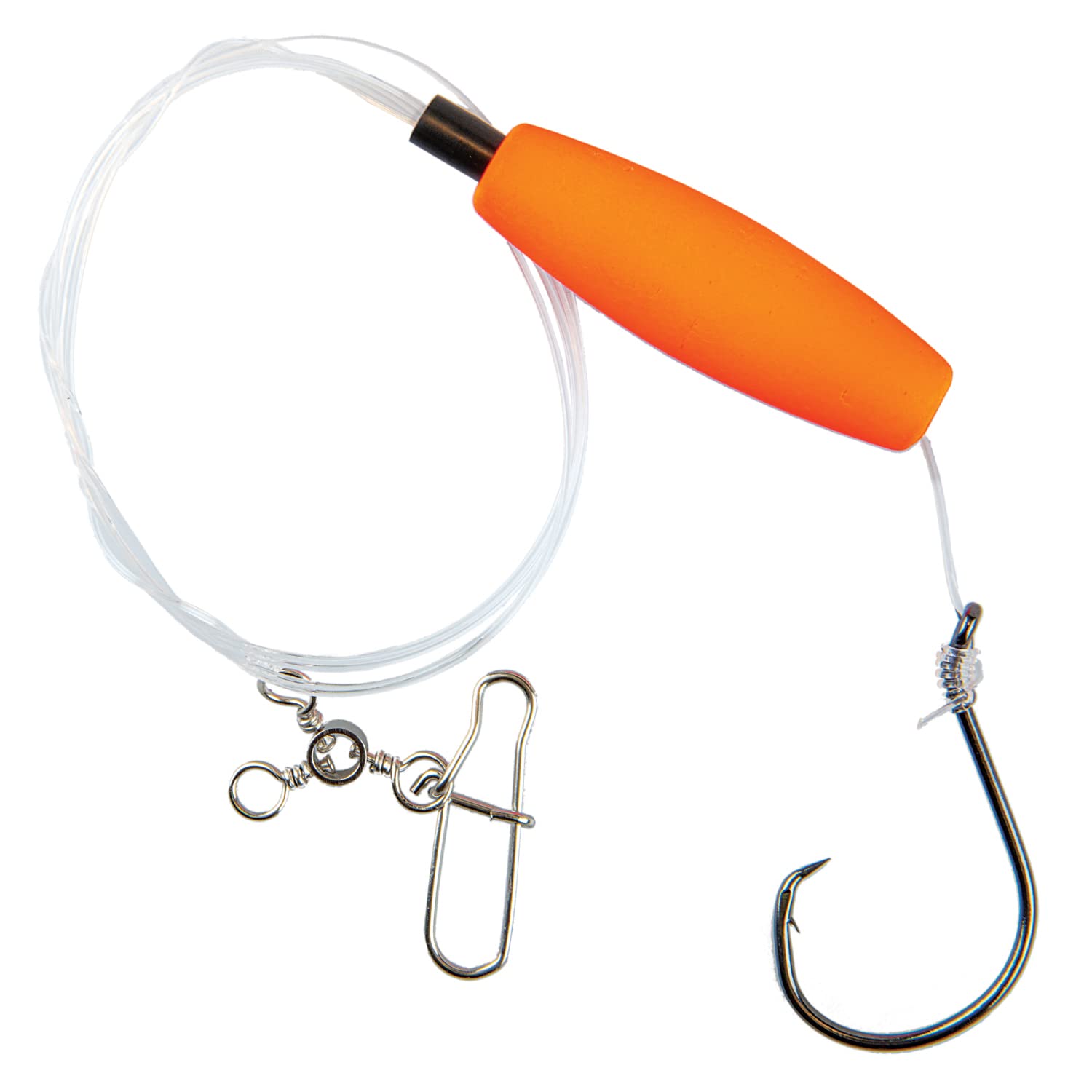
The Eagle Claw Lazer Sharp L917-C1 is sold as a circle-hook striped-bass float rig. The manufacturer’s current product name specifies a 2-1/4-inch float and a package quantity of one; it does not identify 2-1/4 inches as the hook size.
This type of pre-rigged setup is convenient when you want to spend less time tying terminal tackle on the beach. Before using it for striped bass with natural bait, however, confirm that its hook configuration meets the current circle-hook definition and other gear rules in your jurisdiction.
What People Say
The original article summarizes buyer feedback as mixed to neutral, with positive comments around convenience and straightforward setup and some complaints involving packaging or component consistency.
That feedback should be treated as a historical review snapshot because live ratings and customer comments can change.
Overall Sentiment: Neutral

Durability
Inspect the hook, knots, leader, float, and connections before each trip and after any hard fight or snag. A ready-made rig is convenient, but it should still receive the same inspection as one you tied yourself.
Water Resistance
Saltwater can corrode exposed metal tackle over time. Rinse the rig gently with fresh water after use, let it dry completely, and replace any hook or connection that shows corrosion or damage.
Key Benefits
- Pre-rigged striped-bass float presentation
- Manufacturer identifies a 2-1/4-inch float
- Package quantity of one according to Eagle Claw
- Compact spare that is easy to keep in a surf bag
Original rating snapshot: 3.9/5 (11+ reviews in the supplied article; live totals may differ)
Uncle Mo’s Rigs

Uncle Mo’s Hi/Lo Sea Bass Rig is a pre-tied bottom-fishing setup intended for Northeast saltwater use. The manufacturer’s current description lists 3/0 black offset Mustad baitholder hooks with attractor beads, a 60-lb monofilament leader, an approximate 36-inch leader length, a ball-bearing power swivel, and a sinker loop.
The manufacturer lists sea bass, porgy, cod, snapper, croaker, sea trout, tautog, spot, blackfish, and fluke among the intended species. Pack options include 1, 5, and 10 rigs.
One important distinction: the manufacturer describes these as offset baitholder hooks. Do not assume they satisfy regulations that specifically require inline or non-offset circle hooks when targeting species such as striped bass with bait.
What People Say
The original article reports generally positive feedback about convenience, component strength, and the ability to fish without tying every rig from scratch. It also records occasional reports of knots or hooks pulling free during hard snags or fights.
Those comments are useful as a snapshot, but always inspect each rig before casting and check current customer feedback if review history matters to your purchase.
Overall Sentiment: Positive

Durability
The 60-lb monofilament leader and heavy-duty terminal components are intended for routine saltwater bottom fishing. Check the dropper loops, hook knots, leader, swivel, and sinker loop after a snag or hard fight because abrasion and sudden shock can weaken any rig.
Water Resistance
The rig is made for saltwater fishing, but that does not make its metal components corrosion-proof. Rinse after use, dry thoroughly, and avoid storing a wet rig inside a closed bag.
Key Benefits
- Pre-tied hi/lo design reduces setup time
- 3/0 black offset Mustad baitholder hooks
- 60-lb monofilament leader and approximately 36-inch rig length
- Ball-bearing swivel and bottom sinker loop
- Available in multiple pack sizes
Original rating snapshot: 4.6/5 (348+ reviews in the supplied article; live totals may differ)
UMT Slider Rig
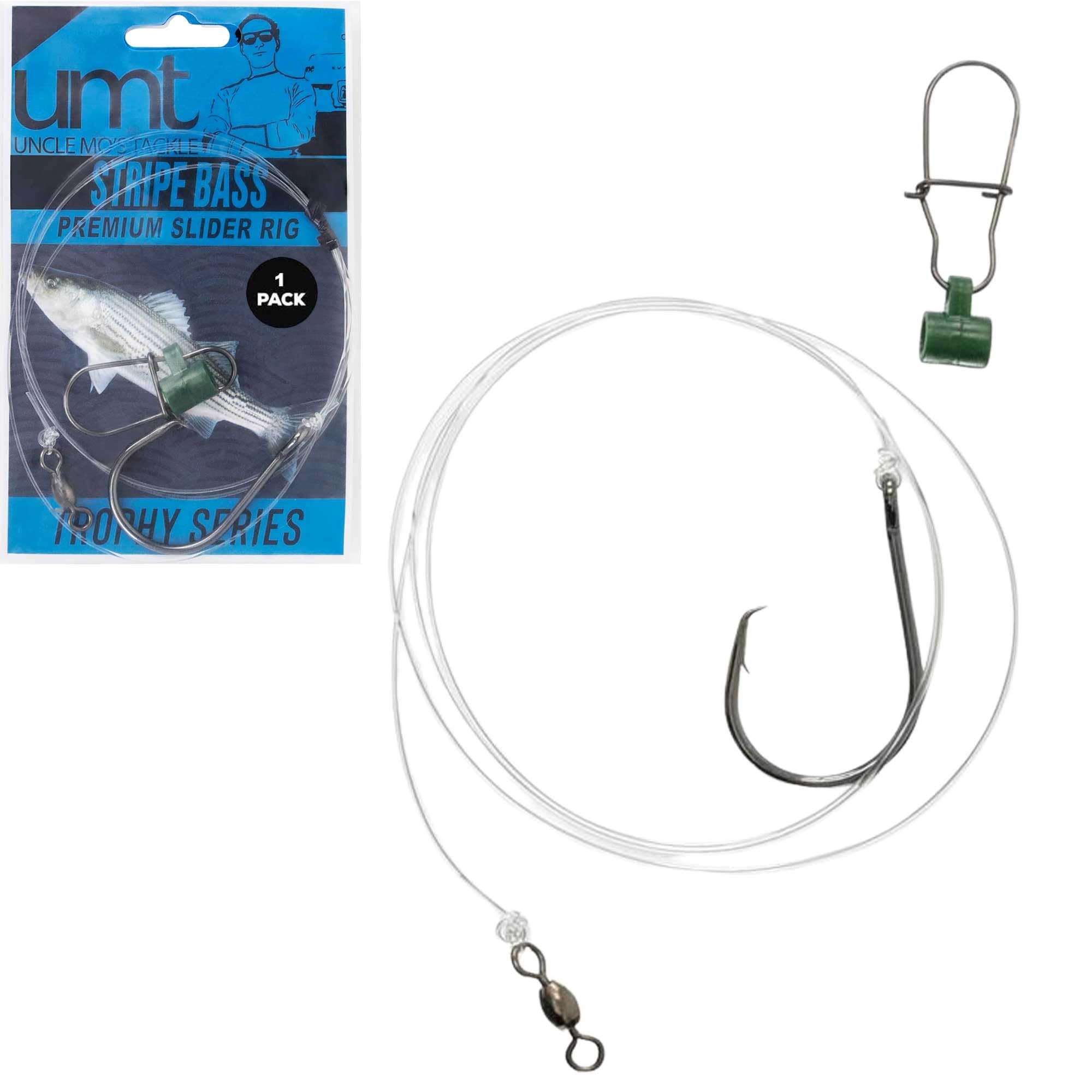
The UMT Slider Rig is designed around a sliding-sinker presentation so the weight can remain near the bottom while a fish can move with the bait with less immediate resistance from the sinker. Current product listings describe a 6/0 inline circle hook, a braid-friendly sinker slide, and a 4-foot 60-lb monofilament leader.
That makes the rig especially relevant to striped-bass bait fishing, but local compliance still depends on the exact rules where you fish. Verify hook definitions, bait restrictions, seasons, and possession rules before using any pre-tied rig.
What People Say
The original article reports generally positive feedback around ease of setup, leader strength, and keeping pre-tied rigs available as backups. It also notes occasional complaints involving missing or imperfect components.
As with the other products, treat this as a snapshot rather than a permanent summary of live customer reviews.
Overall Sentiment: Positive

Durability
A 60-lb monofilament leader gives the rig substantial leader strength for common surf applications, but knots, the slider, hook, swivel, snap, and leader should still be inspected after snags, abrasion, or heavy fish.
Water Resistance
Rinse salt residue from the rig after each trip and let every component dry before storage. Replace hooks or hardware that become rusted, bent, rough, or difficult to operate.
Key Benefits
- Pre-tied slider design for quick deployment
- Current listings specify a 6/0 inline circle hook
- 4-foot 60-lb monofilament leader
- Braid-friendly sliding sinker connection
- Compact enough to carry several pre-rigged spares
Original rating snapshot: 4.4/5 (60+ reviews in the supplied article; live totals may differ)
Frequently Asked Questions
What gear do I need to start surf fishing?
Start with a surf-capable rod and reel, main line, leader material, hooks or pre-tied rigs, several sinkers, bait or a few lures, pliers, line cutters, a measuring tool, a sand spike, and compact tackle storage. Add specialized gear only after you know what your local beach and target species require.
How do I choose the right rig and hook?
Match the rig to your bait presentation, target species, and regulations. Hi/lo rigs are useful for bottom fishing with bait at multiple heights, while sliding rigs let the line move relative to the sinker. Hook size should match the bait and fish, and any circle-hook requirement must be checked against the exact definition used by your local fishery agency.
How should I care for my surf fishing gear?
After fishing, gently rinse salt from reels, rigs, hooks, swivels, tools, and other exposed components with fresh water and let them dry thoroughly. Inspect leaders and knots for abrasion, remove badly rusted hooks, and let wet tackle bags dry before closing them for storage.
What size rod is good for beginner surf fishing?
A rod around 9–10 feet is a practical all-around starting range for many moderate-surf situations because it balances casting reach and manageability. Your ideal rod may be shorter or longer depending on beach structure, sinker weight, lure size, target fish, and how far you actually need to cast.
How heavy should my surf fishing sinker be?
Use the lightest sinker that keeps your bait where you want it while remaining within your rod’s casting-weight rating. Calm water may need relatively little weight, while strong current or rough surf may require more grip. If the rig constantly rolls down the beach, adjust sinker shape or weight rather than simply casting harder.
Do I need a license to surf fish?
Often, yes, but requirements depend on the state, country, age of the angler, fishing location, and species. Some jurisdictions use a license, some use a saltwater registration, and exemptions may apply. Check the official fish-and-wildlife agency for the exact beach and water you plan to fish before your trip.
Angler Preferences
Your best choice depends on how you fish. A mobile lure angler may value the Striper tackle bag most because it keeps a small selection organized while walking the beach. Someone targeting striped bass with bait may prefer a properly compliant inline-circle-hook slider rig, while anglers bottom fishing for sea bass, porgy, fluke, and similar species may appreciate a ready-made hi/lo setup.
Whatever style you choose, durability, easy organization, corrosion care, and matching leader, hook, sinker, and bait to local conditions matter more than carrying the largest possible collection of tackle.
Wrapping Up
As you start surf fishing, keep the setup straightforward. A manageable rod and reel, suitable line and leader, a few sinkers, one or two proven rig styles, basic tools, and compact storage give you enough equipment to learn without spending the whole trip sorting tackle.
Pay attention to beach structure, change casting distance before assuming you need more power, inspect your gear often, rinse away salt after fishing, and check local rules every time regulations or seasons may have changed. Those habits will improve your sessions more than simply adding more equipment.
| Product Name | Image | Original Rating Snapshot | Material | Target Species | Number of Pieces |
|---|---|---|---|---|---|
| Supreme Premium Small Surf Tackle Bag |
|
4.5/5 (129 reviews in original article) | Water-repellent nylon with polyurethane backing | Not species-specific; surf lure storage | 1 |
| Eagle Claw Lazer Sharp Circle Hook Striped BASS 2-1/4′ Float RIG |
|
3.9/5 (11 reviews in original article) | Not specified on current manufacturer page | Striped Bass | 1 |
| Sea Bass Hi/Lo Saltwater Fishing Rigs |
|
4.6/5 (348 reviews in original article) | 60-lb monofilament leader with Mustad hooks and metal terminal hardware | Sea bass, porgy, fluke and other listed saltwater species | 10 |
| UMT 1,5 & 10-Pack Slider Fishing Rigs 6/0 Circle Hook |
|
4.4/5 (60 reviews in original article) | 60-lb monofilament leader with hook, slider and terminal hardware | Striped Bass | 1 |
Sources
- Eagle Claw — Lazer Sharp Circle Hook Striped Bass 2-1/4" Float Rig — manufacturer product name, part number and package quantity.
- Uncle Mo’s Tackle — Hi/Lo Sea Bass Rig — hook type, leader strength and length, swivel, sinker loop and target-species information.
- Atlantic States Marine Fisheries Commission — Atlantic Striped Bass — coastwide striped-bass management and bait-fishing circle-hook requirement.
- Massachusetts Division of Marine Fisheries — 2026 Recreational Striped Bass Rules — example of current state-specific size, possession and inline-circle-hook requirements.
- National Weather Service — Rip Current Safety — surf-zone and rip-current safety guidance.
This Roundup is reader-supported. When you click through links we may earn a referral commission on qualifying purchases.
