

Last Updated on September 11, 2026 by Daniel Globe
A past DUI does not automatically prevent you from traveling to Mexico, but admission is never guaranteed. Mexico does not publish a DUI-specific waiting period or a rule saying every misdemeanor DUI is acceptable. Immigration authorities apply Mexico’s current entry laws to the facts of each traveler’s case, while any U.S. probation, court order, warrant, or passport restriction can create a separate problem before you even reach the border.
Quick Answer
A DUI does not automatically bar you from entering Mexico. Current Mexican law allows immigration authorities to refuse admission when a traveler’s background could compromise national or public security or other legal requirements are not met, but it does not publish a DUI-specific 10-year waiting period. Your case facts and any active travel restrictions still matter.
Key Takeaways
- Mexico does not have a published rule automatically banning every traveler with a DUI.
- There is no official Mexico-specific rule requiring you to wait 10 years after a felony or multiple DUIs.
- Mexican immigration authorities retain discretion under the Migration Law and may question travelers or verify information.
- If you are on probation or supervised release, follow your court and supervision conditions before leaving the United States.
- Court dispositions, proof that requirements were completed, and expungement or sealing orders can help explain your record, but they do not guarantee admission.
Note: This article provides general travel and legal information, not individualized legal advice. Mexican immigration officers make admission decisions, and U.S. probation or court restrictions vary by case and jurisdiction.
Disclosure: As an Amazon Associate I earn from qualifying purchases. Some links on this page are affiliate links, at no extra cost to you.
Can You Travel to Mexico With a DUI?

In many cases, a person with a past DUI can still request admission to Mexico. The important point is that Mexican law does not create a simple rule saying that one misdemeanor DUI is always permitted or that a felony DUI is automatically barred for a fixed number of years.
Mexico’s Migration Law Article 43 allows immigration authorities to refuse a visa, admission, or continued stay when a person’s background in Mexico or abroad could compromise national or public security. It also permits refusal when a traveler does not meet applicable legal requirements, uses inauthentic documents, is subject to an express prohibition by a competent authority, or falls under another applicable legal ground.
That means the details of a DUI matter. A simple completed case is different from an incident involving death, serious injury, additional criminal charges, an outstanding warrant, an unresolved prosecution, or an active court restriction. If your history is complicated, speak with a qualified attorney who can review the exact disposition before you make nonrefundable travel plans.
For ordinary tourism, U.S. citizens generally do not need a Mexican visitor visa for a stay of up to 180 days. However, 180 days is a maximum category period, not a guaranteed admission period. Mexican immigration authorities determine how long you are authorized to stay when you enter.
How Mexico Treats DUI Records
Mexico does not publish a separate immigration statute devoted specifically to DUI convictions. Instead, criminal-history issues are evaluated under the broader grounds contained in Mexican immigration law.
There is no published Mexican rule stating that every DUI causes inadmissibility or that a traveler must wait a fixed number of years after a DUI.
This is why statements such as “one misdemeanor is always fine” or “a felony DUI creates a 10-year ban” are too absolute. The safer conclusion is that a DUI is not automatically disqualifying under a DUI-specific rule, but admission remains subject to Mexico’s general immigration standards and the officer’s lawful assessment.
- The facts surrounding the offense can matter more than the label “DUI.”
- Additional offenses, violence, serious injury, or death can make the situation more complex.
- An unresolved U.S. court restriction can prevent lawful travel even if Mexico would otherwise consider admitting you.
- No past successful crossing guarantees that a future inspection will have the same result.
What Current Mexican Immigration Law Actually Says
Mexico amended Article 43 of its Migration Law in 2021. The current provision focuses on whether a person’s background in Mexico or abroad could compromise national security or public security. It also permits refusal for failure to meet immigration requirements, non-authentic documents, express prohibitions imposed by a competent authority, and other grounds provided by law.
This distinction matters because older articles and summaries sometimes describe Article 43 using earlier wording about being prosecuted or convicted of a “serious crime.” Travelers researching a DUI today should rely on the current law and current government guidance rather than treating an older summary as a fixed DUI rule.
Warning: Do not rely on websites claiming that Mexico imposes an automatic 10-year DUI ban. Current Article 43 does not establish a DUI-specific 10-year waiting period.
When a DUI Can Block Entry
A DUI can still contribute to an entry problem when the surrounding facts raise a more serious legal or public-safety concern. The risk can also come from a separate U.S. restriction rather than Mexico itself.
Situations that deserve extra review before travel include a DUI involving death or serious bodily injury, additional violent or serious charges, an outstanding warrant, unresolved criminal proceedings, a court order prohibiting travel, or active probation or supervised release that restricts international travel.
Mexico does not publish a rule saying that a specific number of DUIs automatically produces a particular exclusion period. Repeat offenses may make a criminal history more complicated, but the official rules reviewed do not establish a simple “two DUIs,” “felony DUI,” or “10 years” formula.
If your record includes more than a straightforward completed misdemeanor case, consider getting advice from an attorney familiar with the conviction and international-travel restrictions before booking the trip.
What Border Officers Look For

Mexican immigration officers can review whether you meet the legal requirements for admission and can interview you about the purpose and circumstances of your trip. Mexican law also allows immigration authorities to request information or data needed to verify the applicable grounds for entry or refusal.
Public guidance does not support assuming that every traveler receives an automatic DUI database search or that every border officer has routine direct access to a specific U.S. criminal-record system. It is therefore better to prepare for questions without making assumptions about exactly what information an officer can already see.
Criminal Record Checks
If criminal-history questions arise, immigration authorities may consider information that is legally available to them and may ask you for additional information. You should not assume that a past conviction is invisible, even if it was old, sealed, or expunged under state law.
- Answer questions truthfully and briefly.
- Do not submit altered or false records.
- Keep useful court documentation accessible if your case history is likely to require explanation.
A past DUI by itself does not establish that you will be refused, but neither an old crossing nor another traveler’s experience guarantees your result.
Questioning At Entry
An immigration officer may ask about your travel purpose, expected stay, accommodation, onward or return plans, and other facts relevant to admission. If the officer asks directly about criminal history, answer accurately.
Trying to hide a material fact or presenting false documentation can create a separate immigration problem. Mexico’s Article 43 expressly permits refusal when documents or information submitted are not authentic.
Stay calm, avoid volunteering unrelated details, and answer the question actually asked. If you are unsure what a legal document means, do not guess about its effect.
Current Entry Documents for U.S. Travelers
A DUI history and ordinary entry documentation are separate issues. Even a traveler with no criminal record must meet Mexico’s passport and immigration-document requirements.
According to current U.S. Department of State guidance for Mexico, air travelers need a passport book. Mexican authorities use the digital Forma Migratoria Múltiple Digital (FMMD) at international airports, and immigration determines the authorized length of stay.
Land travelers should be prepared with acceptable citizenship and identity documentation, and most travelers entering by land need a Forma Migratoria Múltiple (FMM). Requirements can differ for limited border-zone travel, so check the current rules for the port and itinerary you will use.
Pro Tip: Before departure, verify your passport, FMM/FMMD requirements, authorized travel dates, and any court or probation restrictions separately. Solving one issue does not automatically solve the others.
Products Worth Considering

【Travel Must Haves】The passport holder is a great holder for travel essentials. With the versatile elastic band, you can carry the passport holder in your pocket, clip it in your hand or on the handle of your suitcase and know it is safe.

Practical Passport Wallet - The wallet measures 5.9" x 3.9" x 0.6" inches, apart from hold a passport, the passport cover is also a travel wallet, it can store document, receipt, credit card,pen, cash, ticket or boarding pass.

1.Easy Access and Magnetic Button: Our passport wallet features a convenient magnetic button closure, making it easy to access your passport and documents quickly while keeping them secure. Say goodbye to fumbling with zippers and buttons, our passport holder is designed for ease and efficiency
Documents That Help at the Border
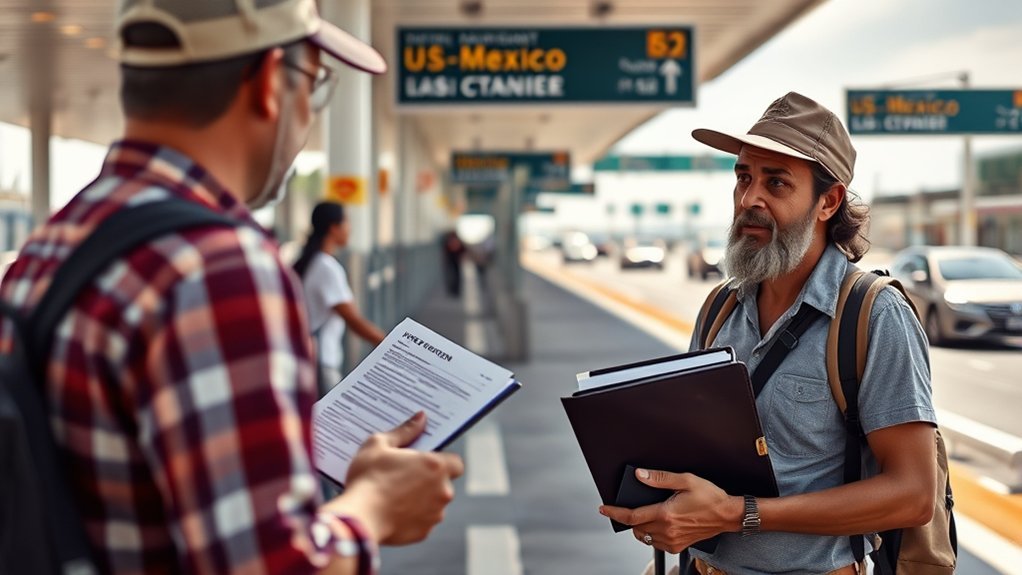
Mexico does not publish a standard mandatory “DUI document packet” for every visitor. Still, organized records can help you explain the status of your case if questions arise.
Useful documents may include the final court disposition, dismissal order, proof that fines or required programs were completed, an expungement or sealing order, and any written travel authorization required by your court or supervision terms.
Proof Of Case Closure
A certified final disposition can show exactly how a case ended. This is more reliable than trying to describe the outcome from memory.
- Final judgment, dismissal, or disposition from the court
- Proof of completed fines, classes, community service, or other requirements when relevant
- Certified expungement, sealing, or set-aside order if one was issued
- Attorney documentation when your case has an unusual procedural history
These records do not force Mexico to admit you. Their purpose is to document the facts accurately if the status of the case becomes relevant.
Probation And Fines Records
If you have completed probation, keeping documentation of completion can help show that supervision has ended. If you are still under supervision, the more important question is whether you are legally allowed to leave the United States.
Do not assume that verbal permission is enough. Your judgment, probation conditions, supervising agency, and court may impose specific procedures for international travel.
For federal supervision, U.S. Courts guidance explains that travel outside the judicial district requires advance permission and that probation officers should obtain the court’s express consent before granting travel outside the United States.
Expungement Or Sealing Papers
If your DUI was expunged, sealed, dismissed, vacated, or otherwise modified, bring the court order that explains exactly what happened. Expungement law differs among U.S. jurisdictions, so the word “expunged” does not have one universal international-immigration effect.
- Use certified copies when reasonably available.
- Keep the final order together with your other travel documents.
- Do not assume sealing makes the event legally nonexistent for every international purpose.
If an immigration officer asks about the case, answer based on the actual wording and legal effect of your disposition rather than assuming that sealing or expungement guarantees that you can answer “no.” Ask your attorney if you are unsure how your order affects a particular question.
Flying to Mexico vs Driving Across
Flying and driving involve different entry-document procedures, but there is no official rule saying that one method gives a traveler with a DUI a more favorable admissibility standard.
Flying: U.S. citizens need a passport book for air travel to Mexico. International airports use the digital FMMD process, and Mexican immigration authorities determine the authorized period of stay.
Driving: Land travelers should carry acceptable passport documentation and, in most cases, obtain an FMM. A traveler taking a U.S.-registered vehicle beyond areas where an exemption applies may also need a separate temporary vehicle import permit, depending on the destination.
The practical difference is paperwork and port procedure—not a guaranteed difference in how Mexican immigration law treats a DUI record. Choose your route based on your trip needs rather than expecting air travel to hide or bypass a criminal-history issue.
Can Old or Expunged DUIs Still Matter?
Yes. An old or expunged DUI can still matter depending on the legal question being asked, the underlying facts, and the effect of the court order. However, an old DUI is not subject to a published Mexican rule that automatically blocks entry for a specific number of years.
Old DUI Records
The age of an offense can be relevant context, especially when a completed case is isolated and no current travel restriction exists. But Mexico’s current law does not provide a simple chart saying that a DUI becomes irrelevant after five, seven, or ten years.
- Know the exact offense and final disposition.
- Confirm that no warrant or travel restriction remains.
- Keep a certified disposition if the case is likely to raise questions.
Do not rely on an anecdote such as “I entered last year with no problem.” Admission is evaluated at the time of each entry.
Expunged DUI Concerns
An expungement or sealing order may change how a conviction appears in public records or how state law treats the case, but it does not create a universal rule for foreign immigration authorities.
If your record was expunged, bring documentation showing the exact order. If an immigration or travel form asks a criminal-history question, read the wording carefully because some questions ask about convictions while others may ask more broadly about arrests, charges, or conduct.
If you do not know how your expungement affects the answer, ask the attorney who handled the case or another qualified lawyer rather than guessing.
Border Check Risks
No traveler can demand admission solely because a DUI is old, expunged, or previously overlooked. Mexican immigration authorities retain legal authority to determine whether admission requirements are satisfied.
- A past DUI does not create a published automatic Mexico ban.
- A complicated criminal history deserves more careful review than an isolated completed case.
- Expungement paperwork can clarify the disposition but does not guarantee entry.
Preparation is more useful than trying to predict whether a particular officer will ask about your history.
Why Probation Can Stop Your Trip
Probation or supervised release can prevent a Mexico trip even when the Mexican entry question is manageable. The restriction comes from the conditions imposed on you in the United States.
Federal supervision commonly restricts travel outside the judicial district. U.S. Courts guidance states that probation officers should obtain express court consent before allowing travel outside the United States. State probation rules vary, so check the actual judgment, supervision agreement, and instructions that apply to your case.
Request approval early enough for any required review. Do not buy a nonrefundable ticket based only on an assumption that your probation officer can approve the trip informally.
Separate passport restrictions can also matter. The U.S. Department of State states that a person certified as owing more than $2,500 in child-support arrears can be denied passport issuance, and a valid passport may be revoked. This is a U.S. passport issue rather than a Mexican DUI rule, but it can still stop international travel.
How to Avoid Border Problems
Good preparation cannot guarantee admission, but it can prevent avoidable mistakes.
- Confirm that your passport is valid for the trip.
- Check whether your entry will use an FMM or FMMD.
- Review your final DUI disposition instead of relying on memory.
- Confirm that no warrant, probation condition, bond condition, or court order restricts your travel.
- Carry useful certified court records when your history is complicated.
- Answer immigration questions accurately and do not submit false documents.
- For a serious, unusual, or unresolved case, obtain legal advice before booking nonrefundable travel.
You can also contact a Mexican consulate for current general entry requirements. However, a consular employee cannot guarantee how an immigration officer will decide your individual admission at the port of entry.
What to Do If You’re Worried About Entry
Start by getting the exact court record for your DUI. Identify the charge, final disposition, date the sentence or supervision ended, and whether any related restrictions remain active.
Next, separate the problem into two questions:
- Are you legally allowed to leave the United States? Check probation, supervised release, bond conditions, warrants, court orders, and passport restrictions.
- Could Mexican immigration have an admissibility concern? Review Article 43 and seek qualified legal advice if your case involved serious injury, death, additional charges, repeat serious conduct, or other unusual circumstances.
If you contact a Mexican consulate, ask about the current law and entry-document requirements rather than asking for a guarantee that you personally will be admitted. The final admission decision is made through the immigration process.
Frequently Asked Questions
How Long Do You Have to Wait to Go to Mexico After a DUI?
Mexico does not publish a DUI-specific waiting period. In particular, current Mexican immigration law does not establish a blanket 10-year wait for a felony or multiple DUIs. Your case disposition, surrounding conduct, current travel restrictions, and Mexico’s general admission rules matter more than a fixed number of years.
Does Mexico Check for DUIs?
There is no official rule stating that every visitor receives a routine DUI check. Mexican immigration authorities can interview travelers, verify entry requirements, and request information or data when legally relevant. Do not assume a record is either automatically visible or automatically invisible.
Has Anyone Been Denied Entry to Mexico With a DUI?
A foreign traveler can be refused entry under Mexican immigration law, including on grounds connected to security, failure to meet entry requirements, false documents, or other applicable legal restrictions. However, official guidance does not provide a reliable DUI-specific denial rate, so claims that denial is either common or extremely rare should be treated cautiously.
What Countries Won’t Let You Enter if You Have a DUI?
There is no reliable universal list because each country uses its own criminal-admissibility rules. Canada is a notable example: impaired-driving convictions may make a traveler criminally inadmissible, although permits or rehabilitation procedures may sometimes be available. For every other destination, check that country’s current official immigration rules rather than assuming one DUI automatically causes refusal.
Do You Have to Disclose a DUI on Mexico’s FMM?
Do not assume that the FMM or FMMD itself requires the same criminal-history disclosure used by another country’s visa application. Complete the current form and immigration process exactly as instructed. If an officer separately asks about criminal history, answer the question truthfully.
Can You Travel to Mexico While on Probation?
Only if your supervision and court conditions allow it and you obtain every required approval. Federal international travel generally requires court involvement in addition to the probation process. State rules vary, so check your actual supervision terms before making travel plans.
Does an Expunged DUI Guarantee Entry to Mexico?
No. An expungement or sealing order can be useful evidence of the current legal status of your case, but U.S. expungement laws vary and the order does not guarantee a particular Mexican immigration decision. Carry the certified order and get legal advice if you are unsure how to answer a criminal-history question.
Sources
- Diario Oficial de la Federación — 2021 reform of Migration Law Article 43 — current statutory grounds relevant to admission decisions.
- Consulate of Mexico — Visitors who do not require a visa — visitor status, FMM, and stays of up to 180 days.
- U.S. Department of State — Mexico travel information — passport, FMMD/FMM, and air/land entry procedures.
- U.S. Courts — Leaving the Judicial District — federal probation and international-travel approval.
- U.S. Department of State — Passports and Child Support Debt — passport restrictions for certified child-support arrears.
- Government of Canada — Convicted of driving while impaired — Canadian criminal inadmissibility rules for impaired driving.
Conclusion
A DUI does not automatically end your chances of traveling to Mexico, but the answer cannot be reduced to “one DUI is fine” or “wait 10 years.” Mexico’s current immigration law does not publish a DUI-specific exclusion period. Instead, immigration authorities apply broader legal grounds and decide whether admission requirements are satisfied.
Before traveling, confirm the exact disposition of your DUI, resolve any probation or court-travel restrictions, make sure your passport and FMM/FMMD requirements are in order, and carry useful court documentation when your history is complicated. If the case involved serious injury, death, additional criminal charges, an outstanding restriction, or another unusual issue, get individualized legal advice before making nonrefundable plans.
