
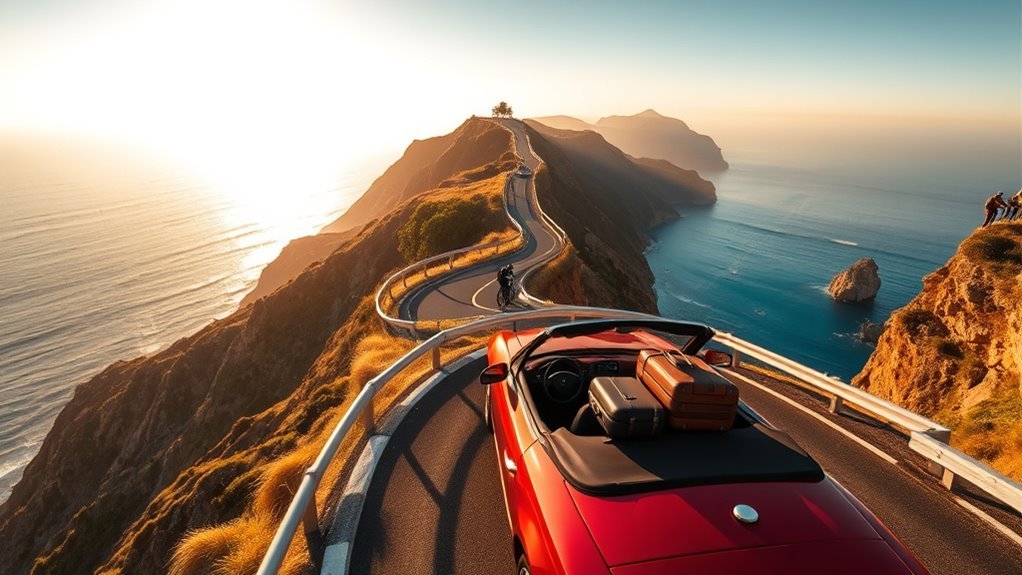
Choose routes with steady traffic, good cell service, and familiar roads, like scenic byways or popular national parks, so you’re never too far from help. Set realistic driving limits, aiming for 6–8 hours a day and avoiding long night stretches. Plan flexible stops with Roadtrippers or iExit, and budget for fuel, lodging, food, and a small emergency cushion. With a few smart choices, your solo trip feels safer, smoother, and a lot more fun as you keep going.
Choose a Safe Solo Road Trip Route

When you’re planning a solo road trip, start with a route that feels both exciting and secure: choose well-traveled roads with strong cell service, and avoid isolated stretches where help could be far away.
Map out your drive with apps like Roadtrippers or Google Maps, and look for safe rest stops, fuel, and lodging before you go. Favor scenic byways or popular national parks, where scenic attractions and steady traffic can make the journey feel freer and more grounded.
Check local driving laws and road culture in each region so you can move confidently through changing rules and customs. Share your itinerary and check-in times with trusted emergency contacts, giving them a clear picture of where you’ll be.
That simple step keeps your independence intact while adding a layer of backup. With the right route, you can roam boldly, stay connected, and enjoy the road on your own terms.
Set Your Driving Limits
Once you’ve mapped a safe route, the next step is to match it to your own energy. You’re not proving anything by pushing past fatigue; you’re protecting your freedom.
Check your personal stamina honestly, and choose distances that fit your driving comfort, not your ego. Aim to drive when you feel sharpest, usually mid-morning or early afternoon, so the road feels steadier and your focus stays strong.
Keep your pace humane, especially if weather turns rough or visibility drops.
- Notice when your attention drifts.
- Respect the miles you can handle.
- Cut back when conditions feel demanding.
Night driving can drain you faster, so avoid long dark stretches when you can. By setting clear limits, you keep control in your hands and make the trip feel expansive, calm, and fully yours.
Plan Stops and Drive Time
How do you keep a road trip lively without letting the miles wear you down? You map your route in Google Maps, then shape it around stops that free you from monotony. Aim for 6–8 hours of driving a day, so you’ve got energy left to wander, stretch, and breathe.
Build in 30 minutes to an hour for each pause, whether you’re chasing scenic viewpoints, grabbing local cuisine, or just resetting at a quiet pull-off. Apps like Roadtrippers and iExit help you spot roadside oddities, useful exits, and hidden gems you might’ve missed.
Check traffic patterns and peak hours before you roll, and watch the weather so you can shift your schedule without stress. When you plan this way, the road feels less like a grind and more like a flowing path, with room for surprise, comfort, and the open-air freedom you’re after.
Budget for Gas, Lodging, and Food
Fuel, beds, and meals can eat through a road-trip budget fast, so it pays to estimate each cost before you hit the highway.
Start with fuel cost estimation: multiply your trip’s miles by your vehicle’s mpg, then divide by gas prices. Apps like GasBuddy can trim costs by about $0.15 a gallon.
Next, weigh lodging discounts. Compare average rates, book early, and watch for 10-30% savings; Airbnb can stretch your dollars on longer stays.
- Set aside $10-20 per meal at casual spots.
- Pack groceries or meals to slash food costs.
- Keep $100-$200 for surprises, so your freedom stays intact.
That cushion can cover an extra night, a dinner, or a repair without trapping your plans.
Track every dollar as you go, and you’ll glide toward open roads with less stress and more control.
Stay Safe on a Solo Road Trip
After you’ve mapped your budget for gas, lodging, and food, shift your focus to the road itself and make safety part of the plan. Choose well-traveled routes, and skip isolated stretches where cell service fades.
Drive by daylight whenever you can; night roads can drain your energy and hide hazards. Before you leave, check tire pressure, brakes, and fluid levels so your car’s ready to carry you freely and reliably.
Share your itinerary with a trusted friend or family member, including stops, overnight locations, and emergency contacts. Keep travel apps handy for navigation and quick updates, but don’t rely on them alone.
Pack a roadside emergency kit with a first aid kit, flashlight, and basic tools. If something feels off, trust yourself, pull over safely, and reassess.
Smart preparation lets you roam with confidence and keep your journey yours.
Frequently Asked Questions
What Is the 3 3 3 Rule for Road Trips?
The 3 3 3 rule means you drive three hours, rest every three hours, and cap your day at 300 miles. You’ll stay sharp, enjoy Roadside Attractions, pack Packing Essentials, and keep your trip freer.
Is There an AI Tool to Make a Travel Itinerary?
Yes—you can use AI Travel Apps for Itinerary Planning like TripIt, Google Travel, Utrip, and Inspirock. You’ll get personalized routes, smart suggestions, and real-time updates that free you from planning stress.
Conclusion
A great solo road trip starts with smart choices. Pick routes with plenty of services, set realistic driving limits, and plan fuel, food, and lodging before you roll out. One striking stat: nearly 7 in 10 drivers say they feel more relaxed when they map out stops ahead of time. That matters because calm driving helps you stay alert and safe. Trust your plan, keep your phone charged, and enjoy the freedom of the open road.