
Last Updated on July 27, 2026 by Daniel Globe
Sarajevo packs centuries of history into a compact city framed by green mountains. A first visit can move from Ottoman-era lanes and Austro-Hungarian architecture to museums about the 1990s siege, traditional Bosnian food, riverside walks, lively markets, and panoramic mountain views—all within a relatively small area.
Quick Answer
Sarajevo’s best experiences combine Ottoman-era Baščaršija, Austro-Hungarian landmarks, the Tunnel of Hope, local food, and mountain views from Trebević. First-time visitors should also make time for the National Museum, Vrelo Bosne, the Miljacka River and Latin Bridge, Markale Market, and—if visiting in August—the Sarajevo Film Festival.
Key Takeaways
- Start in Baščaršija, Sarajevo’s historic Ottoman-era commercial core, and see the Sebilj fountain and traditional craft streets.
- Visit Gazi Husrev-beg Mosque, Vijećnica, the National Museum, and the Tunnel of Hope for a deeper understanding of the city’s layered history.
- Try Sarajevo-style ćevapi, Bosnian coffee, burek or other filled pies, and traditional sweets such as baklava.
- Ride the cable car toward Trebević for mountain scenery and the former 1984 Olympic bobsleigh track, but remain on established routes.
- Allow at least two full sightseeing days if you want to combine the historic center with Trebević, Vrelo Bosne, and museums without rushing.
Disclosure: As an Amazon Associate I earn from qualifying purchases. Some links on this page are affiliate links, at no extra cost to you.
Explore Baščaršija and the Sebilj Fountain
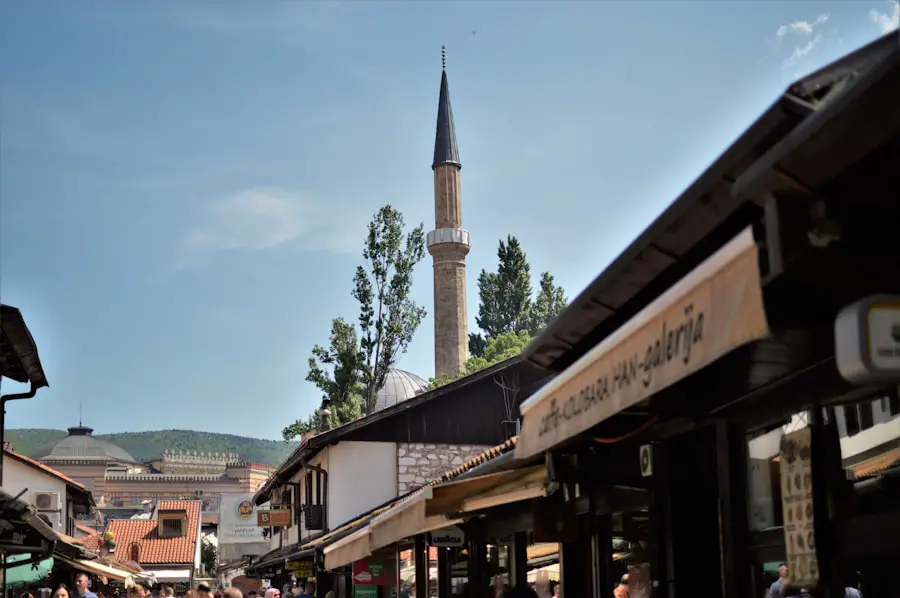
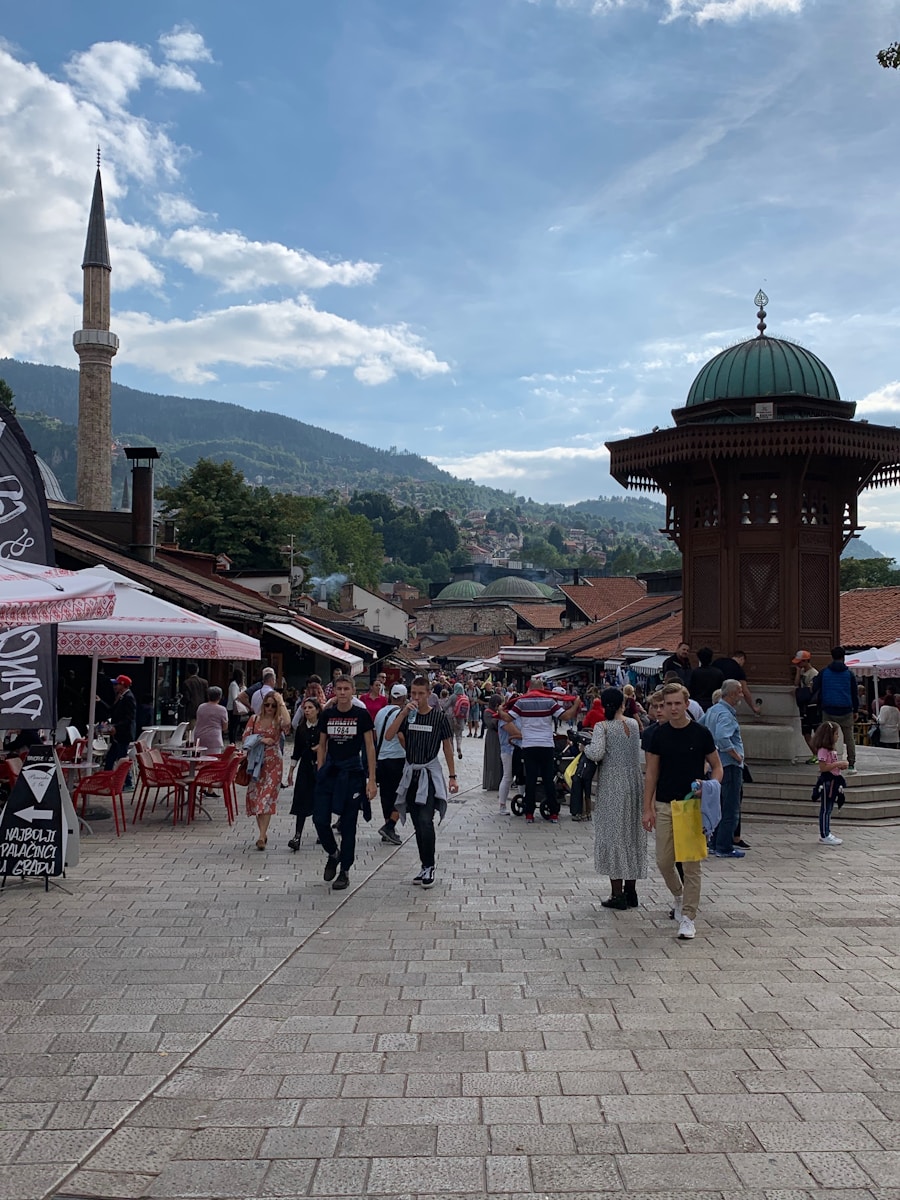
Baščaršija is the historic heart of Sarajevo and one of the best places to begin exploring the city. Its pedestrian lanes are lined with small shops, cafés, bakeries, restaurants, mosques, courtyards, and workshops where crafts such as metalwork remain part of the neighborhood’s identity.
The central landmark is the wooden Sebilj fountain. Sarajevo’s fountain history is more complicated than simply saying that the structure standing today was built in 1753. An earlier Ottoman-era Sebilj was built in the 18th century, while the fountain visitors see in the square today is a later replacement from the Austro-Hungarian period. Local heritage sources provide additional background on the history of the Sebilj.
Give yourself time to leave the main square and wander through the surrounding lanes. Kazandžiluk is especially associated with metalworking and copperware, while other streets reveal how the old bazaar was historically organized around different trades.
Pro Tip: Visit Baščaršija once in the morning, when the lanes are easier to photograph, and again later in the day when cafés and restaurants are livelier. Stop for Bosnian coffee rather than rushing through the bazaar as a checklist attraction.
Visit Gazi Husrev-beg Mosque and Sarajevo City Hall
Gazi Husrev-beg Mosque is one of Sarajevo’s most important examples of Ottoman religious architecture. According to the Gazi Husrev-beg institution, the mosque was built in 1530–31 as part of a much larger endowment that helped shape Sarajevo’s educational, religious, and commercial life.
The mosque’s courtyard offers a quieter contrast to busy Baščaršija. Visitors should remember that this remains an active place of worship. Check current visitor access, dress respectfully, speak quietly, and avoid interrupting prayer.
A short walk away is Sarajevo City Hall, or Vijećnica. The building was officially opened in 1896 and is best known for its richly decorated Pseudo-Moorish design. It later became home to the National and University Library of Bosnia and Herzegovina.
Vijećnica was devastated by fire during the siege of Sarajevo in August 1992, and a vast portion of the library collection was lost. Reconstruction lasted until 2014. Today, the restored building is used for Sarajevo City Council sessions, official ceremonies, exhibitions, cultural programs, and other public events rather than simply functioning as the National and University Library. The official Vijećnica website publishes current visitor information.
Sarajevo’s architecture makes its history visible: Ottoman-era Baščaršija meets Austro-Hungarian civic buildings within only a few minutes’ walk.
Visit the National Museum of Bosnia and Herzegovina
Travelers interested in more than a quick Old Town walk should add the National Museum of Bosnia and Herzegovina. Founded as a national institution in the late 19th century, the museum now contains archaeology, ethnology, natural-science collections, a museum library, and a botanical garden.
One of its best-known treasures is the Sarajevo Haggadah, a medieval illuminated Jewish manuscript. Access to individual treasures and galleries can change for conservation, security, or exhibition reasons, so check the National Museum’s current visitor information before planning your day.
The museum is especially useful for first-time visitors because it gives context to Bosnia and Herzegovina’s history beyond the Ottoman period, the assassination of 1914, and the 1990s war.
Experience the Sarajevo War Tunnel
The Sarajevo War Tunnel, commonly called the Tunnel of Hope, is one of the most important sites for understanding the siege of Sarajevo. It was built in 1993 beneath the airport area to connect the besieged city with territory outside the blockade.
Visit Sarajevo records the wartime tunnel as roughly 800 meters long. It carried people and essential supplies and also accommodated infrastructure such as cables and pipelines. Visitors today see only a preserved section rather than walking the original tunnel’s full length.
The museum includes wartime objects, photographs, video material, and information explaining how the tunnel was constructed and used. The experience is sobering, so allow enough time to read the displays instead of treating the tunnel simply as a photo stop.
Note: The Tunnel of Hope lies away from Baščaršija and the central walking zone. Plan transportation separately and check the museum’s current admission and opening information before leaving the center.
Try Bosnian Cuisine: Ćevapi, Bosnian Coffee, and Baklava
| Food Item | Typical Ingredients or Serving Style | Nutrition Note |
|---|---|---|
| Ćevapi | Grilled minced beef and/or lamb or mutton, typically served with somun and chopped onion | Calories vary considerably by meat mixture, portion size, bread, and sides |
| Baklava | Thin pastry layers, nuts, butter or fat, and a sweet syrup; recipes vary | Calories vary by recipe and serving size |
Ćevapi are among Sarajevo’s signature foods. Sarajevo tourism material describes the local version as grilled minced meat traditionally served with soft somun bread and finely chopped onion. Portions are commonly sold by the number of ćevapi, so this can work as either a quick snack or a full meal.
Do not stop at ćevapi. Burek and other Bosnian filled pies are another important part of local food culture, while dishes such as begova čorba, dolma, and klepe provide a broader look at Bosnian cooking.
For dessert, baklava is one of several traditional sweets worth trying, alongside tufahija, kadaif, hurmašica, and ružice. Recipes differ by bakery and family, so there is no meaningful single calorie count or universal ingredient list for every serving.
Bosnian coffee is just as important to the experience as the food. It is traditionally served slowly, often in a metal coffee pot with a small cup, sugar, and something sweet. Rather than treating it as a drink to grab on the way somewhere else, make time to sit in a Baščaršija café and enjoy the ritual.
Take a Stroll Along the Miljacka River and Latin Bridge
The Miljacka River runs through central Sarajevo and creates an easy walking route between several major sights. The riverbanks offer views of historic bridges, Austro-Hungarian buildings, newer city districts, and the steep hills that surround the valley.
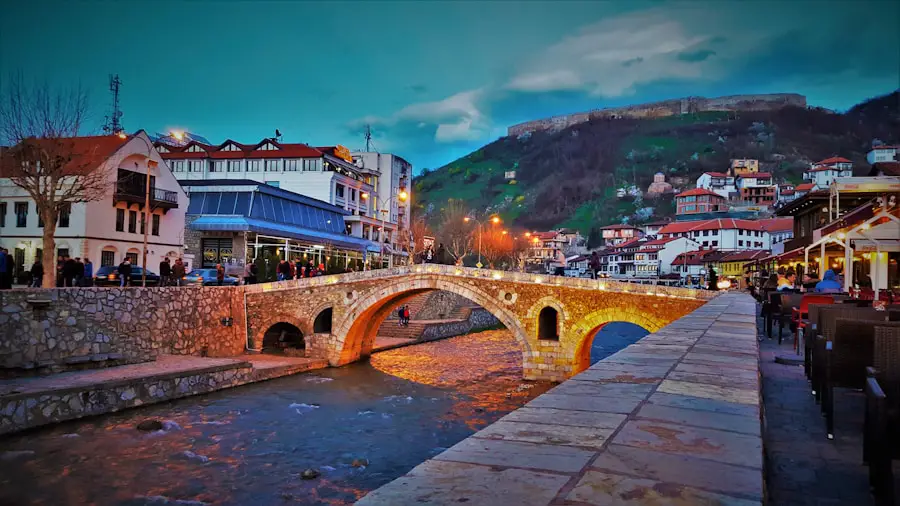
Latin Bridge is the best-known bridge for historical reasons. Archduke Franz Ferdinand of Austria and his wife Sophie were assassinated near the bridge on June 28, 1914. The assassination became one of the immediate events that precipitated World War I, although the war resulted from a much broader web of European political and military tensions.
The bridge itself is a modest stone structure, so its importance is easier to appreciate when you also visit the nearby Museum of Sarajevo 1878–1918 or read the historical displays in the area.
Continue along the Miljacka rather than turning back immediately. The river helps tie together the Ottoman old center, Austro-Hungarian Sarajevo, and the city’s later development.
Visit Vrelo Bosne for a Nature Break
Vrelo Bosne, near Ilidža, offers a green change of pace from central Sarajevo. The park surrounds the spring area of the Bosna River and is popular for walking, shade, water, and a slower atmosphere away from the Old Town.
A classic approach is along Velika Aleja, the long tree-lined promenade leading toward Vrelo Bosne. Visit Sarajevo describes the avenue as a roughly 3.5-kilometer route lined with mature plane and chestnut trees.
Vrelo Bosne makes the most sense for travelers with at least two days in Sarajevo, since reaching Ilidža and spending time in the park takes you away from the dense cluster of Old Town attractions.
Pro Tip: Pair Vrelo Bosne with other Ilidža-area sightseeing rather than trying to squeeze it between Baščaršija attractions. The central historic district is much better explored on foot as its own sightseeing block.
See Sarajevo from the Yellow Fortress
For a broad city view without devoting half a day to the mountains, head uphill from the Old Town toward the Yellow Fortress, or Žuta Tabija. From this part of Vratnik, you can look across Sarajevo’s valley, minarets, rooftops, and surrounding slopes.
The climb is noticeably steeper than walking through Baščaršija, so wear shoes with decent grip. Late afternoon is popular because the lower sun gives the valley more definition, but the viewpoint can be worthwhile whenever visibility is clear.
Visit the Olympic Sites: Mount Trebević and the Olympic Bobsleigh Track
Sarajevo hosted the XIV Winter Olympic Games in 1984, and Mount Trebević remains one of the easiest ways to combine the city’s Olympic history with mountain scenery.
The modern Sarajevo Cable Car once again links the city with Trebević. The ride saves a long uphill journey and provides views over Sarajevo as the cabins climb away from the valley. Because operating hours can change with schedules, maintenance, and conditions, check the official Sarajevo Cable Car website before setting out.
Near the mountain station, visitors can walk toward the former Olympic bobsleigh and luge track. The concrete curves, now marked by years of weathering and graffiti, have become one of Sarajevo’s most recognizable post-Olympic sights.
You can also continue onto established walking routes on Trebević if you have suitable shoes, water, and enough daylight.
Warning: Do not improvise shortcuts or wander onto unmarked trails in Bosnia and Herzegovina. Land mines and unexploded ordnance remain a hazard in some parts of the country. Stay on established routes, obey local warning signs, and follow current official travel and local safety guidance.
Discover the Sarajevo Film Festival
The Sarajevo Film Festival has grown into one of the region’s major cinema events since it began during the 1990s. It brings filmmakers, actors, industry professionals, and audiences together for feature films, documentaries, shorts, student films, discussions, and industry programs.
For 2026, the 32nd Sarajevo Film Festival is scheduled for August 14–21, 2026. Travelers visiting during those dates should expect a more energetic city center and should book accommodation earlier than they might for an ordinary summer week.
The festival experience goes beyond indoor screenings. Programs and events use different venues around Sarajevo, and the atmosphere spills into the streets, cafés, and public spaces.
For travel in later years, confirm that year’s dates on the official festival website rather than assuming the same week every August.
Shop at Markale Market
Markale is one of Sarajevo’s best-known central food markets and remains a useful place to see part of the city’s everyday shopping culture. Stalls sell seasonal fruit and vegetables and other local foods, while the nearby covered market expands the range of products available in this part of the center.
Take time to speak with sellers where language allows, compare local cheeses or cured products, and observe rather than treating the market simply as a souvenir stop.
Markale also carries painful historical significance. The market area was struck during the siege of Sarajevo, and attacks there killed and wounded civilians. That history deserves respectful acknowledgment alongside the market’s present-day role in city life.
Note: Markale is primarily a working market, not a staged tourist attraction. Visit respectfully, avoid blocking shoppers or vendors for photographs, and remember the site’s wartime history.
Plan Your Sarajevo Visit
How Many Days Do You Need in Sarajevo?
One full day is enough for a fast introduction to Baščaršija, Vijećnica, the Latin Bridge area, local food, and a few central landmarks. Two full days are much better for a first trip because you can add the Tunnel of Hope, a museum, and either Trebević or Vrelo Bosne without racing between sites.
With three days, you can cover the city at a slower pace, visit more museums, spend longer in the mountains, or use Sarajevo as a base before continuing elsewhere in Bosnia and Herzegovina.
What Is the Best Time to Visit Sarajevo?
Spring and early autumn are excellent for travelers who prefer comfortable walking weather and fewer peak-summer crowds. Summer brings longer days and a busier cultural calendar, including the Sarajevo Film Festival in August. Winter offers a very different experience, especially for travelers combining Sarajevo with nearby ski areas.
Weather can change quickly in the surrounding mountains, so check the forecast before planning Trebević or other outdoor excursions.
How Do You Get Around Sarajevo?
Most of the central sightseeing area—from Baščaršija through the riverfront and much of the central city—is best explored on foot. Public transport and taxis are more useful for attractions outside that compact core, including the Tunnel of Hope, Ilidža, and Vrelo Bosne.
The Sarajevo Cable Car is the simplest sightseeing route from the city toward Trebević when it is operating. Always check current schedules instead of relying on old travel-blog timetables.
If you’re planning a trip to Sarajevo, Bosnia, you may want to consider packing one of the 5 best travel skirts for women this spring. For outdoor stops or camping during a wider Bosnia trip, you can also review this solar-powered camping lantern guide. Travelers who use CPAP therapy can also check these travel CPAP options before departure.
Frequently Asked Questions
What are the top things to do in Sarajevo, Bosnia?
Top Sarajevo experiences include walking through Baščaršija, seeing the Sebilj fountain, visiting Gazi Husrev-beg Mosque and Vijećnica, exploring the Tunnel of Hope, visiting the National Museum, eating ćevapi, walking beside the Miljacka and Latin Bridge, riding toward Trebević, visiting Vrelo Bosne, and exploring Markale Market.
What is the best time to visit Sarajevo?
Spring and early autumn are good choices for sightseeing on foot, while summer offers long days and major events. Film fans may prefer August; the 2026 Sarajevo Film Festival runs August 14–21. Winter suits travelers who want a colder city break or plan to combine Sarajevo with nearby mountain and ski areas.
What are some must-see historical sites in Sarajevo?
Start with Baščaršija, Gazi Husrev-beg Mosque, Vijećnica, and the Latin Bridge area. For deeper context, add the National Museum of Bosnia and Herzegovina, the Sarajevo Museum 1878–1918, and the Tunnel of Hope.
What outdoor activities are available in Sarajevo?
Popular choices include walking along the Miljacka, visiting Vrelo Bosne, taking the cable car toward Trebević, following established mountain trails, and visiting the former Olympic bobsleigh track. In winter, mountains around Sarajevo also attract skiers. When hiking, stay on marked routes and follow local mine-warning and safety guidance.
What is the local cuisine like in Sarajevo?
Sarajevo’s food reflects Ottoman, Balkan, and Central European influences. Popular foods include ćevapi with somun and onion, burek and other filled pies, begova čorba, dolma, klepe, baklava, tufahija, kadaif, and traditional Bosnian coffee.
Is two days enough for Sarajevo?
Yes. Two full days are enough for a strong first visit. Spend one day around Baščaršija, Vijećnica, the Miljacka, museums, and local food, then use the second for the Tunnel of Hope plus Trebević or Vrelo Bosne. A third day lets you slow down or add more museums and viewpoints.
Can you explore Sarajevo without a car?
Yes. Many major central sights are close enough to explore on foot. Public transport, taxis, or organized transportation are useful for farther attractions such as the Tunnel of Hope, Ilidža, and Vrelo Bosne, while the cable car provides convenient access toward Trebević.
Sources
- Sarajevo City Hall — Vijećnica — official history, reconstruction, current use, and visitor information.
- Gazi Husrev-beg Institution — history of Gazi Husrev-beg and the 16th-century mosque complex.
- Visit Sarajevo — Sarajevo War Tunnel history and dimensions.
- Sarajevo Film Festival — official dates for the 32nd festival in August 2026.
- Sarajevo Cable Car — current operating and visitor information for the Trebević cable car.
- U.S. Department of State — Bosnia and Herzegovina Travel Information — current travel and land-mine safety guidance.
