
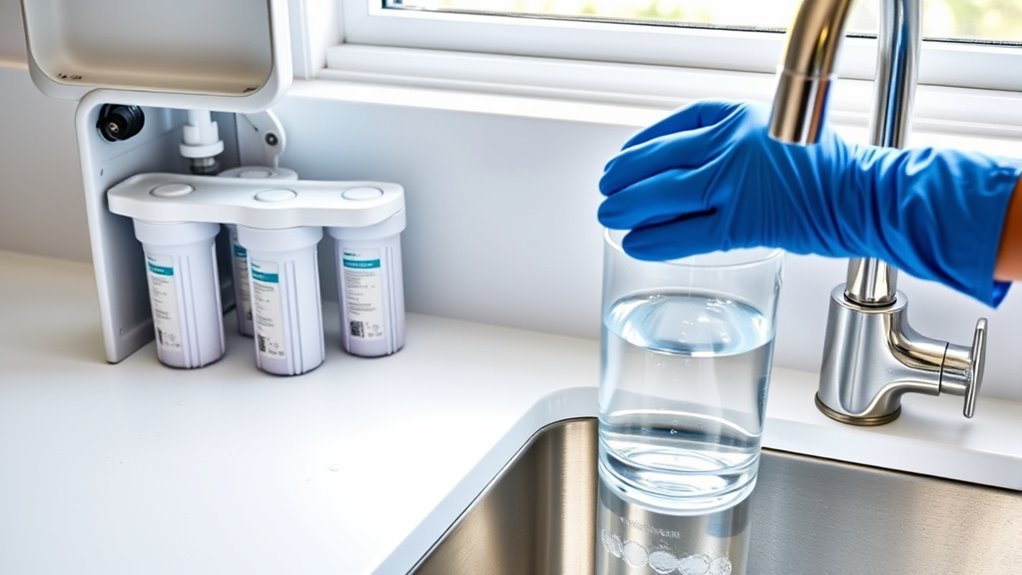
Last Updated on September 11, 2026 by Daniel Globe
You should inspect and wipe the outside of your water purifier about once a month, but most systems do not need full internal sanitizing every 30 days. The correct schedule depends on the purifier type, model, water quality, and amount of water used. Follow the manual for sanitizing, filter replacement, flushing, and UV-lamp service.
Quick Answer
Inspect your purifier monthly for leaks, dirt, odors, unusual sounds, and reduced flow. Wipe its exterior as needed. Sanitize internal housings, reservoirs, or RO tanks only at the interval listed in the product manual, often during filter service. Replace cartridges according to the manufacturer’s time, gallon, or indicator limit.
Key Takeaways
- A monthly inspection is useful, but there is no universal 30-day internal-sanitizing rule.
- Use the exact replacement cartridge, service cycle, gallon rating, and cleaning method listed for your model.
- Do not wash and reuse a disposable filter cartridge unless the manufacturer clearly says it is washable.
- Use only a manufacturer-approved sanitizer. Never mix bleach with vinegar, ammonia, acids, or other cleaners.
- Taste, smell, and appearance cannot prove that water is safe. Test the water when contamination is suspected.
At a Glance
| Time Required | About 5 to 10 minutes for a monthly inspection; approximately 30 to 60 minutes for basic housing or tank service, not including flushing time |
| Difficulty | Easy for exterior cleaning and simple cartridge changes; moderate for RO, UV, and whole-house systems |
| Tools Needed | Product manual, clean cloths, gloves, bucket, housing wrench if supplied, mild dish soap if approved, replacement cartridges, and manufacturer-approved sanitizer |
| Cost | Routine wiping needs only basic cleaning supplies. Cartridge, membrane, lamp, seal, and professional-service costs depend on the model. |
Disclosure: As an Amazon Associate I earn from qualifying purchases. Some links on this page are affiliate links, at no extra cost to you.
Why Water Purifier Cleaning Matters
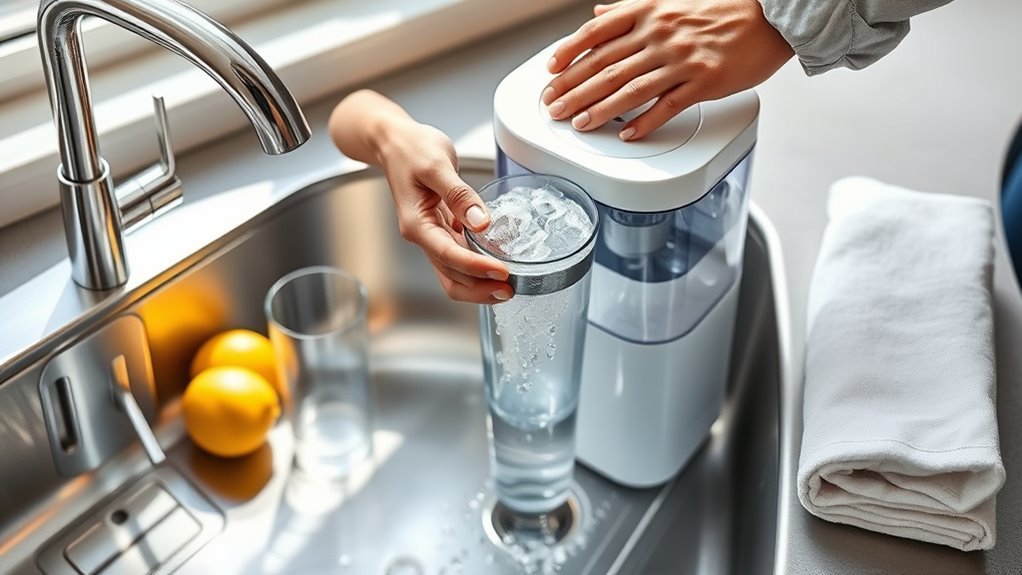
Regular maintenance helps a water purifier operate as designed. Sediment can reduce flow, scale can coat UV sleeves, worn cartridges can lose contaminant-reduction capacity, and neglected housings or reservoirs may support microbial growth.
The EPA WaterSense Guide to Selecting Water Treatment Systems explains that every home treatment system needs ongoing maintenance. Depending on the design, this may include cartridge replacement, disinfection, scale removal, backwashing, membrane replacement, or professional service.
Cleaning and cartridge replacement are related, but they are not the same task. You may be able to wash a reusable pitcher, reservoir, faucet aerator, filter housing, or quartz sleeve. A disposable sediment, carbon, refrigerator, or RO cartridge normally must be replaced rather than scrubbed and reused.
A purifier remains effective only when its cartridges, membranes, lamps, seals, and washable parts are maintained according to the instructions for that exact system.
How Often Should You Clean a Water Purifier?
There is no single cleaning schedule for every water purifier. A sensible routine is to inspect the unit monthly, clean visible dirt promptly, and perform internal maintenance at the interval listed in the manual.
| Task | Practical Schedule | What Controls the Final Interval |
|---|---|---|
| Exterior wiping | Monthly or whenever dirty | Dust, grease, splashes, and installation location |
| Leak and flow inspection | Monthly and after every service | System pressure, fittings, tubing, seals, and cartridge condition |
| Reservoir or pitcher washing | At filter changes and whenever film, residue, or odor appears | Product instructions and whether parts are dishwasher-safe |
| Internal sanitizing | At the manufacturer’s stated interval, commonly during cartridge service | System design, storage tank, feed water, and approved sanitizer |
| Cartridge or membrane replacement | At the time, gallon, indicator, or performance limit in the manual | Water use, sediment, pressure, water chemistry, and product certification |
Monthly Cleaning Checks
A monthly check can catch small problems before they cause leaks, poor flow, or damage. It does not require opening the system every month.
- Wipe the exterior, faucet, display, and nearby cabinet with a clean damp cloth.
- Look for water droplets, corrosion, cracked tubing, loose clips, bulging housings, or damp cabinet surfaces.
- Check whether water flow or RO tank delivery has changed.
- Listen for continuous pump operation, repeated clicking, vibration, or a drain flow that does not stop after the tank should be full.
- Check filter-life indicators, service dates, pressure gauges, or UV alarms.
- Note sudden changes in taste, smell, color, or cloudiness, but do not treat normal taste or appearance as proof of safety.
The CDC advises that taste, smell, and appearance are not reliable measures of water safety. Harmful chemicals and germs may produce no noticeable change.
Annual Deep Cleaning
Many under-sink and tank-style systems are inspected or sanitized during an annual cartridge service, but this is not universal. Some systems need service sooner, while sealed cartridge units may require little internal cleaning.
During a scheduled deep service, you may need to clean approved housings, inspect O-rings, remove scale, sanitize a storage tank, replace cartridges, clean a UV quartz sleeve, or test system performance. Follow the manufacturer’s sequence so chlorine or another sanitizer does not contact a membrane or component that it can damage.
Note: Professional maintenance is optional for many simple systems. It becomes more useful for whole-house equipment, unfamiliar plumbing, persistent leaks, UV faults, pumps, pressure tanks, control valves, or systems treating a known health contaminant.
Prepare Before Cleaning the Purifier
Start by finding the model number and its installation, operation, and maintenance manual. The manual should identify approved cartridges, cleaning products, sanitizer concentration, contact time, flushing volume, replacement intervals, and parts that must be removed before sanitizing.
Gather the following items before opening the system:
- Clean disposable gloves
- A bucket and absorbent towels
- Clean, lint-free cloths
- The supplied filter-housing wrench, if required
- Replacement cartridges, membrane, lamp, O-rings, or seals specified for the model
- Mild unscented dish soap only if the manual permits it
- The manufacturer-approved sanitizer
- Food-grade silicone lubricant only if the manual calls for it
Warning: Shut off electricity and water before opening a powered or pressurized purifier. Release pressure through the faucet or pressure-relief button. Never mix bleach with vinegar, ammonia, acids, descalers, or other cleaners. The mixture can release dangerous gas.
Signs Your Water Purifier Needs Cleaning
Your purifier may need cleaning, cartridge replacement, testing, or repair when you notice one or more of these changes:
- Visible film, slime, dust, scale, or sediment on a washable surface
- Reduced flow from the treated-water faucet
- A filter, lamp, or service indicator has reached its limit
- Unexpected odor, taste, discoloration, or cloudiness
- Water around fittings, tubing, housings, or the storage tank
- A UV warning light, alarm, or failed lamp indicator
- A pump that runs continuously or cycles more often than normal
- An RO system that produces very little water or sends water continuously to the drain
- A pressure drop across a whole-house sediment filter
These symptoms do not identify one certain cause. For example, slow flow can come from a clogged prefilter, low household pressure, a closed valve, a depleted RO tank, a fouled membrane, frozen tubing, or an incorrectly installed cartridge.
Stop using the treated water and investigate promptly if there is a sudden unexplained change, sewage-like odor, suspected chemical spill, damaged well, flood exposure, boil-water advisory, or known contamination event.
What Parts of a Water Purifier Need Cleaning
Clean only the components the manufacturer identifies as washable. Other parts must be replaced or serviced without being submerged or scrubbed.
| Component | Typical Care | Important Limit |
|---|---|---|
| Exterior and control panel | Wipe with a damp cloth and dry | Do not spray cleaner into vents, displays, electrical parts, or seams |
| Pitcher, reservoir, lid, and removable tray | Wash with the approved method and rinse well | Check whether the parts are dishwasher-safe |
| Filter housings and caps | Wash and sanitize during scheduled service if approved | Release pressure before opening and protect sealing surfaces |
| O-rings and seals | Inspect, rinse, and replace if cut, flattened, stretched, or hardened | Use only the lubricant and replacement seal specified by the manufacturer |
| Disposable filter cartridge | Replace at the rated service limit | Do not wash, bleach, brush, or reuse unless clearly labeled washable |
| RO membrane | Replace or service according to performance and model instructions | Keep incompatible chlorine or sanitizer away from the membrane |
| RO storage tank | Sanitize at the model’s stated interval or during specified service | Use the approved solution, contact time, and flushing procedure |
| UV quartz sleeve | Clean mineral or organic fouling as directed | Do not touch clean quartz with bare fingers; replace scratched or permanently cloudy sleeves |
| UV lamp | Replace at the manufacturer’s operating-hour or calendar limit | A glowing lamp may still have insufficient germicidal output |
For example, VIQUA recommends cleaning its UV quartz sleeves at least once every 12 months, with more frequent cleaning in water that causes heavy fouling. It recommends replacing a sleeve after about 2 to 3 years or sooner if it is scratched, damaged, or remains cloudy after cleaning.
How to Clean a Water Purifier Safely
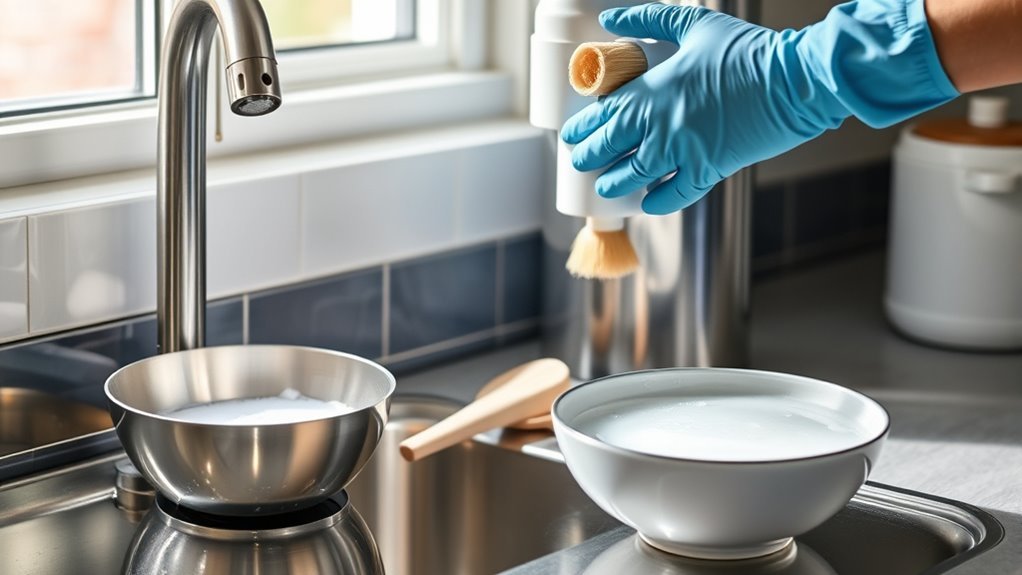
The following process works as a general framework for many serviceable under-sink and RO units. Your model manual takes priority whenever its steps differ.
- Read the manual. Confirm the correct cartridges, shutoff sequence, sanitizer, contact time, and flushing requirement.
- Wash your hands and prepare a clean area. Put on clean gloves and keep replacement cartridges sealed until needed.
- Turn off power and water. Unplug powered equipment, close the feed-water valve, and close the RO storage-tank valve if the manual directs you to do so.
- Release pressure. Open the treated-water faucet or use the housing pressure-relief button. Place a bucket below the system before loosening a housing.
- Remove replaceable parts. Take out cartridges, membranes, lamps, or other components in the sequence specified by the manufacturer. Do not allow dirty cartridge surfaces to contact clean fittings.
- Wash approved reusable parts. Clean housings, caps, reservoirs, and other washable parts with the product-approved cleaner. Use a soft cloth or brush that will not scratch sealing surfaces. Rinse thoroughly.
- Sanitize only as directed. Use the exact approved disinfectant concentration and contact time. Remove chlorine-sensitive membranes or cartridges if the manual requires it.
- Inspect seals and fittings. Replace damaged O-rings. Seat each seal correctly and apply only the specified food-grade lubricant.
- Install new cartridges. Match each cartridge to its correct stage and flow direction. Hand-tighten or use the supplied wrench only as instructed.
- Restore water slowly. Open valves gradually, reconnect power when appropriate, and inspect every joint for leaks.
- Flush the system. Discard the number of gallons, minutes of flow, or full storage tanks listed in the manual. Do not drink the water until the required flushing is complete.
- Record the service. Write down the date, cartridge model, readings, leaks corrected, and next service limit.
Pro Tip: Write the installation date and rated gallon capacity on the new cartridge or save them in a phone reminder. A date alone can be misleading when household water use changes.
Cleaning Guidance by Purifier Type
Pitcher and Countertop Reservoir Filters
Remove the disposable cartridge before washing the pitcher or reservoir. Clean only with the method approved for the product. Rinse well, let parts dry if instructed, install the cartridge correctly, and discard the first batches of water required by the manufacturer.
Faucet and Refrigerator Filters
Wipe the faucet outlet or dispenser and clean removable trays. Replace the sealed cartridge rather than trying to wash it. After replacement, flush the stated amount of water and check for leaks around the cartridge head.
Under-Sink Carbon and Sediment Systems
Shut off the feed water, release pressure, and use a bucket before opening a housing. Clean reusable housings during scheduled service, inspect O-rings, install the correct replacement cartridges, and flush until the manufacturer’s requirement is met.
Reverse Osmosis Systems
RO systems may include sediment, carbon, membrane, post-carbon, remineralization, pump, storage-tank, and UV stages. Keep each cartridge in the correct position. Sanitizing instructions can require removing the membrane and filters before disinfectant enters the housings or tank. Follow the exact sequence in the manual.
UV Purifiers
Turn off power and allow the lamp to cool before service. Shut off the water and release pressure. Replace the lamp at the model’s operating-hour limit, clean the quartz sleeve with an approved method, and replace the sleeve if it is damaged or remains cloudy. Do not look directly at an operating UV lamp or expose skin to its light.
Whole-House Filters and Softeners
Whole-house equipment operates under greater flow and pressure than most point-of-use units. Monitor pressure drop, backwash or regenerate only as programmed, maintain brine or treatment media according to the manual, and use a professional when valves, bypass controls, electrical components, large tanks, or complex plumbing need service.
How Often to Replace Water Purifier Filters
Replace a water-filter cartridge when it reaches the first applicable limit in the manufacturer’s instructions. That limit may be a calendar interval, treated-water gallon capacity, pressure drop, indicator light, UV operating-hour count, or measured loss of performance.
The NSF explains that filter service cycles vary by product. A replacement cartridge that appears to fit is not automatically suitable. Small size differences can allow water to bypass the media, and an uncertified cartridge may not provide the original contaminant reduction.
Filter Replacement Timelines
The following examples show why one fixed schedule cannot cover every purifier:
- A Pentair QuickConnect tankless RO model specifies 12-month composite and carbon filters and a 24-month RO membrane.
- A different Pentair three-stage RO model specifies annual prefilters and postfilters and an 18-month membrane.
- VIQUA states that its UV lamps need annual replacement, while sleeve condition and water fouling affect sleeve-cleaning frequency.
Other brands and models may use shorter or longer intervals. The product manual and performance data sheet should control your maintenance plan.
Signs Filters Need Changing
| Symptom | Possible Causes | What to Check |
|---|---|---|
| Slow flow | Clogged cartridge, low pressure, closed valve, fouled membrane, tank problem, or restricted tubing | Service indicator, pressure, valves, filter age, tubing, and tank delivery |
| Bad taste or odor | Exhausted carbon, stagnant water, dirty dispenser, plumbing issue, source-water change, or microbial growth | Cartridge limit, flushing history, reservoir, faucet, source water, and need for testing |
| Cloudy water | Air after service, suspended particles, scale, damaged media, or source-water change | Whether cloudiness clears from bottom to top, flushing requirement, cartridge installation, and test results |
| Filter alarm or red indicator | Time, gallon, pressure, lamp, or sensor limit reached | Manual, display code, replacement part, and reset procedure |
| Contaminant detected after treatment | Wrong treatment method, exhausted media, bypass, poor installation, damaged membrane, or unsuitable water chemistry | Stop relying on the unit, arrange certified testing, and contact the manufacturer or a qualified professional |
Maintenance Based on Water Use
Heavy use can reach a cartridge’s gallon capacity before its calendar date. High sediment, iron, hardness, organic matter, or other challenging water conditions may also shorten service life.
Use these factors to judge whether earlier service is needed:
- The number of people using the system
- The amount of drinking and cooking water produced
- Incoming water pressure
- Sediment load and turbidity
- Hardness and scale formation
- Changes in source-water quality
- Pressure drop across a cartridge
- RO rejection or other performance measurements recommended by the manufacturer
Do not extend a cartridge’s rated service life simply because the water still tastes normal.
Maintenance Schedules for RO, UV, and Filter Systems
| System | Routine Owner Check | Scheduled Service |
|---|---|---|
| Pitcher, faucet, or refrigerator filter | Keep the reservoir and dispenser clean; check the indicator and water flow | Replace the cartridge at its time or gallon limit and flush as directed |
| Under-sink carbon or sediment filter | Inspect for leaks, pressure loss, and reduced flow | Replace cartridges and clean approved housings at the model’s service interval |
| Reverse osmosis system | Check flow, drain operation, tank delivery, leaks, indicators, and unusual pump activity | Replace each stage separately as specified; sanitize and test performance when required |
| UV purifier | Confirm the power, status light, alarm, and prefilter condition | Replace the lamp and clean or replace the sleeve at the manufacturer’s interval |
| Whole-house filter or softener | Check pressure, bypass position, leaks, media or salt level, and regeneration history | Backwash, regenerate, replace media, or service controls according to the manual and water test |
Water Testing and Filter Certification
Choose and maintain a purifier based on what is actually in the water. The CDC explains that different treatment methods remove different germs and chemicals. No single purifier should be assumed to remove every contaminant.
Public-water customers can review their utility’s annual water-quality report. Private-well owners should test their water at least once a year and after flooding, repairs, changes in taste or color, or suspected contamination. Use a certified laboratory when accurate contaminant measurements are needed.
Look beyond the certification number and confirm the exact reduction claim on the product label or performance data sheet:
- NSF/ANSI 42: Aesthetic effects such as chlorine taste and odor
- NSF/ANSI 53: Specific contaminants with health effects, including cyst reduction when claimed
- NSF/ANSI 55: Ultraviolet microbiological water treatment systems
- NSF/ANSI 58: Reverse osmosis systems and the specific reduction claims listed for the product
The NSF standards guide warns that certification to one standard does not mean a system removes every possible contaminant. Verify the exact substance you need to reduce.
Warning: During a boil-water advisory or known contamination event, follow instructions from the water utility or health department. Do not assume an ordinary carbon filter makes the water safe. Use bottled, boiled, or otherwise approved water until authorities lift the advisory.
Common Water Purifier Problems and Fixes
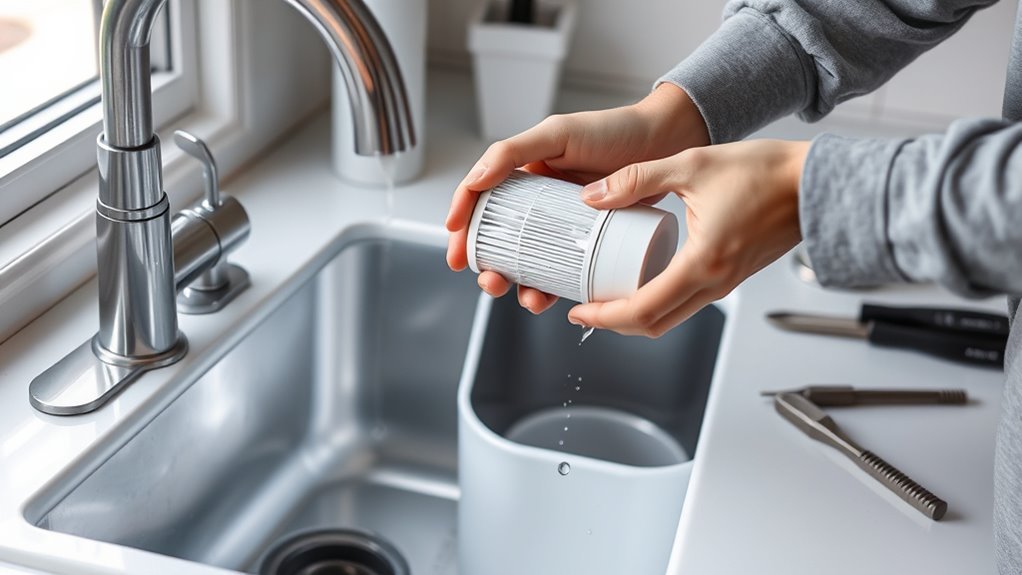
Water Flow Is Slow
Confirm that all valves are fully open and tubing is not kinked. Check the filter indicator, service date, household pressure, and pressure drop. An RO system may also have a low tank charge, fouled membrane, weak pump, or restricted flow control.
The Water Tastes or Smells Different
Flush the system according to the manual, clean the dispenser or approved reservoir, and check whether the carbon stage has reached its service limit. If the change is sudden, severe, or present in both filtered and unfiltered water, contact the water supplier or arrange testing rather than assuming the cartridge is the only cause.
The Purifier Leaks
Shut off the feed water and power. Dry the area and identify the exact leak point. Check whether a housing is cross-threaded, an O-ring is twisted or damaged, tubing is fully inserted, or a fitting has cracked. Do not keep tightening a plastic housing or fitting after it is properly seated because excess force can cause damage.
An RO System Runs or Drains Continuously
Confirm that the storage-tank valve is open and allow enough time for the tank to fill. Continuous operation may result from low feed pressure, an empty or failed tank, a clogged cartridge, a faulty check valve, a damaged membrane, incorrect drain connection, or an auto shut-off problem.
A UV Alarm Appears
Follow the alarm code in the manual. Check power, lamp age, lamp connection, quartz-sleeve condition, sensor cleanliness, and prefiltration. Do not silence or bypass the alarm while continuing to rely on the water for microbiological treatment.
When to Call a Professional for Service
Call the manufacturer, a qualified plumber, a water-treatment professional, or the local health department when:
- A leak continues after the water has been shut off and seals or fittings have been checked
- A housing, tank, valve, electrical component, or UV chamber is cracked or damaged
- The purifier treats arsenic, nitrate, lead, PFAS, pathogens, or another known health contaminant and treated-water tests are unsatisfactory
- You cannot identify the correct cartridge, membrane, lamp, sanitizer, or service procedure
- An RO pump, pressure tank, control valve, or auto shut-off system needs diagnosis
- A whole-house unit needs media replacement, rebedding, disinfection, or plumbing modification
- Water has been affected by flooding, sewage, a damaged well, chemical contamination, or an official advisory
- Low pressure, odor, discoloration, or poor taste remains after normal maintenance
A professional should base recommendations on the purifier model, water test, pressure, flow, service history, and condition of each treatment stage.
Frequently Asked Questions
Do water filters remove Giardia?
Some do, but you must check the specific certification or pore rating. The CDC recommends filters certified for cyst reduction under NSF/ANSI 53 or 58, an absolute pore size of 1 micron or smaller, suitable membrane filtration, or reverse osmosis. Do not assume ordinary activated carbon alone removes Giardia.
How often should I clean my water purifier?
Inspect it and wipe the exterior about once a month. Wash accessible reservoirs when dirty and at filter changes. Sanitize internal housings, tanks, or tubing only at the interval and with the method listed in the manual. There is no universal rule requiring every purifier to be sanitized every 30 days.
What is the best water filter for arsenic?
Start with a certified laboratory test. Reverse osmosis, activated alumina, iron-based media, ion exchange, and other treatments may reduce arsenic, but performance depends on arsenic form, pH, competing ions, water chemistry, and system design. Choose a product with a specific arsenic-reduction claim and test the treated water to confirm it works.
Do water filters remove Cryptosporidium?
Appropriate filters can remove Cryptosporidium. Look for a cyst-reduction claim under NSF/ANSI 53 or 58, an absolute pore size of 1 micron or smaller, or a suitable reverse osmosis or membrane system. Standard taste-and-odor carbon filtration alone is not enough.
Can I wash and reuse a water-filter cartridge?
Not unless the cartridge is specifically labeled as washable or reusable. Most pitcher, faucet, refrigerator, carbon, sediment, and RO cartridges are disposable. Washing them may damage the media, introduce contamination, or allow water to bypass the treatment material.
Can I sanitize a purifier with bleach?
Only when the manufacturer approves bleach for that model. Use the exact concentration, contact time, component-removal steps, and flushing process in the manual. Never mix bleach with vinegar, ammonia, acids, descalers, or other cleaners.
Why is the flow still slow after I replace the filter?
Check for a partially closed valve, kinked tubing, trapped air, an incorrectly installed cartridge, low supply pressure, a clogged faucet aerator, or an RO storage-tank problem. Confirm that protective caps were removed and that the cartridge matches the correct stage and flow direction.
Does a water purifier need annual professional service?
Not every purifier does. Many pitchers, refrigerator filters, and simple under-sink units are owner-serviceable. Professional help is more useful for whole-house systems, pumps, UV faults, pressure tanks, control valves, complex RO systems, persistent leaks, or equipment treating a known health contaminant.
Conclusion
Inspect your water purifier monthly, clean visible dirt promptly, and follow the exact manual for internal sanitizing and component replacement. Do not rely on one schedule for every sediment filter, carbon cartridge, RO membrane, UV lamp, storage tank, or whole-house system.
Safe maintenance means shutting off water and power, releasing pressure, using approved cleaning products, installing the correct replacement parts, flushing the system fully, checking for leaks, and recording the service date. When the purifier treats a known health contaminant, confirm its performance with the right certification and water testing.
Sources
- EPA WaterSense Guide to Selecting Water Treatment Systems — system selection, certification, maintenance, testing, and replacement guidance
- CDC: About Choosing Home Water Filters — water testing, filter maintenance, pore sizes, cyst reduction, and limits of taste and smell
- CDC: About Home Water Treatment Systems — treatment types and the germs or chemicals each method may remove
- NSF: Changing Water Filters — product-specific service cycles and correct replacement cartridges
- NSF Standards for Water Treatment Systems — NSF/ANSI certification categories and contaminant-specific claims
- VIQUA UV System FAQs — quartz-sleeve cleaning, inspection, and replacement guidance

