
Last Updated on September 11, 2026 by Daniel Globe
For shoveling snow, you’ll want a coat that’s waterproof, insulated, breathable, and easy to move in. Look for at least 5,000 mm waterproofing, synthetic or down insulation, and a hood that fits over a hat. Mid-thigh length gives you better coverage without getting in the way. Carhartt, REI Co-op Stormhenge, and Outdoor Research Coze are solid picks. Layer a moisture-wicking base and fleece underneath, and you’ll be set for more practical details.
What to Look for in a Snow Shoveling Coat?
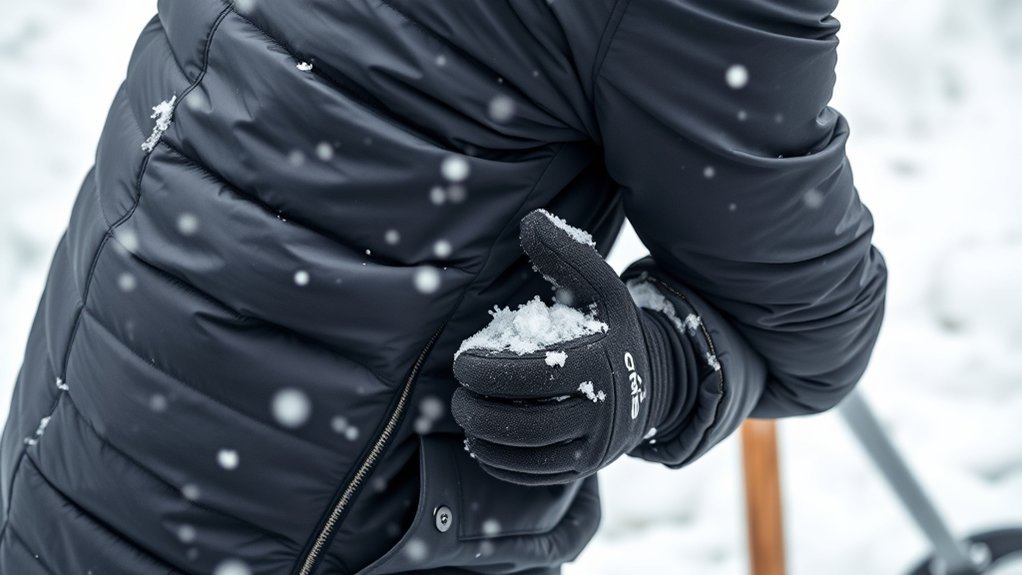
When you’re choosing a coat for shoveling snow, focus first on water resistance so wet snow doesn’t soak through and leave you cold and damp. You need a high waterproof rating, because melting snow can turn a work session into a chill trap fast. Next, pick enough insulation to keep your body warm during long stretches outside; down or synthetic fills both work. A hood adds protection from wind and falling snow, helping shield your head and neck. Look for a slightly longer fit at the waist so you can bend, lift, and use snow shoveling techniques without the coat riding up. Practical details matter too: pockets let you keep gloves or small tools close, and adjustable cuffs help block snow from entering your sleeves. These winter safety tips keep you moving with more comfort, control, and freedom through harsh weather.
Winter Coat Features That Keep You Dry
To stay dry while shoveling snow, choose a coat made with high-waterproof materials like GORE-TEX or comparable fabrics that can block melting snow and sleet. Check waterproof ratings before you buy, because stronger ratings mean better protection in wet, heavy snow. You should also look for fully sealed or taped seams, since those stops moisture from sneaking in through stitch lines. Windproof features matter too, because cold gusts can cut through weak outer shells and leave you chilled fast. Pick breathable fabric so sweat escapes while you work, helping you stay dry from the inside out. Adjustable cuffs, hems, and other closures let you lock out slush and cold air without feeling trapped. When your coat seals out water, blocks wind, and still breathes, you can shovel with more comfort, more control, and less hassle.
Why Hooded Coats Help in Snowstorms
A hooded coat adds an important layer of protection in a snowstorm because it helps block wind and falling snow from your head and face. That gives you better snow protection and keeps you focused while you shovel.
- It cuts heat loss around your head, so you stay warmer longer.
- It shields your face from gusts, which can improve visibility and comfort.
- Adjustable drawstrings let you tighten the hood for a secure fit.
- A hood can work over a hat or helmet, giving you flexible coverage.
These hood benefits matter when you’re out in harsh weather and don’t want to lose energy to the cold. By holding in body heat, the hood helps you stay steady and capable through long jobs. If you want practical freedom in winter, choose a coat with a hood that fits well and stays put when the storm picks up.
Warm Materials That Work Best in Snow
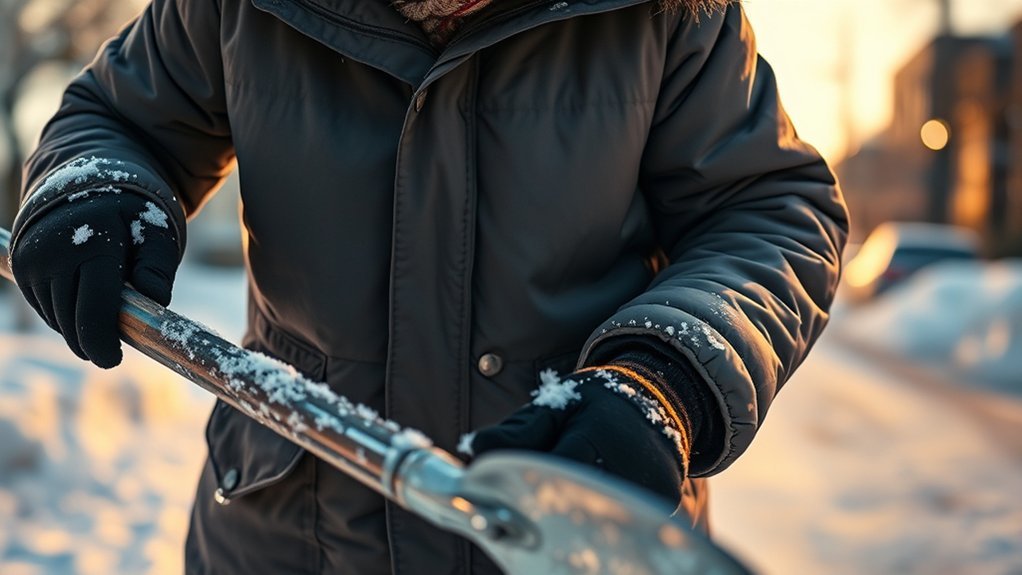
Warm materials make a big difference when you’re shoveling snow because they help you stay dry, warm, and able to keep moving. When you compare insulation, down gives you top warmth for its weight, so you won’t feel trapped under a bulky coat. Synthetic fills like Primaloft shine in wet conditions because they keep insulating even after snow or slush gets in. That makes them a smart choice for long jobs. Look for waterproof fabrics with at least a 10,000 mm rating to block soak-through, and choose breathable membranes like GORE-TEX so sweat can escape. Good moisture management keeps you from getting chilled when your pace picks up. Ripstop nylon or polyester adds toughness, and windproof shells help you hold onto heat when gusts hit. Pick materials that work with your body, not against it, so you can shovel freely and stay focused.
Best Coat Length for Shoveling Snow
For shoveling snow, a coat that reaches at least mid-thigh gives you better coverage against cold air and blowing snow without getting in your way. That length helps you stay protected while you work, and it can still feel manageable when you’re pushing, lifting, and clearing drifts.
A mid-thigh coat gives shoveling-friendly coverage, keeping out cold air and blowing snow without restricting movement.
- Choose a mid-thigh hem for dependable coverage.
- Pick a hood that extends past your shoulders to block wind and snowfall.
- Look for coat materials with weather resistance to stand up to harsh conditions.
- Check insulation types that let you layer underneath without crowding your movement.
A slightly longer coat also helps you wear warm layers beneath it, so you can adapt to the weather without feeling boxed in. If the fit sits at your waist or just below, you’ll get solid protection and room to move. In short, longer coats give you practical freedom against winter’s push.
Most Comfortable Fits for Active Movement
When you’re shoveling snow, the most comfortable coat fit is slightly longer at the waist, giving you coverage without getting in the way of your movement. You need a relaxed shape that supports active flexibility, so your arms, back, and shoulders can work freely. Look for a coat with enough room in the shoulders and sleeves to preserve your movement range while you lift, twist, and push snow. Adjustable cuffs help seal out cold air without pinching, and a hood adds extra protection when wind or falling snow picks up. Choose lightweight insulation so you stay warm without feeling boxed in or overheated during hard work. Water-resistant fabric also matters because wet snow can soak through fast. The best fit lets you stay covered, agile, and in control, so you can move with ease and keep your momentum.
Best Snow Shoveling Coats for Men and Women
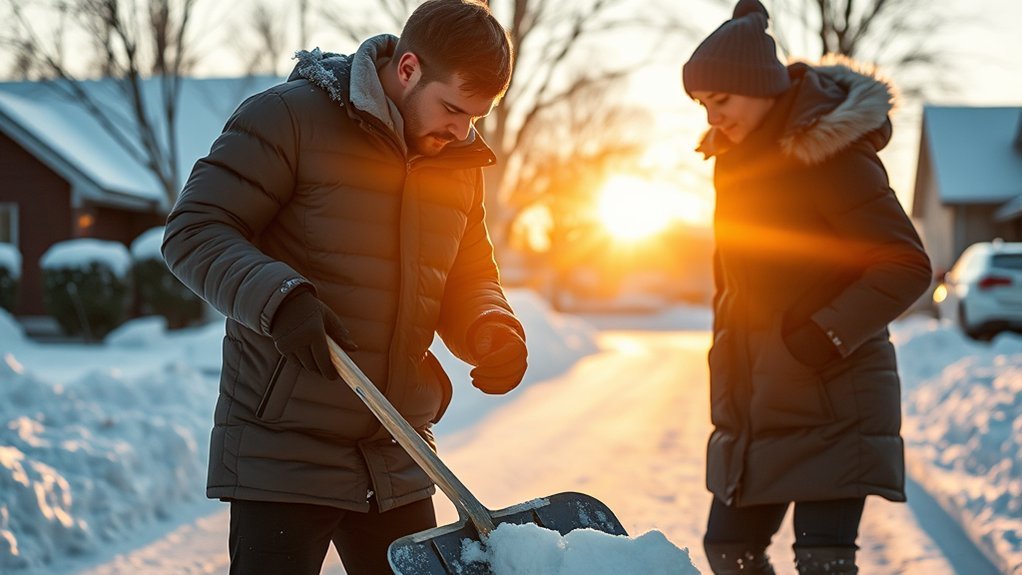
When you’re shoveling snow, choose a water-resistant, insulated coat that keeps you dry and warm without restricting movement. For men, look for top picks with a hood, adjustable cuffs, and enough room at the waist for easy lifting. For women, pick a winter coat that fits comfortably, covers a bit longer, and gives you pockets for tools and extra warmth.
Top Picks For Men
For men tackling serious snowfall, the Carhartt Insulated Jacket stands out as a top pick because it delivers the warmth and durability you need in extreme cold. You’ll stay focused on snow shoveling techniques without freezing up. Choose a coat with a water-resistant outer layer so slush won’t soak through, and pick a hooded design for wind protection. A waist-length or slightly longer fit keeps you moving freely while you work.
- Insulation for deep-cold comfort
- Water resistance for wet snow
- Hood for extra coverage
- Adjustable cuffs and large pockets for winter safety tips and essentials
With the right coat, you can shovel harder, move faster, and protect yourself from harsh weather while keeping your freedom to handle winter on your terms.
Best Women’s Winter Coats
If you want a women’s winter coat that can handle serious snow shoveling, focus on warmth, coverage, and mobility. Look for insulation technologies that trap heat without weighing you down, and choose water-resistant fabric so you stay dry in wet snow. The Carhartt insulated jacket stands out in extreme temperatures because it’s tough and built for hard work. If you want more coverage, the Outdoor Research Coze Down Parka gives you a mid-calf hemline that shields your legs and back. A hooded design helps block wind and snow, while a fit that sits at or just below the waist lets you move freely. Zippered pockets keep essentials secure and your hands ready. Ignore flashy winter coat trends; choose function first.
Budget-Friendly Snow Shoveling Coats
If you want affordable warmth, look for a coat that traps heat without adding bulk, like the REI Co-op Stormhenge Down Hybrid Parka. It gives you strong value with a hybrid design, solid insulation, and waterproof protection that helps you stay comfortable while shoveling wet snow. When you’re shopping on a budget, prioritize warmth, mobility, and weather resistance so you don’t give up performance for a lower price.
Affordable Warmth
When you want solid warmth without a big price tag, a few budget-friendly layers can handle snow shoveling well. You can stay free from cold discomfort with smart affordable insulation and budget layering that doesn’t trap you in heavy spending. Try these options:
- REI Co-op Stormhenge Down Hybrid Parka for warm, reliable coverage.
- Frostline® Bib Overalls, starting at $143.10, for durable insulation below the waist.
- ChillBreaker™ Coveralls for full-body warmth in heavy snowfall.
- EnduraQuilt™ Puffer Jacket, as low as $94.94, for light layering over base gear.
Add waterproof Frostline® Gloves for $54.90 when you need warm hands and steady grip. Pick the pieces that match your storm, and you’ll shovel with comfort, control, and less strain.
Best Value Picks
A few budget-friendly coats can still deliver the warmth and durability you need for snow shoveling. If you want strong value, the REI Co-op Stormhenge Down Hybrid Parka gives you solid warmth and performance starting at $143.10. For tougher days, Carhartt insulated jackets bring proven durability and handle extreme cold without weighing you down. If you prefer lighter freedom, the EnduraQuilt™ Puffer Jacket starts at $94.94 and works well when you layer with insulated vests. For fuller coverage, Frostline® Bib Overalls add lower-body warmth, while Frostline® Gloves help you keep a grip in wet snow. Pair these picks with smart snow accessories, and you’ll move through the storm with more comfort, less strain, and no wasted money.
Budget Features To Prioritize
For budget-friendly snow shoveling coats, focus on features that keep you warm, dry, and able to move easily. You don’t need extras; you need protection that works. Prioritize these essentials:
- Waterproof and windproof shells block slush, sleet, and biting gusts.
- Synthetic insulation types trap heat without bulky weight, so you can lift and twist freely.
- Adjustable features like hoods and cuffs seal out drafts and drifting snow.
- A longer cut covers your lower back when you bend, shovel, and clear driveways.
If you want solid value, look for models like the REI Co-op Stormhenge Down Hybrid Parka. It gives you practical warmth, weather resistance, and mobility without draining your budget, so you can get the job done and move on.
Durable Coat Details That Stand Up to Winter
A durable shoveling coat needs a water-resistant exterior with a waterproof rating of at least 5,000 mm to help keep you dry in wet snow. You also want insulation types that trap heat without slowing you down; synthetic or down fill can work, and thicker insulation usually holds warmth better. Choose a hooded design so wind and snow don’t hit your head and neck, especially during long sessions outside. Fit matters too: a coat that sits slightly longer at the waist helps block snow entry while still letting you move freely. Pay close attention to pocket placement, because zippered pockets give you secure space for gloves, a phone, or small tools. When you pick durable details like these, you protect your time, energy, and comfort. The right coat supports your independence in harsh weather and keeps you focused on clearing the way.
How to Layer Under a Snow Shoveling Coat
Start with a moisture-wicking synthetic base layer to pull sweat off your skin and keep you dry while you shovel. Add a fleece or down mid-layer to trap heat without making you feel bulky or stiff. Then choose a snow shoveling coat with enough room to layer comfortably, plus a fit that lets you move freely.
Base Layer Basics
When you’re layering under a snow shoveling coat, begin with a moisture-wicking base layer in merino wool or a synthetic fabric to pull sweat off your skin during hard work. Good base layer materials support moisture management and help you stay dry, warm, and free to move.
- Choose a snug fit.
- Pick insulation without bulk.
- Wear long sleeves and full-length bottoms.
- Consider thermal or fleece-lined options for sub-zero days.
This setup traps heat, blocks chill, and keeps your body working efficiently while you shovel. You don’t need extra weight to stay protected; you need smart layers that let you move with ease and keep discomfort out of the way.
Mid Layer Warmth
For the mid layer, choose fleece or wool that traps heat while still wicking moisture, so you stay warm and dry while shoveling. This is where insulation types and moisture management work together for freedom from chill and sweat.
| Feature | Why it helps |
|---|---|
| Fleece or wool | Holds warmth and moves sweat away |
| 200-300 g thickness | Balances heat without bulk |
| Breathability rating | Lets airflow steady your body temp |
| Thumbholes or pockets | Add comfort and handy storage |
Pick a snug layer that slides easily under your coat and won’t bind when you lift, push, or twist. You want warmth that moves with you, not against you, so your energy stays on the job, not on fighting cold, damp clothes.
Outer Coat Fit
Choose a snow shoveling coat with a slightly looser fit so you can layer base and mid-layers underneath without feeling restricted. You’ll move freely, stay warm, and avoid the stiff, trapped feeling that slows you down. A smart outer coat supports your body, not limits it.
- Pick adjustable cuffs and hems to lock out cold air.
- Choose a longer cut for extra coverage when you bend and lift.
- Look for breathable materials so sweat can escape while insulation types keep heat in.
- Select mobility features like vents or snow skirts to improve comfort during hard work.
This fit gives you room to layer, protects you from wind, and keeps your range of motion open. With the right outer shell, you can shovel longer without fighting your coat.
Frequently Asked Questions
What to Wear for Snow Shoveling?
Wear a water-resistant hooded coat, insulated gloves, waterproof boots, warm layers, and a hat. Choose a jacket that fits well, covers your waist, and has adjustable cuffs and pockets so you stay dry, mobile, and free.
What Jacket to Wear for Snowshoeing?
You’ll want a waterproof, breathable snowshoeing jacket—then the real choice appears: synthetic insulation types, not down, keep you warm when damp. Pick underarm vents, a snug hood, and adjustable cuffs to stay free and dry.
What Is a Level 7 Jacket?
A level 7 jacket is an extreme-weather shell you can wear in severe cold. It uses waterproof materials and insulation types like down or synthetic fill to keep you warm, dry, and free to move.
What North Face Jacket Is Best for Extreme Cold Weather?
You’ll want The North Face McMurdo Parka for extreme cold weather. Its insulation materials, 550-fill goose down, and weatherproof features—waterproof, windproof shell—keep you warm, dry, and free to move in harsh conditions.
Conclusion
When you’re choosing the best coat for shoveling snow, focus on warmth, waterproof protection, a hood, and a length that won’t get in your way. You’ll stay more comfortable if you pick durable materials and layer smartly underneath. Even in a winter storm, the right coat helps you work faster and dry. Don’t overthink it—use these basics, and you’ll be ready to face the cold like a pro, not a knight in armor.
