
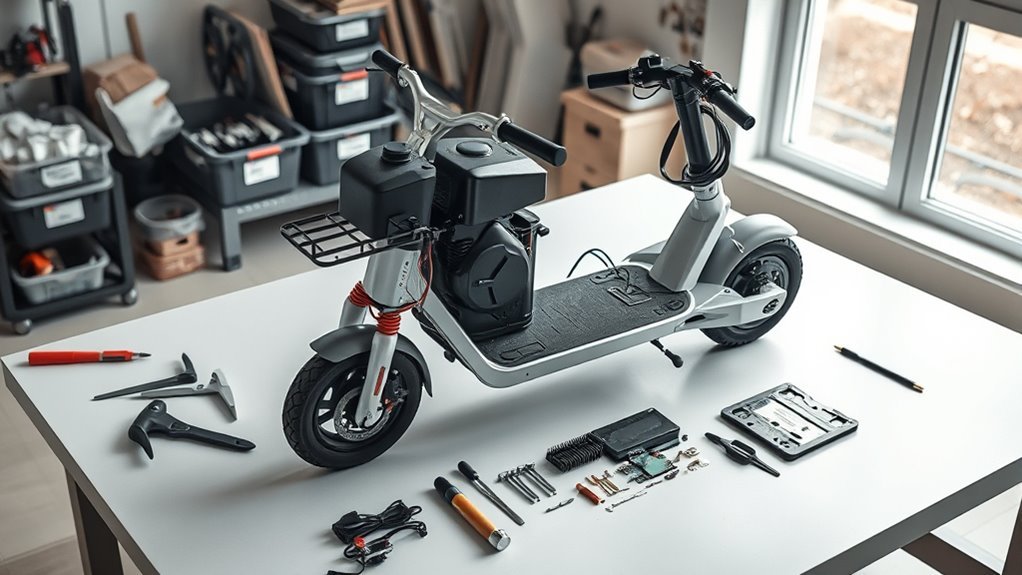
Last Updated on September 10, 2026 by Daniel Globe
Building an electric scooter can cost less than a high-end factory model, but DIY is not automatically the cheaper route. A realistic project can start around $400 when you reuse a sound donor frame and mechanical parts, while a new or higher-performance build can reach $1,500 or more. Battery size, motor power, controller quality, brakes, tools, shipping, and safety-rated electrical parts create most of the price difference.
Quick Answer
Plan roughly $400 to $1,500+ to build an electric scooter. A basic donor-scooter conversion can stay near the lower end, while a large lithium battery, stronger motor, premium controller, upgraded brakes, new frame, tools, and shipping can push the total above $1,000. DIY usually provides customization rather than guaranteed savings.
Key Takeaways
- A realistic DIY electric scooter budget is often about $400 to $1,500+, depending on what you reuse and how much performance you want.
- The battery is often one of the largest individual expenses; higher-capacity lithium packs can cost several hundred dollars.
- Motor, controller, battery voltage, charger, wiring, brakes, and connectors must be electrically and mechanically compatible.
- A donor scooter can cut frame, wheel, brake, and hardware costs, but avoid repurposed or improperly rebuilt lithium battery cells.
- Buying a complete scooter can be cheaper once you include tools, troubleshooting, shipping, replacement parts, and your time.
At a Glance
| Time Required | Several hours to a weekend or longer, depending on fabrication, wiring and troubleshooting |
| Difficulty | Intermediate to advanced |
| Tools Needed | Metric hand tools, torque wrench, multimeter, crimping tools, tire tools and any fabrication tools required by the frame |
| Cost | About $400 to $1,500+, depending on battery, motor, frame and reused parts |
Disclosure: As an Amazon Associate I earn from qualifying purchases. Some links on this page are affiliate links, at no extra cost to you.
How Much Does It Cost to Build an Electric Scooter?
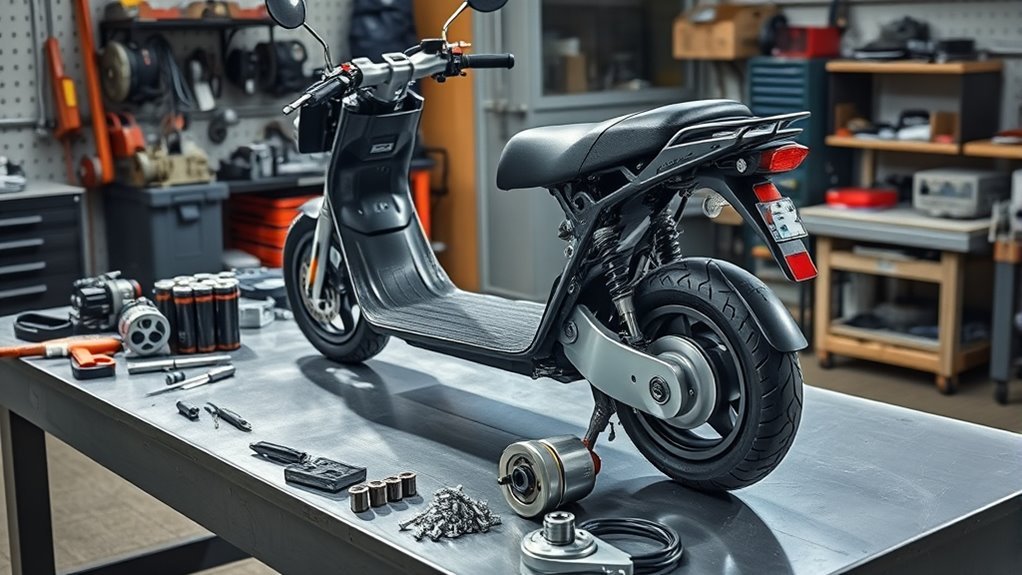
Building an electric scooter can cost roughly $400 to $1,500 or more. The lower end usually means starting with a usable donor scooter and keeping its frame, wheels, brakes, handlebars, and other mechanical parts. Building primarily from new components or aiming for greater range, acceleration, suspension, or braking performance can quickly move the project above $1,000.
There is no universal percentage that the battery, motor, or frame must consume. A small low-voltage system may have a relatively inexpensive battery, while a large lithium pack can cost more than the motor, controller, wiring, and throttle combined. Your safest approach is to budget each subsystem separately instead of relying on a fixed “30% to 40%” rule.
The battery is often one of the biggest single expenses in a DIY scooter, and higher-capacity packs can cost several hundred dollars by themselves.
What Parts Do You Need to Build an Electric Scooter?
A complete scooter needs more than a motor and battery. Before buying anything, list the electrical, mechanical, braking, control, and safety components so one missing item does not stop the project halfway through.
- Frame and deck: supports the rider, battery and drivetrain.
- Motor: commonly a hub motor or chain/belt-driven motor.
- Battery pack: stores energy and must be appropriate for the controller and motor system.
- Battery management system: normally integrated into a properly designed lithium battery pack.
- Controller: regulates power sent to the motor.
- Throttle: sends rider input to the controller.
- Charger: must match the battery chemistry and charging voltage.
- Wiring, connectors and fuse protection: carry current safely through the system.
- Wheels and tires: affect stability, traction and comfort.
- Brakes: must be suitable for the scooter’s weight and intended speed.
- Handlebars, stem and steering hardware: must be structurally sound and securely fastened.
- Lights and reflectors: improve visibility where riding after dark is permitted.
- Fasteners, brackets and enclosures: secure the motor, battery, controller and accessories.
Warning: Do not build a lithium battery pack from repurposed, damaged or unknown cells unless you are properly qualified to design and validate high-current lithium battery systems. Use a reputable, properly protected battery and a charger specifically compatible with that pack. Never charge a scooter unattended or while you are sleeping.
Which Electric Scooter Parts Drive the Price Up?
When you break down an electric scooter budget, the battery and motor are usually among the most expensive electrical components. However, the final cost also depends on the controller, charger, braking system, frame, tires, fabrication requirements, and whether you already own the necessary tools.
| Component | Planning Range | What Changes the Cost |
|---|---|---|
| Donor scooter/frame | $0-$250+ | Used vs. new, suspension, fabrication and structural condition |
| Motor | About $90-$300+ | Power, hub vs. chain/belt drive, wheel size and brand |
| Battery | About $180-$800+ | Chemistry, voltage, amp-hours, discharge capability and certification |
| Controller | About $40-$200+ | Voltage, current capacity, programmability and single/dual-motor support |
| Charger | About $30-$100+ | Battery chemistry, charging voltage and current |
| Brakes, tires and wheels | $50-$250+ | Tire type, brake design and whether existing parts can be reused |
| Wiring, throttle and hardware | $50-$200+ | Connector quality, wire gauge, fuse protection, switches and mounting hardware |
These are planning ranges rather than guaranteed prices. Sales, availability, shipping, battery size, fabrication work and performance targets can move the numbers substantially.
How Battery and Motor Costs Affect Your Budget?
Your battery determines much of the scooter’s usable energy storage, while the motor and controller influence acceleration, climbing ability and power demand. Increasing motor power without providing a suitable battery and controller does not create a balanced system. All three components must be selected together.
Battery Cost Impact
Lithium battery prices vary significantly with voltage, amp-hour capacity, chemistry, cell quality, maximum discharge current, BMS design and safety certification. A larger battery can improve potential range, but it also increases purchase cost, weight and charging requirements.
The cheapest battery is rarely the best place to cut the budget. A pack must be able to supply the controller’s required current while remaining within the battery manufacturer’s limits. The enclosure and mounting method should also protect it from impact, abrasion, water exposure and loose movement.
Note: UL 2272 addresses the electrical system of personal e-mobility devices such as e-scooters, while UL 2271 addresses batteries used in light electric vehicles. A custom scooter assembled from separate components should not automatically be described as UL-certified simply because one individual part carries a certification.
Motor Price Factors
Motor cost depends on power, design, construction quality and whether the motor is built into a wheel or drives the wheel through a chain or belt. Current retail examples show basic scooter motors around the $100 level, while more powerful or specialized motors and dual-motor systems can cost substantially more.
| Motor Class | Typical DIY Effect | Budget Effect |
|---|---|---|
| Lower-power single motor | Lower current demand and simpler build | Lower |
| Mid-range motor | Better acceleration and hill capability | Moderate |
| High-power or dual motor | Higher current, stronger brakes and larger battery often required | Highest |
A stronger motor may also force upgrades elsewhere. Larger controllers, higher-discharge batteries, heavier wiring, stronger connectors, better brakes, wider tires and additional frame reinforcement can make the real cost of a power upgrade much greater than the motor price alone.
How Do You Match the Battery, Motor, and Controller?
Compatibility is one of the most important parts of a DIY scooter build. Check these specifications before buying:
- Nominal battery voltage: must fall within the controller’s supported voltage range.
- Maximum charged voltage: the controller must tolerate the battery’s fully charged voltage, not just its nominal label.
- Battery discharge current: the pack and BMS must safely supply the current the controller can request.
- Controller current limit: should be appropriate for the motor, battery and wiring.
- Motor type: brushed and brushless motors require different controllers.
- Hall sensors and connectors: confirm pinout and signal compatibility instead of assuming matching plugs mean matching wiring.
- Charger voltage and chemistry: use a charger intended for the exact battery type and charging voltage.
- Regenerative braking: if used, confirm the battery/BMS can accept regenerative charging current.
Pro Tip: Choose your battery voltage, target motor power and controller together before ordering anything. Buying a motor first and trying to make unrelated electrical parts work around it often creates expensive compatibility problems.
What Hidden Electric Scooter Build Costs Should You Expect?
You also need to budget for hidden build costs such as wiring, connectors, fuses, switches, mounting brackets, battery enclosures, tools, adhesives, fasteners, tires, brake parts, shipping and return costs. These smaller purchases can turn an apparently inexpensive parts list into a much more expensive finished scooter.
Wiring And Connectors
Wiring and connectors may add $50 or more depending on the build. Use conductor sizes, insulation, fuses and connectors that are suitable for the voltage and current involved. Undersized wires or poorly made connections can create resistance, heat, voltage drop and potential failure.
Do not choose connectors only because they are inexpensive or easy to crimp. They need suitable current ratings, secure mechanical engagement and protection from accidental short circuits. High-current connections should be carefully inspected during initial testing and periodically afterward.
Tools And Specialty Gear
Tool costs depend heavily on what you already own. A build may require metric sockets and hex keys, a torque wrench, wire strippers, crimpers, a multimeter, tire tools and frame-specific fabrication equipment. Some projects may also require soldering equipment, although properly crimped connectors are preferable where the component manufacturer specifies them.
You may also need heat-shrink tubing, cable protection, mounting brackets, thread-locking compound, replacement fasteners, fuses and spare connectors. If the scooter requires welding, battery repair or electrical troubleshooting beyond your experience, professional help can add significantly to the total.
Shipping, Taxes, And Fees
For a normal one-off DIY scooter, commercial container-shipping figures are not useful. Your actual costs are more likely to come from parcel shipping, heavy-item surcharges, lithium-battery shipping restrictions, sales tax, import duties where applicable, and return shipping if a component does not fit.
Battery packs and motors are relatively heavy, so shipping can noticeably affect the final price. Before ordering, check the seller’s return policy and whether batteries or electrical components are subject to special return restrictions.
What Is a Realistic Electric Scooter Build Budget?
The following example shows why a project that looks inexpensive at first can move above $400 quickly.
| Item | Budget Example |
|---|---|
| Used donor scooter | $75 |
| Motor | $100 |
| Controller and throttle | $75 |
| Battery | $250 |
| Charger | $40 |
| Wiring, fuse, connectors and hardware | $75 |
| Tires/brake service | $75 |
| Example total | $690 before tax, shipping and tools |
This is an illustration rather than a fixed shopping list. A smaller or lead-acid-powered project may cost less, while a larger lithium battery, suspension frame, premium controller, hydraulic brakes or dual motors can push the finished cost far beyond this example.
Is Building an Electric Scooter Cheaper Than Buying One?
Not necessarily. Current complete electric scooters cover a very broad price range. As of August 2026, official manufacturer stores include entry-level models below $200 as well as higher-end models above $1,000. That means a mass-produced scooter can easily cost less than a DIY project built from individually purchased parts.
Manufacturers benefit from bulk component purchasing, integrated engineering, standardized assembly and established testing procedures. A DIY builder pays retail prices for each part and may also need tools, replacement components and troubleshooting time.
DIY makes the most financial sense when you already own useful parts, have the right tools, and want a configuration that is difficult to buy ready-made. If your only goal is the lowest upfront cost, a complete scooter is often the better value.
How Can You Build an Electric Scooter on a Budget?
If you’re building an electric scooter on a budget, start with a structurally sound donor scooter from Craigslist or another local marketplace. Reusing the frame, deck, handlebars, wheels, brakes and hardware can remove several purchases from the project.
| Part | Budget Approach | Priority |
|---|---|---|
| Donor scooter | Buy used if frame, steering and brakes are sound | High |
| Motor | Choose only the power you actually need | High |
| Battery | Do not compromise on condition, compatibility or safety | Critical |
| Controller | Match voltage/current to the battery and motor | Critical |
| Wiring/tools | Reuse tools you already own; buy properly rated electrical parts | High |
Do not apply the same “buy used” strategy to unknown lithium battery packs or repurposed cells. Saving money on a donor frame is very different from gambling on an unverified high-energy battery.
- Reuse safe mechanical parts before reusing electrical parts.
- Avoid cosmetic upgrades until the scooter is fully tested.
- Buy the battery, controller and charger as a compatible system whenever possible.
- Inspect used steering, folding mechanisms and brakes carefully.
- Set aside part of the budget for unexpected connectors, brackets and replacements.
- Compare the finished projected cost against a complete scooter before ordering.
What Safety Costs Should Be Included?
Your budget should include items that do not make the scooter faster but make it safer to ride and maintain:
- A properly fitted bicycle helmet.
- Reliable front and/or rear braking appropriate for the scooter’s intended performance.
- Good-condition tires with adequate traction.
- Headlight, rear light and reflectors if riding conditions require them.
- Fuse or other over-current protection specified for the electrical system.
- A secure battery enclosure and mounting system.
- Cable protection and strain relief.
- A battery charger specifically intended for the battery pack.
The U.S. Consumer Product Safety Commission recommends wearing a bicycle helmet, checking the brakes, tires, cables, throttle and frame before riding, following local traffic rules, and using batteries and chargers designed to work safely with the device.
What Ongoing Costs Should You Expect?
The initial build price is not the scooter’s lifetime cost. Over time you may need tires, tubes or sealant, brake pads, bearings, fasteners, lights, damaged connectors, replacement chargers and eventually a replacement battery.
Higher-performance builds may wear tires and brake components faster. Water exposure, vibration, impact and poor cable routing can also shorten component life. Periodic inspection is therefore part of the real ownership cost.
Check Local Electric Scooter Rules Before Riding
Electric scooter rules are not uniform. Helmet requirements, minimum rider ages, permitted riding locations, roadway access and speed limits vary by city, state and country. Check the rules that apply where you intend to ride instead of assuming a particular motor wattage or speed is legal everywhere.
Safety requirements are also evolving. In the United States, CPSC approved publication of a proposed mandatory lithium-ion battery safety standard for micromobility products in June 2026. Because that rulemaking is still developing, builders and buyers should check current requirements before selling, modifying or relying on a custom-built device.
Frequently Asked Questions
How Much Does It Cost to Make an Electric Scooter?
A practical DIY build often costs about $400 to $1,500 or more. A donor-frame conversion can stay near the lower end, while a large lithium battery, premium controller, new frame, suspension, upgraded brakes or dual motors can push the project much higher.
What Is the Most Expensive Part of an Electric Scooter Build?
The battery is often one of the most expensive individual parts, especially when you need high capacity and high discharge current. The motor, controller, frame and braking system can also become major costs on performance builds.
Can I Use a Used Battery to Save Money?
Avoid unknown, damaged, repurposed or improperly rebuilt lithium battery packs. CPSC advises consumers not to use micromobility devices with batteries modified by unqualified personnel or packs made from repurposed or used cells. Saving money on a used frame is safer than gambling on an unknown battery.
Are Scooters Good for Autistic Kids?
A scooter can suit some autistic children, but an electric scooter is not automatically appropriate. Consider the child’s age, balance, coordination, judgment, sensory preferences and ability to follow safety rules. Use a properly fitted helmet and close supervision, and consider a non-electric scooter first when speed control is a concern. A pediatrician or occupational therapist can provide individualized guidance when needed.
Is an Electric Scooter Profitable?
A personal electric scooter is not inherently profitable. A rental, resale or delivery business can potentially make money, but profitability depends on purchase cost, utilization, maintenance, insurance, charging, theft, local regulations and labor. Building one scooter does not guarantee a profit.
Is 15 Mph Fast for an E-Scooter?
Fifteen mph is a meaningful riding speed on a small-wheeled scooter, especially around pedestrians, rough pavement and traffic. Wear a helmet, use effective brakes, slow down for obstacles and follow local speed and riding rules because legal limits vary by location.
Is It Cheaper to Build or Buy an Electric Scooter?
Buying is often cheaper if you need every component new. Building becomes more competitive when you already own tools and can reuse a good frame, wheels, brakes and other mechanical parts. DIY is usually most valuable when customization matters more than finding the lowest purchase price.
Can I Put a Bigger Battery on a DIY Electric Scooter?
Only if the voltage, fully charged voltage, discharge-current capability, BMS, charger, controller and physical mounting are all compatible. A battery with more amp-hour capacity can increase available energy, but changing voltage can damage components if the system was not designed for it.
Conclusion
Building your own electric scooter gives you control over range, motor power, components and repairability, but it does not guarantee a cheaper scooter. A realistic project may cost about $400 to $1,500+, with the battery, motor, controller, brakes and supporting hardware creating most of the variation.
Price the complete system before buying the first component. Confirm battery, controller, motor and charger compatibility, budget for wiring and mechanical safety parts, and compare your projected total against a complete scooter. If you do build, prioritize a sound frame, dependable brakes, correctly rated electrical components and a reputable battery rather than chasing the lowest possible parts cost.
Sources
- U.S. Consumer Product Safety Commission — Micromobility Information Center — battery charging, helmet, inspection and riding-safety guidance.
- UL Solutions — Micromobility Device Testing and Certification — UL 2272 and UL 2271 safety-standard context.
- U.S. Consumer Product Safety Commission — 2026 Proposed Lithium-Ion Battery Safety Standard — current U.S. rulemaking status.
- ElectricScooterParts.com — 36V Scooter Electrical Kit — current motor, controller, throttle and wiring cost example.
- NIU Official Store — Electric Scooters — current complete-scooter pricing used for the build-versus-buy comparison.
