
Last Updated on September 10, 2026 by Daniel Globe
Electric scooters can cost less than $200 during a sale or more than $4,000 for extreme-performance models, but most everyday commuters do not need either end of that range. A practical commuter scooter often lands somewhere around $300 to $1,200. The right budget depends on your required range, hills, rider weight, portability, braking, suspension, battery quality, warranty, and local riding rules—not motor wattage alone.
Quick Answer
A new electric scooter typically costs about $200 to $1,200 for everyday riding, while powerful enthusiast models can cost $1,500 to $4,000 or more. Budget for more than the scooter itself: a helmet, lock, replacement tires or brake parts, electricity, eventual battery replacement, and any insurance or registration required locally.
Key Takeaways
- Budget scooters can start below $300, but range, suspension, brakes, weather protection, and service support may be limited.
- $500 to $1,200 is a useful shopping range for many commuters because better batteries, brakes, suspension, tires, and warranties become more common.
- Motor watts do not determine price by themselves. Compare rated power, peak power, battery watt-hours, brakes, construction, tires, weight, and support.
- Manufacturer range is a best-case figure. Hills, speed, temperature, tire pressure, rider weight, wind, and frequent acceleration can reduce actual range.
- Safety belongs in the budget. Look for appropriate electrical safety certification, use the approved charger and battery, wear a helmet, and check local riding rules.
Disclosure: As an Amazon Associate I earn from qualifying purchases. Some links on this page are affiliate links, at no extra cost to you.
Electric Scooter Price Ranges
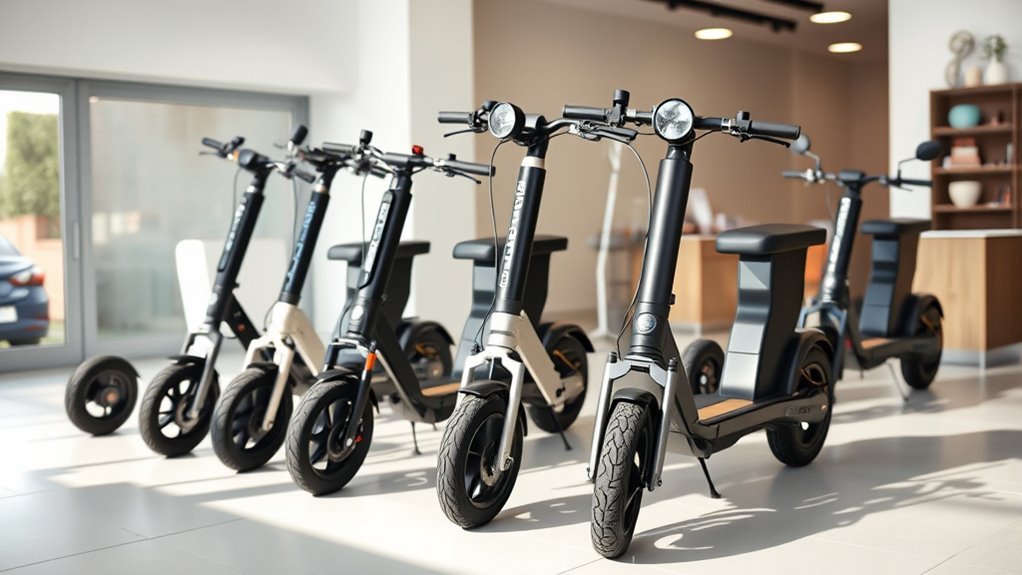
Electric scooter prices cover a wide spectrum. Current manufacturer listings show entry-level models below $300, capable commuter scooters around $400 to $900, and high-performance machines above $3,000. Sale prices can move quickly, so treat any exact product price as a snapshot rather than a permanent benchmark.
| Approximate Price | What You Commonly Get | Best Fit |
|---|---|---|
| Under $300 | Basic commuter performance, smaller battery, simpler suspension or no suspension, basic lighting and braking | Short, relatively flat trips |
| $300-$600 | More range, stronger motors, larger tires, improved lights, app features or suspension on some models | Most short-to-medium urban commutes |
| $600-$1,200 | Larger batteries, better suspension and brakes, stronger hill performance, improved construction and longer warranties on some models | Frequent commuters and riders needing more comfort or range |
| $1,200-$3,000 | Dual motors on many models, large batteries, hydraulic brakes, advanced suspension and heavier-duty frames | Experienced riders with demanding routes |
| $3,000+ | Extreme acceleration, very large batteries, premium suspension and braking, motorcycle-like weight and advertised speed on some models | Specialized enthusiasts, subject to local laws and safe-use limits |
These tiers are guides rather than technical classifications. A discounted scooter can have more motor power than a more expensive model, while a lightweight carbon-fiber commuter may cost more despite having modest top speed. Brand support, warranty, construction, battery cells, certification, weight, and portability all affect the price.
What Drives Electric Scooter Prices Up?
The biggest electric scooter price drivers are the battery, motor and controller system, brakes, suspension, tires, construction, electronics, certification, warranty, and service network. Two scooters with similar advertised speeds can therefore have very different prices.
Battery Capacity
Battery size is one of the most important cost factors because it determines how much energy the scooter can store. For meaningful comparisons, look at watt-hours (Wh) rather than amp-hours (Ah) alone. You can estimate watt-hours by multiplying nominal battery voltage by amp-hours. For example, a 36V 12Ah pack is about 432Wh.
A larger Wh figure can provide more range when other factors are similar, but it does not automatically mean a higher top speed. Speed also depends on voltage, controller limits, motor design, software, rider load and riding conditions.
The Hoverfly X5 illustrates why battery specifications need context: its manufacturer lists a 36V 12Ah battery, a 500W motor, a 20 mph maximum speed and up to 25 miles of claimed range. Those results describe that scooter as a complete system; they should not be assumed for every scooter using a battery of similar capacity.
Note: Advertised range is normally measured under controlled conditions. High speed, hills, cold weather, heavier loads, soft tires, wind and repeated acceleration can reduce the distance you actually travel.
Motor Power
Motor output affects acceleration and hill performance, but wattage labels require careful reading. Some manufacturers advertise rated or nominal power, while others emphasize a much higher peak power figure. Always compare like with like.
Current models demonstrate why old price rules no longer work. A relatively inexpensive scooter can advertise 600W or more of maximum power, while an expensive lightweight model may prioritize low weight, premium materials and portability rather than extreme motor output. Use wattage to judge whether the scooter suits your terrain, not as a shortcut for determining its value.
Brakes, Suspension, Tires and Frame
Better hardware raises manufacturing cost but can also make the scooter more practical. Hydraulic brakes, larger pneumatic or tubeless tires, front-and-rear suspension and stronger frames are common reasons one scooter costs more than another.
Solid tires reduce puncture concerns but usually transmit more road vibration. Pneumatic tires generally provide more compliance and grip but require pressure checks and can puncture. Suspension becomes particularly valuable on cracked pavement and longer rides.
Certification, Warranty and Support
Price also reflects less visible factors. Replacement-parts availability, warranty length, local repair support, battery management systems and electrical-safety testing can be worth paying for. In the United States, ANSI/CAN/UL 2272 is an important electrical-system safety standard for personal e-mobility devices such as pathway e-scooters.
Budget Electric Scooter Features
Budget electric scooters can work well for short commutes, but specifications vary much more than a simple “250W to 350W” rule suggests. Today’s sub-$500 models can include motors advertised well above that level, suspension, app connectivity, regenerative braking, turn signals or larger tires.
Affordable Entry-Level Motors
The MegaWheels A1C remains an example of a simple entry-level commuter. Its current manufacturer listing shows a 300W rated motor, approximately 15.5 mph maximum speed, roughly 11 miles of claimed range, 8.5-inch solid tires and front suspension. Its sale price was below $200 when checked in August 2026, although promotions can change.
| Metric | Typical Budget Priority | What to Check |
|---|---|---|
| Motor | Enough power for intended terrain | Rated vs. peak watts |
| Speed | Usually commuter-focused | Local limits and braking ability |
| Range | Suitable for short trips | Realistic range buffer |
Do not buy on motor size alone. A cheaper scooter with a high peak-wattage claim may still have a small battery, weak service support or limited braking. For a daily commuter, range, reliability, stopping performance and replacement-part availability matter at least as much as acceleration.
Essential Comfort And Safety
At the budget end, inspect the tires, brakes, lights, stem, folding mechanism and frame carefully. Small solid tires can be convenient but harsh on broken pavement. Front suspension can help, but a good tire-and-suspension combination matters more than simply seeing the word “suspension” in a feature list.
Also check the maximum rider load and remember that carrying a backpack or other cargo contributes to total weight. Stay within the manufacturer’s limit.
Warning: A low purchase price should never justify compromising battery or riding safety. Use the manufacturer-approved charger and battery, do not charge while sleeping or away from home, wear a helmet, inspect the scooter before riding, and follow local traffic rules.
Mid-Range Electric Scooters Worth It
Mid-range electric scooters are often the practical sweet spot for regular commuters because better batteries, brakes, suspension and tires become easier to find without stepping into extremely heavy or high-speed machines.
Today’s market also shows how much performance has moved downward in price. The CIRCOOTER Raptor Pro, for example, was listed around $650 when checked in August 2026 with dual 800W motors, dual suspension, dual disc/EABS braking and a 960Wh battery. Its advertised 56-mile maximum range is measured at only 9 mph, which is an important reminder to read the test conditions behind headline range claims.
A commuter does not necessarily need maximum performance. A lighter 20 mph scooter can be easier to carry upstairs, fit in a trunk, take on permitted transit systems and store inside an apartment. Choose the package that matches your actual route rather than the largest specification numbers.
Premium Electric Scooter Price Factors
Premium scooters commonly cost $1,200 or more because they can combine large battery packs, dual motors, stronger controllers, hydraulic braking systems, advanced suspension and heavier frames.
| Factor | Why It Can Raise Cost |
|---|---|
| Dual motors | More acceleration and climbing capability |
| High motor/controller output | Requires more robust electrical and thermal design |
| High-capacity battery | Adds cells, weight and potential range |
| Hydraulic brakes | Provides stronger, more controllable braking hardware |
| Advanced suspension | Improves control and comfort on rough surfaces |
| Construction materials | Can improve strength, weight or durability |
| Warranty and service | Adds after-sale support and parts availability |
At the extreme end, some scooters advertise motorcycle-like speeds. Kaabo’s current King GT Pro, for example, advertises a 62 mph maximum speed and dual 2000W motors. Such machines require far more caution than an ordinary commuter scooter and may not be permitted wherever you want to ride.
More performance is not automatically better value. The best scooter is the one whose range, braking, comfort, weight and legal use match the trips you actually make.
Hidden Costs of Owning an Electric Scooter
The purchase price is only the first part of electric scooter ownership. Charging is usually inexpensive, but tires, brake parts, a helmet, lock, accessories, repairs and an eventual battery replacement can matter far more.
Electricity and Charging Cost
You can estimate the energy cost of a full charge with a simple formula:
Battery capacity in kWh × your electricity price per kWh = battery-energy cost.
For example, a 360Wh battery is 0.36kWh. Using the U.S. Energy Information Administration’s projected 2026 residential average of about $0.1829 per kWh, 0.36kWh of battery energy costs roughly $0.07. Actual wall-socket cost will be slightly higher because charging is not perfectly efficient.
To estimate cost per mile, divide your actual charging cost by the real-world miles you get from that charge. This is more accurate than using one universal “cents per mile” figure.
Pro Tip: Use your scooter’s Wh rating, your actual electricity tariff and your own measured range. That gives you a much more useful cost-per-mile figure than a generic national estimate.
Maintenance and Repairs
Electric scooters have fewer drivetrain service items than gasoline vehicles, but they are not maintenance-free. Depending on the design and mileage, ownership may involve:
- Tire replacement or tube repair
- Brake-pad, rotor or cable adjustment and replacement
- Fastener checks and folding-mechanism maintenance
- Bearing, suspension or wheel repairs
- Damaged lights, displays, throttles or controllers
- Professional labor when a repair is beyond routine owner maintenance
There is no reliable universal annual maintenance number. Before buying, check what replacement tires, brake parts and other common components cost for the exact scooter.
Battery Replacement
The battery can become the largest long-term repair expense. Battery life depends on cell quality, charge cycles, heat, cold, storage conditions, discharge depth and charging habits. Replacement prices also vary enormously because battery size and design differ.
Before purchasing a scooter, verify that an approved replacement battery is actually available and check its current manufacturer price. A cheap scooter can become poor value if its proprietary battery is expensive or unavailable later.
Gear, Security, Insurance and Fees
Your starting budget should also include a properly fitted helmet and a suitable lock. Depending on where you live and how you use the scooter, you may also face insurance, registration, permit or other legal requirements. Rules differ widely, so check the laws where you intend to ride rather than assuming a privately owned scooter is exempt.
Theft risk matters too. A strong lock, secure indoor storage and any available app-based or physical immobilizer can protect a purchase that may cost hundreds or thousands of dollars.
How to Set Your Electric Scooter Budget
Start with the trip instead of the scooter. Write down your round-trip distance, steepest hills, rider-plus-cargo weight, road quality, storage situation and whether you must carry the scooter upstairs or onto transit.
- Set a realistic range requirement. Give yourself a substantial buffer above the miles you normally travel so wind, hills, temperature and battery aging do not leave you stranded.
- Match power to terrain. Flat urban routes need less motor output than steep hills or heavy loads.
- Prioritize braking and tires. Higher speed requires more attention to stopping performance and traction.
- Check scooter weight. A powerful scooter that weighs 70 to 100+ pounds may be impractical if stairs are part of your commute.
- Price replacement parts. Check tires, brake parts, chargers and batteries before purchase.
- Check warranty and service. A cheaper scooter is not necessarily cheaper over several years if support is poor.
- Add safety and security equipment. Budget for a helmet and lock from day one.
- Check local rules. Make sure the scooter’s speed and classification fit where you plan to use it.
Comparing an electric scooter with a car can be useful, but avoid simplistic numbers. AAA estimated the average annual cost to own and operate a new car at $11,577 in its 2025 study, including depreciation, finance, fuel, insurance, taxes and maintenance. That does not mean every scooter saves exactly the difference: a scooter serves different trips, carries less, offers less weather protection and may not replace a car completely.
Should You Buy a New or Used Electric Scooter?
A used scooter can lower the upfront cost, but the battery makes condition especially important. Ask how old it is, how it was stored, whether range has fallen noticeably and whether the original charger is included. Inspect the stem, folding latch, deck, wheels, brakes, tires, wiring and charging port for damage.
Avoid a scooter with a swollen, damaged, modified or poorly repaired battery. Also confirm that the exact replacement battery, charger and common wear parts are still sold. If the discount is small, a new scooter with a full warranty may offer better value.
Safety, Certification and Local Rules
The U.S. Consumer Product Safety Commission recommends choosing micromobility products that comply with applicable safety standards, following manufacturer charging instructions, using only the supplied or approved charger and battery, and remaining present while charging. CPSC also advises riders to wear a bicycle helmet and inspect the scooter before riding.
For electrical safety, look for credible certification applicable to the complete scooter system rather than vague marketing language. UL 2272 covers electrical systems in personal e-mobility devices including pathway e-scooters.
Do not put a used lithium-ion scooter battery in household trash or ordinary recycling. Follow the manufacturer’s guidance and use an appropriate battery recycler or household hazardous-waste program.
Which Electric Scooter Is Right for You?
Which electric scooter fits your ride depends more on your route than on one headline specification.
If portability and normal city commuting matter, the TurboAnt X7 Max remains a useful example. Its current manufacturer comparison lists up to 32 miles of claimed range, a 20 mph maximum speed, a 350W rated front motor with 700W peak output and a detachable battery. The current price was about $450 when checked in August 2026.
If you need more hill performance and suspension, TurboAnt’s R9 uses a 500W rear motor with 800W peak output, advertises up to 35 miles of range and 28 mph, and uses all-terrain tires with dual suspension.
The Hiboy TITAN has also changed significantly from earlier versions. The 2026 model is currently advertised with a 1,200W peak motor, 28 mph maximum speed, up to 46 miles of claimed range, dual suspension and hydraulic brakes.
- Range: choose a model with a buffer above your normal daily distance.
- Performance: compare rated power, peak power, hill capability and rider load rather than watts alone.
- Comfort: consider tire type, wheel size, deck size and suspension.
- Safety: prioritize effective brakes, lights, electrical certification and appropriate riding gear.
- Portability: check actual scooter weight and folded dimensions.
- Ownership: confirm warranty, parts availability and replacement-battery price.
For an affordable entry point, the MegaWheels A1C remains a basic short-range option, while the GOTRAX G4 offers a 500W average motor, 20 mph maximum speed and up to 25 miles of advertised range at a higher commuter price point. Product prices change frequently, so compare current manufacturer listings when you are ready to buy.
Frequently Asked Questions
How Much Does the Average Electric Scooter Cost?
For everyday personal electric scooters, roughly $300 to $1,200 is a practical shopping range. Basic sale models can cost under $200, while premium and extreme-performance scooters can exceed $3,000 or $4,000.
What Is the Best Electric Scooter Under $500?
There is no single best scooter for every rider. The Hoverfly X5 is one current option under $500, with a 500W motor, 20 mph maximum speed and up to 25 miles of claimed range. The TurboAnt X7 Max and GOTRAX G4 are other commuter-focused options around this price. Compare actual range needs, scooter weight, brakes, tires, warranty and local service before choosing.
What Is the Best Electric Scooter for the Money?
The best value is usually a scooter that comfortably covers your real commute without paying for speed or range you will not use. Models such as the TurboAnt X7 Max can suit portable urban commuting, while heavier mid-range models may be better for rough roads or hills. Prioritize brakes, realistic range, parts support and warranty over headline wattage.
How Much Money Does an E-Scooter Cost?
A new personal e-scooter can cost roughly $200 at the budget end, $300 to $1,200 for many commuter models and $1,500 to $4,000 or more for premium performance machines. Sale prices can change the apparent price tier substantially.
How Much Does It Cost to Charge an Electric Scooter?
Charging is usually inexpensive. Multiply battery capacity in kWh by your electricity rate. A 360Wh battery equals 0.36kWh, so at $0.1829 per kWh the battery energy itself costs about seven cents. Actual wall-socket cost is slightly higher because charging has efficiency losses.
How Much Does an Electric Scooter Battery Cost to Replace?
There is no dependable universal replacement price. Cost depends on voltage, watt-hours, cell quality, enclosure, electronics and whether the battery is proprietary. Check the exact manufacturer replacement pack before buying the scooter so you know the likely long-term expense.
Is a $500 Electric Scooter Good Enough for Commuting?
Often, yes. Around $500 can buy a capable scooter for relatively short urban trips. Confirm that its realistic range covers your commute with a buffer, that it can handle your hills and rider weight, and that its brakes, tires, lighting, certification, warranty and parts support meet your needs.
Conclusion
So, how much does an electric scooter cost? Basic models can start around $200, many useful commuter scooters fall between roughly $300 and $1,200, and high-performance machines can exceed $3,000 or $4,000. Instead of choosing by price or motor watts alone, compare realistic range, battery watt-hours, brakes, tires, suspension, scooter weight, certification, warranty and parts availability.
Then budget for the costs that come after checkout: charging, a helmet and lock, tire and brake wear, repairs and an eventual battery replacement. Spending a little more on a scooter that actually fits your route, can be serviced and uses a safe approved charging system can provide better long-term value than simply choosing the cheapest or fastest model.
Sources
- U.S. Consumer Product Safety Commission — Micromobility Information Center — battery charging, riding and micromobility safety guidance.
- U.S. Consumer Product Safety Commission — Micromobility Products-Related Deaths, Injuries and Hazard Patterns 2017-2024 — current U.S. injury, fatality and hazard data.
- UL Solutions — Personal e-Mobility Evaluation, Testing and Certification — information on ANSI/CAN/UL 2272 and e-scooter electrical-system safety testing.
- U.S. Energy Information Administration — Analysis & Projections — U.S. residential electricity-price data and 2026 projections used for the charging-cost example.
- U.S. Environmental Protection Agency — Used Household Batteries — lithium-ion battery handling and recycling guidance.
- AAA — Your Driving Costs 2025 — new-car ownership-cost comparison and methodology.
