

Last Updated on July 29, 2026 by Daniel Globe
The distance from Egypt to Canaan cannot be reduced to one exact number because both were large regions rather than single cities. From the eastern Nile Delta to southern Canaan, a cautious map estimate is roughly 250–400 kilometers, or about 155–250 miles, depending on the starting point, destination, and route. The Bible’s 40-year timeline describes the wider wilderness period, not the time needed to walk directly from Egypt to Canaan.
Quick Answer
From the eastern Nile Delta to southern Canaan, a reasonable route estimate is roughly 250–400 kilometers (155–250 miles), depending on the starting city, destination, and route. The Bible gives no single Egypt-to-Canaan mileage or 10-day total: its 11-day figure covers Horeb to Kadesh Barnea, while the wilderness period lasts 40 years.
Key Takeaways
- There is no universal Egypt-to-Canaan mileage because the answer changes with the chosen start and destination.
- The shortest major northern corridor was the coastal Way of Horus, also associated with the later name Via Maris.
- Exodus 13 says the Israelites did not take the shorter road through Philistine territory because of the risk of conflict.
- Deuteronomy’s 11-day figure applies to Horeb-to-Kadesh Barnea, not the complete journey from Egypt.
- The 40 years were a biblical period of encampment, movement, judgment, and generational change—not 40 years of continuous walking.
Disclosure: As an Amazon Associate I earn from qualifying purchases. Some links on this page are affiliate links, at no extra cost to you.
How Far Is Canaan From Egypt?
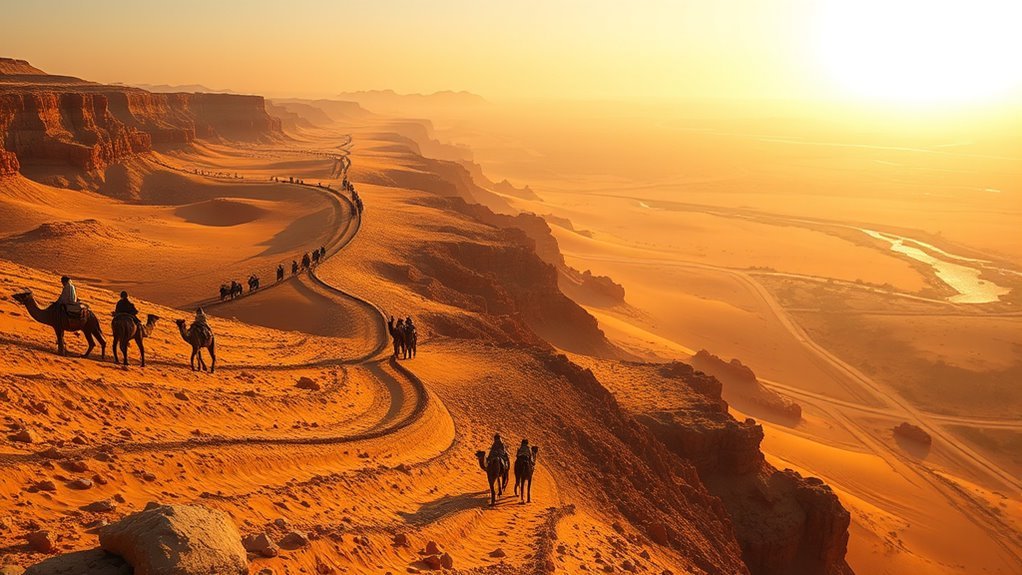
A practical answer depends on what “Egypt” and “Canaan” mean on the map. The biblical departure is commonly associated with Egypt’s eastern Nile Delta. Canaan, however, covered part of the wider Levant, including coastal plains, inland highlands, and areas extending well north of its southern boundary.
For travel from the eastern Nile Delta to southern Canaan, a broad estimate of about 250–400 kilometers (155–250 miles) is more defensible than one fixed figure. A destination near Gaza or Beersheba would produce a shorter result than a destination near Hebron, Jerusalem, or farther north.
The frequently repeated figure of 623 kilometers, or 387 miles, may fit a selected city pair or a longer reconstructed route. It should not be presented as the universal distance between Egypt and Canaan.
Note: A map can produce very different totals depending on whether it measures a straight line, an ancient road, a modern road, or a proposed wilderness itinerary. Always check the selected endpoints before comparing mileage.
The Bible’s 11-day journey is from Horeb to Kadesh Barnea—not from Egypt to Canaan.
The geographical distance was therefore measured in hundreds of kilometers, while the 40-year period belongs to the biblical chronology and theology of the wilderness narrative.
What Routes Connected Egypt and Canaan?
Egypt and Canaan were connected by several roads and regional corridors. They did not form one fixed Exodus route, and each served a different purpose.
The Coastal Way of Horus
The most direct major corridor ran across northern Sinai and continued along the Mediterranean coast. The University of Chicago’s Institute for the Study of Ancient Cultures identifies this route as the Way of Horus, later associated with the Via Maris. It connected Egypt with the southern Levant and continued toward important centers such as Megiddo, Damascus, and Aleppo.
This road was useful for armies, officials, merchants, and caravans, but it was also strategically controlled. Fortifications, patrol points, and Philistine territory made it the fastest geographical option without necessarily making it the safest option for a vulnerable population.
The Biblical Wilderness Route
Exodus 13:17–18 says God did not lead the Israelites by the shorter road through Philistine country because they might turn back when faced with war. The narrative instead directs them toward the wilderness and the Sea of Reeds.
Later biblical stages include places such as Succoth, the Wilderness of Shur, Sinai or Horeb, Kadesh Barnea, the wilderness of Paran, and areas east of the Jordan. Numbers 33 records a sequence of encampments, but several locations remain uncertain or disputed on modern maps.
The King’s Highway and Eastern Approach
The King’s Highway was not the normal direct road from Egypt across northern Sinai. It ran through territory east of the Dead Sea and Jordan Valley. It becomes relevant during the later approach to Canaan, when Israel sought passage through Edom and Amorite territory, as described in Numbers 20 and 21.
The main routes can therefore be separated into three categories:
- Northern coastal road: The shortest established corridor between Egypt and southern Canaan, but also a controlled military route.
- Southern wilderness route: The route associated with the Sea of Reeds, Sinai, and the wilderness stages in the biblical narrative.
- Eastern approach: A later movement through areas east of the Dead Sea and Jordan before entering Canaan.
Egypt to Canaan Distance in Miles and Kilometers
The following comparison separates map estimates from the distinct time periods mentioned in the Bible.
| Comparison | Best-Supported Explanation |
|---|---|
| Eastern Nile Delta to southern Canaan | Approximately 250–400 km (155–250 miles), depending on the selected endpoints and route. |
| Frequently quoted 623 km | Not a universal measurement. It may reflect a particular city pair or reconstructed detour. |
| Horeb to Kadesh Barnea | An 11-day journey according to Deuteronomy 1:2; this is not the entire Egypt-to-Canaan trip. |
| Biblical wilderness period | 40 years, including travel stages, encampments, events at Sinai, judgment, and generational change. |
A small, prepared group using the direct coastal corridor could cross the region much faster than a large community traveling with children, livestock, equipment, and the need to find water. Even so, no ordinary walking estimate explains the 40 years because the biblical account does not describe 40 years of continuous forward travel.
Pro Tip: When a map claims an exact Egypt-to-Canaan distance, check whether it begins at Cairo, the eastern Nile Delta, Rameses, or another location—and whether it ends at Gaza, Beersheba, Jerusalem, or northern Canaan.
How Long Did the Journey Take?

A direct journey from the eastern Nile Delta to southern Canaan would normally be measured in days or weeks, not decades. The biblical narrative, however, is divided into several stages and does not treat Canaan as the immediate next stop after leaving Egypt.
Exodus 19:1–2 places the Israelites at the Wilderness of Sinai in the third month after leaving Egypt. The account then describes the covenant at Sinai, further travel, the mission of the spies, the refusal to enter the land, and the resulting wilderness judgment.
Journey Duration Explained
| Measure | Best-Supported Statement | Context |
|---|---|---|
| Geographic distance | No single fixed total | Egypt and Canaan were regions |
| Shortest major corridor | Way of Horus | Direct but strategically controlled |
| Horeb to Kadesh Barnea | 11 days | Deuteronomy 1:2 |
| Wilderness period | 40 years | Numbers 14:33–34 |
| Kadesh to Zered span | 38 years | Deuteronomy 2:14 |
Dividing a proposed route length by 40 years produces figures such as 15 kilometers per year or 43 meters per day, but those numbers do not describe the narrative. The people were not walking steadily toward Canaan every day. They camped for extended periods and sometimes moved away from the most direct line.
Why It Took 40 Years
Within the biblical account, two separate reasons explain the longer timeline.
- The initial route avoided immediate war. Exodus 13 says the shorter road through Philistine territory was not used because the people might turn back when faced with battle.
- The later 40-year judgment followed the spies’ report. In Numbers 13–14, most of the spies discouraged the people from entering Canaan. Their refusal and lack of trust led to the declaration that the generation would remain in the wilderness.
Numbers 14:33–34 connects the 40 years with the 40 days spent exploring the land. The number therefore has a specific theological role in the narrative; it is not presented as the unavoidable travel time for the physical distance.
Deuteronomy adds that 38 years passed between leaving Kadesh Barnea and crossing the Zered Valley. This does not mean that the Israelites stayed at Kadesh Barnea for 38 years.
Which Route Was Fastest?

The northern coastal road was the fastest established route between Egypt and southern Canaan. It followed the Mediterranean side of northern Sinai and continued through the coastal plain.
Its advantages included flatter terrain, established stopping places, and direct access to southern Canaan. Its disadvantage was political and military exposure. It passed through a strategic corridor used and defended by regional powers.
- Coastal Way of Horus: The shortest and most direct major road, but also the route most exposed to military control and Philistine territory.
- Southern wilderness route: Longer and harder to reconstruct, but consistent with the biblical movement toward the Sea of Reeds and Sinai.
- Eastern approach: A later route through Transjordan before the entry into Canaan from east of the Jordan.
The fastest road was therefore not necessarily the route that best served the narrative’s concerns about security, covenant, leadership, and readiness.
Why Did the Exodus Route Take Longer?
The Exodus route took longer in the biblical narrative because the journey was not designed as a simple point-to-point crossing. Three factors shaped its length:
- Security: The shorter road risked an early confrontation.
- Major wilderness events: The narrative includes the sea crossing, Sinai covenant, laws, construction of the tabernacle, rebellions, and extended encampments.
- Judgment after Kadesh Barnea: The refusal to enter Canaan resulted in the 40-year wilderness period.
Divine Timing
From a theological reading, the journey develops according to divine direction rather than the shortest available mileage. Exodus presents God as choosing a route that avoided immediate war. Numbers then presents the later delay as a response to the people’s fear and refusal to enter the land.
The 40 years therefore combine protection, judgment, patience, and generational transition. This is a faith interpretation drawn from the biblical text, not a calculation based on road length.
- The shortest route was not automatically the safest route.
- Arrival was delayed after the people refused to enter Canaan.
- A new generation reached the eastern side of the Jordan before the conquest narratives began.
Wilderness Preparation
The wilderness period also serves as a time of national and religious formation. At Sinai, Israel receives covenant laws and instructions for worship. The United States Conference of Catholic Bishops’ introduction to Exodus outlines the book’s movement from deliverance to Sinai, covenant, legislation, rebellion, renewal, and construction of the tabernacle.
For Jewish and Christian readers, these events explain why the journey is about more than reaching a destination. The wilderness becomes the setting in which a formerly enslaved population receives laws, leadership structures, communal identity, and covenant obligations.
That interpretation should not be turned into an artificial walking speed. Claims that the Israelites averaged only a few meters per day confuse narrative chronology with continuous travel.
What Can the Journey Tell Us About the Exodus?
The journey helps readers understand the Exodus on three different levels.
- Geographically: A direct coastal road existed between Egypt and Canaan, but terrain, water, fortifications, and political control affected travel choices.
- Biblically: The narrative links the longer route to avoiding war and links the 40 years to the refusal to enter Canaan after the spies’ report.
- Theologically: The wilderness functions as a place of testing, covenant, discipline, provision, and communal formation.
Keeping those levels separate prevents two common errors: treating every proposed map as certain history and treating a theological timeline as a measure of normal walking time.
What Historians Can and Cannot Confirm
Historians can confirm that ancient roads connected Egypt with the southern Levant and that the coastal Way of Horus was a strategically important corridor. Archaeology also confirms long periods of movement, trade, military activity, and cultural exchange between Egypt and Canaan.
What cannot currently be confirmed is one universally accepted Exodus route with every biblical stopping place fixed on a modern map. Several locations—including the precise identification of Mount Sinai—remain debated. Different reconstructions place the route through different parts of Sinai and use different proposed crossings and encampments.
Note: A map labeled “the Exodus route” normally shows one proposed reconstruction. It should not be treated as a route verified at every point by archaeology.
Scholars also disagree about how much historical memory lies behind the Exodus tradition. A balanced article can describe what the biblical text says while remaining honest about the limits of geographical and archaeological reconstruction.
Frequently Asked Questions
How far was biblical Canaan from Egypt?
There is no single distance because Egypt and Canaan were regions. From the eastern Nile Delta to southern Canaan, a cautious estimate is roughly 250–400 kilometers, or 155–250 miles. Destinations farther north or indirect routes produce longer totals.
Does the Bible say Egypt to Canaan was an 11-day journey?
No. Deuteronomy 1:2 says it was an 11-day journey from Horeb, also associated with Sinai, to Kadesh Barnea by the Mount Seir road. That verse does not give the total travel time from Egypt to Canaan.
Why did the journey take 40 years?
In the biblical narrative, the Israelites first avoided the shorter Philistine road because of the risk of war. The 40-year wilderness judgment was later declared after the people refused to enter Canaan following the spies’ report in Numbers 13–14.
How long was the trip from Canaan to Egypt for Joseph’s brothers?
Genesis 42 does not say how many days the trip took. The duration would have depended on where the family lived in Canaan, where they obtained grain in Egypt, road conditions, animals, supplies, and border procedures.
Why do maps show different Egypt-to-Canaan distances?
Maps use different starting cities, destinations, roads, and proposed Exodus routes. A straight-line measurement from the eastern Nile Delta to Gaza will be much shorter than a reconstructed journey through southern Sinai, Kadesh Barnea, Transjordan, and the Jordan Valley.
How long would a direct trip from Canaan to Egypt take?
A direct trip would generally be measured in days or weeks rather than years, but there is no universal answer. A merchant caravan, military force, family group, and large migrating population would travel at different speeds and require different stops.
Conclusion
The most accurate answer is that Egypt and Canaan do not have one fixed distance. From the eastern Nile Delta to southern Canaan, a practical estimate is roughly 250–400 kilometers, or 155–250 miles, depending on the endpoints and road. The coastal Way of Horus was the shortest major corridor, but Exodus says the Israelites did not use the shorter road through Philistine territory.
The 40-year period should not be treated as normal travel time. In the biblical narrative, it includes the journey to Sinai, covenant events, encampments, the refusal to enter Canaan, judgment, and the passing of a generation. Deuteronomy’s 11-day statement refers specifically to Horeb-to-Kadesh Barnea, while its 38-year statement covers the period from leaving Kadesh to crossing the Zered Valley.
Sources
- Penn Museum — Eastern Mediterranean and Levant overview — supports the regional scope of Canaan and the Levant.
- Institute for the Study of Ancient Cultures — Ancient Israel — identifies the Way of Horus/Via Maris as a coastal route leading out of Egypt through the southern Levant.
- Exodus 13:17–18 — supports the statement that the shorter road through Philistine country was not used.
- Deuteronomy 1:2–3 — gives the 11-day journey from Horeb to Kadesh Barnea.
- Numbers 14:33–34 — explains the 40-year wilderness judgment within the biblical narrative.
- Deuteronomy 2:14 — records 38 years from leaving Kadesh Barnea to crossing the Zered Valley.

