
Last Updated on July 22, 2026 by Daniel Globe
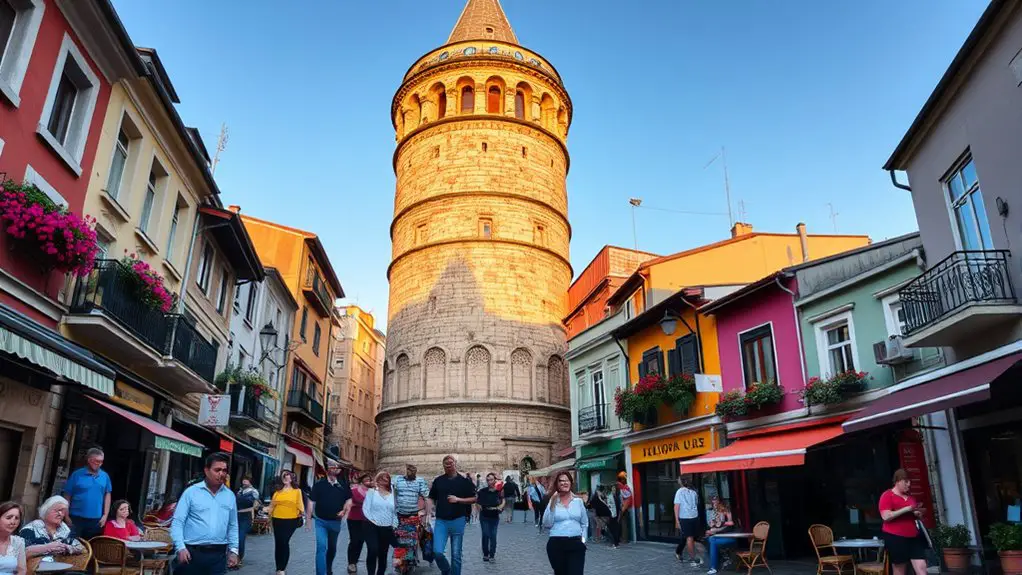
Galata’s history is a tapestry woven from its origins as a Byzantine Greek colony to its role as a bustling trade hub. Positioned near the Golden Horn, it attracted diverse communities, fostering rich cultural exchanges. You’ll notice architectural gems like the iconic Galata Tower, which stands as a symbol of its historical significance. Today, Galata thrives as a lively cultural district, blending art, cafes, and nightlife. Explore further to uncover more about this unique neighborhood.
Quick Answer
Galata is a historic district in Istanbul on the northern side of the Golden Horn, home to the 14th-century Galata Tower and centuries of Byzantine, Genoese, and Ottoman influence. Today it’s known for its narrow hillside streets, cafes, art galleries, and nightlife.
Disclosure: As an Amazon Associate I earn from qualifying purchases. Some links on this page are affiliate links, at no extra cost to you.
Key Takeaways
- Galata originated as a Greek settlement during the Byzantine era, going back as far as the 6th century.
- The Galata Tower, rebuilt by the Genoese in 1348, stands atop the remains of their fortified trading colony.
- Galata has absorbed Genoese, Byzantine, and Ottoman influences over more than seven centuries.
- The neighborhood’s narrow streets feature architectural styles ranging from Neoclassical to Art Nouveau.
- Today’s Galata blends historic sites with a lively scene of cafes, galleries, and nightlife.
The Origins of Galata: A Historical Overview
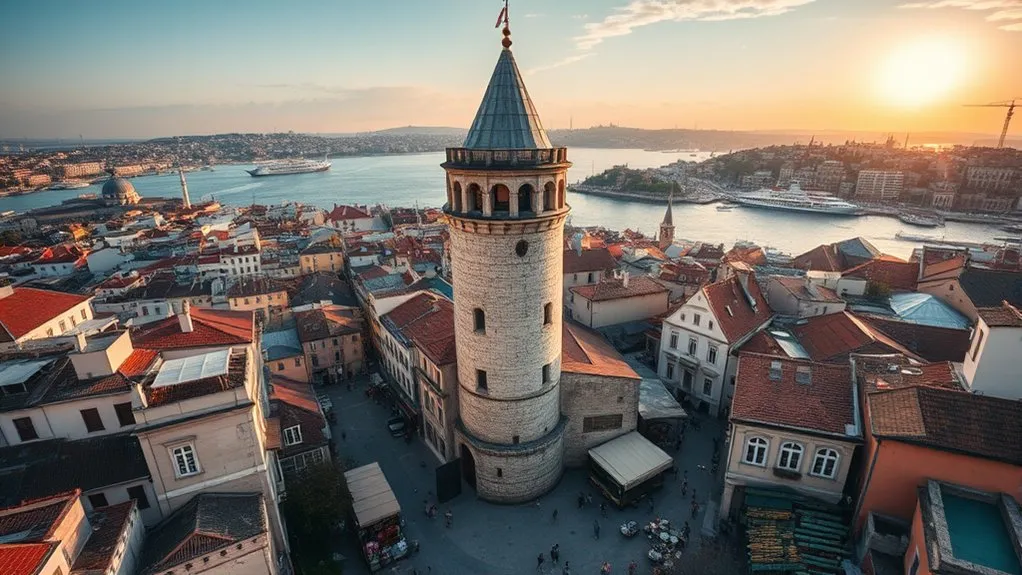
Galata’s roots stretch back to the Byzantine era, when a watchtower first stood on the hill above the Golden Horn as early as the 6th century. The site was destroyed during the Fourth Crusade in 1204, and decades later, in 1267, the Byzantine emperor granted the area to Genoese merchants under the Treaty of Nymphaeum, establishing it as a semi-autonomous trading colony.
Over the following century, the Genoese expanded and fortified the settlement — technically beyond what their original land grant allowed — building walls, warehouses, and the tower that still defines the skyline today. This layered mix of Byzantine foundations and Genoese fortification gives Galata its distinct character.
The current stone Galata Tower was completed by the Genoese in 1348 as the highest point of their fortification system, originally named Christea Turris, the “Tower of Christ.” When Ottoman forces took Constantinople in 1453, the keys to the Galata colony were formally handed over, and the district was absorbed into the expanding Ottoman city.
The Role of Galata in Trade and Commerce
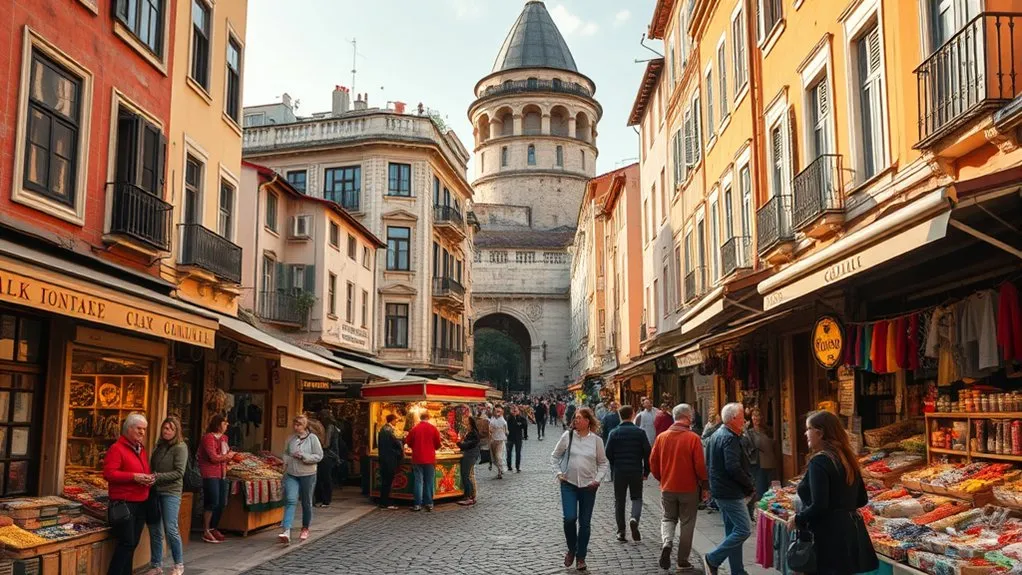
Istanbul’s Galata district has long been a hub for trade and commerce, thanks in large part to its position directly across the Golden Horn from the historic peninsula. Genoese merchants used the location to control shipping traffic and build one of the era’s most active trading colonies in the eastern Mediterranean.
You’ll find that Galata’s market history reflects centuries of local and international commerce:
- Goods from across the Mediterranean and beyond passed through its docks and warehouses.
- Trade privileges negotiated with Byzantine and later Ottoman authorities shaped the area’s economic growth.
- A mix of merchant communities — Genoese, Greek, Jewish, Armenian, and others — built the trading networks that sustained the district for centuries.
As you explore Galata today, its old customs houses, banking buildings, and narrow commercial streets still hint at this trading past — a legacy that helped shape Istanbul’s broader economic development along the Golden Horn.
The Cultural Melting Pot: Diverse Communities in Galata
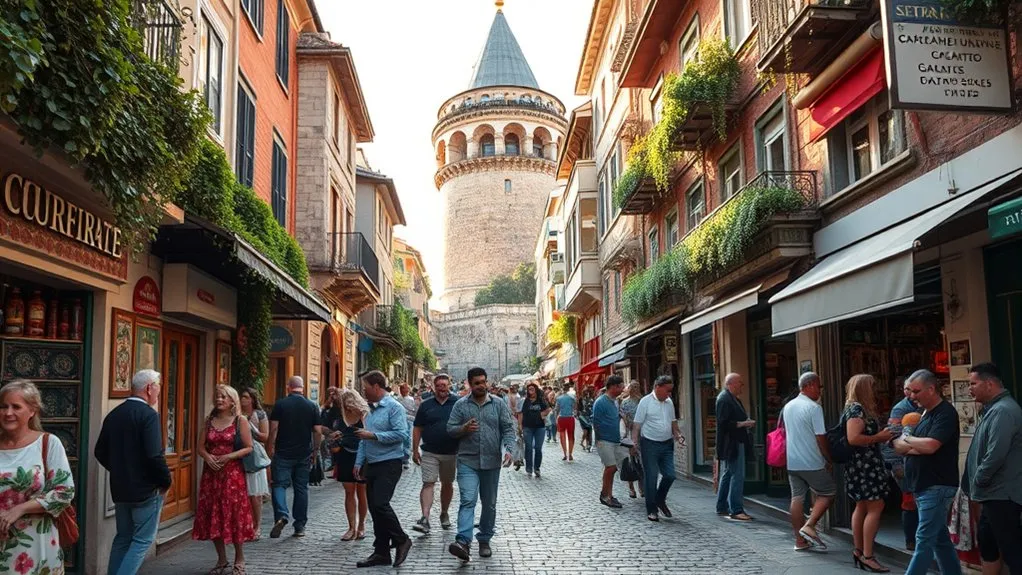
Galata’s community has long reflected a mix of ethnicities and faiths, shaping daily life and giving the district its distinct identity.
Historical Community Dynamics
Galata’s population historically included Genoese, Greek, Armenian, and Jewish residents alongside Ottoman Muslims, each contributing to the district’s social and economic life.
- Cultural exchange: Different communities contributed to Galata’s food, music, and craftsmanship over centuries.
- Economic collaboration: Merchants from various backgrounds built the trading networks that made Galata prosperous.
- Neighborhood coexistence: Communities largely lived and worked side by side, forming a distinct multicultural character that persisted for generations.
Religious Diversity Impact
Galata has long been home to multiple faith communities, each maintaining their own places of worship and traditions within a shared urban space.
| Faith Community | Religious Practices | Community Presence |
|---|---|---|
| Christianity | Church services, festivals | Several historic churches remain active in the district |
| Judaism | Sabbath observance, Hanukkah | Historic synagogues in and around Galata and neighboring Karaköy |
| Islam | Daily prayers, Ramadan | Mosques serving the local Muslim community |
As you explore Galata, you’ll notice traces of these communities in its churches, synagogues, and mosques — physical reminders of a long history of coexistence.
Cultural Festivals and Events
Galata and its surrounding streets play host to several cultural touchpoints throughout the year:
- Istanbul Music Festival: Organized by İKSV each June and July, this long-running classical music festival has used the historic Galata Mevlevihanesi (Galata Sufi Lodge) as one of its venues.
- Istanbul Coffee Festival: An annual celebration of Turkey’s coffee culture held in the city, featuring workshops, tastings, and roasters — a favorite stop for visitors exploring Galata’s cafe scene.
- Ramadan and Bayram gatherings: During religious holidays, the area around Galata Tower fills with locals and visitors marking the season together.
Each of these events offers a window into how the district’s past and present cultures continue to intersect.
Architectural Wonders: The Galata Tower and Beyond
As you wander through Galata, its architectural interest extends well beyond the iconic Galata Tower. This stone structure, rebuilt by the Genoese in 1348, once served as the highest point of their fortification walls and remains a defining symbol of the district’s role in Mediterranean trade.
Note: The tower has been rebuilt and repaired multiple times since 1348, including after fires and earthquakes, and today functions as a museum with panoramic viewing decks.
Nearby, narrow streets are lined with buildings featuring ornate facades and balconies reflecting a mix of architectural styles, including Neoclassical and Art Nouveau influences from the late Ottoman period. Former industrial buildings, like the Karaköy Gazhanesi (a former 19th-century gasworks), have since been repurposed for modern cultural use while retaining their historic exteriors.
Each building tells part of the neighborhood’s layered story, from Genoese fortification to Ottoman-era commerce to today’s mix of galleries and studios. For up-to-date visitor details on the tower as a museum, see the official Galata Tower information from Turkey’s Ministry of Culture and Tourism (Galata Tower museum page).
The Transformation of Galata in the 20th Century
The 20th century brought real change to Galata, as the district’s population and economic role shifted alongside broader changes in Istanbul.
You’ll notice how the area adapted while retaining much of its historical fabric:
- Some older industrial and commercial buildings were later repurposed into cultural or residential space.
- New transit connections improved access between Galata and the rest of the city.
- A shifting mix of residents and businesses gradually reshaped the neighborhood’s character.
By the late 20th century, artists and small business owners had begun moving into Galata’s older buildings, planting the seeds of the creative district it’s known as today. This blend of old fortification walls, Ottoman-era buildings, and newer cultural spaces is part of what makes Galata distinct within Istanbul’s urban landscape.
Contemporary Galata: Art, Cafes, and Nightlife
Contemporary Galata draws visitors with its mix of art, cafes, and nightlife. Street art and small galleries have turned parts of the district into an informal open-air arts scene.
Local cafes throughout Galata serve coffee alongside space for emerging artists and artisans to display their work — good spots for a break between sightseeing stops.
Pro Tip: Visit Galata Tower in the late afternoon for shorter lines and to catch sunset views over the Golden Horn and Bosphorus from the top.
At night, Galata’s bars and small venues host everything from live bands to DJ sets, giving the district an active after-dark scene alongside its daytime historic appeal. For a broader view of how Galata connects to the modern Karaköy waterfront, see the official history of the Galata and Karaköy port area (Galataport history page).
Tips for Exploring Galata: Must-See Attractions and Experiences
To make the most of a visit to Galata, prioritize a few key attractions and experiences:
- Galata Tower: Climb to the top for panoramic views of the Bosphorus and the city skyline.
- Local cuisine: Sample Turkish dishes at nearby eateries — mezes, kebabs, and baklava are easy to find within a short walk of the tower.
- Hidden gems: Wander the narrow streets to find art galleries, small shops, and cafes tucked away from the main tourist routes.
- Getting there: Galata sits within easy walking distance of Karaköy, one stop from the historic peninsula by tram or on foot across the Galata Bridge.
Frequently Asked Questions
What is the best time to visit Galata?
Spring and fall are generally the best times to visit, when the weather is mild and crowds are smaller than in peak summer. You’ll get comfortable walking conditions and a chance to catch local events.
Are there guided tours available in Galata?
Yes, several companies offer guided walking tours in and around Galata. These tours provide historical context, highlight lesser-known spots, and help you make the most of a short visit.
Is Galata safe for tourists?
Galata is generally considered safe for tourists, especially in busy areas. As in any big city, stay aware of your surroundings, keep valuables secure, and avoid poorly lit, quiet streets late at night.
Where can I find local cuisine in Galata?
You’ll find restaurants and cafes around Galata Tower and along nearby streets serving traditional Turkish dishes — look for pide, simit, mezes, and desserts like baklava or künefe.
What public transportation options are available to reach Galata?
Galata is easy to reach by tram, bus, or on foot. Many visitors take the tram to Karaköy or Tophane and walk uphill, or connect via buses that stop near the base of the Galata Tower area.
Conclusion
Galata isn’t just a neighborhood — it’s a layered record of Istanbul’s history, from its Byzantine and Genoese roots to its present-day mix of art, cafes, and nightlife. As you walk its streets, you’ll pass through centuries of trade, faith, and culture all within a few blocks. From the Galata Tower to its galleries and cafes, the district rewards visitors willing to look beyond the main sights.
Sources
- Wikipedia — Galata — historical timeline of the Genoese colony and Galata Tower construction
- Turkey Ministry of Culture and Tourism — Galata Tower — official visitor information
- İKSV — Istanbul Music Festival — festival history and venues, including Galata Mevlevihanesi
- Galataport İstanbul — History — modern Karaköy/Galata waterfront redevelopment

