
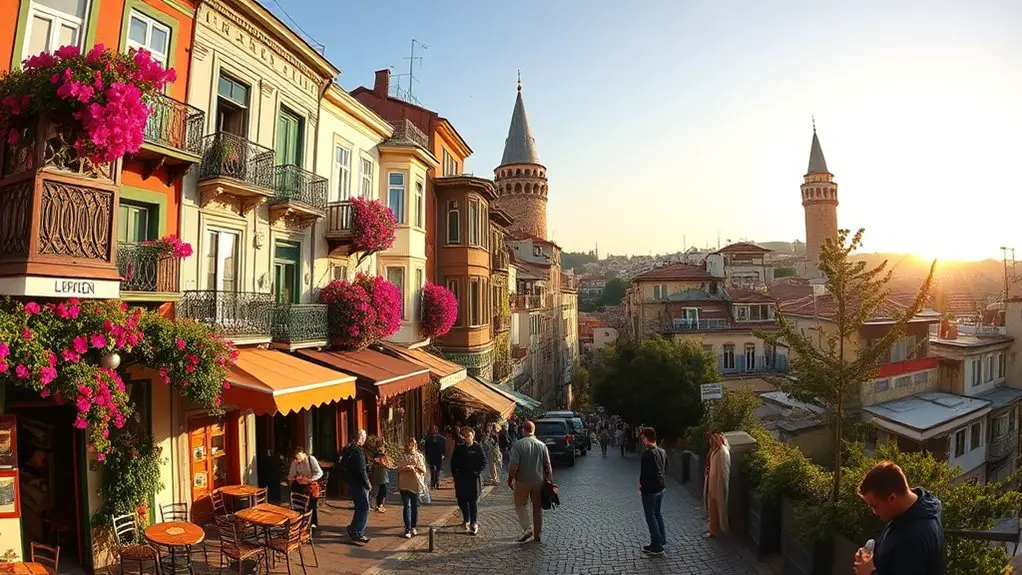
Last Updated on July 25, 2026 by Daniel Globe
Cihangir’s history is a story of Ottoman commemoration, changing architecture, repeated rebuilding, and modern urban transformation. Rather than beginning as a documented Byzantine trade center, the neighborhood developed more clearly from the Ottoman period onward. Its name comes from Şehzade Cihangir, while the streets seen today reflect layers of 19th-century masonry construction, early modern apartment design, artistic culture, and gentrification.
Quick Answer
Cihangir’s documented history centers on Ottoman-era naming and later urban growth, not a proven Byzantine trade-center role. Sultan Süleyman I commissioned the first Cihangir Mosque for his son Şehzade Cihangir in 1559–60. Settlement expanded from the 17th century, followed by distinctive 19th- and 20th-century apartment architecture and a later bohemian identity.
Key Takeaways
- Cihangir is named for Şehzade Cihangir, a son of Sultan Süleyman the Magnificent, not a son of Selim II.
- The first Cihangir Mosque, attributed to Mimar Sinan, was completed in 1559–60; the present structure reflects an 1890 rebuilding after repeated fires.
- Historical research traces substantial neighborhood settlement from the 17th century and major residential development in the 19th century.
- Cihangir’s historic building stock is better described through 19th-century Neoclassicism and post-1925 Art Deco and early modernism than as simply “Baroque.”
- Its present-day creative reputation exists alongside a long-running gentrification process that has changed housing, businesses, and the neighborhood’s social mix.
Disclosure: As an Amazon Associate I earn from qualifying purchases. Some links on this page are affiliate links, at no extra cost to you.
The Origins of Cihangir: A Historical Overview
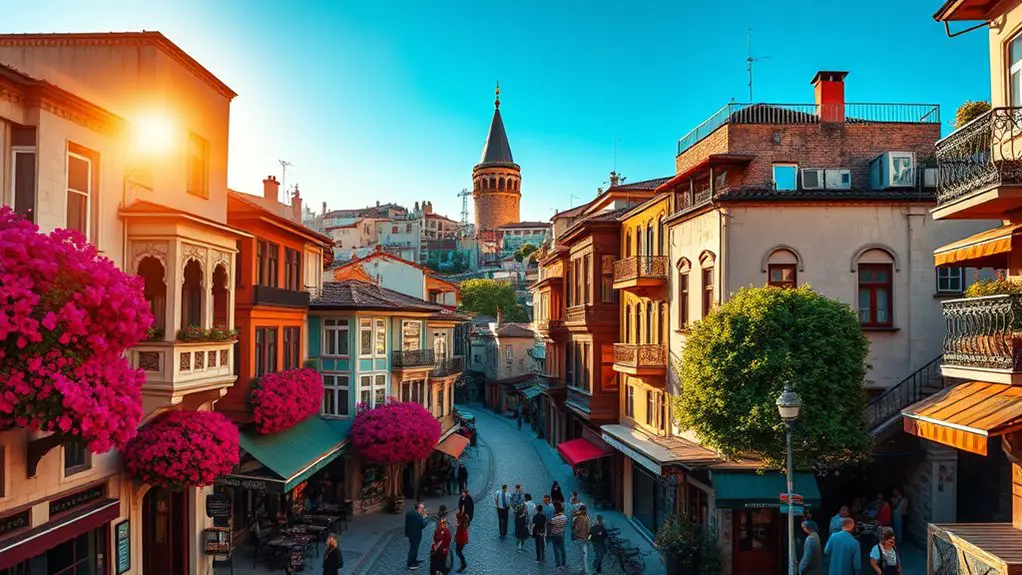
Cihangir occupies the slopes of Beyoğlu above areas such as Tophane, Fındıklı, and Kabataş. Although the wider landscape has a history extending into Byzantine Constantinople, reliable research does not establish the present neighborhood as a major Byzantine trade center. A historical-building inventory published through the Turkish Academy of Sciences instead traces recognizable settlement growth in Cihangir from the 17th century onward.
The name Cihangir comes from Şehzade Cihangir, the son of Sultan Süleyman I and Hürrem Sultan. According to the TDV İslâm Ansiklopedisi, Süleyman commissioned a mosque on the hill in memory of his son, who died in 1553 at the age of 22. The first mosque, attributed to Mimar Sinan, was completed in 1559–60.
That original building did not survive unchanged. Cihangir Mosque suffered repeated fires and rebuilding campaigns. The present mosque largely reflects the reconstruction carried out in 1890 during the reign of Sultan Abdülhamid II, making the landmark itself a visible reminder that Cihangir’s history is one of repeated change rather than a single preserved Ottoman moment.
Note: “Cihangir” is often used loosely in travel writing for the surrounding hillside of Beyoğlu. Nearby Çukurcuma, Galatasaray, Tophane, and Galata have close cultural ties to Cihangir, but they are not all the same administrative neighborhood.
Cihangir During the Ottoman Era
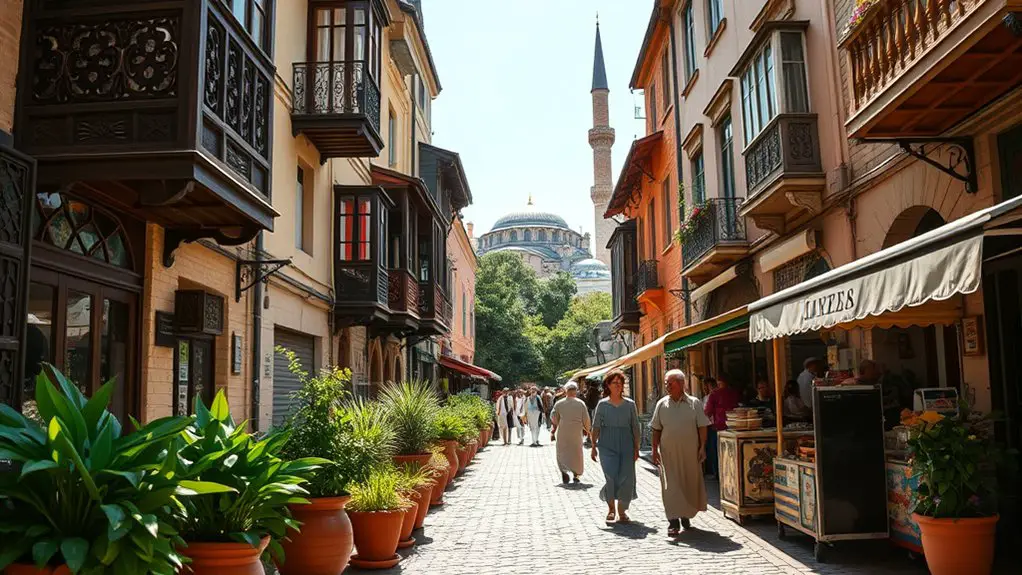
The Ottoman-era story of Cihangir begins most clearly with its hilltop mosque and the gradual growth of settlement around the slopes above the Bosphorus. The mosque gave the area its enduring name, while residential development became increasingly visible from the 17th century.
By the 19th century, Cihangir had become part of the wider residential expansion of Beyoğlu. Multi-story apartment buildings appeared alongside older wooden houses. Historical research indicates that non-Muslim and Levantine residents were prominent in many of the new masonry apartment blocks, while Muslim households were more commonly associated with traditional wooden housing.
Fires repeatedly reshaped this urban fabric. As wooden structures were lost, stone and brick construction became more common. That transition is one of the most important clues to understanding why present-day Cihangir looks different from an older Ottoman neighborhood dominated by timber houses.
Architectural Developments in Cihangir
Cihangir’s architecture is more varied than the original description of “Baroque and contemporary” suggested. The Turkish Academy of Sciences historical-building inventory identifies a clearer chronological pattern: 19th-century Neoclassicism was followed by Art Deco and early modernist influences, especially after 1925.
| Architectural Layer | What It Adds to Cihangir |
|---|---|
| Ottoman religious architecture | Cihangir Mosque and other historic religious buildings connect the neighborhood to its Ottoman origins. |
| 19th-century Neoclassicism | Masonry apartment blocks and more formal facades became important as the area urbanized and rebuilt after fires. |
| Art Deco and early modernism | From the mid-1920s onward, newer apartment buildings introduced simpler geometric forms and early modern design. |
Baroque elements certainly exist elsewhere in Ottoman Istanbul, but describing Cihangir primarily through Baroque architecture hides the neighborhood’s more distinctive 19th- and early-20th-century residential story.
Cultural Significance and Influence
Cihangir should not be described as a proven early-Ottoman refuge where poets, painters, and musicians formed an artistic colony. Its artistic reputation is much more securely associated with its later urban identity.
The 19th-century neighborhood already had a socially mixed character shaped by Muslim, non-Muslim, and Levantine residents living within the wider cosmopolitan world of Beyoğlu. In later decades, writers, actors, artists, journalists, and other cultural figures became strongly associated with Cihangir, helping create the bohemian reputation familiar today.
The Istanbul Governor’s guide to Cihangir also highlights the neighborhood’s long association with artists and prominent cultural figures. That later creative identity is genuine, but it should not be projected backward into the early Ottoman period without evidence.
From Wooden Houses to Masonry Apartments
Fire is one of the overlooked forces in Cihangir’s architectural history. Wooden Ottoman housing was vulnerable to large urban fires, and rebuilding gradually favored masonry. The 1823 fire, for example, damaged historic structures including Firuzağa Mosque, while Cihangir Mosque itself suffered several fires over its history.
By the middle and later 19th century, stone and brick apartment buildings had become increasingly important. The shift changed not only construction materials but also the scale and appearance of the streets. Multi-story blocks helped establish the dense urban character that still distinguishes the neighborhood.
Cihangir’s architectural story is best understood as a progression from Ottoman religious landmarks and wooden housing to 19th-century masonry apartments, followed by Art Deco and early modernist development.
The Artistic Renaissance in Cihangir
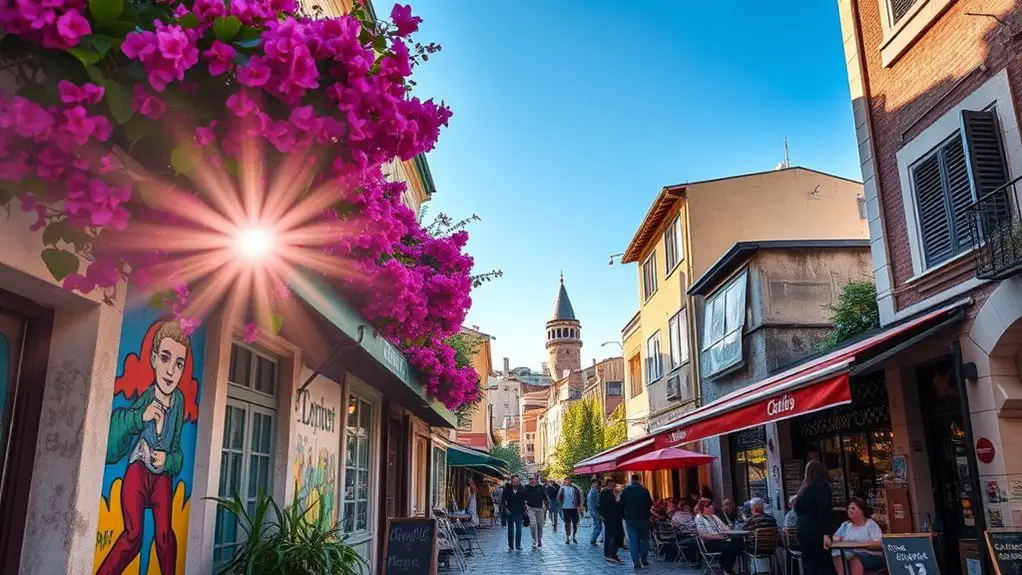
In modern Istanbul, Cihangir has become strongly identified with artists, writers, actors, designers, and café culture. That reputation is one reason the neighborhood is often described as bohemian. It is more accurate, however, to view this as a modern layer of Cihangir’s history rather than an uninterrupted artistic tradition stretching back to the early Ottoman period.
The cultural landscape also extends beyond Cihangir’s strict boundaries. Literary museums, theaters, galleries, antique shops, and creative spaces in neighboring Çukurcuma, Galatasaray, Tophane, and the rest of Beyoğlu contribute to the atmosphere visitors often associate with Cihangir.
| Creative Layer | Grounded Example | Why It Matters |
|---|---|---|
| Literature | Orhan Kemal Museum in Cihangir | Connects the neighborhood with modern Turkish literary history. |
| Literary museum culture | Museum of Innocence in nearby Çukurcuma | Shows how Cihangir’s cultural identity overlaps with adjacent Beyoğlu neighborhoods. |
| Café culture | Independent cafés and informal meeting spaces | Supports the neighborhood’s modern reputation as a social and creative meeting place. |
| Visual culture | Nearby galleries, antique shops, exhibitions, and changing street art | Adds a contemporary cultural layer without treating every installation or mural as permanent. |
| Performance | Small theaters and stages across the Cihangir-Beyoğlu area | Links the neighborhood to Beyoğlu’s broader theater and performing-arts tradition. |
This modern creative culture gives Cihangir much of its current character, but it exists alongside residential life, historic buildings, ordinary neighborhood businesses, and the pressures created by rising desirability.
Modern Development and Gentrification
Cihangir’s transformation is often described through the term gentrification. This is not simply a recent wave of cafés appearing overnight. Researchers have studied Cihangir as one of Istanbul’s notable examples of neighborhood change associated with renovation, changing resident profiles, higher-value housing, and shifts in the commercial landscape.
A 2012 study of Cihangir’s commercial identity places the relevant transformation in the period after the 1980s, while later research in Urban Studies treats gentrification in Cihangir as a continuing and evolving process rather than a single event.
Urban Transformation Trends
The Middle East Technical University research record on Cihangir gentrification emphasizes that the process involves several forces operating at once. Physical renovation is only one part of the story; changes in residents, businesses, property markets, public policy, and local resistance also shape the neighborhood.
| Aspect | What Research Documents | Why It Matters |
|---|---|---|
| Buildings | Renovation and upgrading of older inner-city housing | Can preserve buildings while also increasing property demand. |
| Commercial life | Changes in the neighborhood’s retail and service profile | Alters what kinds of businesses residents encounter and can afford. |
| Residents | Changing socio-economic groups and relationships between older and newer residents | Shows that gentrification is a social process as well as an architectural one. |
| Heritage | Tension between conservation, investment, and changing neighborhood identity | Physical preservation does not automatically preserve the same community structure. |
For that reason, it is better to describe Cihangir as a neighborhood undergoing long-term social and economic change than to assume every café, renovation, or boutique is evidence of one simple urban-renewal project.
Impact on Local Culture
Gentrification can produce conflicting outcomes. Restored buildings and new businesses may bring investment and make historic properties more desirable, while higher housing and commercial costs can make it harder for some long-term residents and businesses to remain.
Cihangir’s artistic reputation is also part of this tension. Creative residents and cultural venues can help make an older central neighborhood desirable; greater demand can then change the conditions that supported that culture in the first place.
This does not mean the neighborhood has lost an authentic past and gained an entirely artificial present. Cihangir’s identity has changed repeatedly for centuries. Its modern character is another layer in that continuing history.
Cultural Landmarks and Their Significance
Cihangir’s history is easiest to understand when its true neighborhood landmarks are separated from famous sights elsewhere in Beyoğlu.
- Cihangir Mosque: The defining historical landmark that gave the neighborhood its name. The original mosque dates to 1559–60, while the present structure reflects its later rebuilding history.
- Firuzağa Mosque: A historic mosque near the meeting of Sıraselviler and Defterdar Yokuşu. The Istanbul Governor’s neighborhood history records an original foundation dating to 1491 and rebuilding after the 1823 fire.
- Orhan Kemal Museum: A literary museum in Cihangir devoted to the Turkish novelist and playwright Orhan Kemal.
- Local art galleries and cultural spaces: Small-scale creative venues contribute to the wider Cihangir-Beyoğlu cultural scene, although individual galleries and programs change over time.
- Çiçek Pasajı: A major Beyoğlu landmark on İstiklal Avenue in Hüseyinağa. It is worth visiting from Cihangir but should not be described as a landmark inside Cihangir itself.
- Galata Tower: Another nearby Beyoğlu icon, located in Bereketzade in the Galata quarter rather than Cihangir.
- Museum of Innocence: Located in nearby Çukurcuma between İstiklal Avenue and Tophane. Its official visitor information describes it as roughly a 10-minute walk from Cihangir.
Making these distinctions gives visitors a more accurate sense of Cihangir itself while still showing how closely the neighborhood is connected to the rest of historic Beyoğlu.
A Short Cihangir History Timeline
| Period | What Changed |
|---|---|
| 1553 | Şehzade Cihangir, son of Sultan Süleyman I and Hürrem Sultan, dies at age 22. |
| 1559–60 | The first Cihangir Mosque, commissioned in his memory and attributed to Mimar Sinan, is completed. |
| 17th century | Historical research records increasingly visible settlement on the slopes of Cihangir. |
| 19th century | Residential development accelerates; masonry apartments grow more common and Neoclassical architecture becomes prominent. |
| 1890 | Cihangir Mosque is rebuilt under Sultan Abdülhamid II after its long history of fires and reconstruction. |
| After 1925 | Art Deco and early modernist architecture become increasingly visible in the neighborhood’s apartment stock. |
| After the 1980s | Cihangir becomes a prominent Istanbul case study in gentrification, renovation, commercial change, and shifting resident profiles. |
| 21st century | Its historic apartment streets, cafés, cultural venues, and association with creative residents reinforce Cihangir’s modern bohemian reputation. |
Cihangir Today: A Blend of Tradition and Modernity
Cihangir today combines several periods of Istanbul history in a compact, steeply sloped neighborhood. Ottoman religious landmarks remain close to 19th- and 20th-century apartment buildings, while cafés, restaurants, cultural spaces, and renovated homes add newer layers.
| Element | Historical Layer | Modern Layer |
|---|---|---|
| Architecture | Ottoman landmarks, Neoclassical masonry, Art Deco and early modern apartments | Renovation, adaptive reuse, and contemporary interiors |
| Cuisine | Turkish home-style dishes, meze, bakeries, tea and coffee traditions | Modern cafés, international menus, brunch spots, and changing restaurant concepts |
| Culture | Historic mosques and literary connections | Museums, theaters, cafés, galleries, and creative communities across Cihangir and nearby Beyoğlu |
| Public life | Dense residential streets and long-established neighborhood routines | Visitors, newcomers, cultural events, and debates over affordability and neighborhood change |
| Community | Multiple generations and social groups have shaped the area | Long-term residents and newer populations continue to negotiate what Cihangir should become |
The result is not a simple clash between “old” and “new.” Cihangir has been rebuilt, repopulated, and reinterpreted many times. Its current mixture of historic architecture and contemporary urban life is part of that longer pattern.
Frequently Asked Questions
What are the best times to visit Cihangir?
Spring and autumn are usually comfortable seasons for exploring Cihangir on foot because the neighborhood is hilly and much of a visit involves walking outdoors. Summer can be hotter, while winter brings cooler and wetter conditions. Weekends and major events can also affect how busy the surrounding Beyoğlu area feels.
Are there local festivals celebrated in Cihangir?
Cihangir and wider Beyoğlu host periodic cultural programs, neighborhood gatherings, film screenings, performances, and public events. However, there is no single fixed annual Cihangir festival that visitors should assume will take place on the same schedule every year. Check current Beyoğlu Municipality and Istanbul Metropolitan Municipality cultural calendars before your trip.
What public transportation options are available in Cihangir?
Cihangir itself does not have a tram running through its interior. Depending on where you are staying, nearby T1 tram stops include Tophane, Fındıklı-Mimar Sinan Üniversitesi, and Kabataş. The F1 Taksim-Kabataş funicular is also useful for moving between the upper Taksim area and the Bosphorus waterfront. Expect steep walks on many Cihangir streets.
Where can I find traditional food in Cihangir?
Cihangir is better known for its mix of cafés and restaurants than for one large traditional food market. Look for Turkish breakfast dishes, meze, home-style cooking, kebabs, soups, börek, pastries, tea, and Turkish coffee at local restaurants and bakeries. Menus and businesses change frequently, so it is better to choose by current offerings than rely on an old list of specific venues.
Is Cihangir safe for solo travelers?
No urban neighborhood can be guaranteed safe. Use normal city precautions, protect valuables, stay aware at night and in crowded areas, and avoid demonstrations or unexpected large gatherings. As of June 9, 2026, the U.S. State Department lists Türkiye at Level 2: Exercise Increased Caution. That is a countrywide advisory rather than a Cihangir-specific crime rating, so travelers should check the latest official guidance before visiting.
Why is the neighborhood called Cihangir?
The neighborhood takes its name from Şehzade Cihangir, a son of Sultan Süleyman the Magnificent and Hürrem Sultan. Süleyman commissioned the original Cihangir Mosque in his son’s memory, and the mosque gave its name to the surrounding area.
Are Galata Tower and Çiçek Pasajı actually in Cihangir?
No. Both are nearby attractions in the wider Beyoğlu district. Galata Tower is in Bereketzade in the Galata quarter, while Çiçek Pasajı is on İstiklal Avenue in Hüseyinağa. They are easy to combine with a Cihangir walk, but they should not be described as landmarks inside Cihangir itself.
Conclusion
Cihangir’s history becomes more interesting when its myths are separated from what the historical record can actually support. Its identity grew from an Ottoman memorial landscape into a denser residential neighborhood shaped by fires, masonry construction, Neoclassical apartments, Art Deco and early modernism. Later, writers, artists, actors, cafés, and cultural venues helped establish the bohemian reputation associated with Cihangir today.
Modern gentrification adds another chapter rather than replacing everything that came before it. Historic buildings, long-term residents, newcomers, cultural spaces, and commercial change now exist side by side. Walking through Cihangir means seeing several centuries of Istanbul’s urban history compressed into the same steep streets.
Sources
- T.C. İstanbul Valiliği — İstanbul’un Semtleri: Cihangir — neighborhood history, Cihangir Mosque, Firuzağa Mosque, Orhan Kemal Museum, and cultural context.
- TDV İslâm Ansiklopedisi — Cihangir Camii — Şehzade Cihangir, the 1559–60 mosque, Mimar Sinan attribution, fires, and the 1890 rebuilding.
- Turkish Academy of Sciences Journal of Cultural Inventory — Cihangir Historical Buildings Inventory — settlement growth, masonry construction, Neoclassicism, Art Deco, and early modernism.
- Middle East Technical University — Assembling Gentrification in Istanbul: The Cihangir Neighbourhood of Beyoğlu — long-term gentrification and urban transformation.
- Metro İstanbul — T1 Kabataş-Bağcılar Tram Line — current nearby tram stations and connections.
- U.S. Department of State — Türkiye Travel Advisory — current country-level safety guidance used to qualify the solo-travel FAQ.
