
Last Updated on July 25, 2026 by Daniel Globe
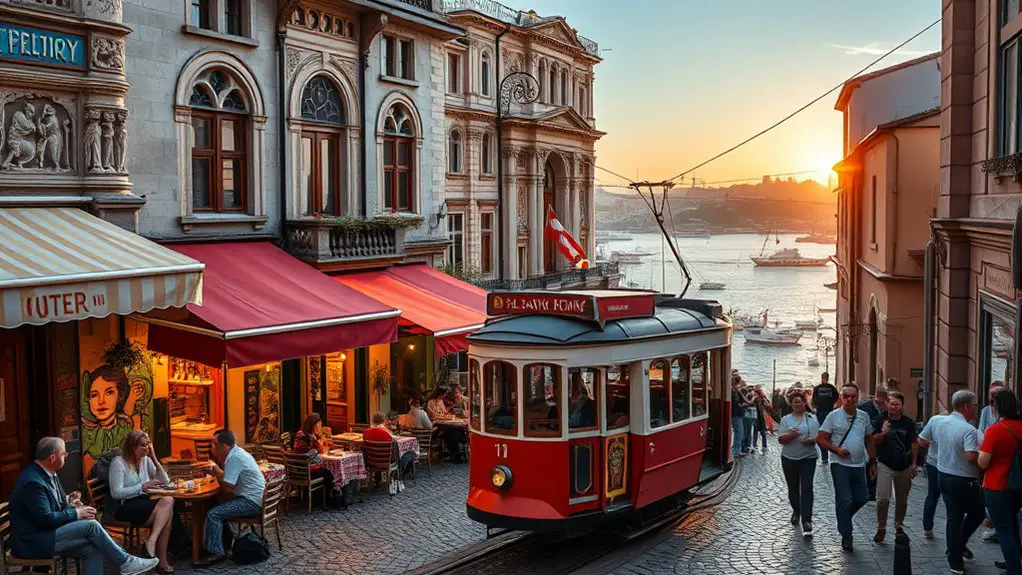
Karaköy is one of Istanbul’s best places to see several centuries of urban history within a compact waterfront district. Its story is closely tied to historic Galata, the settlement rising from the northern shore of the Golden Horn. Byzantine foundations, Genoese trade, Ottoman commerce, 19th-century banking, a busy passenger port, and today’s museums and cafés have all shaped the neighborhood visitors see now.
Quick Answer
Karaköy’s history is best understood as the waterfront story of historic Galata. The area grew from a Byzantine settlement and harbor into a Genoese trading colony, then an Ottoman commercial district. In the 19th century, banking, shipping, new quays, and urban modernization reshaped it. Today, Karaköy combines that layered heritage with museums, cafés, ferries, and a renewed waterfront.
Key Takeaways
- Modern Karaköy occupies the waterfront at the foot of historic Galata, where the Golden Horn meets the Bosphorus.
- The wider Galata area developed from the Byzantine settlement of Sykai and later became a powerful Genoese trading colony.
- After 1453, the Ottomans preserved Galata’s commercial importance while its Muslim, Greek, Armenian, Jewish, Latin, and other communities shaped a remarkably diverse district.
- The 19th century transformed Karaköy through international commerce, Bankalar Caddesi, modern banking, municipal improvements, new quays, and the historic Tünel.
- Modern Karaköy still shows these layers through Galata Tower, SALT Galata, historic commercial buildings, Istanbul Modern, ferry piers, and the redeveloped waterfront.
Note: Karaköy and Galata are closely connected but are not identical names for the same place. Karaköy generally refers to the lower waterfront area, while historic Galata extends uphill toward Galata Tower. Eminönü, including the Spice Bazaar, is across the Galata Bridge on the opposite side of the Golden Horn.
Disclosure: As an Amazon Associate I earn from qualifying purchases. Some links on this page are affiliate links, at no extra cost to you.
The Origins of Karaköy: From Sykai to Galata
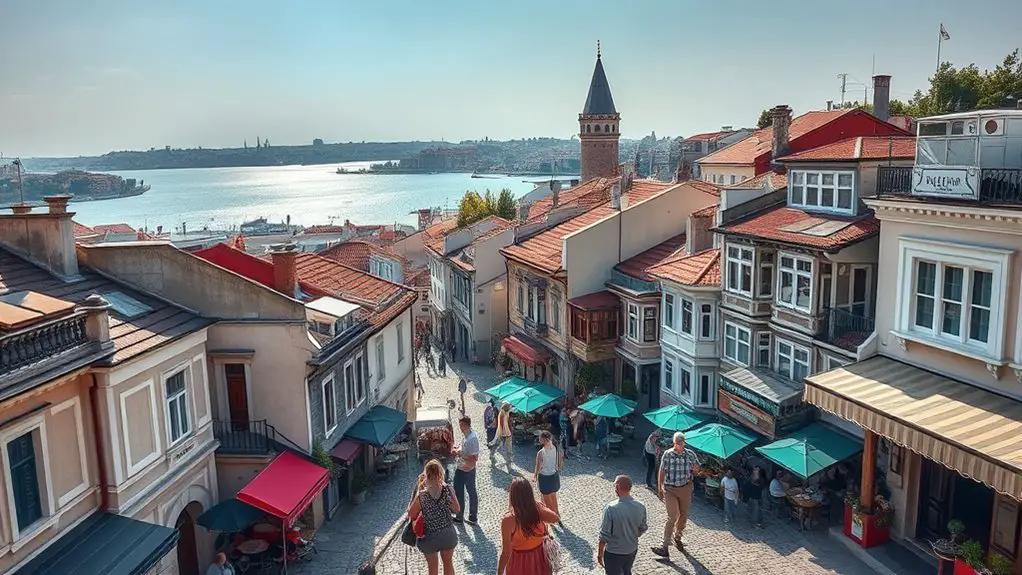
The roots of Karaköy reach into the history of the settlement that developed across the Golden Horn from Constantinople. In Byzantine sources, the broader Galata area was associated with Sykai, a settlement on the northern shore that became part of the urban world surrounding the imperial capital.
The location mattered. The Golden Horn formed a protected natural harbor, while the shoreline sat beside maritime routes linking the Black Sea, Bosphorus, Sea of Marmara, Mediterranean, and commercial centers farther west and east. That geography would repeatedly make Galata and the future Karaköy waterfront valuable to merchants and sailors.
It is more accurate, however, to describe this as a history that developed in stages than to call modern Karaköy a single unchanging “trading hub since ancient times.” The neighborhood people recognize today emerged from layers of Byzantine settlement, medieval Latin commerce, Ottoman administration, and modern port development.
Karaköy and Galata in the Byzantine Era
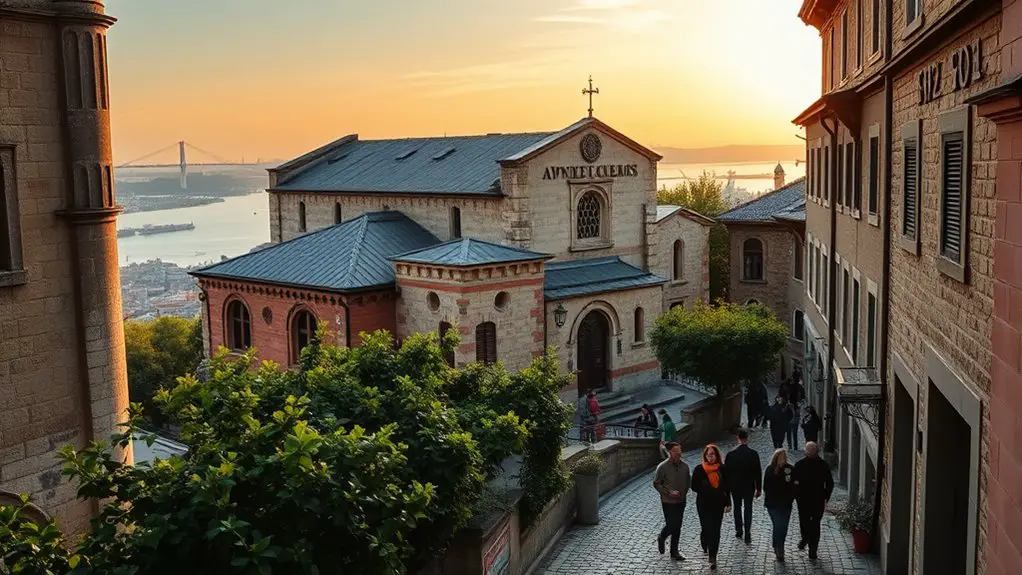
During the Byzantine period, the northern side of the Golden Horn stood opposite Constantinople’s walled core. The settlement historically known as Sykai, and later associated with Galata and Pera, developed around this strategically useful shoreline.
Its importance increased as Italian maritime republics gained commercial privileges in the Byzantine capital. Merchants from Venice, Genoa, Pisa, and other Mediterranean centers became part of Constantinople’s trading world.
One distinction is important when exploring the area today: much of the medieval architecture most clearly visible around Galata is Genoese rather than Byzantine. The surviving Galata Tower, for example, was built by the Genoese in the mid-14th century as part of their fortified settlement, according to Türkiye’s Ministry of Culture and Tourism.
Genoese Galata: The Medieval Trading Colony
The Genoese period is essential to understanding Karaköy’s history. During the later Byzantine centuries, Galata developed into a fortified Genoese commercial colony directly across the Golden Horn from Constantinople.
Walls divided and protected the growing settlement, while merchants, warehouses, churches, homes, and commercial spaces filled the streets between the waterfront and the hill above. The Genoese position placed Galata inside a much wider Mediterranean and Black Sea trading network.
The most famous surviving symbol is Galata Tower. Although it stands uphill from Karaköy rather than on the waterfront itself, it was part of the Genoese defensive system and remains one of the clearest physical reminders of medieval Galata.
Karaköy’s medieval identity cannot be explained simply as “Byzantine.” Its defining surviving landmark and much of Galata’s late-medieval urban character were created by the Genoese while the Byzantine Empire still ruled Constantinople.
The Ottoman Influence on Karaköy
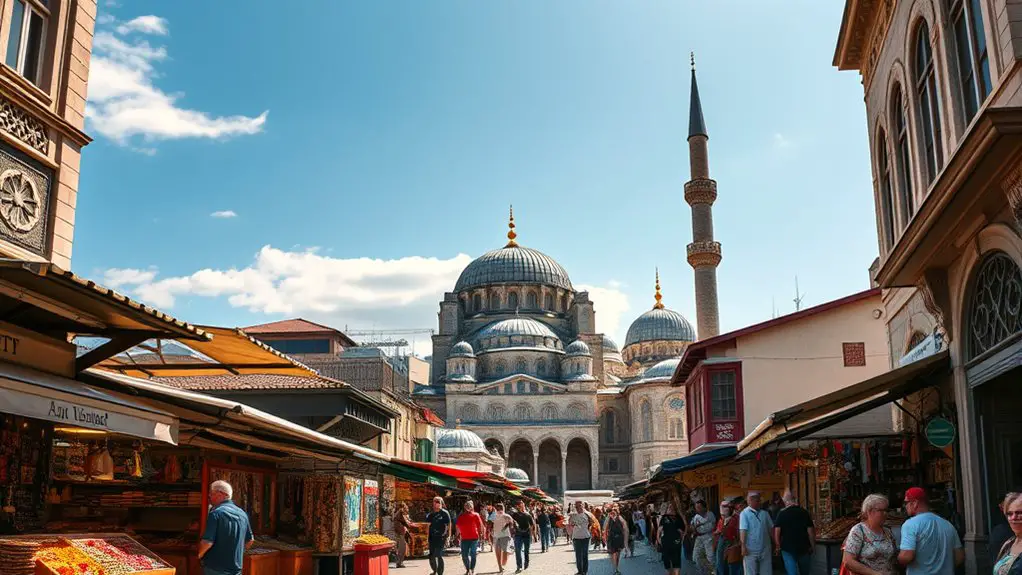
Galata surrendered to Sultan Mehmed II shortly after the Ottoman conquest of Constantinople in 1453. Its separate Genoese political position ended, but its commercial role did not.
Historian Halil İnalcık’s account of Ottoman Galata shows that the district remained closely tied to European and Mediterranean commerce. Ottoman authorities integrated it into the capital while encouraging commercial activity to continue.
The population was also strikingly diverse. Ottoman records describe Genoese and Venetian merchants alongside Greek, Armenian, Jewish, and later Muslim residents. Karaköy, Yüksekkaldırım, the Galata slopes, and nearby waterfront streets developed as overlapping commercial and residential zones rather than a culturally uniform neighborhood.
Architectural Heritage and Preservation
Karaköy’s streets do not belong to one architectural period. Medieval Genoese remains, Ottoman religious buildings, commercial hans, late-Ottoman banks, early modern port structures, and contemporary projects stand close together.
This is why identifying buildings by period matters. Galata Tower is Genoese. Ottoman-era additions include mosques, fountains, commercial structures, and institutions that developed as Galata became more deeply integrated into Istanbul. Later banking and port buildings reflect the district’s 19th- and early-20th-century transformation.
Adaptive reuse has helped preserve some of this heritage. A notable example is the former Imperial Ottoman Bank headquarters on Bankalar Caddesi. Designed by Alexandre Vallauri and inaugurated in 1892, the building now houses SALT Galata, including research, exhibition, and cultural spaces.
Cultural Exchange and Trade
Trade remained the force connecting Karaköy’s different communities. Goods arriving by sea moved through docks, markets, warehouses, workshops, and merchant houses, while financial and diplomatic links connected Galata with European and eastern Mediterranean cities.
Historical records describe Galata as an important storehouse for goods moving between East and West. European textiles, Persian silk, foodstuffs, and other imports circulated through the district, while merchants of different backgrounds worked in the same commercial environment.
The nearby imperial naval base at Kasımpaşa also strengthened maritime activity, although it should not be confused with a 19th-century Karaköy shipbuilding industry. Karaköy’s strongest historical identity remained that of a port, market, commercial crossroads, and later financial center.
Karaköy History Timeline
- Byzantine era: The northern Golden Horn settlement associated with Sykai develops opposite Constantinople.
- Late 13th–15th centuries: Genoese Galata grows into a fortified commercial colony.
- Mid-14th century: The Genoese construct the present Galata Tower as part of Galata’s fortifications.
- 1453: Galata passes under Ottoman rule while maintaining a major role in international commerce.
- 19th century: Karaköy and Galata become major centers of banking, European trade, shipping, and modern municipal development.
- 1875: The historic Tünel begins carrying passengers between the lower Galata/Karaköy area and Beyoğlu.
- Late 19th–early 20th centuries: Modern quays, customs facilities, warehouses, and passenger buildings reshape the waterfront.
- 2004: Istanbul Modern opens in a former waterfront warehouse.
- 2023: Istanbul Modern opens its new Renzo Piano-designed building at its original Karaköy waterfront location.
- Today: Historic commercial streets, cultural institutions, ferries, cafés, shops, and the redeveloped waterfront coexist in one of central Istanbul’s busiest districts.
The Transformation of Karaköy in the 19th Century
The 19th century was one of Karaköy’s most important periods of change. Rather than simply becoming an industrial district, the area emerged as one of Istanbul’s leading centers for international trade, finance, shipping, and modern urban services.
By the mid-1800s, Perşembe Pazarı, Voyvoda Street—today’s Bankalar Caddesi—and Karaköy had become major centers for European goods and banking. Foreign merchants, Ottoman subjects, financiers, shipping companies, and commercial institutions all contributed to the district’s rapid development.
Commercial, Financial, and Port Growth
Bankalar Caddesi became the clearest expression of this new financial role. Banks, insurance companies, merchant offices, and related businesses occupied increasingly imposing buildings along the steep streets above the waterfront.
The Imperial Ottoman Bank was one of the era’s major institutions. Its headquarters moved into Alexandre Vallauri’s purpose-built Bankalar Caddesi building in 1892. The building’s later conversion into SALT Galata makes it one of the easiest places today to connect Karaköy’s financial past with its contemporary cultural life.
The waterfront changed as well. Growing maritime traffic eventually made older arrangements inadequate, and construction of more formal piers and quays began in the late 19th century. Warehouses, customs functions, passenger facilities, and shipping infrastructure expanded during the decades that followed.
Architecture and Urban Modernization
The late-Ottoman district absorbed European architectural ideas without losing its local character. Instead of one dominant “Gothic Revival” style, Karaköy and Galata developed a varied streetscape of neoclassical, neo-Ottoman, neo-oriental, Baroque-influenced, and later Art Nouveau elements.
The former Ottoman Bank building is a good example. SALT describes its opposite façades as neoclassical and neo-oriental, reflecting both European banking culture and its Istanbul setting.
The Kamondo Stairs on Bankalar Caddesi are another reminder of the era’s wealthy banking community. Built for the prominent Ottoman Jewish Camondo family, the curving staircase still links lower Bankalar Caddesi with the streets climbing toward Galata.
Municipal improvements also changed daily life. Roads were widened, lighting and sanitation improved, and the old walls increasingly gave way to a more open street network.
The Historic Tünel
One of the most important transport developments arrived in 1875. The historic Tünel created a quick connection between the lower commercial district and Beyoğlu above the steep Galata slope.
IETT’s historical chronology records its ceremonial opening on January 17, 1875, followed by public operation the next day. The short underground funicular remains part of Istanbul’s transport system and an unusually direct link between the neighborhood’s past and present.
Karaköy in the 20th Century: Warehouses, Ships, and Change
Karaköy entered the 20th century as a working port rather than the café-and-gallery district visitors know today. New warehouses and passenger facilities expanded along the waterfront as Istanbul handled growing volumes of cargo and travelers.
According to Istanbul Modern’s history of the site, warehouses were constructed on the piers in 1910. After the Republic of Turkey was founded in 1923, the waterfront passed into the administration of state maritime authorities.
The port later accommodated cruise ships as well as cargo traffic and remained a major part of Istanbul’s maritime infrastructure into the late 20th century. Passenger terminals, customs buildings, warehouses, transport offices, workshops, and nearby commercial streets all contributed to Karaköy’s working character.
As port functions changed and wholesale businesses moved elsewhere, some former commercial and industrial buildings gained new uses. That transition helped prepare the ground for the galleries, cultural institutions, restaurants, and restoration projects that became increasingly visible after the turn of the 21st century.
Modern-Day Karaköy: A Cultural Hub
Modern Karaköy still feels busy and commercial, but its waterfront and many historic buildings now serve very different purposes. Contemporary art, design, food, tourism, hotels, local workshops, ferries, and traditional businesses all share the district.
Istanbul Modern played an important role in this cultural transformation when it first opened in a former maritime warehouse in 2004. After operating temporarily elsewhere during redevelopment of the waterfront, the museum returned to its original Karaköy location. Its new Renzo Piano-designed building opened on May 4, 2023.
The wider Galataport redevelopment has also reopened and reorganized much of the historic waterfront for pedestrian use while retaining a cruise-port function. Historic port buildings now stand alongside newer cultural, hospitality, retail, and public spaces.
Karaköy’s appeal comes from contrast: medieval Galata rises above a late-Ottoman banking district, while former port infrastructure now sits beside contemporary museums and waterfront public spaces.
That mix makes the neighborhood more interesting than a simple “old meets new” label suggests. The modern cafés and galleries are only the newest layer in a district that has repeatedly changed function while remaining closely tied to movement, trade, and the waterfront.
Notable Historical Landmarks and Attractions
A history-focused visit to Karaköy works best when you treat the waterfront and uphill Galata streets as one connected walking area.
- Bankalar Caddesi: The former financial heart of late-Ottoman Galata, lined with substantial commercial buildings.
- SALT Galata: The former 1892 Imperial Ottoman Bank headquarters, now a cultural and research institution.
- Kamondo Stairs: A distinctive 19th-century staircase associated with the influential Camondo banking family.
- Galata Tower: A mid-14th-century Genoese tower uphill in Galata and one of the strongest surviving reminders of the medieval colony.
- Galata Bridge: The present-day crossing linking Karaköy with Eminönü and the Historic Peninsula.
- Istanbul Modern: Türkiye’s first museum of modern and contemporary art, now housed in a waterfront building designed by Renzo Piano.
- Historic Karaköy waterfront: Former port and customs buildings preserve parts of the district’s maritime character alongside the contemporary Galataport development.
The Spice Bazaar is not in Karaköy. It stands in Eminönü beside the New Mosque, across the Galata Bridge. It is easy to combine with a Karaköy walk, but treating it as a Karaköy landmark confuses two distinct historic districts.
Tips for Exploring Karaköy as a Tourist
Start near Karaköy Pier if you want to understand the neighborhood geographically. From the water, the steep rise toward historic Galata becomes immediately clear.
A useful history-focused route is to walk from the waterfront toward Bankalar Caddesi, stop at SALT Galata and the Kamondo Stairs, continue uphill toward Galata Tower, and then return toward the waterfront for Istanbul Modern and the historic port area.
Pro Tip: Karaköy is steep once you leave the waterfront. Walking uphill through Bankalar Caddesi and Galata first, then returning downhill toward the water, gives you an easier final stretch and makes the historical development of the district easier to visualize.
Public transportation is straightforward. The T1 tram stops at Karaköy and connects the district with areas including Eminönü, Sirkeci, Sultanahmet, and Kabataş. The historic Tünel provides the steep connection toward Beyoğlu.
Ferries are another practical choice. Current routes and times change, so check Şehir Hatları before traveling. Karaköy is served by routes connecting it with the Asian side and other parts of the Golden Horn and Bosphorus network.
For food, look beyond one specific “must-visit” restaurant. Karaköy offers everything from bakeries, cafés, meze, and seafood to contemporary dining, and businesses change more quickly than historical landmarks do.
Travel Safety: Use normal big-city precautions in Karaköy, especially around busy tram stops, ferries, markets, nightlife areas, and crowded attractions. Keep valuables secure and avoid demonstrations. Travel conditions can change, so review your government’s current Türkiye advice before your trip; the U.S. State Department’s Türkiye Travel Advisory is one current official reference.
Frequently Asked Questions
What Are the Best Dining Options in Karaköy?
Karaköy has traditional bakeries, Turkish breakfast spots, seafood and meze restaurants, specialty coffee shops, dessert shops, and contemporary restaurants. For the most rewarding experience, mix one traditional stop with newer cafés rather than limiting your visit to the busiest waterfront venues.
Is Karaköy Safe for Tourists?
Karaköy is a heavily visited central Istanbul district, but travelers should use ordinary urban precautions. Keep phones and wallets secure in crowds, stay aware around transport hubs and nightlife areas, avoid demonstrations, and check current government travel advice before your trip rather than relying on a permanent “safe” or “unsafe” label.
What Is the Best Time to Visit Karaköy?
Spring and autumn are often the most comfortable seasons for exploring Karaköy on foot because temperatures are generally milder than in peak summer. Early morning is useful in any season if you want quieter streets around Galata, while evenings bring a busier dining and nightlife atmosphere.
Are There Any Local Festivals in Karaköy?
Karaköy regularly hosts exhibitions, performances, design events, and seasonal cultural programs, but there is no single permanent neighborhood festival schedule that visitors should assume will occur every year. Check current programs from Istanbul Modern, SALT, Galataport, and Istanbul-wide arts organizations close to your travel dates.
How Do I Get to Karaköy From Other Istanbul Areas?
From Sultanahmet, Sirkeci, or Eminönü, use the T1 tram to Karaköy. From Kadıköy or Üsküdar, ferries are often the most scenic option. From upper Beyoğlu, the historic Tünel descends toward Karaköy. You can also walk across Galata Bridge from Eminönü.
Are Karaköy and Galata the Same Place?
Not exactly. The names overlap historically and are closely connected, but Karaköy generally refers to the lower waterfront district at the foot of historic Galata. Galata extends uphill around Bankalar Caddesi and Galata Tower. Visitors commonly explore both during the same walk.
How Long Should I Spend in Karaköy?
Allow at least two to three hours for a walking introduction to Karaköy and lower Galata. A half day is better if you plan to enter Galata Tower, SALT Galata, or Istanbul Modern, stop for food, and explore the waterfront without rushing.
Sources
- History of Istanbul — Halil İnalcık, “Galata” — Ottoman administration, population, commerce, and 19th-century development.
- Türkiye Ministry of Culture and Tourism — Galata Tower Museum — Genoese construction and the tower’s later uses.
- SALT Galata — history of the Imperial Ottoman Bank headquarters and its present cultural use.
- Istanbul Modern — History — Karaköy waterfront, port history, museum development, and 2023 reopening.
- IETT — Historical Chronology — opening and development of the historic Tünel.
- Galataport Istanbul — History — historic port buildings and the development of the Karaköy-Tophane waterfront.
Conclusion
Karaköy makes more sense once you stop viewing it as simply a fashionable waterfront neighborhood. Its streets sit within the much older story of Galata: a Byzantine settlement zone, a Genoese trading colony, an Ottoman commercial crossroads, a late-19th-century banking center, and a modern passenger port.
Those layers are still visible. You can move from medieval Galata Tower to Bankalar Caddesi, the former Ottoman Bank headquarters, ferry piers, historic port buildings, and Istanbul Modern within a relatively short walk. That concentration of history is what makes Karaköy distinctive: the neighborhood has changed repeatedly, but trade, movement, culture, and the waterfront have remained at the center of its identity.
